A Warning for Australia’s “Trillion-Dollar” AUKUS Commitment
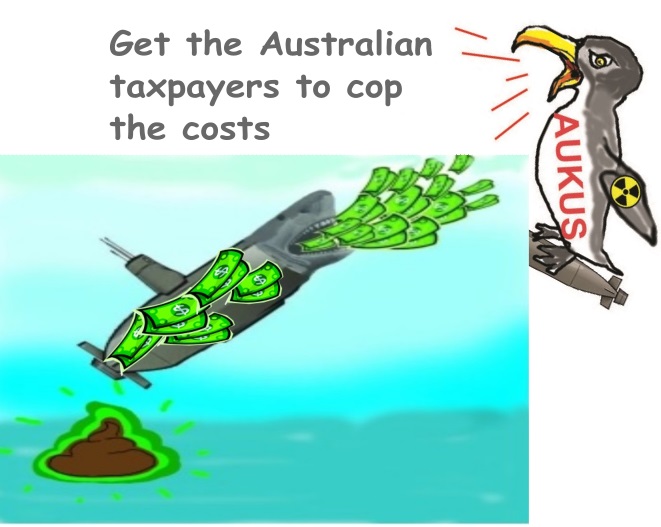
The public needs a clear understanding of what is included in the published estimates and what additional liabilities may emerge over the programme’s lifetime. Even relatively modest increases beyond the existing upper estimate would have significant consequences.
A 20 per cent increase would take the $368 billion figure to approximately $441.6 billion. A 50 per cent increase would take it to $552 billion. A doubling would produce a figure of $736 billion.
Can Future Generations Sustain It?
24 November 2026, AIMN Editorial, By Terry Dwyer
Snowy 2.0, government cost blowouts, Australian sovereignty and Dan Duggan
If governments can underestimate the cost of one major infrastructure project by more than tenfold, what confidence should taxpayers have in Australia’s largest and most complicated defence commitment?
A familiar Australian problem
There is a recurring problem with major government projects in Australia. They are often announced with impressive promises, attractive initial budgets and assurances that the financial risks have been carefully assessed. Yet once construction begins and time passes, our memories tend to fade while the costs usually skyrocket. Of course, by then we are consumed with many other concerns, like feeding the family and paying the mortgage.
Design changes, engineering difficulties, contractual disputes, labour shortages, inflation and delays can turn what initially appeared to be manageable projects into enormous financial liabilities.
Snowy 2.0 is now one of the most striking examples.
Announced in 2017 with an estimated cost of approximately $2 billion, the pumped-hydro project was promoted as an important component of Australia’s future energy system. It was intended to provide large-scale energy storage by moving water between two reservoirs and generating electricity when required.
However, the latest reassessment has placed the target cost to complete at $22.2 billion, with Snowy Hydro allowing for a possible $25 billion scenario.
The $25 billion scenario represents 12.5 times the original estimate, an increase of 1,150 per cent.
The expected commissioning date has also moved to late 2029, compared with the original expectation of completion in 2021.
Snowy Hydro and the Government have identified several contributing factors, including design immaturity at the original investment decision, difficult geological conditions and escalating construction costs.
Whatever the explanations, the financial outcome is extraordinary. A project originally presented as a $2 billion undertaking has become a potential $25 billion liability, and it is not yet finished.
Sources: Snowy Hydro – October 2026 cost reassessment | Australian Government – Update on Snowy 2.0
What energy experts have been saying…………………………………………………………………………11
The Spirit of Tasmania provides another warning
Snowy 2.0 is not the only Australian infrastructure project to demonstrate how dramatically government project costs can escalate beyond their original estimates.
The replacement of Tasmania’s two Spirit of Tasmania ferries provides another concerning example of inadequate project planning, delays and escalating costs………………………………………….
AUKUS: a much larger financial exposure
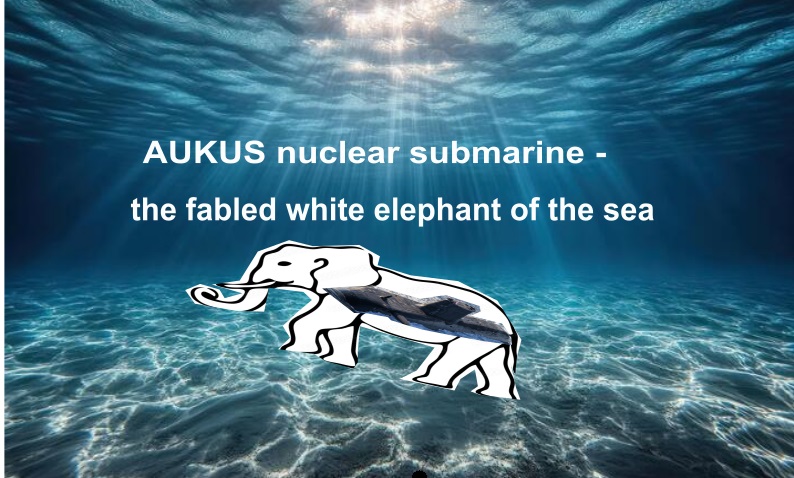
The Australian Government’s published estimate for the nuclear-powered submarine programme is between $268 billion and $368 billion over several decades.
The upper estimate already includes approximately $123 billion in contingency provisions intended to accommodate unforeseen events and risks. This contingency must not be added to the $368 billion a second time.
Nevertheless, the financial commitment is enormous.
Unlike a conventional infrastructure project, AUKUS involves much more than purchasing submarines. Australia must develop supporting infrastructure, train and maintain specialist personnel, establish the regulatory framework for nuclear-powered vessels and acquire the capability to operate and maintain nuclear submarines over their service lives.
There will also be substantial long-term obligations associated with maintenance, upgrades, nuclear stewardship and eventual decommissioning.
The public needs a clear understanding of what is included in the published estimates and what additional liabilities may emerge over the programme’s lifetime. Even relatively modest increases beyond the existing upper estimate would have significant consequences.
A 20 per cent increase would take the $368 billion figure to approximately $441.6 billion. A 50 per cent increase would take it to $552 billion. A doubling would produce a figure of $736 billion.
These are illustrations of possible cost escalation, not official forecasts.
Source: Australian Parliamentary Library – AUKUS submarine programme financial implications
The American submarine production problemPerhaps one of the most significant concerns is that Australia is relying on the United States to deliver submarines while the American shipbuilding industry is already struggling to meet its own production targets.
Under the AUKUS arrangement, Australia is expected to acquire Virginia-class submarines from the United States before the planned introduction of the British-designed SSN-AUKUS submarines.
However, the American industrial base faces substantial difficulties expanding production. A Congressional Research Service review reported that Virginia-class submarine production had been running at approximately 1.1 to 1.2 submarines annually during the period examined, well below the US Navy’s planned rate of two per year.
There is also a backlog of submarines ordered but not yet delivered.
This raises an obvious question: if the United States cannot currently manufacture submarines at the rate required to satisfy its own naval programme, how confident can Australia be that it will receive the vessels promised under AUKUS on schedule?
Australia is not simply purchasing a finished product from an established supplier with unlimited manufacturing capacity. It is depending on another country’s ability to expand a highly specialised industrial sector while meeting its own strategic requirements.
Any delays or changes in American priorities could have direct consequences for Australia’s submarine programme. The same concerns apply to Britain’s ability to develop and deliver the next generation of submarines.
What the AUKUS Public Inquiry has raised
The financial questions are not the only concerns surrounding AUKUS.
The Australian Peace and Security Forum’s independent AUKUS Public Inquiry, whose commissioners included former Chief of the Defence Force Admiral Chris Barrie, examined whether the agreement would genuinely improve Australia’s security and whether its central submarine commitments were achievable.
Its report, Surrendering Australia: The AUKUS Deception, raised serious questions about the programme’s delivery timetable, Australia’s dependence on American and British industrial capacity and the consequences for Australian sovereignty.
The inquiry questioned whether the proposed delivery schedules for the three Virginia-class submarines and the future SSN-AUKUS boats were realistic.2
It also raised concerns about the prospect of the Australian Defence Force having to manage and crew three different submarine types during the transition.
These are significant operational and workforce challenges, not simply accounting issues.
The inquiry also examined the circumstances surrounding the original agreement.
AUKUS was announced in September 2021 by then Prime Minister Scott Morrison, alongside US President Joe Biden and British Prime Minister Boris Johnson.
The agreement was negotiated without a comprehensive public parliamentary inquiry beforehand, and subsequent decisions concerning the programme’s financial commitments and implementation have attracted criticism over the level of public and parliamentary scrutiny.
The inquiry argued that Australians had not been given adequate answers to fundamental questions about the costs, risks and strategic consequences.
These criticisms deserve serious consideration, particularly given the scale of Taxpayers money involved.
Pillar II: another financial question
AUKUS also includes a second component, known as Pillar II, involving cooperation in advanced military technologies.
This covers areas such as artificial intelligence, autonomous systems, quantum technologies, advanced materials and hypersonic weapons.
However, the AUKUS Public Inquiry raised concerns that Pillar II remains uncosted and questioned whether the arrangements provide sufficient protection for Australian intellectual property and national interests.
This creates another problem for taxpayers.
If the submarine programme already represents a commitment of hundreds of billions of dollars, what additional financial obligations could arise from the technology-sharing arrangements?
It is difficult to assess the true financial exposure of a programme when important components have not been fully costed.
The public should not have to wait until further commitments are made before learning what they might eventually cost.
Dan Duggan: when AUKUS intersects with Australian sovereignty
There is another dimension to Australia’s relationship with Washington that deserves attention, and it concerns an Australian citizen who has spent more than four years in maximum-security detention fighting extradition to the United States.
Dan Duggan is a former US Marine Corps fighter pilot who moved to Australia in 2002, married an Australian woman and became an Australian citizen on 26 January 2012. In doing so, he relinquished his US citizenship. He is a husband and father of six children.
He was arrested by the Australian Federal Police on 21 October 2022 and has remained imprisoned in Australia while fighting extradition, despite never having been charged with an offence in Australia.
One particularly significant statement appears in records from the Attorney-General’s Department:.
“The AFP, who is the appropriate law enforcement agency with responsibility for investigation of the types of offences for which Mr Duggan is accused, has confirmed that it did not identify any Australian offending, nor commence any investigation into Mr Duggan.”
This is an extraordinary statement from an Australian Government department. The AFP confirmed that it identified no Australian offending and commenced no investigation into Duggan. Yet Australia has continued to detain one of its own citizens on behalf of a foreign government for more than four years.
The case raises an uncomfortable question about the practical meaning of Australian citizenship when the interests of a powerful ally are involved.
Jessica Lewis and the September 2023 Senate hearing
There is a particularly interesting connection between Dan Duggan’s extradition and the AUKUS partnership.
On 6 September 2023, the US Senate Foreign Relations Committee held a hearing entitled AUKUS: A Generational Opportunity to Deepen Our Security Partnerships with Australia and the United Kingdom.
One of the witnesses was Jessica Lewis, then US Assistant Secretary of State for Political-Military Affairs. During the hearing, the issue of Chinese pilot training and the protection of American military technology was raised. Lewis responded by referring to an Australian pilot she had learned about during a visit to Australia.
Her words were:
“While I was in Australia, I did learn that an Australian pilot also participated, and we’re looking to extradite that pilot here under our laws to deal with that issue.”
Lewis did not name Duggan, but the circumstances clearly point to his case.
What makes this exchange particularly significant is that it occurred during a Senate hearing specifically examining the AUKUS partnership, including the sharing of sensitive military technology and the alignment of Australian and British export-control arrangements with American standards.
The exchange raises legitimate questions about the relationship between Australia’s defence commitments and its handling of an Australian citizen sought by the United States.
Imagine the difference in treatment of Duggan if it were China seeking his extradition. Our fearless leaders would be screaming from the rooftops, as would our media……………………………….
Why was an American official discussing the extradition of an Australian citizen in the middle of a Senate hearing about deepening defence cooperation with Australia?……………………….
The trillion-dollar question
This brings me to a calculation that I believe deserves consideration.
Snowy 2.0 has increased from an original estimate of $2 billion to a possible $25 billion. That is a 12.5-fold increase.
If we were to apply that same multiplier to the approximately $367.6 billion AUKUS upper estimate, the resulting figure would be approximately $4.6 trillion…………………
If governments can underestimate a major infrastructure project by such an extraordinary margin, why should taxpayers accept assurances that a much larger and more complicated international defence programme will remain within its current budget?
I believe this is a perfectly legitimate question.
What else could Australia do with the money?
……………………………………………………………………………………………………………. It would be irresponsible to claim that a $4.6 trillion outcome is inevitable. But it would be equally irresponsible to assume that the current estimates are immune from the financial pressures that have affected other major government commitments.
I believe the Australian public has every right to question whether AUKUS represents the best use of our national resources, whether the promised submarines can be delivered within the proposed timetable and whether the financial commitments have been properly scrutinised…………………………
Governments make the commitments. Politicians announce the programmes. But Australian taxpayers, including future generations, will ultimately pay the bill.
Sources and further reading………………………. https://theaimn.net/a-warning-for-australias-trillion-dollar-aukus-commitment/
No comments yet.
1 This month
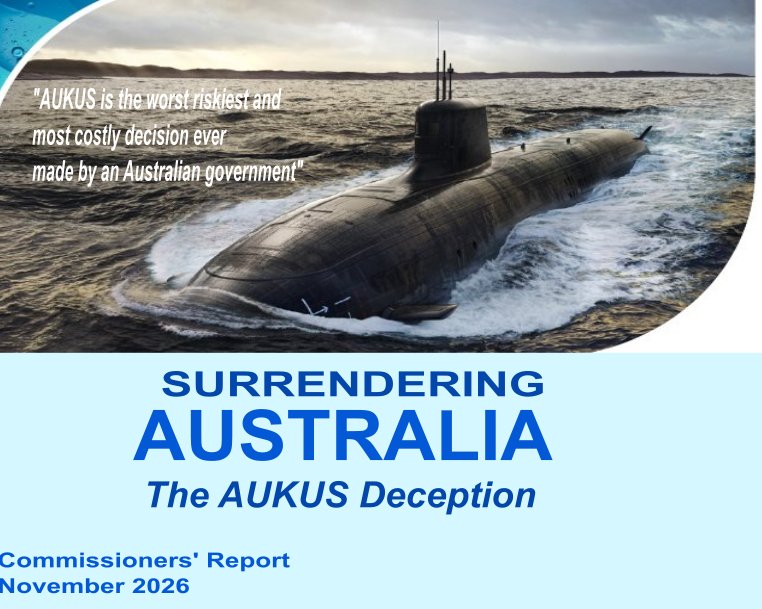
Read the Public Inquiry Report, the Commissioners’ report, Surrendering Australia: The AUKUS Deception is available to download for free at aukuspublicinquiry.com. Or just watch the replay of the National Press Club Luncheon.
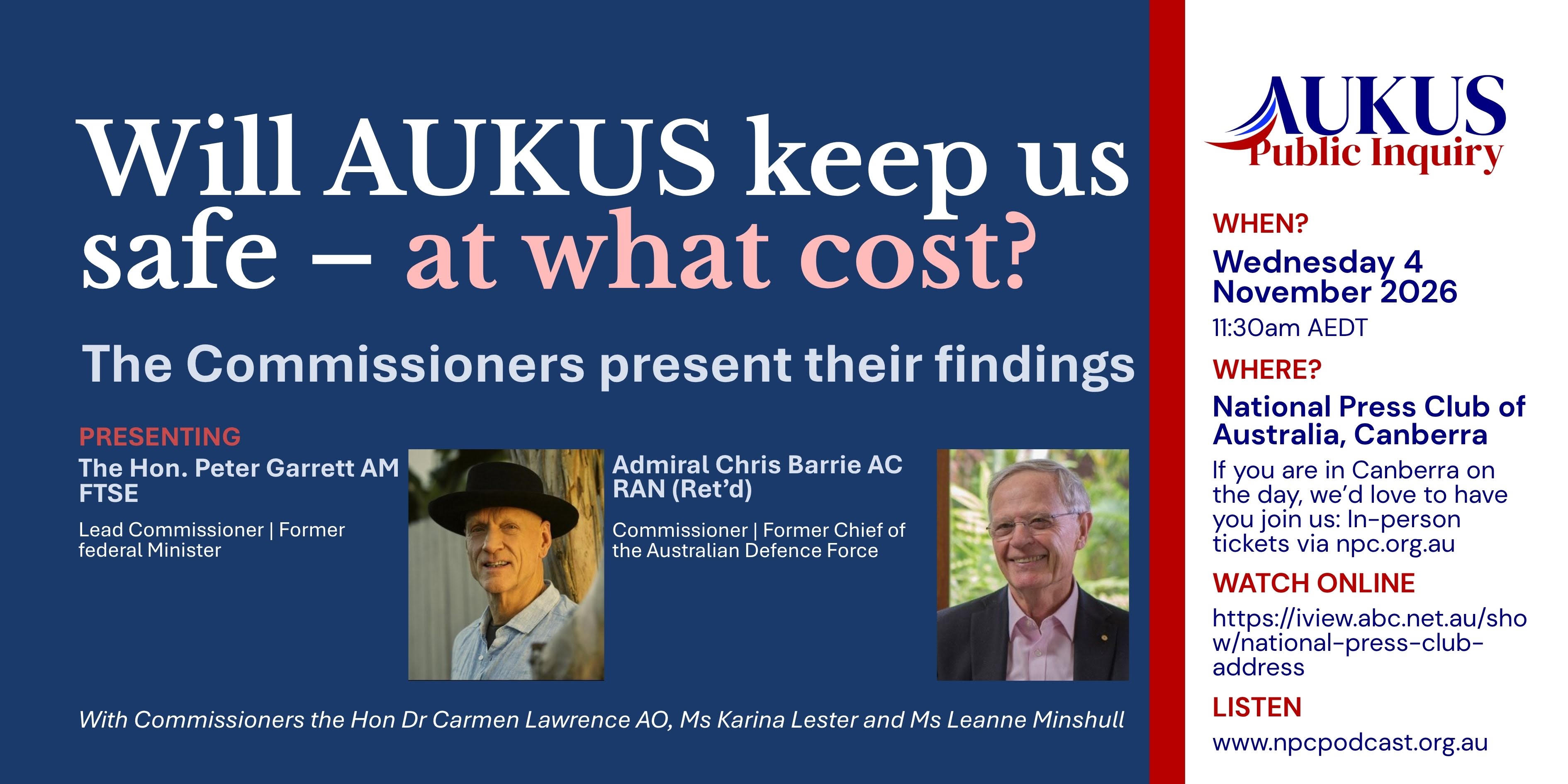
Will AUKUS keep us safe – at what cost?
the Commissioners of the AUKUS Public Inquiry presented their findings at the National Press Club of Australia in Canberra. iview.abc.net.au/show/national-press-club-address
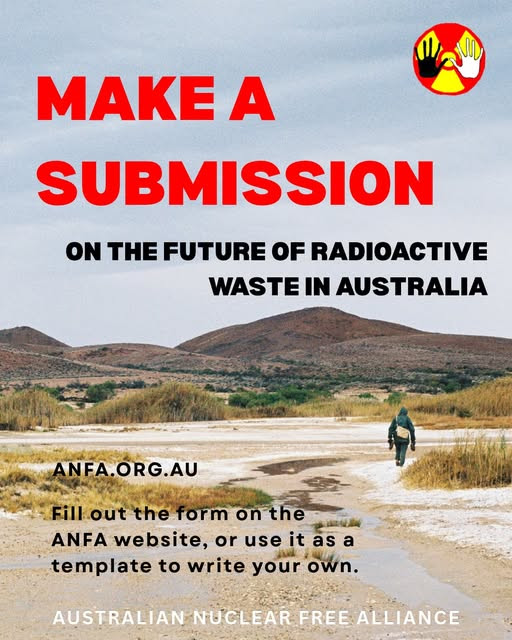
Submissions to the federal government’s new draft framework close on the 13th November 2026.
Australians deserve the truth
about
AUKUS – https://aukuspublicinquiry.com/

PETITION – To: Prime Minister Anthony Albanese and the Australian Labor Government

of the week – Australians for War Powers Reform (AWPR)
To see nuclear-related stories in greater depth and intensity


Leave a Reply