Titanic misconceptions that things will be OK
Last night I watched a terrific programme on SBS world television. It was all about the sinking of the Titanic, covering so many aspects never shown on TV before. I was struck by the atmosphere on the ship, in the early hours of the sinking, with many people, particularly the rich upper-class passengers, taking the whole process as something not really serious, rather fun even. Of course, not all of them saw it that way. But enough of them – to be able to have quite a good party on the upper deck lounge, and to regard the messenger calling them up on deck as rather a nuisance, an ignorant lower-class person. And indeed, some people just refused to leave their (temporarily comfortable) beds, on such a cold night.
And here was I, trying to get my mind away form the rather scary world news. I suppose I’d have been better watching some “reality” show, or that good old Australian standby – sport.
Anyway, the thing was – the Titanic story showed how people are inclined not to take a critical event seriously, not to worry about it, until it’s too late.
And lo and behold, the same sort of thing is happening now. Today DW reports Iran war: Israel hits Iranian heavy water nuclear reactor. The good old news.com.au writes ‘Worst case scenario’: Wall St craters, oil surges as nuclear sites hit’. The fascinating part of this coverage, as shown by that last headline, is that the financial aspect is the first priority.. Yeah, I know that the world economy is important, and it’s not a good thing to have Wall St stocks going down, and investors “mashing the panic button”. I’m not saying that this is a trivial matter. It’s just that drone or missile strikes on a nuclear facility could be a helluva lot more serious than a drop on the stock exchange.
We don’t need an actual nuclear bombing to create a massive environmental and health catastrophe, a drone strike can do that job.
Both articles focus on this economic crisis, paying barely lip service to the fearful physical danger of a nuclear site being exploded, or even just damaged. Israeli air strikes hit a nuclear research reactor in Iran’s Khondab region, and a uranium processing plant in Yazd in Central Iran. The reports hastened to tell us there was no release of radioactive material. How reassuring! We can focus on the main issue – the share prices.

Questions come to mind. Will Iran retaliate by striking Israel’s Dimona reactor and other nuclear sites? How come it’s so terrible for Iran to have legally permitted nuclear research facilities, but apparently OK for Israel to have nuclear weapons. Estimates of Israel’s nuclear warheads range from 90 to 200, but Israel “does not confirm or deny” its nuclear weaponry numbers. So that’s apparently OK.
Yes, we’re all anxious about our petrol and diesel prices, and naturally so. But the possible ramifications of these Israeli strikes on nuclear facilities add up to something more horrendous. I don’t want to rave on here about the health, environmental, social toll that will ensue, if the warring states decide to use this very convenient weaponry – no need to have your own expensive nuclear bomb, just send a few cheap drones to attack your enemy’s nuclear sites.
As with those rich passengers on the Titanic, it’s time that world leaders woke up.
How climate and renewables “disinformation networks” are fuelling a major national security threat
Rachel Williamson, Mar 24, 2026, https://reneweconomy.com.au/how-climate-and-renewables-disinformation-networks-are-fuelling-a-major-national-security-threat/
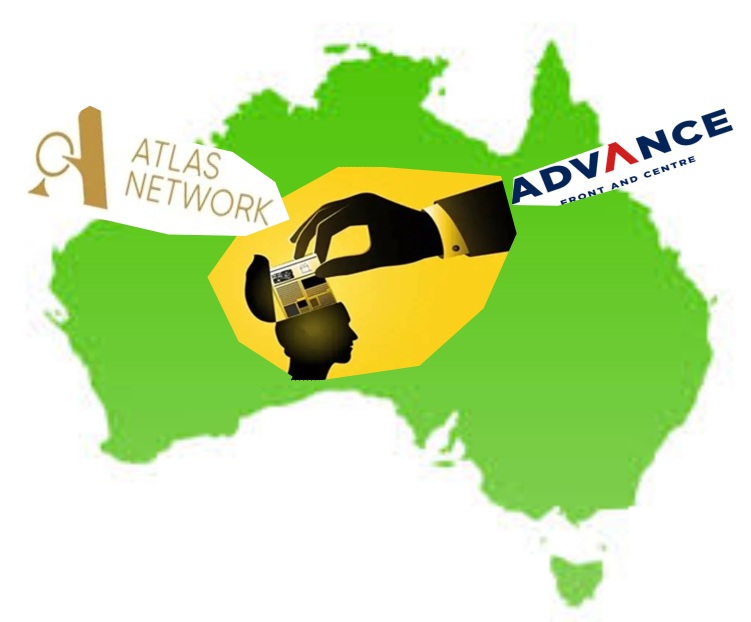
Climate information wars and fossil fuel dependency are national security threats that are undermining Australia’s ability to respond to crises like the Iran war, a new report says.
This battleground is actively undermining the country’s ability to reach energy sovereignty and protect Australians from external threats, says retired Australian Defence Force (ADF) admiral Chris Barrie.
“There has been a failure to understand how energy dependence on fossil fuels will cause both economic disruption and more perilous physical conditions for Australians,” Barrie said in a statement accompanying a new report outlining the scale of the threat.
“Now the two issues are colliding.
“We are facing an unprecedented energy crisis much worse by the world’s failure to face its fossil fuel addiction. Layered on top is a climate disinformation war globally and in Australia that is actively undermining the capacity to build a renewable, clean-energy future and curb coal and gas exports.”
The Climate Disinformation War report says Australia, and the world, have been engaged in an information war over climate change for at least two decades, as “anti-climate propaganda and disinformation networks” grew into multi-billion dollar permanent campaigns.
Today, power comes from dominating the information space and Australians’ perpception of the world is now warped by mis- and disinformation, says The Climate Disinformation War report author, intelligence analyst Anastasia Kapetas.
“This is no longer just a communications issue,” she said in a statement.
“It is a national security threat with consequences for Australia’s sovereignty, economic resilience, disaster preparedness, institutional trust and strategic autonomy. We are already seeing a drift toward authoritarian politics linked to climate denial.”
Responding to the scale of climate disinformation requires coordination across civil society and industry, and across security, economic, and governance institutions, Kapetas says in the report.
It calls for comprehensive anti-trust architecture, such as the current European Union Digital Markets Act, to stop tech platforms that amplify disinformation from becoming too powerful to regulate.
It also wants digital regulation that requires companies to take responsibility for online disinformation and other harms, and “urgent, enforceable” regulation of generative AI that can rapidly scale disinformation.
Marketing group Clean Creatives last year estimated the top 29 oil majors spent $US6.97 billion ($A9.9 billion) in 2024 on media management and PR.
Some of that was funnelled into astroturfing campaigns and monitoring environmental activists, as FTI Consulting was unveiled as doing in the US and as Coalition pollster Freshwater Strategy was exposed for last year by creating a so-called grassroots gas support group, or funding climate deniers.
In Australia, fossil fuel interests spent $7 million backing conservative politicians in the 2025 federal election, and links have been made between conservative think tanks espousing anti-renewable energy ideas with local and US-based fossil fuel donors.
They’ve created “a tidal wave of hostile messaging”, said California Energy Commission chair David Hochschild in Sydney this month.
Sadly, one of the culprits is Australia’s own Liberal and National parties, whose energy policies for two decades and claims of what renewable energy could, or would do despite evidence to the contrary, allowed disinformation and misinformation to flourish.
The impact of this wave of money and propaganda on Australians was made clear last year, when a Senate committee inquiry exposed just how deeply mis- and dis-information is now entrenched in this country, and how badly its damaging Aussie communities.
As Renew Economy managing editor Giles Parkinson put it, the Senate committee unearthed “harrowing evidence of abuse, threats, and intimidation – much of it driven by fear and loathing inspired by deliberate campaigns to demonise renewables”.
The media regulator has no powers to direct platforms or media outlets to take down inaccurate information, and community groups are being hit by coordinated and sophisticated social media attacks.
The anti-renewables “outrage machine” is even having a real impact on attitudes to Australia’s favourite technology, rooftop solar and home batteries, as noted by Populares boss Ed Coper at the EN26 conference last week.
Energy security starts at home
While some media commentators still scoff at the idea that renewables offer energy independence, governments and companies are taking note.
Last week, the UK fast-tracked balcony solar rules specifically to beef up energy security, and Australian electricity retailer Discover Energy finished a pivot that started after the 2020 Ukraine War-coal price spike to dump its gas licence to focus on solar-batteries and virtual power plants.
Nepal, Cuba and Pakistan are all deeply advanced in their own transitions, after country-specific crises over the years gave them few other choices.
Indeed, “homegrown” energy sources are now equated with security, says International Energy Agency (IEA) chief Fatih Birol.
“We have seen, in Europe since 2022, the phenomenal growth of renewables mainly driven by security concerns,” Birol said.
“We have more options to deal with [this] crisis [than during the 1970s oil price shocks].
“Renewables have come to maturity… batteries, these will be a big game changer in terms of solar and wind becoming an even bigger part of the energy sector.”
In a blow to latent hopes in conservative circles, Birol doesn’t believe the way out for Australia is nuclear – even though he is a big fan of the technology and it’s rising again after the last shock in 2022.
He urges Australians to be “very, very proud” of what the country has achieved with solar and home batteries as “not every country needs to be nuclear power”.
Rachel Williamson is a science and business journalist, who focuses on climate change-related health and environmental issues.
Israel wants to destroy Iran’s nuclear program. But should it have nuclear weapons itself?

March 25, 2026, Marianne Hanson, Associate Professor of International Relations, The University of Queensland, https://theconversation.com/israel-wants-to-destroy-irans-nuclear-program-but-should-it-have-nuclear-weapons-itself-278801?utm_medium=email&utm_campaign=The%20Weekender%20-%2028%20March%202026&utm_content=The%20Weekender%20-%2028%20March%202026+CID_09f9907cac66b0e5c3e3ca794f0c8c0c&utm_source=campaign_monitor&utm_term=Israel%20wants%20to%20destroy%20Irans%20nuclear%20program%20But%20should%20it%20have%20nuclear%20weapons%20itself
Israel’s avowed goal in the Middle East war is to prevent Iran from acquiring nuclear weapons. Yet, the double standard associated with this is hardly sustainable in the long run.
The worst-kept secret in the world of nuclear politics is that Israel possesses a formidable arsenal of nuclear weapons. It began developing these in the 1950s and reached a fully operational capability by the late 1960s.
Although Israel refuses to confirm or deny this fact, arms control organisations have assessed that the country has some 80–90 nuclear weapons.
In recent days, Iran targeted Israel’s nuclear facility in the southern town of Dimona, injuring more than 100 people. The head of the International Atomic Energy Agency (IAEA) called for restraint to avoid a “nuclear accident”.
A program shrouded in secrecy
There is much evidence to support the existence of Israel’s arsenal.
In 1963, then-Deputy Defence Minister Shimon Peres famously stated Israel would not be the first to “introduce” nuclear weapons to the Middle East. What this actually meant was spelled out a few years later by the Israeli ambassador to the US. For a weapon to be “introduced”, he said, it needed to be tested and publicly declared. Merely possessing them did not constitute introducing them.
Several whistleblower accounts, intelligence reports and satellite imagery confirm the extent of the Israeli program and its capabilities.
More recently, Amichai Eliyahu, a far-right minister in Prime Minister Benjamin Netanyahu’s government, alluded to using nuclear weapons in Gaza – a tacit acknowledgement of Israel’s capabilities. He was later reprimanded by Netanyahu.
And in 2024, Avigdor Lieberman, a former defence and foreign minister, threatened to “use all the means at our disposal” to prevent an Iranian nuclear weapon. He added: “It should be clear at this stage it is not possible to prevent nuclear weapons from Iran by conventional means.”
It is important to remember that Israel not only developed its nuclear weapons in secret – employing subterfuge, misleading claims, and even the suspected theft of bomb-grade nuclear material from the United States – it has also rejected international inspections of its facilities and refused to join the nuclear Non-Proliferation Treaty (NPT). This treaty has been signed by almost every state in the world.
Concerns over Iran’s program
Iran, meanwhile, has never had a nuclear weapon, though its program has been the source of international concern for more than a decade.
In 2015, Iran signed the Joint Comprehensive Plan of Action (also known as the Iran nuclear deal) with the US, Russia, China, France, the United Kingdom and Germany, which imposed restrictions on its nuclear program in return for sanctions relief. This included inspections by IAEA monitors.
However, Trump scuppered the plan in 2018. Since then, Iran has enriched uranium to levels well above those needed for its energy program. And last year, the IAEA said Iran was non-compliant with its nuclear nonproliferation obligations for failing to provide full answers about its program.
But since the current war began, US and international officials have confirmed that Iran was not close to developing a nuclear weapon and did not pose an imminent nuclear threat to the US or Israel.
In short, there is no truth to the claim, made for almost 40 years by Israel, that Iran is “weeks away” from acquiring the bomb. The IAEA made clear two years ago that a nuclear weapon requires “many other things independently from the production of the fissile material”.
Getting close to nuclear threshold status, but stopping short of developing an actual bomb, likely provides a fall-back position for Iran. If Iran were to feel pushed or threatened, it could, in time, accelerate its energy program towards a weapons program. Or it could use this enriched uranium as leverage in negotiations with the US.
Nuclear powers need to show restraint
This brings us back to a major question: can double standards about who can and cannot develop a nuclear weapon be sustained indefinitely?
Israel’s nuclear arsenal has been tacitly accepted by the West, implying there are “right hands” and “wrong hands” for nuclear weapons. But this is a risky and ultimately unsustainable position.
As Australia’s Canberra Commission noted in 1996, as long as any one state has nuclear weapons, other states will want them, too.
This is precisely why many states voted in 2017 to adopt the UN Treaty on the Prohibition of Nuclear Weapons. The treaty’s purpose is to make the possession, threat and use of nuclear weapons illegitimate for all states, not just for some, on the basis of international humanitarian law.
Signed by 99 states so far, the treaty recognises that nuclear weapons promise massive destruction to civilians and combatants alike, and that even a “small” nuclear war will cause catastrophic damage.
At the end of the day, a consistent approach to nuclear weapons is more likely to prevent nuclear proliferation (by Iran or other states) than the current mess, where some states are tacitly permitted to have these weapons (and wage war on others), while other countries are not.
It is possible we are at a tipping point when it comes to nuclear proliferation, with some countries suspected of wanting to develop nuclear weapon capabilities. This includes US allies South Korea and Japan.
Are the nuclear weapons states ultimately willing to accept the UN Treaty on the Prohibition of Nuclear Weapons and disarm in the interest of global peace and security? If they don’t, then the current trajectory of keeping one’s own nuclear weapons and waging war against states that don’t have them will only weaken an already crumbling rules-based international order.
Your money, their rules. Super funds support Israel war machine
by Andrew Gardiner | Mar 24, 2026, https://michaelwest.com.au/your-money-their-rules-super-funds-support-israel-war-machine/
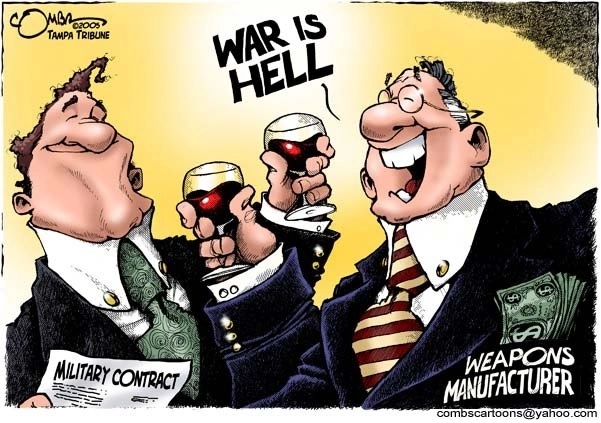
Australian industry super funds are investing in companies involved in the Gaza genocide, and unions are not demanding they stop. Andrew Gardiner reports.
Protected by rules putting a member’s “best financial interests” over ethical, environmental or social considerations, the vast majority of Australia’s industry superfunds are all-systems-go on pouring money into projects connected to the decimation of Gaza, dispossession in the West Bank, and bombing Israel’s neighbours.
An MWM investigation has confirmed that just two of Australia’s 20 industry super funds are making modest changes to their investment portfolios. The other 18 remain invested in Israel’s war machine, with Australian Super alone funding corporations like Elbit Systems (drones), ICL Group (white phosphorus) and Palantir (AI/software for weapons systems).
This, even as the IDF is again using the banned white phosphorus in Lebanon, in which Australian super is invested.
The two funds which did divest – Vision Super and HESTA – still have some money tied up in Israeli projects in Gaza and the West Bank. “HESTA and Vision divested from Israeli banks (but) they still have money in companies listed on a UN database as operating from Israel’s illegal settlements”, Molly Coburn from the Australia Palestine Advocacy Network (APAN) told MWM.
Activist Jill Sparrow says even those modest changes could be quietly reversed “as soon as we look away”. “Divestment isn’t set and forget (and)
“there’s a lot of money to be made in dropping bombs,”
“so super funds could be sorely tempted”, she said.
If you’re in a union-partner industry super fund and have a problem with genocide, chances are you’re out of luck on the socially-conscious investments front. Unions routinely route members’ super into partner funds with little regard to the social or environmental impact when it’s invested.
Ethics ignored
Under 2005 rule changes, union members can transfer their super to retail super funds, Australian Ethical and Future Group, which shun companies whose work enables the carnage in Gaza. These funds show it can be done, so why have industry super funds not done it?
Instead, unions aligned with the Labor Party, under pressure from Zionist lobbyists, are content to send members’ money to super funds that aid the Israeli war effort, funding what the UN calls “a moral stain on us all”.
Like so many other ACTU affiliates, the United Workers Union (UWU), with 151,000 members, talks a good game on Israel’s actions in Gaza, but hasn’t put its members’ super where its mouth is. MWM’s efforts to ascertain how much the union had done to lobby its super funds – HostPlus, Australian Super and HESTA – yielded nothing.
What we learned from UWU members is that in early 2024, a rank-and-file motion including divestment was passed at the council level in various states before being “soft-blocked” by union officials, who reportedly sat on it. Later that year, a more formal “Boycott, Divestment and Sanctions” (BDS) motion, requiring real action compelling divestment by the super funds, was defeated.
“Social issues are bread and butter issues, and funding war is a dead end. Our leadership – who are on the boards of HESTA and Australian Super – (need) to stop hiding behind ‘fiduciary duties’ to fund death and destruction”, UWU delegate (early childhood education) Nicki Toupin told MWM.
Fidiciary duties
Fiduciary duty doesn’t just provide cover for unions putting the bottom line first. “In the interests of members”, it’s cited time and again by super funds whenever there’s pressure to divest.
Buttressing their argument is case law precedent, which will raise the hackles of Australian republicans: Cowan v Scargill, a UK decision dating back to the Thatcher years (1985), helped redefine a member’s “best interests” as “best financial interests” (emphasis added). 2021 changes to fiduciary duty here in Australia reflect that new emphasis.
How do you define “best financial interests”? Wouldn’t a stable Middle East be good for the world’s economy, providing investment opportunities for our super funds that don’t involve genocide?
“Egregious war crimes, crimes against humanity and devastating environmental impacts mean you can argue that the financial interests of super fund members are undermined by investments that support the Israeli military”, Claire Parfitt, Senior Lecturer in Political Economy at Sydney University, told MWM.
It seems our super funds, and their investment managers, are ignoring these arguments in the quest for a quick return, their investment in the Israeli war machine rendering Middle East instability something of a self-fulfilling prophecy.
There are, of course, equal and opposite rules against super funds investing in projects “maintaining the situation created by Israel’s illegal presence in the occupied Palestinian territory”. But some rules, it seems, are more equal than others; successive Australian governments barely lift a finger to enforce international court rulings, human rights obligations and social considerations (ESG), which might trouble the bottom line.
To quote a famous movie line, “a foul is not a foul unless the ref blows his whistle”. The failure to enforce international and ethical obligations means super funds can go on hiding behind “fiduciary duty”; at least 18 of our 20 industry funds are doing just that.
The “fiduciary duty” chestnut, and “soft blocking” tactics by union officials aligned with an ALP which quietly supports the Gaza carnage, have rendered meaningful “change from within” on divestment all but impossible. So groups like ASU for Palestine and UWU 4 Palestine are taking matters into their own hands.
Following a 1000-strong “community picket” of the Israeli-owned ZIM Ganges cargo ship at Port Melbourne, ASU for Palestine started looking at divestment as a way to hit Israel where it hurts. After ASU secretary (now Senator) Lisa Darmanin, then a board member at Vision Super, inevitably advised ASU for Palestine of its “fiduciary and statutory obligations” (adding it wasn’t legal for her to “act as (a) representative” of ASU members on divestment) it became clear something more compelling was called for.
What did ASU for Palestine do? It began a campaign to raise awareness on divestment, suggesting ASU members “switch their super fund” elsewhere, while lobbying to change the default super fund in enterprise agreements to none other than Australian Ethical.
It’s amazing how the threat of losing thousands of ASU members (and untold millions) can motivate a super fund to abandon “fiduciary” rhetoric and do the right thing. A couple of months later, amid much fanfare at the ASU conference, Vision Super announced its limited divestment, full details of which are expected by the end of this month.
These kinds of ‘direct action’ appear to actually work, although (per APAN) the extent of Vision’s divestment was limited. “If it’s not good enough, we’ll just have to go again”, Sparrow told MWM.
For their part, UWU 4 Palestine sees divestment as a major social cause that it and Members First, a grassroots change ticket at upcoming union elections, can get their teeth into. “Building a rank and file, fighting union that isn’t remote from members gives us the power to push for the kind of world we want, not just on workplace issues but in investing our money in something other than genocide”, Toupin told MWM, adding
That’s right. Direct Action works.
The Inheritance of Fear: From the Cold War to Trump’s World
24 March 2026 Michael Taylor, https://theaimn.net/the-inheritance-of-fear-from-the-cold-war-to-trumps-world/
Even as children, we knew something was wrong. The adults spoke in hushed tones. The news carried a sense of urgency. At school, the playground chatter wasn’t about games – it was about war. The kind that could end everything.
By my final year, the fear had become personal. Among the boys, we spoke about conscription – about being called up to fight in the Vietnam War. It wasn’t abstract anymore. It was waiting for us.
That was the world we inherited.
And now, it seems, the next generation is inheriting something disturbingly familiar.
Recent polling shows that fear of a major global conflict is no longer a fringe concern. In the United States, nearly half of respondents – 46% – believe a world war is likely within the next five years, with similar fear echoed across Britain, Canada and France. Across Europe, between 41% and 55% of people think another world war is likely within a decade.
Among younger people, the anxiety runs deeper still. A global Red Cross survey found that almost half of millennials believe a third world war is likely in their lifetime. And here in Australia, new research suggests that young adults are among the most anxious about national security threats, with many expecting conflict within years rather than decades.
This is not abstract fear.
It is generational.
But there is a difference between then and now.
The Cold War was terrifying, but it was also structured. Two superpowers, locked in a tense but calculated standoff. There were rules – dangerous ones, but rules nonetheless.
Today, the fear feels less ordered. Less predictable. More dependent on personalities than systems.
And that is where Donald Trump enters the picture.
To his supporters, he is decisive – a leader unafraid to act. But to many others, particularly younger people watching from a distance, he represents something far more unsettling: volatility. A willingness to escalate, to threaten, to test boundaries not as a last resort, but as a demonstration of strength.
In some international polling, even allied populations now cite the United States itself – under Trump’s leadership – as a potential source of global instability.
That perception matters.
Because fear is not driven solely by events, but by expectations – by what people believe might happen next.
And for a generation raised on a constant stream of crisis – pandemics, climate change, economic instability, and now rising global tensions – the idea that a single leader’s impulses could tip the balance is deeply unsettling.
Unlike our childhood, there is no buffer. No evening news that ends at six o’clock. No space between events and reaction. Every threat is immediate. Every escalation is live-streamed. Every rumour amplified.
There is no off switch.
And so the fear settles in – not always as panic, but as something quieter and more corrosive. A sense that the future is unstable. That the world is being shaped not by steady hands, but by unpredictable ones.
We have seen this kind of fear before.
We lived through it.
But today’s version carries an added uncertainty – not just about what might happen, but about who might make it happen.
For younger generations, that may be the most unsettling thought of all.
The high costs of Albo’s rubber-stamp war in the Middle-East
by Stuart McCarthy | Mar 19, 2026, https://michaelwest.com.au/costs-of-albos-rubber-stamp-war-in-the-middle-east/
While the “Iran war” is fuelling Israel’s desire for Middle East chaos, Australia finds itself in strategic quagmire of confused priorities and escalating energy costs. Stuart McCarthy reports.
According to the 2023 Defence Strategic Review, Australia is confronting the “worst strategic circumstances since WWII.” A need to “pivot” from pointless “forever wars” in the Middle East towards the Indo-Pacific and counter a rapid build-up of Chinese military power evidently warrants an overhaul of our “not fit for purpose” defence force, expenditure of up to $368B on AUKUS submarines and a plan to enter the “missile age.”
No mention is made in that “strategic” document of this country’s most serious vulnerability. Namely, our systemic exposure to exactly the kind of global oil shocks triggered by the latest Middle East military fiasco.
Our lack of preparedness for these shocks is the result of at least two decades of inexcusable incompetence across the political spectrum.
The reality we face is that Australia has been caught with its pants down during a seismic but foreseeable shift in the global geopolitical landscape. The fallout from the current Middle East war will hit us hard, and we are not prepared.
Even if the Strait of Hormuz – the vital artery for 20% of global oil supplies – is miraculously reopened to merchant shipping within the next few weeks, an economic recession is already a safe bet. The 1979 oil shock saw a severe recession across industrialised countries. Australia saw a double-dip recession, and unemployment rose to more than 10%.
Oil dependency
Australia produces less oil now than it did in 1979, but demand has doubled over the same period, in line with economic growth. We are now 90% dependent on imported petroleum fuel.
The 20 years needed to transform our road transport fleet have been squandered, and we are at the tail end of a jet fuel-dependent global air transport system. The demand-led Covid recession saw a 7% decline in domestic petroleum fuel consumption, mostly as a result of the near total shut down of the aviation sector, but we now face a collapse in the availability of globally traded petroleum fuels, affecting the entire transport sector.
And there’s more. As much as two-thirds of the Urea fertiliser used by Australian farmers also usually comes through the Strait of Hormuz. There are already shortages of some essential medicines and other manufactured goods, which rely on fragile, just-in-time global supply chains.
The stability of our financial system remains as dependent on the assumption of perpetual economic growth as it did before the 2008 financial crisis. Oil supply and economic shocks such as these are blithely dismissed as “externalities” in business-as-usual finance and economic models. Much of the financial capital we need to properly transform our economy to a sovereign resilience model is sure to evaporate in equities and finance markets.
This shock will undoubtedly be much worse than what we saw in 1979.
“And who will pay the price? In short, we all will.”
The cost of war
Since the end of WWII, the human costs of Australia’s wars have been carried solely by the tiny proportion of our community who serve in the defence force, their families and the populations of countries “over there.”
For most of us, mere curiosities on the evening news or social media feeds.
Within military circles, Australia’s contributions to US-led wars in the Middle East and elsewhere have often been disparaged as niche wars. Relatively small contingents of “niche” capabilities were assigned to US-led military coalitions with little impact on overall strategic outcomes other than legitimising US hegemony, while minimising domestic political risk and accountability in case things went wrong.
Given this government reflexively committed us to this war with even less forethought than previous governments in the last several wars, it would more accurately be described as Albanese’s rubber-stamp war.
Within hours of the first Israeli and US air strikes against Iran on 28 February, Albanese regurgitated the Israeli pretext that Iran posed an imminent nuclear threat. This pretext has already been publicly debunked by the US Director of National Intelligence.
Unprovoked attacks
For the second time in less than a year, the attacks were launched even as US officials were negotiating with the Khamenei regime over its uranium enrichment program. Iran would be irrational to come back to the negotiating table because that is now proven indicator of the next Israel-US aerial bombardment campaign.
“The degree of Israel-US incompetence on display here is breathtaking,”
even before any moral or legal considerations are made.
Now facing a direct existential threat, the Khamenei regime, on the other hand, has responded with a coherent strategy of lateral escalation, for which they have been preparing since at least 2003.
From their perspective, to “win” this war, all they need to do is survive.
Their strategy is to inflict severe economic pain on the global economy by closing the Strait of Hormuz until the US eventually comes to its senses, and to drive a wedge between the US and the Gulf states, which host permanent US military bases that project power across the region.
These bases have been a growing source of tension in the Middle East since the Iranian revolution in 1979 and the Russian invasion of Afghanistan later in the same year. The US at the time saw a Russian presence in Afghanistan as a threat to its vital national interests in maintaining access to Middle East oil exports, responding with a permanent military presence in the Gulf states under its “Carter doctrine.”
Over time, this US support also allowed the Gulf states and Israel to contain the perceived threat to regional stability from the Iranian regime.
Now, almost fifty years later and with the NATO-led Afghanistan and Iraq wars in the rear view mirror, US bases nonetheless remain, part of a self-perpetuating escalatory spiral with Iran.
Iran will not be content with Israel and the US merely stopping their attacks. They are now demanding that US bases in the Gulf be shut down permanently. The Gulf states – despite their serious diplomatic efforts to establish stable relations with Iran – are trapped in the middle of a war they didn’t want, and they have no clear way out.
War out of control?
On Wednesday night, Israel bombed South Pars, the world’s largest gas field jointly owned by Qatar and Iran. Iranian officials have vowed to launch retaliatory strikes against gas and oil infrastructure elsewhere in the region. This marks the next step up the escalatory ladder, and it means the duration of the energy and economic shock will be measured in years, not months.
Trump no longer has control of the situation, even if he ever did. Netanyahu has for many years envisaged not merely regime change but the fracturing of the Iranian state as a strategic win for Israel, and he – not Trump – is calling the shots.
For Australia’s part, our rubber-stamp contribution of an air force Wedgetail surveillance aircraft, ostensibly to help defend the United Arab Emirates from incoming Iranian missiles, has actually played into the hands of the Iranian strategic narrative.
Regardless of Foreign Minister Penny Wong’s nauseating semantics over this aircraft playing a “defensive” role,
“Australia is now party to the war with Iran,”
from our own base at Al Minhad in the UAE, which has already been targeted by the Iranians at least twice. We are one of only a small handful of Western countries with a permanent military presence in the Gulf, a presence that in and of itself is helping to fuel the escalatory spiral.
While all this plays out “over there”, for the first time in almost a century, some of the human cost of this war will be carried by the wider public here at home. Costs for fuel, food and utilities will continue to soar, as will mortgage payments and rents. Savings and investments will take a hit. Many people will lose their jobs. Some will lose their homes.
Among them are those who used to be considered Labor’s core constituents – the “Aussie battlers” who work hard but struggle to make ends meet – before the “workers’ party” abandoned its principles in favour of banal neoliberal economic rationalism, political careerism and mindless identity politics.
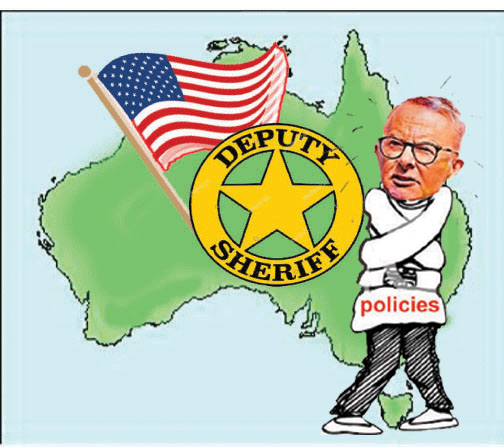
We can only hope that this shock might at last see a consensus emerge for a rational, sovereign, independent national security and foreign policy. Our policies of vassal state subservience to the US and, in this case, Israel are beyond unfit for purpose. They are directly undermining our vital national interests. In the meantime, we’re in for a rough ride.
Stuart McCarthyStuart McCarthy is a medically retired Australian Army officer whose 28-year military career included deployments to Afghanistan, Iraq, Africa, Indonesia and Papua New Guinea. Stuart is an advocate for veterans with brain injury, disabilities, drug trial subjects and abuse survivors. Twitter: @StuartMcCarthy_
Does SMR Stand for Spending Money Recklessly?

March 23, 2026, Susan O’Donnell, M.V. Ramana, https://www.theenergymix.com/does-smr-stand-for-spending-money-recklessly/
What did Canadians get for the $4.5 billion in public funding spent on small modular nuclear reactor (SMR) activities? Our new report assessing SMR development in Canada found the results underwhelming, to say the least.
Published in 2018, A Call to Action: A Canadian Roadmap for Small Modular Reactors recommended that the federal government fund SMRs and undertake other support measures. The report’s first “expected result” was that “one or more SMR demonstration [projects would be] constructed and in operation by 2026.” Our report in this milestone year covers not only this expected result, but also what the federal government has provided in funding for SMRs in Canada.
For many years, the “Micro Modular Reactor” (MMR) proposed for the Chalk River nuclear site in Ontario was to be this first demonstration. Back in 2019, the project proponents applied to the Canadian Nuclear Safety Commission (CNSC) to prepare the site for construction.
Fast forward to 2024: instead of the reactor built and being prepared to go into service, CNSC announced it had “paused all work” on the MMR project. Later that year, the company leading the project, Ultra Safe Nuclear Corporation, filed for bankruptcy protection in the United States, leaving unpaid debts of more than $16 million. That total included $641,307 to the CNSC and lesser amounts to dozens of Canadian small businesses.
In 2018, the New Brunswick government lured two start-up SMR companies into the province from the U.S. and the United Kingdom—ARC and Moltex—giving each $5 million and help to apply for funding from federal taxpayers. The SMR strategy called for two “advanced” reactor designs, which were not cooled with water, to be built at NB Power’s Point Lepreau nuclear site. Both designs have serious problems that have been documented extensively (for example, in the Bulletin of the Atomic Scientists) .
Over the next five years, the federal government handed over more than $97 million to develop the two SMR designs in New Brunswick, and the provincial government added more than $31 million to the project. Yet in late 2025, New Brunswick’s Energy Minister said the government would no longer wait for the ARC and Moltex designs because the province could not take on the risk of first-of-a-kind reactors. The millions of dollars in subsidies are essentially a write-off, funding highly paid positions at these companies at the public expense.
Of the 10 SMR designs in Canada since 2018, only one is in development. Most of the public subsidy money for SMRs—$4.025 billion—has been spent developing this reactor design, the BWRX-300, to be built at the Darlington nuclear site on Lake Ontario. As of early 2026, workers are digging a deep shaft for the reactor vessel. Sometime this summer, we can expect to see concrete being poured into the ground.
Four billion dollars is a lot of money, but nowhere near enough to pay for the four BWRX-300 reactors planned for the site. Even the first BWRX-300 reactor is expected to cost more—$6.1 billion—and the whole project will run at least $20.9 billion. It final bill could come in far higher, since the vast majority of nuclear power projects have historically overrun initial cost estimates.
The high costs for the SMR compare poorly with other options for electricity generation. For example, estimates by Australia’s Commonwealth Scientific and Industrial Research Organisation (CSIRO) show that each unit of electrical energy from SMRs would be far more expensive that a corresponding unit from solar and wind power plants, even when the cost of storage technologies and other means of accounting for renewable energy’s variability are included.
CSIRO has been undertaking an annual cost estimate in collaboration with the Australian Energy Market Operator and its reports involve extensive consultation with various stakeholders. The research agency’s analysis is informing an active debate under way in Australia to determine if the country should embark on nuclear energy. There is no corresponding effort at rigorously computing the costs of different kinds of generating energy from different technologies by any official research agencies in Canada.
Overall, the report’s analysis found little interest in SMRs among banks and other sources of private capital. When measured in terms of their ability to generate power, SMRs are more expensive than big reactors. Given the high costs, the report suggests that exporting significant quantities of SMRs from Canada is only a slim possibility.
Susan O’Donnell and M.V. Ramana are authors of the report on SMRs in Canada. O’Donnell is Adjunct Research Professor and lead investigator of the CEDAR project at St. Thomas University in Fredericton. Ramana is Professor; Simons Chair in Disarmament, Global and Human Security; and Director pro tem of the School of Public Policy and Global Affairs at the University of British Columbia in Vancouver.
Israel’s primary role in Iran war scrubbed from mainstream media

By Walt Zlotow , 25 Mar 26, https://theaimn.net/israels-primary-role-in-iran-war-scrubbed-from-mainstream-media/
No Israel, no Iran war. That fact is AWOL from any coverage of criminal US, Israeli war destroying Iran, US Gulf States bases and possibly the world economy.
Destroying Iran as a hegemonic rival preventing their Middle East expansion of Greater Israel has been Israel’s objective for decades. But the small country of Israel, without billions in US firepower and participation could never accomplish their cherished goal. What to do? Put tremendous carrot and stick pressure on Donald Trump to achieve Israel’s Middle East supremacy.
They came close to getting George W. Bush to take out Iran after Bush demolished Afghanistan and Iraq back in 2003. But Bush stopped his war-crazed Veep Dick Cheney from pulling the Iran war trigger.
Obama was a huge problem for Israel. Instead of attacking Iran he made peace with it… or tried to. His leadership in creating the 2015 Joint Comprehensive Plan of Action (JCPOA) put the end to any concern that Iran was developing nuclear weapons. Which they never were. It should have stopped Israel’s lust to destroy Iran. But it didn’t. Israeli Prime Minister Benjamin Netanyahu embarked on a relentless propaganda campaign to destroy the JCPOA.
His dream was realized when Trump succeeded Obama in 2017. A year later, Trump, likely following Netanyahu’s orders, withdrew from the JCPOA, putting Iran regime change back in play.
When Biden succeeded Trump in 2021, Netanyahu garnered another complacent ally in the White House. Biden did nothing to rejoin the JCPOA and normalize relations with Iran. But the Israeli genocide in Gaza, fully supported and funded by Biden, put Iran on the back burner.
Enter Donald Trump – back in power in 2025. Within 9 months he secured a ceasefire in Gaza. Palestinian genocide switched places with Iran on the forefront of destruction. Iran moved into Trump’s crosshairs to please his Israeli masters.
Had Harris succeeded Biden, likely no Iran war. Unlike Trump, Harris was neither as fully funded by the Israel lobby nor possibly subject to Israeli blackmail threatening to expose Trump’s peccadillos.
The war against Iran:Lessons still unlearned
By William Briggs | 26 March 2026, https://independentaustralia.net/life/life-display/the-war-against-iran-lessons-still-unlearned,20853
The dreams of the U.S. President, that it would all be over in days – that the Iranian people would rise against their tyrannical regime – is now a nightmare that Trump has visited upon the world.
The global economy is on the brink of disaster as oil dries up. America and Israel have further isolated themselves from world public opinion and, apart from an ever- shrinking clique of semi-vassal states like Australia, Trump appears to be alone and increasingly dangerous.
The war offers a great many lessons, but while life and history can be great teachers, there seem to be precious few pupils ready to learn those lessons. This applies equally to apologists for U.S. power, to governments of all stripes and to many of those who inhabit the Left and lay claim to Marxist credentials.
The war was never about “liberating” the Iranian people from the right-wing theocracy. It was about securing a compliant regime that would ensure the flow of oil and to make sure that the USA, as a fading imperial power, maintained global hegemony — both politically and economically.
The slogan that accompanied the wars of aggression against Iraq, that tore Libya apart and which laid waste to so much of the Middle East was simply, No Blood for Oil! The years have slipped by, and yet the same foul motivation for despoiling the globe and destroying a people remains.
Our mainstream media know this to be true, even as the “story” turns its focus to the retaliation by Iran and to the oil pressure that the blocking of the Straits of Hormuz entails. The same media focuses on potential oil shortages, and rightly so, but seems less keen to link that invasion to the fact that people are paying stupid prices for petrol and diesel.
Fewer voices can be heard that would remind the people of how the war started and who is responsible. That has become largely the responsibility of the Left — the Marxists, the campaigners against war and imperialism.
This is as it should be, but something is very wrong. Marxism is quite clear that economics is the defining factor and that politics works with and responds to economic demands. The war, then, can only be understood from an economic perspective. But is it being understood in this way? Sadly, no.
Some see it as a political gamble by a beleaguered and dangerously unhinged U.S. President. Some portray it as a means, by Israel, of destroying any potential risk to its domination of the region. Some come a step closer by recognising the strategic desire to weaken China, as it is a principal customer for Iranian oil.
Any and all of these considerations are enough to allow blame to be sheeted home to the USA and Israel, but there is a deeper, more worrying aspect to this. The United States has been and remains the single biggest military force and greatest economic power that the world has seen. It is, as the Marxist Left will say, an imperialist power. It is also a declining power.
For decades, its main preoccupation has been how to hold back the rising tide of its one great rival. China’s rise, accompanied by a global capitalist economy that has run out of ideas and resilience, ensures that wars are either finishing, beginning, or in the planning stage. A failing economic structure is driving the world to the point of no return. The war against Iran is one battle in this endless spiral into decay. The USA, as the central power in the capitalist global economy, is more than willing to destroy entire nations in its quest to keep the sinking ship afloat.
No crime is too much. The U.S. bombing the girls’ school in Iran, the Israeli destruction of oil facilities on the edge of Tehran that have led to acid rain and an unimaginable civilian health disaster, sicken all reasonable people. But those who plan such actions are not among the reasonable.
These acts need to be condemned. Governments need to show at least a modicum of decency. Our Prime Minister needs to stop slinking in the shadows and act. He needs to denounce such actions. He needs to find the courage to say “No!” and to work to secure the natural resources needed to keep Australia functioning. This is unlikely. Our political structures are such that we remain totally subservient to the demands and interests of the USA..
Those whose anger compels them to take to the streets deserve better than the Babel that has become the protest movement. The most recent action in Melbourne, which was dominated by ever more shrill denunciations of Israel, while mention of the USA and its causal responsibility for the war was at best an afterthought. Protest has merit, it is necessary and has purpose. It also needs focus, if it is to have either merit or purpose.
Protest is also about winning the hearts and minds of people. Sound and fury might be a therapy for some, but numbers count and numbers must grow, people must be educated, encouraged to talk to others, to build a movement that can go beyond noise.
Part of that building process must include the raising of collective consciousness. It must be able to show and convince people that this or that crime of the USA, of Israel, of imperialism, is not isolated, or in any way an aberrant thing, but is a symptom of a deeper, structural crisis. It is not enough for the ideologues to make demands that cannot be achieved. The protest movement, the anti-war movement, should aim at providing a vehicle, a voice for those who want something better than news screens full of war stories and a Federal Government pathetically marching to the fifes and drums of a fading U.S. empire.
European Union leaders have been prepared to stand back a little; to say that the war is not their war. It is hard to imagine an Australian government being daring enough to question anything that comes from Washington. As the sun sinks on U.S. hegemony, Australia seems ready to go down with the American ship.
UK’s Astute nuclear submarine timeline is very unlikely to be met.

Brief Update on the SSN Programme
17.03.2026, https://www.nuclearinfo.org/article/brief-update-on-the-ssn-programme/
The Astute project has the objective of delivering conventionally armed, nuclear-powered submarines for the Royal Navy, otherwise acronymised as SSNs. Seven submarines are planned to be delivered, with five currently operational: HMS Astute, HMS Ambush, HMS Artful, HMS Audacious, and HMS Anson. During February, HMS Anson arrived in Australia at HMAS Stirling. This visit was intended to be for maintenance and a symbolic demonstration of the trilateral AUKUS partnership between the UK, US, and Australia, which aims to develop nuclear-powered submarines with advanced conventional capabilities. AUKUS submarines are planned to succeed the Astute class. The sixth Astute-class submarine, HMS Agamemnon, was commissioned into the Royal Navy and completed its first dive last year, while HMS Achilles is currently under construction. The seven Astute submarines were once hoped to be delivered by the end of this year, but this timeline is very unlikely to be met.
This reflects the persistent challenges that have long bedevilled submarine construction in the UK, including delays, technical issues, accidents, and rising costs. HMS Anson itself for instance was delayed (among other factors) due to setbacks with HMS Audacious, while the 2024 fire in Barrow, the main shipyard for manufacturing the UK’s nuclear submarines, will further delay progress on the final Astute submarine. Also, AUKUS may generate geopolitical tensions among its partners. A US Congressional report earlier from this year has raised the possibility of withholding submarines from Australia due to concerns that the sale may divert US submarine capacity from a potential conflict with China. Meanwhile, some analysts question the strategic trade-offs of deploying HMS Anson to the Indo-Pacific, given the UK’s defence commitments in Europe and the Atlantic. These issues point to dual risks facing the SSN programme: first, achieving successful and timely delivery, and second, achieving agreement among allies over its strategic objectives and operational use.
Trump is the most dangerous man in the world

By Mark Beeson | 21 March 2026, https://independentaustralia.net/politics/politics-display/trump-is-the-most-dangerous-man-in-the-world,20838
Trump’s Iran war raises fears of global conflict — while allies stay silent and diplomacy collapses, writes Mark Beeson.
U.S. PRESIDENT DONALD TRUMP is the most dangerous man in the world. Why are we supporting him?
Many people were concerned about what a second Trump presidency might look like, but it’s uncontroversial to claim that it’s much worse than even the gloomiest pessimists feared.
It has been plain for a long time that Trump has little regard for the truth and is determined to silence independent media. But the one thing his supporters and the world in general might have hoped for was that he wouldn’t have gone back on his promise to not start unnecessary, ill-conceived wars, especially in the Middle East.
And yet, not only has Trump launched an illegal war with Iran, which has already resulted in the deaths of thousands, including innocent schoolgirls, but he is also displaying a psychopathic delight in using America’s overwhelming military might ‘just for fun’.
Given that the assault on Iran is being conducted with – or even on behalf of – Israel there is a breathtaking irony in the fact that Trump is displaying the same sort of indifference to human suffering that allowed individual Nazis to take part in the ‘final solution’ and the murder of six million Jews.
It is, of course, entirely possible that Trump doesn’t really know what’s going on given his increasingly obvious cognitive decline, but he has never exhibited much human empathy and is a compulsive liar and confabulator. These qualities arguably made him unfit to be a property developer, much less the most powerful man on Earth.
Given his famously child-like need for attention and adulation, which his courtiers and cronies are only too willing to provide, there is absolutely no chance of him changing. On the contrary, his belief that God is proud of him ought to alarm ought to alarm friend and foe alike.
After all, this is a man with the capacity to blunder into World War 3 without having any idea what he’s doing. The complete absence of any plan or exit strategy in the escalating conflict with Iran demonstrates that even the most apocalyptic of unforeseen consequences cannot be ruled out.
While an international economic crisis may not be the worst thing that could happen, for those of us fortunate enough to live in peaceful Australia it really ought to demonstrate that Trump is a threat to supposed friends and allies, as well as the innocent Iranians he promised to help.
If nothing else, Trump’s behaviour should make the danger and folly of relying on someone quite so delusional and self-obsessed clear to even our most unthinking policymakers. Trump will be satisfied with nothing less than the complete support and cooperation of allies, no matter how misguided or inhuman his policies may be.
Given the decades of uncritical fealty Australia’s leaders have displayed to the United States, it is no surprise that there has generally been an uncomfortable silence about ‘our’ response to the latest American-led fiasco.
Penny Wong wrote:
‘We (sic) support the United States acting to prevent Iran from obtaining a nuclear weapon and to prevent Iran continuing to threaten international peace and security.’
It’s worth remembering that Iran was attacked while trying to negotiate a new agreement to replace the one Trump tore up, a tactic that may have allowed the U.S. to decapitate Iran’s leadership but won’t making resolving the conflict any easier. Truth, diplomacy and trustworthiness are clearly for losers. Might clearly does make right in Trump-world. This reality may help to explain why the Albanese government is keeping its collective head down.
Other leaders have not been quite so supine and gutless, however. German Chancellor Friedrich Merz, after fruitless attempts at ingratiating himself with Trump, unambiguously stated that the “government will not participate in this war”. Moreover, Merz pointed out that Trump’s war had nothing to do with NATO, which was a defensive alliance, not one designed for wars of aggression.
Trump responded in his usual fashion with threats and bluster, suggesting a failure to support his ill-conceived war would be ‘very bad’ for NATO. Although we have learned not expect truth or consistency when dealing with Trump, suggesting that the foundation of the Western alliance may be in jeopardy is hardly a minor threat. Trump’s great friend Vladimir Putin must be delighted.
If our leaders are too unimaginative and cowardly to speak up in defence of international law, or to criticise unilateralism and the intensification of great power politics, civil society must do what it can. The absence of the sort of activism and protests that characterised opposition to the equally ill-conceived and pointless Vietnam War is disappointing and revealing, however. Perhaps it takes 500 actual combat deaths and the prospect of being called-up to bring home the reality of war to Australians.
Or perhaps rising interest rates, the cost of filling up a monstrous SUV, or re-routing your European holiday might do the trick. Either way, it’s reassuring to know that President Trump thinks the war with Iran is going so well that he gives if 15 out of 10. Nothing for our leaders to worry about after all.
Fortnight to 21 March in nuclear-related (non-corporate) news

Some bits of good news – Nigeria unlocks $552 million for basic education. The Iran war is turning energy security into an electrification story Canada’s Supreme Court has opened Quebec’s daycare system to refugee claimants. Big cities breathed a little easier.
TOP STORIES. Principled: Trump-appointed counterterrorism director Joe Kent resignsin protest over US war with Iran.
Trump hints U.S. will turn to Cuba after Iran: ‘Just a question of time’ – https://www.youtube.com/watch?v=3lKxS-NmJVY
Israel planned this war on Iran for 40 years- everything else is a smoke screen.
In US/Israeli war on Iran, all roads point to rise in global nuclear weapons. .
Small modular reactors – smaller regulation?
Oxfam responds to mass forced displacement in Lebanon and ready to respond to wider regional crisis.
While Hinkley Nuclear Was Being Built, The UK Grid Decarbonized.
Climate. Humanity heating planet faster than ever before, study finds.
Noel’s notes. Why should Trump get all the blame?
AUSTRALIA.
- The Software Upgrade Australia Didn’t Need.
- The Architecture of Silence: Palantir, AUKUS, and the Business of Genocide.
- Shhh! Don’t Mention the War! – Scam of the Week- Pointless sending of UK nuclear submarine HMS Anson to Australia?
- The Perfect Storm: How the Far-Right Surge and Labor’s Silence are Reshaping Australia.
- Penny Wong’s Iran war lies exposed – https://www.youtube.com/watch?v=MjcjyK6oglw .
- Millions in tax-deductible donations to IDF, illegal settlements
- The Toxic Legacy of Britain’s Nuclear Testing in Australia.
- “Grow your own and buy local”: Networks seek change and flexibility to manage a 100 pct renewable grid.
- More Australian news at https://antinuclear.net/2026/03/08/5-australian-nuclear-news-week-to-14-march-2026/
NUCLEAR_RELATED TOPICS
| ARTS and CULTURE. Is a Mass Revolt Against Technocracy Starting to Happen? |
| ECONOMICS. For Denmark, Large uncertainties on the expected costs of SMRs in the 2040s and 2050s Re/insurers must plan for nuclear-powered ships, says Axa XL. |
| EDUCATION. UK universities getting more enmeshed in the nuclear lobby. |
| EMPLOYMENT. UK’s nuclear research body consults on plans to cut about 200 jobs – ALSO AT https://nuclear-news.net/2026/03/21/1-b1-uks-nuclear-research-body-consults-on-plans-to-cut-about-200-jobs/ Trident workers to strike in row over nuclear job cuts. |
ENERGY.
- As the oil and gas crisis drives the world economy towards another financial crash, green energy is the only viable future.
- The Strait Is Closed: How Trump’s Strike on Iran Triggered a Global Energy Crisis.
- ‘Punching them while they’re down’: US & Israel bomb Iran’s schools & hospitals, with ‘no stupid rules of engagement’.
- Bill Gates’ TerraPower Finally Has a Permit for a Nuclear Reactor, but No Reliable Way to Fuel It.
| ETHICS and RELIGION. Cardinals McElroy and Cupich denounce Iran war: ‘War now has become a spectator sport.’ |
| MEDIA. A chilling reminder of the deceit & violence of Iraq war. |
| OPPOSITION to NUCLEAR . Coalition Grows Against Hochul’s Nuclear Plan. The Welsh dragon is getting ready to roar. |
POLITICS.
- Scottish National Party face an uphill battle in home of UK’s nuclear subs.
- Macron accosted.
- “AIPAC Is Toxic”: Illinois Races Expose a Shifting Democratic Landscape.
- Senator Joins Police to Eject Antiwar Marine From Hearing, Breaking His Arm – https://youtu.be/HIo4uY1N0Tg? t=27
- Marco spills the beans…’Bibi made us do it’
- As proposals for nuclear stations proliferate across Canada, ‘fleet-based’ reactor deployment remains elusive – ALSO AT …..
- Canada will soon release new electricity and nuclear strategy, minister says .
POLITICS INTERNATIONAL and DIPLOMACY. Israel’s Manipulation of Trump on Iran.
Washington’s Public Swagger Meets Private Panic Over Iran. Alone at the Apex.
Trump’s NATO Warning Sounds More Like a Threat.
| SAFETY.Safety meltdown: Trump’s weakening of nuclear reactor regulations sparks opposition. |
| SECRETS and LIES. Scottish Labour donation linked to ‘astroturf’ nuclear campaign.‘We deserve to know the truth’: 11 questions about US bases in Britain.Pro-nuclear group faces questions over ‘links’ to major London PR firm. A Japanese ‘conman’ tried to sell an undercover DEA agent nuclear materials – but how did he get them? Hungary detains Ukrainians transporting tens of millions in cash and gold. |
| SPINBUSTER. Debunking Nuclear ‘Hopium’ – Dr. GordonEdwards. |
| URANIUM. Iran’s nuclear materials and equipment remain a danger in an active war zone. |
| WASTES NRC ends work on three proposed rules for securing spent fuel |
| WAR and CONFLICT. UN preparing for nuclear catastrophe ‘worst case scenario’ including use of nukes in Middle East. Iran’s Bushehr Nuclear Power Plant ‘hit in strike’ as radiation update issued. As Trump Talks of Taking Cuba, Havana Promises “Impregnable Resistance”. Trump, Netanyahu down to last card in criminal Iran war.Iran signals a ‘fight to the end‘ with choice of new ayatollah .Back on its heels, will Israel nuke Iran? Starmer’s Self-Defence Fudge: The UK’s Growing Involvement in the Iran War. |
| WEAPONS and WEAPONS SALES. Macron names next $11.5 billion nuclear-powered aircraft carrier ‘France Libre’ as a symbol of independence. |
The weakest link: Australia’s submarine hopes depend on the UK, but Britannia no longer rules the waves
Guardian, Ben Doherty, 21 Mar 26
If the US is unable to provide Virginia-class submarines and the UK’s timeline to build the Aukus class falters, Australia could be left with nothing

Ben DohertySat 21 Mar 2026 01.00 AEDTShare178
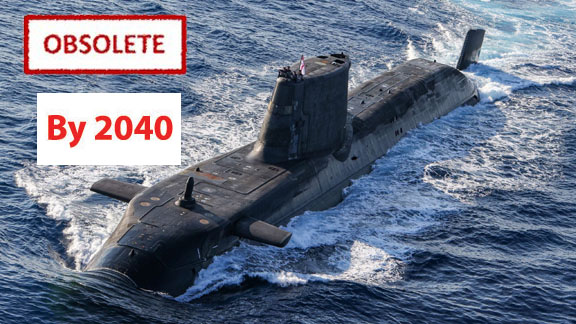
When HMS Anson – a British nuclear submarine – surfaced just off the coast of Perth last month, it was hailed as vindication of the Aukus triumvirate: “a historic new phase” in Australia’s path towards commanding its own nuclear submarines.
The submarine’s arrival, it was argued, was demonstration of the political will behind the ambitious Aukus deal: manifestation of Donald Trump’s exhortation the agreement was “full steam ahead”.
But the Anson’s arrival brought with it no small amount of consternation also.
Anson is now the only attack submarine in the British fleet that can be put to sea, of a supposed complement of six. The others are all in maintenance, being refitted or have been stripped for parts to keep other subs afloat.
“Perhaps more local concerns should be the priority,” the news site Navy Lookout suggested, unconvinced by foreign adventurism.
And so it came to pass. When war suddenly broke out in the Middle East and the Anson abruptly ended its engagement in Australia early – called back to a potential deployment in the strait of Hormuz – there was no fanfare, none of the triumphalism.
t was, perhaps, a neat metaphor for the Aukus agreement itself: political intent aplenty, but capacity lacking.
The spirit is willing, but the flesh …
A ‘demanding’ timeline
In the gallons of newsprint spilled over the Aukus deal, forensic attention has been paid to the capacity of the US to spare three Virginia class submarines for Australia from the early 2030s.
Given sclerotic – and thus-far stubbornly unshiftable – rates of shipbuilding in the US despite billions in Australian taxpayers’ assistance, the Congressional Research Office has openly considered that instead of the US selling any Virginia-class submarines to Australia, it would instead rotate its own US-commanded vessels through Australian ports.
But Australia’s use of the American submarine is only ever intended as a transitory capability.
Far more than the US, Australia must depend on the UK.
For its own, sustained nuclear submarine capability, Australia will rely on Britain’s capacity to design and build the first of an entirely new class of nuclear submarine: the SSN Aukus.
Some have argued the UK’s nuclear submarine industry is beyond salvation.
“The UK is no longer capable of managing a nuclear submarine program,” rear admiral Philip Mathias, a former director of nuclear policy at the Ministry of Defence, said last year, blaming “gross mismanagement” and a “catastrophic failure of succession and leadership planning”.
Even the booster-ish House of Commons inquiry into Aukus heard it was “a source of national shame the way we’ve treated the nuclear submarine building enterprise in this country”.
Lord Case, formerly the head of Britain’s civil service, told the defence committee: “somehow, we became the world’s most embarrassed nuclear nation”.
The published “optimal pathway” forecasts the first Aukus class submarine being built by the UK for the Royal Navy in the “late 2030s”.
The design of that vessel will form the basis for Australia’s own Aukus submarines, to be built in Adelaide. Australia’s first Aukus submarine is due in the water in the “early 2040s”.
It is, by even the most optimistic accounts, a “demanding” timeline. And the UK has more pressing priorities.
It must first complete the seventh and final boat in the Astute class (Britain’s nuclear attack submarine, of which the Anson is the most recent into active service). But the UK also has, in construction, four Dreadnought class nuclear ballistic submarines, the basis of the UK’s nuclear deterrent.
All of these are being built by BAE Systems Submarines at Barrow-in-Furness, in Cumbria.
Put frankly, one senior UK defence source told the Guardian on condition of anonymity, while upholding Aukus is politically important to the UK, other boats must, and will, take precedence.
Back of the queue
That leaves Australia in an invidious position.
If the US is unable (by its own legislation) to provide Virginia-class submarines, and the UK’s timeline to build the Aukus class falters, those countries still have nuclear submarine fleets.
Australia will be left with nothing (its ageing diesel-electric Collins class submarines already having been extended far beyond their slated working life).
Australia has the most at stake in Aukus, but the least control over how it unfolds.
For while Australian tax dollars –A$1.6bn of a committed A$4.7bn to the US and A$452m of A$4.6bn to the UK – flood into foreign shipbuilding industries, Australia finds itself intractably at the back of the queue…………………………………………………………………………………………………………………………………………………………………………..
Questions to be asked
Marcus Hellyer, head of research at Strategic Analysis Australia, describes himself as “Aukus agnostic”.
“I don’t jump in and say ‘it’s all doomed’ or ‘it’s the greatest policy idea ever’, but there are certainly questions to be asked about the process that got us here, and how it is going.”
Hellyer says Aukus was announced to the Australian people without any public debate or a proper assessment of alternative defence strategies, such as hypersonic missiles.
And, he argues, while focus has been on the US capacity to deliver surplus Virginia-class submarines, Australia will ultimately have to rely far more heavily on a UK naval nuclear enterprise that has been “chronically underfunded”.
“Now the UK government would say ‘well, where we’re addressing that, we’re funding that’, but there is a massive backlog in both investment required and work to be done.”
Also, Hellyer says, it is hard to pin down exactly how far progressed the design for the new Aukus submarine is.
“It’s really hard to get any kind of reliable information out of any of the players about the maturity of the assets in this program. We keep being told by admirals that the Aukus design is ‘mature’. Well, define ‘mature’.”
“We’re not in the detailed design phase, so we’re still nowhere near starting construction … when are we actually going to start building this thing?”
There is, too, the adversary argument.
Since Aukus was announced in 2021, zero additional Aukus-nation submarines have been built beyond those already in the pipeline before the agreement was revealed. The US has built seven of its own nuclear submarines, the UK has launched one for its navy.
In that time, China, the superpower Aukus is designed to counter, has launched 10 nuclear submarines.
Historically, great naval powers have always had significant civilian industries upon which they can draw. China is now the world’s largest civilian ship builder. The US now accounts for just 0.1% of global shipbuilding.
“And their shipyards are successful not because they’ve got gazillions of lowly paid unskilled people banging away with hand tools,” Hellyer says, “they have significant technology and they are absolutely driven by efficiency, by delivering on time and on budget.
“That’s why the Chinese will continue to outcompete us in terms of building ships and increasingly submarines … and now they’ve made that policy switch: they’re now bringing that to their undersea domain.” https://www.theguardian.com/world/2026/mar/20/the-weakest-link-australias-submarine-hopes-depend-on-the-uk-but-britannia-no-longer-rules-the-waves
No Good Exit
Pine Gap is almost certainly providing targeting intelligence that has enabled strikes now characterised by UN human rights experts as potential war crimes. Under laws amended by the Howard government in 2001 and never restored, the Prime Minister can take Australia to war on Cabinet agreement alone, no parliamentary debate, no public mandate, no vote. Nobody in the national media is asking whether that authority has been invoked. Nobody is asking whether it should be.

21 March 2026 David Tyler, Australian Independent Media
John Mearsheimer sees war with Iran as a strategic folly, arguing it is unwinnable, will not destroy Iran’s nuclear knowledge, and could, instead, boost Iran’s interest in acquiring nuclear weapons.
No stranger to irony, or paradox, Dr Mearsheimer does not mince words. The West Point graduate and former Air Force Captain, now a distinguished scholar at Cornell, has spent two decades documenting exactly how an American Eagle could get sucked into the vortex of wars that serve its bovver-boy, or Middle-East proxy, Israel, and its bellicose aspirations at enormous cost.
When Mearsheimer speaks about a US military adventure in Iran, he is not waffling. He is quoting from the autopsy he wrote in advance. And Mearsheimer’s verdict on Operation Epic Fury, is that Trump has dug himself into a deep hole; an opinion all the more damning for its formal, almost courteous understatement:
“I think President Trump has put himself in a situation where he really doesn’t have a good exit strategy.”
Trump’s catastrophe may be complex and irretrievable, but it was not inevitable. It was predicted, in detail, by experts whose job it was to predict it, and who were systematically ignored, discredited or sacked for saying so. Trump ignored the experts. This is how he can always snatch defeat from the jaws of victory.
The pretext for the attack doesn’t bear scrutiny. Before the first double-tap Tomahawk missile crushed and burned alive 168 schoolchildren on 28 February, Oman’s Foreign Minister Badr Al-Busaidi was announcing what could have been a diplomatic coup: Iran had agreed to never stockpile enriched uranium, had accepted full IAEA verification, and was prepared to irreversibly downgrade its enriched uranium to the lowest level possible.
Peace, he said, was “within reach.” Further talks were due to resume on 2 March.
Iran now says that the US President never intended to avoid war and that the talks were a ruse to get more time to set up a military attack. It’s true. It’s also true that Trump and Netanyahu are driven by the need to stay out of court. Both are hell-bent in quest of a more enduring diversion-and both would have always pulled the trigger anyway. Even without Saudi encouragement……………………………………………………………………………………………………………………………………….
Iran now says that the US President never intended to avoid war and that the talks were a ruse to get more time to set up a military attack. It’s true. It’s also true that Trump and Netanyahu are driven by the need to stay out of court. Both are hell-bent in quest of a more enduring diversion-and both would have always pulled the trigger anyway. Even without Saudi encouragement.
……………………………………….. Many missile strikes in the war’s opening phase are seen by UN human rights experts as potential war crimes under the Rome Statute. At least a million Lebanese people have been displaced.
https://googleads.g.doubleclick.net/pagead/ads?gdpr=0&client=ca-pub-3072351457465524&output=html&h=280&adk=2235633406&adf=387799125&w=678&fwrn=4&fwrnh=100&lmt=1774125889&rafmt=1&armr=3&sem=mc&pwprc=5956714339&ad_type=text_image&format=678×280&url=https%3A%2F%2Ftheaimn.net%2Fno-good-exit%2F&host=ca-host-pub-2644536267352236&fwr=0&pra=3&rh=170&rw=678&rpe=1&resp_fmts=3&fa=27&uach=WyJXaW5kb3dzIiwiMTkuMC4wIiwieDg2IiwiIiwiMTQ2LjAuNzY4MC44MCIsbnVsbCwwLG51bGwsIjY0IixbWyJDaHJvbWl1bSIsIjE0Ni4wLjc2ODAuODAiXSxbIk5vdC1BLkJyYW5kIiwiMjQuMC4wLjAiXSxbIkdvb2dsZSBDaHJvbWUiLCIxNDYuMC43NjgwLjgwIl1dLDBd&abgtt=7&dt=1774125788538&bpp=1&bdt=3727&idt=0&shv=r20260318&mjsv=m202603170101&ptt=9&saldr=aa&abxe=1&cookie=ID%3Dd85616c6c9bd2a6c%3AT%3D1770448449%3ART%3D1774125788%3AS%3DALNI_MbtaAxRxG9MqgIcWMShV7avYd9mzg&gpic=UID%3D000011f58c2d07ec%3AT%3D1770448449%3ART%3D1774125788%3AS%3DALNI_MasvLU7CXh2jEp0EwTeqK932dwU3A&eo_id_str=ID%3D1b13a2c219278375%3AT%3D1770448449%3ART%3D1774125788%3AS%3DAA-AfjYkqjLrM9kIjGmfRgvZ6J5n&prev_fmts=0x0%2C678x280%2C678x280%2C1265x585%2C1265x122%2C678x280%2C678x280%2C678x280%2C678x280&nras=10&correlator=6552144162929&frm=20&pv=1&u_tz=660&u_his=2&u_h=720&u_w=1280&u_ah=672&u_aw=1280&u_cd=32&u_sd=1.5&dmc=8&adx=117&ady=5250&biw=1265&bih=585&scr_x=0&scr_y=2914&eid=95378429%2C95384535%2C42533294%2C95383746%2C95386039%2C95379823&oid=2&psts=AOrYGslFnD4MCobWfWWaTnZO58i7aVt7D29MIFScmcewoQBVZjRgX1f3b9NwGtVkwcGa5Z-1eoPb2VtruRZFG8PO7KJlApj9H8fZyI5zqVkCG4CmXvZmwQ3Box5rCHMTD73x%2CAOrYGslqDhuWvVFLDi_GZC5QcWZeq0_skU9KxspMCRk4eB7tugVH2yaIxi5G3F9O2Lf92rq8U8mMNGoqiazmp1b23UZ4BdLvnwQ3WxWxgRykEZSB%2CAOrYGskeRH4aNaTYW0JyG3hzeADf9iRr0p5FcMslU9tcjQOmsfMxJqNzQgBma4wHaEq5_EyPCfryTvgRCXzrdNA6zXpsYzi2aGa6YBEEsIrD4jk%2CAOrYGsnZlMGylK-NV6L01yQbFeOM_0OyuT3kK6KdRWPAa0ZJ-_fUiqW2vcAZvsE7G9PHnZ_OKbVa1uJ56Zi1H-BaO31G2fiS7gxE7wk%2CAOrYGskrNVCKFAP1enIxqXLvS3enuTJ1vSXSpDKMa_FTU_LIa3i733aUFije2OhcKHUesjN9G6616z_zZ30fUvobJwp9R63Myz8XDtyBjjQdpDmpSw%2CAOrYGsnrFCx6HaDRyuw7FJgzshe7poT_x7bpz6edsQFJsiawAUvVj1cdcmwj8C0dhnUgTtbxVbGZiUsGMRomL8AnScaaQ9jMiTGt-38YWkcIDhQ%2CAOrYGsmGx2dhmzE4w3QV-X9NmiFCpDNgjknMYKowrNLwx0eLRev6mAN_VRDxDLeClYOlXHDvSoaiEQKey8wTUJbgVV1DbfGqHw1h5d1Wiu7sDg&pvsid=5130612622751585&tmod=1337930814&uas=1&nvt=1&fc=1408&brdim=0%2C0%2C0%2C0%2C1280%2C0%2C1280%2C672%2C1280%2C585&vis=1&rsz=%7C%7Cs%7C&abl=NS&fu=128&bc=31&bz=1&pgls=CAEaBTYuOS40~CAEQBBoHMS4xNzQuMA..&num_ads=1&ifi=8&uci=a!8&btvi=8&fsb=1&dtd=M
Meanwhile, Donald Trump, on his Truth Social, calls Iran “militarily ineffective and weak.”…………………………………………………………………………………..
Trump is demanding NATO allies help secure the Strait of Hormuz. NATO is, to put it charitably, otherwise engaged.
Retreat? Mearsheimer is equally clear-eyed. Declare victory and withdraw, and it will be “perceived as a humiliating defeat for the US.” And that assumes Iran cooperates. “They have many cards to play,” he notes. “They can inflict significant losses. Therefore, even if we retreat, it’s unclear whether this will solve the problem.”
Trump promised a generation of winning. He has delivered a generation’s worth of losing, compressed into twenty days. And let’s not forget his Latin American fiasco. El Presidente, who endeared himself to millions south of the border with his talk of “shithole” countries, has rather a lot of Venezuelans on the warpath after his regime change curdled almost on contact into a neocolonial farce, with Maduro gone, sovereignty shredded and the gringos already with their fingers in the till.
Cuba could be next on Hegseth’s hit-list? Trump does need to keep the distractions going. Meanwhile disinformation is being pumped as vigorously as the Ford plumbing. And with similar effect.
Fox News cheerleaders and the Netanyahu communications office have been carefully not telling the American public: Iran is not the isolated, backward, sanction-crippled military of the pre-war briefings.
It is fighting with Russian eyes and Chinese precision. Together, those two contributions have changed the strategic calculus in ways that neither Washington nor Tel Aviv appear to have seriously gamed………………………………………………………………………………………………………………………………………………………………………………….
The Netanyahu Factor: Closing Every Window
Mearsheimer’s analysis cuts deepest on the question of diplomacy.
On Day 19, Israeli strikes killed two of Iran’s most consequential figures: security chief Ali Larijani and Basij commander Gholamreza Soleimani. Larijani’s death was not a military decapitation strike in the conventional sense. It was the targeted elimination of Iran’s most experienced nuclear negotiator; a pragmatic, sophisticated operator whom analysts had consistently identified as one of the few figures capable of opening a negotiated exit.
Israel killed the man who could have brokered the ceasefire Netanyahu claims to want.
Netanyahu told Sean Hannity that Operation Epic Fury “will usher in an era of peace that we haven’t even dreamed of” and create conditions for Iranians to form “their own democratically elected government.” He said something substantially similar about Iraq in 2003. About Libya in 2011. The script is laminated. The outcomes are identical. The lesson is never drawn.
He is currently in a bunker, hinting with characteristic coyness that perhaps the Iranian regime survives after all. Of course it does. The Islamic Republic has outlasted everything the West has thrown at it: the Iran-Iraq war, decades of sanctions, assassination campaigns, Stuxnet, and the twelve-day bombing campaign of last June………………………………………………………………………………………………………………..
The Intelligence Scandal Underneath It All
One more thread demands to be pulled. Tulsi Gabbard, Director of National Intelligence, has been accused of altering her Senate testimony on Iran; specifically, of omitting intelligence details that contradicted Trump’s claim that Tehran posed an imminent threat. The IAEA had found no evidence Iran was moving toward a nuclear weapon. Oman had just brokered what its foreign minister described as a breakthrough agreement……………………………….
What Australia Needs to Ask
An Iranian projectile struck near Australia’s military headquarters in the UAE this week. Anthony Albanese confirmed it. Then said nothing else useful.
Pine Gap is almost certainly providing targeting intelligence that has enabled strikes now characterised by UN human rights experts as potential war crimes. Under laws amended by the Howard government in 2001 and never restored, the Prime Minister can take Australia to war on Cabinet agreement alone, no parliamentary debate, no public mandate, no vote. Nobody in the national media is asking whether that authority has been invoked. Nobody is asking whether it should be.
The question Mearsheimer asks about Washington; what’s the exit, and who owns the consequences, deserves to be asked in Canberra. With the same urgency. And considerably more honesty than we are currently getting.
……………………. Trump got his war with Iran, on the urging of a foreign government, on the basis of intelligence his own Director of National Intelligence allegedly falsified, over a diplomatic resolution that was days from signature.
History won’t be interested in who did the urging. He owns this. Every schoolgirl in Minab. Every barrel at Ras Laffan. Every day the Hormuz stays closed.
It has, as Mearsheimer warned, no good exit. https://theaimn.net/no-good-exit/
Australian nuclear news – week to 28 March 26
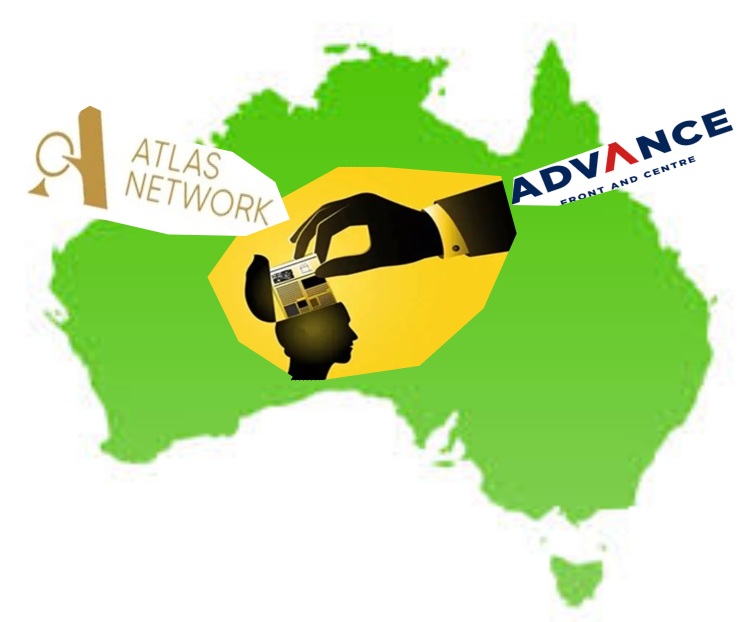
Australian nuclear news – week to 28 March 26
- The high costs of Albo’s rubber-stamp war in the Middle-East.
- How climate and renewables “disinformation networks” are fuelling a major national security threat.
- Your money, their rules. Super funds support Israel war machine
- The war against Iran:Lessons still unlearned.
- UK’s Astute nuclear submarine timeline is very unlikely to be met.
- Trump is the most dangerous man in the world
- The Iran war is Australia’s margin call.
- The weakest link: Australia’s submarine hopes depend on the UK, but Britannia no longer rules the waves.
1 This month

of the week – Australians for War Powers Reform (AWPR)
To see nuclear-related stories in greater depth and intensity
 Antinuclear