Advocates for nuclear power should heed the lessons from Kursk
By Richard Broinowski, Aug 29, 2024, https://johnmenadue.com/advocates-for-nuclear-power-should-heed-the-lessons-from-kursk/
On 22 August, Rafael Grossi, director-general of the International Atomic Energy Agency, warned of the deadly effect a military attack on Russia’s nuclear power complex at Kursk would have on civilian communities in Russia, Ukraine and potentially across Europe. He had previously warned of the consequences of such attacks on Ukraine’s nuclear reactors at Zaporizhzhia.
The Kursk nuclear complex is approximately 30 kilometres from a fluid military situation between invading Ukrainian forces and Russian defenders. The complex has six Russian designed RBMK reactors, the same type as at Chernobyl. Two are shut down, two are in construction mode, and two are hot. None have protective domes. The easiest and most effective military action would be destruction of the complex’s power supply, which as with flooded generators at Fukushima, would halt cooling pumps, overheat the reactors, cause a melt-down of fuel rods, and the uncontrolled venting of radioactive materials into the atmosphere.
People have short memories, and tend to forget the dimensions of previous nuclear disasters and near disasters, particularly at Windscale, Three Mile Island, Chernobyl and Fukushima. Chernobyl was arguably the worst, followed closely by Fukushima. At Chernobyl, reactor number four exploded, not due to military action, but an experiment by Russian engineers to see how long turbines would spin and supply power to cooling pumps if the reactor’s main electric supply failed. In the reactor, the collision of incandescent nuclear fuel with cooling water created an explosion which blew apart the reactor vessel and spread radioactive dust including xenon gas, short-lived Iodine 131 (eight days) and Caesium 137 (30 years) across much of Ukraine and Belarus, as well as parts of Russia, and Scandinavia. The nearest town of Pripyat was evacuated and a no-go zone of 30 kilometre radius, later expanded to 4,300 square kilometres, was declared.
Subsequent reports by the UN Scientific Committee on the Effects of Atomic Radiation found that immediate deaths caused by radiation from Chernobyl could be calculated, most certainly deaths from thyroid cancer, but not of long-term stochastic deaths. The precise number is unknown and there are wildly different estimates, including among the medical profession. Because of fears about radiation damage to foetuses, over one million abortions were performed across Europe in the year following the disaster.
And now, two warring countries dice with death over Zaporizhzhya, Europe’s largest nuclear power complex and one of the 10 largest in the world. Most recent attacks occurred between 2022 and 2024. Fighting in 2022 led up to Russia wresting management of the complex. While it was going on, a large calibre bullet pierced the outer wall of reactor number four and an artillery shell hit a transformer in reactor number six.
In April 2024, the IAEA reported the plant was attacked by a swarm of drones, three of them torching surveillance and communication equipment. There were three direct hits on containment structures. On 11 August, fire broke out in one of two cooling towers. Zelensky blames Putin for the attacks, Putin blames Zelensky. Putin is probably right. Why would Russia attack the complex it now managed? Both tend to downplay the disastrous consequences an attack on the reactors or their electricity and cooling systems would have on civilian populations across Europe. They would be similar if not worse than the results of the Chernobyl fiasco.
Although badgered by journalists following his 22 August address, Grossi refused to attribute blame for the attacks at Zaporizhzhia and who might initiate them at Kursk. He said the IAEA was not a political organisation, and blame would be up to the UN Security Council. He would not get into speculation. When pressed, however, he said if his investigations led to clear evidence of the perpetrators, he would call them out. Meanwhile, he was about to go to Kursk and examine the situation in conjunction with the managers and engineers of the nuclear complex there. He then planned to separately see both Putin and Zelensky.
What the whole situation should bring home to Australian politicians and their backers in the nuclear industry, who so blithely recommend the construction of a dozen-odd nuclear reactor complexes here, is the widespread lethal damage a kinetic attack on any one of them would cause in this country. We already see that US military and surveillance installations would become natural targets for China if ever war breaks out over Taiwan. Nuclear reactors would pose a much wider damage to the civilian population.
Opposing a USA-led international nuclear agreement that is bizarrely unfair to Australia
Australians can object to the agreement, by putting in a submission to a Parliamentary Joint Standing Committee.
Submissions are due by September 1st. So far, only 2 submissions have been published. They’re sort of “zipped” – so I can’t read them. You can bet your boots they are from the nuclear lobby
I’s a bit of an IT hurdle to actually get your submission in. That’s after you’ve even written it. Which is tough, too, as the general public in Australia knows nothing about it.
But anyway, here’s one little effort
TITLE: Submission to the Joint Standing Committee on Treaties concerning the:
Agreement among the Government of Australia, the Government of the
United Kingdom of Great Britain and Northern Ireland, and the Government
of the United States of America for Cooperation Related to Naval Nuclear Propulsion.
This submission urges that the Joint Standing Committee on Treaties recommends against
the Australian Government signing this Agreement as I believe that it is not in the best interests of the Australian people on a number of grounds, as outlined in this submission
Australia would be landed with high level nuclear waste – This Agreement
requires Australia to “be responsible for the management, disposition, storage, and
disposal of any spent nuclear fuel and radioactive waste resulting from the
operation of Naval Nuclear Propulsion Plants transferred pursuant to this Article,
including radioactive waste generated through submarine operations, maintenance,
decommissioning, and disposal.” (ARTICLE IV Naval Nuclear Propulsion Plants,
Related Equipment and Material, Section D).
The health risk to Australians brought in by the construction of nuclear facilities
and the management and storage of radioactive wastes. Buying second-hand
nuclear submarines make this waste danger another hazard, as we’d be buying
already existing toxic wastes.
Under this agreement it is possible for a nuclear weapon to be present on
Australian shores– this would it would be a clear breach of the highest order of the
Treaty on the Non-Proliferation of Nuclear Weapons (NPT) because as a signatory to
NPT Australia is not allowed to manufacture or otherwise acquire nuclear weapons.
The agreement does not guarantee that the USA will continue with the nuclear
submarine arrangements, but still ensures that Australia will cop the costs. This is
blatantly unfair.
It is extraordinarily unfair and bizarre that under Article IV E. “Australia shall
indemnify, the United States and the United Kingdom against any liability, loss,
costs, damage or injury (including third-party claims) arising out of, related to, or
resulting from Nuclear Risks connected with the design, manufacture, assembly,
transfer, or utilization of any Material or Equipment, including Naval Nuclear
Propulsion Plants and component parts and spare parts thereof transferred or to be
transferred pursuant to this Article.”
The ‘National Interest Analysis [2024] ATNIA 14 with attachment on consultation’,
acknowledges that “There has been no public consultation”, with paragraph 55
stating that “No public consultation has been undertaken, given the classified scope of consultations between the Parties on the Agreement, including matters relating to
national security and operational capability.”
The Treaty clearly outlines that Special Nuclear Material to be transferred under the
agreement, “shall contain highly enriched uranium and, only with respect to
irradiated fuel, may contain plutonium”, (ARTICLE VI Conditions and Guarantees,
SECTION I –SPECIAL NUCLEAR MATERIAL)
In conclusion – the whole agreement is unfair, poorly organised, and should not be
accepted by Australia, particularly in this situation where there has been no public
consultation – set up completely in the dark as far as the Australian people are
concerned.
Noel Wauchope
Coalition Proposal Undercuts Australians to Fund Expensive Nuclear Fantasy

August 28, 2024, https://theaimn.com/coalition-proposal-undercuts-australians-to-fund-expensive-nuclear-fantasy/
In response to the federal Coalition’s proposal for $100 billion in cuts to housing, transport, education, and climate solutions, the 30 undersigned organisations released the following statement:
Peter Dutton and the Coalition made their priorities clear today with a proposal to gut social services and roll back Australian renewables – all to fund their expensive nuclear fantasy
The radical proposal would slash everything from housing and public transport to renewable energy and manufacturing jobs in an attempt to find the $100 billion they’d need to bankroll their unpopular nuclear scheme – a scheme that would drive up energy bills in the short, medium, and long-term.
By attacking both bedrock social programs and the renewable energy already providing 40% of Australia’s electricity, the Coalition would undercut Australia’s economic prosperity, undermine investor certainty, and make life harder for Australians already doing it tough.
By scrapping Future Made in Australia, Powering the Regions Fund and Rewiring the Nation, Peter Dutton would also abandon the key initiatives designed to reduce carbon pollution and reform the economy to ensure we remain prosperous and internationally competitive in a decarbonising world.
Peter Dutton’s attacks on a Future Made in Australia are especially telling, a rehash of the tired arguments Donald Trump and the Republicans used in their attempt to kill the U.S. Inflation Reduction Act.
Contrary to their ‘sky-is-falling’ rhetoric, however, U.S. inflation has decreased substantially since the U.S. passed its signature clean industry policy. Meanwhile, the policy has crowded in private investment equivalent to six times the support it provides, driven the creation of 210 new clean projects, created 400,000 new jobs and added $155B to the U.S. GDP annually.
The Coalition wants Australians to forego that same opportunity and sacrifice their own social services so they can prop up a nuclear industry expected to raise household energy bills an average of $1000 annually. If elected, Peter Dutton risks taking Australia back to the decade of chaos that characterised the Abbott, Turnbull, Morrison years on climate and energy policy.
-Advertisement-
This proposal is a transparent stunt, not a serious plan. Where the Coalition should be proposing real solutions on cost of living, the economy, and climate, they continue to offer only denial, delay, and disinformation. The Australian people deserve far more.
Surging seas are coming for us all, warns UN chief

Katy Watson, 26 Aug 24
The United Nations Secretary-General António Guterres has said that big
polluters have a clear responsibility to cut emissions – or risk a
worldwide catastrophe.
“The Pacific is today the most vulnerable area of
the world,” he told the BBC at the Pacific Island Forum Leaders Meeting
in Tonga. “There is an enormous injustice in relation to the Pacific and
it’s the reason I am here.” “The small islands don’t contribute to
climate change but everything that happens because of climate change is
multiplied here.”
But eventually the “surging seas are coming for us
all,” he warned in a speech at the forum, as the UN releases two separate
reports on rising sea levels and how they threaten Pacific island nations.
The World Meteorological Organization’s State of the Climate in the South
West Pacific, external report says this region faces a triple whammy of an
accelerating rise in the sea level, a warming of the ocean and
acidification – a rise in the sea’s acidity because it’s absorbing
more and more carbon dioxide.
“The reason is clear: greenhouse gases –
overwhelmingly generated by burning fossil fuels – are cooking our
planet,” Mr Guterres said in a speech at the forum. “The sea is taking
the heat – literally.”
BBC 27th Aug 2024
Australian nuclear news from 26 August to 1st September
Australian nuclear news from 26 August to 1st September
Headlines as they come in:
- A quick update on Submissions to Parliament about the new AUKUS agreement.
- Anthony Albanese uses visit to Collie to slam Peter Dutton’s nuclear plans.
- Dutton’s nuclear vision is distorted by ignorance (or worse)
- WA town Collie’s efforts to save its future distracted by nuclear talk.
- That time when Canada cancelled its nuclear submarine order
- Barnaby’s Bush Summit bombshell: Why ScoMo wouldn’t back nuclear.
- ‘Heavily male dominated’: Nuclear workforce has to be ‘more balanced’
- Defence Minister Richard Marles opened $600k second office in Geelong, a short walk from his existing space
- Opposing a USA-led international nuclear agreement that is bizarrely unfair to Australia.
- The AUKUS submarine deal has been exposed as a monumental folly – is it time to abandon ship?
- Coalition Proposal Undercuts Australians to Fund Expensive Nuclear Fantasy
- Coalition pledges to ditch nuclear sites if earthquake zones are declared unsafe
Coalition pledges to ditch nuclear sites if earthquake zones are declared unsafe

The Age, By Mike Foley, August 26, 2024
Proposed nuclear sites would be abandoned if studies reveal unacceptable risks, the Coalition has declared following an earthquake near its planned Hunter Valley site, raising questions about other selected locations close to geological fault lines.
A magnitude 4.7 earthquake struck near Muswellbrook in NSW’s Upper Hunter region on Friday, several kilometres from the Liddell coal plant where the opposition has pledged to build a nuclear reactor if elected. The quake damaged buildings in the town while tremors were felt as far away as Sydney.
Opposition energy spokesman Ted O’Brien pledged that if the Coalition formed government, it would establish an independent nuclear authority that would conduct detailed studies of the proposed sites.
“If [the studies] come back with advice that says any power plant should not proceed, then a power plant would not proceed, full stop,” he told ABC radio on Friday. “That is absolutely key.”………………………………………………………………………………………………………………
Four of the opposition’s seven proposed nuclear sites are located near active fault lines: Port Augusta in South Australia, Lithgow in NSW, Collie in Western Australia and the Latrobe Valley in Victoria – an area that has had seven seismic events this year ranging from magnitudes of 2 to 4.3.
Latrobe Valley resident Wendy Farmer, president of the Voices of the Valley group, is helping to establish an alliance of anti-nuclear groups from the communities selected for plants.
Farmer said the opposition should have studied its selected sites before nominating them for reactors.
“Had they taken time to either speak to companies or communities, they would have already known this,” she said.
Hunter Community Environment Centre co-ordinator Jo Lynch said she was concerned about nuclear waste, considering the millions of tonnes of fly ash stored in dams across her region.
“I am concerned about waste management from a nuclear facility. Just looking at the track record with coal, that was a result of outdated environmental laws,” Lynch said………………………….. https://www.theage.com.au/politics/federal/coalition-pledges-to-ditch-nuclear-sites-if-earthquake-zones-are-declared-unsafe-20240826-p5k5d5.html
Countering the nuclear lobby spin this week

Some bits of good news. How Copenhagen cleaned up its harbour. Renewable energy consumption hit a record high. The US finally supported a global plastics treaty
***********************************
TOP STORIES.
How US Big Tech monopolies colonized the world: Welcome to neo-feudalism. https://www.youtube.com/watch?v=Qf1wQ9QeaKM
The heroes who saved the world from Chernobyl Two.
‘Very serious’ nuclear situation could happen ‘at any moment’ in Ukraine, says IAEA chief.
Donald Trump and Nuclear Weapons.
Molten salt reactors were trouble in the 1960s—and they remain trouble today.
From the archives. A new French fairy tale: “Cheap” nuclear electricity in France is not what it appears.
Biodiversity. Capitalism is killing the planet – but curtailing it is the discussion nobody wants to have. ALSO AT https://nuclear-news.net/2024/08/20/2-b1-capitalism-is-killing-the-planet-but-curtailing-it-is-the-discussion-nobody-wants-to-have/
Climate. Climate scientist says 2/3rds of the world is under an effective ‘death sentence’ because of global warming. Think we don’t have a choice when it comes to saving the planet? Think again– ALSO AT https://nuclear-news.net/2024/08/20/2-b1-think-we-dont-have-a-choice-when-it-comes-to-saving-the-planet-think-again/ Project 2025: The right-wing conspiracy to torpedo global climate action. Meeting 1.5C warming limit hinges on governments more than technology, study says.
Plastic pollution. Human brain tissue made up of 0.5 per cent microplastics, study reveals.
Noel’s notes. A whole new way of thinking about nuclear weapons – THEY’RE SILLY! “Churnalism” – that is a timely word that we all need to consider.
***********************************
AUSTRALIA. Is the USA now considering withdrawal from AUKUS? Australia offers U.S. a vast new military launchpad in China conflict. AUKUS 2.0: Albanese Drives It Like He Stole It, and Then Gives It Away to the US. Civil Society faces imposition of an AUKUS military High Level nuclear waste dump. The anti-renewables groups pushing the nuclear option to rural Australia – ALSO AT https://antinuclear.net/2024/08/26/the-anti-renewables-groups-pushing-the-nuclear-option-to-rural-australia/ Too big to fail? Who cares if there’s no accountability – the Nuclear Lie. More news items at https://antinuclear.net/2024/08/19/australian-nuclear-news-headlines-19-26-august/
NUCLEAR ITEMS.
ARTS and CULTURE. The lost world of Chornobyl: inside a nuclear disaster zone – in pictures. The UK nuclear lobby’s festival of joyous propaganda.
CLIMATE. Why Nuclear Energy Is Not the Solution to the Climate Crisis. Why the big push for nuclear power as “green”?
ECONOMICS. Atlantic Canada’s only nuclear power station is offline, again.
Final investment decision on new nuclear plant Sizewell C is delayed. “Final Investment Decision (FID) ” in Sizewell C nuclear station might never happen. Nuclear unicorn Newcleo to move holding company from UK to France to tap EU funds.
China keeps door firmly closed to Japanese seafood imports.
SMRs and nuclear renaissance: Learning from past to avoid over promising on low costs.
ENERGY. AI’s insatiable energy demand is going nuclear.
Global disappointment with the most promising energy: ‘The dream is dead’, and we are in ‘big trouble’
ENVIRONMENT. Sizewell C seeks permit for ‘water vole displacement activities’ ALSO AT https://nuclear-news.net/2024/08/24/1-b1-sizewell-c-seeks-permit-for-water-vole-displacement-activities/
EVENTS. 1 September, Ontario WALK AGAINST NUCLEAR WASTE https://www.facebook.com/nonukesontreatylands
| MEDIA. Defence Correspondents: The Journalistic Wing of the Military? |
| POLITICS. Harris’s concluding speech at DNC embraces agenda of global war. Democrats Release Insanely Hawkish Middle East Policy Platform. ‘Strong record of supporting the U.S.-Israel relationship’: a look at Tim Walz’s votes on Palestine as a member of Congress.Biden’s Convention Speech Made Absurd Claims About His Gaza Policy. | POLITICS INTERNATIONAL and DIPLOMACY. Blinken ‘Sentenced Ceasefire Talks to Death’ With Comments on Netanyahu.Hungary again breaks with West: Ukrainian attack on Kursk is ‘wrong‘ .The U.S. and China Can Lead the Way on Nuclear Threat Reduction. White House downplays Chinese concerns over possible US nuclear strategy change, |
| SAFETY. Rafael Grossi to visit Kursk nuclear power plant in Russia , following reports that remains of a drone were found there Nuclear power risks rising in Russia-Ukraine war. Fire at Zaporizhzhia elevates meltdown risk. IAEA chief to visit Kursk nuclear plant due to Ukraine incursion. UK’s nuclear facilities ‘at high risk of atomic blackmail’ from Putin. Flight attendant turned author reveals terrible security vulnerability she fears could trigger nuclear apocalypse. How EDF almost plunged France into darkness .Incident: Fluid leak forces rail shipment to return to the San Onofre nuclear power plant | SECRETS and LIES. Report on nuclear power in Wales is so secret the UK Government won’t even disclose its name .Labour MP under fire for accepting £2,000 donation from Sizewell C developer. ALSO AT https://nuclear-news.net/2024/08/22/1-b1-labour-mp-under-fire-for-accepting-2000-donation-from-sizewell-c-developer/ Inside the ‘suitably opaque’ response to a toxic sewage spill at Chalk River nuclear lab. |
| SPACE. EXPLORATION, WEAPONS. Rocket Test on Remote Scottish Island Ends in Flames. | SPINBUSTER. Nuclear power on the prairies is a green smokescreen. ALSO AT https://nuclear-news.net/2024/08/21/2-b1-nuclear-power-on-the-prairies-is-a-green-smokescreen/ Why fans of nuclear are a problem today. |
| TECHNOLOGY. Small modular reactors: Not all that glows is gold. The Risk of Bringing AI Discussions Into High-Level Nuclear Dialogues. A robot’s attempt to get a sample of the melted nuclear fuel at Japan’s damaged reactor is suspended | WASTES. Britain’s Dirtiest Beaches – Don’t Mention the Pu! Japan: Removal of nuclear fuel remains in Fukushima will begin on August 22.The Nuclear Decommissioning Authority (NDA)NDA’s £30 million investment into nuclear research & innovation.We don’t want your garbage‘: Northern township in shock after hearing Ontario is sending it radioactive waste. |
| WAR and CONFLICT. Blinken Heads to Israel for Gaza Cease-Fire Push as IDF Slaughter Continues. Moscow Says Ukraine Destroyed Russian Bridge With Western-Provided Missiles. Ukraine could trigger ‘another Chernobyl’ – ex-US Army officer. Zelensky’s Misadventures in Kursk. Kazakhstan Takes Lead in Global Push for Nuclear Disarmament Amid Heightened Tensions. | WEAPONS and WEAPONS SALES. From the NPT to the UN Summit of the Future: Cut nuclear weapons budgets and investments. ‘US the primary source of nuclear threat in world’. Biden approved nuclear strategy focusing on China: Report. US crying wolf over China’s ‘nuclear threat’ while expanding nuclear arsenal. Ex-Google CEO Eric Schmidt says the Ukraine War turned him into an arms dealer. |
Australia offers U.S. a vast new military launchpad in China conflict

Australia is expanding its northern military bases, with U.S. support, to counter China’s growing threat. Critics quip it’s become the “51st state.”
Washington Post, By Michael E. Miller, August 24, 2024
ROYAL AUSTRALIAN AIR FORCE BASE TINDAL, Australia — Deep in the outback, a flurry of construction by Australia and the United States is transforming this once quiet military installation into a potential launchpad in case of conflict with China.
Runways are being expanded and strengthened to accommodate the allies’ biggest airplanes, including American B-52 bombers. A pair of massive fuel depots is rising side by side to supply U.S. and Australian fighter jets. And two earth-covered bunkers have been built for U.S. munitions.
But the activity at RAAF Tindal, less than 2,000 miles from the emerging flash points of the South China Sea,isn’t unique. Across Australia, decades-old facilities — many built by the United States during World War II — are now being dusted off or upgraded amid growing fears of another global conflict.
“This isabout deterrence,” Australia’s defense minister, Richard Marles, said in an interview. “We’re working together to deter future conflict and to provide for the collective security of the region in which we live.”
The United States has ramped up defense ties with allies across the region, including with the Philippines and Japan, as it tries to fend off an increasingly assertive and aggressive China. Australia offers the United States a stable and friendly government, a small but capable military, and a vast expanse from which to stage or resupply military efforts.
U.S. Secretary of Defense Lloyd Austin, hailing the “the extraordinary strength of our unbreakable alliance with Australia,” said after a meeting with Marles earlier this month that deepercooperation — including base upgrades and more frequent rotational bomber deployments — would help build “greater peace, stability, and deterrence across the region.”
Australia has also joined the AUKUS agreement, under which the United States and Britain will provide it with nuclear-propelled submarines, some of the world’s most closely guarded technology.
These moves underscore a bigger shift, as Canberra has grown increasingly tight with Washington as they both grow wary of Beijing. Military cooperation has become so extensive that critics quip Australia is becoming the United States’ “51st state.”
Mihai Sora, a former Australian diplomat who is an analyst at the Lowy Institute, a Sydney think tank, has a different metaphor. Australia is “an unsinkable aircraft carrier right at the bottom of the critical maritime sea lanes.”
“As the stakes increase in the South China Sea, as the risk over conflict in Taiwan increases, northern Australia in particular becomes of increasing strategic value for the United States,” Sora said.
American representatives ona recent congressional delegation to Darwin,onAustralia’s northern coast, agreed.
“This provides a central base of operations from which to project power,” Rep. Michael McCaul (R-Tex.), chairman of the House Foreign Affairs Committee, said during the trip.
Some Australian experts, however, argue that the growing U.S. military footprint doesn’t deter conflict with China so much as ensure Australia will be involved.
“I have deep misgivings about the whole enterprise” of increased U.S. military activity in Australia, said Sam Roggeveen, a former Australian intelligence analyst who is also at the Lowy Institute. “It conflates America’s strategic objectives in Asia with ours, and it makes those bases a target.”
……………………………………….Australia has spent roughly $1 billion on upgrading the Tindal air force base. Built by U.S. Army engineers in 1942 to stage bombing raids on Japanese targets in Papua New Guinea and Indonesia, Tindal is now the site of dozens of construction projects. A key one is the new parking apron capable of accommodating four of Australia’s biggest planes: KC-30 tankers that can refuel fighter jets and allow for far more distant attacks.
But there are also plans for the United States to build its own parking apron here, big enough for six B-52 bombers capable of reaching mainland China.
“That is absolutely something China would pay attention to,” Roggeveen said.
Marles declined to comment on the increasing rotations mentioned by Austin but said the trajectory is “an increasing American force posture in Australia.” We see that as very much in Australia’s national interest,” he said. “People understand that we are living through challenging times, when the global rules-based order is under pressure.”………………………………………………………………..
Australia is also surveying three “bare bases” — skeleton facilities in remote parts of western Australia and Queensland — with an eye to upgrading them so heavier Australian and American airplanes can use them, said Brigadier Michael Say, who leads Australia’s Force Posture Initiative. He said it’s still being determined whether the United States will pay for some of the improvements. [WHAA-A-AT!]
In the Cocos Islands, tiny coral atolls in the Indian Ocean northwest of the Australian continent and just south of Indonesia, Canberra will soon begin upgrading the airstrip to accommodate heavier military aircraft, including the P-8A Poseidon, a “submarine hunter” that could monitor increased Chinese naval activity in the area. A U.S. Navy construction contract published in June listed the Cocos as a possible project location, but Say said it hasn’t yet been decided whether the United States will contribute.
Diversifying — or redistributing?
These “bare bases,” which stretch for 3,000 miles from east to west, fit a new U.S. strategy of dispersing forces to prevent China from delivering a knockout blow.
“If one location gets taken out, the U.S. can still project force, it can still replenish and resupply and reinforce its troops,” Sora said. “Australia is fundamental to that but is just one plank in America’s regional force posture.”
Roggeveen questioned, however, whether the United States is actually increasing its capabilities in the region or merely moving assets out of places like Guam that are more immediately threatened by China’s improving missile capability. Under AUKUS, the United States will begin rotating up to four nuclear-powered submarines through western Australia in 2027………………………………………
Some concerns linger in Washington over Australia’s commitment, however. During the visit to Darwin, McCaul and other representatives asked about the 99-year lease a Chinese company holds over the port surrounding the Australian naval base. Australian officials said two reviews had found there wasn’t a security concern, and that in the case of a conflict, the port could be nationalized.
“Australia relies on China for prosperity and on America for security,” Rep. Jimmy Panetta (D-Calif.) told The Post. “That’s the balance they are playing.” https://www.washingtonpost.com/world/2024/08/24/us-military-base-australia-china/—
—
Western world complicit in Gaza Hellfire attacks
By Alison Broinowski | 26 August 2024, https://independentaustralia.net/politics/politics-display/western-world-complicit-in-gaza-hellfire-attacks,18907
Gaza schools and hospitals continue to be bombarded by Israeli weaponry, much of which has been supplied by Western governments. Dr Alison Broinowski reports.
BY HALFWAY through August, the Israeli military had bombed at least five schools. Accused of using six-bladed American-made “Ninja” missiles, they have chopped to pieces the Palestinians inside, most of them women and children.
On 19 November 2023, head of the United Nations Relief and Works Agency (UNRWA) Martin Griffiths wrote:
‘Shelters are a place for safety. Schools are a place for learning… Civilians cannot and should not have to bear this any longer. Humanity needs to prevail’.
This was the day after Israel’s military bombed the Al-Fakhoora school in northern Gaza, where displaced people were sheltering. On the same day, they bombed another nearby school with a combined total of more than 150 dead.
Humanity still has not prevailed in Gaza, where the surviving Palestinians are bearing even worse consequences. It’s alleged that the massacres are now being delivered by Ninja Hellfire AGM-114R9X missiles. These are nicknamed “assassination” missiles for having killed Al Qaeda’s leader, Ayman al-Zawahiri, in 2022.
Soon after the Hamas breakout on 7 October, Israel cut off supplies to Palestinians and pushed them into northern Gaza. It then forced displaced people to flee south to Rafah, where shelter and supplies were as limited as in the north. The fact that Hamas is the elected governing authority in Gaza didn’t stop Israel’s cynical, genocidal pursuit.
First were bombs on hospitals, which the Netanyahu Government claimed harboured Hamas, leaving them ruined or barely functioning.
Next, Israel’s military made schools their target, with the same excuse. On 6 and 7 June, the Israeli Defence Forces (IDF) attacked a UN-run school at Nuseirat refugee camp, killing 33 people, and another school in Deir al-Balah in northern Gaza killing more. Some of the victims (including an 8-year-old boy) were claimed to be Hamas militants.
At the same time, Israel expressed outrage in the UN at being listed as a nation violating its obligation under the Fourth Geneva Convention to protect children in armed conflict.
School bombings then multiplied. On 9 July, an attack on Abbasan, east of Khan Younis in southern Gaza, hit the entrance of al-Awdah school, killing at least 30 people who were sheltering there and wounding 53. Palestinian medics said most of the victims, as always, were women and children. The Israeli military said its sole target was a ‘terrorist from Hamas’ military wing’ near the school.
In the first ten days of August, Israeli attacks on five schools in Gaza City killed more than 179 Palestinians. On 1 August, Israel’s military attacked the Dalal al-Mughrabi school, and on 10 August, at least 100 displaced people were killed at the Al-Tabin school in Daraj, part of Gaza City. In this deliberately-timed attack as the Palestinians were preparing for dawn prayers, or were already in the mosque area, many bodies were shredded into unrecognisable pieces.
Three Israeli rockets reportedly hit the school, setting fire to the building that housed hundreds of displaced people. Described as the deadliest massacre in the ten-month-old war, this attack confirmed a deliberate pattern of Israel killing and maiming defenceless civilians sheltering in schools. It was the latest of 174 UN-identified bombings of shelters, and Al Jazeera reports 500 school attacks over the last ten months.
Fragments of at least two shells used at al-Tabin school on 10 August were identified as being of the American GBU-39 SDB type, manufactured and exported to Israel by Boeing.
Columbia’s Professor Anthony Zenkus alleges that AGM-114 Hellfire missiles were also used, made of 45 kilograms of dense material with six blades flying at high speed, supposedly to crush and cut a targeted person. If they were, in fact, used in crowded spaces in Gaza, Israel cannot claim they “targeted” any Hamas individual.
Zenkus claims that by 2 July, 3,200 Ninja Hellfires had been sent to Israel by the Biden–Harris Administration, and thousands more will be included in the $23.5 billion worth of weapons they have approved.
As every day brings news of another school massacre, the choice facing Australians is between psychic numbing and motivated, active outrage. How can we make our government protest on our behalf against Israel’s atrocities? Ministers know that all the U.S. has to do is cut off the funds and stop the export of weapons of terror like the Ninja Hellfire to Israel. How many more schoolchildren will be shredded before Prime Minister Anthony Albanese, Defence Minister Richard Marles and Foreign Minister Penny Wong come out and say it?
When will they adhere to Australia’s obligations to the International Court of Justice and the International Criminal Court? When will they stop exporting the multiple Australian-made components for the F-35 bombers made by American companies that Israel uses for its attacks on schools and hospitals?
We are already complicit in Israel’s genocide. How much worse can it get?
Is the USA now considering withdrawal from AUKUS?

A little bird sent me this:
“I have just had it from a strong source in America that if Australia fails to reach an article 14 arrangement with IAEA within the next three months then irrespective of the presidential result America will give notice of withdrawal from AUKUS
However it may negotiate with Australia to use Garden Island as a base for its Indian Ocean fleet
Apparently major contractors involved with the first phase of AUKUS are lobbying the USA government to continue irrespective of what occurs with AUKUS but so far with little success”
Answers to the Questions on Notice are published in due course on the Australian Parliament House website.
Civil Society faces imposition of an AUKUS military High Level nuclear waste dump
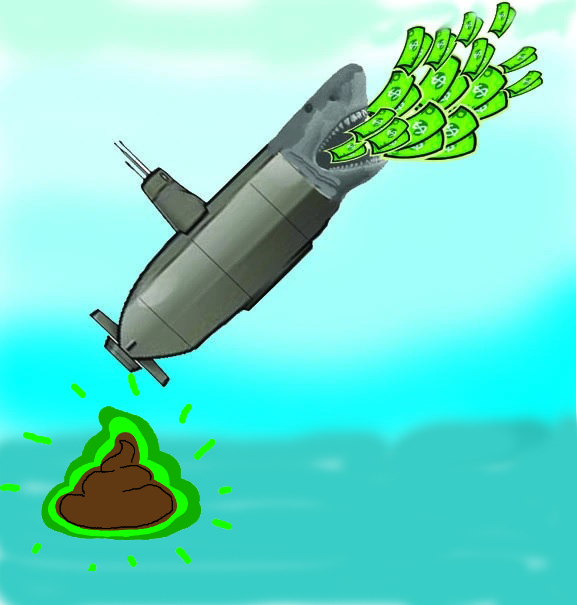
by David Noonan, Independent Environment Campaigner 22 August 2024
The Federal ALP belatedly disclosed a secret pre-condition in AUKUS plans to buy second hand US
nuclear subs: for Australia to keep US N-Subs US origin military High Level nuclear waste forever.
In a breach of trust the ALP is seeking to ‘normalise’ High Level nuclear waste in Australia. Claims of
‘nuclear stewardship’ in taking on US N-Subs and in retaining untenable US N-Sub wastes are a farce.
Disposal of High-Level nuclear waste is globally unprecedented, with our AUKUS ‘partners’ the US &
UK having proven unable to do so in over 65 years since first putting nuclear powered subs to sea.
Minister for Defence Richard Marles MP has still not made a promised ‘announcement’, said to be by
early 2024, on a process to manage High Level nuclear waste and to site a waste disposal facility, he
saying “obviously that facility will be remote from populations” (ABC News 15 March 2023).
Defence is already working to identify potential nuclear waste storage and disposal sites, assessing
existing Defence lands, and appraising potential regions with areas to compulsorily acquire a site.
The public has a right to know who is already being targeted for imposed AUKUS N- waste storage.
Political leaders in WA, Qld and Vic have already rejected a High-Level nuclear waste disposal site.
Our SA Premier has so far only said it should go to a safe ‘remote’ location in the national interest.
AUKUS compromises public confidence in Gov and sets up a serious clash with civil society:
In setting the offer for a next Federal Election, Labor must become transparent and be made
accountable over AUKUS and associated rights and interests that are at stake in Labor’s intended
High Level nuclear waste dump siting process. For instance:
- Federal and SA Labor must commit to comply with the United Nations Declaration on the Rights
of Indigenous Peoples Article 29 provision of Indigenous People’s Rights to “Free, Prior and
Informed Consent” over storage or disposal of hazardous materials on their lands. - Defence must declare their intension to over-ride the SA Nuclear Waste Storage (Prohibition) Act
2000 to impose an AUKUS nuclear dump on outback lands and unwilling community in SA. - Federal Labor must fully set out the array of AUKUS nuclear wastes to be stored in Australia.
The ALP National Platform (2021, Uranium p.96-98) makes a commitment to oppose overseas waste:
Labor will: 8.d. Remain strongly opposed to the importation and storage of nuclear waste
that is sourced from overseas in Australia.
In contrast, AUKUS aims Australia buy existing US military nuclear reactors in second-hand N-Subs
that are to be up to 10-12 years old, loaded with intractable US origin High-Level nuclear wastes that
are also weapons usage fissile materials – and remain as Bomb Fuel long after decommissioning.
Further, in an affront to public trust Labor’s AUKUS Bill has been written to provide a federal legal
power to take existing US and UK N-Sub nuclear reactor wastes for storage and disposal in Australia.
Labor claims that it is not their ‘policy’ to do so – but it is their proposed Federal Law…
Q: Is Federal Labor already targeting the Woomera Area in SA as a potential site to impose an AUKUS military High-Level nuclear waste dump?
A Labor AUKUS Bill assumes a power and a right to over-ride State laws by naming State laws in
Regulations that are to be made in 2025. Section 135 “Operation of State and Territory laws”, states:
If a law of a State or Territory, or one or more provisions of such a law, is prescribed by the
regulations, that law or provision does not apply in relation to a regulated activity.
The Bill provides for regulated activities in ‘nuclear waste management, storage and disposal’ at
AUKUS facilities in future nuclear zones, which are to be authorised in part under Sec.135.
The national press has reported the Woomera rocket range is understood to be the ‘favoured
location’ for storage and disposal of submarine nuclear waste (“Woomera looms as national nuclear
waste dump site including for AUKUS submarine high-level waste afr.com 11 August 2023).
A ‘Review’ of the Woomera Prohibited Area has just been announced by the Minister for Defence
Richard Marles MP: “to ensure it remains fit for purpose and meets Australia’s national security
requirements.” The Review is due to report in mid-2025 – after the federal election…
AUKUS will aim to compulsorily acquire and declare a High-Level nuclear waste dump site, with over-
ride of State laws through this Bill, long before the 2032 first purchase of a second-hand US N-Sub.
It was left up to a US Vice Adm. Bill Houston to reveal the proposed sales of in-service Virginia-class
subs will be in 2032 and in 2035, with a first new N-Sub in 2038 (US Breaking Defence 8/11/23).
If Federal Labor wants to locate an AUKUS nuclear waste dump in SA, it will have to over-ride our
existing State Law to impose the dump. This AUKUS Bill is a threat to the safety of the people of SA.
Storage and disposal of nuclear wastes compromises the safety and welfare of the people of South
Australia, that is why it is prohibited by the SA Nuclear Waste Storage (Prohibition) Act 2000.
Labor Premier Mike Rann strengthened these laws in 2002 and now Federal Labor may over-ride them.
The Objects of this Act cover public interest issues at stake, to protect our health, safety and welfare:
“The Objects of this Act are to protect the health, safety and welfare of the people of South
Australia and to protect the environment in which they live by prohibiting the establishment
of certain nuclear waste storage facilities in this State.”
The import, transport storage and disposal of High-Level nuclear reactor waste is prohibited in SA.
However, Federal Labor are taking up legal powers to impose a dangerous AUKUS nuclear dump on
SA or on the NT, through an undemocratic override of State laws and compulsory land acquisition.
Question: Will Federal Labor also disregard Indigenous Peoples UN recognised Right to Say No?
In the lead up to a federal election Labor must now declare if they will respect or ignore an
Indigenous Right to Say No to an AUKUS nuclear waste dump on their country.
South Australians have a democratic right to decide their own future & to Say No an AUKUS dump.
AUKUS 2.0: Albanese Drives It Like He Stole It, and Then Gives It Away to the US

by Paul Gregoire, 15 Aug 2024, Fact Checked, https://www.sydneycriminallawyers.com.au/blog/aukus-2-0-albanese-drives-it-like-he-stole-it-and-then-gives-it-away-to-the-us/

On his jaunt to the US last week, not only did defence minister Richard Marles glorify the US presence across the entire Australian military domain at the AUSMIN, but he also signed an updated version of the AUKUS Exchange of Naval Nuclear Propulsion Information Agreement (ENNPIA).
Then in announcing the updated AUKUS agreement had been tabled on Monday, Marles explained that it “will be central to Australia’s acquisition of a sovereign nuclear-powered submarine (SSN) capability from the 2030s”, including US-made SSN and UK-assisted Australian-made SSN.
“It will also enable Australia to prepare for Submarine Rotational Force-West (SRF-West) at HMAS Stirling from 2027, supporting the rotational presence of up to four Virginia class submarines from the US and one Astute class submarine from the UK,” the deputy PM added in his press release.
Yet, while Marle’s first proposition, that Australia will ever acquire any of the eight proposed SSN of its own, has been shown to be full of holes, a recent paper by the US congress’ thinktank reveals that the mainly US submarine force stationed in WA is a given and it recommends no Australian SSN.
And despite these questions, the Albanese government did table the updated EENPIA, which, if all parties provide a note assuring that domestic requirements are completed, will replace the 2022 original agreement, and this rather lopsided treaty will continue to be in force until the end of 2075.
A lack of sovereignty
The AUKUS ENNPIA establishes a legally-binding framework to facilitate the communication and exchange of naval nuclear propulsion information and nuclear material and equipment from the UK and the US to Australia – the AUKUS powers – in regard to our own coming “sovereign” SSN.
The reason it’s questionable that any boats we may acquire will be sovereign is that the deal adheres to the Treaty on the Non-Proliferation of Nuclear Weapons (NPT), which guards against new states acquiring the ability to produce such weapons, so therefore, the reactors in the subs are off-limits.
The plan is to purchase three to five second-hand Virginia class SSN from the states, starting in the early 1930s, with sealed nuclear reactors in them, and in terms of the five Australian-made AUKUS subs, the UK will provide welded naval nuclear propulsion plants to be inserted into the AUKUS SSN.
And author of Nuked, investigative journalist Andrew Fowler told the ABC last month in reference to the Virginia class SSN that if Australia buys these boats, it’s questionable that they can every really be referred to as owned solely by the nation, as treaty obligations guard against that final step.
Non-proliferation requirements
The updated ENNPIA further requires Australia to establish an Article 14 Arrangement under the Agreement between Australia and the International Atomic Energy Agency (IAEA) for the Application of Safeguards in Connection with the Treaty on the Non-Proliferation of Nuclear Weapons.
This 1974 agreement permits Australia to use nuclear material in relation to “peaceful” activities, which is safeguarded under its provisions, and this further entails ensuring that the “material is not diverted to nuclear weapons or other nuclear explosive devices”.
Article 14 of the agreement requires that if Australia plans to use nuclear material in a “non-proscribed military activity”, that our nation and the IAEA must come to an arrangement, so that Australia is permitted to use it in this non-safeguarded manner.
And if Australia is found to be in breach of the NPT, it’s agreement with the IAEA or the Article 14 agreement, the US and the UK have the right to cease the AUKUS agreement and will require the return of all nuclear material and equipment transferred to it, which again raises sovereignty.
Pulling the plug
Australians have been told that the nation is committing at least $368 billion to this AUKUS sub deal, which certainly signals a nation sliding towards a war economy with less social services. And the ENNPIA notes that no public consultation has been undertaken because the process is classified.
But as Greens Senator David Shoebridge told Sydney Criminal Lawyers in April, our nation has already committed AU$4.6 billion to the US for its nuclear submarine industrial base, and another AU$4.6 billion for the UK’s nuclear submarine industrial base.
The updated ENNPIA further provides that “any party may, by giving at least one year’s written notice to the other parties, terminate this agreement”. Yet, there is nothing within it stipulating that Australia will be receiving any refunds on these already progressing investments.
And on such termination or if one party has breached the deal “each other party has the right to require the return or destruction of any naval nuclear propulsion information, nuclear material and equipment that it communicated, exchanged, or transferred pursuant to the agreement”.
So, while this last clause does technically apply to all AUKUS powers, it doesn’t really have any bearing on our nation, as we are to pay for the transference of information, nuclear material and related equipment, and we’re not supposed to provide any in the other direction.
So, Australia is left in a precarious situation where everything can be taken away.
A dumping ground for nuclear waste
In terms of nuclear waste, the AUKUS ENNPIA only “obligates Australia” to store and dispose of “any spent nuclear fuel and radioactive waste resulting from naval nuclear propulsion plants that are transferred”.
However, this document only relates to the exchange of naval nuclear propulsion information coming from the US and the UK. And it does not, for instance, dictate what will happen to the nuclear waste generated by SRF-West: the US and UK SSN force that will operating out of WA from 2027 onwards.
Indeed, the Australian Radiation Protection and Nuclear Safety Agency last month, signed off on storing the nuclear waste produced by SRF-West on Garden Island, off the coast of Perth, and this will be both low-grade and intermediate-grade waste. And such arrangements could be expanded.
And the Australian Naval Nuclear Power Safety Bill 2023 continues to sit in the lower house, after it went through the parliamentary committee process, which, amongst other measures, facilitates the establishment of a high level nuclear waste dump/s on First Nations land.
There’s a new sheriff in town
So, while the new AUKUS ENNPIA doesn’t facilitate our nation taking on high grade radioactive waste that the US and the UK hasn’t been able to store themselves, the updated document neither rules out that this will be facilitated via other means in the future.
And nor does it spell out what was clear at last week’s AUSMIN meet, which was that increasing interoperability between the US and Australian defence forces is coming, with Washington being the senior partner, and it will have a much greater military presence and in turn, control on the ground.
“If you look at the force posture of the United States on the Australian continent, we’ve seen a growth in marine rotation in Darwin,” our deputy PM said during the AUSMIN, and added that “in fact, that force posture lay down of the United States in Australia is across all domains”.
The anti-renewables groups pushing the nuclear option to rural Australia.

SMH, By Bianca Hall, August 26, 2024
Conservative economists, lobbyists, commentators and energy boffins have descended on regional communities nominated by the Coalition for nuclear sites, in a raft of events aimed at changing hearts and minds in the bush.
Organisers hope the events will create grassroots support for nuclear energy and stoke scepticism about renewables, particularly wind farms. The events, which organisers say aren’t linked, have featured climate science denier Ian Plimer, who recently wrote a treatise mocking the “blackbirding” slave trade, anti-wind farm activist Grant Piper, and others.
A matter of detail
Opposition Leader Peter Dutton announced a future Coalition government would build seven government-owned nuclear facilities on the sites of existing coal-fired power stations, using existing transmission poles and wires.
To get there, it would need to overturn the federal ban on nuclear energy, and overcome state bans in NSW, Victoria and Queensland. It would also need to overcome community opposition to nuclear energy.
Dutton is yet to offer detailed costings for his nuclear policy, but CSIRO’s latest energy cost report card, compiled with Australia’s energy market regulator AEMO, estimates a large-scale nuclear reactor could cost $16 billion and take nearly two decades to build.
While the Coalition’s policy details remain scant, Nuclear for Australia, a lobby group founded two years ago by 16-year-old Will Shackel and backed by entrepreneur Dick Smith, has been growing as a political force to sell nuclear to Australia.
The group has more than 10,000 followers on Facebook; it has paid ads on Meta’s social media platforms that can reach up to 500,000 people; and it held a standing-room only pro-nuclear event recently in Lithgow.
Shackel said he wasn’t a political party member, and his organisation received no funding from any party.
But there are clear links between anti-wind farm activists, the pro-nuclear movement and conservative think tanks like the Centre for Independent Studies.
The pro-market CIS in January launched its new Energy Program, focusing on nuclear energy. Its energy research director Aidan Morrison was a keynote speaker at Nuclear for Australia’s Lithgow event.
Morrison, a data analyst, in June told CIS senior fellow Robert Forsyth he was no expert, and that he was still learning about climate science.
“I haven’t, like many people, dived deep into the science on climate change and tried to map out my assessment of all the different mechanisms and how it’s worked, so I rely – like most people – on trusting those in public spaces.”
Nuclear for Australia was established as a charity in October, but it isn’t required to report its financial statements and reports until December.
Three people are listed as directors of Nuclear for Australia: former ANSTO chief executive Adrian (Adi) Paterson, also the chairman, Will’s mother Kylie, and Matthew Faint.
Paterson, who told The Guardian he was not a climate change denier, in May nonetheless described concerns about human-induced climate change as “an irrational fear of a trace gas which is plant food”.
Tony Irwin, a member of Nuclear for Australia’s “expert working group”, told this masthead the group was trying to convert hearts and minds in communities earmarked for nuclear sites by the Coalition.
“You’ve got to have a bottom up approach to lifting the ban, and also be able to influence the politicians and the people at the top,” he said.
Irwin said his group had been contacted by communities in NSW and Queensland opposed to the rollout of renewables.
“I’ve just been in Queensland and the Great Dividing Range, who’ve been absolutely devastated with wind turbines and just bulldozing through all the forests up there,” he said. “We seem to be destroying the environment to save the environment.”
Concerns about land use have been promoted by the Institute of Public Affairs, which in December said “one third of Australia’s prime agricultural farmland” could be covered in solar panels and wind turbines by 2050.
(It’s an assessment rejected by Australian National University professor of engineering Andrew Blakers, who estimates we could fulfil Australia’s solar and wind energy needs in just 1200 square kilometres, a tiny fraction of the 4.2 million square kilometres devoted to agriculture.)
Professed concerns about wind turbines, and their effects on landscapes, are common among pro-nuclear campaigners.
Also speaking was Dr Alan Moran, an economist and former director at the conservative think tank the Institute of Public Affairs, who on his website derides “green radicals”.
……………………. Nuclear for Australia has secured frequent and positive coverage in News Corp outlets, including front page coverage in the Daily Telegraph and on Sky News, Chris Smith’s show TNT Radio, and with 2GB’s Ben Fordham.
Exclusive polling conducted by Resolve Political Monitor for this masthead in June showed voters are open to the prospect of nuclear: 41 per cent support it, and 35 per cent are opposed.
But renewable projects have far stronger support: 73 per cent are in favour, amid warnings that investment in wind and solar may weaken after Dutton promised to set up seven nuclear plants if he wins the next election………………………………………
What we hear matters
It’s a truth of politics that a simple message repeated often enough becomes accepted wisdom. But this month a group of Australian National University academics released research that shows this is also true of climate change and renewables.
The team, led by PhD candidate Mary Jiang, showed even the most committed climate science believers could be swayed by hearing repeated scepticism; while sceptics could be affected by repeated statements of science.
“It shows that the power of repetition is quite strong,” Jiang said. “It can influence truth assessment.”
Nuclear for Australia’s Shackel said his group was now planning events across the country.
“If a community want to know about nuclear, we will provide our experts and support our experts to get out there,” he said.
For those living in regions under a nuclear shadow the questions are more complex, says Kate Hook, who is considering a run against Nationals MP-turned-independent Andrew Gee in Calare next election.
“[What] I’m hearing from people is the nuclear proposal, as a best-case scenario, could be up and running in 15 years [and] that’s not a ‘now’ thing. Whereas you can see renewable energy projects coming up in the region, and that is a ‘now’ thing,” she said. https://www.smh.com.au/national/the-anti-renewables-groups-pushing-the-nuclear-option-to-rural-australia-20240812-p5k1mp.html
NSW earthquake shows Peter Dutton’s nuclear plans are on shaky ground: ACF
Australian Conservation Foundation , Dave Sweeney:
“A magnitude 4.8 earthquake not far from one of Peter Dutton’s proposed nuclear reactor sites is further evidence of the risky nature of the Coalition’s radioactive plan.
“The Coalition failed to do any detailed site analysis or community consultation and has instead based its plan on politics rather than evidence.
“The Fukushima nuclear disaster was caused by a tsunami following an earthquake off the coast of Japan.
“Nuclear facilities are particularly vulnerable to external – and often unpredictable – seismic and climate events.
“Many Australians will have clear memories of the scenes of devastation that followed the December 1989 Newcastle earthquake that killed 13, injured more than 150 and caused a damage bill of around $5 billion.
“If this event had of involved a nuclear reactor, the scale of destruction and impact would have been far greater.
“As well as being the slowest and most expensive energy option for Australia nuclear power is also the most risky and vulnerable.”
Nuclear industry front group? The Australian Strategic Policy Institute (ASPI) enthuses over nuclear-armed submarines’
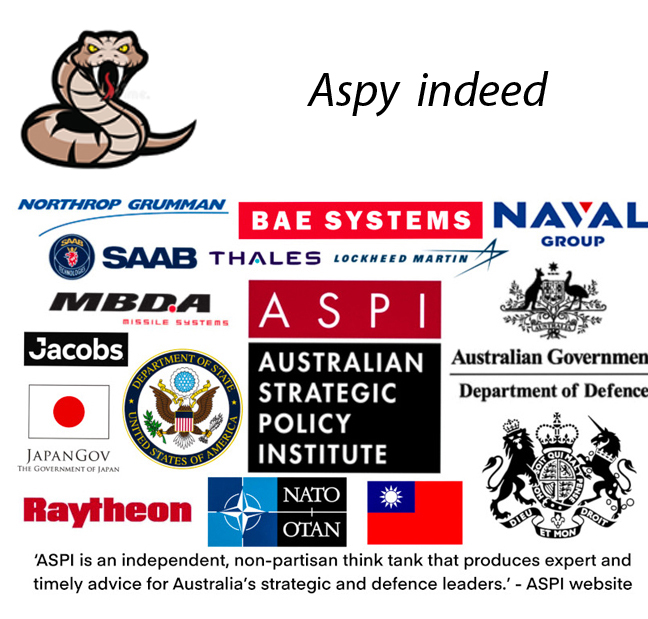
COMMENT. It really is about time that the Australian government stopped heeding this hawkish pretend-independent “think tank”.
Its thinking is limited to whatever the military-industrial-corporate-media complex tells it to think.
Australia could soon be hosting nuclear-armed US submarines The Strategist 23 Aug 2024.Alex Bristow
“……………………………………………………..One way to demonstrate that Canberra has real skin in the deterrence game is to host more US nuclear forces.
Australia is yet to follow South Korea’s example of welcoming a visit by a US ballistic missile submarine, which would always carry dozens of nuclear warheads. But changes afoot in Washington mean Australia could soon be regularly hosting other types of nuclear-capable submarines—those that can deliver nuclear weapons even if the US neither confirms nor denies that any are aboard.
Largely overlooked in Australia, the US Congress has funded development of a nuclear-tipped cruise missile for use at sea, formally called SLCM-N, to become provisionally operational by 2034. Such nuclear cruise missiles have not been deployed on US Navy vessels since the early 1990s.
The new ones seem to be primarily earmarked for Virginia-class attack submarines—a type of boat that visits Australia regularly and will form part of the rotational force being established at the base HMAS Stirling in Western Australia later this decade as part of AUKUS.
Politics could still get in the way, but there is bipartisan support for SLCM-N in the US Congress and the Biden administration’s opposition has lessened. If Trump wins, its future should be secure. Elbridge Colby, who is widely tipped for a top national security role in a second Trump administration, is a fan.
………………………Australia will have a greater say over changes to US nuclear posture if it does more to support extended deterrence than host such joint facilities as Pine Gap. But doing more will require public understanding and support, which the government must build.
Canberra’s first task is ensuring that disinformation about US nuclear weapons does not undermine AUKUS.
…………………………Ministers must make the case to the Australian public and the international community that the US nuclear umbrella, which relies on support from allies, helps make the world more stable and less prone to the proliferation of nuclear weapons.
………………………..Australian interests are best served by contributing more actively to extended nuclear deterrence, including being open to hosting more US nuclear forces, without seeking nuclear weapons……
1 This month
.

Australians deserve the truth
about
AUKUS – https://aukuspublicinquiry.com/

PETITION – To: Prime Minister Anthony Albanese and the Australian Labor Government

of the week – Australians for War Powers Reform (AWPR)
To see nuclear-related stories in greater depth and intensity

