Israel lobby ramps up scare campaigns in fear of truth
By Bilal Cleland | 1 August 2024, https://independentaustralia.net/politics/politics-display/israel-lobby-ramps-up-scare-campaigns-in-fear-of-truth,18826
Israel lobby groups have increased efforts to silence those accusing the nation of genocide in Gaza, writes Bilal Cleland.
SHAIMA FARWANEH, 16, in the coastal displacement camp in al-Mawasi, west of Khan Younis, was preparing to make breakfast for her family on 13 July when the Israeli bombs fell.
Ninety people, mainly women and children, were killed and over 300 injured.
Shaima told Mondoweiss:
There is no country in all the world that does this to children, women, and civilians. This isn’t how wars are.
A leg hit me and I saw dismembered bodies a few metres away. I saw a young child screaming. He lost his lower limbs and was crawling on his hands and screaming. The bombs didn’t stop and suddenly the boy disappeared. I saw how he vanished before me while we ran and lowered our eyes to the ground, unable to do anything but run.
Israel in trouble
Following 7 October, by the end of 2023, from over 4,000 immigrants a month only about 1,000 a month were arriving in Israel. A 70 per cent decline.
In that same couple of months, about 470,000 Israelis fled.
As reported in Anadolu Ajansi:
‘Therefore, there is a negative migration of about half a million people, and this does not include thousands of foreign workers, refugees and diplomats who left the country.’
Despite the support given to Israeli Prime Minister Benjamin Netanyahu by the ruling parties across North America, much of Europe and Australia, one in four Israeli Jews and four in ten Arab Israelis would like to leave Israel according to a new survey. This reflects ‘a steady distrust with Israel’s political and military leadership’.
International institutions closing in
Haaretz published the stunning International Court of Justice (ICJ) findings on the Israeli occupation of Palestinian territory:
- Israel must end its presence in the occupied territories as soon as possible.
- Israel should immediately cease settlement expansion and evacuate all settlers from the occupied areas.
- Israel is required to make reparations for the damage caused to the local and lawful population in the Palestinian territories.
- The international community and organisations have a duty not to recognise the Israeli presence in the territories as legal and to avoid supporting its maintenance.
- The UN should consider what actions are necessary to end the Israeli presence in the territories as soon as possible.
The International Criminal Court (ICC) in The Hague is expected to issue arrest warrants for Netanyahu and Defence Minister Yoav Gallant within a fortnight.
Conflating opposition to genocide with anti-Semitism
The United States makes much of the role of the Iranian Council of Guardians selecting acceptable candidates for political office but ignores the role of its own Council of Guardians, AIPAC, which decides on suitable candidates for office.
U.S. Congressman Jamaal Bowman, once a recipient of lobby largesse, after seeing reality in Palestine on a J Street-funded excursion, called Gaza a genocide and said boycotts were legitimate.
Israeli lobby groups spent $9.9 million in a Democrat primary to get rid of him in favour of a supporter of Israel.
The scare campaign around rising anti-Semitism, which conflates criticism of Israel’s mass atrocities with prejudice against Jews, is a feature of most of the old colonial countries.
Mary Kostakidis, one of Australia’s most respected journalists, who speaks truth to power, has written regarding the Israeli genocide in Gaza:
‘In an effort to silence me, the Zionist Federation have filed a complaint with the [Australian Human Rights Commission] for racial vilification, aided by a reporter who can’t do his own research.’
The lobby levelled another case of harassment and suspicious accusations against a Palestinian Australian engaged in anti-genocide activity.
Hash Tayeh, who had to present himself to the police over alleged anti-Semitic comments, was not charged and his matter has been referred to the Office of Public Prosecutions.
His Caulfield Burgertory outlet was set on fire, allegedly by two men, on 10 November, an attack he claimed was linked to his involvement in a pro-Palestine rally and thus a hate crime.
Then we witnessed the arrest of a Palestinian activist in the Prime Minister’s electoral office.
Sarah Shaweesh, who was asking about the delay in visas for her family in Gaza, was arrested.
The office refused to help her.
She is a key organiser of the 24/7 Gaza sit-in protest in front of the PM’s office.
Complicity in genocide
In early March, Sydney law firm Birchgrove Legal lodged a communiqué to the ICC prosecutor claiming that the Australian PM and a number of other high-level local politicians are complicit in the Gaza genocide.
On Tuesday this week, it announced that the Office of the Prosecutor of the ICC had added the document:
‘“…to the evidence gathered as part of the ICC’s investigation into the Situation in the State of Palestine,” as well as having been transmitted “to relevant staff members for further review”.’
Meanwhile, Muslim Votes Matter is mobilising the anti-genocide vote in preparation for the next federal election.
TODAY. “People of a generally nervous disposition” worry about mishaps with nuclear bombs.
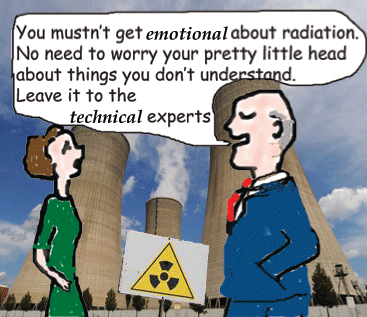
I just couldn’t resist that little quotation from an article today about an undetonated nuclear bomb lying at the bottom of a river. To be fair, I think that the writer might have been being sarcastic. He also mentions that “bomb-enthusiasts” worry, too.
Nevertheless, his statement is symptomatic of the comfortable attitude of the authorities to the whole subject of nuclear weapons – in this system, quaintly called deterrence. We’re all a bit worried that someone, like Putin, for example, might actually use one, some day.
But, in the “normal” course of events, nuclear weapons provide good, reliable jobs, and all sorts of government benefits to the community, and something to be proud of- “my strong country” etc. Don’t they?
So, it’s a bit annoying, when someone kicks up a fuss about the nuclear weapons that get accidentally dropped, and lost. They have all sorts of safety features, so they can’t easily explode. well, the land-based ones are supposed not to, anyway. The Atomic Archive lists for the USA 32 “Broken Arrow” nuclear accidents. Of course, that’s only the American ones. What about the others – French, British, Russian, North Korean, Chinese nuclear weapons? Russia was known to have 45.000 nuclear weapons up to 1986 – most of them on submarines – how many got lost undersea? Can they explode, undersea?
But that’s the thing. We are comforted by the reassurance from the experts, that explosion of a lost nuclear weapon is extremely unlikely. We are safe.
What they don’t talk about – is corrosion, leakage of radioactive materials. Over time, increased radioactivity in water and land will affect millions of people, – but don’t worry – of all those millions, only a few million will get cancer from this. So you see, a few million cancer deaths is nothing much really, to worry about. Or so the experts would have us think.
The nuclear lobby has achieved a wonderful global brainwashing. The only thing to worry about is a dramatic event, – an explosion with high levels of radiation released.
If you worry about those less dramatic millions of cancers, well, you must be “a person of a generally nervous disposition”. Hell – it’s your fault – you need psychiatric care, you poor thing.
Ted O’Brien sets out long-term plan for uranium-enrichment industry
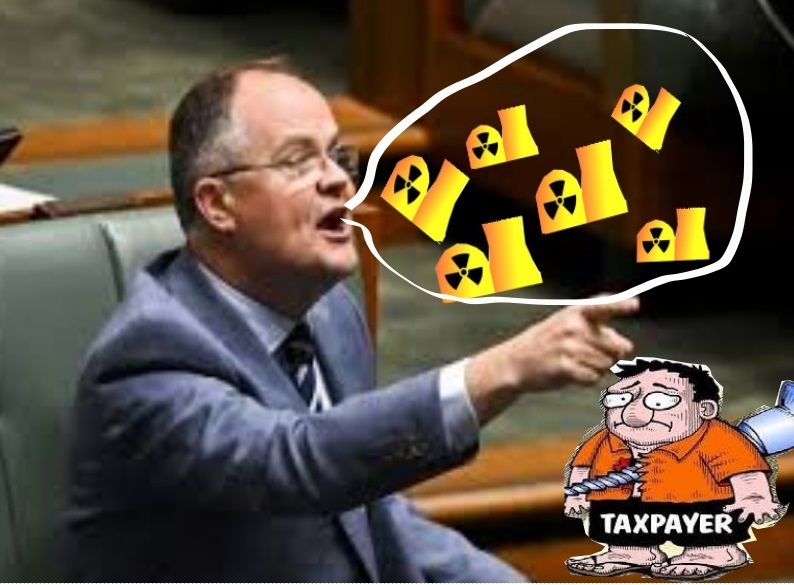
Joe Kelly, THE AUSTRALIAN, 31 July 24
Opposition energy spokesman Ted O’Brien will call for Australia to develop a sovereign capability at the front end of the nuclear fuel cycle – including the enrichment, conversion and fabrication of uranium – as new survey results show a dip in support for nuclear power.
In an address in Adelaide on Thursday night, Mr O’Brien will sketch out a long-term national endeavour to strengthen Australia’s energy security, building on the Coalition’s plans to replace retiring coal-fired power stations with up to seven nuclear power plants.
Mr O’Brien’s long-term nuclear plan for Australia now includes three key planks: the unlocking of the nation’s uranium reserves; the building of nuclear power plants; and a longer-term plan to develop expertise across the front end of the nuclear fuel cycle that would involve the development of a uranium-enrichment industry.
The three-pronged plan is aimed at ensuring Australia can eventually be self-sufficient, and not have to rely on global supply chains for the nuclear fuel rods that will be needed to power a future fleet of nuclear power plants…………………….
“Advancing Australia in this direction would set Australia up for the future, not just economically, but also strategically.”
Mr O’Brien will speak about his longer-term vision at an energy event on Thursday night being hosted by the Institute of Public Affairs, where he will also make a case for Australia to develop the capability to export nuclear fuel…………………….
The speech follows SEC Newgate’s release of its latest Mood of the Nation report on Thursday, which reveals only moderate support for nuclear power and a clear preference for renewables and new transmission infrastructure.
The latest tracking survey of 2021 Australians over the age of 18, taken between July 17 and 23, shows support for nuclear is slightly lower than in April at 37 per cent, while 39 per cent of respondents say they are against nuclear, and 23 per cent are neutral.
The results show a clear preference for building large-scale wind and solar farms with new transmission lines (50 per cent of respondents prefer this option), rather than nuclear power plants that use existing transmission infrastructure (26 per cent of people prefer this option).
Support for the Coalition’s policy to build seven new nuclear power plants is 39 per cent, while 35 per cent of respondents say it makes them less likely to vote with the Coalition, and 26 per cent say it makes them more likely to vote for the Opposition at the next election.
Of those who oppose the Coalition plan, most objections relate to safety concerns (41 per cent say it is too dangerous). However, 19 per cent of opponents to the Coalition plan believe renewables are superior.
Dutton praises Canada to sell nuclear plan. But does Ontario really have cheaper power?

Guardian, Graham Readfearn, 1 August 24
Opposition leader’s argument is puzzling given Canadian provinces dominated by renewables pay less for electricity.
There’s a community in Ontario called Dutton which, right now, seems appropriate given the number of times Peter Dutton has name-checked the Canadian province over the last 12 months.
In dozens of media interviews and speeches, Dutton (the opposition leader, not the township) has said Ontarians are getting cheap electricity because of their 20 nuclear reactors.
The Coalition has announced it wants to lift Australia’s ban on nuclear electricity and put at least one reactor at seven sites around the country.
Last week, Dutton again deployed his favourite Canadian talking point, telling reporters: “We could be like Ontario, where they’ve got 60 or 70% nuclear in the mix, and they’re paying about a quarter of the price for electricity that we are here in Australia.”
Really cheaper?
So ubiquitous has Dutton’s talking point been that it has made its way to Prof Mark Winfield, a sustainable energy expert at Ontario’s York University. And he is puzzled.
“I have heard about this,” he told Temperature Check. “I must admit I find the notion of holding Ontario up as a model for electricity and climate policy more than a little bizarre.”
Winfield says Ontario’s electricity rates are not low by Canadian standards, but added “the situation is distorted by the [$8bn a year] subsidy the province provides out of general revenues”.
Those billions, Winfield says, would otherwise be spent on things like schools and hospitals, instead of “artificially” lowering electricity rates.
“That accounts for the bulk of the province’s annual deficit,” he says.
So does nuclear mean cheap power for Ontario?
First, let’s start with Ontario’s electricity mix. The province has 20 of Canada’s 22 nuclear reactors, providing about 59% of Ontario’s electricity.
But comparisons of electricity prices across Canada and North America don’t show that Ontario’s nuclear-heavy generation delivers particularly cheap power.
According to two analyses (here and here), Quebec, the province next door where almost all electricity comes from hydropower, gives the cheapest rates. British Columbia and Manitoba are also cheaper, and they’re also dominated by hydro.
Dutton has said Ontarians “pay around about 14 cents kWh. There are parts in Australia that will be paying up to 56 cents a kilowatt hour from July 1 this year.”
But making a fair comparison between Australian electricity prices and Ontario is almost impossible because – before we’ve even got to the subsidy – the structures and governance systems around electricity are very different.
Almost half of Ontario’s power generation is publicly owned and the prices people pay are set by a government board.
Ontarians pay for their electricity in a more sophisticated way than Australians – people can choose one of three price plans, and the price people pay for each kWh can depend, for example, on how much power they have used that month or what time of day they are using it. The cost to the customer per kWh can be as low as 3c/kWh and as high as 32c/kWh.
But Winfield says the $8bn annual subsidy that helps keep those costs down is also masking the cost of refurbishing Ontario’s existing fleet of reactors that were built between the 1970s and 1990s.
“Those projects have consistently run billions over budget and years behind schedule, and in some cases ended in write-offs,” Winfield says.
The provincial government wants to refurbish 10 of its reactors. Winfield says the cost of those refurbs isn’t known, but his own estimates stand at about $44bn.
Ontario’s government has a chequered recent history when it comes to energy policy.
Critics have pointed to the province’s “horrifically expensive” nuclear reactors that helped the collapse of the publicly owned generator in the 1990s with $42bn of debt, and ratepayers were asked to repay some of that with a charge they continued to pay until 2018.
In 2018, the provincial government cancelled 758 renewable projects, reportedly costing Ontarians about $250m.
Winfield says Ontario’s decision to sideline renewables and back nuclear will see the province relying more on gas, which he says will push up greenhouse gas emissions.
“The fundamental underlying problem, along with all of the other downsides with nuclear – waste management, major upstream impacts in terms of uranium mining and milling, security, catastrophic accident and weapons proliferation risks that just don’t exist in relation to other energy technologies – is that it hasn’t benefited from the kinds of learning curves you have seen with renewables and storage, where costs have fallen and performance improved,” he says.
“Rather, nuclear costs just keep rising.”………………… https://www.theguardian.com/environment/article/2024/aug/01/peter-dutton-nuclear-power-plan-cost-price-canada-ontario
Australian nuclear news headlines 29 July – 5 August

Headlines as they come in
- ‘Renewable, not radioactive’: calls for Newcastle to remain nuclear free
- Australia should avoid small nuclear reactors until 2040s, engineers warn.
- America’s war machine: Unless Australia acquires nuclear weapons, why acquire AUKUS subs?Nuclear plant trips due to fire, and battery storage steps in to stabilises the grid
- Australians blame wind, solar for high power bills as media campaigns take hold .
- Nuclear is a toxic idea … here’s why.
- AUKUS servility just one facet of poor governance.
- Ted O’Brien sets out long-term plan for uranium-enrichment industry.
- Dutton praises Canada to sell nuclear plan. But does Ontario really have cheaper power?
- Nuclear means choosing drinking water, irrigation or power: Miles.
- Time for Dutton to front up to Collie on nuclear announcement.
AUKUS servility just one facet of poor governance
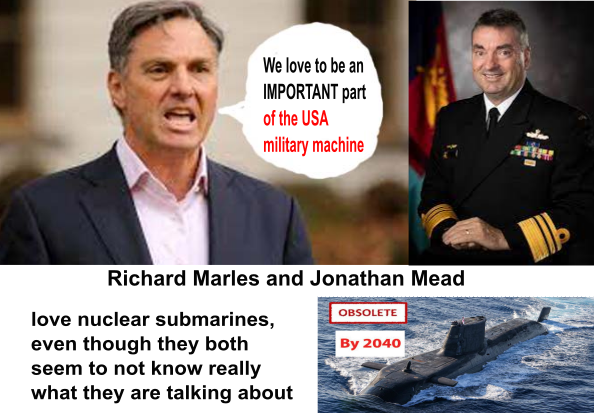
By Paul KeatingJul 31, 2024, https://johnmenadue.com/aukus-servility-just-one-facet-of-poor-governance/
Richard Marles has the Navy out in force firing torpedoes at AUKUS critics.
On Friday last, Vice Admiral Jonathan Mead claimed the critics need to produce evidence of any challenges to AUKUS being realised, then on Saturday, Vice Admiral Hammond, Chief of Navy, raised his periscope claiming the AUKUS debate was being ‘hijacked’ by people with ‘specific agendas’ without indicating what these agendas might be or who was likely making them.
The fact is, what clearly is being ‘hijacked’ is national accountability – accountability for the most wayward strategic and financial decision any government has taken since Federation.
Despite AUKUS’s half trillion of budgetary cost and its dangerous strategic implications there has not been one Ministerial Statement explaining its rationale, its strategic policy objective or defending its hugely distorting impact on government expenditures.
Not a coherent or persuasive word has come from the Minister for Defence or for that matter, the Prime Minister, let alone from a parliamentary debate on what is significantly a seminal turn in the country’s strategic and defence policy settings.
Vice Admiral Hammond, ignoring Australia’s geography – its residence among populous and prosperous Asian states, fell back on the old Anglo glee-club adage ‘three developed nations who have over 100 years of shared history, heritage, values and sense of purpose.’

The likelihood is that Australia will not come into possession of nuclear submarines of its own making, but what it will certainly become is landlord and host to American nuclear submarines as the United States appropriates Australian real estate in its attempts, against all odds, to maintain strategic primacy in Asia. Odds that carry the likelihood of Australia being dragged into military skirmishes with China, or indeed, worse.
So irresponsible, secretive and smug has the government been in making its decision, that no amount of ‘hijacking’ by anyone else is likely to disrupt Australia from its current path of effectively falling into American hands, or at least, being abjectly at America’s beck and call.
Republished from Australian Financial Review, July 30, 2024
Assange, CIA Surveillance and Spain’s Audencia Nacional
Australian Independent Media, August 1, 2024, Dr Binoy Kampmark
The sordid story on the CIA-backed operation against the WikiLeaks publisher Julian Assange during his time cramped in London’s Ecuadorian Embassy continues to froth and thicken. US officials have persisted in their reticent attitude, refusing to cooperate with Spain’s national high court, the Audiencia Nacional, regarding its investigation into theAgency’s espionage operations against the publisher, spearheaded by the Spanish security firm Undercover (UC) Global.
Since 2019, requests for assistance regarding the matter, including querying public statements by former CIA director Mike Pompeo and former head of counterintelligence, William Evanina, along with information mustered by the relevant Senate Intelligence Committee, have been made to US authorities by judges José de la Mata and Santiago Pedraz. These have been treated with a glacial silence.
On December 12, 2023, the General Subdirectorate of International Legal Cooperation furnished the US authorities “an express announcement” whether such judicial assistance would be denied.
Spain’s liaison magistrate in the US, María de las Heras García, duly revealed that the tardiness to engage had been occasioned by ongoing legal proceedings being conducted before the US District Court of the Southern District of New York. As Courtney E. Lee, trial attorney at the US Justice Department’s Office of International Affairs explained, supplying Spain’s national high court with such information would “interfere” with “ongoing US litigation”. Hardly a satisfactory response, given requests made prior to the putative litigation.
The litigation in question involved a legal suit filed in the US District Court of the Southern District of New York by civil rights attorney Margaret Ratner Kunstler, media lawyer Deborah Hrbek, and journalists John Goetz and Charles Glass.
In their August 2022 action, the complainants alleged that they had been the subject of surveillance during visits to Assange during his embassy tenure, conduct said to be in breach of the Fourth Amendment. The plaintiffs accordingly argued that this entitled them to money damages and injunctive relief from former CIA director Mike Pompeo, the director of the Spanish security firm Undercover (UC) GlobalDavid Morales, and UC Global itself.
On December 19, 2023 District Judge John G. Koeltl granted, in part, the US government’s motion to dismiss while denying other portions of it. The judge accepted the record of hostility shown by Pompeo to WikiLeaks openly expressed by his April 2017 speech and acknowledged that “Morales was recruited to conduct surveillance on Assange and his visitors on behalf of the CIA and that this recruitment occurred at a January 2017 private security industry convention at the Las Vegas Sands Hotel in Las Vegas, Nevada.
The litigants found themselves on solid ground with Koeltl in the finding that they had standing to sue the intelligence organisation. “In this case, the plaintiffs need not allege, as the Government argues, that the Government will imminently use their information collected at the Ecuadorian Embassy in London.” The plaintiffs would “have suffered a concrete and particularized injury fairly traceable to the challenged program and redressable by favorable ruling” if the search of the conversations and electronic devices along with the seizure of the contents of the electronic devices were found to be unlawful.
-Advertisement-
The plaintiffs also convinced the judge that they had “sufficient allegations that the CIA and Pompeo, through Morales and UC Global, violated their reasonable expectation of privacy in the contents of their electronic devices.” But they failed to convince Koeltl that they had a reasonable expectation of privacy regarding their conversations with Assange, given the rather odd reasoning that they were aware the publisher was already being “surveilled even before the CIA’s alleged involvement.” Nor could such an expectation arise given the acceptance of video surveillance of government buildings. Problematically, the judge also held that those surrendering devices and passports at an Embassy reception desk “assumed the risk that the information may be conveyed to the Government.”
Sadly, Pompeo was spared the legal lash and could not be held personally accountable for violating the constitutional rightsof US citizens. “As a presidential appointee confirmed by Congress […] Defendant Pompeo is in a different category of defendant from a law enforcement agent of the Federal Bureau of Narcotics.”…………………………………………………………………………..
As long as the Agency stifles and drags out proceedings on the grounds of this misused privilege, the Justice Department is bound to remain inert in the face of the Spanish investigation. https://theaimn.com/assange-cia-surveillance-and-spains-audencia-nacional/
TODAY. Who will honestly face up to the problem of nuclear wastes? Rolling Stewardship as a practical option.
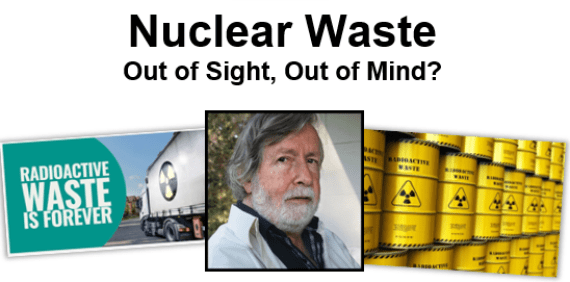
Dr Edwards is the first I’ve come across to simply acknowledge that there really is no definitive solution for disposing of nuclear wastes. But he moves on to a practical method of managing the wastes that now exist, (along with the aim of not creating any more). He suggests adapting a plan by the National Academy of Sciences for dealing with long-lived toxic substances – Rolling Stewardship.
Do not trust the authorities on this problem. Get real.
The International Atomic Energy Agency (IAEA) was set up in order to promote the nuclear industry, (and to blur and assuage the guilt from the bombing of Hiroshima and Nagasaki).
So – don’t expect the IAEA, and all the other worthy bodies set up to manage the industry, to genuinely face up to the problem. If it means adding costs to today’s industry – they’re not interested. (Just let’s pass it on to our grandchildren)
Do not trust the “respectable” media to genuinely address, let alone even understand, this problem. They can’t – (A) because they want to keep their jobs, and (B) they are intimidated by their feeling of not really understanding such technical matters – best leave it to the experts!
Trouble is – the experts all have a vested interest in the nuclear/ nuclear-weapons and associated industries.
Having said that, I do acknowledge that there are a courageous few – experts who see the bad stuff about nuclear. (These are soon dismissed and labelled as cranks etc) .
There are a few courageous journalists who manage to speak the truth, and still hold down their jobs in the “mainstream” media. (I will not name these, for their own employment safety.)
So – now we come to talking about nuclear wastes.
I am grateful to Gordon Edwards for coming up with a genuine examination of the question of nuclear wastes. Gordon Edwards is a mathematician, physicist, nuclear consultant, and president of the Canadian Coalition for Nuclear Responsibility (www.ccnr.org). No doubt he will soon to be trashed by the “experts” as a foolish and dangerous crank.
Dr Edwards is the first I’ve come across to simply acknowledge that there really is no definitive solution for disposing of nuclear wastes. But he moves on to a practical method of managing the wastes that now exist, (along with the aim of not creating any more). He suggests adapting a plan by the National Academy of Sciences for dealing with long-lived toxic substances – Rolling Stewardship.
Dr Edwards’ concept is outlined here – Rolling stewardship of nuclear wastes. In brief, it means that we should take responsibility now for nuclear waste – store it safely and strongly above ground, away from large water bodies, and monitor it, repair and repackage containers. This is an alternative to the present plan for bury it and forget about it – leave it to future generations to cope with any issues.
This stewardship plan is expensive – the costs of making the containers really strong, and kept in repair, and the ongoing work of monitoring and repair. Indeed it will add to the already well-known diseconomics of the industry.
So the authorities and experts will not like it. But perhaps – some will. Some will join the ranks of the discredited critics of the nuclear industry. It would be something to be proud of – to join with Gordon Edwards and others who look towards a positive plan – as we exit from the nuclear age.
Nuclear is a toxic idea … here’s why

By Environment Victoria
Clean energy is already here, generating 40% of our electricity in 2023! It’s on our rooftops, co-existing on farms, embraced by local businesses, and stored for later use by battery technology.
It’s the most affordable form of energy, and it’s growing fast. Which is great news, because the more clean energy we use, the less dirty coal and gas we burn, and the less damage we do to our climate.
But nuclear energy could threaten this progress. Nuclear is horribly costly (both to produce and for energy bills), would take decades to build, and is totally unnecessary.
Nuclear is just a new distraction designed to undo Australia’s hard work and stall the renewable energy.
Here are 4 reasons nuclear energy in Australia is a toxic idea.
Nuclear advocates claim to want mature discussion on nuclear, but we’ve been here before! Like ‘clean coal’, carbon capture & storage (CCS), and the ‘gas fired recovery’ that came before it, nuclear energy is just a new distraction to keep us burning dirty coal for as long as possible.
In 2015 a South Australian Royal Commission found Nuclear in Australia made no economic sense. [1]
In 2020 a Victorian inquiry into nuclear found “substantial evidence that nuclear power is significantly more expensive than other forms of power generation …” [2]
And this year the Australian Academy of Technological Sciences and Engineering (ATSE) released a report suggesting that if Small Modular Reactors (SMRs) ever make it off the drawing-board, it’s unlikely they would be cost-effective until the mid to late late 2040s. That’s 20 years away! [3]
2. Nukes would be a nightmare for our energy bills!
As you can see from the below graph,[on original] nuclear is by far the most expensive way to power our homes. [4]
The cost of building large scale nuclear is eye-watering. Best case scenario, constructing just one nuclear plant would cost $8.65 billion. But Australia has never built a nuclear power station before, so it’s very likely this price would be much higher, possibly as much as $17 billion or more. [5]
Nuclear energy projects have a long history of delays and massive cost blowouts. In the UK, the Hinkley Point C reactor was originally budgeted to cost $35 billion (AUD) but will now cost up to $94 billion (AUD). And this is in a country that already has an established nuclear industry! [6]
For this reason, superannuation funds and banks have refused to back nuclear as it doesn’t stack up economically, so the Coalition has conceded taxpayers would need to pay the full amount.
It’s a different story for clean energy. The Federal Government’s Capital Investment Scheme (CIS) is driving billions of dollars in private investment in wind, solar and batteries (which means taxpayers don’t have to oot all the costs).
In fact, the first large scale auction for battery storage was massively oversubscribed, showing huge investor interest in Australian renewable energy projects. [7]
3. It will take too long
Australia has no nuclear energy industry, so developing the required infrastructure, regulations and training programs needed would be a long process. The most credible estimates show nukes wouldn’t be producing any energy in Australia until at least 2040. [8]
If we were to stop building clean energy and wait for nuclear, we would need to extend the lives of coal power plants that are already old, unreliable and expensive to operate. That would mean more than two BILLION additional tons of climate pollution between now and 2050, compared to the Australian energy market operators’ latest energy transition plan. [9]
Alternatively, wind and solar projects can be up and operational within a couple of years. [10]
4. We don’t need it!
In 2010 just 10% of our electricity production came from clean energy, but by 2023 that number had soared to almost 40%. [11]
Rapid advances in energy technology, including large scale batteries, means we no longer require energy grids to be designed around the old ‘baseload’ model, where large, centralised power stations operated at a constant rate and can’t quickly or efficiently vary their output. Clean energy grids are being designed around a combination of variable but predictable solar and wind, and dispatchable sources. ‘Dispatchable’ means they can quickly ramp up and down their output like batteries and pumped hydro.
This is a new way of designing an energy grid. But we have study upon study showing exactly how it is possible using the technology we already have. See here, here and here.
This new model works for a number of reasons. Solar and wind output can be predicted in advance, allowing grid operators to plan and engage the required dispatchable output. You can also use ‘demand response’ mechanisms, where large industrial energy users are paid to reduce consumption at rare times of very high demand. This is much more cost effective than building generation capacity that might only be needed a few hours each year – which occurs in baseload systems. As nuclear generation is not flexible, introducing it to the energy mix would require rooftop solar system to be disconnected from the grid during the day! [12]
As you can see from the graph below, [on original] even if the Coalition’s proposed nuclear plants were built, they would only be a small, but very expensive, fraction of our energy grid. We would still need to move full steam ahead with renewable energy.
Nuclear is costly, time intensive and unnecessary. We need to cut climate pollution now, not in 25 years’ time, and clean energy sources like wind and solar with battery storage are the fastest and lowest-cost way to achieve this.
Greasing Palms: The Thales Blueprint for Corruption
July 30, 2024, by: Dr Binoy Kampmark, https://theaimn.com/greasing-palms-the-thales-blueprint-for-corruption/
It is a point verging on the trite: an arms corporation suspected of engaging in corrupt practices, spoiling dignitaries and officials and undermining the body politic. But one such corporation is France’s Thales defence group, which saw raids on their offices in France, the Netherlands and Spain on June 26 and June 28. The prosecutors are keen to pursue charges ranging from standard corruption and attempts to influence foreign officials to instances of criminal association and money laundering.
It is clear in this that even the French republic, despite having a narcotics grade addiction to the international arms industry, thought that Thales might have gone just that bit far. Some 65 investigators from the Nanterre-based office responsible for battling corruption, financial and fiscal offences have been thrown into the operation. A further twelve magistrates from the National Financial Prosecutor’s Office (PNF), with the assistance of the European agency Eurojust, aided by Dutch and Spanish officials, have all been involved in this sprawling enterprise.
The police raids arise from two separate investigations. The first, starting at the end of 2016, involved suspicions of corruption pertaining to a foreign official, criminal association and money laundering. The topics of interest: the sale of submarines to Brazil, along with the construction of a naval base.
The second commenced in June 2023, with claims of suspected corruption and influence peddling, criminal conspiracy and money laundering connected with the supply of military and civilian equipment to overseas clients.
Giving little by way of details, a spokesperson for Thales insisted that the corporation “strictly complies with national and international regulations.” It had “developed and implemented a global compliance program that meets with the highest industry standards.” That, it may well turn out, is precisely the problem.
The company propaganda on such compliance with national and international regulations is plentiful and fabulously cynical. After a time perusing such material, one forgets that this is a defence outfit much dedicated to sowing the seeds of death, a far from benign purpose. Group Secretary and General Counsel Isabelle Simon, for instance, is quoted as saying that the company, over the course of two decades “has developed a robust policy on ethics, integrity and compliance, which are the foundations of our social responsibility and the key to building a world we can all trust.”
The anti-corruption policy, so it is claimed, is also “regularly reviewed and updated to reflect increasingly strict international rules and requirements on corruption and influence peddling,” a point “further strengthened by Thales’s progress towards ISO 37001 certification.”
Typical of the guff surrounding modern organisational behaviour, the company wonks assume that workshops and training sessions are the way to go when inspiring a spirit of compliance. The more sessions you run, and the more do you do, the more enlightened you become. In boasting about its “zero tolerance on corruption,” we are told that 11,270 “training sessions on corruption and influence peddling were delivered in 2019-2020.”
Other features are also mentioned to ward off any suspicions, among them a code of conduct intended to stomp on any corrupt practices, a “corruption and influence peddling risk map,” a disciplinary system, an anti-bribery management system and an internal whistleblowing program.
Thales also got what it wanted, effectively bypassing, with the blessing of the defence department, a competitive tender process. This took place despite a 2017 offer from the global munitions company, NIOA, and the ANAO’s own recommendation to pursue an appropriate tender option. All in all, the audit found that “Defence’s management of probity was not effective and there was evidence of unethical conduct.”
This is putting it mildly, given that Thales had not only been involved in drafting the criteria for the request for tender (RTF) documents (some 28 workshops were held for that purpose between October 2018 and August 2019), but did so deficiently. In October 2019, this very point was made by the Defence Department, which noted no fewer than 199 “non-compliances” by the company against the RTF.
Apart from giving officialdom their time in the sun of oversight and regulation, chastening investigations into corruption do little to alter the spoliation that arises from the defence industry. Defence contractors are regularly feted by government authorities, often with the connivance of the revolving door. Yesterday’s officials are today’s arms sales consultants. The defence sector, notably for such countries as France, is simply too lucrative and important to be cleansed of its unscrupulousness. Even as these investigations are taking place to ruffle Thales, the Brazilian military establishment, by way of example, has happily continued doing business with the French weapons giant.
In February last year, the defence group trumpeted securing a contract with the Brazilian Airspace Control Department (DECEA) for the supply and installation of ADS-B ground surveillance stations to improve the safety of commercial civil aviation. The effort is not negligible: 66 stations to be installed in over 20 Brazilian states.
On June 17, the company announced the acquisition by the Brazilian Air Force of the Ground Master 200 Multi-mission All-in-one (GM 200 MM/A) tactical air surveillance radars. With much bluster, the announcement goes on to describe such radars as giving the user “superior situational awareness for air surveillance, as well as ground-based air defence (GBAD) operations up to Mid-Range Air-Defence (MRAD).” Some gloating follows: “The contract signed with the FAB consolidates Thales’ position as a leader in the radar market in Brazil.” One can only wonder how many palms were greased, and local regulations breached, for that to happen.
Prime Minister Albanese’s hypocrisy on matters nuclear
Reverse nuclear secrecy. Albo or Dutton? What’s the scam?
Michael West Media, by Rex Patrick | Jul 28, 2024
“……………………………………………………………………..At the same time, the Prime Minister has launched a full-scale attack on Dutton’s half-baked scheme to build seven nuclear power reactors. Albanese’s problem is that much of Labor’s critique of Dutton’s contentious plans applies to AUKUS too.
It’s hard to criticise power reactors when you’re the man who stamped approval on the $368B AUKUS program as you swung by the political Kabuki show in San Diego last year.
Which leaves the Prime Minister exposed as a hypocrite on an issue he would like to put at the centre of his election campaign. https://michaelwest.com.au/reverse-nuclear-secrecy-albo-or-dutton-whats-the-scam/
Australians blame wind, solar for high power bills as media campaigns take hold

Misinformation fueling bizarre beliefs
Putting out conflicting information about the energy transition suits anti-renewables groups for that myth to persist as it supports the status quo,
Rachel Williamson, Jul 29, 2024, https://reneweconomy.com.au/australians-blame-wind-solar-for-high-power-bills-as-media-campaigns-take-hold/
Australians have forgotten why their power bills are going up, with more than a third now blaming renewables, and not rising fossil fuel prices for their monthly or quarterly pain, according to an Ipsos survey released on Monday.
Everyday Australians are also struggling to understand the transition at all as misleading statements, such as the National Party favourite that offshore wind turbines kill whales, make it harder to sort fact from fiction.
Based on misinformation shared on social media, by word-of-mouth, and in mainstream media, 68 per cent of Australians believe transitioning to renewable energy generally will result in higher power prices.
Some 37 per cent of Australians think that closing coal power stations, specifically, and replacing them with wind and solar farms, are already lifting power prices.
That figure is 10 per cent higher than it was in 2022, when the start of the Russian war in Ukraine sent coal prices sky-high and consumer power bills rocketing.
The Ipsos survey showed increases in negative perceptions around closing coal power stations and replacing them with wind and solar farms across seven different metrics.
These covered fewer people believing that renewables will help air quality, to more people believing the shift will damage job prospects, economic growth, energy reliability, and cost of living generally.
It recorded a sharp hike of 13 per cent in the number of people who want the government to make energy bills a policy priority, and sharp decrease in those wanting Australia to be a climate leader.
Two plus two still equals four
But it’s not difficult to see why more Australians are now associating wind and solar farms with higher power bills and cost of living more generally, says the Grattan Institute’s Allison Reeve.
“It’s only very recently that we’ve come to this point where renewables have become the cheapest form of energy, so people who don’t think about energy all the time for a living will have a shortcut in their brain and say ‘oh renewables are more expensive’,” she says.
“Rewiring that shortcut will take that time.”
The news cycle is full of articles about renewables, or Liberal and National MPs’ nuclear red herrings, whereas two years ago political leaders were reminding consumers that coal prices were the cause of rocketing wholesale energy prices.
Furthermore, Reeve says Australians may still be paying for those high 2022 wholesale power prices in their Default Market Offers, because retailers contract for energy years in advance.
Re-Alliance national director Andrew Bray says delays in delays in upgrades to transmission infrastructure and requirements to burn gas are also driving prices up.
Today, what energy consumers are being told is that renewables are delivering massive wholesale price drops while at the same time being gifted marginal discounts to their bills.
Add in the fact that electricity retailers are surprising consumers across the country – and not just in New South Wales (NSW) as happened to Renew Economy editor Giles Parkinson – with radically higher time-of-use tariffs when electricity meter settings are changed, and consumers have a reason to associate high power bills with the energy transition.
Misinformation fueling bizarre beliefs
Putting out conflicting information about the energy transition suits anti-renewables groups for that myth to persist as it supports the status quo, Reeve says.
Despite a third of Ipsos’ respondents saying they want to know more about what Australia is doing to meet its climate goals, misinformation is getting in the way.
Nearly two-thirds of the respondents believed statements such as that electric vehicles are as bad for the planet as petrol cars, based on word-of-mouth rumour, social media, and articles in mainstream media.
Other “somewhat and very believable” statements believed by 50 per cent of the Ipsos survey respondents include that offshore wind farms will hurt whales, building more renewable energy generation will lead to more blackouts and brownouts, and that wind farms take more energy to build than they provide to the grid over their lifetime.
No one knows what is really happening
Australians still love the idea of living in a clean, green land, but a lack of awareness about how close the country is is causing widespread pessimism.
There is still strong support for the energy transition generally, with nearly two thirds of Australians still wanting the country to move away from fossil fuels and towards renewable energy.
But few people know what is actually happening.
Half think the transition won’t happen at all or that Australia has no plans to make it happen, 45 per cent believe the country will miss its emissions target in 2030.
And more than half don’t understand the actions Australia is taking to meet its net zero commitments.
Counteracting the nuclear spin, and more – week to 29 July

Some bits of good news. The Gambia’s decision to uphold ban on Female Genital Mutilation (FGM) a critical win for girls’ and women’s rights. Oceana Canada Celebrates Major Conservation Victory: Underwater Mountains off the Coast of B.C. Now Permanently Protected, under indigenous guidance. Great Green Wall has revived Africa’s degraded landscapes
**************************************
TOP STORIES.
What the top UN court’s ruling means for Israel. Netanyahu Commands, US Obeys.
Rolling stewardship of nuclear waste.
Young Changemakers Advocate for Nuclear-Free Future through Educational Journey in Kazakhstan.
Climate. Severe heatwave in Iran forces shops and public institutions to close
Noel’s notes. Militarism: How NATO is co-opting women and young people – with a veneer of peace and fun. The digital system threatens the nuclear industry – it’ll get worse with AI. Absolutely fed up with Facebook and Google’s censorship of nuclear issues.
************************************************
AUSTRALIA. Dutton’s nuclear delusion an exercise in stupidity. Czech nuclear deal shows CSIRO GenCost is too optimistic, and new nukes are hopelessly uneconomic. Aussies react to Dutton’s Nuclear Policy – https://www.youtube.com/watch?v=9o4S335dXM4
Canada rejects AUKUS nuclear submarine deal. AUKUS and the pride of politicians.
From the archives. Gina Rinehart’s threat to the proud independence of Australia’s Fairfax newspapers.
Respect and responsibility: Jabiluka safe as uranium mining lease for Kakadu site not renewed8.
Lots more Australian news at https://antinuclear.net/2024/07/23/australian-nuclear-news-headlines-22-29-july/
NUCLEAR ITEMS
CLIMATE. Hungary to allow nuclear plant to exceed Danube water temperature limit. Huge wildfire rips into California.
ECONOMICS.
- Critical AUKUS contract doubles in price and now a year late.
- ‘ Regulated Asset Base’ system mulled in Japan to add nuke plant construction costs to rates.
- Point Lepreau nuclear station down till at least September, costing utility extra $71M ALSO AT https://nuclear-news.net/2024/07/24/3-b1-point-lepreau-nuclear-station-down-till-at-least-september-costing-utility-extra-71m/ A New Brunswick reaction to the exorbitant costs of Point Lepreau nuclear power station.
- Spain: Nuclear Industry Reels After Tax Increase.
- UK / New Energy Minister Underlines ‘Absolute Support’ For SMRs, But Less Certain On Wylfa Plans.
- French nuclear giant ORANO slips into the red following Niger-French breakup. EDF looks towards future projects after flagging tough second half.
| EDUCATION. Bangor University to collaborate with Rolls Royce and the University of Oxford to develop nuclear power for space. | ENERGY. Solar doesn’t need a toxic “friendship” with nuclear power. | ETHICS and RELIGION. A letter to the children of tomorrow. “Nuclear disarmament is a right to life issue” – Catholic Archbishop John C Wester. |
EVENTS. 30 July Webinar: Halt Holtec – the Nuclear Mafia Atomic People will be broadcast on Wednesday 31 July on BBC Two and BBC iPlaye 6 August WEBINAR. Never Again! Remembering the Atomic Bombing of Hiroshima and Nagasaki
| LEGAL. A $36.8 billion lesson from Georgia– “The most expensive electricity in the world”Potential claims against NANO Nuclear Energy Inc. The World Court Has Cleared the Fog Hiding Western Support for Israel’s Crimes.Hundreds protesting Netanyahu visit arrested at US Capitol. Two legal actions against the hasty commissioning of Flamanville nuclear reactor. | MEDIA. BBC correspondent exposes ‘collapse of journalistic norms’ after 7 Oct. Meta’s Policy On Zionism Exposed: Cyberwell Scrambles After Israel Ties Revealed. U.S. media downplays and ignores ICJ ruling declaring Israeli occupation illegal. We published an analysis from a leading economist on soaring nuclear costs. Facebook removed it |
OPPOSITION to NUCLEAR . Nuclear energy not the way to go: coalition Taiwan. UK Nuclear Free Local Authorities back joint statement condemning AUKUS nuclear proliferation. Nuclear Free Local Authorities congratulate marchers on Lakenheath protest.
| PEACE. 2024 Golden Rule Voyage Begins! | PERSONAL STORIES. ‘Atomic bomb hell must never be repeated’ say Japan’s last survivors. | PLUTONIUM. Is nuclear waste able to be recycled? Would that solve the nuclear waste problem? |
| SAFETY Safety warnings as cracks rise at Torness nuclear plant. Japan Nuclear Restart Suffers Major Setback. | TECHNOLOGY. Humans should teach AI how to avoid nuclear war—while they still can. | WASTES. Radioactive Wastes from Nuclear Reactors. |
| WAR and CONFLICT. Israel nearing ‘all-out war’ – foreign minister. Washington gives Netanyahu ‘full backing’ to expand war on Lebanon: Israel Report. While Netanyahu is feted in U.S. Congress, Israeli airstrike hits a school sheltering people in Gaza, killing at least 30. Scottish parliamentarian highlights ‘nuclear annihilation risk’ in major UN speech | WEAPONS and WEAPONS SALES. Will US defend Japan with nukes or turn it into the line of fire? US Forces Japan to be upgraded to warfighting command. Tit for tat? Putin warns Russia may resume production of intermediate-range nuclear weapons. EU sets date of transfer of Russian money to Ukraine for arms purchases. |
Jabiluka uranium mine lease not renewed in decision heralded as ‘huge win’

NT government opts not to grant 10-year lease after considering wishes of Indigenous people and federal government advice
Australian Associated Press, Fri 26 Jul 2024, https://www.theguardian.com/australia-news/article/2024/jul/26/jabiluka-uranium-mine-lease-not-renewed-in-decision-heralded-as-huge-win?CMP
The lease on the Northern Territory’s Jabiluka uranium mine will not be renewed, months after its remote surrounding area was granted new protections.
Energy Resources Australia (ERA) had applied for a 10-year lease renewal on the Jabiluka uranium mine, but was knocked back on Friday.
The NT mining minister, Mark Monaghan, said the decision to not renew was based partially on advice from the federal government.
“We have gone through a thorough process to ensure that all stakeholder views have been considered in this decision,” he said.
“The federal government advice, along with the wishes of the Mirarr people, were critical to this process and outcome.”
The Northern Territory government declared special reserve status over the Jabiluka area, which is in the surrounds of Kakadu national park, in May.
This prevents any future applications for the grant of a mineral title over the Jabiluka area once the current lease ceases on 11 August.
The Australian Conservation Foundation welcomed the decision, calling it a “huge win” for traditional owners.
“This decision allows a line to be drawn under the divisive era of uranium mining in Kakadu,” a statement read.
“This is a responsible decision that ends the threat that has hovered over this very special place for four decades.”
Mirarr people have long opposed any mining in the area, holding protests in the late 1990s and early 2000s when more than 5,000 people travelled to Kakadu to prevent uranium mining at Jabiluka.
Energy Resources of Australia, a subsidiary of the Rio Tinto Group, has been contacted for comment
A $36.8 billion lesson from Georgia, USA, – “The most expensive electricity in the world”

In May, the plaintiffs along with four other prominent Georgia consumer groups released a report, Plant Vogtle: The True Cost of Nuclear Power in the United States. The analysis detailed how the U.S. Department of Energy, Georgia Power, and the Georgia Public Service Commission (PSC), conspired to force Georgians into purchasing the most expensive electricity in the world, costing ratepayers $10,784 per kilowatt, compared to $900 to $1,500 per kilowatt (KW) for wind or solar. Recent Georgia Power electricity bills have shown the bill increase to be in the 30-40% range.
Again and again, the Georgia Public Service Commission (PSC) was warned about the astronomical cost of the Vogtle reactors and the financial toll it will bear on Georgians for decades to come.
Ratepayers beware. New nuclear power plants will gouge customers
From Georgia Conservation Voters Education Fund and Georgia WAND
Georgia consumer groups have filed a major lawsuit against the State of Georgia [AF1] in federal court, alleging Georgia lawmakers violated the state’s constitution by unilaterally postponing Georgia Public Service Commission (PSC) elections. According to the lawsuit, the PSC election’s unlawful postponement allowed the sitting commission members to rubberstamp the largest utility rate increases in Georgia history and grant utility companies the authority to charge Georgians for cost-overruns and mishaps. The groups argue that the charges may not have been passed onto consumers if elections were held as regularly scheduled.
House Bill 1312, which Georgia legislators passed in April, delays the election of new PSC members until at least 2025, giving multiple sitting PSC members an extra two years in office. Georgia’s constitution requires that PSC terms shall be six years, and therefore cannot be lengthened without a constitutional amendment. All PSC members have had their office terms extended to eight years, and one nine years as a result.
…………………………………….Brionté McCorkle, plaintiff and executive director of Georgia Conservation Voters Education Fund, said: “Georgians are fighting every month to stay ahead of rising costs for food, housing, and now energy. These aren’t optional costs. They’re things we need to survive. Public Service Commissioners like Tricia Pridemore, Fitz Johnson, and Tim Echols have allowed Georgia Power to take money out of the pockets of hard-working Georgians – and it has to end.”
In May, the plaintiffs along with four other prominent Georgia consumer groups released a report, Plant Vogtle: The True Cost of Nuclear Power in the United States. The analysis detailed how the U.S. Department of Energy, Georgia Power, and the Georgia Public Service Commission (PSC), conspired to force Georgians into purchasing the most expensive electricity in the world, costing ratepayers $10,784 per kilowatt, compared to $900 to $1,500 per kilowatt (KW) for wind or solar. Recent Georgia Power electricity bills have shown the bill increase to be in the 30-40% range.
Additional Key findings in the May Vogtle report included:
- Plant Vogtle allowed Georgia Power to expand its rate base, the assets on which they earn a guaranteed rate of return, by over $11 billion. Yet their share of Vogtle is 1,020 megawatts, making it the most expensive electricity in the world at $10,784/KW. Normal (wind, solar, natural gas) generation prices range from $900 to $1500/KW.
- Vogtle Units 3 & 4 took 15 years to build and cost $36.8 billion, well over twice the projected timeline and cost.
- Vogtle independent construction monitors documented that Georgia Power provided materially false cost estimates for at least ten years, falsehoods used to justify expanding Plant Vogtle. Similar false cost estimates sent South Carolina utility executives to jail for that state’s failed nuclear plant, which started construction at the same time as Plant Vogtle.
Patty Durand, consumer advocate, founder of Cool Planet Solutions and a recent candidate for the Georgia PSC, said:
“Again and again, the Georgia Public Service Commission (PSC) was warned about the astronomical cost of the Vogtle reactors and the financial toll it will bear on Georgians for decades to come. Commissioners repeatedly declined to protect ratepayers from cost overruns and ignored PSC staff recommendations to cancel the project. People went to prison for actions like this in South Carolina, yet we have had no accountability for the same, and worse, behavior here. Instead, the state legislature decided to shield current commissioners from facing voters by delaying PSC elections indefinitely. This is clearly unconstitutional. This is un-American.” https://beyondnuclearinternational.org/2024/07/28/a-36-8-billion-lesson-from-georgia/
1 This month


Help Aunty Sue Protect Her Land and Sacred Sites From Destructive Rocket Testing.
.

Australians deserve the truth
about
AUKUS – https://aukuspublicinquiry.com/

PETITION – To: Prime Minister Anthony Albanese and the Australian Labor Government

of the week – Australians for War Powers Reform (AWPR)
To see nuclear-related stories in greater depth and intensity

