Bowen: “Australia will be renewable energy superpower, not a nuclear backwater”
ReNewEconomy, Giles Parkinson 7 July 2023
Federal energy minister Chris Bowen has slammed Opposition leader Peter Dutton’s call for nuclear power in Australia, saying they are slow to build, impossible expensive and not needed in Australia.
“Here we go again,” Bowen told reporters after a meeting of state and federal climate and energy ministers in Tasmania on Friday, where the main topics of discussion were the new capacity investment scheme to help storage and a fast connections process for wind and solar.
“Mr. Dutton shows he does not understand renewable energy,” Bowen said.
“He did not get the memo from the Australian people last year, when they threw out his climate denying government.
“He has not changed and I say this. Peter Dutton as prime minister would be worse for the climate than Scott Morrison. And that takes him doing. The man who carried a lump of coal into the House of Representatives was better on climate than Peter Dutton. That’s the low bar that Peter Dutton has managed to get below.”
Bowen mocked Dutton’s reference of both “small” nuclear reactors and “micro” nuclear reactors, neither of which exist in commercial form anywhere in the world.
“The nuclear for Australia committee called for 80 of these things … where will they go? What will the cost be?
“Some of his own party have acknowledged they cost $10 billion each. The only thing small about a small modular reactor is its output. nothing small about its cost.
“:His deputy Mr. Littleproud, the leader of the National Party, said it wouldn’t cost a cent which will come as a considerable surprise surprise to the nuclear industry that they’re going to build them for free.
“We’ve had 10 years of denial and delay. And now we have an attempt at a distraction. I’ll tell you what the future of Australia is, a renewable energy superpower, not a nuclear backwater. https://reneweconomy.com.au/bowen-australia-will-be-renewable-energy-superpower-not-a-nuclear-backwater/
US cluster bombs deal is clear signal that war is not going well for Ukraine
America risks losing the moral high ground by supplying Ukraine with a weapon banned by much of the world, so why are they supplying it?
Mark Stone, US correspondent @Stone_SkyNews
The White House is fully aware of the huge controversy surrounding this cluster munitions decision.
Some 123 countries are part of the 2008 International Convention on Cluster Munitions which bans the use or transfer of this particular weapon.
Almost all of America’s allies are signatories to the convention.
Even within US government circles, there has been deep unease about supplying its own stockpile of cluster munitions to Ukraine.
Ukraine war latest: US to send Kyiv controversial weapon banned by more than 100 countries
As recently as last week, within the state department, there was division about the decision to supply the weapon.
The long and grim record of the cluster bomb explains the unease and the controversy.
Globally, civilians represent 97% of cluster munition casualties, according to a report last year by the Landmine and Cluster Munition Monitor – an organisation that seeks to ban them altogether.
Children are overwhelming the victims.
By supplying the weapon, there is a clear risk to civilians, not now necessarily, but in the future. The legacy of unexploded cluster bomblets is evident on former battlefields globally.
America also risks losing the moral high ground against Russia by supplying a weapon banned by much of the world.
So why supply it?
Well, the facts on the ground are not in Ukraine’s favour. The transfer is a clear signal that the war is not going well for Ukraine.
The so-called spring offensive did not materialise in the spring and looks set to falter through the summer too.
Ukraine is fast running out of more conventional artillery with supply stocks in America and elsewhere running low.
A ‘bridge of supply’ is necessary.
………………. The munitions would be used by Ukraine on occupied Ukrainian soil. The risk to civilians would be owned by Ukraine. The onus would be on Ukraine, with a pledge of American help, to clear the unexploded munitions when the war comes to an end.
The announcement is part of a multi-million dollar tranche of new weaponry which is an attempt by the Biden administration to future-proof the conflict; to give Ukraine the weapons it needs now in case domestic political circumstances change in the next 18 months.
American politics is in flux.
There is no guarantee of open-ended support for Ukraine. https://news.sky.com/story/us-cluster-bombs-deal-is-clear-signal-that-war-is-not-going-well-for-ukraine-12917101
US Will Provide Ukraine U.N. Condemned Cluster Bombs as Part of New Weapons Package
by EDITORJuly 8, 2023 https://scheerpost.com/2023/07/08/us-will-provide-ukraine-cluster-bombs-as-part-of-new-weapons-package/
The news comes after HRW issued a report that said Ukraine killed civilians with U.N. banned cluster bombs used in Izium
By Dave DeCamp / Anitwar.com
The Associated Press reported Thursday that the Biden administration has decided to arm Ukraine with cluster bombs and will announce the munitions as part of a new $800 million arms package. The news comes after Human Rights Watch (HRW) issued a report that said Ukraine has killed its own citizens using the munitions.
US officials told AP that they expect the arms package to be announced Friday. The White House used to be opposed to arming Ukraine with cluster munitions, as they are indiscriminate weapons that cause harm to civilians, but the concerns have waned.
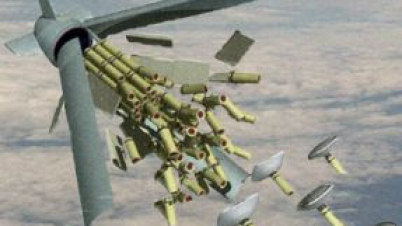
Cluster bombs scatter small submunitions over large areas, making them especially hazardous to civilians who can find unexploded munitions years after they were dropped. Because of their indiscriminate nature, cluster munitions have been banned by more than 100 nations. The US, Ukraine, and Russia are not parties to the treaty, known as the Convention on Cluster Munitions.
The HRW report said that Ukrainian cluster munition rocket attacks in the eastern city of Izium in 2022 killed at least eight civilians and wounded 15 more. HRW also said Russia’s use of cluster bombs in the war has killed many civilians.
Ukraine’s use of cluster bombs on people living in its eastern territory goes back to 2014, when war first broke out in the Donbas. That year, HRW issued a report that said Kyiv was using the controversial munitions against populated areas of Donetsk. “The use of cluster munitions in populated areas violates the laws of war due to the indiscriminate nature of the weapon and may amount to war crimes,” HRW said.
According to Truthout, Daryl Kimball, executive director of the Arms Control Association, issued a statement on Thursday warning the US against sending cluster bombs to Ukraine. He said doing so would “be escalatory, counterproductive, and only further increase the dangers to civilians caught in combat zones and those who will, someday, return to their cities, towns, and farms.”
The Fukushima Disaster: The hidden side of the story
Arnie Gundersen speaks of the cliché that “the solution to pollution is dilution,” but with the radiation from Fukushima being sent into the Pacific, there will be “bio-accumulation”—with vegetation absorbing radiation, little fish eating that vegetation and intensifying it and bigger fish eating the smaller fish and further bio-accumulating the radioactivity. Already, tuna off California have been found with radiation traced to Fukushima. With this planned further, and yet greater dispersal, thousands of people “in the Pacific basin will die from radiation,” he says.
Exposing the nuclear industry and its lies. https://www.telegraph.co.uk/politics/2023/07/08/labour-explore-ai-ban-decisions-nuclear-weapons-david-lammy/
“The Fukushima Disaster, The Hidden Side of the Story,” is a just-released film documentary, a powerful, moving, information-full film that is superbly made. Directed and edited by Philippe Carillo, it is among the strongest ever made on the deadly dangers of nuclear technology.
It begins with the words in 1961 of U.S. President John F. Kennedy: “Every man, woman and child lives under a nuclear sword of Damocles, hanging by the slenderest of threads, capable of being cut at any moment by an accident, or miscalculation or by madness.”
It then goes to the March 2011 disaster at the Fukushima Daichi nuclear power plants in Japan after they were struck by a tsunami. Their back-up diesel generators were kicked in but “did not run for long,” notes the documentary. That led to three of the six plants exploding—and there’s video of this—“releasing an unpreceded amount of nuclear radiation into the air.”
“Fukushima is the world’s largest ever industrial catastrophe,” says Professor John Keane of the University of Sydney in Australia. He says there was no emergency plan and, as to the owner of Fukushima, Tokyo Electric Power Company, with the accident its CEO “for five nights and days…locked himself inside his office.”
Meanwhile, from TEPCO, there was “only good news” with two Japanese government agencies also “involved in the cover-up”—the Nuclear Industry Safety Agency and Ministry of Economy, Trade and Industry.
“Japanese media was ordered to censor information. The Japanese government failed to protect its people,” the documentary relates.
Yumi Kikuchi of Fukushima, since a leader of the Fukushima Kids Project, recalls: “On TV, they said that ‘it’s under control’ and they kept saying that for two months. The nuclear power plant had already melted and even exploded but they never admitted the meltdown until May. So, people in Fukushima during that time were severely exposed to radiation.”
Arnie Gundersen, a nuclear engineer and now a principal of Fairewinds Energy Education in Burlington, Vermont, speaks of being told by Naoto Kan, the prime minister of Japan at the time of the accident, that “our existence as a sovereign nation was at stake because of the disaster at Fukushima Daichi.”
Kan then appears in documentary and speaks of “manmade” links to the disaster.
The documentary tells how Kan, following the accident, became “an advocate against nuclear power….ordered all nuclear power plants in Japan to shut down for safety” and for the nation “to move into renewable energy.”
But, subsequently, “a nuclear advocate,” Shinzo Abe, became Japan’s prime minister.
Yoichi Shimatsu, a former Japan Times journalist, appears in the film and speaks of “the cruelty, the cynicism of this government.” He speaks of how in the accident’s aftermath, “nearly every member of Parliament and leaders of the major political parties” along with corporate executives, “moved their relatives out of Japan”
He says “Shanghai is the largest Japanese community outside Japan now…while these same people” had been “telling the people of Fukushima go home, 10 kilometers from Fukushima, go home it’s safe, while their families are overseas in Los Angeles, in Paris, in London and in Shanghai.”
“If it’s safe, why they left?” asks Kikuchi. “They tell us it’s safe to live in Fukushima, and to eat Fukushima food to support Fukushima people. There’s a campaign by Japanese government…and people believe it.”
Gundersen says: “At Fukushima Daichi, the world is already seeing deaths from cancer related to the disaster…There’ll be many more over time.” He adds that there’s been a “huge increase in thyroid cancer in the surrounding population.”
“Unfortunately,” he goes on, “the Japanese government is not telling us al the evidence. There’s a lot of pressure on the scientists and the medical community to distort the evidence so there’s no blowback against nuclear power.”
There is a section in the documentary on the impacts of radioactivity which includes Dr. Helen Caldicott, former president of Physician for Social Responsibility, discussing the impacts of radiation on the body and how it causes cancer. She states: “There is no safe level of radiation. I repeat, there is no safe level of radiation. Each dose of radiation is cumulative and adds to your risk of getting cancer and that’s absolutely documented in the medical literature.”
“The nuclear industry says, well, there are ‘safe doses’ of radiation and even says a little bit of radiation is good for you and that is called the theory of hormesis,” notes Dr. Caldicott. “They lie and they lie and they lie.”
Maggie Gundersen, who was a reporter and then a public relations representative for the nuclear industry and, like her husband Arnie became an opponent of nuclear power, speaks of how nuclear power derives from the World War II Manhattan Project program to develop atomic weapons and post-war so-called “Atoms for Peace” push.
Gundersen says in becoming a nuclear industry spokesperson, “the things I was taught weren’t true.” The notion, for example, that what is called a containment at a nuclear plant is untrue because radioactivity “escapes every day as a nuclear power plant operates” and in a “calamity” is released massively.
As to economics, she cited the claim decades ago that nuclear power would be “too cheap to meter.” The president of Fairewinds Energy Education, she says: “Atomic power is now the most expensive power there is on the planet. It is not feasible. It never has been.” Regarding the radioactive waste produced by nuclear power, she says “there is literally no technology to do that…It does not exist.”
As to international oversight, the documentary presents the final version of a “Report of the United Nations Scientific Committee on the Effects of Atomic Radiation” issued in 2014 which finds that the radiation doses from Fukushima “to the general public during the first year and estimated for their lifetimes are generally low or very low….The most important effect is on mental and social well-being.”
Shimatsu says it is not only in Japan but on an international level that the consequences of radioactive exposure have been completely minimized or denied. “We are all seeing a global political agreement centered in the UN organizations, tie IAEA [International Atomic Energy Agency], the World Health Organization…All the international agencies are whitewashing what is happening in Fukushima. We take dosimeters and Geiger counters in there, we see a much different story,” he says.
In Germany, says Maggie Gunderson, “the politicians chose” to do a study to “substantiate” that no health impacts “happened around nuclear power plants….But what they found was the radiation releases cause significant numbers of childhood leukemia.” A summary of that 2008 study comes on the screen. The U.S. followed up on that research, she says, but recently “the [U.S.] Nuclear Regulatory Commission said it was not going to do that study,” that “it doesn’t have enough funding; it had to shut it down.” She said the real reason was that it was producing “data they don’t want to make public.”
Beyond the airborne releases of radiation after the Fukushima accident, now, says the documentary, there is the growing threat of radioactivity through water that has and still is leaking from the plants as well as more than a million tons of radioactive water stored in a thousand tanks built at the plant site. After the accident, TEPCO released 300,000 tons of radioactive water into the Pacific Ocean. Now there is no land for more tanks, so the Japanese government, the documentary relates, has decided that starting this year to dump massive amounts of radioactive water over a 30-year period into the Pacific.
Arnie Gundersen speaks of the cliché that “the solution to pollution is dilution,” but with the radiation from Fukushima being sent into the Pacific, there will be “bio-accumulation”—with vegetation absorbing radiation, little fish eating that vegetation and intensifying it and bigger fish eating the smaller fish and further bio-accumulating the radioactivity. Already, tuna off California have been found with radiation traced to Fukushima. With this planned further, and yet greater dispersal, thousands of people “in the Pacific basin will die from radiation,” he says.
Andrew Napuat, a member of the Parliament of the nation of Vanuatu, an 83 island archipelago in the Pacific, says in the documentary: “We have the right to say no to the Japan solution. We can’t let them jeopardize our sustenance and livelihood.” Vanuatu along with 13 other countries has signed and ratified the South Pacific Nuclear Free Zone Treaty.
As the documentary nears its end, Arnie Gundersen says that considering the meltdown at the Three Mile Island nuclear plant in Pennsylvania in 1979, the meltdown at the Chernobyl nuclear plant in Ukraine in 1986, and now the three Fukushima meltdowns in 2011, there has been “a meltdown every seven years roughly.” He says: “Essentially, once every decade the world needs to know that there might be an atomic meltdown somewhere.” And, he adds, the “nuclear industry is saying they want would like to build as many as 5,000 new nuclear power plants.” (There are 440 in the world today.)
Meanwhile, he says, “renewable power is no longer alternative power. It’s on our doorstep. It’s here now and it works and it’s cheaper than nuclear.” The cost of producing energy from wind, he says, is three cents a kilowatt hour, for solar five cents, and for new nuclear power plants 15 cents. Nuclear “makes no nuclear economic sense.”
Maggie Gundersen says, with tears in her eyes: “I’m a woman and I feel it’s inherent for us as women to protect our children our grandchildren, and it’s our job now to raise our voices and have this madness stop.”
Philippe Carillo, from France, who worked for 14 years in Hollywood and who since 2017 has lived in Vanuatu, has worked on several major TV documentary projects for the BBC, 20th Century Fox and French National TV as well as doing independent productions. He says he made “The Fukushima Disaster, The Hidden Side of the Story” to “expose the nuclear industry and its lies.” His previous award-winning documentary, “Inside the Garbage of the World,” has made changes regarding the use of plastic.
“The Fukushima Disaster, The Hidden Side of the Story” can be viewed at Amazon, Apple TV, iTunes, Google Play and Vimeo on demand. Links are: iTunes; Apple TV; Amazon UK; USA; Google Play, and Video on demand.
‘Russian victory’ worse than civilian cluster-bomb deaths – says Pentagon official
A US official has defended the decision to supply Ukraine with the weapons, which are banned in more than 100 countries.
US fears of Russian success on the battlefield outweigh concerns that deliveries of cluster bombs to Ukraine could result in civilian casualties, a senior Pentagon official acknowledged on Friday.
Speaking to reporters, Under Secretary of Defense for Policy Colin Kahl defended the White House’s decision to approve another $800 million weapons package for Ukraine, including cluster munitions. The weapons are banned in more than 100 countries.
When they detonate, the munitions release many small bomblets over a wide area. A percentage of bomblets fail to detonate on impact, however, and unexploded elements pose severe risks to civilians for years after fighting ends.
Asked if the Pentagon has assured its allies that the munitions will not cause excessive civilian harm, Kahl replied: “I’m as concerned about the humanitarian circumstance as anybody, but the worst thing for civilians in Ukraine is for Russia to win the war. And so it’s important that they don’t.”…………………………… https://www.rt.com/news/579374-pentagon-cluster-munition-civilian-casualties/
A watershed week in nuclear news

A bit of good news -The Path to a Sustainable Civilisation
It’s a watershed moment – on 2 counts:
1. Ukraine. The determination of the USA-led Western countries to bring Ukraine into NATO is a red flag to Russia, and current events, indicate that the West, and its charismatic super-star Zelensky, will not countenance any negotiated end to the war.
2. The IAEA’s Rafael Grossi has made it clear that the Fukushima nuclear wastewater MUST be emptied into the Pacific, to ensure that this practice is accepted, for the continued growth of the nuclear industry world-wide.
Christina notes. IAEA hypocrisy, and the little Fukushima nuclear radiation mill. And the prize for HYPOCRISY goes to Rafael Grossi,Director General of the International Atomic Energy Agency. No real research into the effects of releasing nuclear waste-water into rivers and seas. Oh goody! That means it’s OK, (doesn’t it?)
TOP STORIES
Ralph Nader: Reverse the Accelerating Warfare State Before It’s Too Late! Daniel Kovalik: Why Russia’s intervention in Ukraine is legal under international law. Chris Hedges: They Lied About Afghanistan. They Lied About Iraq. And They Are Lying About Ukraine.
Better, safer, alternatives for managing Fukushima’s radioactively polluted wastewater. Cover up? Did atom bosses collude to ‘manage message’ of Japanese plan to poison Pacific? Will this whistleblower be heard by anyone? Fukushima: Anxiety and anger over Japan’s nuclear waste water plan.
An Attack on the Zaporizhzhia Nuclear Plant Could Still be Catastrophic (- nuclear promoters minimise the risk). Red alert at Zaporizhzhia? US cluster bombs deal is clear signal that war is not going well for Ukraine. https://www.youtube.com/watch?v=RpVon7R2XKo
AUSTRALIA.
- Barngarla people continue their fight against the proposed Kimba nuclear waste dump.
- Vice Admiral Jonathon Mead to be Director-General of New Australian Submarine Agency. Sinking billions: undergunned and overpriced. Inside ‘nuke school’, the elite US training ground preparing Australian submariners for an AUKUS future.
- Peter Dutton ramps up nuclear power push and claims Labor down ‘renewable rabbit hole’. Bowen: “Australia will be renewable energy superpower, not a nuclear backwater”. Nuclear: Coalition remains trapped by climate and technology denial. Queensland’s Liberal National Party leader Crisafulli rejects Dutton’s push for nuclear power.
CLIMATE. Wishful thinking about nuclear energy won’t get us to net zero.
CIVIL LIBERTIES. Ben & Jerry’s, CodePink Co-Founders Arrested in DC Demanding Freedom for Julian Assange.
ECONOMICS.
- World’s 30 major banks are NOT investing in so-called “green” “sustainable” nuclear energy.
- Small nuclear reactors are unaffordable, and Rafael Grossi and the IAEA know this! Minireactor cost surge threatens nuclear’s next big thing,
- Holtec hogs the money, but Michigan ratepayers will foot the bill for reactor resuscitation.
- Jacobs’ nuclear spin-off raises alarm in Whitehall.
ENERGY. Germany’s power mix boasts more renewables, lower spot market prices – despite nuclear exit. Fukushima: China calls for suspension of Japanese plan to release radioactive water into sea. Russian K-278 sub sank 30 years ago but continues to leak radiation. Historic Hanford contamination is worse than expected.
FILM. The Fukushima Disaster: The hidden side of the story, https://www.youtube.com/watch?v=kBqk0OtlE8k
HEALTH. Workers, residents at US site that made Nagasaki A-bomb’s plutonium still suffering. U.S. senators seek expanded compensation for people exposed to nuclear fallout.
INDIGENOUS ISSUES. Local colleges train students to work in a plutonium pit factory, but at what cost? First Nations won’t back nuclear plant expansion until waste questions are answered.
LEGAL High nuclear crimes don’t pay.
MEDIA. Fukushima, the Hidden Side of the Story. https://www.youtube.com/watch?v=kBqk0OtlE8k . Journalists Abandoned Julian Assange and Slit Their Own Throats. Today in war propaganda.
NUCLEAR TECHNOLOGY. World’s Largest Fusion Project Is in Big Trouble, New Documents Reveal. Even the science engineering big-wigs don’t seem too enthusiastic about nuclear fusion. Sweden goes for small nuclear reactors, dumps renewable energy plans. Canada planning World’s Biggest Nuclear Power Plant . UK Labour seeks pact to keep AI out of nuclear arms deployment.
OPPOSITION to NUCLEAR. Huge protest against Rafael Grossi at Gimpo airport, Seoul, South Korea. Jeju islanders protest Japan’s radioactive water discharge. UN report on Japan’s Fukushima water plans fails to placate opponents. Come and join us: Nuclear Free Local Authorities individual membership launched on Independence Day. Backlash builds as Japan prepares to release wastewater from Fukushima nuclear plant. Nagasaki to take shot at G-7 over its nuclear deterrence stance.
POLITICS. Italy’s Nuclear Energy Debate: Past, Present, and Future. US govt provides yet another round of money grants to companies, including Westinghouse, to promote nuclear power development. RFK Jr torches Biden for handing “horrific” cluster munitions to Ukraine.
POLITICS INTERNATIONAL and DIPLOMACY. ” The future of nuclear as an alternative energy source relies on the success of the Fukushima release” – Rafael Grossi, (“problem is war, not nuclear energy”- Grossi). International community cannot tolerate Japan’s nuclear-contaminated water dumping.. Ukraine, Russia accuse each other of planning to attack Europe’s biggest nuclear plant. Russia and Ukraine step up rhetoric around Zaporizhzhia nuclear power plant. Ukraine in talks with Bulgaria to buy Russian nuclear reactors with EU funds. N Korea slams US move to deploy nuclear submarines to peninsula.
SAFETY. Russia calls on NATO to discuss Ukraine nuclear plant. IAEA: Europe’s largest nuclear power plant regains back-up electricity feed. Especially in USA, nuclear reactors are getting very old – past their use-by dates. INCIDENTS: One of the world’s worst nuclear disasters is likely something you’ve never heard of.
SECRETS and LIES. Nuclear Contaminated Water Dumping: IAEA Concludes ‘Absolute Safety of Nuclear Contaminated Water’ – with Japanese Government Money?.
Despite Zelensky’s claims, there’s no evidence that Russia has rigged Ukraine’s Zaporizhzhya plant with explosives, nuclear watchdog says.
SPINBUSTER. Despite Zelensky’s claims, there’s no evidence that Russia has rigged Ukraine’s Zaporizhzhya plant with explosives, nuclear watchdog says. John Bolton Accidentally Explains Why US Policy On Russia And China Is Wrong.
WASTES. IAEA chief Rafael Grossi says he’s satisfied with Japan’s plans to release Fukushima wastewater. Japanese regulator greenlights discharge of nuclear waste from Fukushima plant. What to know about Japan’s plan to release treated radioactive water from Fukushima nuclear plant into the sea. Japan Set to Pour Fukushima Water Into Pacific, Irking China. Japan’s nuclear regulator finishes inspection of Fukushima radioactive wastewater release system. Japan claims that China and South Korea both pour radioactive waste-water , worse than Japan’s, into the oceans.
Hanford nuclear waste site has a clean-up bill of 560 billion USD in Washington DC . Missouri S&T will ask St. Louis-area residents their opinions about nuclear waste.
WAR and CONFLICT.
- ‘Russian victory’ worse than civilian cluster-bomb deaths – says Pentagon official. American, Russians, Ukrainians and Belarusians gather in Vienna to call for peace. War can be ended quickly either through peace treaty or nuclear weapons: Top Russian official. Scenario for a War in Eastern Ukraine. NATO’s Scorched Earth in Ukraine. ‘Kiev inflating regional conflict into World War III’, Russian envoy warns US.
- Charming optimism, as a Japanese non-profit group plans for bunkers for the community to be OK in a nuclear war.
- “The Doomsday Machine”: Confessions of Daniel Ellsberg, Former Nuclear War Planner.
- The ultimate technocratic fantasy: “a winnable nuclear war.”
WEAPONS and WEAPONS SALES.
- US Will Provide Ukraine U.N. Condemned Cluster Bombs as Part of New Weapons Package.
- Ukraine great ‘testing ground’ for Western weapons: Kiev. U.S. Depleted Uranium to Make Ukraine War Dirtier.
- Report Shows How Military Industrial Complex Sets Media Narrative on Ukraine.
- US Nuclear-Capable B-52 Bombers Fly to Korean Peninsula in Latest Provocation.
Queensland’s Liberal National Party leader Crisafulli rejects Dutton’s push for nuclear power
No nukes in Qld: Crisafulli rejects Dutton’s plan Financial Review, Mark Ludlow, Queensland bureau chief, 10 July 23
Queensland Liberal National Party leader David Crisafulli has rebuffed federal leader Peter Dutton’s push to repurpose the state’s retiring coal-fired power stations for nuclear power, saying it will never get off the ground without bipartisan support.
As Mr Dutton attempts to put nuclear power back on the agenda as a way to help Australia to reach net zero by 2050, Labor has ridiculed the idea as too expensive, despite the price of small modular reactors coming down in recent years.
Mr Crisafulli, who could become premier at Queensland’s state election next year, according to the latest opinion polls, said there was no point discussing nuclear power until it was endorsed by both major parties.
“Until both sides of federal parliament agree that is the course of action, it is not going to happen,” Mr Crisafulli told The Australian Financial Review.
“I’m not spending any energy on it – pardon the pun – because no one will invest in it unless both sides agree to it. It’s a reality.”
When asked what he would do if he and Mr Dutton won their respective elections and it became federal government policy, Mr Crisafulli said investors would still steer clear of nuclear power until Labor was behind it.
Federal Labor is vehemently opposed to nuclear power, …………………………………………….
Daniel Kovalik: Why Russia’s intervention in Ukraine is legal under international law

One must begin this discussion by accepting the fact that there was already a war happening in Ukraine for the eight years preceding the Russian military incursion in February 2022. And, this war by the government in Kiev against the Russian-speaking peoples of the Donbass – a war which claimed the lives of around 14,000 people, many of them children, and displaced around 1.5 million more even before Russia’s military operation – has been arguably genocidal. That is, the government in Kiev, and especially its neo-Nazi battalions, carried out attacks against these peoples with the intention of destroying, at least in part, the ethnic Russians precisely because of their ethnicity.
The argument can be made that Russia exercised its right for self-defense
10 July 23 https://www.rt.com/russia/554166-international-law-military-operation-ukraine/
Daniel Kovalik teaches International Human Rights at the University of Pittsburgh School of Law, and is author of the recently-released book Nicaragua: A History of US Intervention & Resistance.
For many years, I have studied and given much thought to the UN Charter’s prohibition against aggressive war. No one can seriously doubt that the primary purpose of the document – drafted and agreed to on the heels of the horrors of WWII – was and is to prevent war and “to maintain international peace and security,” a phrase repeated throughout.
As the Justices at Nuremberg correctly concluded, “To initiate a war of aggression … is not only an international crime; it is the supreme international crime differing only from other war crimes in that it contains within itself the accumulated evil of the whole.” That is, war is the paramount crime because all of the evils we so abhor – genocide, crimes against humanity, etc. – are the terrible fruits of the tree of war.
In light of the above, I have spent my entire adult life opposing war and foreign intervention. Of course, as an American, I have had ample occasion to do so given that the US is, as Martin Luther King stated, “the greatest purveyor of violence in the world.” Similarly, Jimmy Carter recently stated that the US is “the most war-like nation in the history of the world.” This is demonstrably true, of course. In my lifetime alone, the US has waged aggressive and unprovoked wars against countries such as Vietnam, Grenada, Panama, the former Yugoslavia, Iraq (twice), Afghanistan, Libya, and Somalia. And this doesn’t even count the numerous proxy wars the US has fought via surrogates (e.g., through the Contras in Nicaragua, various jihadist groups in Syria, and through Saudi Arabia and the UAE in the ongoing war against Yemen).
Indeed, through such wars, the US has done more, and intentionally so, than any nation on earth to undermine the legal pillars prohibiting war. It is in reaction to this, and with the express desire to try to salvage what is left of the UN Charter’s legal prohibitions against aggressive war, that a number of nations, including Russia and China, founded the Group of Friends in Defense of the UN Charter.
In short, for the US to complain about Russia’s invasion of Ukraine as a violation of international law is, at best, the pot calling the kettle black. Still, the fact that the US is so obviously hypocritical in this regard does not necessarily mean Washington is automatically wrong. In the end, we must analyze Russia’s conduct on its own merits.
One must begin this discussion by accepting the fact that there was already a war happening in Ukraine for the eight years preceding the Russian military incursion in February 2022. And, this war by the government in Kiev against the Russian-speaking peoples of the Donbass – a war which claimed the lives of around 14,000 people, many of them children, and displaced around 1.5 million more even before Russia’s military operation – has been arguably genocidal. That is, the government in Kiev, and especially its neo-Nazi battalions, carried out attacks against these peoples with the intention of destroying, at least in part, the ethnic Russians precisely because of their ethnicity.
While the US government and media are trying hard to obscure these facts, they are undeniable, and were indeed reported by the mainstream Western press before it became inconvenient to do so. Thus, a commentary run by Reuters in 2018 clearly sets out how the neo-Nazis battalions have been integrated into the official Ukrainian military and police forces, and are thus state, or at least quasi-state, actors for which the Ukrainian government bears legal responsibility. As the piece relates, there are 30-some right-wing extremist groups operating in Ukraine, that “have been formally integrated into Ukraine’s armed forces,” and that “the more extreme among these groups promote an intolerant and illiberal ideology… ”
That is, they possess and promote hatred towards ethnic Russians, the Roma peoples, and members of the LGBT community as well, and they act out this hatred by attacking, killing, and displacing these peoples. The piece cites the Western human rights group Freedom House for the proposition that “an increase in patriotic discourse supporting Ukraine in its conflict with Russia has coincided with an apparent increase in both public hate speech, sometimes by public officials and magnified by the media, as well as violence towards vulnerable groups such as the LGBT community.” And this has been accompanied by actual violence. For example, “Azov and other militias have attacked anti-fascist demonstrations, city council meetings, media outlets, art exhibitions, foreign students and Roma.”
As reported in Newsweek, Amnesty International had been reporting on these very same extremist hate groups and their accompanying violent activities as far back as 2014.
It is this very type of evidence – public hate speech combined with large-scale, systemic attacks on the targets of the speech – that has been used to convict individuals of genocide, for example in the Rwandan genocide case against Jean-Paul Akayesu.
To add to this, there are well over 500,000 residents of the Donbass region of Ukraine who are also Russian citizens. While that estimate was made in April 2021, after Vladimir Putin’s 2019 decree simplified the process of obtaining Russian citizenship for residents of the Donetsk and Lugansk People’s Republics, this means that Russian citizens were being subjected to racialized attack by neo-Nazi groups integrated into the government of Ukraine, and right on the border of Russia.
And lest Russia was uncertain about the Ukrainian government’s intentions regarding the Russian ethnics in the Donbass, the government in Kiev passed new language laws in 2019 which made it clear that Russian speakers were at best second-class citizens. Indeed, the usually pro-West Human Rights Watch (HRW) expressed alarm about these laws. As the HRW explained in an early-2022 report which received nearly no coverage in the Western media, the government in Kiev passed legislation which “requires print media outlets registered in Ukraine to publish in Ukrainian. Publications in other languages must also be accompanied by a Ukrainian version, equivalent in content, volume, and method of printing. Additionally, places of distribution such as newsstands must have at least half their content in Ukrainian.”
And, according to the HRW, “Article 25, regarding print media outlets, makes exceptions for certain minority languages, English, and official EU languages, but not for Russian” (emphasis added), the justification for that being “the century of oppression of … Ukrainian in favor of Russian.” As the HRW explained, “[t]here are concerns about whether guarantees for minority languages are sufficient. The Venice Commission, the Council of Europe’s top advisory body on constitutional matters, said that several of the law’s articles, including article 25, ‘failed to strike a fair balance’ between promoting the Ukrainian language and safeguarding minorities’ linguistic rights.” Such legislation only underscored the Ukrainian government’s desire to destroy the culture, if not the very existence, of the ethnic Russians in Ukraine.
Moreover, as the Organization of World Peace reported in 2021, “according to Ukraine’s National Security and Defense Council Decree no. 117/2021, Ukraine has committed to putting all options on the table to taking back control over the Russian annexed Crimea region. Signed on March 24th, President Zelensky has committed the country to pursue strategies that . . . ‘will prepare and implement measures to ensure the de-occupation and reintegration of the peninsula.’” Given that the residents of Crimea, most of whom are ethnic Russians, are quite happy with the current state of affairs under Russian governance – this, according to a 2020 Washington Post report – Zelensky’s threat in this regard was not only a threat against Russia itself but was also a threat of potentially massive bloodshed against a people who do not want to go back to Ukraine.
Without more, this situation represents a much more compelling case for justifying Russian intervention under the Responsibility to Protect (R2P) doctrine which has been advocated by such Western ‘humanitarians’ as Hillary Clinton, Samantha Power, and Susan Rice, and which was relied upon to justify the NATO interventions in countries like the former Yugoslavia and Libya. And moreover, none of the states involved in these interventions could possibly make any claims of self-defense. This is especially the case for the United States, which has been sending forces thousands of miles away to drop bombs on far-flung lands.
Indeed, this recalls to mind the words of the great Palestinian intellectual, Edward Said, who opined years ago in his influential work, ‘Culture and Imperialism’, that it is simply unfair to try to compare the empire-building of Russia with that of the West. As Dr. Said explained, “Russia … acquired its imperial territories almost exclusively by adjacence. Unlike Britain and France, which jumped thousands of miles beyond their own borders to other continents, Russia moved to swallow whatever land or peoples stood next to its borders … but in the English and French cases, the sheer distance of attractive territories summoned the projection of far-flung interest …” This observation is doubly applicable to the United States.
Still, there is more to consider regarding Russia’s claimed justifications for intervention. Thus, not only are there radical groups on its border attacking ethnic Russians, including Russian citizens, but also, these groups have reportedly been funded and trained by the United States with the very intention of destabilizing and undermining the territorial integrity of Russia itself.
As Yahoo News! explained in a January 2022 article:
“The CIA is overseeing a secret intensive training program in the U.S. for elite Ukrainian special operations forces and other intelligence personnel, according to five former intelligence and national security officials familiar with the initiative. The program, which started in 2015, is based at an undisclosed facility in the Southern U.S., according to some of those officials.
The program has involved ‘very specific training on skills that would enhance’ the Ukrainians’ ‘ability to push back against the Russians,’ said the former senior intelligence official.
The training, which has included ‘tactical stuff,’ is ‘going to start looking pretty offensive if Russians invade Ukraine,’ said the former official.
One person familiar with the program put it more bluntly. ‘The United States is training an insurgency,’ said a former CIA official, adding that the program has taught the Ukrainians how ‘to kill Russians.’”
(emphasis added).
To remove any doubt that the destabilization of Russia itself has been the goal of the US in these efforts, one should examine the very telling 2019 report of the Rand Corporation – a long-time defense contractor called upon to advise the US on how to carry out its policy goals. In this report, entitled, ‘Overextending and Unbalancing Russia, Assessing the Impact of Cost-Imposing Options’, one of the many tactics listed is “Providing lethal aid to Ukraine” in order to “exploit Russia’s greatest point of external vulnerability.”
In short, there is no doubt that Russia has been threatened, and in a quite profound way, with concrete destabilizing efforts by the US, NATO and their extremist surrogates in Ukraine. Russia has been so threatened for a full eight years. And Russia has witnessed what such destabilizing efforts have meant for other countries, from Iraq to Afghanistan to Syria to Libya – that is, nearly a total annihilation of the country as a functioning nation-state.
It is hard to conceive of a more pressing case for the need to act in defense of the nation. While the UN Charter prohibits unilateral acts of war, it also provides, in Article 51, that “[n]othing in the present Charter shall impair the inherent right of individual or collective self-defense… ” And this right of self-defense has been interpreted to permit countries to respond, not only to actual armed attacks, but also to the threat of imminent attack.
In light of the above, it is my assessment that this right has been triggered in the instant case, and that Russia had a right to act in its own self-defense by intervening in Ukraine, which had become a proxy of the US and NATO for an assault – not only on Russian ethnics within Ukraine – but also upon Russia itself. A contrary conclusion would simply ignore the dire realities facing Russia.
New Book -The Path to a Sustainable Civilisation
In this radical new book Prof. Mark Diesendorf and Rod Taylor, who are
based in Australia, say that major changes have to be made in order the
move to a sustainable future.
They claim that we have allowed large
corporations, the military and other vested interests to capture
governments and influence public opinion and markets excessively. The
result will be social, economic and environmental disaster.
They argue that the way forward is to build social movements to apply overwhelming pressure on government and big business, weaken the power of vested interests and
strengthen democratic decision-making.
This, they say, must be done simultaneously with action on the specific issues of climate, energy, natural resources & social justice, so as to transition to a truly
sustainable civilisation. That may sound Utopia, but the book takes us
through the practical technology options and explores how the transition to
their use might come about globally. However, it goes well beyond just
offering technical and social fixes, challenging the idea that
technological changes alone will be sufficient to transition to ecological
sustainability. It says that a sustainable civilisation needs ‘an
economic system that fosters ecological sustainability and social
justice’, whereas ‘the current dominant system, neoclassical economic
theory together neoliberalism practice, is based on numerous myths. Its
practitioners claim it’s a science although it does not stand up to
scientific scrutiny’.
Renew Extra 8th July 2023
https://renewextraweekly.blogspot.com/2023/07/the-path-to-sustainable-civilisation.html
1 This month


Help Aunty Sue Protect Her Land and Sacred Sites From Destructive Rocket Testing.
.

Australians deserve the truth
about
AUKUS – https://aukuspublicinquiry.com/

PETITION – To: Prime Minister Anthony Albanese and the Australian Labor Government

of the week – Australians for War Powers Reform (AWPR)
To see nuclear-related stories in greater depth and intensity

