Nuclear advocates energised despite economic reality
Canberra Times By Jacob Shteyman, May 15 2023
Australia could develop a domestic nuclear energy system within 15 years but it would not be economically competitive, a Senate committee has been told.
A procession of energy experts, and a 16-year-old boy, lined up to give their two cents on a proposal to remove the prohibition on installing nuclear power in Australia on Monday.
Gillian Hirth, chief executive of nuclear regulator ARPANSA, told the committee it would take 10 to 15 years to develop nuclear energy facilities, but regulatory frameworks would need to be established first.
There would also need to be a significant uplift in the capability of the nuclear industry, she said.
While new technologies being developed overseas, like small modular reactors, are safer and produce less radioactive waste [a dubious claim!] than traditional nuclear generation, the committee heard the economics behind nuclear doesn’t stack up in the Australian context.
Department of Energy deputy secretary Simon Duggan said work done by the CSIRO found the abundance of low-cost renewable energy in Australia would make it difficult for nuclear technology to compete financially by the time it was ready to be deployed.
The government’s focus is instead on getting as much renewable energy, firming and transmission infrastructure into the grid as possible to provide more stability for consumers, Mr Duggan said.
Will Shackel, 16, told the committee he created advocacy group Nuclear for Australia because he wants to encourage the country to have an open mind on nuclear energy and a fact-based debate.
“Young people are energised by the prospect of nuclear energy, yet government is not reacting,” he wrote in a submission.
“Despite bids to pander to us with utopian fantasies of a clean energy transition through renewables, young people are calling for the commonwealth government to acknowledge that the only pragmatic solution lies in the tabooed energy generation capability of nuclear energy.”
But Dave Sweeney, nuclear policy analyst at the Australian Conservation Foundation, said radioactive waste remains the achilles heel of the industry.
“We get three years with existing commercial reactors of reliable electricity and then we get 100,000 years of an intergenerational carcinogenic, mutagenic waste burden,” he told the committee.
“We need to back a winner and that winner is the renewable sector.”……………………………
The committee is due to report back by June 15 https://www.canberratimes.com.au/story/8196744/nuclear-advocates-energised-despite-economic-reality/
Fukushima greets summer with dread as nuclear-contaminated wastewater dumping approaches

Global Times, By Xu Keyue and Xing Xiaojing in Iwaki, May 15, 2023
The Fukushima Prefecture in northeastern Japan is known as “the island of happiness,” which embodies people’s longing for a better life. Summer began in Fukushima in early May when locals normally look forward to intimate contact with the sea.
However, despite strong opposition at home and abroad, the Japanese government and the Tokyo Electric Power Company (TEPCO) are set to go ahead with the plan to dump the nuclear-contaminated wastewater from the Fukushima Daiichi Nuclear Power Plant into the sea this summer.
As summer approaches, the Global Times reporters went to the Fukushima Prefecture. In this first installment of this field investigation, the Global Times reveals the palpable sense of fear and unease hanging over Fukushima, paired with intense opposition from locals who chanted “Never allow arbitrary dumping into the sea!”………………………………………………………………………………………………………
About 54 kilometers away from the Fukushima Daiichi Nuclear Power Plant, the city looks subdued with few passersby along the streets. The excavation of an underwater tunnel for the project to drain the nuclear-contaminated wastewater from the Fukushima Daiichi Nuclear Power Plant was completed in April, and TEPCO announced that it is expected to complete the construction of the tunnel by the end of June. Measuring 1,031 meters long and 1 kilometer away from the coast, the tunnel will allow radioactive wastewater to be dumped into the sea.
…………………………………………………….. Chiyo Oda, co-chairperson of an environmental NGO and city assembly “Stop polluting the oceans!” was one of them.
“Summer is coming. What’s going to happen? Fukushima greets summer with fear!” said Oda, who expressed strong concern about the dumping of nuclear-contaminated wastewater at a conference themed “Don’t Nuke the Pacific” on May 7. “The Japanese government has reached an agreement with the fishing community that nothing will be done without [the fishing community and other stakeholders’] understanding.” Nevertheless, the Japanese government is apparently breaking its promise and is preparing to dump the water which is likely to start this summer.
When the Global Times reporters met Oda, the 68-year-old woman had just returned to Iwaki from Fukushima city, the capital of Fukushima Prefecture. Early that day, with Kazuyoshi Sato, another co-representative of the city assembly, Oda had driven for two hours to the Fukushima prefectural office to hold a press conference to announce that a mass rally called “May 16 Tokyo Action” will be held in Tokyo on May 16 to urge the Japanese government and TEPCO to stop dumping the nuclear-contaminated wastewater.
Oda told the Global Times that the campaign will last all day on May 16, when anti-sea pollution campaigners from all over Japan are meant to gather in Tokyo. As planned, they will gather in front of the TEPCO headquarters at 10:30 am, and then head to the House of Representatives with lawmakers to hold the rally. The rally and petition to the Japanese government and parliament will be followed by a speech at the Hibiya Open Air Concert Hall in the evening. It will then be followed by a massive demonstration in Ginza, Tokyo, which is expected to be attended by more than 1,000 people.
“The sea of my hometown, the Sea of Japan, and the seas of the world must not be polluted,” said Oda.
Oda noted that the Japanese government, TEPCO, the Fukushima Prefectural Federation of Fisheries Cooperative Associations, and the National Federation of Fisheries Cooperative Associations of Japan signed an agreement in 2015, stating it would not “do anything about the nuclear-contaminated water from Fukushima without the understanding and consent of the relevant people,” but now the Japanese government and TEPCO insist on dumping the water despite opposition from all parties, including fishermen. …………………………………………………………………………………………………………………………………………………………………..
“Look! This is the sea we want to protect!” Ikarashi told the Global Times that he and his family have fond memories of living by the sea, eating the catch from the same sea, surfing, and frolicking with their children. The people of Fukushima live just like them, having enjoyed the bounty of the sea for generations. If the nuclear-contaminated wastewater is dumped into the sea, future generations will no longer be able to enjoy the beautiful nature.
Ruiko Muto, who lives in Tamura, Fukushima, is the head of the association for the victims of the Fukushima nuclear accident. After the accident, she worked hard to hold the former management of TEPCO accountable as a member of the legal team for the Fukushima nuclear accident and the criminal prosecution team.
Muto told the Global Times in an email that “ALPS-treated water” used by the Japanese government and TEPCO contains many other radioactive substances besides tritium, making it “not safe at all.” Under such circumstances, attempts to release the radioactive wastewater from Fukushima into the sea must not be allowed.
Muto said that as summer approaches, her group will join forces with other civic groups and continue to express opposition through protests and rallies.
Dumping not only way
In an on-the-spot interview, Global Times reporters noted the intense concern over whether “ALPS-treated water,” as the Japanese government and TEPCO refer to it, is safe, and whether there is an alternative to dealing with the wastewater.
Hideyuki Ban, a Japanese nuclear expert and co-director of the Tokyo-based Citizens’ Nuclear Information Center (CNIC), told the Global Times that “the nuclear-contaminated wastewater contains 64 radionuclides, including tritium, some of which are very long-lived and cannot necessarily be diluted. [The compounds] can accumulate in the ocean and attach to fish and shellfish, and some of them can enter the body of marine organisms, causing human beings to be exposed to nuclear radiation after consumption. Even if [the wastewater] is treated and released into the sea, it is not safe.”
“There is no precedent in the world for dumping such wastewater containing 64 radionuclides into the sea,” he said.
“The capacity of ALPS to remove radionuclides and the amount of the nuclear-contaminated wastewater to be discharged are not fully understood, let alone gaining the understanding and consent of stakeholders. Under such circumstances, it is not allowed to arbitrarily discharge the wastewater,” he said.
Ban noted that there are other ways to dispose of the wastewater. For example, there is the option of “mortar solidification,” where the nuclear-contaminated wastewater is mixed, solidified, and stored in mortar as in cement production. What the Japanese government has done is based on a political decision, not one based on scientific research, Ban criticized……………………………………………………………………….
The problem, however, is that even if the nuclear-contaminated wastewater is disposed of, key issues such as whether nuclear fuel debris can be removed from the Daiichi plant remain unresolved. The government plans to decommission the reactor in the next 30 to 40 years, but it has yet to give a clear explanation of how long it will take to complete the project and in what condition the facility will have to be in order to qualify as successfully decommissioned, according to Muto.
Surrounded by the sea, Japan gives thanks to the gracious sea as a prosperous maritime nation, on “Sea Day” held annually on the third Monday of July, which is one of the statutory holidays in the country.. Born by the sea, the locals reached by the Global Times could not help but express their deep concern and fear that if the sea is polluted, it will be difficult to enjoy the sea’s succor in the future. https://www.globaltimes.cn/page/202305/1290745.shtml
 |
Britain leads the way in escalating the Ukraine war with long range missiles

Robert Stevens10 May 2023 WSWS UK deepens warmongering in Ukraine with plans to supply long-range missiles
The UK is again leading the way in a massive further escalation of the NATO war against Russia.
On Monday, the Washington Post reported that the UK’s Ministry of Defence (MoD) had issued a call to weapons manufacturers, on behalf of the International Fund for Ukraine (IFU), to supply missiles capable of striking Russian-annexed Crimea or cities deep inside Russia’s borders. Over £300 million in funding has been made available through donations from the UK, Norway, the Netherlands, Denmark, Sweden, plus Iceland and Lithuania.
The MoD’s notice referred to “Missiles or Rockets with a range 100-300km; land, sea or air launch” and “Payload 20-490kg”. Listed as “Desirable requirements” were: “Low Probability of Intercept (LPI); includes Mission Planning Capability; Assured navigation (with hardened Global Navigation Satellite System capability) in the face of advanced countermeasures and EM spectrum denial; Air defence penetration methods to increase probability of successful strike; Technical Readiness Level of at least 8”.
This fits the profile of the UK’s own Storm Shadow missile which has a range of in excess of 250km. Costing £2.2 million apiece, the weapon is manufactured by the UK/French/Italian arms group MBDA for the British and French armed forces. According to the Forceswebsite, the Storm Shadow was “developed primarily for stealth strikes,” is “capable of engaging the targets precisely in any weather conditions during day and night” and boasts “long-range low attitude paths combined with subsonic speed.”…………….
The Guardian reported Wednesday, “A British official, speaking anonymously, said the tender requirements were ‘rather consistent’ with the Storm Shadow.” An MoD spokesperson said that a final decision to supply Ukraine with long-range Ukraine would rest with the main five countries in the IFU.
This was just for public consumption. Everyone knows that it is Britain, acting in tandem with the United States, that will decide what gets sent. This was made clear by the statements cited in the Washington Post made by British Prime Minister Rishi Sunak in February in his speech to the Munich Security Conference:…………
Sunak added definitively, “The United Kingdom will be the first country to provide Ukraine with longer range weapons.”
His pledge was all but confirmed this week by UK Foreign Secretary James Cleverly, in Washington to hold talks with US Secretary of State Antony Blinken and the Atlantic Council think tank “on the United Kingdom’s role in an increasingly adversarial world.”……….
Cleverly commented, “Air defense missile systems became increasingly important over time, and in the next stage we’ll see another evolution of the support.”
Britain’s role as chief provocateur in the lead up to and during NATO’s war against Russia is a matter of record. It has also led the way in ensuring ever-more lethal military hardware has been flooded into Ukraine, with the resulting mass loss of life, both Ukrainian and Russian, not even an afterthought.
Yuriy Sak, an adviser to Ukrainian Defense Minister Oleksiy Reznikov, told Reuters, “We would welcome it if the UK takes on a leadership role with the long-range missiles, in the same way they did with the Challenger 2 main battle tanks.”
Politico responded to the MoD’s announcement with a piece declaring, “The Biden administration has no plans to follow Britain’s lead in sending long-range missiles to Ukraine—with some officials saying the U.S. is now off the hook thanks to the U.K.’s planned delivery.”
……………………………………….. At every stage in the conflict, NATO has escalated the conflict with the supply of weaponry that US President Joe Biden himself and NATO officials had previously unconditionally ruled out. The Guardian noted, “Britain is unlikely to want to go ahead without US support, and getting to this point may have required diplomatic wrangling.”…………………………………………….. https://www.wsws.org/en/articles/2023/05/10/dvvj-m10.html
How the Greens are conquering the Tory countryside

In the vote on May 4, the Greens won Mid Suffolk district council from the
Conservatives, taking 24 of the 34 seats and securing their first ever
majority-held council in the UK. It was the biggest wave in a national
tidal surge of rural support for the party. The Greens doubled their
councillors nationally from 240 to 481 — and became the largest party in
East Hertfordshire and Lewes in East Sussex. They also took 12 seats in
East Suffolk, and made gains in Cumberland, South Tyneside, Hastings and
Worcester.
Times 14th May 2023
https://www.thetimes.co.uk/article/how-the-greens-are-conquering-the-tory-countryside-fjzw6mhvv
Japan’s nuclear contaminated wastewater dump plan a cause of concerns even for New Caledonia
By Global Times: May 14, 2023
Japan’s plan to dump nuclear-contaminated wastewater into the ocean has been strongly condemned by the international community. Nonetheless, Tokyo is still going its own way and speeding up the plan to make the rest of the world pay for it. What harm will it cause to the Pacific island countries and local residents if the contaminated water is discharged into the Pacific Ocean by Japan? What efforts has the Pacific Islands Forum (PIF) made to stop Japan? Global Times (GT) reporter Wang Wenwen discussed these issues with Johanito Wamytan (Wamytan), the vice-president of the association of friendship between New Caledonia and foreign countries.
GT: What do you think of Japan’s decision to dump nuclear-contaminated wastewater into the Pacific Ocean? If it is carried out, how will it affect Japan’s regional and international image?
Wamytan: Twelve years after the Fukushima disaster, the nuclear power plant operator, Tokyo Electric Power Co. (TEPCO), is preparing to dump more than 1 million tons of contaminated water into the Pacific Ocean. The plan has caused concerns among fishermen and angered Japan’s neighbors.
Storage was the solution put in place at Fukushima. The affected nuclear power plant produces hundreds of cubic meters of contaminated water each week. To cool the fuel in the affected reactors, TEPCO is forced to inject water permanently. Add to that the rainwater and groundwater that is sitting in the basements of buildings. This water loaded with radioactive isotopes is then pumped to be partially treated and placed in tanks.
According to a TEPCO count in February 2021, 1,061 tanks were piled up at the Fukushima site, containing 1.25 million cubic meters of wastewater. In a document dated April 2020, the IAEA reiterated its position that storage “can only be a temporary measure and a more sustainable solution is needed.”

Japan’s nuclear contaminated wastewater dump plan a cause of concerns even for New Caledonia
By Global TimesPublished: May 14, 2023 07:21 PM
A view of the Fukushima Daiichi Nuclear Power Plant. Photo: VCGEditor’s Note:
Japan’s plan to dump nuclear-contaminated wastewater into the ocean has been strongly condemned by the international community. Nonetheless, Tokyo is still going its own way and speeding up the plan to make the rest of the world pay for it. What harm will it cause to the Pacific island countries and local residents if the contaminated water is discharged into the Pacific Ocean by Japan? What efforts has the Pacific Islands Forum (PIF) made to stop Japan? Global Times (GT) reporter Wang Wenwen discussed these issues with Johanito Wamytan (Wamytan), the vice-president of the association of friendship between New Caledonia and foreign countries.
This is the fifth piece of the series.
GT: What do you think of Japan’s decision to dump nuclear-contaminated wastewater into the Pacific Ocean? If it is carried out, how will it affect Japan’s regional and international image?
Wamytan: Twelve years after the Fukushima disaster, the nuclear power plant operator, Tokyo Electric Power Co. (TEPCO), is preparing to dump more than 1 million tons of contaminated water into the Pacific Ocean. The plan has caused concerns among fishermen and angered Japan’s neighbors.
Storage was the solution put in place at Fukushima. The affected nuclear power plant produces hundreds of cubic meters of contaminated water each week. To cool the fuel in the affected reactors, TEPCO is forced to inject water permanently. Add to that the rainwater and groundwater that is sitting in the basements of buildings. This water loaded with radioactive isotopes is then pumped to be partially treated and placed in tanks.
According to a TEPCO count in February 2021, 1,061 tanks were piled up at the Fukushima site, containing 1.25 million cubic meters of wastewater. In a document dated April 2020, the IAEA reiterated its position that storage “can only be a temporary measure and a more sustainable solution is needed.” Tanks were filled by 2022 and TEPCO needs room for further dismantling.
The accumulation of these open-pit tanks also raises the risk of accidents. It is likely that Japan’s decision will have a negative impact on the country’s image in terms of nuclear safety and environmental management. The decision can also lead to boycotts or trade restrictions by countries in the region which oppose it.
So far, this decision has been widely criticized by countries in the region, as well as by fishermen and some Japanese. Like them, we in Kanaky-New Caledonia are concerned about the long-term effects of the contamination of the Pacific Ocean on human health and the environment……………………………………………………………………..
GT: New Caledonia is a member of the PIF. What efforts has the PIF made to stop Japan and how effective are they?
Wamytan: The PIF has publicly expressed concern about Japan’s decision to dump contaminated water into the Pacific Ocean, calling on Japan to work closely with Pacific countries to develop an appropriate and environmentally friendly solution to water management. The PIF also requested Japan to provide detailed information on the composition of the contaminated water and on measures taken to minimize risks to human health and the environment……………………………………………………………………… https://www.globaltimes.cn/page/202305/1290677.shtml
May 15 Energy News- geoharvey
Science and Technology: ¶ “Oceans Have Been Absorbing The World’s Extra Heat. But There’s A Huge Payback” • In March, the surface temperature of the world’s oceans was above anything seen in the forty years that satellites have been measuring it. But two kilometers below the surface, heat has been rising relentlessly for decades, thanks […]
May 15 Energy News — geoharvey
Very bad advice: $368b nuclear submarines and the Federal budget

Although he knows almost nothing about submarines, Albanese gave the go-ahead to acquire nuclear ones without insisting on a cost effectiveness study showing how they compare to modern conventional versions.
An objective study would’ve shown the latest conventional ones are superior – they are much harder to detect and are operationally available far more often because they don’t suffer few serious maintenance problems.
The program cost of twelve high quality conventional subs is only about $18 billion compared to $368 billion for 11 nuclear ones that repeatedly break down
.
By Brian Toohey https://johnmenadue.com/aukus-very-bad-advice/
At a time when the Reserve Bank’s interest rate rise is adding to cost of living pressures and increasing the chances of a recession, Albanese is finding it hard to justify the staggering $368 billion cost of AUKUS nuclear submarines.
Anthony Albanese says it only took him 24 hours to decide to back the AUKUS pact between Australia, the UK and the US. And not much longer, it seems, to decide to get nuclear submarines, if not precisely how. The rush shows. At a time when the Reserve Bank’s interest rate rise is adding to cost of living pressures and increasing the chances of a recession, Albanese is finding it harder to justify the staggering $368 billion cost of these submarines. As explained below, this is 20 times more than 12 superior conventional submarines would cost.
So he’s taken to claiming the job creation benefits of building a handful of subs in Adelaide is just as important as the national security benefits. During his visit to England for the Coronation, Albanese visited Barrow-in-Furness where the Astute class nuclear submarines were built. The shipyard employs 11,000 people, which is due to rise to 17,000. Albanese said, “I see this is being very similar to what the car industry provided for Australia in the post-war period.” In fact, employment in car manufacturing in Australia was much higher at its peak. Employment dropped by 80,000 between 1973 and 1980, yet it was still 45,000 in 2015. Large sums of government funding failed to ensure car manufacturing survived.
Albanese’s government estimates that 20,000 jobs will be created by building seven submarines, called the AUKUS class, at Adelaide. Although sharing the design work for a highly complex product is rarely successful, it will be done in this case between the three AUKUS countries. The construction jobs won’t start to flow at discernible rate until shortly after 2040. Yet Albanese implies the job benefits will be available before the next election. If job creation is the goal, there are much better ways to achieve it.
Given Albanese’s excitement about the quality of the work done at Barrow-in-Furness, it’s worth looking at what actually happened. The National Interest reported in November 2021 that, although the first boat, HMS Astute, had been laid down in 2001, the key design and production facilities had atrophied, resulting in delays and cost overruns that continue to harry the program today. Basic drafting and engineering skills had deteriorated. Problems emerged with software used to design the sub. After HMS Astute entered service in 2014, the crew suffered from excessive heat. It ran aground during sea trials a month after delivery.
Earlier, the Guardian reported in 2012 that during exercises that year a pipe carrying seawater from the back of the submarine to the reactor sprang a leak, forcing the boat to surface. An investigation revealed that a cap was made from the wrong metal, but construction records said the right metal had been installed. The Guardian also said a lead-lined water jacket surrounding the reactor core was fitted with substandard lead, creating a risk that electrical charges in the lead could generate false readings in instruments monitoring the state of the reactor.
A confidential Ministry of Defence memo obtained by the Guardian says extensive corrosion is “a cause for major concern”. The memo said the damage means “severe problems” can be expected in future and warns that the submarines will have to spend more time than planned under repair. All is now supposed to be going well.
Although he knows almost nothing about submarines, Albanese gave the go-ahead to acquire nuclear ones without insisting on a cost effectiveness study showing how they compare to modern conventional versions. An objective study would’ve shown the latest conventional ones are superior – they are much harder to detect and are operationally available far more often because they don’t suffer few serious maintenance problems. The program cost of twelve high quality conventional subs is only about $18 billion compared to $368 billion for 11 nuclear ones that repeatedly break down.

In the circumstances, Albanese’s failure to consider conventional submarines before going nuclear was deeply irresponsible. Perhaps he wasn’t told by his advisors. In any event, no Australian official has publicly mentioned this huge drawback in acquiring nuclear submarines.
Quoting from secret US Navy documents, Newsweek on April 19 confirmed earlier authoritative reports showing that only a quarter of America’s Virginia class submarines are operationally available at any one time, due to highly complex maintenance problems. The highly regarded American defence analyst defence analyst Winslow Wheeler gave the same figure in 2021.
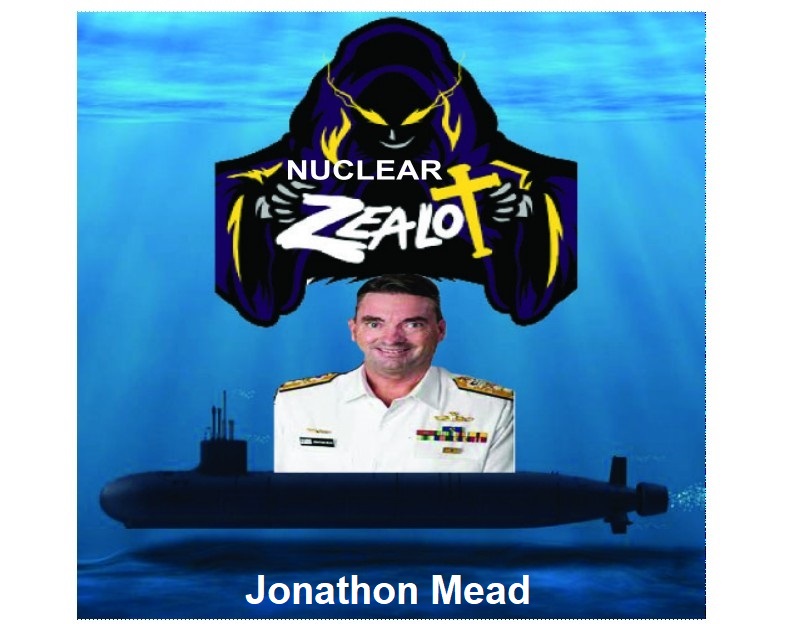
Surely someone in Vice Admiral Jonathan Mead Admiral Mead’s 350 strong advisory team group advising Albanese on nuclear submarines should have stumbled across it.
Mead gave an astonishing interview to the Guardian published on March 8 and 9 this year. Mead wrongly described Australia’s existing Collins class conventional submarines as “the most advanced in the world”. They are certainly not. They lack modern equipment such as fuel cells and advanced batteries that let submarines operate extremely quietly for sustained periods without having to rise to the surface to recharge their batteries every day or two, unlike the Collins class. Modern German, Japanese and South Korean ones are in this category. These submarines have low sustainment costs, unlike the Collins class where this burden has hit almost $700 million a year, not including fuel and crew costs. Taking the Collins out of service would free up billions in funding for new conventional submarines.
Because nuclear subs are significantly bigger than most conventional subs, they are easier to detect as they move through the earth’s magnetic field and the water column. Rapid advances in sensor power and computer processing increase the chances of subs’ detection – and destruction. Mead said he had taken account of the prospect oceans would become more transparent by 2050. His solution is to use underwater drones in places where you don’t want a nuclear submarine to be detected. That would be just about everywhere that the presence of nuclear submarine was supposed to be important. Apparently, the nuclear sub would control a drone at a safe distance. In this case, far cheaper platforms can be used to control the drones.
Nuclear power at least 15 years away, says regulator
Australia’s chief nuclear regulatory body has told a parliamentary inquiry how long it would take to legislate and build a nuclear power plant.
Anthony Anderson and Ellen Ransley 15 May 23, news.com.au
A senate inquiry examining whether Australia’s ban on nuclear energy should be lifted has been told it would take 10-15 years to have a power plant up and running if the moratorium was lifted right now.
The Environment and Communications Legislation Committee sat on Monday to discuss the Environment and Other Legislation Amendment (Removing Nuclear Energy Prohibitions) Bill 2022.
The bill would see amendments made to the Australian Radiation Protection and Nuclear Safety Act 1998 and the Environment Protection and Biodiversity Conservation Act 1999, effectively paving the way for nuclear power generation.
CEO of the Australian Radiation Protection and Nuclear Safety Agency (ARPANSA) Dr Gillian Hirth fronted the inquiry on Monday afternoon, where she was questioned about her organisation’s role in nuclear regulation.
Dr Hirth told the inquiry there would need to be a regulatory framework established for private nuclear generation, since ARPANSA only regulates Commonwealth projects.
“The time frames for implementation, if it were established today, you would be lucky to have it up and running in 15 years … 15 years would be the minimum,” said Dr Hirth.
“It can take three to five years to do a significant review of regulations in Australia … once they’re done, you’re looking at at least 10 years to develop facilities.”
The CSIRO also fronted the inquiry, with representatives grilled over data from 2018 showing nuclear would be prohibitively expensive for Australia.
The discussion focused on small modular reactors (SMRs), a technology of which CSIRO’s executive director for environment, energy, and resources, Dr Peter Mayfield, said there was limited information available……………………………………………………………..
The laws around nuclear technology will also need to be amended to enable Australia to take carriage of nuclear powered submarines, due to arrive in the early 2030s under the recently signed AUKUS agreement.
“(According to) our Act as it currently stands, we can’t regulate nuclear powered submarines,” said Dr Hirth.
“The proposed amendment, in the short term, seeks to give ARPANSA regulatory power until Defence can establish [their own body].”
Earlier, a number of executives in Australia’s leading nuclear industry associations and groups spruiked the benefits which nuclear energy could offer Australia……………………
The committee has twice been granted an extension to develop a report, which at the time of writing will be expected to be finalised on June 15. https://www.news.com.au/technology/environment/nuclear-power-at-least-15-years-away-says-regulator/news-story/6b8c4ec9c94cd4d05471783678abdb59
Peter FitzSimons takes aim at schoolboy campaigning for nuclear energy with scathing Twitter post.
- William Shackel campaigns for nuclear power
- He has been criticised by Peter FitzSimons
- Journalist slammed ‘expensive’ nuclear energy
By DANYAL HUSSAIN FOR DAILY MAIL AUSTRALIA, 15 May 2023
Peter FitzSimons has called out a young Aussie teen for campaigning for nuclear energy.
Year 11 Brisbane boy William Shackel, 16, has drawn national publicity in recent months with his Nuclear for Australia campaign group.
Nuclear for Australia is an (?) independent, non-registered information campaign that advocates for the ban on nuclear energy in Australia to be lifted.
William posted a video on social media on Sunday documenting a trip to Canberra, where he is hoping to present a petition to parliament.
FitzSimons praised the young activist’s passion but claimed it had been ‘misplaced’ as he addressed the video in a Twitter post on Monday.
‘Onya for your passion, young man, as misplaced as it is. I stand to be corrected, but is nuclear energy not most expensive to produce?’ he wrote.
‘Why do that, when renewables are blooming, and cheap? Takes 10 years to build? ANYONE out there, who would welcome big or mini-reactor nearby?’
William outlined his support for nuclear power in an interview last Tuesday.
‘Nuclear is a really unique solution because unlike fossil fuels, nuclear is safe and it is clean,’ he told 6 News……………………………………………………… https://www.dailymail.co.uk/news/article-12083987/Peter-FitzSimons-calls-William-Shackel-campaigns-nuclear-energy-Australia.htm1
Understanding The Highly Complex World Of Western China Analysis

CAITLIN JOHNSTONE, MAY 15, 2023 https://caitlinjohnstone.substack.com/p/understanding-the-highly-complex?utm_source=post-email-title&publication_id=82124&post_id=121463595&isFreemail=true&utm_medium=email
—
Former Pentagon official Elbridge Colby was interviewed on The National Review’s Charles CW Cooke Podcast, where he provided some very high-level analysis on the tensions around China, Taiwan, and the United States.
I will here attempt to explain some of Colby’s comments for the benefit of the average reader, because Colby has been studying these things for many years and his commentary can be a bit advanced and esoteric for the casual punditry consumer.
“The analogy I use is… Taiwan is like a man with a cut in the ocean, and China is like a great white shark, and America is like a man in a boat,” Colby said in the interview.
“The problem is once that great white shark starts moving, you got no time,” added Colby. “You’re done. You know, if you’re not already by the side of the boat, right? Because it’s a great white shark.”
Now bear with me if Colby’s incisive observations went a bit over your head here, but if we break it down I’m confident that we can all catch up to this man’s towering intellect enough to catch a glimpse of his understanding on the matter.
What Colby appears to be saying — and please correct me of you think I’m reading this wrong — is that China is like a Great White Shark, which as we all know is an extremely dangerous aquatic predator with a voracious appetite, capable of gulping down a human being in a few swift bites.
Now, try to imagine being in a situation where you’re out there in the ocean, and there’s a Great White Shark right there with you in the water. And to make matters worse, you’re bleeding — a problem not only due to the wound from whence the blood is emanating, but also because sharks can smell blood in the water! That would be pretty bad, right?
Okay, so are you with me so far? Remember, this is very advanced stuff, so feel free to read back and review as much as you need.
Now, imagine you’re in that situation with the cut and the shark, and there’s a boat that you can go to to get away from the shark. You’d want to hop aboard that vessel as swiftly as possible, don’t you think? I know I would!
So to put it all together, what the esteemed Elbridge Colby is telling us is that China is analogous to the Great White Shark which is eyeing the bleeding man in the water, and the man can be compared to Taiwan, and the United States of America is comparable to the boat that is coming to the rescue of the man.
Make sense? If you’re still struggling to comprehend Colby’s scalpel-like geopolitical analysis, don’t worry, because I’ve obtained this helpful infographic above, to further illuminate your understanding:
Interestingly enough, this is not the first time China has been compared to a Great White Shark in recent western punditry. The Hoover Institution’s Matt Pottinger, a former advisor to President Donald Trump, made a similar comparison in an interview with Nikkei Asia earlier this month:
“We saw a baby shark and thought that we could transform it into a dolphin over time, to become a friendly sort of system,” Pottinger said. “Instead, what we did was we kept feeding the shark and the shark got bigger and bigger and bigger and bigger. And now we’re dealing with a formidable, great white.”
“With a shark you put up a shark cage,” added Pottinger. “The shark doesn’t take it personally. It bumps into the cage. It respects those barriers.”
Again, this is very complicated for the uninitiated layperson, but what Pottinger appears to be saying is that China is not at all comparable to a dolphin, which is an oceanic mammal known to be friendly toward people and easily trained to do tricks in aquatic theme parks. Rather, in Pottinger’s understanding, China is more comparable to a Great White Shark, which as you’ll recall from our discussion earlier in this essay is actually known to be rather dangerous.
If you’re still struggling to make sense of Pottinger’s luminous understanding, here’s another illustration to help make things a bit clearer:

If you need it simplified even further, another way to put it might be, CHINA BAD. SHARK BAD. CHINA LIKE SHARK. CHINA VERY, VERY BAD. BAD CHINA. BAD.
Again, don’t be hard on yourself if you can’t quite wrap your head around the high-level analysis of intellectual giants like Matt Pottinger and Elbridge Colby. If we could understand these things as well as they do, we’d be the ones earning big bucks from Washington think tanks, not them!
Well I think that’s enough work for your gray matter today. Have a rest and a nice sleep and come back fresh tomorrow, where we’ll be discussing some mind-blowing comparisons western analysts have been drawing between Vladimir Putin and Adolf Hitler.
Leak reveals Zelensky privately plots bold attacks inside Russia.(Is his halo slipping?)

They reveal a leader with aggressive instincts that sharply contrast with his public-facing image as the calm and stoic statesman.
Zelensky suggested Ukraine “conduct strikes in Russia”
“Zelensky highlighted that … Ukraine should just blow up the pipeline and destroy likely Hungarian [Prime Minister] Viktor Orban’s industry”
Zelensky then “suggested that Ukraine attack unspecified deployment locations in Rostov,” a region in western Russia, using drones instead, according to another classified document.
The Age, John Hudson and Isabelle Khurshudyan, May 14, 2023
Washington: Ukrainian President Volodymyr Zelensky has won the trust of Western governments by refusing to use the weapons they provide for attacks inside Russia and prioritising the targeting of Russian forces inside Ukraine’s borders.
But behind closed doors, Ukraine’s leader has proposed going in a more audacious direction – occupying Russian villages to gain leverage over Moscow, bombing a pipeline that transfers Russian oil to Hungary, a NATO member, and privately pining for long-range missiles to hit targets inside Russia’s borders, according to classified US intelligence documents detailing his internal communications with top aides and military leaders.
The documents, which have not been previously disclosed, are part of a broader leak of US secrets circulated on the Discord messaging platform and obtained by The Washington Post. They reveal a leader with aggressive instincts that sharply contrast with his public-facing image as the calm and stoic statesman weathering Russia’s brutal onslaught. The insights were gleaned through intercepted digital communications, providing a rare look at Zelensky’s deliberations amid Russian missile barrages, infrastructure attacks and war crimes.
The Pentagon, where senior US military leaders were briefed on the matters outlined in the leaked documents, did not dispute the authenticity of the materials.
In some cases, Zelensky is seen restraining the ambitions of his subordinates; in several others, he is the one proposing risky military actions.
In a meeting in late January, Zelensky suggested Ukraine “conduct strikes in Russia” while moving Ukrainian ground troops into enemy territory to “occupy unspecified Russian border cities,” according to one document labelled “top secret.” The goal would be “to give Kyiv leverage in talks with Moscow,” the document said.
In a separate meeting in late February with General Valery Zaluzhny, Ukraine’s top military commander, Zelensky “expressed concern” that “Ukraine does not have long-range missiles capable of reaching Russian troop deployments in Russia nor anything with which to attack them”. Zelensky then “suggested that Ukraine attack unspecified deployment locations in Rostov,” a region in western Russia, using drones instead, according to another classified document.
In a meeting in mid-February with Deputy Prime Minister Yuliya Svrydenko, Zelensky suggested Ukraine “blow up” the Soviet-built Druzhba pipeline that provides oil to Hungary. “Zelensky highlighted that … Ukraine should just blow up the pipeline and destroy likely Hungarian [Prime Minister] Viktor Orban’s industry, which is based heavily on Russian oil,” the document says.
In detailing the conversation, intelligence officials concede that Zelensky was “expressing rage toward Hungary and therefore could be making hyperbolic, meaningless threats,” a qualification that does not accompany the other accounts of Zelensky suggesting bold military action. Though Hungary is nominally part of the Western alliance, Orban is widely considered Europe’s most Kremlin-friendly leader.
When asked if he had suggested occupying parts of Russia, Zelensky, during an interview with The Washington Post in Kyiv, dismissed the US intelligence claims as “fantasies” but defended his right to use unconventional tactics in the defence of his country.
……………. The use of long-range missiles to hit inside Russia is a particularly sensitive topic for the White House, which has long worried that the Ukraine conflict could escalate out of control and force a catastrophic standoff between the United States and Russia, the world’s largest nuclear powers.
Though Washington has given Zelensky billions of dollars’ worth of advanced weaponry, President Biden has steadily rebuffed the Ukrainian leader’s request for long-range ATACMS, shorthand for the Army Tactical Missile System, capable of striking targets up to 185 miles away. Since the start of the war, Biden has said the United States is “not encouraging or enabling Ukraine to strike beyond its borders”.
When asked about the intelligence indicating he had weighed the use of long-range missiles to hit Russia, Zelensky said it is not something Ukraine is entertaining. “No one in our country has given orders for offensives or strikes on Russian territory,” he said.
It is unclear whether the United States has shared accounts of Zelensky’s plotting with allied nations, but the Ukrainian president continues to enjoy the strong support of Western governments, which have provided him with an increasingly sophisticated array of weaponry.
This past week, Britain became the first Western country to provide Ukraine with long-range missiles. The Storm Shadow, a cruise missile system with stealth capabilities, has a range of 155 miles, far exceeding the 50-mile range of the US-provided HIMARS launchers.
British Defence Minister Ben Wallace said Friday that the missile would give Ukraine “the best chance” to defend itself and would be for use only “within Ukrainian sovereign territory.” A spokesman with the British Embassy in Washington declined to comment on whether Zelensky’s leaked remarks might give London pause about its decision.
The Biden administration says Zelensky’s intercepted comments are not the cause for withholding ATACMS.
“Ukraine has repeatedly committed to employ US-provided weapons responsibly and strategically when needed to counter Russian aggression, and we are confident that will continue to be the case,” said a US defence official who, like others interviewed for this report, spoke on the condition of anonymity to discuss a sensitive topic.
Since last year, Zelensky has promised that Ukraine would never use US weapons to strike inside Russia, a pledge the White House says he has fulfilled.
“President Zelensky has kept the promises he has made to President Biden, and we do not believe that that will change,” said a senior administration official.
One reason for not providing the long-range missiles is the “relatively few ATACMS” the United States has for its own defence needs, General Mark A. Milley, chairman of the Joint Chiefs of Staff, told Defence One in March.
Zelensky, however, said he believes the United States isn’t sending the weapons because it doesn’t trust Kyiv.
“I think they are afraid that we might use them on the territory of Russia,” Zelensky told The Post. “But I would always tell our partners … ‘We have a priority target for which we are spending the ammunition packages we receive, and we spend it on the deoccupation of purely Ukrainian territories,’” he said.
While there is no indication that Ukraine has used Western missiles to strike into Russian territory, the same cannot be said for Kyiv’s use of armed drones.
Explosions caused by unmanned aerial vehicles have become a regular occurrence in Russia, including in Rostov, where a drone crashed into an oil refinery this month. Ukrainian officials are often coy about the incidents, hinting that they’re responsible without directly taking credit.
Two drone attacks in December on Russia’s Engels air base in Saratov, more than 590 kilometres from the Ukrainian border, showed “that we have the ability to reach many kilometres farther than they could expect,” Oleksiy Danilov, secretary of Ukraine’s National Security and Defence Council, said in an interview earlier this year.
Russia this month accused Ukraine of staging a drone attack intended to kill President Vladimir Putin in the Kremlin. Videos circulating on social media and verified by The Post show two drones streaking toward the Kremlin at about 2.30am local time. The allegation was forcefully denied by Ukrainian officials, including Zelensky…………………..more https://www.theage.com.au/world/europe/leak-reveals-zelensky-privately-plots-bold-attacks-inside-russia-20230514-p5d87l.html The Washington Post
UK’s Nuclear Waste Services ignore overwhelming local council opposition to siting plan for waste dump
Candidates opposed to the siting of a Nuclear Waste facility on the border
of Mablethorpe and Theddlethorpe not only took control of all the parish
councils in the search area but also took all of the allocated seats on the
dissstrict council, plus two seats in Sutton on Sea.
Turnout was high for a local election. In Theddlethorpe and Withern 39.6% of those eligible to
vote did so and more than seventy per cent of the voted for Travis Hesketh
(pictured) In Sutton on Sea, Where one Green and one independent anti dump
candidates overturned a Conservative majority, the turnout topped forty per
cent.
With such an overwhelming result we wrote to the leaders of both
Lincolnshire County Council and East Lyndsey District Council demanding
that they honour the people’s decision and withdraw from the so-called,
Community Partnership.
We await their decision. However, NWS has spoken to
the press and intend to ignore the result. That makes the second “Test Of
Public Support ” they have chosen to ignore. The first, a survey carried
out by Theddlethorpe Residents Association, showed 85% against with a
turnout of 56%.
Guardians of the East Coast 13th May 2023
https://preview.mailerlite.io/emails/webview/385711/88100923539195491
Philippines unprepared for nuclear-related dangers

“Companies and the pro-nuclear lobby are not being forthright on the pitfalls of small modular reactors (SMR),”
“If constructed, the Philippines will be one of the guinea pigs in a costly experiment “
BYJONATHAN L. MAYUGA, MAY 15, 2023, Business Mirror
THE Philippines is not prepared for the risks posed by nuclear energy and should instead pursue the development of renewable energy. This was emphasized by Greenpeace Campaigner Khevin Yu during an online news briefing dubbed “The Economic Implications of a Philippine Nuclear Program: What the Pro-Nuclear Camp Won’t Tell Us” held last Friday.
Greenpeace held the briefing to issue its reaction to the House Committee on Appropriations’ approval of a House bill that seeks to establish a nuclear regulatory framework.
Citing a Philippine Institute for Development Studies (PIDS) report on the feasibility of nuclear energy in the Philippines, Yu said it would take at least a hundred years for the Philippines to be ready for the construction, operation and management of nuclear waste.
He said that similarly, the Philippines is not equipped with the technology nor the capacity to ensure the safe operation of nuclear energy, arguing that it will be too risky to operate such a facility in a country that is exposed to various natural disasters such as earthquakes, typhoons, landslides and flooding.
According to Yu, at least 14 sites are being eyed for the development of a nuclear facility in various locations, including Bataan, near the Bataan Nuclear Power Plant, which was abandoned by the government in the 1970s.
A lot better
GOING for renewable energy like solar energy is a lot better, Yu said because once it fails, solar energy can be quickly switched off without the risk of a nuclear disaster. He added that nuclear energy requires a lifetime to construct, operate and manage and is worse than fossil fuel, which can be shut down in 25 years. He said that disposing of wastes in nuclear will be problematic, citing the case of even advanced countries like Japan.
According to Greenpeace, the proposed Philippine National Nuclear Energy Act is a gruesome bill that, if enacted, will potentially bankrupt the country.
The group believes that the most that benefit from the proposed measure are the nuclear industry and nuclear companies.
“Posing a severe drain to the country’s financial resources, the bill will make the national government, local government units, using Filipino taxpayer money, shoulder most, if not all the liabilities—costs of short-and long-term waste storage, decommissioning and nuclear accidents— associated with nuclear energy,” it says.
During the briefing, Yu said nuclear energy is a costly source of power.
“It does not fit in a world beset by a global financial crisis, as countries like ours struggle from keeping the economy afloat while dealing with climate change impacts,” he said.
Yu said the nuclear bill in Congress will waste billions of taxpayer money even while it fails to propose any viable financial solutions to address the necessary gargantuan costs for short- and long-term radioactive waste storage, decommissioning and nuclear accidents.
“Companies and the pro-nuclear lobby are not being forthright on the pitfalls of small modular reactors (SMR),” he added.
Costs much higher
YU said there is no commercial SMR currently in operation in the world. If constructed, the Philippines will be one of the guinea pigs in a costly experiment, he said.
Moreover, he said the projected costs are much higher than our country can afford, putting the burden on our government and the people.
“Companies proposing SMRs, in reality, do not have sufficient capital to fund billions needed for nuclear accidents, early decommissioning and waste storage. Meanwhile, the Philippine government’s track record of making those responsible for environmental accidents like mine and oil spills is dismal,” he said.
In conclusion, Greenpeace said the Philippines government should drop Rep. Mark O. Cojuangco’s nuclear bill, arguing that it has “faulty provisions” and “neglects to tackle the true costs of nuclear energy”—both on the financial aspects of construction and operation, as well as, short and long term waste storage, decommissioning and nuclear accidents, all of which concern the safety of Filipino people.
Yu said the government should, in fact, drop plans to develop nuclear energy in the Philippines, altogether saying “it uses technologies and resources that are not readily available in the country and indigenous renewable sources are locally available and abundant, much faster to deploy, much less costly and does not carry inherent risks.
Instead, he said the Philippine government should prioritize a just transition to renewable energy.
May 14 Energy News — geoharvey
Opinion: ¶ “Can Tesla’s Price War Accelerate Electrification?” • Tesla’s price reductions in the first quarter of the year have sent some waves through the auto industry. As legacy automakers and startups both try to catch up to Tesla’s EV dominance, some wonder whether the automaker’s price cuts could actually spur on a quicker transition […]
May 14 Energy News — geoharvey
This week’s budget confirms the death of Labor’s nuclear disarmament diplomacy

All the new money is to support AUKUS.
Albo and the nukes – the demise of Labor’s disarmament policy, by Philip Dorling | May 12, 2023 https://michaelwest.com.au/albo-and-the-nukes-the-demise-of-labors-disarmament-policy/
A new nuclear arms race is accelerating, but Australia won’t be doing much about this threat to global survival. This week’s budget confirms the death of Labor’s nuclear disarmament diplomacy. Former diplomat Philip Dorling explains.
At his AUKUS submarine announcement on 14 March 2023, Prime Minister Anthony Albanese spoke of Australia’s “proud record of leadership” in nuclear non-proliferation. On 17 April Foreign Minister Penny Wong trumpeted Labor’s “proud history” of championing practical disarmament efforts”.
Labor does have a history of disarmament and non-proliferation leadership. In the 1990s Foreign Minister Gareth Evans was an outstanding diplomatic activist with Australia playing important roles in negotiation of the Chemical Weapons Convention, extension of the Nuclear Non-Proliferation Treaty, and the Comprehensive Nuclear Test Ban Treaty. Evans argued before the International Court of Justice that the use and threat of nuclear weapons is illegal. The Canberra Commission produced a landmark report charting steps to achieve the elimination of nuclear arsenals.
Dollars for diplomacy
Foreign Minister Wong is the latest custodian of Labor’s tradition of middle power disarmament diplomacy. But what are Labor’s priorities now? Well, at the end of the day, money talks and in Tuesday’s Federal Budget the Department of Foreign Affairs and Trade (DFAT) picked up an extra $74.6m for nuclear diplomacy.
Of that, $52.7m is for DFAT to provide “international policy advice and diplomatic support for the nuclear-powered submarine program.” Another $21.9m will go to the Australian Safeguards and Non-Proliferation Office (ASNO) to support the establishment of safeguard arrangements with the International Atomic Energy Agency (IAEA) for the AUKUS project.
All the new money is to support AUKUS.
AUKUS safeguards
For the AUKUS project to proceed within the framework of Australia’s non-proliferation obligations, Australia must negotiate a special arrangement with the IAEA to allow the use of highly enriched uranium in submarine reactors. We already have a Comprehensive Safeguards Agreement (CSA) with the IAEA that covers civilian nuclear activities. Article 14 of the CSA allows for negotiation of an arrangement with the IAEA to oversee the use of nuclear material for non-explosive military purposes, i.e. nuclear naval propulsion.
It’s challenging to combine the safeguards transparency with the secret world of nuclear submarines; but the Australian Government and IAEA Director General Rafael Grossi appear confident an arrangement can be agreed to enable the IAEA to provide credible assurances that submarine fuel is not being used to manufacture nuclear weapons.
The Government has already affirmed that Australia will be provided with complete, sealed reactor units from which the removal of any nuclear material would be extremely difficult. The reactor fuel will “not be in a form that can be directly used in nuclear weapons without further chemical reprocessing, requiring facilities that Australia does not have and will not seek”. Australia’s wider non-proliferation obligations, including acceptance of IAEA inspections anywhere, anytime will remain in place.
A few days before the 14 March AUKUS announcement, Albanese and Wong wrote to Grossi to open formal negotiations. ASNO Director General Geoff Shaw also forwarded “preliminary design information” to the IAEA.
Diplomatic dogfight
However despite what DFAT describes as Australia’s “impeccable non-proliferation credentials”, the negotiations are already politically contentious with China claiming AUKUS “poses serious nuclear proliferation risks”. Beijing alleges Australia is “coercing the IAEA Secretariat into endorsement on the safeguards issue”. Chinese diplomats are demanding an “intergovernmental process” involving all IAEA members with any new arrangement “jointly discussed and decided by the international community”.
Australia’s government doesn’t want AUKUS derailed. We’re relying on advice from the IAEA in 1978 that states an Article 14 arrangement can be negotiated with the IAEA Secretariat before being provided to the IAEA Board of Governors for “appropriate action”. Australia would like Grossi to simply submit the negotiated arrangement to the Board as information. However the Board may insist on subjecting the arrangement to its approval. China and Russia will demand that, and they’ll likely vote against any arrangement regardless of its terms. IAEA Board approval is by no means assured. Even if the Board does approve, China won’t leave the matter there. A fractious dispute could drag on for years.
That’s why $74.6m has been committed to AUKUS diplomacy. This large and complex campaign will involve negotiation with the IAEA Secretariat and engagement with the 35 countries on the IAEA Board, indeed with all 176 members. Australia will be funding plenty of IAEA projects, seminars and workshops. In terms of diplomatic effort it’s equivalent to running for election to a seat on the United Nations Security Council, only more controversial and already actively opposed by China and Russia.
All this comes with big opportunity costs.
A new nuclear arms race
The international situation is deeply worrying. Tension between China and the United States over Taiwan continues to rise. There’s already a naval arms race of which AUKUS is a small part, but the bigger strategic shift is manifest with China’s expansion of its nuclear forces. Construction of hundreds of new silos for a greatly expanded strategic missile force raises the prospect that Beijing is seeking an arsenal much closer to parity with the US.
At the same time, Russia has suspended the New START nuclear arms treaty which will expire in 2026. Moscow’s development of new and potentially destabilising delivery systems makes the future strategic calculus more uncertain. In turn, the prospect of three way nuclear arms competition with China and Russia has led to calls in the US Congress for an expansion of US nuclear forces.
Australian diplomats express concern about “the opaque nuclear arsenal build up in our region”. Others are less coy about the nuclear danger. Veteran foreign policy analyst Professor Joseph Siracusa recently warned that “We are literally on the eve of destruction .
The demise of Labor’s disarmament diplomacy
Labor’s national platform commits the government to move to join the Treaty on the Prohibition of Nuclear Weapons (TPNW), a recent agreement produced under UN auspices to advance nuclear disarmament. Albanese championed Labor’s 2018 commitment to sign the TPNW. In June last year a large group of former Australian Ambassadors and High Commissioners urged the new government to follow through and join the TPNW as demonstration of “a principled foreign policy … that advances the global common good”.
The United States has no enthusiasm for the TPNW and DFAT worried that the new Labor Government would be receptive to something that could complicate AUKUS, especially ensuring bipartisan support in the US Congress.
They needn’t have been concerned. Labor’s pledge to join the TPNW was a dead letter the moment Labor’s leadership signed up to the nuclear submarine project. DFAT submissions released under FOI show Wong agrees that TPNW isn’t a priority. She massaged Labor rank and file concerns by sending Labor backbencher Susan Templeman as an observer to the first TPNW states parties meeting in Vienna in June 2022. But as DFAT noted, “our attendance as an observer did not represent a decision to join the TPNW.”
Questioned in March by independent MP Zoe Daniel about the backflip, Albanese again referenced Labor’s “proud history” of disarmament efforts, but wouldn’t commit to joining the TRNW.
Lost opportunity
Australia could be working with TPNW countries to put an international spotlight on the dangers of a new nuclear arms race. Realistic and practical measures that could be pursued include those proposed by former ASNO Director General John Carlson; pressing nuclear weapon states for “no first use” commitments, a cap on existing arsenals, no modernisation or new weapons and a draw down towards minimum deterrence capabilities.
However with AUKUS dominating the agenda, there isn’t any room for the middle power diplomacy once practiced by Gareth Evans. Instead, Australian diplomats are busy defending our nuclear submarine pact. At a recent meeting in Geneva on nuclear risks, Australian spent nearly as much time and effort rebutting Chinese allegations about AUKUS as what was devoted to substantive issues.
The Government’s budget allocation to DFAT shows they know they have a long diplomatic fight on their hands. It will suck the life out of Australian disarmament diplomacy. We’ll be talking ad nauseam about AUKUS while a nuclear arms build-up makes the world much less safe.
Labor’s disarmament activism is dead, cannibalised by AUKUS.
Philip Dorling
Philip Dorling has some thirty years of experience of high-level political, public policy and media work, much of that at the Australian Parliament.
He has worked in the Australian political environment from most angles, in both the national and state levels of government including as a senior executive; as a senior policy adviser for the Federal Labor Opposition and for cross bench Senators; and as an award-winning journalist in the Federal Parliamentary Press Gallery.
1 This month


Help Aunty Sue Protect Her Land and Sacred Sites From Destructive Rocket Testing.
.

Australians deserve the truth
about
AUKUS – https://aukuspublicinquiry.com/

PETITION – To: Prime Minister Anthony Albanese and the Australian Labor Government

of the week – Australians for War Powers Reform (AWPR)
To see nuclear-related stories in greater depth and intensity

