AGL is quitting coal: What now on renewables, workers and the bottom line? — RenewEconomy

AGL Energy’s plan to quit coal power generation a decade ahead of schedule means a much bigger and faster pivot to renewables. How will it work? The post AGL is quitting coal: What now on renewables, workers and the bottom line? appeared first on RenewEconomy.
AGL is quitting coal: What now on renewables, workers and the bottom line? — RenewEconomy
Federal government tips $43m into decarbonising “hard to abate” sectors — RenewEconomy

ARENA launches grants program offering funds to companies in hard-to-abate sectors to integrate renewables and energy efficiency technologies. The post Federal government tips $43m into decarbonising “hard to abate” sectors appeared first on RenewEconomy.
Federal government tips $43m into decarbonising “hard to abate” sectors — RenewEconomy
Consumers want out of coal: De Brenni explains Queensland switch to renewables — RenewEconomy

Queensland energy minister tells the Energy Insiders podcast the plan to switch from coal to renewables was driven by climate impacts and consumer demand. The post Consumers want out of coal: De Brenni explains Queensland switch to renewables appeared first on RenewEconomy.
Consumers want out of coal: De Brenni explains Queensland switch to renewables — RenewEconomy
Energy Insiders: De Brenni on Queensland’s flip to renewables — RenewEconomy

Energy minister Mick de Brenni outlines how Queensland will make the switch from coal to 80 per cent renewables. Plus: Victoria’s storage target, and the latest from AGL. The post Energy Insiders: De Brenni on Queensland’s flip to renewables appeared first on RenewEconomy.
Energy Insiders: De Brenni on Queensland’s flip to renewables — RenewEconomy
Australia’s last coal holdout surrenders to the green energy revolution — RenewEconomy

The pace at which the defense of coal is falling by the wayside is extraordinary. Even Queensland, the state seen as the last hold out, has now mapped its exit. The post Australia’s last coal holdout surrenders to the green energy revolution appeared first on RenewEconomy.
Australia’s last coal holdout surrenders to the green energy revolution — RenewEconomy
September 27 Energy News — geoharvey

Opinion: ¶ “Electric Vehicle Good, E-Bike Better, Cargo E-Bike Even Better” • “One bike that can do almost anything – commutes, trips to the store, daycare drop-off, leisure rides, and more.” So said the e-bike maker CERO, as it unveiled its CERO One. It’s all true! The CERO One feels like silk in motion to […]
September 27 Energy News — geoharvey
Australia’s last coal holdout surrenders to the green energy revolution — RenewEconomy
The pace at which the defense of coal is falling by the wayside is extraordinary. Even Queensland, the state seen as the last hold out, has now mapped its exit. The post Australia’s last coal holdout surrenders to the green energy revolution appeared first on RenewEconomy.
Australia’s last coal holdout surrenders to the green energy revolution — RenewEconomy
“A broken system allows nine nations to hold the world hostage” — IPPNW peace and health blog

Molly McGinty speaks for IPPNW at the UN: “We reject the complacency of nuclear-armed states and their allies, and thank those who have paved the path to abolition.” [IPPNW’s Associate Program Director Molly McGinty delivered the following remarks at the High-Level Meeting of the International Day for the Total Elimination of Nuclear Weapons on 26 […]
“A broken system allows nine nations to hold the world hostage” — IPPNW peace and health blog
Australian and more – Nuclear news -week to 26 September

Some bits of good news – Good News on AIDS, Ocean Conservation in Indonesia, and Clean Air Zones in Spain.Coronavirus. World –
over 609 million confirmed cases and over 6.5 million deaths. USA 395 117 new cases . The highest numbers of new weekly deaths were reported from the United States of America. President Joe Biden says “The pandemic is over” . As the Americans say – Go figure.
AUSTRALIA
Aukus plan to expedite Australia’s nuclear sub construction an act of nuclear proliferation under ‘naval nuclear propulsion’ cover: Chinese mission to UN . South Australia’s premier says buying nuclear submarines directly from US would degrade Australian shipbuilding.
25 September – anniversary of nuclear bombing at Maralinga – causing Aboriginal deaths, and later deaths of soldiers exposed to radiation. https://www.youtube.com/watch?v=R0MgVjCEwd0
Australia’s foreign minister warns of ‘catastrophic’ impact of Indo-Pacific war during UN address.
Greens Senator Barbara Pocock calls on the Federal Government to suspend work on South Australian nuclear waste site. Kimba community groups need to pose these hard questions to Ministers Madeleine King and Ed Husic.
‘A huge victory’: Traditional owners win court challenge against $4.7b Santos gas project
Crikey and Media Watch v Friendlyjordies and Independent Australia.
Consumers reap rewards of 100 pct renewables as wind and solar farms hand back windfall profits
INTERNATIONAL
26 September – International Day for the Total Elimination of Nuclear Weapons: dismantle the warheads and build a common security. International Day for the Total Elimination of Nuclear Weapons 2022: History, Significance and Celebration.
SCOTT RITTER: Reaping the Whirlwind
‘Naïve’ to think Russia will lose war, says Dr Jordan Peterson – https://www.youtube.com/watch?v=BnxxELn00gk The Ukraine war could open the nuclear Pandora’s box. The deadly game of nuclear escalation. Unlocked: NATO prolongs the Ukraine proxy war, and global havoc. World powers must take Putin’s threat seriously, stop the escalation and seek a diplomatic solution.
Small modular reactors: What is taking so long?
World’s richest countries fall short on renewable energy targets.
UKRAINE. Holding ground, losing war. War fears at another Ukraine nuclear site . In effect if not juridically, Ukraine was becoming a member of the NATO alliance.THE WORLD SPLIT APART.
Vladislav Ugolny: Ukraine is targeting civilians for retribution in the east while its Western backers turn a blind eye. HISTORIC CONTEXT OF THE REFERENDA
.
Aukus plan to expedite Australia’s nuclear sub construction an act of nuclear proliferation under ‘naval nuclear propulsion’ cover: Chinese mission to UN.
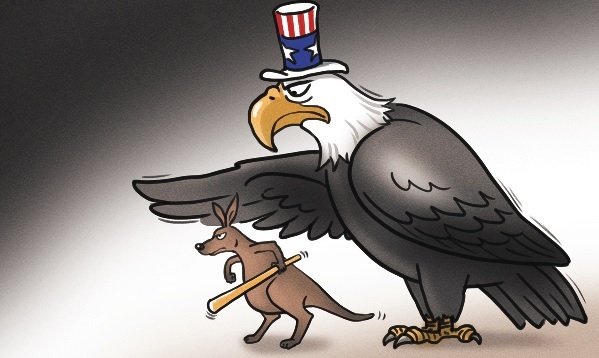
https://www.globaltimes.cn/page/202209/1276076.shtml By Leng Shumei and Hu Yuwei , Sep 26, 2022 , The Chinese mission to the UN in Vienna warned in an exclusive statement sent to the Global Times on Sunday that the latest move by AUKUS to plan to expedite Australia’s nuclear submarine construction is a blatant defiance of and trampling on the international nuclear non-proliferation system, and is an act of nuclear proliferation under the pretext of “naval nuclear propulsion.”
A spokesperson of the Chinese mission to the UN and other international organizations in Vienna made the comment after leaders of the US, UK and Australia said on Friday marking the one-year anniversary of the AUKUS security pact that they have made “significant progress” toward Australia acquiring a nuclear-powered submarine.
In disregard of the serious concerns of the international community on the trilateral nuclear submarine deal, the US is insisting on and even making reckless remarks about accelerating the deal, which is a blatant defiance of and trampling on the international nuclear non-proliferation system, the spokesperson told the Global Times in the statement.
China has repeatedly pointed out that the nuclear submarine deal among the three countries violates the Treaty on the Non-Proliferation of Nuclear Weapons (NPT), the IAEA Comprehensive Safeguards Agreement (CSA) and Additional Protocols (AP). It is an act of nuclear proliferation under the pretext of “naval nuclear propulsion,” the statement noted.
The US regards China as an “imaginary enemy.” The act of inciting Indo-Pacific competition seriously undermines regional peace and stability, which shows that the US has a wrong understanding of China, of the world and of itself, it said.
We hope that the US side will abandon the Cold War mentality, abandon the use of nuclear submarine cooperation among the three countries to contain China, abandon the trampling of international rules for geopolitical purposes, and work with China to implement the important consensus of the two heads of state, and practice mutual respect, peaceful coexistence, win-win cooperation, and shoulder the responsibility of a major country, read the statement.
Leaders of the US, UK and Australia said in a statement on Friday “We are steadfast in our commitment to Australia acquiring this capability at the earliest possible date,” according to Reuters.
The Biden administration is exploring an arrangement to expedite Australia’s acquisition of nuclear-powered submarines to respond to China’s growing military might by producing the first few submarines in the US, The Wall Street Journal reported on Saturday, citing some Western officials.
The idea is to provide Australia with an initial nuclear-powered fleet by the mid-2030s, while a longer-term effort is under way to give Australia the capability to produce nuclear-power submarines at home, according to The Wall Street Journal.
Chinese experts warned that Australia should also be alert that it is sleepwalking into a US trap to serve as the latter’s pawn in the US’ strategy against China. But they also believed that it would not be easy to implement the plan given the lack of spare shipbuilding capacity in the US and in Britain.
In August, the US admiral in charge of building new Columbia-class ballistic missile submarines said producing nuclear-power subs for Australia would interfere with the US’ efforts to build its own submarines unless a major effort was made to expand the American industrial base, according to the Wall Street Journal.
It is questionable how feasible the plan actually is, Chen Hong, president of the Chinese Association of Australian Studies and director of the Australian Studies Centre at East China Normal University, told the Global Times on Sunday.
The nuclear-powered submarine deal under AUKUS is a blatant, irresponsible act of nuclear proliferation, and once again proves that AUKUS countries are practicing a “double standard” on nuclear non-proliferation and using the deal as a tool for geopolitical gamesmanship, Ambassador Wang Qun, China’s Permanent Representative to the United Nations in Vienna, told the Global Times in a recent exclusive interview.
Song Zongping, a Chinese TV commentator, warned it is already a fact that the US is dedicated to nuclear weapons proliferation.
But more importantly, the US is pushing its frontier against China to Australia by weaponizing Australia with nuclear submarines. The Australia’s nuclear-submarine fleet would be a squadron of and be controlled by the US, Song noted.
In the Friday statement, the AUKUS leaders – US President Joe Biden, UK Prime Minister Liz Truss and Australian Prime Minister Anthony Albanese – also said they had made “significant strides” in other areas, including hypersonic weapons, cyber, electronic warfare capabilities and additional undersea capabilities, according to Reuters.
Chen warned that by enhancing cooperation under AUKUS in these aspects, Australia does not understand that it is actually sleepwalking into a trap to serve as a pawn for the US’ strategy against China.
Currently, the nuclear-powered submarine deal under AUKUS attracts the most attention, but cooperation under AUKUS is far more complex as the organization’s long-term strategic aim is to contain China’s development, Chen noted.
Australia is being pushed into the teeth of the storm in the US’ strategy against China. It should be on high alert that it probably is sacrificing its own national security for other countries’ national interests, Chen warned.
South Australia’s premier says buying nuclear submarines directly from US would degrade Australian shipbuilding
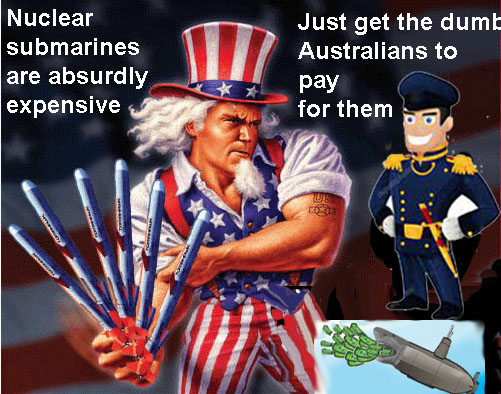
Proposal to fast-track submarines by having them produced by US ‘would not be acceptable’, Peter Malinauskas says
Guardian Sarah Martin, @msmartoSun 25 Sep 2022
The South Australian premier, Peter Malinauskas, has criticised a proposal for Australia to buy nuclear submarines directly from the US, saying it would “not be acceptable” for his state to miss out on promised submarine manufacturing jobs.
A report in the Wall Street Journal on Saturday suggested the Biden administration was considering a plan with the UK and Australia to fast-track nuclear-powered submarines for Australia by the mid-2030s by producing the first few submarines in the US.
However, given existing production constraints at US shipyards, the deal would depend on Australia making a financial commitment to expand the US’s submarine-production capacity to ensure it could also meet its domestic demands.……………………………………….
When asked if it would be acceptable for the Australian government to purchase submarines from the US without training an Australian workforce as part of the deal, Malinuaskas was clear.
“No, that would not be acceptable from the state government’s perspective, because that would represent a degradation of what has been promised, and that is that these subs are being built in Australia,” he said.
“It all depends on the pathway, and that detail really matters here – not just for the economic interests of the state, but also from our sovereign submarine-building capacity, which is such a central tenet of de-risking Australia’s security position.”
How Australia intends to fill the capability gap between its existing Collins Class fleet and the new fleet of up to 12 nuclear-powered submarines is the subject of a federal government review that is due to report by March next year.
On Sunday the defence minister, Richard Marles, said the review, being undertaken by former defence minister Stephen Smith and former Australian defence force chief Angus Houston, would consider how best to fill the capability gap that would otherwise see Australia wait until the mid-2040s for new submarines……………………………………………………………
In a joint statement released last week to mark one year of the Aukus pact, the leaders of Australia, the UK and the US said that the group had made significant progress towards Australia acquiring conventionally armed, nuclear-powered submarines.
“We are steadfast in our commitment to Australia acquiring this capability at the earliest possible date,” the statement said. https://www.theguardian.com/world/2022/sep/25/sa-premier-says-buying-nuclear-submarines-directly-from-us-would-degrade-australian-shipbuilding
HISTORIC CONTEXT OF THE REFERENDA IN UKRAINE.
Popular Resistance, By Moon of Alabama., September 24, 2022, Educate!
Voting for membership in the Russian Federation has started in four oblast of Ukraine:
………………….. The Ukrainian regime has resorted to pure terrorism to prevent the votes from happening:
” Ukrainian partisans, sometimes working with special operations forces, have blown up warehouses holding ballots and buildings where Russian proxy officials preparing for the vote held meetings. Ukrainian officials have acknowledged that they are engaged in a campaign to assassinate key Russian administration officials; more than a dozen have been blown up, shot and poisoned, according to Ukrainian and Russian officials.“
Such behavior by the Zelenski regime against its still Ukrainian compatriots will only encourage the people in the four oblast to vote for an alignment with Russia.
The propaganda in the ‘west’ will declare that the vote is irregular and that the results, likely to be pro-Russian, will be fake.
But a view on historic election outcomes since Ukrainian independence in 1991 show clear geographic preferences in east and south Ukraine for pro-Russian policies:
[ The original here shows a graphic chart illustrating voting patterns over the years]
The graphic above is from research published by the Eurasian Research Institute of the International Hoca Ahmet Yesevi Turkish-Kazakh University. Its author writes:
“As we can see, the have always been a clear-cut geographical split in the way the regions of Ukraine vote for particular candidates. The East and West division or also referred as Southeast and Northwest division was always present throughout the electoral history of the independent Ukraine. It is conventionally believed that the eastern part of Ukraine is more influenced by Russia politically, economically and culturally. Therefore, the presidential candidates proposing more pro-Russian agenda usually gain much more political support in eastern regions than in other parts of Ukraine.
On the other hand, the western part of the country has traditionally been more pro-European with strong reference to traditional core Ukrainian ethnic traditions and values. Consequently, presidential candidates with pro-European political agenda and traditional Ukrainian appeal usually had strong support in western regions of the country. It is interesting to note that preferences of the electorate were not related to the geographical origin or background of the presidential candidates and any candidate could easily become popular in the east as well as in the west. Moreover, the same candidate could be both pro-eastern and pro-western in different periods of time as did Leonid Kuchma in 1994 and 1999, who is the only Ukrainian president to serve two consecutive terms from 1994 to 2005.“
The division is consistent with ethnic and linguistic differences between those parts of Ukraine.

In 2014, after the violent fascist coup in Kiev, one of the first laws implemented by the new government removed the Russian language from official use. Instead of overcoming the differences between its people it only sealed the predominant split in Ukraine.
The election promise of the current Ukrainian president Vladimir Zelenski to make peace with the Russia aligned rebellious Donbas region by adhering to the Minsk 2 agreements was rewarded with a large share of southeastern votes for his presidency. However, after having been threatened with death by fascists, Zelenski has made a 180 degree turn and has since posed as Ukrainian nationalist. In consequence he has lost all support in southeastern Ukraine.
The southeastern parts of today’s Ukraine have for centuries been part of the central Russian empire. They were only attached to the Soviet Republic of Ukraine under Lenin’s rule in 1922 and, in the case of Crimea, in 1954 under Nikita Khrushchev who himself had grown up in the Donbas region.

A likely high turnout and majority vote for membership in the Russian Federation will only correct the historic misalignment created by those illogical transfers.
https://popularresistance.org/historic-context-of-the-referenda-in-ukraine/
Vladislav Ugolny: Ukraine is targeting civilians for retribution in the east while its Western backers turn a blind eye
Tens of thousands of residents of Kharkov region may become victims of Kiev’s “justice”
https://www.rt.com/russia/563216-future-victims-of-ukrainian-justice/ By Vladislav Ugolny, a Russian journalist based in Donetsk, 23 Sept 22
The Ukrainian offensive in Kharkov Region, launched earlier this month, led to Russia’s armed forces losing control of a number of settlements.
These include the towns of Balakleya, Izium, Kupiansk, Volchansk and a number of villages and small locales. Nevertheless, the Russian army, by concentrating on rearguard battles, was able to avoid significant losses and managed to retreat to the left bank of the Oskol River to regroup.
However, the primary victims of this turn of events were the inhabitants of the aforementioned areas who are now in the hands of Ukraine.
Left behind
There is no exact information about the population of this region. The last census was conducted by Kiev more than 20 years ago, and the country’s statistics are known to be wildly inaccurate.
At the outset, we can estimate the pre-war population at 200,000 people. After the outbreak of hostilities, some were forced to flee. The number of refugees depended on the intensity of the fighting. For example, in the Russia-border town of Volchansk, people continued to live normally – they had not heard firing in the city since March – and there has always been humanitarian aid. However, the frontline villages south of Izium were virtually wiped off the face of the earth.
In any case, we are talking about tens of thousands of people. Most likely, at least 100,000 people lived in the Russian-controlled territories. Some of them remain under the protection of the Russian army, which controls the left bank of the Oskol, and villages such as Kupiansk-Uzlovoi and Borovaya, which have now become the sites of intense hostilities.
After the beginning of the Ukrainian offensive, some Kharkov Region residents were forced to leave their homes. An evacuation was carried out in Volchansk, Veliky Burluk, Kupiansk and Izium. Various estimates suggest that between 5,000 and 25,000 people have fled to Russia in September alone.
According to Readovka journalists, Voronezh Region accommodated about a thousand refugees. Another small number left Kharkov and headed to the Donetsk and Lugansk People’s Republics, in particular to the nearest district center of Svatovo.
In any case, most local residents have remained in situ. Based on the communication with residents of small Donbass front-line towns that have been shelled for eight years, it is safe to say that such a decision is not politically motivated. Residents of such areas, many of whom are older people, those with disabilities, families with household plots or low-mobility relatives who require care, usually cling to their land, homes and traditional way of life to the end. They are the ones who have not evacuated their homes in recent months, and it is they who are now under threat.
Ukraine is preparing ‘mop-ups’
A number of channels have appeared in the Telegram messenger app, one of the leading social media platforms for both sides of the conflict, which publish the personal data of so-called “collaborators.” The basis for accusations could be anything, including communicating with the Russian military or receiving humanitarian aid. Some of these channels are currently blocked, after a wave of complaints to Telegram’s technical support.
Despite this, some remain operational and many dehumanize Russia’s supporters as “zhduny(rus) – waiters.” According to the public consensus in Ukraine, such people who sympathize with Moscow are the cause of the conflict. In the eyes of Ukrainian radicals, anyone who expresses a positive attitude towards Russia is a threat to national security.
Thus, personal data in the early days of the offensive was published for one purpose: to point out enemies so that they would be killed during the “sweep” – a set of actions aimed at establishing control over occupied territory undertaken by the army, mercenaries and nationalist battalions. ‘Mopping-up’ is outside the criminal procedure code and is not regulated by any laws. Law may come to the territory later but, in the very first days, “revolutionary justice” is carried out, without lawyers and with the functions of judge, prosecutor and executioner performed by Ukrainian combatants.
To help their murderous cause, similar channels are being created that publish personal data with calls for lynching.
After the ‘cleansing’ is completed, elements of the Ukrainian legal system will come to the captured cities. They will focus on the concealment of war crimes committed during the ‘clean-up‘, and instead point the finger at Russia. The last two tasks will be carried out simultaneously, such as in Bucha, and those killed by Ukrainians will be cynically presented as victims of the Russian army.
Demonstrative detentions
According to the Security Service of Ukraine (SBU), as of last week 16 people suspected of collaborating with Russian authorities had already been detained. The security agents are first and foremost interested in tax officials responsible for the functioning of local businesses during Moscow’s control of the territory. However, local teachers who switched to teaching the Russian curriculum are also at risk.
Despite international humanitarian law, which obliges the party in control of a territory to preserve the educational process and emphasizes that no harm be done to educators, Kiev seems determined to punish teachers, to use them as an example to others.
Deputy Prime Minister of Ukraine Irina Vereshchuk says that these teachers committed crimes and should be punished for high treason. Such measures by the Ukrainian government are aimed primarily at intimidating educators in Russian-controlled territory. By showing a willingness to prosecute civilian workers, Kiev is raising the stakes.
Ukrainian law enforcement is also known to detain forestry workers, for having helped the Russian army to collect firewood. The details are unknown: whether they supplied the Russians with firewood on a commercial basis, felled the forests entrusted to them, or simply told the soldiers where to chop, remains unknown.
Traditions of Ukrainian ‘justice’
Any civilian living in Russian-controlled territory could be charged with collaboration. Ukraine has a special ministry for the reintegration of “temporarily occupied territories,” which since 2016 has been developing a policy of “filtering” the civilian population. Initially, its activity was concentrated around Donbass and Crimea but its scope has now expanded.
The most striking example is the law ‘On the State Policy of the Transitional Period’, which has been criticized by, among others, the Venice Commission [on constitutional law] for the fact that Ukrainian state policy in the territories it occupies is aimed at investigating only the alleged war crimes of the opposite side, ignoring the goal of establishing the truth about all crimes. This law also introduced differentiated treatment of citizens, depending on their level of interaction with Russia and/or the Donbass republics.
The topic of differentiating guilt – and, according to Ukraine, the entire civilian population is guilty to a greater or lesser degree – was then promoted by all sorts of non-profit organizations. So the Crimean Tatar Resource Center engaged with the Soros Foundation’s ‘Vozrozhdeniye’ and the extremist organization ‘Mejlis of the Crimean Tatar people,’ who claim to be the exiled Ukrainian government of Crimea, developed a whole methodology for evaluating the degree of collaboration.
For a demonstration of this scale, Ukrainians cited three respective examples: a doctor at a Crimean city hospital, an acting city council deputy and the ex-chief prosecutor of Crimea, Natalya Poklonskaya.
According to the methodology, the doctor scores 17 points, the deputy 30, and Poklonskaya 86. Thus, any Crimean doctor is already guilty of collaborationism, having 17 points. Since 2014, Ukrainian society, represented by non-profit organizations, has debated the doctor’s degree of guilt and the punishment which ought be meted out. We see the results of such discussions in Kharkov Region.
Preparing the ‘next Bucha’
In addition to fighting teachers and foresters, Ukrainian law enforcement and the media are also busy falsifying war crimes. They open the so-called “cellars” – illegal prisons and torture chambers, in which alleged prisoners of war and civilians were kept. The process of falsification relies on vivid shots – frames with a prayer scratched on the wall of one of the basements.
Another fabrication involved seven Sri Lankan students attending the Kupiansky Medical College, which was allegedly held by Russian military personnel since March, who testified about torture by the Russians.
The official position is simple: angry Russians simply detained and tortured foreigners. That the Russian army in fact evacuated them from Mariupol and Kherson is ignored. For the time being, Sri Lanka’s Ministry of Foreign Affairs is asking Kiev to provide more information about its citizens. A fair investigation, however, should not be expected until those Sri Lankans find themselves outside the hands of the Ukrainian state.
Speaking of Kiev’s hand, another media symbol of the “genocide of the Ukrainian people” was presented as the hand of a deceased man with rubber bracelets in the colors of the Ukrainian flag. This was apparent evidence of a hate crime: a man killed for wearing Ukrainian symbols. As it turned out, the body was that of Sergey Sova, a member of the 93rd Mechanized Brigade, who was killed during fighting near Izium.
In general, the only mass graves that Ukrainian propaganda now clings to are the cemeteries organized by Russians, where the victims of the military conflict were buried, including Ukrainian soldiers. There is an inscription on one of the crosses, in particular, “APU [Ukrainian Armed Forces] 17 people, Izium, from the morgue.” Ukrainians claim that there are 440 bodies there. Some of the crosses have memorial plaques, some only an inventory number.
The bodies were buried by the Russian army in accordance with the traditions of the region. Perhaps, of course, among those buried under the cross are Muslims, Jews, or adherents to pagan beliefs popular among Ukrainian neo-Nazi battalions, but the Russians did everything possible on their part to ensure the remains of the enemy were not desecrated.
In normal circumstances, these bodies would have been given to the Ukrainian side in return for the bodies of dead Russian soldiers, but Ukraine boycotted these exchanges due to an unwillingness to admit significant losses. In particular, the son of the aforementioned Sergey Sova learned a few months later about the fate of his father and through the media requested the body be transferred back home for a proper burial. Prior to that, Sova had most likely been listed as missing, a ploy that suppresses official numbers of dead Ukrainian soldiers and avoids compensation payments to their families.
Now, however, the Ukrainian soldiers killed in battle and buried in accordance with the dominant religious traditions in Ukraine will be counted as victims of an “alleged genocide.” After a while, when it is impossible to distinguish whether people were killed in early September or mid-September, they will be presented as victims of the retreating Russian army.
All of this is a sinister and cynical story, the truth of which we can learn only after the return of the Russian army to Kharkov. Only then will the massive machine of lies, propaganda and disinformation, which is the work of the Ukrainian government in the occupied territories, be broken, and the world will be able to learn about the real war criminals. As when we discovered after the liberation of Mariupol and the establishment of control over the buildings of Mariupol Airport, that the Ukrainian Security Service and Azov turned it into a concentration camp, known as ‘The Library.’
The deadly game of nuclear escalation

https://barbadostoday.bb/2022/09/25/btcolumn-the-deadly-game-of-nuclear-escalation/ Article by
Sasha Mehter, 25 Sept 22, by Lenrod Nzulu Baraka
Military mobilisation in Russia has led to thousands of Russians fleeing their country to escape conscription. Russians, perhaps mindful of the 27 million of their countrymen that fell defending the motherland against Nazi aggression, are saying no to the prospects of becoming cannon fodder for another war between Russia and the rest of Europe. Direct flights from Russia to countries that do not require Russians to have visa are already sold out.
Russian mobilisation comes at a time when European and America belligerence is at an all time high. President of the European Commission Ursula von der Leyen has doubled down on Russian sanctions saying that the sanctions were here to stay and that now was a time to show resolve not appeasement. Maybe she is trying hard to shore up the commitment of European nations that are staring down a bleak winter of discontent.
President Biden fresh from his 60 Minute interview in which he bluntly stated that he was willing to send American troops to assist Taiwan if that country was threatened by invading Chinese forces, amplified Ursula von der Leyen’s hawkish rhetoric. With a very straight face President Biden berated Russia for wanting to extinguish Ukraine’s right to exist as a state. I guess he forgot what the American government did to Iraq, Libya, and Yugoslavia.In his speech at the UN President Biden reminded his fellow world leaders that no nation should be allowed to pursue imperialistic ambitions without consequences. He probably winked at the leaders of Israel and Saudi Arabia as he said these words to remind them that his statement did not apply to their nations. The US has used its veto over fifty times to shield Israel from UN resolution condemning Israeli actions against Palestinians. And who could forget the famous fist bump between President Biden and Crown Prince Mohammed bin Salman after President Biden pariah threat.
Undaunted and undeterred by the European Community, NATO, and the US and its allies, President Putin ordered a military mobilisation of 300 000 reservists. In a televised address to his nation President Putin stated that if the territorial integrity of his nation was threatened, he would use every available means to protect Russia and its people. President Putin’s cryptic weathervane comment in connection with his nuclear statement preceding it, suggests that the deadly game of nuclear escalation has started.
The US and NATO bring to the table an impressive array of military and economic weapons many of which have already been deployed against Russia. On its own, Russia will not be able to withstand the American /NATO assault indefinitely. The longer the Ukrainian war drags on the weaker Russia’s position becomes. A major Russian escalation could however turn the tide in Russia’s favor.
The formal annexation of new Ukrainian territory may fit the bill for an escalation that might prove to be decisive. The West will have to decide whether President Putin is bluffing about his nuclear threat as they decide on an appropriate response. Ukrainian attacks against territory formally annexed by Russia will be interpreted as an attack on Russia by Ukraine. The path to total war will be open and Russia will unleash its most potent weapons on Ukraine and secondly on any NATO or American forces that come to Ukraine’s assistance.
Since Russia will be the underdog in an all out dogfight with NATO and the US, Russia will have to rely on its nuclear arsenal either as a deterrent to outright invasion of Russia by NATO and US forces or as a game changing strategy to decimate the opposition. Russia may very well decide to go nuclear for the same reason the US went atomic against the Japanese. Rather than throwing his population into the meat grinder of a conventional war, Putin may go instead for a few precision strikes designed to instill terror in the camp of the enemy. Once that first nuclear button is pushed everything changes and the world that we know will be transformed.
Lenrod Nzulu Baraka is the founder of Afro-Caribbean Spiritual Teaching Center.
World shouldn’t give up on nuclear disarmament, says Prime Minister Jacinda ArdernWorld shouldn’t give up on nuclear disarmament
25/09/2022 NewsHub, By Craig McCulloch for RNZ
After a two-year Covid-induced hiatus, the United Nations’ leaders’ summit returned with gusto this week, but against a far darker backdrop than Jacinda Ardern’s last time there.
The general assembly has been dominated by Russia’s invasion of Ukraine, with attention fuelled this week by Vladimir Putin’s barely veiled nuclear threats and expanded war effort.
In an end-of-trip interview with RNZ, the Prime Minister noted the conflicted emotions among leaders in New York: pleased to have “come through” the pandemic, only to then “smack up against such significant hurdles”.
“Everyone was talking in some form about issues like inflation… climate action, and the persistent security threats in Europe,” Ardern told RNZ.
The mere mention of nuclear war added gravity; the conflict was “absolutely” on everyone’s lips, Ardern said.
“It is a worrying time.”… https://www.newshub.co.nz/home/politics/2022/09/world-shouldn-t-give-up-on-nuclear-disarmament-says-prime-minister-jacinda-ardern.html
1 This month


Help Aunty Sue Protect Her Land and Sacred Sites From Destructive Rocket Testing.
.

Australians deserve the truth
about
AUKUS – https://aukuspublicinquiry.com/

PETITION – To: Prime Minister Anthony Albanese and the Australian Labor Government

of the week – Australians for War Powers Reform (AWPR)
To see nuclear-related stories in greater depth and intensity

