Carbon dioxide levels are now 50% higher than during the pre-industrial era
Carbon dioxide levels are now 50% higher than during the pre-industrial era
CO2 has not been so high since before hominids walked upright – and are not dropping fast enough to avert catastrophe
Non-carbon emissions could ‘bump’ global temperatures above 1.5C within seven years, research warns
Non-carbon emissions could ‘bump’ global temperatures above 1.5C within seven years, research warns
Even if all human-made greenhouse gas emissions were halted immediately, there’s a two-thirds chance the planet will exceed its warming limit of 1.5C, according to study into the extent of heating locked into the world’s climate by previous pollution.
Chart of the Day: Australia’s best performing wind farms in May — RenewEconomy

Stockyard Hill wind project in Victoria named best performing wind farm in Australia for second month in a row. The post Chart of the Day: Australia’s best performing wind farms in May appeared first on RenewEconomy.
Chart of the Day: Australia’s best performing wind farms in May — RenewEconomy
June 6 Energy News — geoharvey

Opinion: ¶ “Road To Zero Emissions Now Clear For Road Traffic” • The road to zero emissions from road traffic is becoming very clear now. That the solution is battery electric vehicles is now accepted even at most legacy carmakers. Only Toyota and a few of its friends still believe in an important role for […]
June 6 Energy News — geoharvey
Nuclear news – Australia and beyond

Some bits of good news – European Cities Are Turning Rooftops Into Community and Sustainability Hubs: ‘A revolution in urban planning’ Dr. Jane Goodall on climate change, planting trees, and nurturing hope. Golden bandicoots haven’t inhabited outback NSW for more than a century, until now.
AUSTRALIA
The National Radioactive Waste Management Act is racist and the Act must be amended or repealed and replaced. Indigenous owners call on the Labor government to scrap the nuclear waste dump plan. South Australia nuclear waste storage facility legal battle continues.
Despite the evidence that nuclear power is failing, and small nuclear reactors don’t exist, Australia’s right-wing politicians cling to their dream. New opposition leader Peter Dutton says that nuclear energy is not Liberal Party policy. New National Party leader pushes for small nuclear reactors. Barnaby Joyce removed as leader of the National Party, goes out spruiking for the nuclear industry.
Australia’s nuclear submarines and nuclear proliferation obligations – how many angels can dance on a periscope? Book. Fact or Fission? The truth about Australia’s nuclear ambitions.
No demotion for Plibersek: Deputy PM – Tanya Plibersek – at last – an Environment Minister who does care about the environment. After the Coalition’s failure, there is no higher duty than being Australia’s environment minister . Environment report ‘hidden’ by Coalition should be released immediately: Greens
‘Canaries in the coal mine’: Frogs face an uncertain future, and that’s bad news for us as well
INTERNATIONAL.
The need for a negotiated settlement to end the Ukraine war – Western allies discuss this. https://www.youtube.com/watch?v=85JcUZe7kk0
Weapons designed to mass murder civilians, terrorize the world, and enable impunity for war crimes can no longer be relied on to “prevent war.”
Washington: NATO chief meets with Biden, Blinken, Austin, Sullivan to prolong Ukraine war .
Erdogan: Turkey will be in the forefront of the space war.
Turkish drones in Ukraine as model: Japan, U.S. to produce drones for use against China, Russia .
Small nuclear reactors may produce more, and more toxic, wastes than large ones do – new research. Nuclear waste from small modular reactors.
Current policies will bring ‘catastrophic’ climate breakdown, warn former UN leaders. 30 years on from Rio Earth Summit not that much has been achieved.
Time to Start Reducing Consumption! — harben post — Barbara Crane Navarro
There’s a scream building up in young people.
UKRAINE. U.S. Army: Ukraine is laboratory for new warfighting doctrine.
EUROPE. Members of European Parliament and experts condemn plan to label nuclear as ”green”.
South Australia nuclear waste storage facility legal battle continues
South Australia nuclear waste storage facility legal battle continues, ABC North and West SA / By Lucas Forbes 5 June 22,

Key points:
- Traditional owners asked the new federal government to quash a decision naming a site near Kimba as the location of a nuclear waste facility
- The Barngarla Determination Aboriginal Corporation has started legal action to block the facility
- A previous community ballot showed just over 60 per cent of Kimba residents support the facility
A legal stoush between the federal government and traditional owners over a nuclear waste facility in South Australia looks set to continue after the new resources minister was asked to move the project.
The Barngarla Determination Aboriginal Corporation opposed the facility, saying traditional owners were not sufficiently consulted.
It began legal action last year to stop the facility.
The organisation called on the new Labor government to quash the previous government’s decision to declare Napandee near Kimba as the site of the facility.
But Resources Minister Madeline King would not be drawn on whether or not she would quash the decision.
“Radioactive waste management is a long-term, complex issue that successive governments have been working on for decades,” she said……….
She said she would not pre-empt the outcome of the court process by making changes to the project.
The Barngrala Determination Aboriginal Corporation has written to Ms King and Prime Minister Anthony Albanese asking them to find another site for the nuclear waste facility. ………… https://www.abc.net.au/news/2022-06-06/nuclear-waste-storage-facility-legal-battle-sa-/101125418
The need for a negotiated settlement to end the Ukraine war – Western allies discuss this

senior Western officials — including US President Joe Biden — are emphasizing anew that even with advanced western weaponry, Ukraine’s prospects for peace will ultimately rest on diplomacy.
Western allies meeting regularly to game out potential framework for Ukraine ceasefire as war hits 100th day. By Natasha Bertrand, Katie Bo Lillis, Barbara Starr and Jeremy Herb, CNN, June 3, 2022,Washington (CNN)Staring down the prospect of an extended stalemate in Ukraine, the US and its allies are placing a renewed emphasis on the need for a negotiated settlement to end the war as the conflict grinds into its 100th day with no clear victory in sight for either side.
US officials have in recent weeks been meeting regularly with their British and European counterparts to discuss potential frameworks for a ceasefire and for ending the war through a negotiated settlement, multiple sources familiar with the talks told CNN. Among the topics has been a four-point framework proposed by Italy late last month. That framework involves Ukraine committing to neutrality with regard to NATO in exchange for some security guarantees, and negotiations between Ukraine and Russia on the future of Crimea and the Donbas region.
Ukraine is not directly involved in those discussions, despite the US commitment to “nothing about Ukraine without Ukraine.” US and Ukrainian officials said the US has not been pressuring Ukraine to commit to a certain plan or directly pushing them to sit down with the Russians.
Still, there is some confusion about what kind of framework the US would consider appropriate to bring to the Ukrainians for further discussion.
US Ambassador to the UN Linda Thomas Greenfield told reporters earlier this week that the Italian framework is “one of those initiatives that we certainly would love to see bring a conclusion to this horrific war and the horrific attacks on the Ukrainian people.” But two US officials told CNN that the US actually does not support the Italian proposal.
In any case, US and western officials tell CNN that there is a growing concern that if the Russians and Ukrainians don’t get back to the table and work out a deal, the war will drag on — potentially for years.
Subtle language shift
It’s not clear whether these discussions will translate into eventual settlement talks. The Biden administration still sees no real prospect for any diplomatic breakthroughs or ceasefires anytime soon and two NATO officials said that the western alliance sees little appetite to negotiate on the Ukrainian side — in part because Russia’s brutal bombing campaign and myriad human rights violations have destroyed public support for any concession to Russia.
Moscow has also showed little interest in serious talks, officials say. Right now, Ukraine remains focused on ensuring a decisive military victory in the east and the south in order to put themselves in a superior negotiating position, these sources said.
“We can propose all the plans we want, but unlikely Kyiv will go for anything that cedes territory at the moment,” according to one official.
The concern that the conflict could grind on indefinitely — with mounting costs — has been reflected in the subtle shift in language and messaging by US officials over the past several weeks.
In April, the US’ stated goal was for Russia to “fail,” a National Security Council spokesperson said at the time, and for the Russian military to be significantly “weakened” in the long term, as Defense Secretary Lloyd Austin proclaimed — comments that reflected optimism that Ukraine might be able to defeat Russia decisively on the battlefield after successfully defending Kyiv.
But as an effective stalemate has taken hold on the battlefield, with Russia making incremental gains in the east and Ukraine saying it is increasingly outgunned and outmanned, senior Western officials — including US President Joe Biden — are emphasizing anew that even with advanced western weaponry, Ukraine’s prospects for peace will ultimately rest on diplomacy.
“As President Volodymyr Zelensky of Ukraine has said, ultimately this war ‘will only definitively end through diplomacy,'” Biden wrote in a New York Times op-ed on Tuesday. “Every negotiation reflects the facts on the ground. We have moved quickly to send Ukraine a significant amount of weaponry and ammunition so it can fight on the battlefield and be in the strongest possible position at the negotiating table.”
The hope, officials said, is that the US can support Ukraine long enough to see it through to a peaceful settlement rather than a full capitulation……………………..
As the US looks to maintain its military and financial support for Ukraine and isolate Russia for as long as it takes to get to a peace agreement, a key strategy will be keeping the NATO alliance unified. But already, sources say, there are cracks appearing in NATO — Turkey is refusing to allow Sweden and Finland to move forward with joining the bloc, and diplomats had to carve out an exception for Hungary as part of Europe’s recent oil embargo against Russia.
There’s also the challenge of maintaining domestic support for funding Ukraine’s war. There’s been growing opposition among Donald Trump-aligned Republicans with each assistance vote that Congress has taken, one Democratic lawmaker noted. He added that there are concerns over how willing Congress will be in the future to fund a protracted conflict……………..https://edition.cnn.com/2022/06/03/politics/ukraine-100-days-western-allies-regular-meetings-potential-ceasefire/index.html
Rare Pediatric Cancers Persist 63 Years After Nuclear Accident
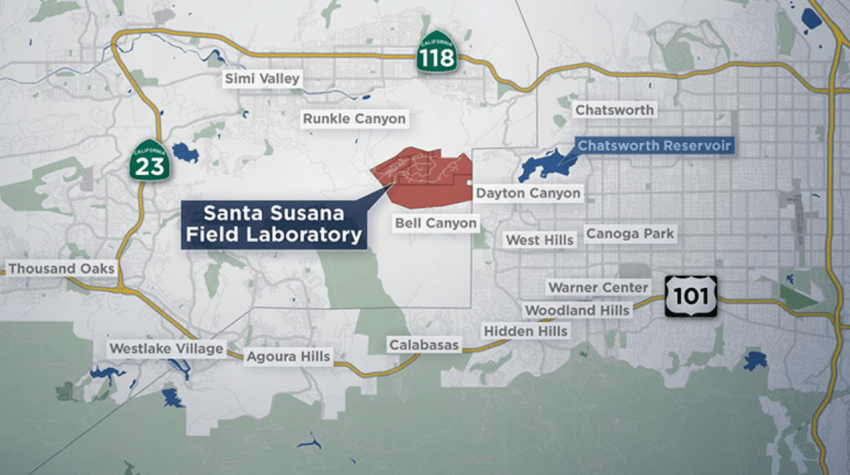
Melissa Bumstead is one of those residents. She and her family live 3.7 miles from the Santa Susana site. When her toddler Grace was diagnosed with a rare form of leukemia in 2014, doctors told Bumstead there were no known links between her daughter’s cancer and environmental contamination.
But during Grace’s treatment at Children’s Hospital Los Angeles, her mother began meeting other parents who lived near her and had children facing equally rare cancers.
They plotted their homes on Google Maps and found that they all lived within roughly 10 miles of one another. It would take another year for them to realize that the SSFL site was at the center of the circle.
WebMD Cancer news, By Neil Osterweil, March 11, 2022 –– Chernobyl. Fukushima. Three Mile Island.
The world knows these names all too well because of accidents there: complete or partial meltdowns of nuclear reactors that released massive amounts of cancer-causing radiation into the air, soil, and water.
The Santa Susana Field Lab (SSFL) is far less well-known, but no less infamous for what took place at this former rocket engine and nuclear energy test site just 28 miles northwest of downtown Los Angeles.
In July 1959, an accident involving one of 10 experimental nuclear reactors at the SSFL sitereleased a cloud of harmful radiation and toxic chemicals over the surrounding area, including Simi Valley, San Gabriel Valley, Chatsworth, and Canoga Park. The small reactor had no containment vessel.
This accident resulted in a release of radioactive iodine estimated to be as much as 250 times that of the partial meltdown that would occur 2 decades later at Three Mile Island, a much larger commercial reactor that had a containment vessel.
Six decades later, hundreds of potentially carcinogenic chemicals remain in the surrounding environment. And local children are being diagnosed with rare cancers at a rate that far outpaces what experts would predict.
Decades-Long Cover-Up
In 1959, the public knew nothing about what had happened at the site.
According to John Pace, then an employee at SSFL, the accident was covered up. Pace recounted the cover-up in the documentary In the Dark of the Valley, which first aired in November 2021 on MSNBC.
In fact, the accident at SSFL remained under wraps for 2 decades, according to Daniel Hirsch, former director of the Program on Environmental and Nuclear Policy at the University of California, Santa Cruz, and now president of Committee to Bridge the Gap, a nuclear policy nongovernmental organization.
“Students working with me while I was teaching at UCLA in 1979 uncovered these Atomic Energy Commission reports from Atomics International,” he said in an interview. “We had to order the documents from the annex to the UCLA Engineering Library. They were stored offsite, and it took a few days, and when we got them, we opened them up, and there were these fold-out photographs of the fuel [rods]. As we folded out the photographs further, we saw one photo with an arrow labeled ‘longitudinal cracks,’ and then other arrows showing other kinds of cracks, and then another arrow labeled ‘melted blob.’”
Hirsch and his students found that other accidents had occurred at SSFL, including a fuel fabrication system that leached plutonium, fires in a “hot” lab where irradiated nuclear fuel from around the United States was handled, and open-air burn pits where radioactive and toxic chemical wastes were illegally torched.
According to the Committee to Bridge the Gap, when the 2,800-acre SSFL site was being developed under the name Rocketdyne by aircraft maker North American Aviation, the area was sparsely populated, with nearly as many grazing animals as people in its hills and valleys.
North American Aviation later became part of Rockwell International, which in turn sold its aerospace and defense business units to the Boeing Company in 1996. Boeing, now in charge of the site and the cleanup efforts, is doing everything in its power to shirk or diminish its responsibility, Hirsch and other critics say.
Parents Against SSFL
Today, more than 150,000 people live within 5 miles of SSFL, and more than half a million live within 10 miles.
Continue readingDespite the evidence that nuclear power is failing, and small nuclear reactors don’t exist, Australia’s right-wing parties cling to their dream

The most comprehensive analysis of the global nuclear industry is the annual World Nuclear Industry Status Report. The most recent, published before the Russian invasion of Ukraine, shows that despite a surge in activity in China, the global industry remains in decline.
Old and costly, nuclear energy has reliable friends , SMH, Nick O’Malley, Environment and Climate Editor, 5 June 22,
The conversation always starts the same way. Someone pops up in an opinion piece or during a political interview and asks why Australia can’t have rational discussions about nuclear power.
Boundless, cheap, emissions-free baseload power is there for the taking if an Australian government just had the intestinal fortitude to face down an unfeasibly powerful cabal of ideological greenies, we’re told.
The call is echoed around the country by a handful of enthusiastic advocates and resonates in conservative political circles before fading out, sometimes after seeding the ground for yet another parliamentary inquiry on the issue.
With the Coalition’s election loss the issue has erupted again. Victorian Liberal greybeard Michael Kroger lamented the lack of visionary policy. Asked by this newspaper what one might be, he proposed a nuclear energy program.
In a piece for The Spectator entitled “The Teals: loud, entitled and Rich” and subtitled, ”Why we lost Kooyong”, conservative commentator Tim Smith also cites the lack of a nuclear energy plan, as though the raft of inner-city voters who abandoned his party for climate candidates might have been won over with nuclear power plants rather than phantom car parks.
Both the former and new Nationals leaders have advocated for nuclear power since the loss. “Our party room will come to a position on that and it’s one that obviously we’re very passionate about,” said David Littleproud. In these pages last week, Jake Thrupp, writing on how the Liberals might win the next election, declared nuclear power was supported by “most of the [Liberal] party room”, by “fair-minded Australians” and is embraced around the world.
It isn’t. The most comprehensive analysis of the global nuclear industry is the annual World Nuclear Industry Status Report. The most recent, published before the Russian invasion of Ukraine, shows that despite a surge in activity in China, the global industry remains in decline. As of mid-2021, 33 countries operated 415 nuclear reactors, up seven units compared with mid-2020 – but still below mid-2019 and 23 fewer than the 2002 peak of 438.
In 2020, globally, five reactors started up, which was six fewer than scheduled as of mid-2019. Six units closed over the same period. There are now 414 reactors in operation and 93 that were abandoned during construction. Another 53 are closed for maintenance, 25 of which have had construction suspended and 204 permanently closed.
Excluding China, nuclear power generation dropped to the lowest level since 1995. The nuclear share in the electricity mix in France dropped to the lowest level since 1985, says the report. ………………..
The global energy crisis prompted by Russia’s war has reignited at least rhetorical enthusiasm for nuclear power in some quarters. Boris Johnson voiced his view recently that Britain should be building a new plant every year rather than every decade.
The market is so far unconvinced. The only major plant under construction in Britain is currently two years overdue and projected to cost about $45 billion, compared with an early estimate of $30 billion. In March this year, Finland’s first new plant in 15 years went online, 11 years late and at a cost $20 billion, three times over budget.
Meanwhile, the cost of renewable alternatives and batteries continues to fall, along with construction times. The latest CSIRO report on the cost of energy in Australia again found solar and wind to be the cheapest, and nuclear – though hard to estimate – the most
expensive. This echoes the International Energy Agency which in 2020 judged solar power to provide the cheapest electricity in history.
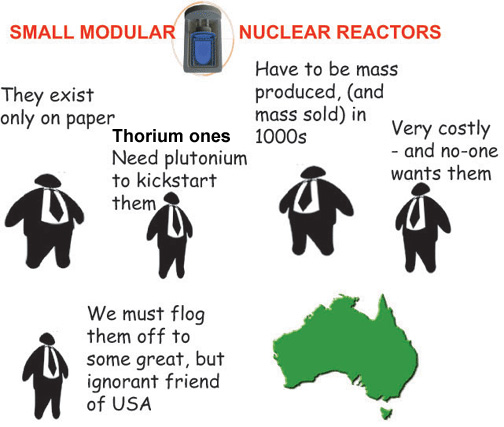
Nuclear advocates tend to respond to sceptics by citing the benefits of small modular reactors – the safe ones that can be constructed in factories for quick and cheap deployment. And it’s true, SMRs sound great.
Their only shortcoming is that they don’t yet exist
Dutton names pro nuclear Queensland MP to climate and energy, promotes Taylor to Treasury — RenewEconomy

Angus Taylor gets the Treasury role in new Opposition front bench, as Dutton and his climate and energy leaders get ready to promote nuclear. The post Dutton names pro nuclear Queensland MP to climate and energy, promotes Taylor to Treasury appeared first on RenewEconomy.
Dutton names pro nuclear Queensland MP to climate and energy, promotes Taylor to Treasury — RenewEconomy
ACT reaps dividend from 100 pct renewables as energy bills fall despite market chaos — RenewEconomy

Canberra households will see their electricity costs fall from 1 July, as renewables contracts shield consumers from surging wholesale electricity prices. The post ACT reaps dividend from 100 pct renewables as energy bills fall despite market chaos appeared first on RenewEconomy.
ACT reaps dividend from 100 pct renewables as energy bills fall despite market chaos — RenewEconomy
Three ways Albanese government can ease pressure on power bills — RenewEconomy

Labor needs to launch an inquiry into coal outages, turbocharge renewables, and introduce a capacity mechanism for new dispatchable capacity. The post Three ways Albanese government can ease pressure on power bills appeared first on RenewEconomy.
Three ways Albanese government can ease pressure on power bills — RenewEconomy
Sunshine state hosts best performing solar farms in May, but can’t stop record prices — RenewEconomy

The top six solar farms in the month of May were all located in the Sunshine State, but could do little to stop the fossil-fuel inspired hikes in prices. The post Sunshine state hosts best performing solar farms in May, but can’t stop record prices appeared first on RenewEconomy.
Sunshine state hosts best performing solar farms in May, but can’t stop record prices — RenewEconomy
Ultra-polluting gas project could blow Labor’s climate target – and it just got the green light — RenewEconomy

It’s difficult to see how Labor can both embrace the gas industry and reduce emissions to its target of 43% by 2030. The post Ultra-polluting gas project could blow Labor’s climate target – and it just got the green light appeared first on RenewEconomy.
Ultra-polluting gas project could blow Labor’s climate target – and it just got the green light — RenewEconomy
Mandated home gas connection is mandating ill health for thousands — RenewEconomy

States and territories must legislate against the mandated use of gas in new houses and developments and encourage existing homes to switch to electricity. The post Mandated home gas connection is mandating ill health for thousands appeared first on RenewEconomy.
Mandated home gas connection is mandating ill health for thousands — RenewEconomy
1 This month
17 October, Free Public Talk on Nuclear Issues in South Australia
David Noonan will speak on public interest concerns over the new Roxby Downs Indenture Act 2026 on BHP copper-uranium mining and ore processing in SA, and on how AUKUS may face SA with a High-Level nuclear waste agenda.
Dr Jim Green will discuss international developments in the field of nuclear power including ‘small modular reactors’ and Generation 4 ‘advanced’ nuclear reactor concepts.


Help Aunty Sue Protect Her Land and Sacred Sites From Destructive Rocket Testing.
.

Australians deserve the truth
about
AUKUS – https://aukuspublicinquiry.com/

PETITION – To: Prime Minister Anthony Albanese and the Australian Labor Government

of the week – Australians for War Powers Reform (AWPR)
To see nuclear-related stories in greater depth and intensity

