Cancer patients seek damages from Fukushima nuclear plant — Fukushima 311 Watchdogs

Lawyer Kenichi Ido, second left, sitting among other lawyers representing plaintiffs who were children in Fukushima at the time of the 2011 nuclear disaster and later developed thyroid cancer, speaks during a news conference after a trial in Tokyo, Thursday, May 26, 2022. A Tokyo court began hearing a case Thursday seeking nearly $5 million […]
Cancer patients seek damages from Fukushima nuclear plant — Fukushima 311 Watchdogs
May 29 Energy News — geoharvey

Science and Technology: ¶ “OpenOA Software Improvements Illuminate Wind Plant Performance” • The US National Renewable Energy Laboratory upgraded its Open Operational Assessment software, which helps demystify wind plant operations for operators. One new feature of version 2.3 is a wind plant layout visualization for interactive maps of wind farms. [CleanTechnica] Wind plant (Dennis Schroeder, […]
May 29 Energy News — geoharvey
Labor urged to act to prevent Julian Assange extradition
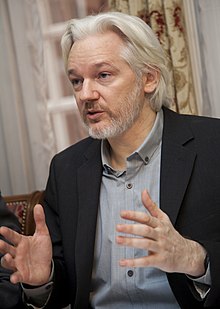
https://www.thesaturdaypaper.com.au/news/politics/2022/05/28/labor-urged-act-prevent-julian-assange-extradition#mtr, 28 May 22, The legal case against Julian Assange is a game of luck and whim. Any day now, the British home secretary, Priti Patel, is expected to rubber stamp his extradition to the United States. What will happen to him there is uncertain.
The Westminster Magistrates’ Court formally approved his extradition on April 20 and Patel has until May 31 to announce whether it will happen. If convicted of espionage in the US, Assange could be sentenced to 175 years in prison. His legal team argue he would likely kill himself.
There is one glimmer of hope for the WikiLeaks founder, however, bound up in last weekend’s Australian election result. The victory of Anthony Albanese, a supporter of the journalist, has reignited calls to halt the extradition.
Albanese has said that while he didn’t sympathise with Assange for some of his actions, he could not see any purpose to keeping him in jail.“Assange’s appeal is like a game of extradition snakes and ladders. He managed to take his argument about US prison conditions all the way to the door of the Supreme Court, but they rejected it, so he slid back down to the magistrates’ court where he started.”
“The prime minister, Mr Albanese, has previously said ‘enough is enough’. [Then shadow] Attorney-General Mark Dreyfus issued a statement last year confirming that Labor wanted the matter ‘brought to an end’,” says lawyer and human rights activist Kellie Tranter, who is a former WikiLeaks Party senate candidate. “So it remains to be seen whether such statements will result in the new government requesting that the US drop the case.”
She was “cautiously optimistic” about the case of Assange, who faces 17 charges under the US Espionage Act relating to the publication of classified documents and information related to US war crimes.
“It is helpful that the Greens – who have been calling for the Australian government to take action in the Assange case for some time – may hold the balance of power in the senate,” Tranter added.
Earlier this week, Albanese travelled to Japan for a meeting of the Quad leaders – from India, Japan, the US and Australia – to deliver a message about Australia’s policy changes.
Supporters including Tranter had urged the Department of Foreign Affairs and Trade (DFAT) and the Department of the Prime Minister and Cabinet to include the whistleblower on the agenda, and not just as a sideline issue.
The meeting was the “ideal opportunity” for Albanese to speak with US President Joe Biden and British Prime Minister Boris Johnson to request that Assange be allowed to come home, said Greg Barns SC, an adviser to the Australian Assange campaign.
A spokesperson for the Department of the Prime Minister and Cabinet said they were unable to provide comment on Quad agenda items. Comment was being sought from DFAT.
Stella Assange, who married the WikiLeaks founder in Belmarsh prison this year and is the mother of their two children, told The Saturday Paper the case had become political. She insisted the government had a duty to protect its citizens.
“By failing to act, it’s not just negligent; it shows that whoever is in office that isn’t acting is not fit for office,” the human rights lawyer said. “This can end today if the Australian government decides to do something about it.”
Every human rights organisation in the world had said the extradition of the Townsville-born computer hacker, editor and publisher should be stopped, she said. The latest to speak out is the Council of Europe.
Earlier this month, then Foreign Affairs minister Marise Payne and her Labor shadow, Penny Wong, claimed Australia couldn’t intervene, as the matter was before the courts.
But former British Labour Party leader Jeremy Corbyn, speaking to The Saturday Paper, rubbished the claim. The MP pleaded to Australia to “speak up for your own”.
“Whilst in Britain there are – for good reason – constraints about raising [it] in parliament because it’s a sub judice matter, that does not apply in Australia,” Corbyn said.
“There is no legal case in Australia. So there’s nothing to stop every Australian politician speaking up with Julian Assange, and I think they should. Please do, because it will help the freedom for journalists everywhere.”
Barns said there was “plenty of political support” for Albanese to ensure the whistleblower does not face an effective death penalty in the US. He pointed out that the Bring Julian Assange Home Parliamentary Group had 30 members from every party before the election. This is expected to increase, Assange’s brother, Gabriel Shipton, said.
“Ultimately I don’t think Albo wants to become another Australian prime minister who is complicit in Julian’s persecution and more broadly the Western descent into barbarity that has been taking place ever since the Iraq invasion,” he said. “Whether he has the power to resist that is up to us.”
A spokesperson for DFAT said the government had “consistently raised the situation of Mr Assange with the United States and the United Kingdom”. The spokesperson said the government “conveyed our expectations that Mr Assange is entitled to due process, humane and fair treatment, access to proper medical and other care, and access to his legal team”. However, “The extradition case regarding Julian Assange is between the United States and the United Kingdom; Australia is not a party to this case.”
US–Australian relations are one of many matters that will test Albanese’s leadership. According to Tranter, freedom of information requests show “that consecutive governments have long held the view that the Assange case has strategic implications for the alliance”. She says this is why no Australian government had spoken out in support of his human rights or provided diplomatic assistance to him.
“Mr Albanese should take a stand consistent with his stated ethos of protecting the persecuted and not forsake any Australian citizen to personal abuse for political purposes,” Tranter said.
As he awaits his fate, Assange is incarcerated in London’s maximum security Belmarsh prison. He was taken there after seven years in the Ecuador embassy in London, where he sought asylum to prevent extradition to Sweden over now-abandoned sexual assault charges.
“Assange’s appeal is like a game of extradition snakes and ladders,” says Nick Vamos, the former head of extradition at Britain’s Crown Prosecution Service. “He managed to take his argument about US prison conditions all the way to the door of the Supreme Court, but they rejected it, so he slid back down to the magistrates’ court where he started.”
Assange “can’t climb that particular ladder again”, Vamos says. “But he can still appeal on the other grounds that he lost originally, so there are likely to be a few more ups and downs before this process is finally over.”
The partner and head of business crime at London firm Peters & Peters said the attempts to persuade Home Secretary Patel not to order the extradition would not be successful – “not in a million years”.
Vamos says that if there is another appeal in Britain it could take another six months to be heard. If it is denied, another avenue is the European Court of Human Rights, in Strasbourg, France, which could issue an order directing Britain not to extradite Assange until its case is heard.
Jennifer Robinson, part of Assange’s legal team, has confirmed this is a path being considered.
“This case is too important from a free speech point of view, but also from a humanitarian point of view,” she said.
“We know what the medical evidence is about Julian’s mental health, and that he will find a way to commit suicide if he’s extradited.”
In all, Vamos says, these appeals could take another two years. But once Assange’s extradition has been signed off, he says, US Marshals are free to fly to Britain to arrest Assange: “It will normally happen within a couple of weeks of Patel making the order.”
At an EU Free Assange rally in Brussels, on April 23, Assange’s wife wiped away tears as she spoke to the crowd. The event was aimed at targeting European leaders, with speeches by politicians from various countries. “In the end this will end up in Europe,” Stella Assange said. “Europe can free Julian. Europe must free Julian.”
She recalled that 15 years into his 27-year imprisonment, people thought Nelson Mandela would never be liberated. “But he was, because decent people in that case came out and they shouted for his freedom, even if they were the only person in the square to shout,” she said.
“The fact is, it takes a few decent people to show the way and what we stand for, because we create the reality around us.”
Activists were defending “not just decency and the memory” of all the tens of thousands of victims of the Iraq and Afghan war, caught up in the crimes that WikiLeaks exposed; they were also standing up for the right to a free future.
“What has been done to Julian is a crime,” Stella Assange said. “The law is being abused in order to keep him incarcerated, year after year, for doing the right thing … When will it end? Will it end?”
When Henry Kissinger gives advice on ending the Ukraine conflict, the West should listen

The sooner those who are feeding the current chaos can clue into Kissinger’s advice, the better off we’ll all be in mitigating the inevitable subsequent diplomatic, economic, and political hangover
The realpolitik veteran schools today’s ideologues, but they won’t like the lesson
https://www.rt.com/op-ed/authors/rachel-marsden/ Rachel Marsden is a columnist, political strategist, and host of independently produced talk-shows in French and English. rachelmarsden.com 27 May 11, The ideologues who dominate today’s Western foreign policy establishment are largely responsible for escalating tensions with Russia to the point of military conflict in Ukraine. And now the grandmaster of realpolitik — that is, foreign relations shaped by pragmatism and on-the-ground truth rather than wishful thinking — has just delivered a rhetorical blow to NATO’s ambitions over Ukraine.
Henry Kissinger, the Nixon-era US secretary of state and a living legend of international politics, celebrates his 99th birthday this week. On Monday, he took to the stage via videoconference at the annual World Economic Forum in Davos, Switzerland, to offer his advice for resolving the Ukraine conflict.
“Parties should be brought to peace talks within the next two months. Ukraine should’ve been a bridge between Europe and Russia, but now, as the relationships are reshaped, we may enter a space where the dividing line is redrawn and Russia is entirely isolated,” Kissinger said in a conversation with WEF founder and executive chairman Klaus Schwab.
Isolating Russia from Europe seems to be the goal of engaging Moscow in a war of attrition by arming and backing Ukrainian fighters to effectively serve as NATO proxies. This would also explain why Washington is so highly invested in the conflict, both financially and ideologically.
An EU-Ukraine-Russia axis would be competitive with Beijing and Washington on the global playing field. But the Atlantist leaders in Brussels and their assorted Russophobic allies have privileged dated Cold War ideology over the long-term political and economic interests of their own citizens, who would be best served by a normalization of relations and increased cooperation right across the European continent.
“We are facing a situation now where Russia could alienate itself completely from Europe and seek a permanent alliance elsewhere,” Kissinger said. “This may lead to Cold War-like diplomatic distances, which will set us back decades. We should strive for long-term peace.” By far, the most likely scenario is even greater Russian rapprochement with China.
The end result could be a stronger military-industrial bloc in competition with the US for economic and political influence worldwide and a loss of clout for the EU, which would simply be reduced to a less influential partner of Washington’s, with less autonomy than it would have enjoyed had it not subordinated all of its interests to Washington and had instead maintained a more independent and balanced position.
Kissinger’s decades of experience in global affairs at the highest level as an advisor to heads of state, governments, and multinational corporations, and as an advocate of pragmatic solutions to sticky global problems, all give weight to his advice for any global crisis.
Recipient of the Nobel Peace Prize for his role in negotiating an end to the bloody Vietnam War with the North Vietnamese during the administration of Republican President Richard Nixon, Kissinger served as both secretary of state and national security advisor to the former US leader. Prior to that, he served as an advisor to Democratic President John F. Kennedy. If he’s urging a rapid resolution to the conflict in Ukraine, it’s informed by his professional experience. Perhaps he sees shades of Vietnam in Ukraine?
Kissinger’s solution for ending the territorial disputes between Russia and Ukraine is unlikely to please the current American foreign policy establishment. “Ideally, the dividing line should be a return to the status quo ante. Pursuing the war beyond that point will not be about the freedom of Ukraine, but a new war against Russia itself,” Kissinger said, with the “status quo ante” referring to leaving Crimea, Lugansk, and Donetsk under Russia’s control.
Once the “most admired man in America”, according to Gallup polls from 1973, 1974, and 1975, in the wake of peace in Vietnam, Kissinger has often wandered off Washington’s beaten foreign policy path. He laid out the first blueprint for cooperation between the US and China. He also opposed NATO’s bombing of Yugoslavia under former President Bill Clinton. “The rejection of long-range strategy explains how it was possible to slide into the Kosovo conflict without adequate consideration of all its implications—especially the visceral reaction of almost all nations of the world against the new NATO doctrine of humanitarian intervention,” Kissinger wrote in a Newsweek article in 1999.
Kissinger’s remarks accurately foreshadowed the military interventions of NATO member nations elsewhere under humanitarian pretexts — such as Syria, Libya, and now against Russia via Ukraine — for the ultimate purpose of regime change. He equally predicted why, despite rampant promotion and spinning of these Western wars, so much opposition to them nonetheless exists. Although attention spans and news cycles may have shortened since Kissinger’s diplomatic heyday, some people can still grasp that ideologically driven conflicts can engender long-term negative systemic repercussions that more than outweigh whatever short-term satisfaction may be derived from sparking an ideologically driven conflict.
The sooner those who are feeding the current chaos can clue into Kissinger’s advice, the better off we’ll all be in mitigating the inevitable subsequent diplomatic, economic, and political hangover.
Col. Richard Black — U.S. Leading World to Nuclear War
Video: Col. Richard Black — U.S. Leading World to Nuclear War, The International Schiller Institute, 27 May 22, Mike Billington with Executive Intelligence Review interviews Col. Richard Black (ret.).
(Ed. First a lengthy discussion on ColBlack’s military background, and his analysis of the history of the First –war in Syria)
”……………………… BLACK: …… the United States has a strategic policy of using proxies to engage in war. ………
a highly secretive CIA special activities center—these are kind of the James Bond guys of the Central Intelligence Agency, total Machiavellian; they will do anything, there’s no it’s no holds barred with these guys.
…………throughout you see this Machiavellian approach, where we use unlimited force and violence. And at the same time, we control the global media, to where we erase all discussions of what’s truly happening. So, to the man or the woman in the street, they think things are fine. Everything is being done for altruistic reasons, but it’s not……………………
BILLINGTON: Part of your military service was as a JAG officer, and for a period of time, you were the Army’s head of the criminal law division at the Pentagon. And in that light, what do you see as of how these Caesar sanctions—how would you look at those from the perspective of international law and military law?
BLACK: Well, now, I was not the international law expert. I was the criminal law expert. But I would say that making war on a civilian population is a crime of grave significance in the law of war.
………………… When we fight these wars, we have no limits on the cruelty and the inhumanity that we’re prepared to impose on the people, making them suffer, so that somehow that will translate into overthrowing the government, and perhaps taking their oil, taking their resources.
BILLINGTON: Clearly, the policy against Russia today, by the current administration.
BLACK: Yes. Yes. You know, Russia is, perhaps more blessed with natural resources than any other nation on Earth. They are a major producer of grain, of oil, of aluminum, of fertilizers, of an immense number of things that tie into the whole global economy. And no doubt there are people who look at this and say, “if we could somehow break up Russia itself, there will be fortunes made, to where trillionaires will be made by the dozens.” And there’s some attraction to that. Certainly you’ve seen some of this taking place already, with foreign interests taking over Ukraine, and taking their vast resources.
But, we began a drive towards Russia, almost immediately after the Soviet Union dissolved in 1991. The Soviet Union dissolved, the Warsaw Pact dissolved. And unfortunately, one of the great tragedies of history is that we failed to dissolve NATO. The sole purpose of NATO was to defend against the Soviet Union. The Soviet Union no longer existed. NATO went toe toe with the Warsaw Pact. The Warsaw Pact was gone; it no longer existed. There was no purpose in NATO’s continuing to exist. However, we retained it, and it could not exist unless it had an enemy. Russia was desperate to become part of the West.
BILLINGTON: So, the U.S. and U.K. position on the war in Ukraine, just over these last few weeks has now become not only supporting the war, but victory at all costs. This has been declared by Defense Secretary Austin and others. And they are pumping in huge quantities of not only defensive but offensive military weaponry to the Kyiv regime. What do you see as the consequence of this policy?
BLACK: I think one thing that it will do is it will ensure that a tremendous number of innocent Ukrainian soldiers will die needlessly. A lot of Russian soldiers will die needlessly. These are kids. You know, kids go off to war. I went off to war as a kid. You think your country, right or wrong, everything they’re doing is fine. It just it breaks my heart, when I look at the faces of young Russian boys, who have been who have been gunned down—in some cases very criminally by Ukrainian forces. And likewise, I see Ukrainian young men, who are being slaughtered on the battlefield.
We don’t care! The United States and NATO, we do not care how many Ukrainians die. Not civilians, not women, not children, not soldiers. We do not care. It’s become a great football game. You know, we’ve got our team. They’ve got their team, rah rah. We want to get the biggest score and run it up. And, you know, we don’t care how many how many of our players get crippled on the playing field, as long as we win.
Now, we are shipping fantastic quantities of weapons, and it’s caused the stock of Raytheon, which creates missiles, and Northrop Grumman, which creates aircraft and missiles, all of these defense industries have become tremendously bloated with tax dollars. I don’t think it’s ultimately going to change the outcome. I think that Russia will prevail. The Ukrainians are in a very awkward strategic position in the East.
But if you look at the way that this unfolded, President Putin made a desperate effort to stop the march towards war back in December of 2021. He went so far as to put specific written proposals on the table with NATO, peace proposals to defuse what was coming about. Because at this point, Ukraine was massing troops to attack the Donbas. And so, he was trying to head this off. He didn’t want war. And NATO just blew it off, just dismissed it; never took it seriously, never went into serious negotiations.
At that point, Putin seeing that armed Ukrainians, with weapons to kill Russian troops were literally on their borders, decided he had to strike first. Now, you could see, that this was not this was not some preplanned attack. This was not like Hitler’s attack into Poland, where the standard rule of thumb, is that you always have a 3-to-1 advantage when you are the attacker. You have to mass three times as many tanks and artillery and planes and men, as the other side has. In fact, when Russia went in, they went in with what they had, what they could cobble together on short notice. And they were outnumbered by the Ukrainian forces. The Ukrainian forces had about 250,000. The Russians had perhaps 160,000. So instead of having three times as many, they actually had fewer troops than the Ukrainians. But they were forced to attack, to try to preempt the battle that was looming, where the Ukrainians had massed these forces against the Donbas.
Now, the Donbas is adjacent to Russia. It is a portion of Ukraine that did not join with the revolutionary government that conducted the coup in 2014 and overthrew the government of Ukraine. They refused to become a part of the new revolutionary government of Ukraine. And so they declared their independence. And Ukraine had massed this enormous army to attack against the Donbas. And so Russia was forced to go in to preempt that planned attack by Ukraine. And you could see that Russia very much hoped that they could conduct this special operation without unduly causing casualties for the Ukrainians, because they think of the Ukrainians, or at least they did think of the Ukrainians as brother Slavs; that they wanted to have good relations. But there is a famous picture with a Russian tank, that had been stopped by a gathering of maybe 40 civilians who just walked out in the road and blocked the road and the tank stopped. I can tell you, in Vietnam, if we had had a bunch of people who stood in the way of an American tank, going through, that tank would not have slowed down, in the slightest! It wouldn’t honk the horn, it wouldn’t have done anything; wouldn’t have fired a warning shot. It would have just gone on. And I think that’s more typical—I’m not I’m not criticizing the Americans. I was there and I was fighting, and I probably would have would have driven the tank straight through myself.
But what I’m saying is that the rules of engagement for the Russians were very, very cautious. They didn’t want to create a great deal of hatred and animosity. The Russians did not go in—they did not bomb the electrical system, the media systems, the water systems, the bridges and so forth. They tried to retain the infrastructure of Ukraine in good shape because they wanted it to get back. They just wanted this to be over with and get back to normal. It didn’t work. The Ukrainians, the resistance was unexpectedly hard. The Ukrainian soldiers fought with great, great valor, great heroism. And. And so now the game has been upped and it’s become much more serious.
But it is amazing to look and to see that Russia dominates the air. They haven’t knocked out the train systems. They haven’t knocked out power plants. They haven’t knocked out so many things. They’ve never bombed the buildings in the center of Kyiv, the capital of Ukraine; they haven’t bombed the buildings where the parliament meets. They’ve been incredibly reserved about these things, hoping against hope that peace could be achieved.
But I don’t think I don’t think Ukraine has anything to do with the decision about peace or war. I think the decision about peace or war is made in Washington, D.C. As long as we want the war to continue, we will fight that war, using Ukrainians as proxies, and we will fight it to the last Ukrainian death.
BILLINGTON: How do you project the potential of a war breaking out directly between the United States and Russia? And what would that be like?
……………………. We need to recognize the risk of playing these games of chicken. Where, for example, the Turkish media just published an article saying that at Mariupol, where there was a great siege, that the Russians ultimately won. The one area they haven’t taken over is this tremendous steel plant. There are a lot of Ukrainian soldiers who are holed up there. And now it has come to light that apparently there are 50 French senior officers, who are trapped in that steel plant along with the Ukrainians. The French soldiers have been on the ground fighting, directing the battle. And this was kept under wraps, ultra-secret, because of the French elections that just occurred. Had the French people known that there were a large number of French officers trapped and probably going to die in that steel plant, the elections would have gone the other way: Marine Le Pen would have won. And so it was very important that for the entire deep state, that it not come to light that these French officers were there.
……………… And you can see we’re taking these very reckless actions, and each time we sort of up the ante—I happen to be a Republican—but we have two Republican U.S. senators who have said that, “well, we might just need to use nuclear weapons against Russia.” That is insane. I think it’s important that people begin to discuss what a thermonuclear war would mean.
Now, we need to understand, we think, “oh, we’re big, and we’re bad, and we have all this stuff.” Russia is roughly comparable to the United States in nuclear power. They have hypersonic missiles, that we do not have. They can absolutely evade any timely detection, and they can fire missiles from Russia and reach San Francisco, Los Angeles, Chicago, Detroit, Baltimore, Washington, D.C., New York City.
And if you think about just Virginia, where I happen to live, if there were a nuclear war—and keep in mind, they also have a very large and effective fleet of nuclear submarines that lie off the coast of the United States. They have a great number of nuclear-tipped missiles, and they can evade any defenses we have. So just in Virginia, if you look at it, all of Northern Virginia would be essentially annihilated. There would hardly be any human life remaining in Loudoun County, Prince William County, Fairfax County, Arlington, Alexandria. The Pentagon lies in in Arlington County: The Pentagon would simply be a glowing mass of molten sand. There would be no human life there. And there would be no human life for many miles around it. Just across the Potomac, the nation’s capital, there would be no life remaining in the nation’s capital. The Capitol building would disappear forever. All of the monuments, all of these glorious things—nothing would remain.
If you go to the coast of Virginia, you have the Norfolk Naval Shipyard, you have the Port of Norfolk. You have you have the greatest accumulation of naval power on the face of the Earth. This is where we park all of our aircraft carriers, our nuclear submarines, all of those things. There would be nothing remaining. There would be nothing remaining of any of those shipping industries there.
And you can carry this on. You talk about New York City, probably New York City itself, not only would everybody be killed, but it would probably be impossible for people to inhabit New York City for hundreds of years afterwards. But not only would it cease to be a place of vibrant human life, but probably going out for maybe half a millennium, it would not recover any sort of civilization.
We need to understand the gravity of what we’re doing. Perhaps if it were a matter of life and death for the United States, what happens in Ukraine, that would be one thing. Certainly when the Soviet Union put missiles in Cuba, that targeted the United States, that was worth taking the risk, because it was right on our border and it threatened us. And it was it was a battle worth fighting for and a risk worth taking. The Russians are in this in exactly the mirror image of that situation, because for them, the life of Russia depends on stopping NATO from advancing further right into Ukraine, right to their borders. They cannot afford not to fight this war. They cannot afford not to win this war.
So I think, toying with this constant escalation in a war that, really, in a place that has no significance to Americans—Ukraine is meaningless to Americans; it has no impact on our day-to-day lives. And yet we’re playing this reckless game that risks the lives of all people in the United States and Western Europe for nothing! Just absolutely for nothing! …………………………………………………….. https://schillerinstitute.com/blog/2022/04/26/video-col-richard-black-u-s-leading-world-to-nuclear-war/
Stop Deep Yellow: No uranium mining on Upurli Upurli Nguratja country

https://www.ccwa.org.au/mulga_rock The Mulga Rock uranium project is the only uranium proposal being advanced in WA. The project is uneconomic, unwanted and unnecessary.
Mulga Rock is on Upurli Upurli Nguratja country in the Yellow Sandplain Priority Ecological community in the Great Victoria Desert (GVD) and home to the endangered Sandhill Dunnart – one of three remaining areas where the species is found in Australia. The area is also home to the endangered Southern Marsupial Mole the vulnerable Crest Tailed Mulgara and Desert Skink, the migratory Rainbow Bee-Eater and many other priority species.
Vimy Resources are seeking to merge with uranium miner Deep Yellow. Deep Yellow’s leadership is a cause for Deep concern. Their Chairperson Chris Salisbury was the Iron Ore boss at Rio Tinto during the Juukan Gorge destruction. Deep Yellow’s Managing Director John Borshoff was the Director of uranium company Paladin. During his leadership there were ongoing reports of industrial disputes worker fatalities and environmental concerns.
“I worry about that country and what effect uranium mining would have on it, there is no other area like it. Once that’s destroyed and poisoned well how can you replace all that. It’ll be gone forever.” Janice Scott – Nangaanya-ku
There is a registered Native Title Claim over the area – Upurli Upurli Nguratja. Vimy have routinely undermined Native Title interests in the area and have failed to meet the claim group. The Spinifex people who are descendants of some of Australia’s first environmental refugees who fled South Australia during the British atomic weapons tests between 1956 and 1963 and settled near Mulga Rock first at Cundallee then Coonana and then Tjutjuntjarra. There are strong connections to the area and a strong history of impact and resistance to the nuclear industry.
“We don’t want uranium mining. We’ve written to government to let them know we the Traditional Owners have not been consulted. The current clearing at the site is disrespectful and shows a total lack of social value, moral and ethical leadership.” Debbie Carmody – Upurli Upurli Nguratja
The Proposal:
- Four open pits, strip mined and backfilled
- Licensed to take 15 million litres of water per day
- Would produce 32 million tonnes of radioactive mine waste
- Would clear 3,709 ha of native vegetation
- Located in the Yellow Sandplain Priority Ecological Community, known as one of the most pristine areas in the Great Victoria Desert.
- Home to the endangered Sandhill Dunnart
- Upstream from the Queen Victoria A Class Nature Reserve
Julian Assange’s family says federal election result brings renewed hope for WikiLeaks founder’s release
https://www.abc.net.au/news/2022-05-27/julian-assange-release-family-election-result-brings-hope/101100860, By Brendan Mounter and Adam Stephen, 27 May 22,
Key points:
- The family and supporters of Julian Assange are hopeful of securing his release following a change of government
- Prime Minister Anthony Albanese has previously expressed support for efforts to secure the WikiLeaks founder’s return to Australia
- Mr Assange has spent the past three years in the UK’s Belmarsh Prison
The family of Julian Assange is hopeful the election of a federal Labor government will pave the way for the WikiLeaks founder’s eventual release and a return to Australia.
It has been almost a decade since Mr Assange, who originally hails from Townsville in north Queensland, has been a free man.
For the past three years, he has been in high security detention at Belmarsh Prison in the United Kingdom, after seven years of asylum within London’s Ecuadorian embassy in a bid to avoid arrest.
United States authorities have sought Mr Assange’s extradition from the UK so he can stand trial on charges of espionage and computer misuse relating to hundreds of thousands of leaked cables from the wars in Iraq and Afghanistan.
His brother, film producer Gabriel Shipton, said Mr Assange had been persecuted for publishing the ugly truths of war.
“Julian is accused of what investigative journalists do all the time, which is sourcing and publishing materials from a source, Chelsea Manning,” Mr Shipton said.
“Those releases exposed war crimes in Iraq, undocumented civilian deaths in Iraq, corruption, government malfeasance … all sorts of things.”
American prosecutors allege Mr Assange unlawfully helped US Army intelligence analyst Chelsea Manning steal classified diplomatic cables and military files that WikiLeaks later published, putting lives at risk.
Family urges incoming government to act
Lawyers for Mr Assange fear he could face up to 175 years in jail if he is extradited to the US and convicted.
But the weekend’s election result has buoyed his supporters, with the hope that the new Labor government will intervene and help secure his release.
While in Opposition, newly elected Prime Minister Anthony Albanese is reported to have told a February 2021 caucus meeting that “enough was enough” and he “can’t see what’s served by keeping [Assange] incarcerated”.
Mr Albanese is also a signatory to the Bring Julian Assange Home Campaign petition.
Senior Labor MP Mark Dreyfus, who is expected to be appointed Attorney-General, has also expressed a need to “bring the matter to a close”.
Mr Shipton is calling on the new government to turn those words into action.
“That was the Labor position before the election so we’re very hopeful when there’s a new administration, a new government coming in there’s always a lot of hope that they will live up to their promises,” he said.
Cancer Patients Seek Damages from Fukushima Nuclear Plant
Claims Journal , By Mari Yamaguchi | May 27, 2022 TOKYO (AP) — A Tokyo court began hearings Thursday in a lawsuit seeking nearly $5 million in damages for six people who were children in Fukushima at the time of its 2011 nuclear power plant disaster and later developed thyroid cancer.
The plaintiffs are suing the operator of the nuclear plant, saying radiation released in the accident caused their illnesses.
It is the first group lawsuit filed by Fukushima residents over health problems allegedly linked to the disaster, their lawyers say.
One plaintiff, identified only as a woman in her 20s, testified from behind a screen that she had to give up plans to attend university because of repeated operations and treatments.
“Because of the treatments, I could not attend university, or continue my studies for my future job, or go to a concert. I had to give up everything,” she said. “I want to regain my healthy body, but that’s impossible no matter how hard I wish.”
She and the five other plaintiffs are seeking a total of 616 million yen ($4.9 million) in damages from Tokyo Electric Power Company Holdings for allegedly causing their cancers.
On March 11, 2011, a magnitude 9.0 earthquake and massive tsunami destroyed the Fukushima plant’s cooling systems, causing three reactor cores to melt and release large amounts of radiation. Critics say the plant operator should have known that a large tsunami was possible at the site.
The plaintiffs, who were 6 to 16 years old at the time of the accident and lived in different parts of Fukushima, were diagnosed with thyroid cancer between 2012 and 2018, their lawyers said……………..
The Fukushima prefectural government tested 380,000 residents aged 18 or younger at the time of the accident for thyroid cancer. About 300 were diagnosed with cancer or suspected cancer.
That occurrence rate, about 77 per 100,000, is significantly higher than the usual 1-2 per million and can only be linked to radiation from the accident, the plaintiffs’ lawyers said.
………… Three other plaintiffs who attended the hearing were also behind a partition to protect their privacy because of criticism on social media accusing them of fabricating their illnesses and hurting the image of Fukushima, the lawyers said.
Ido said many people with health problems feel intimidated to speak out in Fukushima and that he hopes the lawsuit will prove a correlation between radiation and the plaintiffs’ cancers “so that we can have a society in which people can talk freely about their difficulties.”…………… https://www.claimsjournal.com/news/international/2022/05/27/310693.htm
No credibility in the way that the Ukraine war is being reported – says Colonel Richard Black (ret)

Video: Col. Richard Black — U.S. Leading World to Nuclear War, The International Schiller Institute, 27 May 22, Mike Billington with Executive Intelligence Review interviews Col. Richard Black (ret.).
”…………………………..BILLINGTON: Many flag grade officers certainly understand the consequences that you just described in a rather hair-raising way. Why is it that, while there are some generals speaking out in Italy, in France, in Germany, warning that we are pursuing a course that could lead to nuclear war, why are there not such voices from flag grade officers—retired, perhaps—saying what you’re saying here today?
BLACK: You know, there’s been a tremendous deterioration in the quality of flag officers………. we now have “yes men.” These are not people whose principal devotion is to the United States and its people. Their principal devotion is to their careers and their ability to network with other military officers upon retirement. There’s a very strong network that can place military generals into think tanks, where they promote war, into organizations like Raytheon and Northrop Grumman, and all of these defense operations, where they can get on boards and things like that. So there’s quite a personal price that you pay for saying, “Hey, stop. War is not in the interests of the American people.” If we had a better quality of individual, we would have people with the courage who would say, “I don’t care what it costs me personally.” But it is very difficult to get into the senior ranks, if you are an individual guided by principle, and patriotism, and devotion to the people of this nation. That’s just not how it works. And at some point, we need a President who will go in and shake the tree, and bring a lot of these people falling down from it, because they’re dangerous. They’re very dangerous to America.
………………. Just like I asked what’s keeping the generals from speaking out, why, and what will it take, to get Americans to recognize that we can and must sit down with Russians, and with Chinese, and with all other nations and establish a true, just world based on the dignity of man and the right to development and security?
………. at this point, the media have been so totally censored and so biased that the American people really don’t have a perception of the need for anything of that sort. It’s going to be difficult.
………… The idea that somehow we have this enormously just cause, it doesn’t strike a great deal of the world that it is just, and much of the world does not accept the latest propaganda about war crimes: this thing about Bucha. That’s probably the most prominent of all the war crimes discussions.
And what was Bucha? There was a film taken of a vehicle driving down the road in Bucha, which had been recaptured from the Russians. And every hundred feet or so there was some person with his hands, zip tied behind his back, and he’d been killed. It was not announced until four days after the Ukrainians had retaken Bucha.
Now, we knew almost nothing about it. We actually didn’t even have proof that people had been killed. But assuming they had, we didn’t know where they had been killed. We did not know who they were. We did not know who killed them. We did not know why they were killed. No one could provide an adequate motive for the Russians to have killed them. The Russians held Bucha for a month. If they were going to kill them, why didn’t they kill them during that month? And if you’re going to slaughter a bunch of people, wouldn’t they all be in one place and wouldn’t you gun them all down there? Why would they be distributed along a roadside, a mile along the way? It makes no sense!
What we do know is that four days after the mayor of Bucha joyously announced that the city was liberated, four days after the Ukrainian army had moved in, and their special propaganda arm of the Ukrainian military were there, all of a sudden there were these dead people on the road. How come they weren’t there when the Russians were there? How come they only appeared after the Russians were gone?
If I were looking at it as simply a standard criminal case, and I was talking to Criminal Investigation Division or the FBI, or military police or something, I’d say, “OK, the first thing, let’s take a look at the Ukrainians.” My guess would be, and you start with a hunch when you’re investigating a crime—my hunch is that the Ukrainians killed off these people after they moved in, and after they looked around, and said, “OK, who was friendly towards the Russian troops while the Russians were here? We’re going to execute them.” That would be my guess. Because I don’t see any motive for the Russians to have just killed a few people on their way out of town.
And nobody questions this, because the corporate media are so monolithic. We know for a fact, from the mouth of the head of a Ukrainian hospital, the guy who ran the hospital, he boasted that he had given strict orders to all of his doctors, that when wounded Russian POWs, when casualties were brought in, they were to be castrated. Now, this is a horrific war crime, admitted from the mouth of the hospital administrator, and the Ukrainian government said, “we’ll kind of look into that,” Like it’s no big thing. I can’t think of a more horrific, horrific war crime, ever. Where did you hear about it, on ABC and MSNBC and CNN and FOX News? Not a whisper. And yet the proof is undeniable. We had another clip where there was a POW gathering point, where the Ukrainians would bring POWs to a central point for processing—and this is about a seven-minute video—and the Ukrainian soldiers simply gunned them all down.
And they had probably 30 of these wounded Russian soldiers lying on the ground, some of them clearly dying from their wounds. Some of them, they put plastic bags over their heads. Now, these are these are guys who are laying there, sometimes fatally wounded with their hands zip-tied behind their backs, and they’ve got plastic bags over their heads, making it difficult to breathe. And because they can’t raise their hands, they can’t take the bags off, so that they can breathe. At the end of the video, the Ukrainians bring in a van, and there are three unwounded Russian POWs. Without the slightest thought or hesitation, as the three come off, and their hands are bound behind their backs, they gunned down two of them, right on camera and they fall over. And the third one gets on his knees, and begs that they won’t hurt him. And then they gun him down! These are crimes. And these were not refuted by the Ukrainian government. But you’d never even know that they occurred! So far, I will tell you that the only proven—I’m not saying that there aren’t war crimes happening on both sides. I’m just telling you, that the only ones where I have seen, fairly irrefutable proof of war crimes, have been on the Ukrainian side.
Now, often you hear it said, well, the Russians have destroyed this or destroyed that. Well, I’ve got to tell you, you go back to the wars that we fought when we invaded Iraq, the “Shock and Awe,” we destroyed virtually everything in Iraq, everything of significance. We bombed military and civilian targets without much discrimination. The coalition flew 100,000 sorties in 42 days. You compare that to the Russians, who have only flown 8,000 sorties in about the same period of time. 100,000 American sorties versus 8,000, in about the same time. I think the Russians have tended to be more selective. Whereas we went out — the philosophy of Shock and Awe is that you destroy everything that is needed to sustain human life and for a city to function. You knock out the water supply, the electrical supply, the heat, the oil, the gasoline; so that you knock out all of the major bridges. And then you just continue to destroy everything.
So it’s really ironic. And keep in mind, Iraq is a relatively small country. Ukraine is a huge country. 100,000 sorties in 42 days, 8,000 sorties in about the same time. A tremendous difference in violence between what we did in Iraq, and what they have done in Ukraine. So there’s simply no credibility when you actually get down to the facts and you look at the way that the war has been conducted…………… https://schillerinstitute.com/blog/2022/04/26/video-col-richard-black-u-s-leading-world-to-nuclear-war/
France’s Nuclear Industry Slides Into Crisis

https://globeecho.com/news/europe/germany/frances-nuclear-industry-slides-into-crisis/ By David Sadler May 26, 2022,
France is less dependent on Russian gas than Germany – thanks to the country’s 56 nuclear reactors. But because more than half of them are standing still and Russia is disappearing as a customer, France’s nuclear industry is under pressure.
French President Emmanuel Macron had promised a “renaissance of nuclear energy” in February. He wants to have six new pressurized water reactors built. More electricity, more independence, more innovation – Macron is going all-out on the nuclear power card to push France’s industry forward.
Corrosion stalls the plans

But these ambitious plans are currently experiencing a serious setback: 29 of the 56 reactors are shut down. There is a double problem: the state-owned company EDF’s kiln park is showing its age. Many reactors are shut down for routine maintenance. But now, of all things, twelve of the younger series also have to be taken off the grid.
The reason is a corrosion problem that nobody expected. “At the moment, the controls do not allow any statement to be made as to how large the cracks in the cooling tubes are. The reactors have to be shut down for this,” says Bernard Doroszczuk, rapporteur for the Nuclear Safety Authority.
Proportion of nuclear power unplanned at low point
Instead of around 70 percent, France’s nuclear power plants only supplied 37 percent of the electricity requirement in April – less than ever before! Europe’s largest nuclear power provider, Electricité de France, currently estimates the group’s shortfall in revenue for 2022 at 18.5 billion euros. It is already foreseeable that there will be power shortages in winter.
But a quick solution to the technical problems is not in sight. Because there is a lack of skilled workers. “Basically, EDF estimates that by 2026 there will be a six-fold increase in the need for specialist staff. Above all when it comes to the machinery: i.e. pumps, the pipe network, and there is a lack of welders – that’s what drives everyone,” says Jean-Luc Lachaume from the security agency. “And this calculation does not even include the announced construction of new reactors. Nor does it include the need that has now arisen as a result of these unforeseen corrosion problems.”
Instead of renaissance, first of all, renovation. Security auditor Doroszczuk therefore calls for a Marshall Plan. “Industry and the state have to get involved now,” he demands. “Otherwise the announced goals are not tenable. And that would be the worst thing for the credibility of the entire industrial program.”
Russia has been the most important customer so far
On top of all these problems there is now the war in Ukraine. To date, Russia has been the most important customer of the French nuclear industry. Mycle Schneider, editor of the World Nuclear Industry Status Report, sees the items in the order books dwindling. Internationally, Russia was “the decisive, most aggressive promoter” of the construction of new nuclear power plants. And now suddenly this bottleneck has arisen. “In Finland, a project for a Russian nuclear power plant has already been officially canceled – and turbines for this nuclear power plant were to be delivered from France,” says Schneider.
In fact, the French Ministry of Economic Affairs even planned to take a 20 percent stake in the domestic turbine manufacturer in Belfort for the Russian company Rosatom. But that plan could now be shelved. France believed that its nuclear strategy was on the upswing. But the plans have gone haywire.
Anthony Albanese has the power to save Julian Assange. But will he?

We’re all enormously relieved that the corrupt #ScottyFRomMarketing has gone.
And we like Albanese, I think.
But – will he have the guts to help our Australian hero, Julian Assange?
Albanese had the perfect opportunity in Tokyo on Tuesday, meeting the U.S. president. He could have raised the matter with Biden.. But he didn’t.
When will he? Will he speak up for Assange at all?
Now is the time for Australia to intervene, and to demand the repatriation of Julian and an end to his persecution. It’s about time our mealy-mouthed and pathetic media and politicians broke their silence and cringing subservience to the USA.
Months of more rain likely as BOM report links global warming to flood disasters
Months of more rain likely as BOM report links global warming to flood disasters
The Bureau of Meteorology reports a perfect storm of factors led to devastating flooding across Queensland and NSW and climate change may have made them worse. And it warns key indicators are pointing to more heavy rain this winter and spring.
They’re Just Outright Telling Us That Peace In Ukraine Is Not An Option

Caitlin Johnstone, 25 May 22, US Senator Joe Manchin said at the World Economic Forum on Monday that he opposes any kind of peace agreement between Ukraine and Russia.
Manchin, who at the moment is one of the most powerful elected officials in Washington, added that only the complete forcible ejection of Russia from all of Ukraine is acceptable, that the war should ideally be used to remove Putin from power, and that he and the strategists he talks to see this war as an “opportunity”.
…………………………… Manchin’s comments fit in perfectly with what we know about the US-centralized empire’s real agendas in Ukraine.
Earlier this month Ukrainian media reported that UK Prime Minister Boris Johnson told the nation’s president Volodymyr Zelensky on behalf of NATO powers that “even if Ukraine is ready to sign some agreements on guarantees with Putin, they are not.”
Last month US Secretary of “Defense” Lloyd Austin acknowledged that the goal in this war is not peace in Ukraine or the mere military defeat of Russia but to actually weaken Russia as a nation…………
Last week The New York Times reported that the Biden administration is developing plans to “further choke Russia’s oil revenues with the long-term goal of destroying the country’s central role in the global energy economy.”
………… Two months ago Biden himself acknowledged what the real game is here with an open call for regime change, saying of Putin, “For God’s sake, this man cannot remain in power.”
Statements from the Biden administration in fact indicate that they expect this war to drag on for a long time, making it abundantly clear that a swift end to minimize the death and destruction is not just uninteresting but undesirable for the US empire.
This is not a proxy war with peace as an option anywhere within sight. It’s not about saving Ukrainian lives. It’s not even about beating Russia in Ukraine. It’s about achieving regime change in Moscow, no matter how many lives need to be destroyed in the process.
Peace is not on the menu. https://caitlinjohnstone.substack.com/p/theyre-just-outright-telling-us-that?s=w—
USA Energy Department nuclear waste backlog goes as far back as WWII
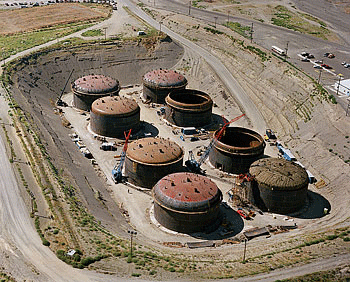
Federal News Network, Tom Temin@tteminWFED, May 25, 2022 The Energy Department has a backlog of nuclear waste clean up responsibilities, with material dating back to World War II. But continuing turnover in program leadership means things just aren’t happening. For more, Government Accountability Office natural resources and environmental team Director Nathan Anderson spoke with the Federal Drive with Tom Temin.
Interview transcript:
Tom Temin: So what is going on here, the Energy Department says it needs something like a half a trillion dollars to do the cleanup of nuclear waste. Give us the scope of what it is they’re trying to do here in the first place?
Nathan Anderson: Well, you’ve got the dollar figure, right, in terms of the best estimates that we can give to this point. It is looking like almost a half a trillion dollar future financial responsibility of the federal government. I want to take it back a little bit to how we got here. You know, for decades, we were in the Cold War. And we were producing nuclear weapons. And we had sites across the country that were engaged in the Manhattan Project, and ultimately in the arms race that we were involved in until the late 1980s. And then around that time, the switch was flipped, if you will. And all of a sudden, we had to embrace the cleanup responsibilities that came with the end of the Cold War and kind of embracing both environmental and moral responsibilities of cleaning up the waste. And that’s where we’re at now, you know, we’ve been at this for a little more than 30 years, in a way trying to figure out the best way forward in terms of addressing the environmental and human health risks. And also, you know, the financial risks.
Tom Temin: And what is the scope of the issue geographically is there material that needs to be dealt with all over the place?
Nathan Anderson: There are 15 active cleanup sites that the Department of Energy is responsible for addressing. The biggest site in terms of financial risk and scope of waste is probably the Hanford Site out in southwestern Washington. There’s also a massive cleanup operation at the Savannah River Site in South Carolina, there’s a nuclear repository down in New Mexico at the Waste Isolation Pilot Plant. DOE recently kind of completed some of their activities at the Brookhaven Lab in New York. But as I’m kind of going through this list, you can see it really is all across the country, where we have these sites and have these cleanup responsibilities.
Tom Temin: And what does cleanup actually entail? It has to be removed and put somewhere else and buried in concrete or what?
Nathan Anderson: Well, I think one of the best ways to describe this is you’ve got nuclear waste, and radioactive waste that is in a tank, a couple sites around the country. There are 177 underground tanks at the Hanford Site, these tanks are massive, I’ve stood in a mock up of one. They hold, you know, up to a million gallons of waste. You’ve also got contaminated soil and groundwater. Decades ago during the nuclear weapons production mission, not as much as understood about the risks that some of these liquids and some of these contaminants contained, and so some of it was dumped directly into the ground. And that has permeated into the groundwater at certain sites. And then you’ve also got contaminated facilities that need to be demolished and that contamination needs to be dealt with appropriately. So I would say the three big cleanup activities are addressing the waste that’s in the tank. That’s the really nasty stuff, the soil and groundwater that needs to be remediated. And then also the excess facilities that need to be demolished, and that contamination needs to be remediated.
Tom Temin: And does that put the Energy Department in the position of being a buyer of contracted services to actually do this? Are there companies that handle this type of thing?
Nathan Anderson: Yes, it does. DOE is one of the largest contracting departments out there, probably right behind DoD (Department of Defense) in terms of the percentage of money that is put out the contracts. And now you’ve got companies around the country that are technically equipped to do this. And what DOE needs to do is ensure that for the taxpayer, you get the benefits of competition at each one of these sites. And then you also have the kind of like the accountability frameworks that are embedded within the contracts themselves, to make sure that cleanup is happening in a risk informed way. I like to say that contractors can do anything we ask them to do in this country. It’s up to the Department of Energy, and specifically the Office of Environmental Management to make sure that what they are asking the contractors to do is aligned with the risks that some of this waste poses. You recently commented about cement. That’s a perfect example. There are opportunities to take some of this tank waste like out of Hanford and put it in cement rather than glass because it’s very low levels of risk and cement, or grout as a term in the industry is significantly cheaper than the alternatives.
Tom Temin: We’re speaking with Nathan Anderson, a director in the Natural Resources and Environmental Team at the GAO. And the thesis of your report this time around is not really though how big the task is. But the fact that a revolving door of leadership at the Environmental Management Office of DOE is one of the hindrances to steady progress here. Tell us more about what you found.
Nathan Anderson: You’re hitting the nail on the head in terms of what this most recent report does touch on. We’ve just spoken about kind of the size and complexity of the issues. And what you’ll see across government oftentimes when you have a set of issues that are technically challenging and huge in scope, and long lasting and enduring is you have a leader of those federal responsibilities who has either a fixed term appointment, and in many cases, also an elevated level within the department. And that’s what we are leaning towards in this new report is that Congress should take those two actions to address the frequent turnover by having like a fixed term appointment of four to five years, to make sure that you’ve got a strong signal inside and outside government that this is a position that requires stability, and then also, that there should be an undersecretary position within the Department of Energy to again, provide that signal that there needs to be a high level of organizational clout that these are issues that are long lasting, and require stability and commitment from the senior leader within the department.
………………………. Nathan Anderson: We do have a very dedicated cadre of technicians and public servants that serve in the Office of Environmental Management, you know, there have been tremendously capable senior leaders, assistant secretaries at the Department of Energy that are responsible for this mission. But at the end of the day, resources are scarce. At the end of the day, priorities need to be set. Not everything can be done. And what we’re seeing is an increase in cost, substantially increasing costs for the long term mission of environmental cleanup within the Department of Energy. And I think it’s over the last seven or eight years, it’s almost doubled in terms of what we call the environmental liability, that total cost to the government for the cleanup mission. And that is a kind of a strong prompt or a catalyst to say, OK, is the status quo working? I would argue that the status quo needs to change.
………………………. I would say that GAO has identified a handful of options that could really fly down that half a trillion dollar cost estimate that you kind of lead with, there are opportunities and I would submit that while those opportunities are tens of billions of dollars or more, it will require like elevated leadership attention to be able to get there. And yet another reason why a fixed term appointment and an undersecretary position could really help here. https://federalnewsnetwork.com/agency-oversight/2022/05/energy-department-nuclear-waste-backlog-goes-as-far-back-as-wwii/—
Twenty-Two House Republicans Demand Accountability on Biden’s $40b War Spending
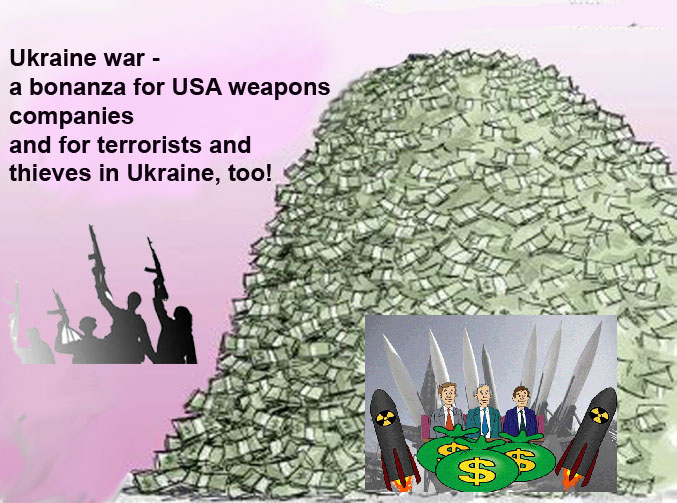
“The aid package approved by Congress provides unprecedented funding for a foreign conflict in which the United States is not fighting, while there have been no significant hearings or substantive briefings on the use of the money and weapons being provided at taxpayer expense.” The lawmakers raised the prospect of sophisticated weaponry falling into the hands of terrorist organizations, citing a documented history of illicit arms-trafficking within Ukraine, a market which is one of the largest in Europe:
A cohort of Republicans, part of the dissenting vote on Biden’s Ukraine war package, seeks oversight and specifics about the destination of U.S. money and weapons.
| Glenn Greenwald and Anthony Tobin, May 25 |
The House of Representatives, on May 10, approved President Biden’s $33 billion package for the war in Ukraine, and then, on its own initiative, added $7 billion on top of it. That brought the new war spending authorization to $40 billion, on top of the $14 billion already spent just 10 weeks into this war, which U.S. officials predict will last years, not months. The House vote in favor was 368-57. All 57 NO votes were from GOP House members. All House Democrats, including the Squad, voted YES.
A similar scene occurred when the Senate, “moving quickly and with little debate,” overwhelmingly approved the same war package. All eleven NO votes were from Senate Republicans. All Senate Democrats, including Sen. Bernie Sanders (I-VT), voted in favor, seemingly in direct contradiction to Sanders’ February 8 op-ed in The Guardian warning of the severe dangers of bipartisan escalation of the war. Efforts by Sen. Rand Paul (R-KY) to delay passage of the bill so that some safeguards and accountability measures could be included regarding where the money was going and for what purposes it would be used were met with scorn, particularly from Paul’s fellow Kentucky GOP Senator, Minority Leader Mitch McConnell, who condemned Paul as an “isolationist.” Following the Senate vote, a jet was used to fly the bill across the world to President Biden in South Korea, where he signed it into law.
But the lack of any safeguards over the destination of the money and weapons prompted close to two dozen House Republicans, led by Rep. Yvette Herrell (R-NM), to send a letter to the Biden White House on Monday demanding greater specificity and assurances about legal requirements on how weapons are used. The letter urges a public reckoning on the dangers of the U.S.’s bankrolling of the war in Ukraine: “We write today to express grave concern about the lack of oversight and accountability for the money and weapons recently approved by Congress for Ukraine,” it began.
“The aid package approved by Congress provides unprecedented funding for a foreign conflict in which the United States is not fighting, while there have been no significant hearings or substantive briefings on the use of the money and weapons being provided at taxpayer expense.” The lawmakers raised the prospect of sophisticated weaponry falling into the hands of terrorist organizations, citing a documented history of illicit arms-trafficking within Ukraine, a market which is one of the largest in Europe:
“According to a 2017 Small Arms Survey briefing on arms trafficking, over 300,000 small arms disappeared from Ukraine between 2013 and 2015 and only 13 percent were recovered. Criminal networks, corrupt officials, and underpaid military personnel can make a profitable business from the sale of arms from Ukrainian military stockpiles. For example, in 2019, the Ukrainian Security Service uncovered a plot by Ukrainian soldiers to sell 40 RGD-5 grenades, 15 grenade launchers, 30 grenade detonators, and 2,454 rounds of ammunition for 75,000 Ukrainian hryvnia or around $2,900.”
Indeed, the relentlessly war-supporting CNN last month acknowledged that “the US has few ways to track the substantial supply of anti-tank, anti-aircraft and other weaponry it has sent across the border into Ukraine.” Biden officials admitted the “risk that some of the shipments may ultimately end up in unexpected places.” ……………………… more https://greenwald.substack.com/p/twenty-two-house-republicans-demand?s=r
1 This month
17 October, Free Public Talk on Nuclear Issues in South Australia
David Noonan will speak on public interest concerns over the new Roxby Downs Indenture Act 2026 on BHP copper-uranium mining and ore processing in SA, and on how AUKUS may face SA with a High-Level nuclear waste agenda.
Dr Jim Green will discuss international developments in the field of nuclear power including ‘small modular reactors’ and Generation 4 ‘advanced’ nuclear reactor concepts.


Help Aunty Sue Protect Her Land and Sacred Sites From Destructive Rocket Testing.
.

Australians deserve the truth
about
AUKUS – https://aukuspublicinquiry.com/

PETITION – To: Prime Minister Anthony Albanese and the Australian Labor Government

of the week – Australians for War Powers Reform (AWPR)
To see nuclear-related stories in greater depth and intensity

