Nuclear is already well past its sell-by date

As construction costs and delays ramp up, it is clear that renewables will do the heavy lifting of our energy transition.
https://www.newstatesman.com/spotlight/energy/2022/05/debate-nuclear-already-well-past-sell-by-date
By Paul Dorfman, 25 May 22,

Boris Johnson hopes his dream of “a new nuclear plant every year” will be aided and abetted by the recent publication of the government’s Energy Security Strategy. But with little interest from the investment market, and the fact that utility-scale solar and onshore wind cost less than a quarter of new nuclear, perhaps the Treasury’s concerns should be taken more seriously.

Here’s why. Hinkley Point C, the only new nuclear construction in town, where energy giant EDF is building two nuclear reactors, is overdue and over budget. Costs have ramped up from an original estimate of £18bn to £26bn, and the Somerset project is not due to open until at least June 2027, and more than likely quite a few years later.
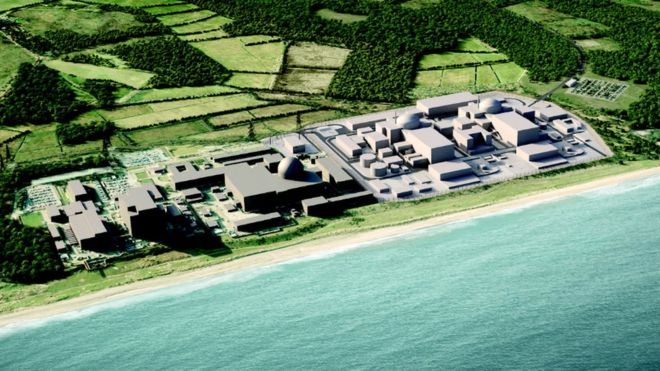
Next in line is Sizewell C in Suffolk, which is supposed to be paid for via the “fiscally dextrous” Regulated Asset Base mechanism, a new funding model that transfers risk from developers to consumers to bring in more investors. This places great financial liability unfairly and squarely on the shoulders of UK taxpayers and electricity consumers, who will be paying for huge upfront costs, inevitable delays and further cost hikes.

And there’s more. The EDF European pressurised water reactor (EPR) design, currently being built at Hinkley C and planned for Sizewell C, may have a generic fault with its most important safety feature: the reactor pressure vessel. As a result, a Chinese EPR has now been shuttered for ten months.

This is not forgetting the horrible mess across the channel, with half of EDF’s nuclear reactor fleet offline, many due to progressive corrosion. The French nuclear regulator is warning a “large-scale plan” lasting “several years” is needed.
Nuclear’s climate-friendly unique selling point (USP) is also up for grabs. Sea-level rise will increase coastal flooding, storm surges and erosion, making current coastal nuclear infrastructure increasingly obsolete. This means even more expense for any nuclear construction, operation, waste management and decommissioning – and, according to the UK Institute of Mechanical Engineers, even relocation or abandonment.

Happily, help is on the way – 256 gigawatts (GW) of non-hydro renewables were added to the world’s power grids in 2020 (nuclear added only 0.4GW). Last year, solar and wind made up three-quarters of all new generation – and with other renewables, the total figure is 84 per cent.

Even the UK investment minister recently concluded that wind farms in the North Sea will be more valuable to the UK than the oil and gas industry. There is no one left to dispute the fact that the heavy lifting of the net zero transition will be done by renewable energy.
Nuclear isn’t just slow and expensive – it’s far too inflexible to ramp up and down with the swings of demand. When the wind fails to blow and the sun doesn’t shine, that’s when grid upgrades, interconnection (which enables power to be shared between neighbouring countries), energy efficiency management, and rapidly evolving storage technology steps in to make up the difference. Nuclear’s contribution has, can and will only ever be very marginal. The reality is, it’s already well past its sell-by date.
Nuclear tragedy in the Marshall Islands
The Bulletin, By Sally Clark | May 25, 2022, We were innocent 21-year-olds entering an organization called the Peace Corps in 1969……….. Young, naive Americans, we knew little about the area, other than, perhaps, fleeting thoughts that we might find the remains of Amelia Earhart or artifacts from her plane there……….
Our naivete began to diminish when we were told the Atomic Energy Commission was coming to check out the health of the children and adults and of course to give out candy and show a dated movie. We asked questions and learned about the nuclear test over Bikini and the fallout coming down over a neighboring island, whose residents thought it was snow. We were told that the Marshallese ran outside, allowing the fallout to land on their skin, with some children putting it to their eyes. Luckily many residents sensed danger and ran to the ocean, saving themselves from a future road of at least some fallout ailments.
As we spent more time in the islands, little by little more detailed stories emerged—of still births, high cancer rates, and other radiation-related health issues. Islanders had been moved from Bikini before nuclear tests were conducted; some of the explosions were so great that one of the small islands simply vaporized, leaving a deep cavern. Many Marshallese had to endure being relocated from their blessed atoll to Kili, an island in the middle of the ocean with no lagoon.
Over the years, more and more people spoke out about such atrocities and such disregard for the Marshallese, who were actually called “savages” by a US paper in the 50’s. My heart wept as I learned more information about the scope of nuclear testing in the Marshalls.
Between 1946 and 1958, the Marshall Islands region was the site of the testing of nuclear weapons equivalent to the explosive power of 1.6 Hiroshima bombs every day for 12 years—67 in all at the Bikini and Enewetak atolls—a fact that is impossible for me to comprehend.
A resolution is now in front of the Congress asking the United States to prioritize nuclear justice in its negotiations with the Marshall Islands on an extended Compact of Free Association between the countries. The resolution recognizes that the United States nuclear testing program and radioactive waste disposal, including not just contaminated debris from the Marshalls but also material transported from the Nevada Test Site, caused irreparable material and intangible harm to the people of the Marshall Islands.
We believe this harm continues to this day. Within this resolution is a call for an apology for what the United States did to the Marshallese and to raise awareness about the need for more action to undo this harm. US Rep. Katie Porter of California and senators Mazie Hirono of Hawaii and Edward Markey of Massachusetts are spearheading this effort, which would formally apologize for the US nuclear legacy in the Marshall Islands and raise public awareness of the issue. Please write or call your representatives and senators, asking them to support House Joint Resolution 73 and Senate Joint Resolution 40.
What happened in the islands is simply incomprehensible to me. The toll on the Marshallese and the environment is impossible for me to grasp. And I have another nagging thought: Why as Peace Corps volunteers were we not warned about the radioactive fallout and the social issues we were being dropped into? Of course, there’s the implication that we were being used as pawns to smooth the relationship between the Marshall Islands and the United States and to continue to have the islanders as our friends for strategic reasons.
Who makes these decisions to drop bombs on such beautiful, pristine islands? Who sends 20-year-olds into a potentially radioactive area without warning them? When can we as a human race honor peoples around the world and get out of building weapons and gaining lands for strategic reasons? Please stop. I’m sad and weep and write letters asking for an apology. So sad. Where is our soul? https://thebulletin.org/2022/05/nuclear-tragedy-in-the-marshall-islands/
Household power bills jump as Coalition hands energy market mess to Labor — RenewEconomy

First rise in household bills announced, conveniently delayed until after election as Coalition hands its energy mess to Labor and the cross bench. The post Household power bills jump as Coalition hands energy market mess to Labor appeared first on RenewEconomy.
Household power bills jump as Coalition hands energy market mess to Labor — RenewEconomy
Big Banana: CS Energy signs up for French nuclear giant’s first Australian wind farm — RenewEconomy

Queensland state owned utility gives go-ahead to the first wind farm to be built in Australia by the renewables offshoot of French nuclear energy giant EdF. The post Big Banana: CS Energy signs up for French nuclear giant’s first Australian wind farm appeared first on RenewEconomy.
Big Banana: CS Energy signs up for French nuclear giant’s first Australian wind farm — RenewEconomy
Neighbourhood Batteries: To bring power to the people, you need to listen to what they want — RenewEconomy

Does the value of neighbourhood batteries stack up? And do they cut emissions? Local communities will want to know. The post Neighbourhood Batteries: To bring power to the people, you need to listen to what they want appeared first on RenewEconomy.
Neighbourhood Batteries: To bring power to the people, you need to listen to what they want — RenewEconomy
May 25 Energy News — geoharvey

Opinion: ¶ “Australians Voted For Stronger Action On Climate Change. Will They Get It?” • Australia’s new prime minister mentioned the words “climate change” four times within two minutes of his maiden international speech. But experts say it won’t be easy to turn around a coal-powered ship that has been chugging in the wrong direction […]
May 25 Energy News — geoharvey
Global heating is affecting France’s nuclear reactors, as water temperatures rise in the rivers

Warming French rivers could take more nuclear supply offline, https://www.reuters.com/world/europe/warming-french-rivers-could-take-more-nuclear-supply-offline-2022-05-25/ 26 may 22, PARIS, May 25 (Reuters) – An unseasonably warm May has led to high water temperatures in several rivers throughout France, putting some nuclear plants’ output at risk during a period of historically high unavailability, Refinitiv Eikon data showed on Wednesday.
Reporting by Forrest Crellin Editing by David Goodman River water is often used for cooling reactors before being returned to the the river at a higher temperature.
Regulations are in place that limit reactor production during times of high heat to prevent the process from damaging local wildlife.
The exposed nuclear plants are the 1.8 gigawatt (GW) Bugey plant, the 2.6 GW Saint-Alban plant and the 3.6 GW Tricastin plant on the Rhone river in the south east, as well as the 3.6 GW Blayais plant on the Gironde river in the south west.
Because river temperature is closely correlated to air temperature, the recent heatwave in France would need to abate to reduce the risk of environmental outages.
Most rivers with power plants have an upper limit between 26 and 30 degrees Celsius for cooling, so critical supply losses would only take place if daily average temperatures are above the river’s maximum for at least a couple of weeks, the Refinitiv analysts said.
However, even with a spell of cooler weather, the situation is unlikely to simply disappear as we head into a warmer season, they added.
“The latest forecasts indicates that temperatures at Bugey and Tricastin will be below warning levels later this week, while Blayais will stay above warning levels and risk needing to down-regulate, if at nominal power,” said Refinitiv analyst Stefan Soderberg.
The current warning levels at the Blayais plant indicate that it is still lower than the maximum allowed temperature but above the level where supply reduction is needed to comply with regulations, he added.
The Blayais plant is operating at limited capacity, data from nuclear provider EDF (EDF.PA) showed.
French nuclear supply stood at a much reduced 50% of available capacity on Wednesday, with a slew of reactors having gone offline in recent months owing to issues with corrosion found in the welding of reactor safety circuits.
South Korea to keep import ban on Japan seafood due to Fukushima concern.

South Korea to keep import ban on Japan seafood due to Fukushima concern https://english.kyodonews.net/news/2022/05/d973d7db8578-s-korea-to-keep-import-ban-on-japan-seafood-due-to-fukushima-concern.html
KYODO NEWS 26 May 22, South Korea will maintain an import ban on Japanese seafood from areas affected by the 2011 Fukushima nuclear crisis, a minister said Wednesday, denying any plan to lift it in a bid to secure Tokyo’s support to join a regional free trade accord.
“We’ve taken a resolute stance on the issue. We aren’t considering allowing imports of Japan’s Fukushima seafood as a tactic to get backing for our bid to join” the Trans-Pacific Partnership accord, Oceans Minister Cho Seung Hwan said during a meeting with reporters, according to Yonhap News Agency.
Japan is one of the leading members of the 11-nation TPP, which also includes Australia, Singapore and Mexico. Consent of all members is required for new membership.
South Korea has been working on domestic procedures to submit an application, Yonhap said.
China and Taiwan are also seeking to join the TPP.
Taiwan in February lifted an import ban on food products from Fukushima and some other Japanese prefectures imposed in the wake of the Fukushima disaster.
Amid radiation concerns, South Korea has banned Japanese seafood imports from eight prefectures, including Fukushima.
Experts call on governments to start including animal welfare in sustainable development governance
Experts call on governments to start including animal welfare in sustainable development governance
Scientists and other experts are calling on governments to start including animal welfare in sustainable development governance now in order to work towards a healthier, more resilient, and more sustainable world for all.
Curbing other climate pollutants, not just CO2, gives Earth a chance
Curbing other climate pollutants, not just CO2, gives Earth a chance
Slashing emissions of carbon dioxide by itself isn’t enough to prevent catastrophic global warming, a new study by scientists at Duke and four other universities shows. But if we simultaneously also reduce emissions of methane and other often overlooked climate pollutants, we could cut the rate of global warming in half by 2050 and give the world a fighting chance.
Australia’s new Prime Minister backs the UN Nuclear Weapons Ban Treaty
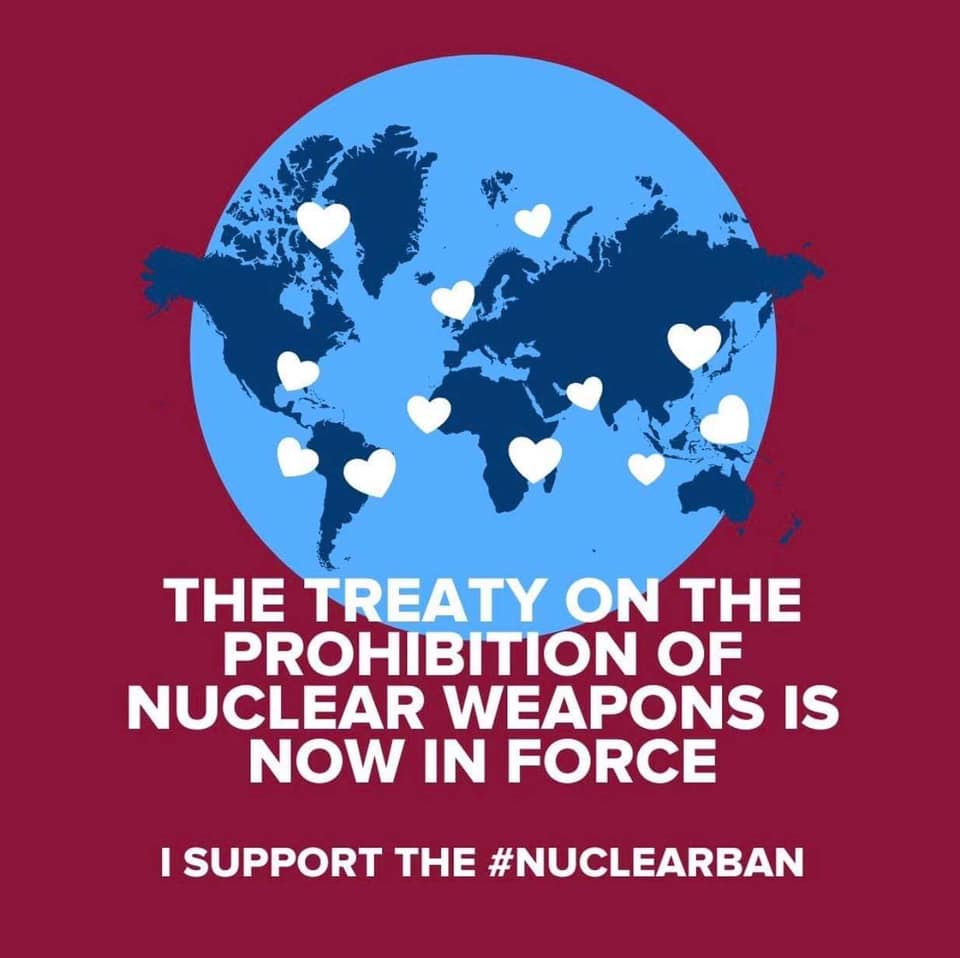
https://icanw.org.au/new-prime-minister-backs-the-ban/?fbclid=IwAR0PloEtGAvJE3z3fK3Lvb01JmlIbIJ2MXeAoT4KBjIBe3AMTGretVOISV8 24 May 22, The election of the Albanese Labor Government heralds a new era in Australia’s approach to nuclear disarmament and non-proliferation. While the previous government shunned the UN Treaty on the Prohibition of Nuclear Weapons, the Australian Labor Party has committed to sign and ratify it in government. Recent polling demonstrates ¾ of the Australian public support this action.
Prime Minister Anthony Albanese is a long-term champion of nuclear disarmament and non-proliferation, inspired by his late mentor Tom Uren, a former Labor Minister who witnessed the atomic bombing of Nagasaki as a prisoner of war. In proposing the resolution committing to the treaty in 2018, he said the new policy is “Labor at its best” and that “nuclear disarmament is core business for any Labor government worth its name”. In 2016 Albanese launched the Tom Uren Memorial Fund with ICAN, and has spoken out in support of the treaty in parliament, at public events and demonstrations since its negotiation in 2017.
A majority of the new government members have signed the ICAN Parliamentary Pledge to work for Australia to sign and ratify the Treaty. It has been backed by two dozen unions, including the national peak body, the Australian Council of Trade Unions. The Victorian, Tasmanian, Australian Capital Territory, South Australian, Northern Territory and Western Australian Labor branches, as well as over 50 local branches have passed motions declaring their support and calling upon Australia to join the ban without delay. Many have called for signature and ratification to be completed in the first term of the new government.
Following a decision of the Australian Parliament, signature and ratification of the Treaty on the Prohibition of Nuclear Weapons can now proceed under the Albanese Labor Government.
In addition to the incumbent signatories of the ICAN Parliamentary Pledge, we are delighted to welcome the following new parliamentarians that have committed to work for Australia to sign and ratify the Treaty on the Prohibition of Nuclear Weapons:
Boothby, SA Louise Miller-Frost, Labor
Bennelong, NSW Jerome Laxale, Labor
Chisholm, VIC Carina Garland, Labor
Cunningham, NSW Alison Byrnes, Labor
Goldstein, VIC Zoe Daniel, Independent
Higgins, VIC Dr Michelle Ananda-Rajah, Labor
Hunter, NSW Daniel Repacholi, Labor
Kooyong, VIC Dr Monique Ryan, Independent
North Sydney, NSW Kylea Tink, Independent
Pearce, WA Tracey Roberts, Labor
Robertson, NSW Gordon Reid, Labor
Wentworth, NSW Allegra Spender, Independent
ENATE, ACT David Pocock, Independent
SENATE, QLD Penny Allman-Payne, Greens
SENATE, NSW David Shoebridge, Greens
SENATE, SA Barbara Pocock, Greens
SENATE, VIC Linda White, Labor
Pressure Mounts on British Home Secretary Patel Over Assange Decision
New Australian Government
The election on Friday of just the fourth Labor government in Australia since the Second World War may bode well for Assange. The new prime minister, Anthony Albanese, has said publicly that Assange should be returned to his native Australia.
Pressure Mounts on Patel Over Assange Decision, https://consortiumnews.com/2022/05/22/pressure-mounts-on-patel-over-assange-decision/—
The British home secretary is under pressure as she’s about to decide whether to extradite WikiLeaks publisher Julian Assange. By Joe Lauria
in London
Special to Consortium News, 23 May 22,
At some point during the next nine days, British Home Secretary Priti Patel will decide whether or not to extradite imprisoned WikiLeaks publisher Julian Assange to the United States to face espionage charges for publishing accurate information revealing U.S. war crimes.
Pressure is building from both sides on the home secretary. Press freedom and human rights organizations, a Nobel laureate, the Council of Europe’s human rights commissioner, journalists and Assange supporters have appealed to Patel to let Assange go.
While it would be deemed improper for outside influence to be brought on judges, it would not be fanciful to imagine that behind the scenes Patel is getting the message from the U.S. Department of Justice and possibly from U.S. and U.K. intelligence services about what is expected of her.
The home secretary should know without prodding what the U.S. and British governments want her to do. Patel is a highly-ambitious politician who no doubt will calculate how her decision will impact her career.
“Politicians think about their next election, they think about their voters … that’s what makes them tick,” Kristinn Hrafnnson, WikiLeaks editor-in-chief, told Consortium News at a protest outside the Home Office in London last Wednesday. “For the first time it’s in the hands of a politician, and Priti Patel, if she wants to think about her legacy … she should do the right thing.”
“Politics is a strange beast,” Hrafnsson said. “Anything can happen. I’m hoping this is something that will be taken up in the Cabinet here. Let’s not forget that Boris Johnson was a journalist. He was part of the media community and should have better understanding of this case than many others.”
Patel is acting after the U.K. Supreme Court refused to hear Assange’s appeal of a High Court decision to overturn a lower court ruling barring Assange’s extradition on health grounds and the danger of U.S. prisons. The High Court decided solely on conditional U.S. promises that Assange would be well treated in custody.
With the courts no longer involved and the decision solely in Patel’s hands, the case now is purely political, meaning political pressure can be brought to bear on the home secretary.
“The home secretary has the discretion to block this extradition, and there is a lot of pressure from civil society and press freedom groups for her to do so,” said Stella Assange at a film screening on Thursday.
She said the “heaviest” pressure had come from Dunja Mijatovic, the human rights commissioner for the Council of Europe, “urging Patel to block it.” Mijatovic wrote to Patel on May 10, saying:
“I have been following the developments in Mr Assange’s case with great attention. In the judicial proceedings so far, the focus has mainly been on Mr Assange’s personal circumstances upon his possible extradition to the United States. While a very important matter, this also means, in my opinion, that the wider human rights implications of Mr Assange’s possible extradition, which reach far beyond his individual case, have not been adequately considered so far.
In particular, it is my view that the indictment by the United States against Mr Assange raises important questions about the protection of those that publish classified information in the public interest, including information that exposes human rights violations. The broad and vague nature of the allegations against Mr Assange, and of the offences listed in the indictment, are troubling as many of them concern activities at the core of investigative journalism in Europe and beyond.
Consequently, allowing Mr Assange’s extradition on this basis would have a chilling effect on media freedom, and could ultimately hamper the press in performing its task as purveyor of information and public watchdog in democratic societies.”
Nobel Peace Prize laureate Adolfo Pérez Esquive has also written to Patel. “I join the growing collective concern about the violations of the human, civil and political rights of Mr. Julian Assange,” the Argentine wrote. He called the extradition request “illegal and abusive” and said it imperiled press freedom and could bring “potentially fatal consequences” to Assange.
Amnesty International released a statement at the end of April calling on Patel to deny extradition. “If the Home Secretary certifies the US request to extradite Julian Assange it will violate the prohibition against torture and set an alarming precedent for publishers and journalists around the world,” Amnesty said. It went on:
“Prolonged solitary confinement is a regular occurrence in the USA’s maximum-security prisons. The practice amounts to torture or other ill-treatment, which is prohibited under international law. The assurances of fair treatment offered by the USA in Julian Assange’s case are deeply flawed and could be revoked at any time. Extradition to the USA would put Assange at risk of serious human rights violations, and hollow diplomatic assurances cannot protect him from such abuse.
If the UK government allows a foreign country to exercise extraterritorial criminal jurisdiction to prosecute a person publishing from the UK, other governments could use the same legal apparatus to imprison journalists and silence the press far beyond the borders of their own countries.”
“There has been a huge mobilization all over Europe in many countries and 1,800 journalists have written an open letter to Priti Patel saying that this case should be blocked because it affects their safety because of the implications for global press freedom,” Stella Assange said.
Reporters Without Borders submitted a petition to Patel on Thursday with 65,000 signatures. It was delivered to British embassies in eight countries, Assange said. More than 700,000 Australians have also signed a petition.
New Australian Government
The election on Friday of just the fourth Labor government in Australia since the Second World War may bode well for Assange. The new prime minister, Anthony Albanese, has said publicly that Assange should be returned to his native Australia.
The 2022 climate election: unpacking how climate concerned Australians voted
The 2022 climate election: unpacking how climate concerned Australians voted
Climate Council
Votes are still being counted, but one thing is indisputable: climate action is the winner of this election. Millions of Australians put climate first at the ballot box, and the politicians who dragged their heels on the most important challenge of our time are paying a price for that. It’s clear the Australian Parliament is now set for an unprecedented shake up, and all eyes are on what climate action will be achieved by the incoming government.
The political and media establishment ignored climate – but voters didn’t — RenewEconomy

Media outlets and big political parties ignored climate change. Will they recognise their mistake, as the issue gets bigger for voters? The post The political and media establishment ignored climate – but voters didn’t appeared first on RenewEconomy.
The political and media establishment ignored climate – but voters didn’t — RenewEconomy
Albanese commits Australia to stronger 2030 target, starts climate reset — RenewEconomy

Anthony Albanese hits reset on Australia’s international climate stance, formally committing Australia to a stronger 2030 emissions target. The post Albanese commits Australia to stronger 2030 target, starts climate reset appeared first on RenewEconomy.
Albanese commits Australia to stronger 2030 target, starts climate reset — RenewEconomy
1 This month
17 October, Free Public Talk on Nuclear Issues in South Australia
David Noonan will speak on public interest concerns over the new Roxby Downs Indenture Act 2026 on BHP copper-uranium mining and ore processing in SA, and on how AUKUS may face SA with a High-Level nuclear waste agenda.
Dr Jim Green will discuss international developments in the field of nuclear power including ‘small modular reactors’ and Generation 4 ‘advanced’ nuclear reactor concepts.


Help Aunty Sue Protect Her Land and Sacred Sites From Destructive Rocket Testing.
.

Australians deserve the truth
about
AUKUS – https://aukuspublicinquiry.com/

PETITION – To: Prime Minister Anthony Albanese and the Australian Labor Government

of the week – Australians for War Powers Reform (AWPR)
To see nuclear-related stories in greater depth and intensity

