Spain outraged as massive US nuclear-powered submarine arrives in Gibraltar
SPAIN has launched an official complaint against the arrival of a US nuclear-powered submarine in Gibraltar.
By ALESSANDRA SCOTTO DI SANTOLO, Apr 14, 2022 The arrival of a USS Georgia submarine in the port of Gibraltar has sparked a diplomatic row between Spain and the US. The Spanish Foreign Ministry has confirmed that it has lodged an official protest with the US.
The Spanish authorities wanted the submarine to anchor at the Rota naval base instead, where the US Georgia had already been based in August 2020.
The reasons and the duration for the stopover of the submarine remain unknown.
Since the port of Gibraltar was ceded by Spain to the United Kingdom in 1713, the Spanish government actually lacks the authority to prevent such moves. The British Overseas Territory has been at the centre of a bitter row between the UK and EU after Brexit, as access to Gibraltar was not included in the trade agreement. Under an EU proposal, Spain would gain control over the country’s external border……………………https://www.express.co.uk/news/uk/1596057/spain-news-Gibraltar-uss-Georgia-submarine-nuclear-uk-latest
Extremely rare brain cancer appearing in people who attended a New Jersey school, close to former nuclear weapons fuel plant

94 former staff and students from Colonia High School in the Woodbridge Township School District have been stricken by the devastating diagnoses in recent years.
While the exact number of former faculty and staff diagnosed with glioblastoma is not precisely known, the cancer is exceedingly rare. According to the American Association of Neurological Surgeons, glioblastoma has an incidence of 3.21 per 100,000
Nearly 100 people at this NJ school got brain tumors — a survivor demands answers, https://nypost.com/2022/04/14/why-nearly-100-people-at-nj-school-got-brain-tumors/?fbclid=IwAR1IItuf3UXbHuJAJr-gByHSGIgbgX1lZYsljrokhDTk6z1Dx77P5UMwrg4
By Andrew Court
A cancer survivor is vowing to untangle the twisted mystery of why almost 100 people associated with a New Jersey high school have developed “extremely” rare malignant brain tumors.
Al Lupiano is among the 94 former staff and students from Colonia High School in the Woodbridge Township School District who have been stricken by the devastating diagnoses in recent years.
“I will not rest until I have answers,” Lupiano, 50, declared in an interview with NJ.com and the Star-Ledger on Thursday. “I will uncover the truth.”
Among the others diagnosed with brain cancer was Lupiano’s younger sister, who passed away from the disease in February at the age of 44.
The devoted brother promised his sister on her deathbed that he would get to the bottom of what was causing the apparent cancer cluster at Colonia High. On Tuesday — after a public push by Lupiano — local officials approved an emergency probe of the school.
“There could be a real problem here, and our residents deserve to know if there are any dangers,” Woodbridge Mayor John McCormac said in a statement. “We’re all concerned, and we all want to get to the bottom of this. This is definitely not normal.”
Starting this weekend, various radiological assessments will be conducted across the school’s 28-acre campus, including the testing of indoor air samples for radon.
Lupiano was diagnosed with a brain tumor back in the late 1990s, at the age of 27. He went on to recover from the disease.
Last year, his wife — who also attended Colonia — was diagnosed with a rare brain tumor. On the exact same day, Lupiano’s younger sister, Angela DeCillis, another alumna of Colonia, learned that she too had brain cancer.
After his sister’s death in February, Lupiano became convinced of a link between the Colonia campus and the brain cancers that he, his wife and his sister had developed. Last month, he started a Facebook group asking locals whether they knew of any other people associated with the school who had been stricken by similar diagnoses.
In less than six weeks, Lupiano says, he has gathered the names of 94 people connected with the school who have developed brain tumors.
The disturbing development became headline news this week after CBS News took it national. A subsequent TikTok video discussing the medical mystery has also racked up more than 2.2 million viral views in just 24 hours.
The vast majority of those who have developed brain tumors “graduated between 1975 and 2000, although outliers have come as recently as a 2014 graduate,” according to the Star-Ledger.
The diagnoses include “several types of primary brain tumors, including cancerous forms like glioblastoma and noncancerous yet debilitating masses such as acoustic neuromas, haemangioblastomas and meningiomas.”
“To find something like this … is a significant discovery,” Dr. Sumul Raval, one of New Jersey’s top neuro-oncologists, told the outlet. “Normally speaking, you don’t get radiation in a high school … unless something is going on in that area that we don’t know,” Raval added, calling for an immediate investigation.
The viral TikTok video discussing the purported cancer cluster was posted Wednesday by popular personality Dr. Joe Whittington.
Whittington — a board-certified MD in California — claimed several of the brain tumors developed by ex-Colonia High staff and students are glioblastoma multiforme — an aggressive cancer which spreads to brain tissue.
While the exact number of former faculty and staff diagnosed with glioblastoma is not precisely known, the cancer is exceedingly rare. According to the American Association of Neurological Surgeons, glioblastoma has an incidence of 3.21 per 100,000.
Meanwhile, the TikTok video sparked panic and a range of conspiracy-theory style comments, with people claiming mold, toxic waste, asbestos and nearby cellphone towers could all be causing the cluster.
Lupiano also spoke with CBS News on Thursday, saying he now believes ionizing radiation must be responsible for the health issues.
“What I find alarming is there’s truly only one environmental link to primary brain tumors, and that’s ionizing radiation,” he declared. “It’s not contaminated water. It’s not air. It’s not something in soil. It’s not something done to us due to bad habits.”
The school was built back in 1967 on acres of empty land, with McCormac telling the news network he is stumped as to what could be causing the cancers.
Lupiano alleges that some contaminated soil was removed from the site when it closed down in 1967 — the same year Colonia High School was built. He now wonders whether some of that soil ended up on the school grounds.CBS2
He has reached out to the state Department of Health, Department of Environmental Protection and the federal Agency for Toxic Substances and Disease Registry for help — which is reportedly still in the “early stages,” according to the CBS News report.
Lupiano told NJ Spotlight News that the school is located less than 12 miles from the Middlesex Sampling Plant — a site that was used, under the direction of the Manhattan Project, to crush, dry, store, package and ship uranium ore for the development of the atomic bomb.
He alleges that some contaminated soil was removed from the site when it closed down in 1967 — the same year Colonia High School was built. Lupiano is wondering whether some of that soil ended up on the school grounds.
Today, Colonia enrolls approximately 1,300 students, with many said to be “anxious” about the possible cancer cluster.
“We are looking at possible things that we can do between the town and school, and they said they will look at anything we come up with,” McCormac said. at top https://nypost.com/2022/04/14/why-nearly-100-people-at-nj-school-got-brain-tumors/?fbclid=IwAR1IItuf3UXbHuJAJr-gByHSGIgbgX1lZYsljrokhDTk6z1Dx77P5UMwrg4
A call for World-class Cleanup at Chalk River Laboratories
https://concernedcitizens.net/2022/04/14/a-call-for-world-class-cleanup-at-chalk-river-laboratories/ Canada’s $16 billion nuclear waste legacy is in danger of being abandoned in substandard facilities and allowed to leak into our rivers and drinking water. Instead, let’s use our expertise to turn Canada into a world leader in the cleanup and safe storage of radioactive waste.
WORLD-CLASS NUCLEAR WASTE CLEANUP would protect health, drinking water, property values and peace of mind.
What do experts say is needed?
The International Atomic Energy Agency says that radioactive waste facilities must be carefully sited and waste placed below ground to keep radioactive materials out of air and water and protect current and future generations. The IAEA says that siting a facility for long-lived waste in a “stable geological formation” is “fundamentally important.” It says that nuclear reactor entombment should only be used in the case of an emergency, such as a meltdown.
Retired AECL scientists say that IAEA guidance must be followed, that Canada has an obligation to follow the guidelines as a signatory to the Joint Convention on the Safety of Radioactive Waste Management.
First Nations, in a Joint Declaration, endorsed by resolution at the Assembly of First Nations, say that nuclear waste should be managed according to five principles: 1) no abandonment, 2) monitored and retrievable storage 3) better containment, more packaging, 2) away from drinking water and major water bodies and 5) no unnecessary transport (exports and imports)
The Canadian Coalition for Nuclear Responsibility says radioactive waste should be carefully managed in monitored and retrievable condition so that repairs to packaging can be made as needed, to keep the contents out of the biosphere, our air, soil and drinking water. The CCNR suggests that a “rolling stewardship” strategy whereby each generation teaches each subsequent generation how to look after the wastes and keep them out of the biosphere.
Some countries such as Finland have made good progress building facilities to keep radioactive waste out of the biosphere. Finland puts radioactive wastes produced by its four nuclear reactors in bedrock geological facilities 100 meters deep. It has over 25 years of experience with these facilities. They will also house the radioactive remains of the reactors when they are shut down and dismantled.
WORLD-CLASS NUCLEAR WASTE CLEANUP would bring money into the Ottawa Valley economy and support good careers for generations of valley residents.
WORLD-CLASS NUCLEAR WASTE CLEANUP would involve:
Thoroughly characterizing all wastes
Establishing an impeccable record-keeping system for use by current and many future generations.
Careful packaging and labelling of the wastes. Repairing packages when they fail and improving them if safer packaging materials become available.
Regional mapping to locate a site with stable bedrock
Construction and operation of an in ground or underground storage facility. Materials that will be radioactive and hazardous for thousands of years cannot be safely stored on the surface.
While waiting for all of the above steps to be completed, wastes should be stored in above ground monitored and reinforced (and shielded if necessary) concrete warehouses; such facilities were pioneered by Atomic Energy of Canada Limited in the 1990s.
WORLD-CLASS NUCLEAR WASTE STORAGE FACILITIES would protect the Ottawa River and future generations.
Today: On Ukraine – Australia well and truly brainwashed by the military-industrial-corporate-media complex

It would be funny, if it were not so serious. The Australian media, in serious decline, has gone further down the drain lately – esprecially NewsCorpse. We might get bored with indordinate attention lavished on sporting heroes. We might laugh at the politicians’electioneering stunts – much baby-kissing, koala-hugging, tractor-driving, wearing of cowboy hats…………
But the steady destruction of any intelligent discourse on Australia’s new militarism, on why we must hate China, and above all, how we must adore the USA, NATO and their behind-the-scenes delight in the protracted process of Ukraine being destroyed – all this is sinister stuff.
Diogenes went around Athens in broad daylight, shining a lantern – he was looking for an honest person. He’d need a blow-torch in Australia today, to find any honest reporting on Ukraine.
In Ukraine, with the blessing of the Western countries, those who are in favor of a negotiation have been eliminated – Jacques Baud

Retired Swiss Military-Intelligence Officer. Is it possible to actually know what has been and is going on in Ukraine? Jacques Baud, The Unz Review 02 Apr 2022
” ……………………………. Conclusions. As an ex-intelligence professional, the first thing that strikes me is the total absence of Western intelligence services in accurately representing the situation over the past year. In fact, it seems that throughout the Western world intelligence services have been overwhelmed by the politicians. The problem is that it is the politicians who decide — the best intelligence service in the world is useless if the decision-maker does not listen. This is what has happened during this crisis.
That said, while a few intelligence services had a very accurate and rational picture of the situation, others clearly had the same picture as that propagated by our media. The problem is that, from experience, I have found them to be extremely bad at the analytical level — doctrinaire, they lack the intellectual and political independence necessary to assess a situation with military “quality.”
Second, it seems that in some European countries, politicians have deliberately responded ideologically to the situation. That is why this crisis has been irrational from the beginning. It should be noted that all the documents that were presented to the public during this crisis were presented by politicians based on commercial sources.
Some Western politicians obviously wanted there to be a conflict. In the United States, the attack scenarios presented by Anthony Blinken to the UN Security Council were only the product of the imagination of a Tiger Team working for him — he did exactly as Donald Rumsfeld did in 2002, who “bypassed” the CIA and other intelligence services that were much less assertive about Iraqi chemical weapons.
The dramatic developments we are witnessing today have causes that we knew about but refused to see:
- on the strategic level, the expansion of NATO (which we have not dealt with here);
- on the political level, the Western refusal to implement the Minsk Agreements;
- and operationally, the continuous and repeated attacks on the civilian population of the Donbass over the past years and the dramatic increase in late February 2022.
In other words, we can naturally deplore and condemn the Russian attack. But WE (that is: the United States, France and the European Union in the lead) have created the conditions for a conflict to break out. We show compassion for the Ukrainian people and the two million refugees. That is fine. But if we had had a modicum of compassion for the same number of refugees from the Ukrainian populations of Donbass massacred by their own government and who sought refuge in Russia for eight years, none of this would probably have happened.
Whether the term “genocide” applies to the abuses suffered by the people of Donbass is an open question. The term is generally reserved for cases of greater magnitude (Holocaust, etc.). But the definition given by the Genocide Convention is probably broad enough to apply to this case.
Clearly, this conflict has led us into hysteria. Sanctions seem to have become the preferred tool of our foreign policies. If we had insisted that Ukraine abide by the Minsk Agreements, which we had negotiated and endorsed, none of this would have happened. Vladimir Putin’s condemnation is also ours. There is no point in whining afterwards — we should have acted earlier. However, neither Emmanuel Macron (as guarantor and member of the UN Security Council), nor Olaf Scholz, nor Volodymyr Zelensky have respected their commitments. In the end, the real defeat is that of those who have no voice.
The European Union was unable to promote the implementation of the Minsk agreements — on the contrary, it did not react when Ukraine was bombing its own population in the Donbass. Had it done so, Vladimir Putin would not have needed to react. Absent from the diplomatic phase, the EU distinguished itself by fueling the conflict. On February 27, the Ukrainian government agreed to enter into negotiations with Russia. But a few hours later, the European Union voted a budget of 450 million euros to supply arms to the Ukraine, adding fuel to the fire. From then on, the Ukrainians felt that they did not need to reach an agreement. The resistance of the Azov militia in Mariupol even led to a boost of 500 million euros for weapons.
In Ukraine, with the blessing of the Western countries, those who are in favor of a negotiation have been eliminated.This is the case of Denis Kireyev, one of the Ukrainian negotiators, assassinated on March 5 by the Ukrainian secret service (SBU) because he was too favorable to Russia and was considered a traitor. The same fate befell Dmitry Demyanenko, former deputy head of the SBU’s main directorate for Kiev and its region, who was assassinated on March 10 because he was too favorable to an agreement with Russia — he was shot by the Mirotvorets (“Peacemaker”) militia. This militia is associated with the Mirotvorets website, which lists the “enemies of Ukraine,” with their personal data, addresses and telephone numbers, so that they can be harassed or even eliminated; a practice that is punishable in many countries, but not in the Ukraine. The UN and some European countries have demanded the closure of this site — but that demand was refused by the Rada [Ukrainian parliament].
In the end, the price will be high, but Vladimir Putin will likely achieve the goals he set for himself. We have pushed him into the arms of China. His ties with Beijing have solidified. China is emerging as a mediator in the conflict. The Americans have to ask Venezuela and Iran for oil to get out of the energy impasse they have put themselves in — and the United States has to piteously backtrack on the sanctions imposed on its enemies.
Western ministers who seek to collapse the Russian economy and make the Russian people suffer, or even call for the assassination of Putin, show (even if they have partially reversed the form of their words, but not the substance!) that our leaders are no better than those we hate — sanctioning Russian athletes in the Para-Olympic Games or Russian artists has nothing to do with fighting Putin.
What makes the conflict in Ukraine more blameworthy than our wars in Iraq, Afghanistan or Libya? What sanctions have we adopted against those who deliberately lied to the international community in order to wage unjust, unjustified and murderous wars? Have we adopted a single sanction against the countries, companies or politicians who are supplying weapons to the conflict in Yemen, considered to be the “worst humanitarian disaster in the world?”
To ask the question is to answer it… and the answer is not pretty.
About the author
Jacques Baud is a former colonel of the General Staff, ex-member of the Swiss strategic intelligence, specialist on Eastern countries. He was trained in the American and British intelligence services. He has served as Policy Chief for United Nations Peace Operations. As a UN expert on rule of law and security institutions, he designed and led the first multidimensional UN intelligence unit in the Sudan. He has worked for the African Union and was for 5 years responsible for the fight, at NATO, against the proliferation of small arms. He was involved in discussions with the highest Russian military and intelligence officials just after the fall of the USSR. Within NATO, he followed the 2014 Ukrainian crisis and later participated in programs to assist the Ukraine. He is the author of several books on intelligence, war and terrorism, in particular Le Détournement published by SIGEST, Gouverner par les fake news, L’affaire Navalny. His latest book is Poutine, maître du jeu? published by Max Milo.
This article appears through the gracious courtesy of Centre Français de Recherche sur le Renseignement, Paris. more https://www.sott.net/article/466340-Retired-Swiss-Military-Intelligence-Officer-Is-it-Possible-to-Actually-Know-What-Has-Been-And-is-Going-on-in-Ukraine
Recent history sheds light on the Ukraine situation . Part Three- Denazification
Retired Swiss Military-Intelligence Officer. Is it possible to actually know what has been and is going on in Ukraine?
Jacques Baud, The Unz Review 02 Apr 2022
”………………………………………………………………….. Denazification

In cities like Kharkov, Mariupol and Odessa, the Ukrainian defense is provided by the paramilitary militias. They know that the objective of “denazification” is aimed primarily at them. For an attacker in an urbanized area, civilians are a problem. This is why Russia is seeking to create humanitarian corridors to empty cities of civilians and leave only the militias, to fight them more easily.
Conversely, these militias seek to keep civilians in the cities from evacuating in order to dissuade the Russian army from fighting there. This is why they are reluctant to implement these corridors and do everything to ensure that Russian efforts are unsuccessful — they use the civilian population as “human shields.” Videos showing civilians trying to leave Mariupol and beaten up by fighters of the Azov regiment are of course carefully censored by the Western media.
On Facebook, the Azov group was considered in the same category as the Islamic State [ISIS] and subject to the platform’s “policy on dangerous individuals and organizations.” It was therefore forbidden to glorify its activities, and “posts” that were favorable to it were systematically banned. But on February 24, Facebook changed its policy and allowed posts favorable to the militia. In the same spirit, in March, the platform authorized, in the former Eastern countries, calls for the murder of Russian soldiers and leaders. So much for the values that inspire our leaders.
Our media propagate a romantic image of popular resistance by the Ukrainian people. It is this image that led the European Union to finance the distribution of arms to the civilian population. In my capacity as head of peacekeeping at the UN, I worked on the issue of civilian protection. We found that violence against civilians occurred in very specific contexts. In particular, when weapons are abundant and there are no command structures.
These command structures are the essence of armies: their function is to channel the use of force towards an objective. By arming citizens in a haphazard manner, as is currently the case, the EU is turning them into combatants, with the consequential effect of making them potential targets. Moreover, without command, without operational goals, the distribution of arms leads inevitably to settling of scores, banditry and actions that are more deadly than effective. War becomes a matter of emotions. Force becomes violence. This is what happened in Tawarga (Libya) from 11 to 13 August 2011, where 30,000 black Africans were massacred with weapons parachuted (illegally) by France. By the way, the British Royal Institute for Strategic Studies (RUSI) does not see any added value in these arms deliveries.
Moreover, by delivering arms to a country at war, one exposes oneself to being considered a belligerent. The Russian strikes of March 13, 2022, against the Mykolayev air base follow Russian warnings that arms shipments would be treated as hostile targets.
The EU is repeating the disastrous experience of the Third Reich in the final hours of the Battle of Berlin.War must be left to the military and when one side has lost, it must be admitted. And if there is to be resistance, it must be led and structured. But we are doing exactly the opposite — we are pushing citizens to go and fight, and at the same time, Facebook authorizes calls for the murder of Russian soldiers and leaders. So much for the values that inspire us.
Some intelligence services see this irresponsible decision as a way to use the Ukrainian population as cannon fodder to fight Vladimir Putin’s Russia. It would have been better to engage in negotiations and thus obtain guarantees for the civilian population than to add fuel to the fire. It is easy to be combative with the blood of others.
4. The Maternity Hospital At Mariupol
It is important to understand beforehand that it is not the Ukrainian army that is defending Mariupol, but the Azov militia, composed of foreign mercenaries.
In its March 7, 2022 summary of the situation, the Russian UN mission in New York stated that “Residents report that Ukrainian armed forces expelled staff from the Mariupol city birth hospital No. 1 and set up a firing post inside the facility.” On March 8, the independent Russian media Lenta.ru, publishedthe testimony of civilians from Mariupol who told that the maternity hospital was taken over by the militia of the Azov regiment, and who drove out the civilian occupants by threatening them with their weapons. They confirmed the statements of the Russian ambassador a few hours earlier.
The hospital in Mariupol occupies a dominant position, perfectly suited for the installation of anti-tank weapons and for observation. On 9 March, Russian forces struck the building. According to CNN, 17 people were wounded, but the images do not show any casualties in the building and there is no evidence that the victims mentioned are related to this strike. There is talk of children, but in reality, there is nothing. This does not prevent the leaders of the EU from seeing this as a war crime. And this allows Zelensky to call for a no-fly zone over Ukraine.
In reality, we do not know exactly what happened. But the sequence of events tends to confirm that Russian forces struck a position of the Azov regiment and that the maternity ward was then free of civilians.
The problem is that the paramilitary militias that defend the cities are encouraged by the international community not to respect the rules of war. It seems that the Ukrainians have replayed the scenario of the Kuwait City maternity hospital in 1990, which was totally staged by the firm Hill & Knowlton for $10.7 million in order to convince the United Nations Security Council to intervene in Iraq for Operation Desert Shield/Storm.
Western politicians have accepted civilian strikes in the Donbass for eight years without adopting any sanctions against the Ukrainian government. We have long since entered a dynamic where Western politicians have agreed to sacrifice international law towards their goal of weakening Russia………………. more https://www.sott.net/article/466340-Retired-Swiss-Military-Intelligence-Officer-Is-it-Possible-to-Actually-Know-What-Has-Been-And-is-Going-on-in-Ukraine
Recent history sheds light on the Ukraine situation . Part One
Retired Swiss Military-Intelligence Officer. Is it possible to actually know what has been and is going on in Ukraine?

The integration of these paramilitary forces into the Ukrainian National Guard was not at all accompanied by a “denazification,” as some claim.
Among the many examples, that of the Azov Regiment’s insignia is instructive.
Jacques Baud
The Unz Review 02 Apr 2022 I Just recently I came across perhaps the clearest and most reasonable account of what has been going on in Ukraine. Its importance comes due to the fact that its author, Jacques Baud, a retired colonel in the Swiss intelligence service, was variously a highly placed, major participant in NATO training operations in Ukraine. Over the years, he also had extensive dealings with his Russian counterparts. His long essay first appeared (in French) at the respected Centre Français de Recherche sur le Renseignement. A literal translation appeared at The Postil (April 1, 2022). I have gone back to the original French and edited the article down some and rendered it, I hope, in more idiomatic English. I do not think in editing it I have damaged Baud’s fascinating account. For in a real sense, what he has done is “to let the cat out of the bag.” — Boyd D. Cathay
Part One: The Road To War
For years, from Mali to Afghanistan, I have worked for peace and risked my life for it. It is therefore not a question of justifying war, but of understanding what led us to it.
Let’s try to examine the roots of the Ukrainian conflict. It starts with those who for the last eight years have been talking about “separatists” or “independentists” from Donbass. This is a misnomer. The referendums conducted by the two self-proclaimed Republics of Donetsk and Lugansk in May 2014, were not referendums of “independence” (независимость), as some unscrupulous journalists have claimed, but referendums of “self-determination” or “autonomy” (самостоятельность). The qualifier “pro-Russian” suggests that Russia was a party to the conflict, which was not the case, and the term “Russian speakers” would have been more honest. Moreover, these referendums were conducted against the advice of Vladimir Putin.
In fact, these Republics were not seeking to separate from Ukraine, but to have a status of autonomy, guaranteeing them the use of the Russian language as an official language — because the first legislative act of the new government resulting from the American-sponsored overthrow of [the democratically-elected] President Yanukovych, was the abolition, on February 23, 2014, of the Kivalov-Kolesnichenko law of 2012 that made Russian an official language in Ukraine. A bit like if German putschists decided that French and Italian would no longer be official languages in Switzerland.
This decision caused a storm in the Russian-speaking population. The result was fierce repression against the Russian-speaking regions (Odessa, Dnepropetrovsk, Kharkov, Lugansk and Donetsk) which was carried out beginning in February 2014 and led to a militarization of the situation and some horrific massacres of the Russian population (in Odessa and Mariupol, the most notable).
At this stage, too rigid and engrossed in a doctrinaire approach to operations, the Ukrainian general staff subdued the enemy but without managing to actually prevail. The war waged by the autonomists consisted in highly mobile operations conducted with light means. With a more flexible and less doctrinaire approach, the rebels were able to exploit the inertia of Ukrainian forces to repeatedly “trap” them.
In 2014, when I was at NATO, I was responsible for the fight against the proliferation of small arms, and we were trying to detect Russian arms deliveries to the rebels, to see if Moscow was involved. The information we received then came almost entirely from Polish intelligence services and did not “fit” with the information coming from the OSCE [Organization for Security and Co-operation in Europe] — and despite rather crude allegations, there were no deliveries of weapons and military equipment from Russia.
The rebels were armed thanks to the defection of Russian-speaking Ukrainian units that went over to the rebel side. As Ukrainian failures continued, tank, artillery and anti-aircraft battalions swelled the ranks of the autonomists. This is what pushed the Ukrainians to commit to the Minsk Agreements.
But just after signing the Minsk 1 Agreements, the Ukrainian President Petro Poroshenko launched a massive “anti-terrorist operation” (ATO/Антитерористична операція) against the Donbass. Poorly advised by NATO officers, the Ukrainians suffered a crushing defeat in Debaltsevo, which forced them to engage in the Minsk 2 Agreements.
It is essential to recall here that Minsk 1 (September 2014) and Minsk 2 (February 2015) Agreements did not provide for the separation or independence of the Republics, but their autonomy within the framework of Ukraine. Those who have read the Agreements (there are very few who actually have) will note that it is written that the status of the Republics was to be negotiated between Kiev and the representatives of the Republics, for an internal solution within Ukraine.
That is why, since 2014, Russia has systematically demanded the implementation of the Minsk Agreements while refusing to be a party to the negotiations, because it was an internal matter of Ukraine. On the other side, the West — led by France — systematically tried to replace Minsk Agreements with the “Normandy format,” which put Russians and Ukrainians face-to-face. However, let us remember that there were never any Russian troops in the Donbass before 23-24 February 2022. Moreover, OSCE observers have never observed the slightest trace of Russian units operating in the Donbass before then. For example, the U.S. intelligence map published by the Washington Post on December 3, 2021 does not show Russian troops in the Donbass.
n October 2015, Vasyl Hrytsak, director of the Ukrainian Security Service (SBU), confessed that only 56 Russian fighters had been observed in the Donbass. This was exactly comparable to the Swiss who went to fight in Bosnia on weekends, in the 1990s, or the French who go to fight in Ukraine today.
The Ukrainian army was then in a deplorable state. In October 2018, after four years of war, the chief Ukrainian military prosecutor, Anatoly Matios, stated that Ukraine had lost 2,700 men in the Donbass: 891 from illnesses, 318 from road accidents, 177 from other accidents, 175 from poisonings (alcohol, drugs), 172 from careless handling of weapons, 101 from breaches of security regulations, 228 from murders and 615 from suicides.
In fact, the Ukrainian army was undermined by the corruption of its cadres and no longer enjoyed the support of the population. According to a British Home Office report, in the March/April 2014 recall of reservists, 70 percent did not show up for the first session, 80 percent for the second, 90 percent for the third, and 95 percent for the fourth. In October/November 2017, 70% of conscripts did not show up for the “Fall 2017” recall campaign. This is not counting suicides and desertions (often over to the autonomists), which reached up to 30 percent of the workforce in the ATO area. Young Ukrainians refused to go and fight in the Donbass and preferred emigration, which also explains, at least partially, the demographic deficit of the country.
The Ukrainian Ministry of Defense then turned to NATO to help make its armed forces more “attractive.” Having already worked on similar projects within the framework of the United Nations, I was asked by NATO to participate in a program to restore the image of the Ukrainian armed forces. But this is a long-term process and the Ukrainians wanted to move quickly.
So, to compensate for the lack of soldiers, the Ukrainian government resorted to paramilitary militias. In 2020, they constituted about 40 percent of the Ukrainian forces and numbered about 102,000 men, according to Reuters. They were armed, financed and trained by the United States, Great Britain, Canada and France. There were more than 19 nationalities.
These militias had been operating in the Donbass since 2014, with Western support. Even if one can argue about the term “Nazi,” the fact remains that these militias are violent, convey a nauseating ideology and are virulently anti-Semitic…[and] are composed of fanatical and brutal individuals. The best known of these is the Azov Regiment, whose emblem is reminiscent of the 2nd SS Das Reich Panzer Division, which is revered in the Ukraine for liberating Kharkov from the Soviets in 1943, before carrying out the 1944 Oradour-sur-Glane massacre in France.
The characterization of the Ukrainian paramilitaries as “Nazis” or “neo-Nazis” is considered Russian propaganda. But that’s not the view of the Times of Israel, or the West Point Academy’s Center for Counterterrorism. In 2014, Newsweek magazine seemed to associate them more with… the Islamic State. Take your pick!
So, the West supported and continued to arm militias that have been guilty of numerous crimes against civilian populations since 2014: rape, torture and massacres…
The integration of these paramilitary forces into the Ukrainian National Guard was not at all accompanied by a “denazification,” as some claim.
Among the many examples, that of the Azov Regiment’s insignia is instructive: see above
In 2022, very schematically, the Ukrainian armed forces fighting the Russian offensive were organized as:
- The Army, subordinated to the Ministry of Defense. It is organized into 3 army corps and composed of maneuver formations (tanks, heavy artillery, missiles, etc.).
- The National Guard, which depends on the Ministry of the Interior and is organized into 5 territorial commands.
The National Guard is therefore a territorial defense force that is not part of the Ukrainian army. It includes paramilitary militias, called “volunteer battalions” (добровольчі батальйоні), also known by the evocative name of “reprisal battalions,” and composed of infantry. Primarily trained for urban combat, they now defend cities such as Kharkov, Mariupol, Odessa, Kiev, etc……. more https://www.sott.net/article/466340-Retired-Swiss-Military-Intelligence-Officer-Is-it-Possible-to-Actually-Know-What-Has-Been-And-is-Going-on-in-Ukraine
April 15 Energy News — geoharvey

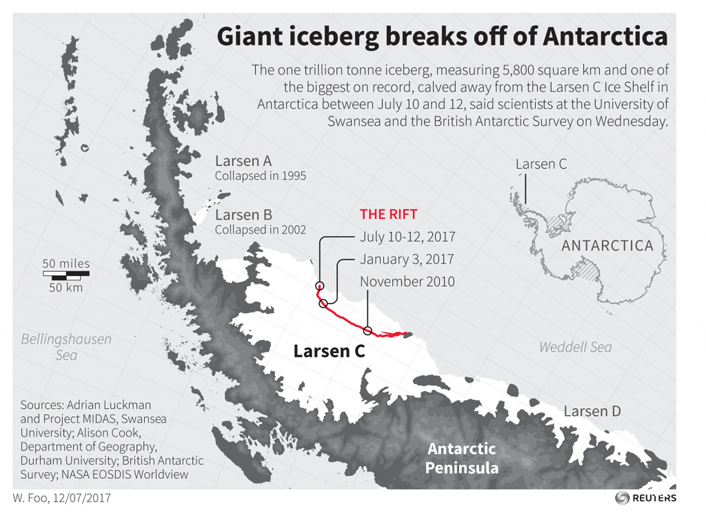
Science and Technology: ¶ “Powerful ‘Rivers In The Sky’ Could Cause Biggest Ice Shelf In Antarctic Peninsula To Collapse” • When the temperatures in Antarctica soared to 38 degrees Celsius above normal, an ice shelf the size of Los Angeles collapsed. A study showed that the event resulted from an atmospheric river. The Larsen C […]
April 15 Energy News — geoharvey
Today: Australia’s Defence Establishment joy – small nuclear reactors, (dud for energy, climate action) but great for war!

It’s not often that for Australia, the essential connection between ”peaceful” nuclear energy and nuclear weapons is set out so blatantly, as Defence Connect just did.. For many decades, we have been beguiled by the nuclear industry’s propaganda with the myth of the ”peaceful atom”.
And more lately. Australians have been sold, by ANSTO’s marketing men, the story of how ANSTO’s goal is the medical benefit to all Australians, from its nuclear reactor. What a load of poppycock that was!
We must be grateful to Defence Connect, for setting it out so clearly. Now that nuclear energy has turned out to be unaffordable and irrelevant to climate change, and now that cyclotrons have proved better that nuclear reactors, for producing medical radioisotopes. The truth is clearly out – the only use for the nuclear industry is warfare!
Defence expert spills the beans – small nuclear reactors for Australia are all about militarism, not ”peaceful energy”

A Milestones Approach to introduction of small nuclear reactors in Australia, Defence Connect 13 Apr 22, Navy veteran and defence industry analyst Christopher Skinner examines whether the International Atomic Energy Agency (IAEA) Milestones Approach should be adopted in Australia in light of the AUKUS nuclear-powered submarine program.
Last Friday the Australian Nuclear Association (ANA) ran a very successful conference in the Aerial Centre of the University of Technology Sydney (UTS) which brought together members and interested people face-to-face for the first time in more than two years.
Significant information and viewpoints emerged, and among these, perhaps the most positive was the clear message from international expert on nuclear legal and regulatory matters Helen Cook that the International Atomic Energy Agency Milestones Approach for introduction of nuclear power, as proven in international use by many countries, is able to be progressed even within all the legislative constraints at federal and state level within Australia.
Passage through the full three phases takes 10 to 15 years which sounds realistic for Australia.
The IAEA Milestone Approach is very well explained in webpages, documents and videos all readily available from IAEA in several languages. This approach has three phases and the first of these, called the pre-project activities phase covers all 19 of listed nuclear infrastructure issues that Australia will face both for the AUKUS submarine acquisition program and any future consideration of small modular (nuclear) reactors (SMR) which unsurprisingly are remarkedly similar to nuclear attack submarine (SSN) reactors except for some additional criteria for military use, such as shock proofing and platform motion in six dimensions.
Applying the Pareto Principle, 80 per cent of the criteria for SSNs also apply to SMRs so why not progress those 80 per cent to save time later.
The suggestion was made that the IAEA Milestones Approach should be adopted right now for the AUKUS program with the expectation that most of the work could be applied to a future SMR program if and when that is approved as an optional carbon-free energy source to be included in Australia’s energy roadmap………….
It is encouraging that Defence has announced 300 scholarships for graduate and technical education in nuclear science, technology and engineering, and some of the recipients were attending the conference.
The AUKUS SSN program will be the largest technically complex program ever undertaken in Australia and it behoves all scientific, technical and engineering institutions to contribute to its success. Similarly for the workforce development institutions to create the courses and contribute to the more general knowledge of nuclear science, technology and engineering.
However there is still a level of fear and apprehension in the community about anything nuclear as was shown in the recent University of Queensland study report What would be required for nuclear energy plants to be operating in Australia from the 2030’s?, a timeframe not dissimilar to the AUKUS submarine program. At the end of the study, the team concluded there were only two main issues to be addressed to build public trust through:
- more detailed explanations of the processes involved over the entire nuclear fuel cycle to ensure safety, and long-term sustainability of radioactive waste; and
- greater assurance of the risks involved and especially the measures to be taken to minimise the risk of accidents and to mitigate the effects of such accidents when they did occur.
As the ANA conference clearly showed, there are parallel development paths being considered for SMRs and nuclear submarines for Australia, and there are many points of common interest that will benefit from a complementary approach.
The encouraging news from the conference was that the Australian Nuclear Science and Technology Organisation (ANSTO) is working closely with Defence’s Nuclear Powered Submarine Task Force in several working groups that were recently announced in the AUKUS progress report. https://www.defenceconnect.com.au/key-enablers/9855-a-milestone-approach-to-introduction-of-small-nuclear-reactors-in-australia
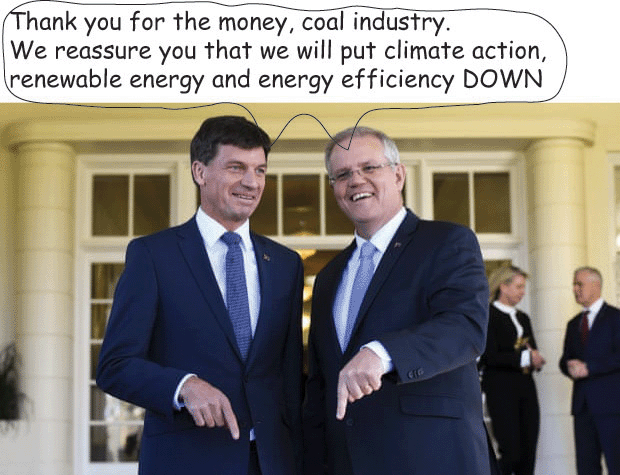
This should be a climate change election
Bob Douglas
Anthony Albanese and his colleagues could surely storm to victory if they enthusiastically acted on the arguments presented by climate experts. They would certainly attract the support of the millions of Australians who understandably fear the consequences of our current, disastrously inadequate approach to this topic.
Kyiv Independent news is anything but. It’s a mouthpiece for NATO-USA-Azov-nazi propaganda and unverified atrocity stories

NED Finances Key Ukrainian Propaganda Organ, the Kyiv Independent, Covert Action Magazine, By Evan Reif, April 13, 2022 One NED-sponsored journalist even fights with the neo-Nazi Azov Battalion and openly advocates for the commission of war crimes.
hroughout this war, one of the most prolific voices has been the Kyiv Independent. Through both its website and its Twitter account, it has been posting a nearly endless stream of unconfirmed and often fantastical pro-Ukrainian propaganda along with unverified, and often unattributed tales of the latest Russian atrocities.
Despite never offering even a scrap of evidence, however, it exploded from a few thousand followers before the war to several million now, with millions more following its individual reporters. It is routinely promoted by some of the biggest names in media, such as CNN and Fox News.
Let’s take a look at one tweet in particular, as an example of this. On March 30, the Kyiv Independent tweeted this:

We can see here a blending between truth and lies. While strikes would hit the warehouse, and the Red Cross would confirm that (and also, that it had been abandoned for more than two weeks by that time and all aid was distributed), no evidence was given that the strikes were Russian and the Red Cross did not comment on it.
The only source for the claim that the attacks were Russian is the Azov Battalion, putting the credibility of the statement into serious doubt. Kyiv Independent does not tell you this.
Despite this being posted with no evidence in the first place, the tweet was re-tweeted 12,000 times. How many people could this piece of literal Nazi propaganda have reached?
This outfit is well-funded and well-run. They can and do produce large amounts of good-quality English-language content very quickly. The market for this content, obviously, is not Ukrainians, but the West.
It is important to understand just how a propaganda network like this works. This blending of truth and lie is very common. The terrible realities of war mean that there is always plenty of information to report. Attacks and counterattacks. Bombs falling here. Shells there. Deaths and fires.
Much of this is probably accurate information. The sheer volume of it, combined with all the promotion, paid or otherwise, means that soon you will see Kyiv Independent reports on every screen, every day.
However, you only get one side of the issue. It is illegal to report on Ukrainian military casualties. This means that all you will see is dead Russians, burning Russian tanks and the wreckage of Russian aircraft. This creates an image of an invincible Ukrainian Army, killing Russians by the thousands with no losses of their own…………..
Meanwhile, every shell and bomb that hits a Ukrainian city is relentlessly covered. This means that the Russians are simultaneously portrayed as an omnipresent bogeyman, but also as incompetent cowards. Umberto Eco’s words about shifting rhetorical focus are relevant here.
Peppered in the endless streams of more mundane reporting, however, are the increasingly unhinged calls for escalation. Worse yet, at some points the mask comes off entirely, such as in this bizarre article which seems to both downplay nuclear war, and cast it as an acceptable price to pay for Ukrainian victory, all while accusing Putin of being the nuclear threat.
It is clear that the editorial position of this paper is that the war should escalate, more people should die and, if necessary, Russia, and therefore the Russian people, should be annihilated with nuclear weapons. More than that, their position seems to be that we cannot afford NOT to do so.
No one would win World War III. Not even the reporters at Kyiv Independent. No one except the arms dealers. This outfit has greatly outsized reach with which to spread these ideas…….
Foreign Funding
The paper was founded in 2021 after the staff of the Kyiv Post walked out en masse after the paper came under new ownership. While it is presented as a valiant attempt to retain editorial control, the seed funding the Post received from the Canadian Government and European Endowment for Democracy (the EU equivalent of the NED) tells another tale.
Indeed, if you look more closely at the staff, a pattern of collaboration with NATO regime-change operations becomes very clear.
Meet the team:………………………………………………………………….
In later articles, I will elaborate on this, but the network is quite extensive. As you can see from their documents, they are in up to their heads in NATO regime-change cash.…………………….
(Article also shows links of the journalists to USA militaristic think tanks, and to uKraine’s AZOV brigade and NAZI groups…..
In a new low even for him, journalist Illia Pomonarenko, on March 27, 2022, in response to widely circulated videos of Ukrainian fascists torturing and kneecapping Russian prisoners, Illia not only made no apologies for their crimes, but called for further atrocities……………………………………… https://covertactionmagazine.com/2022/04/13/ned-finances-key-ukrainian-propaganda-organ-the-kyiv-independent/#comment-4881
Glenn Greenwald: The Censorship Campaign Against Western Criticism of NATO’s Ukraine Policy Is Extreme

This war has been very good indeed for the permanent Washington political and media class. And although it was taboo for weeks to say so, it is now beyond clear that the only goal that the U.S. and its allies have when it comes to the war in Ukraine is to keep it dragging on for as long as possible.
One can spread as many lies and as much disinformation as one wants provided that it is designed to advance the NATO agenda in Ukraine

It is not a mystery who is benefiting from this orgy of military spending. On Tuesday, Reuters reported that “the Pentagon will host leaders from the top eight U.S. weapons manufacturers on Wednesday to discuss the industry’s capacity to meet Ukraine’s weapons needs if the war with Russia lasts years.” Among those participating in this meeting about the need to increase weapons manufacturing to feed the proxy war in Ukraine is Raytheon, which is fortunate to have retired General Lloyd Austin as Defense Secretary, a position to which he ascended from the Raytheon Board of Directors. It is virtually impossible to imagine an event more favorable to the weapons manufacturer industry than this war in Ukraine:
https://scheerpost.com/2022/04/13/glenn-greenwald-the-censorship-campaign-against-western-criticism-of-natos-ukraine-policy-is-extreme/by April 13, 2022 Preventing populations from asking who benefits from a protracted proxy war, and who pays the price, is paramount. A closed propaganda system achieves that. By Glenn Greenwald
If one wishes to be exposed to news, information or perspective that contravenes the prevailing US/NATO view on the war in Ukraine, a rigorous search is required. And there is no guarantee that search will succeed. That is because the state/corporate censorship regime that has been imposed in the West with regard to this war is stunningly aggressive, rapid and comprehensive.
On a virtually daily basis, any off-key news agency, independent platform or individual citizen is liable to be banished from the internet. In early March, barely a week after Russia’s invasion of Ukraine, the twenty-seven nation European Union — citing “disinformation” and “public order and security” — officially banned the Russian state-news outlets RT and Sputnik from being heard anywhere in Europe. In what Reuters called “an unprecedented move,” all television and online platforms were barred by force of law from airing content from those two outlets. Even prior to that censorship order from the state, Facebook and Google were already banning those outlets, and Twitter immediately announced they would as well, in compliance with the new EU law.
But what was “unprecedented” just six weeks ago has now become commonplace, even normalized. Any platform devoted to offering inconvenient-to-NATO news or alternative perspectives is guaranteed a very short lifespan. Less than two weeks after the EU’s decree, Google announced that it was voluntarily banning all Russian-affiliated media worldwide, meaning Americans and all other non-Europeans were now blocked from viewing those channels on YouTube if they wished to. As so often happens with Big Tech censorship, much of the pressure on Google to more aggressively censor content about the war in Ukraine came from its own workforce: “Workers across Google had been urging YouTube to take additional punitive measures against Russian channels.”
So prolific and fast-moving is this censorship regime that it is virtually impossible to count how many platforms, agencies and individuals have been banished for the crime of expressing views deemed “pro-Russian.” On Tuesday, Twitter, with no explanation as usual, suddenly banned one of the most informative, reliable and careful dissident accounts, named “Russians With Attitude.” Created in late 2020 by two English-speaking Russians, the account exploded in popularity since the start of the war, from roughly 20,000 followers before the invasion to more than 125,000 followers at the time Twitter banned it. An accompanying podcast with the same name also exploded in popularity and, at least as of now, can still be heard on Patreon.
What makes this outburst of Western censorship so notable — and what is at least partially driving it — is that there is a clear, demonstrable hunger in the West for news and information that is banished by Western news sources, ones which loyally and unquestioningly mimic claims from the U.S. government, NATO, and Ukrainian officials. As The Washington Post acknowledged when reporting Big Tech’s “unprecedented” banning of RT, Sputnik and other Russian sources of news: “In the first four days of Russia’s invasion of Ukraine, viewership of more than a dozen Russian state-backed propaganda channels on YouTube spiked to unusually high levels.”
Note that this censorship regime is completely one-sided and, as usual, entirely aligned with U.S. foreign policy. Western news outlets and social media platforms have been flooded with pro-Ukrainian propaganda and outright lies from the start of the war. A New York Times article from early March put it very delicately in its headline: “Fact and Mythmaking Blend in Ukraine’s Information War.” Axios was similarly understated in recognizing this fact:
Ukraine misinformation is spreading — and not just from Russia.” Members of the U.S. Congress have gleefully spread fabrications that went viral to millions of people, with no action from censorship-happy Silicon Valley corporations. That is not a surprise: all participants in war use disinformation and propaganda to manipulate public opinion in their favor, and that certainly includes all direct and proxy-war belligerents in the war in Ukraine.
Yet there is little to no censorship — either by Western states or by Silicon Valley monopolies — of pro-Ukrainian disinformation, propaganda and lies. The censorship goes only in one direction: to silence any voices deemed “pro-Russian,” regardless of whether they spread disinformation. The “Russians With Attitude” Twitter account became popular in part because they sometimes criticized Russia, in part because they were more careful with facts and viral claims that most U.S. corporate media outlets, and in part because there is such a paucity of outlets that are willing to offer any information that undercuts what the U.S. Government and NATO want you to believe about the war.
Their crime, like the crime of so many other banished accounts, was not disinformation but skepticism about the US/NATO propaganda campaign. Put another way, it is not “disinformation” but rather viewpoint-error that is targeted for silencing. One can spread as many lies and as much disinformation as one wants provided that it is designed to advance the NATO agenda in Ukraine (just as one is free to spread disinformation provided that its purpose is to strengthen the Democratic Party, which wields its majoritarian power in Washington to demand greater censorship and commands the support of most of Silicon Valley). But what one cannot do is question the NATO/Ukrainian propaganda framework without running a very substantial risk of banishment.
It is unsurprising that Silicon Valley monopolies exercise their censorship power in full alignment with the foreign policy interests of the U.S. Government. Many of the key tech monopolies — such as Google and Amazon — routinely seek and obtain highly lucrative contracts with the U.S. security state, including both the CIA and NSA. Their top executives enjoy very close relationships with top Democratic Party officials. And Congressional Democrats have repeatedly hauled tech executives before their various Committees to explicitly threaten them with legal and regulatory reprisals if they do not censor more in accordance with the policy goals and political interests of that party.
But one question lingers: why is there so much urgency about silencing the small pockets of dissenting voices about the war in Ukraine? This war has united the establishment wings of both parties and virtually the entire corporate media with a lockstep consensus not seen since the days and weeks after the 9/11 attack. One can count on both hands the number of prominent political and media figures who have been willing to dissent even minimally from that bipartisan Washington consensus — dissent that instantly provokes vilification in the form of attacks on one’s patriotism and loyalties. Why is there such fear of allowing these isolated and demonized voices to be heard at all?
The answer seems clear. The benefits from this war for multiple key Washington power centers cannot be overstated. The billions of dollars in aid and weapons being sent by the U.S. to Ukraine are flying so fast and with such seeming randomness that it is difficult to track. “Biden approves $350 million in military aid for Ukraine,” Reuters said on February 26; “Biden announces $800 million in military aid for Ukraine,” announced The New York Times on March 16; on March 30, NBC’s headline read: “Ukraine to receive additional $500 million in aid from U.S., Biden announces”; on Tuesday, Reuters announced: “U.S. to announce $750 million more in weapons for Ukraine, officials say.” By design, these gigantic numbers have long ago lost any meaning and provoke barely a peep of questioning let alone objection.
It is not a mystery who is benefiting from this orgy of military spending. On Tuesday, Reuters reported that “the Pentagon will host leaders from the top eight U.S. weapons manufacturers on Wednesday to discuss the industry’s capacity to meet Ukraine’s weapons needs if the war with Russia lasts years.” Among those participating in this meeting about the need to increase weapons manufacturing to feed the proxy war in Ukraine is Raytheon, which is fortunate to have retired General Lloyd Austin as Defense Secretary, a position to which he ascended from the Raytheon Board of Directors. It is virtually impossible to imagine an event more favorable to the weapons manufacturer industry than this war in Ukraine:
Demand for weapons has shot up after Russia’s invasion on Feb. 24 spurred U.S. and allied weapons transfers to Ukraine. Resupplying as well as planning for a longer war is expected to be discussed at the meeting, the sources told Reuters on condition of anonymity. . .
Resupplying as well as planning for a longer war is expected to be discussed at the meeting. . . . The White House said last week that it has provided more than $1.7 billion in security assistance to Ukraine since the invasion, including over 5,000 Javelins and more than 1,400 Stingers.
This permanent power faction is far from the only one to be reaping benefits from the war in Ukraine and to have its fortunes depend upon prolonging the war as long as possible. The union of the U.S. security state, Democratic Party neocons, and their media allies has not been riding this high since the glory days of 2002. One of MSNBC’s most vocal DNC boosters, Chris Hayes, gushed that the war in Ukraine has revitalized faith and trust in the CIA and intelligence community more than any event in recent memory — deservedly so, he said: “The last few weeks have been like the Iraq War in reverse for US intelligence.” One can barely read a mainstream newspaper or watch a corporate news outlet without seeing the nation’s most bloodthirsty warmongering band of neocons — David Frum, Bill Kristol, Liz Cheney, Wesley Clark, Anne Applebaum, Adam Kinzinger — being celebrated as wise experts and heroic warriors for freedom.
This war has been very good indeed for the permanent Washington political and media class. And although it was taboo for weeks to say so, it is now beyond clear that the only goal that the U.S. and its allies have when it comes to the war in Ukraine is to keep it dragging on for as long as possible. Not only are there no serious American diplomatic efforts to end the war, but the goal is to ensure that does not happen. They are now saying that explicitly, and it is not hard to understand why.
The benefits from endless quagmire in Ukraine are as immense as they are obvious. The military budget skyrockets. Punishment is imposed on the arch-nemesis of the Democratic Party — Russia and Putin — while they are bogged down in a war from which Ukrainians suffer most. The citizenry unites behind their leaders and is distracted
from their collective deprivations. The emotions provoked by the horrors of this war — unprecedentedly shown to the public by the Western media which typically ignores carnage and victims of wars waged by Western countries and their allies — is a very potent tool to maintain unity and demonize domestic adversaries. The pundit class finds strength, purpose and resolve, able to feign a Churchillian posture without any of the risks. Prior sins and crimes of American elites are absolved and forgotten at the altar of maximalist claims about Putin’s unprecedented evils — just as they were absolved and forgotten through the script which maintained that the U.S. had never encountered a threat as grave or malignant as Trump. After all, if Putin and Trump are Hitler or even worse, then anyone who opposes them is heroic and noble regardless of all their prior malignant acts.
And that is why even small pockets of dissent cannot be tolerated. It is vital that Americans and Europeans remain entrapped inside a completely closed system of propaganda about the war, just as Russians are kept entrapped inside their own. Keeping these populations united in support of fighting a proxy war against Russia is far too valuable on too many levels to permit any questioning or alternative perspectives. Preventing people from asking who this war benefits, and who is paying the price for it, is paramount.
Big Tech has long proven to be a reliable instrument of censorship and dissent-quashing for the U.S. Government (much to the chagrin of corporate media employees, Russian outlets still remain available on free speech alternatives such as Rumble and Telegram, which is why so much ire is now directed at them). A rapid series of ostensible “crises” — Russiagate, 1/6, the COVID pandemic — were all exploited to condition Westerners to believe that censorship was not only justified but necessary for their own good. In the West, censorship now provokes not anger but gratitude. All of that laid the perfect foundation for this new escalation of a censorship regime in which dissent, on a virtually daily basis, is increasingly more difficult to locate.
No matter one’s views on Russia, Ukraine, the U.S. and the war, it should be deeply alarming to watch such a concerted, united campaign on the part of the most powerful public and private entities to stomp out any and all dissent, while so aggressively demonizing what little manages to slip by. No matter how smart or critically minded or sophisticated we fancy ourselves to be, none of us is immune to official propaganda campaigns, studied and perfected over decades. Nor is any of us immune to the pressures of group-think and herd behavior and hive minds: these are embedded in our psyches and thus easily exploitable.
That is precisely the objective of restricting and closing the information system available to us. It makes it extremely difficult to remain skeptical or critical of the bombardment of approved messaging we receive every day from every direction in every form. And that is precisely the reason to oppose such censorship regimes. An opinion or belief adopted due to propaganda and reflex rather than autonomy and critical evaluation has no value.
Nuclear and gas in EU taxonomy slammed as ‘greenwashing’,
- The controversial decision to include gas and nuclear in the EU’s taxonomy was the outcome of a lengthy and highly-politicised process EU Observer By ELENA SÁNCHEZ NICOLÁS BRUSSELS, 14 Apr 22, Russia’s invasion of Ukraine, and EU plans to reduce its reliance on Russian fossil-fuel imports, have raised more questions over the fate of the European Commission’s controversial taxonomy proposal.
EU member states were already split over the role of gas and nuclear in the energy transition and, thus, in green finance — even before the war in Ukraine……….
Critics say the proposal undermines the credibility of the EU taxonomy as a science-based investment tool, gives credence to claims of greenwashing, creates confusion in financial markets, and will cause major delays in the much-needed transition away from fossil fuels.
The taxonomy does not ban outright investment in activities not included in the guidelines — but it is designed to steer investments away from companies and investors which falsely claim to be environmentally sustainable.
‘Gold standard’ gone
Experts have warned that including natural gas (with a higher threshold than the one recommended by experts) and nuclear power in the EU’s sustainable finance rules may lead to further greenwashing in financial markets.
University College Dublin professor Andreas Hoepner, who has been one of those leading academic opposition on the taxonomy, describes it as probably “the biggest greenwash ever.”
The proposal, he said, ignores rigorous scientific analysis and weakens the credibility of the whole EU sustainable finance agenda. And it may even lead to an increase in emissions incompatible with the Fit-for-55 package and the EU’s climate targets.
The rules were meant to create common standards for classifying taxonomy-aligned economic activities as environmentally sustainable.
But Laurence Tubiana, one of the key architects of the 2015 Paris Agreement, has warned that investors may go elsewhere to seek more “more reliable science-based criteria” to classify their investments.
“The whole idea of creating a ‘gold standard’ is gone” with gas and nuclear power included in the EU taxonomy, Dutch MEP Bas Eickhout told EUobserver in an interview.
With the credibility of the whole taxonomy hanging by a thread, Eickhout warned of the impact on green bonds, given that funds raised from these bonds could be used for gas and nuclear projects. The transition towards net-zero emissions will require massive investment, but not enough money is currently going into projects delivering climate neutrality, he said.
“If we now lower the standard in order to mobilise the money, then we are still fooling ourselves,” he said, because the taxonomy must be “a credible standard” to fulfil its goal…………………..
“The EU should rapidly transition away from fossil fuels, fossil-fuel investments and subsidies to deliver climate stability,” added Ursula Woodburn from the UK’s cross-sector group of business leaders, CLG Europe,
The decision to include gas and nuclear in the taxonomy was slammed as the outcome of a both lengthy and highly-politicised process.
But the European Commission has also come under fire for looking at this tool purely through a domestic prism — despite its impact beyond EU borders. https://euobserver.com/war-peace-green-economy/154585