Climate projections paint a grim future for WA if emissions not cut
Climate projections paint a grim future for WA if emissions not cutWA faces a grim future of more droughts and floods if climate change continues, but the state government is only beginning to plan to contribute towards global carbon emissions that could minimise the damage.
Australia’s biggest wind and battery project lands equity and turbine supply deals — RenewEconomy

Golden Plains wind farm, and a big battery, lands equity deal to finance the project, and a turbine supply and construction deal with Vestas. The post Australia’s biggest wind and battery project lands equity and turbine supply deals appeared first on RenewEconomy.
Australia’s biggest wind and battery project lands equity and turbine supply deals — RenewEconomy
Morrison boosts “Making Positive Energy” pre-election ad splurge to almost $31 million — RenewEconomy

Morrison government more than doubles its spending on pre-election advertising to convince voters it cares about the climate and clean energy. The post Morrison boosts “Making Positive Energy” pre-election ad splurge to almost $31 million appeared first on RenewEconomy.
Morrison boosts “Making Positive Energy” pre-election ad splurge to almost $31 million — RenewEconomy
“Stop pretending:” Governments urged to come clean on early coal closures — RenewEconomy

With more coal plants set to close early, the clean energy sector has called on governments to accept the reality of the end of coal. The post “Stop pretending:” Governments urged to come clean on early coal closures appeared first on RenewEconomy.
“Stop pretending:” Governments urged to come clean on early coal closures — RenewEconomy
Setting the record straight on carbon offsets — RenewEconomy

How can an organisation tell a good quality carbon offset from a bad one? When should offsetting be used? And what’s the best strategical approach? The post Setting the record straight on carbon offsets appeared first on RenewEconomy.
Setting the record straight on carbon offsets — RenewEconomy
Russian Congress of Intellectuals: An Open Letter to the Russian Leadership
Russian Congress of Intellectuals..An Open Letter to the Russian Leadership. https://johnmenadue.com/russian-congress-of-intellectuals-an-open-letter-to-the-russian-leadership-february-4-2022/ February 4, 2022, By John Menadue, (letter, signed by a lage number of individuals)
Our position is simple: Russia does not need a war with Ukraine and the West. Such a war is devoid of legitimacy and has no moral basis.
There is an ever-increasing flow of alarming news about a possible Russian invasion of Ukraine. Reports are emerging about stepped-up recruitment of mercenaries within Russia and the transfer of fuel and military equipment to Ukraine’s Donetsk and Luhansk regions. In response, Ukraine is arming itself and NATO is sending additional forces into Eastern Europe. The tension is not abating, but rather mounting.
Russian citizens are becoming de facto hostages of a reckless adventurism that has come to typify Russia’s foreign policy. Not only must Russians live with the uncertainty of whether a large-scale war will begin, but they are also experiencing a sharp rise in prices and a devaluation of their currency. Is this the sort of policy Russians need? Do they want war—and are they ready to bear the brunt of it? Have they authorized the authorities to play with their lives in this way?
But no one asks Russian citizens for their opinion. There is no public debate. State television presents only a single viewpoint—that of the warmongers. Direct military threats, aggression and hatred are aimed at Ukraine, the US, and the West. But the most dangerous thing is that the war is being depicted not only as permissible, but as inevitable. This is an attempt to deceive the population, to impose upon them the idea of waging a crusade against the West, rather than investing in the country’s development and improving living standards. The cost of the conflict is never discussed, but the price—the huge, bloody price—will be paid by the common Russian people.
We, responsible citizens and patriots of Russia, appeal to Russia’s political leadership. We openly and publicly call out the Party of War that has been formed within the government.
We represent the viewpoint of those in Russian society who reject war, who consider unlawful the use of military threats and the deployment of a blackmailing style in foreign policy.
We reject war, whereas you, the Party of War, consider it acceptable. We stand for peace and prosperity for all Russian citizens, whereas you put our lives on the line for the sake of political games. You deceive and manipulate people, whereas we tell them the truth. You do not speak in the name of the Russian population—we do. For decades, the Russian people, who lost millions of lives in past wars, have lived by the saying: “if only there were no war.” Have you forgotten this?
Our position is quite simple. Russia does not need a war with Ukraine and the West. No one is threatening us, no one is attacking us. Policies based on the idea of such a war are immoral and irresponsible and must not be conducted in the name of the Russian people. Such a war is devoid of legitimacy and has no moral basis. Russian diplomacy should take no other position than a categorical rejection of such a war.
Not only does such a war not reflect Russia’s interests, but it also threatens the country’s very existence. The senseless actions of the country’s political leadership, which is pushing us in this direction, will inevitably lead to a mass anti-war movement in Russia. Each of us will naturally play a part in it.
We will do everything in our power to prevent this war, and if it begins, to stop it.
Signed,
Continue readingPutin reminds everyone that Ukraine joining NATO could lead to nuclear war
As it has amassed military forces on the borders of Ukraine, Russia has proposed two draft treaties, one with NATO and one with the United States, that seek a variety of security guarantees, including one that would prohibit further eastward expansion of NATO and therefore not allow Ukraine to join. The United States and its NATO allies have rebuffed that suggestion even as talks on de-escalating tensions around Ukraine have continued.

Putin reminds everyone that Ukraine joining NATO could lead to nuclear war https://thebulletin.org/2022/02/putin-says-ukraine-membership-in-nato-would-make-nuclear-war-more-likely/
By Sarah Starkey | February 11, 2022 Three days ago, in a jarring answer to a question from the media, Russian President Vladimir Putin said allowing Ukraine to join NATO would increase the prospects of a Russia-NATO conflict that could turn nuclear. Putin’s assertion, made in the context of a complicated hypothetical about an unlikely Ukrainian attempt to take
Crimea back from Russia, came during a joint press conference with the President of France, Emmanuel Macron.
With over 100,000 Russian troops amassed at Ukraine’s border, the conference was originally called to discuss ways to de-escalate the situation. However, about 45 minutes into the meeting, Putin made it clear there were some lines that could not be crossed without severe and possibly even nuclear consequences.
“[T]here will be no winners,” he said, describing a hypothetical future in which Ukraine had joined NATO and then attempted to invade Russian-occupied Crimea, “and you will find yourself drawn into this conflict against your will. You will be fulfilling Article 5 in a heartbeat, even before you know it.”
Article 5 of NATO’s founding treaty says that any attack on a NATO member is an attack on all members. This principle of collective defense, NATO says, is at the heart of its treaty. The only time the article has been invoked was on September 11, 2001, when terrorists attacked the United States.
“Do you realize that if Ukraine joins NATO and decides to take Crimea back through military means, the European countries will automatically get drawn into a military conflict with Russia?” Putin said. “Of course, NATO’s united potential and that of Russia are incomparable.”
Though the Kremlin’s English-language transcript has Putin using, somewhat ambiguously, the term “incomparable,” he also asserted that Russia “is one of the world’s leading nuclear powers and is superior to many of those countries in terms of the number of modern nuclear force components.”
And Putin is correct. In early 2021, Nuclear Notebook authors Hans M. Kristensen and Matt Korda estimated that Russia has a stockpile of nearly 4,500 nuclear warheads, which is more than enough weapons to obliterate countless cities and military facilities, setting massive fires, the smoke from which would send the world into nuclear winter. The United States has about 3,800 nuclear warheads and another 1,750 retired warheads awaiting dismantlement, a force that also has civilization-ending capabilities. The nuclear arsenals of the United Kingdom and France are small by comparison but still powerful enough to cause mass death and environmental damage.
As it has amassed military forces on the borders of Ukraine, Russia has proposed two draft treaties, one with NATO and one with the United States, that seek a variety of security guarantees, including one that would prohibit further eastward expansion of NATO and therefore not allow Ukraine to join. The United States and its NATO allies have rebuffed that suggestion even as talks on de-escalating tensions around Ukraine have continued.
Philippines: the case against coal, other fossil fuels and nuclear power
Building a nuclear power plant will only further burden Filipino consumers economically and expose the country and citizens to more health hazards, contamination and disaster risks.Nuclear energy is the most expensive and most dangerous source of electricity. Contrary to others’ expectations, nuclear will actually cost us so much: fuel, expertise and technologies all have to be imported overseas. That’s aside from the huge costs of dealing with the safety risks and disasters associated with nuclear power plants.
By Ludwig Federigan, Manila Times, February 12, 2022, The author is the executive director of the Young Environmental Forum and a nonresident fellow of the Stratbase ADR Institute. He ranks 236th among global Sustainable Development Goals (SDG) influencers, according to the Taking Action Online. You can email him at ludwig.federigan@gmail.com. Follow him on Twitter at @WiggyFederigan
GROWTH is difficult to imagine without energy and energy that does not take the needs of future generations into consideration can only destroy and not build………The Philippines has enough renewable resources to meet its power needs but some are unevenly distributed.
Some locations may not be as well-endowed. Geographic features, such as mountains, may cause clouds to appear more often and block sunlight. Others may disrupt wind flows, making it harder to generate electricity from the wind.The solution in such cases is to import power from nearby areas better endowed with renewable sources.
Given that we can be self-sufficient in renewable electricity nationwide, less endowed areas should not have to look too far to source electricity. This is no different from what we do today when we construct hundred-megawatt and gigawatt-level power plants — these are so widely-spaced apart that they have to export their output to distant locations, too.
Delivering electricity to localities in need requires transmission and distribution lines. Thus, even where renewables make it possible for more households and communities to consume electricity at the point it is generated, we still need transmission infrastructure to support less endowed localities.The importance given to baseload plants — plants that provide a steady output 24/7 — is an outdated idea. It was useful in the past when renewables were very expensive but is less so today in an era of cheap renewables. It is possible to cope with the variable output of solar panels and wind turbines in the same way that banks cope with the inherent unpredictability of deposits and withdrawals.
The claim that renewable electricity is too expensive to compete with fossil fuels might have been valid a few years ago. It is not so true today. Various case studies have already shown how rooftop solar is cheaper than grid electricity in most parts of the country. Of course, if consumers still think otherwise, then the market for renewables will remain sluggish.
What is needed at this point is for the policymakers, academics, media and the public to be better informed about the state of prices. This is something that can be done by suppliers and the government. Unfortunately, too many policymakers, academics and media people still think that “solar is expensive.”
………………The government must do more to support renewable energy (RE). When people say RE is expensive, it’s in large part because it takes so many permits and many years to develop a project in the country. Many of the steps are unnecessary and sometimes are subject to discretion and abuse of public officials. If we cut this red tape, it will decrease the cost and risks of development, allow more local and foreign companies to compete, and reduce costs for all consumers.
On nuclear power
Building a nuclear power plant will only further burden Filipino consumers economically and expose the country and citizens to more health hazards, contamination and disaster risks.Nuclear energy is the most expensive and most dangerous source of electricity. Contrary to others’ expectations, nuclear will actually cost us so much: fuel, expertise and technologies all have to be imported overseas. That’s aside from the huge costs of dealing with the safety risks and disasters associated with nuclear power plants.
The uranium needed to fuel a nuclear facility will have to be imported as deposits do not exist in the country. Not only will this reduce the country’s energy independence, it will also render the price we pay for power dependent on changes in world uranium prices. Transportation of the fuel is also another cost that has to be shouldered. The costs of building, operating and eventually decommissioning nuclear plants are also much more higher than renewables.Nuclear energy is not clean or truly renewable. While atomic energy can be regenerated, substances such as uranium are finite resources. These materials are also mined, just like fossil fuels, and need further processing before they are usable. The processing also poses risks for the environment and is likely to contribute to greenhouse gas emissions rather than mitigate them, as is often claimed by nuclear power proponents…………..
The risk and costs of environmental destruction and the impacts on health and livelihoods outweigh any short-term perceived benefits from nuclear. The government must instead focus on achieving ambitious RE targets and aim for 100-percent RE power generation. We should stop wasting time, money and effort on pursuing nuclear energy, which is a losing proposition for consumers, the economy, and our health and safety. https://www.manilatimes.net/2022/02/12/business/green-industries/the-case-against-coal-other-fossil-fuels-and-nuclear-power/1832623.
Space rocket with NASA satellites launched, but now lost in space
Astra Space launches from Space Coast, but rocket last seen spinning in space
By RICHARD TRIBOU. ORLANDO SENTINEL| FEB 10, 2022
Astra Space successfully launched a rocket Thursday for the first time from the Space Coast, but the mission was a failure as the upper stage was last seen spinning in space with its ultimate fate unclear……….
The plan was to deploy four satellites for NASA a little more than eight minutes after liftoff, but cameras on board ahead of the deployment showed the second stage tumbling in space.
Speed and altitude data on the stream showed the rocket hit a maximum velocity of nearly 9,700 mph and continued to climb in altitude even after the malfunction, moving from 85 miles altitude when the fairing separated and last seen at around 140 miles altitude and climbing when data cut off on the video.
…………………… This mission, which was the culmination of $3.9 million awarded to the company as part of NASA’s Venture Class Launch Services Demonstration 2 contract was dubbed ELaNa 41, as in the Educational Launch of Nanosatellites.
The four CubeSats lost in space came from the University of Alabama (BAMA-1), New Mexico State University (INCA), the University of California at Berkeley (QubeSat) and NASA’s Johnson Space Center (R5-S1).
The company had looked to complete the first of what is planned to be many launches from Florida. Last week it became the first company to get Federal Aviation Administration approval for a new type of license that combines what previously required multiple licenses. https://www.orlandosentinel.com/space/os-bz-astra-space-launch-attempt-thursday-20220210-n7bxzytogrd2flsq7j4ajm6xqi-story.html
February 11 Energy News — geoharvey

Opinion: ¶ “Gas Crunch Causes Electricity Crisis Despite Record Cheap Clean Energy. Time To Create A Green Energy Pool?” • In the UK and similar nations, the gas crisis is pushing up electricity prices because the wholesale electricity market uses the most expensive power to set the price. Renewables keep getting cheaper, and it’s time […]
February 11 Energy News — geoharvey
USA does not have to march into war with Russia over Ukraine. It can choose to keep to the Minsk-Normandy process

The current crisis should be a wake-up call to all involved that the Minsk-Normandy process remains the only viable framework for a peaceful resolution in Ukraine. It deserves full international support, including from U.S. Members of Congress, especially in light of broken promises on NATO expansion, the U.S. role in the 2014 coup, and now the panic over fears of a Russian invasion that Ukrainian officials say are overblown.
Memo to Congress: Diplomacy for Ukraine Is Spelled M-I-N-S-K
Ukrainians of all ethnicities deserve genuine support to resolve their differences and find a way to live together in one country—or to separate peacefully.
https://portside.org/2022-02-08/memo-congress-diplomacy-ukraine-spelled-m-i-n-s-k Medea Benjamin, Nicolas J.S. Davies COMMON DREAMS
While the Biden administration is sending more troops and weapons to inflame the Ukraine conflict and Congress is pouring more fuel on the fire, the American people are on a totally different track.
A December 2021 poll found that a plurality of Americans in both political parties prefer to resolve differences over Ukraine through diplomacy. Another December poll found that a plurality of Americans (48 percent) would oppose going to war with Russia should it invade Ukraine, with only 27 percent favoring U.S. military involvement.
The conservative Koch Institute, which commissioned that poll, concluded that “the United States has no vital interests at stake in Ukraine and continuing to take actions that increase the risk of a confrontation with nuclear-armed Russia is therefore not necessary for our security. After more than two decades of endless war abroad, it is not surprising there is wariness among the American people for yet another war that wouldn’t make us safer or more prosperous.”
The most anti-war popular voice on the right is Fox News host Tucker Carlson, who has been lashing out against the hawks in both parties, as have other anti-interventionist libertarians.
On the left, the anti-war sentiment was in full force on February 5, when over 75 protests took place from Maine to Alaska. The protesters, including union activists, environmentalists, healthcare workers and students, denounced pouring even more money into the military when we have so many burning needs at home.
You would think Congress would be echoing the public sentiment that a war with Russia is not in our national interest. Instead, taking our nation to war and supporting the gargantuan military budget seem to be the only issues that both parties agree on.
Most Republicans in Congress are criticizing Biden for not being tough enough (or for focusing on Russia instead of China) and most Democrats are afraid to oppose a Democratic president or be smeared as Putin apologists (remember, Democrats spent four years under Trump demonizing Russia).
Both parties have bills calling for draconian sanctions on Russia and expedited “lethal aid” to Ukraine. The Republicans are advocating for $450 million in new military shipments; the Democrats are one-upping them with a price tag of $500 million.
Progressive Caucus leaders Pramila Jayapal and Barbara Lee have called for negotiations and de-escalation. But others in the Caucus–such as Reps. David Cicilline and Andy Levin–are co-sponsors of the dreadful anti-Russia bill, and Speaker Pelosi is fast-tracking the bill to expedite weapons shipments to Ukraine.
But sending more weapons and imposing heavy-handed sanctions can only ratchet up the resurgent U.S. Cold War on Russia, with all its attendant costs to American society: lavish military spending displacing desperately needed social spending; geopolitical divisions undermining international cooperation for a better future; and, not least, increased risks of a nuclear war that could end life on Earth as we know it.
For those looking for real solutions, we have good news.
Negotiations regarding Ukraine are not limited to President Biden and Secretary Blinken’s failed efforts to browbeat the Russians. There is another already existing diplomatic track for peace in Ukraine, a well-established process called the Minsk Protocol, led by France and Germany and supervised by the Organization for Security and Cooperation in Europe (OSCE).
The civil war in Eastern Ukraine broke out in early 2014, after the people of Donetsk and Luhansk provinces unilaterally declared independence from Ukraine as the Donetsk (DPR) and Luhansk (LPR) People’s Republics, in response to the U.S.-backed coup in Kiev in February 2014. The post-coup government formed new “National Guard” units to assault the breakaway region, but the separatists fought back and held their territory, with some covert support from Russia. Diplomatic efforts were launched to resolve the conflict.
The original Minsk Protocol was signed by the “Trilateral Contact Group on Ukraine” (Russia, Ukraine and the OSCE) in September 2014. It reduced the violence, but failed to end the war. France, Germany, Russia and Ukraine also held a meeting in Normandy in June 2014 and this group became known as the “Normandy Contact Group” or the “Normandy Format.”
All these parties continued to meet and negotiate, together with the leaders of the self-declared Donetsk (DPR) and Luhansk (LPR) People’s Republics in Eastern Ukraine, and they eventually signed the Minsk II agreement on February 12, 2015. The terms were similar to the original Minsk Protocol, but more detailed and with more buy-in from the DPR and LPR.
The Minsk II agreement was unanimously approved by the U.N. Security Council in Resolution 2202 on February 17, 2015. The United States voted in favor of the resolution, and 57 Americans are currently serving as ceasefire monitors with the OSCE in Ukraine.
The key elements of the 2015 Minsk II Agreement were:
- an immediate bilateral ceasefire between Ukrainian government forces and DPR and LPR forces;
- the withdrawal of heavy weapons from a 30-kilometer-wide buffer zone along the line of control between government and separatist forces;
- elections in the secessionist Donetsk (DPR) and Luhansk (LPR) People’s Republics, to be monitored by the OSCE; and
- constitutional reforms to grant greater autonomy to the separatist-held areas within a reunified but less centralized Ukraine.
The ceasefire and buffer zone have held well enough for seven years to prevent a return to full-scale civil war, but organizing elections in Donbas that both sides will recognize has proved more difficult.
Continue readingUkraine Special Australia

Well, here we are again. Nothing changes – or does it?
Australian troops dutifuly went off to kill and be killed in Vietnam
Australian troops dutifully went off to kill and be killed in Iraq
Australian troops dutifully went of to kill and be killed in Afghanistan.
But now – it’s a new game. Now only the Poles, French, German, British etc troops go to Ukraine to fight Russia. All that Australia has to do, is to buy heaps of weaponry fromUSA companies and say bwedy America. Great that yer ready to have a war with Russia, and sell lots of weaponry to Ukraine and everybody else you can ‘
Antony Blinken deigned to actually visit this colony, and tell us in suave, silken, and smarmy words that Australia is privileged to be on the side of USA and the puppet organisation NATO, in this next adventure, so much safer – all about lucrative (for USA) weapons sales rather than troops.

Peter Dutton is ecstatic about a the idea of war. Ukraine now, China next.
Trouble is – things could so easily go nuclear, – whether by intention, or by accident, nuclear weapons might just go off. And even if they don’t – ther are Ukraine’s 15 old nuclear reactors – such a dangerous target , again whether intionally or by accident. It’s a different world from the days of Vietnam, Iraq and Afghanistan.
South Australian Labor supported Greens. motion opposing SA as nuclear waste dump, but Liberals SA Best and Advance SA blocked it.

10 Feb 22, Liberals and crossbench block Greens motion calling for SA to reject Federal Government’s attempt to turn the state into nuclear waste dumping ground
Today, the Liberals along with SA Best and Advance SA voted against a Greens motion condemning the decision by the federal government late last year to dump nuclear waste in Kimba.
“South Australians could not have been clearer. We do not want dangerous radioactive waste being dumped in farming country against the wishes of the Barngarla – the area’s Traditional Owners,” said SA Greens spokesperson for Energy, Robert Simms MLC.
“It is tremendously disappointing that the Liberals, SA Best, and Advance SA have ignored the pleas of the Traditional Owners, and instead given their tick of approval to put a radioactive waste dump in the heart of our food bowl that puts at risk our clean, green reputation and our state’s key grain export industry.
“A wide-ranging parliamentary inquiry must occur to not only consider the implications of the federal government’s decision to dump radioactive waste on Kimba on SA’s Eyre Peninsula, but also hear the concerns of the Barngarla People – and no further action should be taken until that process has concluded, “ Mr Simms said.
The motion moved today by Robert Simms MLC, was only supported by the Greens and SA Labor.
UK’s nuclear submarine graveyard- but one is to be recycled – perhaps for Australia?
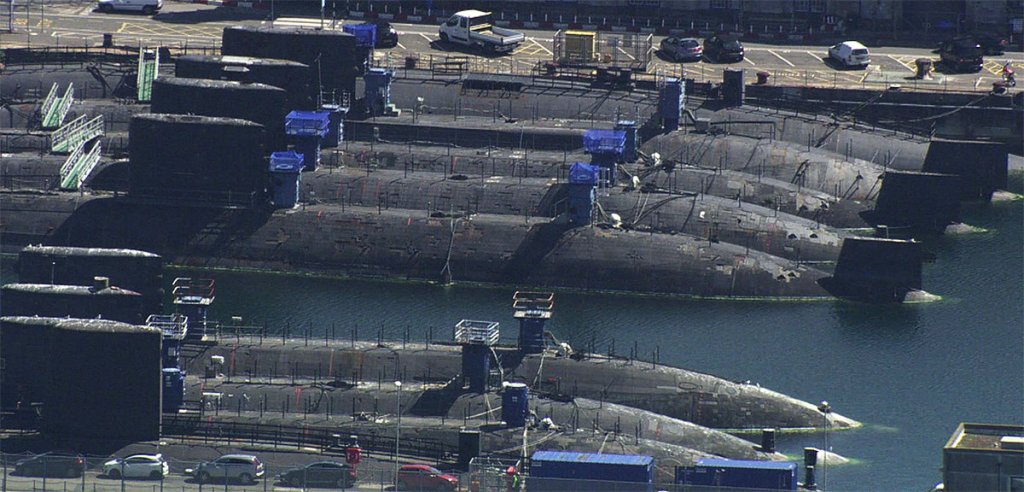
The first vessel that’s going to be recycled from the so-called ‘submarine graveyard’ in Devonport has been named – but there’s no word yet on when it’ll actually happen. The last one was decommissioned in 1980 – but thirteen of them remain tied up there. HMS Valiant will be the first to be recycled – but no date’s been set for that yet. Planet Radio 9th Feb 2022
Planet Radio 9th Feb 2022
https://planetradio.co.uk/greatest-hits/devon/news/nuclear-submarine-recycled-devonport/
Comfortably numb — Beyond Nuclear International

When we will wake up to the real threat we face?
Comfortably numb — Beyond Nuclear International “Hello? (Hello? Hello? Hello?)
“Is there anybody in there?
Just nod if you can hear me
Is there anyone home?”
Those echoing opening lines of the Pink Floyd song, “Comfortably Numb” keep wafting through my psyche as I watch the US, Russia, and China, amass ever more sophisticated, deadly and downright evil nuclear weapons capabilities. What are they thinking?
Meanwhile, tensions continue to mount at the Ukraine-Russia border, as Putin moves more armaments and fleets around and the US flies its elite 82nd Airborne Division into standby mode in Poland, part of 3,000 US troops now deployed to the region.
All of this has sent US nuclear hawks, sounding more and more like General ‘Buck’ Turgidson from Dr. Strangelove, chafing at the bit to justify the further escalation and acceleration of the so-called modernization of the entire US nuclear weapons complex.
Meanwhile, there is even speculation that maybe Ukraine should not have given up its nuclear weapons at the end of the Cold War as the Soviet Union collapsed. The Russian seizure of Crimea and the seemingly endless conflict on Ukraine’s eastern border has led some to urge a Ukraine nuclear rearmament.
A nuclear-armed Ukraine, goes the logic, would allow it to “deter” a Russian invasion or, at least, any possible use of nuclear weapons by Russia in a grab for Ukraine.
But this thinking further exposes the hollow argument for deterrence. Nuclear weapons in Ukraine would have only one outcome — they would make the prospect of nuclear weapons being used in any current conflict more likely. (Then, of course, there is the ever-present danger of Ukraine’s 15 operating nuclear reactors — addressed in a January 30, 2022 article on these pages.)
The prospect that even a conventional conflict could break out in Ukraine is already horrific enough. But even the remotest possibility that this could progress to the use of nuclear weapons by any party, is positively nightmarish.
If you don’t value sleep, then Ira Helfand’s article in The Nation lays all of this out in chilling detail. It’s like reading the script to an apocalyptical dystopian horror movie (the kind that sadly seems to be all too popular these days).
Helfand’s article, however, is the exception to most of the coverage, which discusses the prospect of accidental or deliberate nuclear war over the Ukraine situation in a mind-bogglingly impassive way, “comfortably numb” to the very real, horrific, humanitarian consequences were this actually to happen.
It’s as if, as IPPNW’s Chuck Johnson said to me during a recent phone call, “it’s all perfectly normal”.
But to most of us regular folk, calmly anticipating the possibility of a nuclear war isn’t normal. It’s the definition of insanity. And it’s exasperating. Hello? Can you hear us? We have a climate crisis bearing down on us. A global emergency of, yes, apocalyptic proportions.
It goes without saying that, as a species, we need to stop directing all our energies towards our collective extinction, both through our failure to act adequately and on time on climate, and by unnecessarily rattling nuclear sabres.
It goes without saying, but it needs saying. Again and again and really loudly. By all of us. Just nod if you can hear me.
Linda Pentz Gunter is the international specialist at Beyond Nuclear and writes for and curates Beyond Nuclear International.
1 This month
17 October, Free Public Talk on Nuclear Issues in South Australia
David Noonan will speak on public interest concerns over the new Roxby Downs Indenture Act 2026 on BHP copper-uranium mining and ore processing in SA, and on how AUKUS may face SA with a High-Level nuclear waste agenda.
Dr Jim Green will discuss international developments in the field of nuclear power including ‘small modular reactors’ and Generation 4 ‘advanced’ nuclear reactor concepts.


Help Aunty Sue Protect Her Land and Sacred Sites From Destructive Rocket Testing.
.

Australians deserve the truth
about
AUKUS – https://aukuspublicinquiry.com/

PETITION – To: Prime Minister Anthony Albanese and the Australian Labor Government

of the week – Australians for War Powers Reform (AWPR)
To see nuclear-related stories in greater depth and intensity

