How to mix sanctions and diplomacy to avert disaster in Ukraine. Source: Bulletin of the Atomic Scientists — Who Watches the Watchers?

At doom’s doorstep: It is 100 seconds to midnight How to mix sanctions and diplomacy to avert disaster in Ukraine By David Cortright, George A. Lopez | February 1, 2022 Exercise with Teikovsky missile unit. Credit: Ministry of Defence of the Russian Federation. CC BY 4.0. After a month of intensive political work at home […]
How to mix sanctions and diplomacy to avert disaster in Ukraine. Source: Bulletin of the Atomic Scientists — Who Watches the Watchers?
February 4 Energy News — geoharvey

Opinion: ¶ “Green Olympics: Test Case For China And Carbon Neutrality” • China can use the winter Olympics as a way to show the many millions of people who will watch the games that it is serious about achieving its ambitious climate goals. China has nearly half of all the installed capacity of renewable energy […]
February 4 Energy News — geoharvey
Ranger uranium mine rehabilitation costs could blow out to $2.2 billion, Energy Resources tells ASX
Ranger uranium mine rehabilitation costs could blow out to $2.2 billion, Energy Resources tells ASX, https://www.abc.net.au/news/rural/2022-02-02/ranger-uranium-mine-cleanup-cost-blowout-to-2-2-billion/100798666ABC Rural / By Daniel Fitzgerald The rehabilitation of a decommissioned uranium mine in Kakadu National Park could cost up to $1.2 billion more than expected and take two years longer than initially planned.
Key points:
- Rehabilitation of Ranger uranium mine to cost between $1.6 billion and $2.2 billion
- Timeline of clean-up pushed out by two years
- Gundjeihmi Aboriginal Corporation concerned ERA won’t be able to fund extra costs
Energy Resources of Australia (ERA) — a subsidiary of mining giant Rio Tinto — shut down production at its Ranger uranium mine, 250 kilometres east of Darwin, in January last year and has since been working to return the mine site to its original state.
The rehabilitation was originally estimated at $973 million, but in a statement to the ASX on Wednesday, ERA revised costs to be approximately between $1.6 and $2.2 billion.
The company also said clean-up works could continue until the end of 2028, more than two years longer than planned.
The Gundjeihmi Aboriginal Corporation, which represents Mirarr traditional owners, had been seeking clarity on the expected cost blowouts from ERA.
“We knew it would cost more, but a doubling — to probably the biggest rehabilitation exercise in the history of Australian mining — took us by surprise,” chief executive Justin O’Brien said.
“It’s not good news, but at least we now have a much greater picture of the true cost.”
ERA’s statement outlined a number of reasons for the revised cost, including engineering issues, emerging technical risks and additional water treatment costs.
“It is a complex operation and it is in a very sensitive, world-heritage-listed national park, upstream of Aboriginal communities and the Arafura Sea,” Mr O’Brien said.
Federal changes needed to extend time frame
ERA’s current lease stipulates the company must complete the rehabilitation and be off the mine site by 2026, a condition legislated by the Atomic Energy Act 1953.
With the rehabilitation time frame now stretching into 2028, ERA said it “has been engaging with government and key stakeholders to amend the Atomic Energy Act 1953 and extend the expiry date of ERA’s tenure on the Ranger Project Area”.
Mr O’Brien said a two-year extension to the rehabilitation was “pretty ambitious”.
“If you’re going to amend the legislation in Canberra you don’t just do it for two years, you give them lots of space to do this,” he said.
“If they [ERA] relinquish within another 26 years, then fine.”
Can ERA afford the cost blowout?
In light of the cost revision, ERA said it was “currently reviewing all available funding options to ensure that the increased forecast cost of the rehabilitation of the Ranger Project Area will be adequately funded”.
As of December 31, 2021 the company had $699 million in cash funding and $535 million held by the Commonwealth government as part of the Ranger Rehabilitation Trust Fund.
ERA’s parent company, Rio Tinto said in a statement to the ASX, “it is committed to working with [ERA] to ensure the rehabilitation of the Ranger Project Area is successfully achieved to a standard that will establish an environment similar to the adjacent Kakadu National Park”.
Nuclear medicine incidents
Report highlights learnings from nuclear medicine incidents, Mirage News, 2 Feb 22, ARPANSA has finalised its annual report on radiation safety incidents using data collated from radiation regulators around the country…….The new Australian Radiation Incident Register (ARIR) report provides a summary and analysis of incidents that occurred during 2020. The report includes a focus on workflows in nuclear medicine. Nuclear medicine accounted for 157 of the 803 incidents reported for 2020…….
Findings of the report include:
a total of 803 incidents reported – demonstrating better awareness of reporting
529 of the reported incidents were in diagnostic radiology, with 157 in nuclear medicine, and 40 in radiotherapy
patients were exposed to less than 1 mSv of radiation in 47% of incidents
human error was identified as a factor in more than 65% of incidentsequipment failure or deficiencies accounted for 17% of incidents…….. https://www.miragenews.com/report-highlights-learnings-from-nuclear-716848/
Morrison’s ‘Australian Way’ climate plan is criminally irresponsible
Morrison’s ‘Australian Way’ climate plan is criminally irresponsibleIan Dunlop
The Coalition’s worship of fossil fuels and inept policymaking are leaving Australia defenceless against its greatest threat: climate change.
Raytheon and Lockheed Martin boast to investors that Ukraine-Russia crisis is a boon for their business
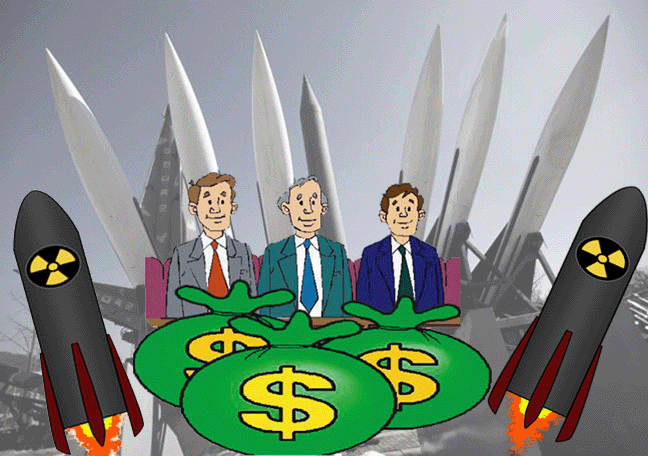
The statements come from leaders of an industry that exerts tremendous influence in Washington, employing an average of 700 lobbyists per year over the past five years, or more than one lobbyist per member of Congress, according to Brown University’s Costs of War project.
Everyone in D.C. knows that weapons manufacturers are helping skew U.S. policy towards militarism
WEAPONS COMPANIES BOAST UKRAINE-RUSSIA TENSIONS ARE BOON FOR BUSINESS , Popular Resistance, By Sarah Lazare, In These Times., January 31, 2022
In Calls With Investors, Raytheon And Lockheed Martin Boasted That The Worsening Conflict Is Helping Profits.As the United States weighs more involvement in the growing conflict between Ukraine and Russia, some of the largest weapons companies in the world — Raytheon and Lockheed Martin — are openly telling their investors that tensions between the countries are good for business. And General Dynamics, meanwhile, is boasting about the past returns the company has seen as a result of such disputes.
The statements come as the U.S. government escalates arms shipments to Ukraine, among them the Javelin missiles that are a joint venture between Raytheon and Lockheed Martin. House Democrats, meanwhile, are trying to quickly push through a bill that would significantly increase U.S. military assistance to Ukraine, and impose new sanctions on Russia.
Anti-war campaigners warn that U.S. escalation, amid renewed tensions between Ukraine and Russia, could bring dire consequences, and spill into a much larger and more protracted war. “As we are shipping advanced weaponry to the Ukrainian military, the Biden administration has signaled that U.S. military advisors will continue to stay in the country,” Cavan Kharrazian, progressive foreign policy campaigner for the advocacy organization Demand Progress, tells In These Times. “Who will most likely set up and teach the Ukrainian army how to use these weapons systems? The U.S. military.”
Among those openly discussing the boon to profits is Raytheon CEO Greg Hayes. During a January 25 appearance on CNBC’s “Squawk on the Street,” he was asked, “Do we have anything that would make it so if you inserted 8,000 American soldiers into Ukraine, they can stop 103,000 Russian soldiers?”
In his reply, Hayes touted the role the company could play in arming U.S. allies. “Obviously we have some defensive weapons systems that we could supply which could be helpful, like the patriot missile system.” He went on to add, “We’ve got the technologies to help in these engagements, whether it’s patriot systems, some of the radar systems.”………
If it sounds like Hayes is using mounting tensions as an advertising opportunity for his company, this may not be far fetched. On a January 25 earnings call (which was noted on Twitter by Nick Cleveland-Stout of the Quincy Institute), Hayes included “tensions in Eastern Europe” among the factors that Raytheon stands to benefit from. He said: “We just have to look to last week where we saw the drone attack in the UAE, which have attacked some of their other facilities. And of course, the tensions in Eastern Europe, the tensions in the South China Sea, all of those things are putting pressure on some of the defense spending over there. So I fully expect we’re going to see some benefit from it.”
Raytheon isn’t alone in its projections. Among those noting the likely boost to profits is Jim Taiclet, the chairman, president and CEO of Lockheed Martin. In a January 25 earnings call, he told investors, “If you look at the evolving threat level and the approach that some countries are taking, including North Korea, Iran and through some of its proxies in Yemen and elsewhere, and especially Russia today, these days, and China, there’s renewed great power competition that does include national defense and threats to it.”
This “great power competition,” he suggested to investors, bodes more business for the company. Taiclet says, “And the history of the United States is when those environments evolve, that we do not sit by and just watch it happen. So I can’t talk to a number, but I do think, and I’m concerned personally that the threat is advancing, and we need to be able to meet it.”
The statements come from leaders of an industry that exerts tremendous influence in Washington, employing an average of 700 lobbyists per year over the past five years, or more than one lobbyist per member of Congress, according to Brown University’s Costs of War project.
Everyone in D.C. knows that weapons manufacturers are helping skew U.S. policy towards militarism, but they usually try to be less obvious,” Erik Sperling, executive director of Just Foreign Policy, an anti-war organization, told In These Times. “They are cashing in on tensions over Ukraine as the U.S. pours weapons into the region.”……..
Everyone in D.C. knows that weapons manufacturers are helping skew U.S. policy towards militarism, but they usually try to be less obvious,” Erik Sperling, executive director of Just Foreign Policy, an anti-war organization, told In These Times. “They are cashing in on tensions over Ukraine as the U.S. pours weapons into the region.”
But Kharrazian warns, “While it may not be profitable for arms manufacturers, engagement in good-faith, realistic diplomacy is what will benefit the region as a whole and mitigate unnecessary and potentially catastrophic conflict.” https://popularresistance.org/top-weapons-companies-boast-ukraine-russia-tensions-are-a-boon-for-business/
Saving the world at plutonium mountain
Such hidden repositories might be found elsewhere, wherever nations have tested nuclear weapons or carried out other research on fissile materials such as plutonium. Will all that scientific collaboration and goodwill be readily available?
It is true, as the plaque at Degelen Mountain attests, that the world is safer thanks to this operation. But it is also true that the scars left by nuclear weapons testing during the Cold War will last for millennia.
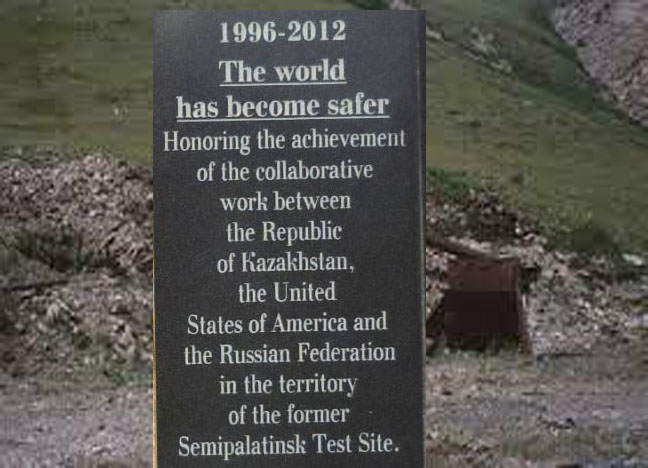
Saving the world at plutonium mountain https://thepeninsulaqatar.com/article/18/08/2013/saving-the-world-at-plutonium-mountain Published: 18 Aug 2013 -Updated: 30 Jan 2022, By David E Hoffman and Eban Harrell Last October, at the foot of a rocky hillside near here, at a spot known as Degelen Mountain, several dozen Kazakh, Russian and American nuclear scientists and engineers gathered for a ceremony. After a few speeches, they unveiled a three-sided stone monument, etched in English, Russian and Kazakh, which declared:
“1996-2012. The world has become safer.”
The modest ribbon-cutting marked the conclusion of one of the largest and most complex nuclear security operations since the Cold War. The secret mission was to secure plutonium — enough to build a dozen or more nuclear weapons — that Soviet authorities had buried at the testing site years before and forgotten, leaving it vulnerable to terrorists and rogue states.
The effort spanned 17 years, cost $150m and involved a complex mix of intelligence, science, engineering, politics and sleuthing. This account is based on documents and interviews with Kazakh, Russian and US participants, and reveals the scope of the operation for the first time. The effort was almost entirely conceived and implemented by scientists and government officials operating without formal agreements among the nations involved. Many of these scientists were veterans of Cold War nuclear-testing programs, but they overcame their mistrust and joined forces to clean up and secure the Semipalatinsk testing site, a dangerous legacy of the nuclear arms race.
They succeeded, but what they accomplished here may have to be done all over again if the walls of secrecy ever come down and reveal security vulnerabilities in North Korea or Iran, or in other states that have developed the atomic bomb, including China, Pakistan, India and Israel.
During the Cold War, the Soviet Union carried out more than 450 nuclear explosive tests at the Semipalatinsk site, which sprawls over a portion of the Kazakh plains slightly larger than Connecticut. Most of the tests involved atomic explosions, while others were carried out to improve weapons safety, in part by examining the impact of conventional explosives on plutonium metal. A network of tunnels built under Degelen Mountain became the epicentre of these tests.
After the Soviet Union collapsed in 1991, the Russians gradually abandoned the site. Economic conditions in the main city near the testing grounds grew desperate, and residents began to search the tunnels for metal to sell. They used mining equipment to steal copper from the electrical wiring and to scavenge rails that once carried nuclear devices far underground for explosive testing.
Conceived in 2000, Operation Groundhog suffered repeated delays, including work stoppages during the frigid winters. But with the nuclear ambitions of Al Qaeda coming into clearer view in documents seized during the invasion of Afghanistan, US officials felt the urgency of preventing plutonium from falling into the wrong hands. The concrete dome over the holes at the Balapan was completed in August 2003.
Just a few miles away, however, Degelen Mountain was still unattended, and scavengers continued to burrow in close proximity to weapons-grade plutonium. When a senior Pentagon official, Andy Weber, met with Russian and Kazakh officials in mid-2003 to discuss extending projects to the mountain, the Russians were still ambivalent and did not reveal all they knew.
They offered the locations of three more experiments, at two sites. If work at these sample locales went well, and if the Russians felt confident that the Americans were not committing espionage, Minatom would consider sharing more information.
As it turned out, these sample locations weren’t in Degelen Mountain at all but in a nearby bunker. They involved three “kolbas” — large metal cylinders, insulated with Kevlar and fiberglass and designed to contain explosions equivalent to the force of 440 pounds of dynamite. They were most often placed deep within Degelen Mountain for plutonium tests, but three had been used above ground and were stored in the bunker.
The US Defence Threat Reduction Agency agreed to work on the three kolbas,one of which had been pried open by scavengers, and to defer action on Degelen Mountain. Operation Matchbox, begun in 2004, secured the kolbas by filling them with a concrete mixture.
In the spring of 2005, US scientists finally got the breakthrough they’d been waiting for when Russia released all the remaining information about Degelen Mountain. But it wasn’t pretty.
The mountain contained about 220 pounds of recoverable plutonium — enough for more than a dozen nuclear bombs. Even more surprising, Russia revealed that at one location, the Soviets had left behind some high-purity plutonium and equipment that could be used to build a nuclear weapon.
This disclosure alarmed US officials but the Russians were extremely cautious. In their reports to the US side, they used code names for 16 sites in and around Degelen Mountain, ranking them according to proliferation risk. Three of the sites were found to present the “maximum risk” if they fell into the wrong hands and were given the code names X, Y and Z.
One day, while crews were drilling a hole at the Y site, a concrete retaining wall collapsed, exposing the plutonium and equipment. Eventually, material from two of the sites was sent back to Russia, and the third was entombed in concrete.
Scavengers continued to raid the tunnels until 2008, when Kazakhstan finally declared Degelen Mountain an “exclusion zone” — which allowed US officials to erect warning signs — and when Kazakh security forces got the authority to expel the scavengers.
Still, the work remained slow. In a 2010 summit in Washington that included 47 nations, President Obama arranged a personal meeting with Nazarbayev. Officials of the two nations then met with their Russian counterparts. The United States, Russia and Kazakhstan agreed in confidence to complete the work at Semipalatinsk by the next summit, scheduled for March 2012 in Seoul.
This high-level commitment galvanised the operation. For the first time, Kazakh crews worked through the winters, and American officials stayed on site in Semipalatinsk with them, while increased US funding meant four crews could work simultaneously instead of one. Obama, Nazarbayev and Russian President Dmitri Medvedev announced the completion of the work in Seoul, though the news was overshadowed by Obama’s “open mike” incident with Medvedev.
Such hidden repositories might be found elsewhere, wherever nations have tested nuclear weapons or carried out other research on fissile materials such as plutonium. Will all that scientific collaboration and goodwill be readily available?
It is true, as the plaque at Degelen Mountain attests, that the world is safer thanks to this operation. But it is also true that the scars left by nuclear weapons testing during the Cold War will last for millennia.
European Taxonomy – more like Fakeonomy – now including coal and nuclear
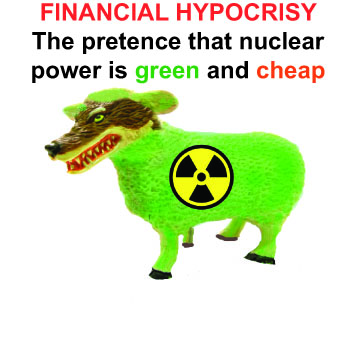
EU includes gas and nuclear in guidebook for ‘green’ investments, Commission’s move widely criticised as undermining efforts to keep global heating below 1.5Cm Guardian
Jennifer Rankin in Brussels, Thu 3 Feb 2022 The European Commission has been accused of undermining its climate goals after it defied critics by pushing ahead with plans to include gas and nuclear in an EU guidebook for “green” investments.
Gas and nuclear were deemed bridge technologies to meet the EU’s target of net zero emissions by 2050, in long-awaited proposals on the EU’s “taxonomy for environmentally sustainable economic activities”, which were published on Wednesday.
“The reason we are including gas and nuclear in the way we are doing it is because we firmly believe that this recognises the need for these energy sources in transition,” the EU commissioner for financial services, Mairead McGuinness, told reporters.
Critics said including gas and nuclear in a guide intended to prevent greenwashing jeopardised the EU’s climate goals and hopes of keeping global heating below 1.5C.
“The European Commission is significantly undermining the EU’s credibility as a climate actor,” Bas Eickhout, a Dutch Green MEP and vice-chair of the European parliament’s environment committee, said. “At the UN climate summit in Glasgow, small steps were taken towards phasing out fossil fuels. Yet, unfortunately, the commission is already turning back the clock and leaving the door open to the gas industry.”
Laurence Tubiana, the chief executive of the European Climate Foundation and an architect of the landmark 2015 Paris climate agreement, said: “The EU taxonomy was envisioned as a vital tool to align financial flows with the Paris agreement. Instead, Europe is undermining its climate leadership and lowering standards in the EU and beyond. When a gold standard does emerge elsewhere, this taxonomy will be left behind.”
Since the proposals leaked on New Year’s Eve 2021 – fuelling bitter accusations of a lack of transparency – the commission has made minor tweaks that make it easier for gas projects to get in the green guidebook……
The taxonomy – intended to channel billions of private money into climate-friendly investments – is fast becoming one of the biggest controversies of Ursula von der Leyen’s tenure as European Commission president. Last month Greta Thunberg and climate activists slammed the plans as “fake climate action” that flout scientific advice.
In a further sign of anger, campaign group Avaaz staged a mock burial of the taxonomy on a roundabout outside the commission headquarters, with activists wearing face masks of Von der Leyen, Germany’s Olaf Scholz and France’s Emmanuel Macron. France pressured Von der Leyen to grant the stamp of approval for nuclear power, while Germany had lobbied for the inclusion of gas, although Scholz’s coalition government is split on the issue.
“Europe is witnessing our biggest setback yet in our moonshot mission,” said Patricia Martín Díaz of Avaaz. “Labelling fossil gas and nuclear as green is incompatible with the EU’s 2050 climate targets and our hope of keeping 1.5C alive.”……………
Other critics include an expert panel convened by the commission, which said the plans were “not in line” with the original regulation, agreed in July 2020. In its stinging rebuke, the EU platform on sustainable finance – a group that includes industry, NGO and finance experts from EU institutions – said they had doubts about the criteria for gas and nuclear, while “many are deeply concerned about the environmental impacts that may result”………..
The EU taxonomy became law in July 2020, but legislators left important details to be resolved through so-called delegated acts – secondary legislation meant for technical issues that is not subject to the same degree of ministerial and parliamentary oversight.
Critics have accused the commission of abusing the process, by smuggling in the controversial issues of nuclear and gas into the latest delegated act, rather than drafting a separate law.
Only a supermajority of 20 out of 27 EU member states, or a majority of the European parliament’s 705 MEPs can now defeat the plans during a scrutiny period of four to six months that began on Wednesday.
Commission officials played down the threat of a legal challenge from Austria and Luxembourg, describing it as “a very theoretical discussion”. Both countries oppose nuclear power, while Green ministers in the German coalition government have dismissed the plans as greenwashing.
Denmark, Sweden and the Netherlands had urged the commission not to label gas as green, while Germany declared its opposition to nuclear…………
Lisa Fischer, who leads the E3G thinktank’s work on climate neutral energy systems, said gas and nuclear had no place in the taxonomy. “Gas investments are not only harmful to the climate they are also increasingly financially risky. Nuclear makes the EU’s energy transition more costly than it needs to be.”
In a sign of the intense arguments, McGuinness revealed that had been no unanimity among the commission’s top 27 officials; she said an “overwhelming majority” of EU commissioners had backed the plans.
“We were legally obliged to do this,” she said referring back to the initial July 2020 law. Opponents in national capitals, however, say the commission had no obligation to include gas or nuclear. https://www.theguardian.com/environment/2022/feb/02/eu-guidebook-taxonomy-green-investments-gas-nuclear-included
Information wars: are we getting a fair view of China’s treatment of Uyghurs?
Information wars: are we getting a fair view of China’s treatment of Uyghurs?
MICHAEL WEST MEDIA|By Michael Sainsbury|February 3, 2022 ”……………………..
The Five-Eyes/China Propaganda War,
There is a propaganda war. It pits the China Communist Party against the West, led by the Five Eyes – the US, UK, Canada, Australia and New Zealand. To these we can also add Japan and South Korea, China’s mutually wary north Asian neighbours.
The latest battle in the war is being fought here in Australia over the Australian Strategic Policy Institute’s report Uyghurs for Sale: ‘Re-education’, forced labour and surveillance beyond Xinjiang. Its main theme is the re-education camps in Xinjiang and subsequent sending Uyghurs out for what it describes as forced labour in factories in the east of China in tough conditions, although they are paid rather than enslaved.
Considering that many of these factories are used by well-known Western clothing and retail brands, the report has sent shockwaves through the industry, with some withdrawing work from these factories.
Lawyer and activist Jaq James has prepared a lengthy rebuttal. Her paper, The Australian Strategic Policy Institute’s Uyghurs for Sale Report: Scholarly Analysis or Strategic Disinformation?, offers as a detailed unpicking ASPI’s reporting as loose/fudged and often second and third hand, as well as resulting in Uyghurs losing their jobs.
| Lead author on ASPI’s report is analyst, journalist and comedian Vicky Xu. Xu and her work have received widespread publicity in mainstream media. Yet the coverage has been devoid of scrutiny. Scrutiny has come however in independent media, particularly in John Menadue’s Pearls and Irritations, which has run stories by Jaq James and others questioning Xu’s claims. The biggest problem with both the reports is a lack of context…………https://www.michaelwest.com.au/information-wars-are-we-getting-a-fair-view-of-chinas-treatment-of-uyghurs/ |
Inclusion of nuclear and gas is ”attempted robbery”
 |
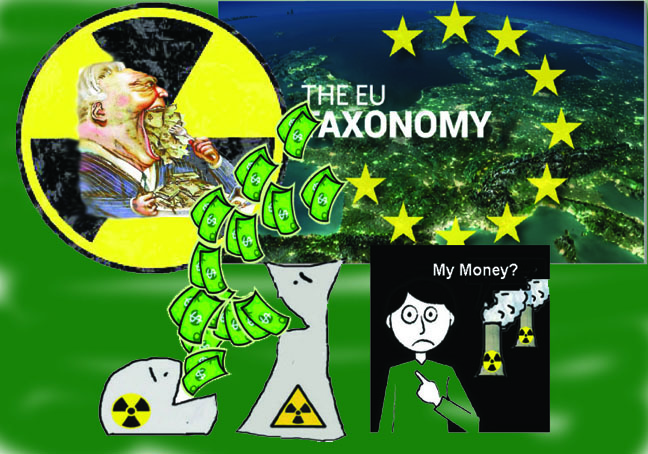
Taxonomy: inclusion of nuclear and gas is “attempted robbery” – Greenpeace
Taxonomy: inclusion of nuclear and gas is “attempted robbery” – Greenpeace, Greenpeace European Unit 02/02/2022 Brussels, 2 February 2022 – The European Commission today officially presented a controversial plan to label fossil gas and nuclear energy as sustainable under the taxonomy regulation. The plan would incentivise potentially hundreds of billions of euro in private investments to flow away from clean energy like renewables and instead go to nuclear energy and fossil gas, accelerating the climate crisis.
Apart from producing dangerous and unmanageable radioactive waste, nuclear reactors take so long to build that they cannot come online quickly enough to contribute to reaching EU climate targets by 2030, which scientists say is necessary to prevent the worst effects of the climate crisis. Gas is also the single most polluting fuel in the EU, with soaring prices sparking a European energy crisis.
Greenpeace EU sustainable finance campaigner Ariadna Rodrigo said: “I’d like to report an attempted robbery, please. Someone is trying to take billions of euro away from renewables and sink them into technologies that either do nothing to fight the climate crisis, like nuclear, or which actively make the problem worse, like fossil gas. The suspect is at EU Commission HQ and has disguised herself as someone to be taken seriously on the climate and nature crisis.”
“This anti-science plan represents the biggest greenwashing exercise of all time. It makes a mockery of the EU’s claims to global leadership on climate and the environment. The inclusion of gas and nuclear in the taxonomy is increasingly difficult to explain as anything other than a giveaway to two desperate industries with powerful political friends,” added Rodrigo.
The Platform on Sustainable Finance, a body of over 50 experts from business, academia and civil society, which advises the European Commission on its green agenda, said in its official feedback to the plan that the provisions on nuclear energy, especially radioactive waste, violate a key principle of the taxonomy, which aims to ensure that any technologies included “do no significant harm” to the environment. The Institutional Investors Group on Climate Change, whose members represent more than €50 trillion in assets, has also said that the Commission’s proposals on gas would “channel capital towards activities not compatible with the EU’s commitment to climate neutrality by 2050.”
Environmental lawyers at NGO Client Earth have said that the inclusion in the taxonomy of fossil gas would be incompatible with several EU laws, including the 2021 EU Climate Law. Several governments and organisations are reportedly planning legal challenges to the inclusion of gas and nuclear in the taxonomy.
Next steps
The Commission’s plan is set to face an immediate backlash from MEPs, who have been cut out of the process and denied the chance to scrutinise this controversial plan until now.
Greenpeace is calling on MEPs to vote this proposal down. A majority of the Parliament, or 353 MEPs, is required to reject it.
Greenpeace is also calling on all financial institutions in the EU not to categorise nuclear and gas investments as environmentally sustainable, and to be transparent and science-based about their energy and climate investment decisions.
Contacts:
Ariadna Rodrigo – Greenpeace EU sustainable finance campaigner: +32 (0)479 99 69 22, arodrigo@greenpeace.org AT TOP https://www.greenpeace.org/eu-unit/issues/climate-energy/46036/taxonomy-nuclear-gas-attempted-robbery/
America’s military leaders reassure their staff ”We will win a nuclear war!”
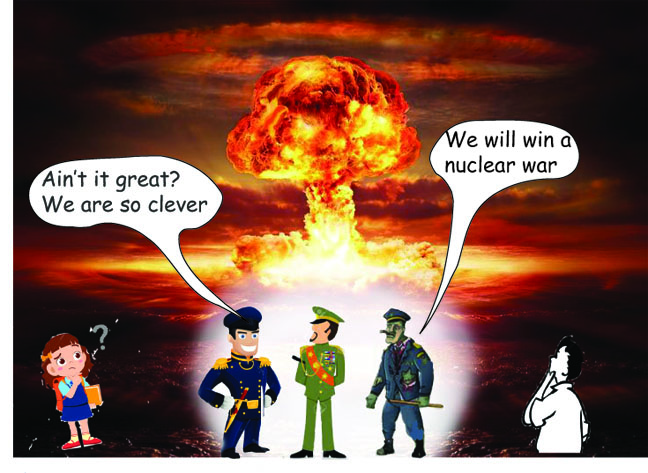
US defense to its workforce: Nuclear war can be won, Bulletin of the Atomic Scientists, By Alan Kaptanoglu, Stewart Prager | February 2, 2022 Ronald Reagan and Mikhail Gorbachev once said that “a nuclear war cannot be won and must never be fought,” and five major nuclear weapon states, including the United States, repeated this statement earlier this year. Yet many in the US defense establishment—the military, government, think tanks, and industry—promote the perception that a nuclear war can be won and fought.
Moreover, they do so in a voice that is influential, respected, well-funded, and treated with deference. The US defense leadership’s methodical messaging to its workforce helps shape the views of this massive, multi-sector constituency that includes advocates, future leaders, and decision makers. It advances a view of nuclear weapon policies that intensifies and accelerates the new nuclear arms race forming between the United States, China, and Russia.
The 23-chapter Guide to Nuclear Deterrence in the Age of Great Power Competition provides an excellent and representative case study for examining this critical messaging. This guide is published by the Louisiana Tech Research Institute, which provides support for the US Air Force Global Strike Command. It is written by nuclear arms experts for the approximately 30,000 members of the US Air Force Global Strike Command and the “700,000 total force airmen who engage in the profession of arms.”
All of the authors have direct or indirect connections with the nuclear weapons complex or associated think tanks, and several of the authors have held senior positions with the Air Force Global Strike Command, US Strategic Command, and other national security agencies in the US government. The guide’s messaging is comprehensive but dangerously skewed.
The guide centers around a new reality—the aggressive development of nuclear arms by Russia and China that is intensifying a new Cold War. Nuclear arms treaties—an important tool for limiting arms races—are brushed aside as functionally pointless since, according to the guide, Russia will cheat and China won’t come to the bargaining table. In one passage, the guide claims “it is unlikely that these countries would be foolish enough to engage in a strategic arms race with the United States, and, if they do, they will lose.” Yet much of the remainder of the document analyzes all the ways in which China and Russia are advancing their capabilities beyond US capabilities. These threatening developments are then used to justify the rapid and expensive modernization of the US nuclear weapon complex, while many historic nuclear arms agreements wither away, including the Anti-Ballistic Missile Treaty, Intermediate-range Nuclear Forces Treaty, and the Iran nuclear deal.
What follows are some of the misrepresentations, an omission, and a questionable policy in the guide:
Misrepresentation: A nuclear war can be fought and won. That the US military considers scenarios under which nuclear deterrence fails is unsurprising. But in the event of limited nuclear war, the United States has plans in place to “beat” its adversaries. …………………
Omission: The reality of nuclear war. In this more-than-400 page guide, only three pages are devoted to a rather anodyne description of the devastating harms of nuclear weapons. ………..
The guide does not mention the well-documented human toll of the bombings of Hiroshima and Nagasaki. The guide does not discuss the full horrors of the “day after” a nuclear exchange. Nor does it address the potentially civilization-ending effects of climate change and nuclear winter from the resulting firestorms. …………………
Misrepresentation: Nuclear weapons keep the peace. The guide credits nuclear weapons and US nuclear superiority with the era of “long peace”—the absence of major wars between superpowers since 1945. As such, it posits that, the more US nuclear weapons, the better………………
The guide does not note that the world came very close to a potentially catastrophic nuclear exchange during the Cuban Missile Crisis. It singularly portrays US nuclear weapons as a benefit for humankind.
Misrepresentation: Nuclear weapon mistakes and accidents never happen. Indeed, the guide does not mention the many well-documented false-alarms and close calls of nuclear detonation from technical or human error that could have led to catastrophe. It does not acknowledge the dangers posed by the imperfect humans who control the nuclear weapons and infrastructure. It does not mention that intercontinental ballistic missile (ICBM) crew members were caught cheating on exams or that the Joint Chiefs’ of Staff unanimously recommended an invasion of Cuba during the missile crisis. Nor is there mention of the harms caused by nuclear testing to many communities.
The guide portrays the United States as if it is in perfect control of its nuclear weapons operations.
Questionable policy: A nuclear triad is necessary. The guide argues strenuously that the United States would be less secure without all three legs of its nuclear triad consisting of warhead-equipped submarines, aircraft, and land-based missiles…………………
Lastly, this scenario assumes that NATO allies would not bother to use any of their several hundred nuclear warheads after an adversary destroys a significant portion of the US homeland.
The guide dismisses critiques of the ICBM force, including the accompanying launch-on-warning and use-them-or-lose-them postures that increase the danger of accidental nuclear war.
The authors seek perpetual US nuclear superiority. They dismiss the option of minimal deterrence—keeping only a minimal complement of nuclear weapons primarily to provide a second-strike capability—as not viable. According to the guide, the United States must not only possess a second-strike capability but the potential to fight and win a limited nuclear war against any adversary. ……………..
To be clear, the authors are considering a scenario in which at least several hundred nuclear weapons have been used on both the US and adversary’s homeland. Hundreds of millions of people are likely dead, modern civilization might have collapsed, and nuclear winter might soon starve another few billion people. What exactly is worth bargaining for in this scenario?
Finally, the guide notes that “[t]he United States has never been content with a mere second-strike capability.” In this context, “[t]he United States” appears to refer primarily to US military and government institutions; the majority of the US public favors a minimal deterrence policy, and an overwhelming majority support the phasing out of ICBMs, according to a recent poll.
……………. defense messaging justifies a vigorous and expanding nuclear arms force, exceptionalizes the United States, and blames downsides on Russia and China. If service members received more thoughtful messaging about nuclear deterrence and preparedness, their efforts to think critically might help them understand—in the profound ways that Reagan and Gorbachev once understood—that “a nuclear war cannot be won and must never be fought.” https://thebulletin.org/2022/02/us-defense-to-its-workforce-nuclear-war-can-be-won/
Analysis: U.S. can launch war in Ukraine when it’s consolidated NATO coalition — Anti-bellum

A machine translation from Russian Information Agency Novosti. Presented for information purposes. “Military Thought”: the United States can start a war in Ukraine when a coalition of NATO countries takes shape The United States may see fit to have a large-scale conflict in Ukraine when a coalition of NATO countries ready to fight Russia is […]
Analysis: U.S. can launch war in Ukraine when it’s consolidated NATO coalition — Anti-bellum
Time to start stopping the wars: No war in Ukraine, then no war anywhere.

United for Peace and Justice Jan 29, 2022 ,
The Ukraine crisis intensifies, with no clear path to resolution. A military confrontation between the United States and Russia, the world’s most heavily armed nuclear nations, could spell disaster.
It is time for the people of the world to cry Enough! No more war threats, no more War! The peace movement must be a global people’s movement, aligned with the policies of no government.
The governments of the United States and its allies bear responsibility for refusing to include the post-Soviet Russian government in security arrangements that would allow it to feel secure within its borders. After the Cold War, Russia’s government sought a European security order in which it could be a full participant. Russia also relied on assurances from the United States government and its allies that NATO would not be expanded to the East.
Instead, the government of the U.S. and its NATO allies pursued a far more confrontational course, expanding NATO to include former Soviet republics and Warsaw Pact countries, and leaving open the possibility of membership for Georgia and Ukraine, moves which would extend the alliance right up to Russia’s borders. It was against this background that the 2014 overthrow of Ukraine’s government occurred, leaving Russia with a government backed by Western powers on its doorstep. Followed swiftly by Russia’s occupation of Crimea and the revolt of two regions in Ukraine’s East, the crisis devolved into a complex proxy war in the breakaway regions, with forces supported by Russia facing a Ukraine military receiving varying degrees of support from the government of the United States and its NATO allies.
The people of Ukraine have borne the brunt of all this. In eight years of fighting, 14,000 Ukrainian soldiers and noncombatants have been killed, and over 1.5 million displaced. Russia also likely has suffered combat casualties in Ukraine, although the numbers are unknown. The society and infrastructure of Ukraine’s East have been badly damaged by eight years of fighting.
And now the people of Ukraine find themselves at the center of a renewed and broader crisis, one that could draw the militaries of the United States, its NATO allies and Russia into direct conflict. The Russian government has deployed a significant part of its land forces towards Ukraine’s borders. At the same time it is making demands for a sweeping renegotiation of Europe’s security arrangements, including a significant rollback of NATO. The United States and NATO have for the most part rejected those demands, offering instead negotiations on a narrower range of arms control and confidence-building measures, and refusing to place any limits on further NATO expansion.
The United States government and some of its NATO partners are increasing weapons shipments to Ukraine. The U.S. also is placing military forces on alert for rapid deployment to Europe. Russia, the United States, and NATO all are conducting significant naval exercises in the waters in and around Europe. It must be emphasized that Russia and the United States together hold over 90% of the world’s nuclear weapons, and a wider war in Europe could involve four out of the original five nuclear-armed states……………………
Immediately:
–We call on the government of the United States to be willing to negotiate with any and all states without conditions. Its “security” policies have played a significant role in bringing Europe, and the world, to the brink of disaster…………………………..
And then we call for:
— Reversal of NATO decisions to expand rapid reaction forces and supporting infrastructure in Eastern Europe.
–Termination of U.S. programs to deploy U.S. ballistic missile defenses in Europe.
–Removal of U.S. nuclear weapons from Europe………………………….. http://www.unitedforpeace.org/2022/01/29/time-to-start-stopping-the-wars-no-war-in-ukraine-then-no-war-anywhere/?link_id=3&can_id=4dd9fe2dc5f0ed4a2c5e977ca86d9acb&source=email-time-to-start-stopping-the-wars-no-war-in-ukraine-then-no-war-anywhere&email_referrer=email_1428162&email_subject=time-to-start-stopping-the-wars-no-war-in-ukraine-then-no-war-anywhere
New Mexico’s Bill to stop the State becoming a ‘sacrifice zone’ for nuclear wastes
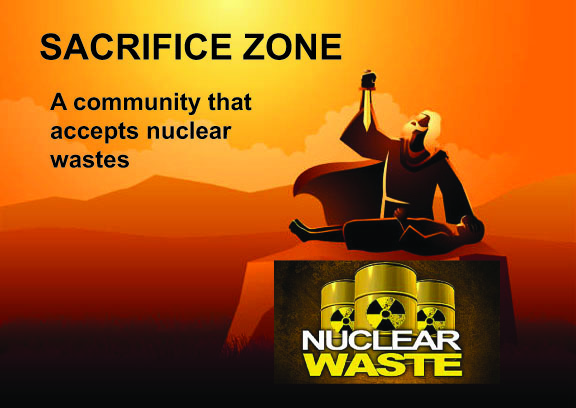
“New Mexico, with less than one half of 1% of the nation’s population, should not continue to be the sacrifice zone because we can be exploited,”
New Mexico Debates Bill to Block Spent Nuclear Fuel Storage, Feb. 1, 2022, By SUSAN MONTOYA BRYAN, Associated PressALBUQUERQUE, N.M. (AP) — Gov. Michelle Lujan Grisham and members of New Mexico’s congressional delegation already have voiced strong opposition to building a multibillion-dollar facility along the state’s border with Texas that would store tons of spent nuclear fuel from commercial power plants around the U.S.
Top New Mexico officials contend the Nuclear Regulatory Commission hasn’t done enough to vet plans by Holtec International to build a facility to store thousands of tons of spent uranium in the state. They argue that without a plan by the federal government to deal with spent fuel, the material would remain in New Mexico indefinitely.
Texas Gov. Greg Abbott has also expressed his opposition to a similar storage facility in his state. Both states have sued the federal government over the issue.
Democratic Sen. Jeff Steinborn of Las Cruces, who is sponsoring the New Mexico legislation, said the federal government needs to address the problem and establish a policy for dealing with the spent fuel piling up at the nation’s nuclear power plants.
“New Mexico, with less than one half of 1% of the nation’s population, should not continue to be the sacrifice zone because we can be exploited,” he told fellow lawmakers, noting that many communities have passed resolutions opposed to bringing high-level nuclear waste to the state.
………………… The federal government is paying to house the fuel, and the cost is expected to stretch into the tens of billions over the next decade, according to a review by independent government auditors.
The fuel is sitting at temporary storage sites in nearly three dozen states, either enclosed in steel-lined concrete pools of water or in steel and concrete containers known as casks.
U.S. Energy Secretary Jennifer Granholm has talked about revisiting recommendations made a decade ago by a blue ribbon commission on America’s nuclear future. In November, her agency issued a request seeking input on a consent-based siting process to identify locations to store commercial spent nuclear
$640 Billion and 56 years to clean up Hanford’s underground tanks of plutonium and other nuclear wastes.
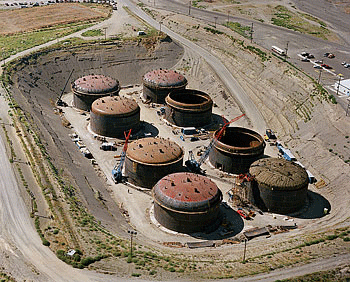
Hanford begins 1st large-scale treatment of nuke tank wastes, Feb. 2, 2022 By NICHOLAS K. GERANIOS, Seattle TimesThe Associated Press SPOKANE, Wash. (AP) — Workers on a former nuclear weapons production site have started the first large-scale treatment of radioactive and chemical wastes from large underground storage tanks, a key milestone in cleaning up the Hanford Nuclear Reservation, the U.S. Department of Energy said Wednesday.Hanford for decades made plutonium for the nation’s nuclear arsenal and is the most radioactively contaminated site in the nation’s nuclear weapons complex. It was created by the Manhattan Project and made the plutonium for the atomic bomb dropped on Nagasaki, Japan, at the end of the World War II……..
The newly operational system removes radioactive cesium and solids from waste stored in huge underground tanks at Hanford. The treated waste will be stored until it is sent to the nearby Waste Treatment and Immobilization Plant, where it will be converted into a glass-like substance for long-term storage. That plant, under construction since 2002, comes online next year, the agency said……
Hanford contains approximately 56 million gallons of radioactive waste stored in 177 underground tanks, representing one of DOE’s largest environmental risks and most complex challenges. The tank waste is a result of nearly five decades of plutonium production that supported national security missions and helped end World War II, the DOE said.
U.S. Sen. Maria Cantwell, D-Wash., called the news “a monumental step” in the cleanup of Hanford.
But it is one step.
Finishing the cleanup of Hanford, located near Richland in southcentral Washington, will cost an estimated $300 billion to $640 billion, and take until about 2078, according to a Department of Energy report published at the end of January.
The 580-square-mile (1,502-square-kilometer) Hanford site, located along the Columbia River, produced almost two-thirds of the plutonium for the nation’s nuclear weapons program from World War II through the Cold War.
DOE is spending about $2.5 billion annually on environmental cleanup of the wastes, plus contaminated buildings, soil and groundwater. But the estimated costs to finish most cleanup by 2078 would require much larger annual budgets.
This story has been corrected to show that treated waste will be stored in an underground tank, not special capsules. https://www.seattletimes.com/seattle-news/hanford-begins-1st-large-scale-treatment-of-nuke-tank-wastes/
1 This month
17 October, Free Public Talk on Nuclear Issues in South Australia
David Noonan will speak on public interest concerns over the new Roxby Downs Indenture Act 2026 on BHP copper-uranium mining and ore processing in SA, and on how AUKUS may face SA with a High-Level nuclear waste agenda.
Dr Jim Green will discuss international developments in the field of nuclear power including ‘small modular reactors’ and Generation 4 ‘advanced’ nuclear reactor concepts.


Help Aunty Sue Protect Her Land and Sacred Sites From Destructive Rocket Testing.
.

Australians deserve the truth
about
AUKUS – https://aukuspublicinquiry.com/

PETITION – To: Prime Minister Anthony Albanese and the Australian Labor Government

of the week – Australians for War Powers Reform (AWPR)
To see nuclear-related stories in greater depth and intensity

