UKRAINE CRISIS: US ‘Toolboxes’ Are Empty

January 22, 2022 The toolbox is empty. Russia knows this. Biden knows this. Blinken knows this. CNN knows this. The only ones who aren’t aware of this are the American people, says Scott Ritter. By Scott Ritter, Special to Consortium News U.S. Secretary of State Antony Blinken met with his Russian counterpart, Sergei Lavrov, in a hastily scheduled, 90-minute summit in Geneva yesterday, after which both sides lauded the meeting as worthwhile because it kept the door open for a diplomatic resolution to the ongoing crisis in Ukraine. What “keeping the door open” entails, however, represents two completely different realities.
For Blinken, the important thing appears to be process, continuing a dialogue which, by its very essence, creates the impression of progress, with progress being measured in increments of time, as opposed to results.
A results-oriented outcome was not in the books for Blinken and his entourage; the U.S. was supposed to submit a written response to Russia’s demands for security guarantees as spelled out in a pair of draft treaties presented to the U.S. and NATO in December. Instead, Blinken told Lavrov the written submission would be provided next week.
In the meantime, Blinken primed the pump of expected outcomes by highlighting the possibility of future negotiations that addressed Russian concerns (on a reciprocal basis) regarding intermediate-range missiles and NATO military exercises.
But under no circumstances, Blinken said, would the U.S. be responding to Russian demands against NATO expanding to Ukraine and Georgia, and for the redeployment of NATO forces inside the territory of NATO as it existed in 1997.
……………….Blinken’s restatement of a position he has pontificated on incessantly for more than a month now was not done for the benefit of Lavrov and the Russian government, but rather for an American and European audience which had been left scratching their collective heads over comments made the day before by President Joe Biden which suggested that the U.S. had a range of options it would consider depending on the size of a Russian incursion.
…………………………………… the lack of an agreed-upon strategy on how to deal with a Russian incursion/invasion of Ukraine was an open secret for everyone except the U.S. and European publics, who being fed a line of horse manure to assuage domestic political concerns over being seen as surrendering to Russian demands.
…………………………. Blinken has indicated that the U.S. has a toolbox filled with options that will deliver “massive consequences” to Russia should Russia invade Ukraine. These “tools” include military options, such as the reinforcement of NATO’s eastern flank with additional U.S. troops, and economic options, such as shutting down the NordStream 2 pipeline and cutting Russia off from the SWIFT banking system. All these options, Blinken notes, have the undivided support of U.S. European allies and partners.
………… There’s only one problem—the toolbox, it turns out, is empty.
While the Pentagon is reportedly working on a series of military options to reinforce the existing U.S. military presence in eastern Europe, the actual implementation of these options would neither be timely nor even possible. One option is to move forces already in Europe; the U.S. Army maintains one heavy armored brigade in Europe on a rotational basis and has a light armored vehicle brigade and an artillery brigade stationed in Germany. Along with some helicopter and logistics support, that’s it.
Flooding these units into Poland would be for display purposes only—they represent an unsustainable combat force that would be destroyed within hours, if not days, in any large-scale ground combat against a Russian threat.
………………………. In short, there is no viable military option, and Biden knows this.
…………………………………………. Propaganda About ‘Propaganda’
One of the great ironies of the current crisis is that, on the eve of the Blinken-Lavrov meeting in Geneva, the U.S. State Department published a report on Russian propaganda, decrying the role played by state-funded outlets such as RT and Sputnik in shaping public opinion in the United States and the West (in the interest of full disclosure, RT is one of the outlets that I write for.)
The fact that the State Department would publish such a report on the eve of a meeting which is all about propagating the big lie—that the U.S. has a plan for deterring “irresponsible Russian aggression”—while ignoring the hard truth: this is a crisis derived solely from the irresponsible policies of the U.S. and NATO over the past 30 years.
While a compliant mainstream American media unthinkingly repeated every warning and threat issued by Biden and Blinken to Russia over the course of the past few days, the Russian position has been largely ignored. Here’s a reminder of where Russia stands on its demands for security guarantees: “We are talking about the withdrawal of foreign forces, equipment, and weapons, as well as taking other steps to return to the set-up we had in 1997 in non-NATO countries,” the Russian Foreign Ministry declared in a bulletin published after the Lavrov-Blinken meeting. “This includes Bulgaria and Romania.”
The toolbox is empty. Russia knows this. Biden knows this. Blinken knows this. CNN knows this. The only ones who aren’t aware of this are the American people.
The consequences of a U.S. rejection of Russia’s demands will more than likely be war.
If you think the American people are ready to bear the burden of a war with Russia, think again.
Scott Ritter is a former U.S. Marine Corps intelligence officer who served in the former Soviet Union implementing arms control treaties, in the Persian Gulf during Operation Desert Storm, and in Iraq overseeing the disarmament of WMD. https://consortiumnews.com/2022/01/22/ukraine-crisis-us-toolboxes-are-empty/
The production, servicing and berthing of nuclear-powered submarines in or near population centres present unacceptable health risks.
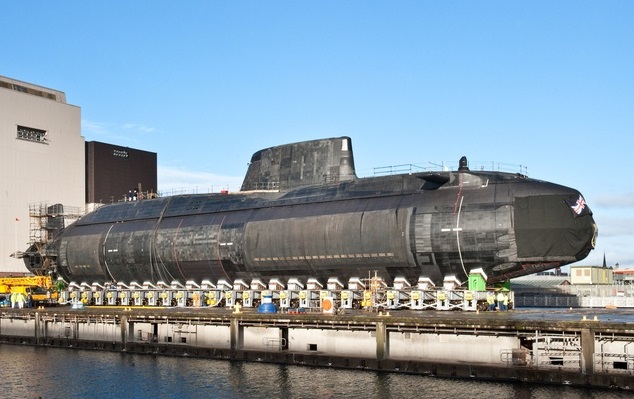
Following revelations in freedom of information requests to Declassified UK records show 97,430 stable iodine tablets were pre-issued to people in Plymouth, Portland and Barrow-in-Furness from 2016-21 to protect them from radiation.
Kate Hudson, general secretary of the Campaign for Nuclear Disarmament (CND), said: “The production, servicing and berthing of nuclear-powered submarines in or near population centres present unacceptable health risks.
“Safeguarding our communities cannot be achieved through limited distribution of pills,” she said, adding that the vessels, some of which carry nuclear warheads, “need to be disarmed and decommissioned.” As Tim Deere-Jones has pointed out “I’m amazed at the way Governments and Regulators allow the “nuclear authorities” to mainstream on publicly highlighting the dangers of one or two radionuclides such as Iodine and Caesium and discuss them endlessly while avoiding the additional issues of the other 50/60 + nuclides that would be released by a meltdown or a LOCA or any other significant event.”
Radiation Free Lakeland 22nd Jan 2022
Ending nuclear weapons before they end us: current challenges and paths to avoiding a public health catastrophe

Tilman A. Ruff, Journal of Public Health Policy, 6 Dec 21, Abstract The United Nations Treaty on the Prohibition of Nuclear Weapons (TPNW)—an important planetary health good—entered into legal force in January 2021. Evidence of the consequences of nuclear war, particularly the global climatic and nutritional effects of the abrupt ice age conditions from even a relatively small regional nuclear war, indicates that these are more severe than previously thought.
None of the nine nuclear-armed states is disarming; instead, all invest enormously in new and more hazardous nuclear weapons. Nor has any of the 32 states claiming reliance on another state’s nuclear weapons yet ended such reliance. These factors, abrogation of existing nuclear arms control agreements, policies of first nuclear use and war fighting, growing armed conflicts worldwide, and increasing use of information and cyberwarfare, exacerbate dangers of nuclear war. Evidence-based advocacy by health professionals on the planetary health imperative to eliminate nuclear weapons has never been more urgent…………………………………. https://link.springer.com/epdf/10.1057/s41271-021-00331-9?sharing_token=8Cd__t3vTJaWbsgGcnEWo1xOt48VBPO10Uv7D6sAgHt0QkiR2wvxImdHaGvdDJeiiseTJaeDf88o34BlerbNyH85_HHPT7FfMM7QY83sLRryF42OO9Nn-Tv556BjJan1sIHbDadb-rLehWR97YePw-P3HwE7AyTZIli7nRVyKEs%3D
How France greenwashes nuclear weapons
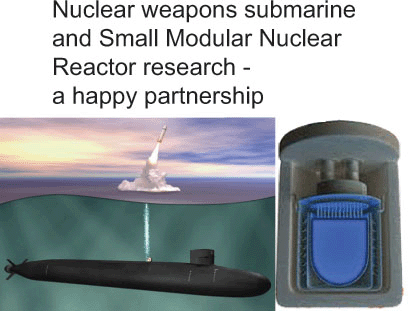
President Macron has announced investment of one billion euros in research and construction of small modular reactors (SMRs). SMRs are small nuclear reactors that are to be used primarily for submarine propulsion and thus for military purposes in distant theatres of war
Behind the planned modernisation of French nuclear power, allegedly to ensure cheaper electricity, nestles the agenda of its nuclear weapons programme. For years now, the state has imposed the exorbitant costs of its civilian-military nuclear industry on the French public.
France plans to modernise its nuclear power – allegedly to insure cheaper and greener electricity. Yet behind it nestles a nuclear weapons agenda https://www.ips-journal.eu/topics/foreign-and-security-policy/how-france-greenwashes-nuclear-weapons-5668/ 23 Jan 22,
At the turn of the year, France assumed the presidency of the Council of the European Union. And last week, the EU defence ministers met informally to talk about the Common Security and Defence Policy (CSDP). Among other issues, they discussed nuclear security and nuclear deterrence strategies.
In recent years, the French president has been a strong advocate of nuclear power. Historically, France’s independent development of nuclear technology for atomic weapons has been an important source of national pride. Since the 1990s, however, nuclear power has been declining as a consequence of the Chernobyl disaster. Annual reports by Mycle Schneider, an international consultant on energy and nuclear policy, show that this is a part of a global trend. Nevertheless, France continues to be a tireless advocate of this technology.
Nuclear answers for green energy and weapons
On 1 January 2022, a draft regulation of the European Commission classified the investment in nuclear energy and natural gas as sustainable. This concerns billions of euros in financial support in the so-called EU Taxonomy. Emmanuel Macron was keen to acquire a ‘Green Label’ for nuclear energy. France’s real interests concerning nuclear energy emerged clearly in a speech Macron delivered on a visit to Framatome’s Le Creusot facility in 2020: ‘Without civilian nuclear energy there is no military use of this technology – and without military use there is no civilian nuclear energy’. In a nutshell, this means that without a cutting-edge nuclear industry France cannot continue to expand and modernise its nuclear weapons arsenal. This remains true for all nuclear weapons states.
At present, these states are upgrading their arsenals. Russia and the United States are procuring new delivery systems – such as hypersonic missiles – that will be able to deliver their nuclear bombs much more quickly and accurately, leaving the enemy with no time to defend themselves. Thus, a new nuclear arms race has begun.
The US think tank Atlantic Council is quite open about how crucial it regards civilian use of nuclear power to be for national security policy: the civilian US nuclear industry is a U.S. strategic asset of vital importance for US national security. Similar formulations can be found in the speeches of other presidents of nuclear weapons states. Its civilian nuclear complex costs the United States at least USD 42.4bn a year. The International Campaign to Abolish Nuclear Weapons (ICAN) claims that all nuclear weapons states together invest over USD 100bn a year in their nuclear weapons arsenals.
France, too, wants to join in the ongoing technological development in other nuclear weapons states for quite some time. President Macron has announced investment of one billion euros in research and construction of small modular reactors (SMRs). SMRs are small nuclear reactors that are to be used primarily for submarine propulsion and thus for military purposes in distant theatres of war. The new Hunter class submarines underline France’s great-power ambitions. This needs to be understood against the background of the collapsed submarine deal with Australia. Last year Australia announced that it was cancelling its contract to buy French diesel submarines in favour of US and UK nuclear technology.
Flexible submarine-based nuclear weapons systems have major strategic importance for all nuclear weapons states. They have the capability of going for up to three months without surfacing. They can cover great distances at high speeds undetected and surface almost wherever they want around the globe. They are capable of launching up to 20 missiles, each with a dozen individual guided warheads. All this plays a key role in the nuclear weapons doctrine of the five ‘official’ nuclear weapons states, the United States, the United Kingdom, Russia, France, and China. At the same time, the possession of this technology underpins these countries’ great-power status. France, like the other nuclear weapons states, is keen to consolidate its status.
Exposing the French agenda
The first meeting of EU defence ministers under the French Council Presidency was held on 12–13 January 2022 in Brest. This is where France’s sea-based nuclear weapons are stationed, making this a clear demonstration of its military power. As early as his 2020 speech in Le Creusot, the French President confirmed his country’s military ambitions: ‘the nuclear industry will remain the cornerstone of our strategic autonomy. It affects every aspect of deterrence, powering our nuclear submarines, submarines for launching ballistic missiles, and powering our nuclear aircraft carriers.’
Nuclear power and nuclear sharing are controversial in the European Union. Austria and Luxembourg have sharply criticised the EU Taxonomy. At the same time, there has been a multilateral UN treaty banning weapons of mass destruction since the Treaty on the Prohibition of Nuclear Weapons of 22 January 2021.
Behind the planned modernisation of French nuclear power, allegedly to ensure cheaper electricity, nestles the agenda of its nuclear weapons programme. For years now, the state has imposed the exorbitant costs of its civilian-military nuclear industry on the French public. The costs of building the pressurised water reactor in Flamanville, for example, ran to €19.4bn. Ultimately, electricity customers and investors subsidise military applications with ‘climate-saving nuclear power’.
In any case, as France takes over the EU Council Presidency it is now perfectly placed to promote the civilian-military use of nuclear energy and a European security and defence strategy based on the doctrine of nuclear deterrence.
Europe’s nuclear waste remains an unsolved and highly dangerous problem – EU Assessment Report

Nuclear waste from nuclear power plants remains an unsolved and highly dangerous problem, as spent fuel must remain isolated from the environment for a million years. In an attempt to solve the nuclear waste problem, an EU-wide regulation was introduced in 2011, the “Council Directive 2011/70/Euratom establishing a Community framework for the responsible and safe management of spent fuel and radioactive waste”.
This Directive tried to force EU member states to address the issue seriously, after this had been neglected for decades – thus immediately proving that nuclear waste has never been effectively dealt with.
The national waste management policies of the EU member states are still inadequate in many respects. The European Commission concluded in its latest report in 2019 that more needs to be done; this is also reflected in the high number of infringement proceedings.
In the Assessment Report, we not only address shortcomings in transparency and participation, but also problems in the inventory data, unsolved issues in the multinational repository search, incomprehensible
cost estimates and lack of financing. The Onkalo repository under construction in Finland is often presented as a game changer by the nuclear lobby, although the safety of the technology used is questionable due to new findings.
Don’t Nuke the Taxonomy 21st Jan 2022
January 23 Energy News — geoharvey

Opinion: ¶ “No New Oil And Gas Leasing! Hearing On Climate And Offshore Drilling” • In a House Committee hearing, committee members focused on the connection between offshore drilling in the Gulf of Mexico and US climate goals. This much is clear: continuing offshore oil and gas leasing as usual will not help us meet […]
January 23 Energy News — geoharvey
Summary of the Julian Assange High Court case situation
The UK High Court will rule on the Assange Case on Monday.Here is a great summary by investigative journalist Tareq Haddad of what happens next:
1/ Breaking in Assange case: The British High Court will hand down a ruling as to whether the WikiLeaks publisher can appeal his US extradition case to the Supreme Court at 10.45am on Monday, 24 January
.2/ The ruling will determine whether the High Court “certifies” that the grounds raised by Assange’s defence have sufficient legal merit and public importance. If the application is certified, the Supreme Court appeal can proceed.
3/ If not, the case goes back to Westminster Magistrates’ Court where District Judge Vanessa Baraitser has been directed to send the case to Secretary of State Priti Patel to sign the order for extradition.
4/ She will then have two months to sign the order. If she does, only then can Assange’s defence team raise a new challenge to the High Court where they will seek to cross-appeal the points that went against them in DJ Baraitser’s January 2021 ruling.
5/ Assange’s defence also still has the option to lodge a case with the European Court of Human Rights, though I am told they are unsure whether to commence this process now or wait until the domestic appeals process is further along/exhausted.https://twitter.com/Tareq_Haddad/status/1484519655079399424
On 24 January, UK High Court will decide if Julian Assange can appeal against extradition

The UK High Court will deliver its decision on Monday 24 January on whether to permit Julian Assange to appeal the US extradition decision to the UK’s Supreme Court #FreeAssangeNOWhttps://t.co/p9bPgHPh2f
Options for Australia’s nuclear submarines – all of them impractical
Nuclear-powered submarines for Australia: what are the options? The Strategist , 20 Jan 2022, Pete Sandeman The political and strategic ramifications of the AUKUS pact involving the US, UK and Australia continue to reverberate, but the details of how Australia will acquire nuclear-powered submarines (SSNs) have often been overlooked. There are daunting technical, industrial and financial challenges on the long road to joining that club.
Even the acquisition of conventional submarines isn’t easy and projects completed on time and budget are rare. Nuclear propulsion adds another layer of complexity and cost, and the engineering challenge has been described as more demanding than building the space shuttle. There are good reasons why SSN ownership is limited to a small group of elite nations—the US, Russia, China, the UK, France and India. (With considerable French assistance, Brazil is on track to have its first nuclear boat in the late 2020s.)
………. Some commentators suggest that Australia’s first boats at least could be bought off UK or US production lines. Alternatively, old or ‘surplus’ submarines could be leased until new vessels are available. These assumptions are at odds with the US Navy’s and Royal Navy’s struggles with bringing new boats into service and maintaining ageing vessels.
…….Defence Minister Peter Dutton has said the RAN is considering leasing boats from the USN or RN but that’s far from a certainty. The RN is already severely short of active boats—nominally down to six SSNs, and able to field two or three on a good day. The USN is trying to maintain its existing force, struggling to build enough new Virginia-class SSNs while its Los Angeles-class boats are phased out. However supportive of Australia the UK may be, it has no suitable boats available to lease. The US has a far bigger fleet with 28 Los Angeles boats still active, but its force is already overcommitted and Washington is unlikely to offer anything, except perhaps a recently retired boat as a static training vessel.
Neither the US nor UK keeps submarines ‘in reserve’. The UK has already expensively extended the 1980s-vintage Trafalgar-class boats well past their 30th birthdays. None of the growing collection of decommissioned hulks could be returned to service with all the funds and will in the world. Their nuclear fuel is spent, and they would need colossally expensive refits and refuelling. More critically, submarines have finite hull lives. Every dive fatigues the pressure hull and pipework to a point where safe diving becomes severely restricted or the boat becomes unseaworthy. Older boats become increasingly hard to maintain and struggle to retain their all-important minimal acoustic signature.
The US has a more effective submarine dismantling program than the UK and its LA-class boats are gradually being scrapped. The inactive boats that remain intact are equally tired and some were withdrawn from service prematurely to avoid the cost of mid-life refuelling. There’s a slim chance that one or two of these boats could see further service with the RAN but only at enormous expense, and refitting them would put more strain on overburdened US industrial capacity.
………. Some suggest the Astute’s the best solution, optimistically proposing that the first couple be built in the UK before technology transfer enables the remaining six to be made in Australia. …… Unfortunately, there are almost insurmountable obstacles to the class ever numbering more than seven.
In the UK, completion of the remaining Astute-class boats is finely balanced with the construction of the Dreadnought-class ballistic missile submarines (SSBNs) and there’s not space in the shipyard or skilled people available to add additional boats….
People didn’t prepare for nuclear submarine exports and AUKUS was a bolt from the blue.
Assuming money was no object, new engineers could be recruited and the Barrow facilities could be enlarged, the project would still be in trouble because the Astute’s PWR-2 reactor no longer meets modern safety benchmarks and production has almost ceased……
Even if additional PWR-2 reactors could be acquired and the Astute boats could be constructed in Australia, they’d be semi-obsolete when they began to arrive in service by the late 2030s.
………….. Although the USN benefits from an established design and an industrial base that’s vastly more efficient than that of the RN, the yards and supply chain will need to expand significantly to fulfil the ambitious plans to grow the USN fleet. A recent report to Congress noted that ‘observers have expressed concern about the industrial base’s capacity for executing such a workload without encountering bottlenecks or other production problems in one or both of these programs’.
The USN also has issues maintaining its existing submarines. …………………..
When the AUKUS announcement was made, the Australian government promised to acquire at least eight nuclear submarines to be built by ASC in South Australia. There’s limited submarine building experience left at ASC since the Collins boats were completed in the early 2000s. The deal with the French to build Attack-class boats included technology transfer to regenerate the skills base. Whatever SSN design is selected, greater assistance will be needed from the UK or US. With limited nuclear infrastructure, Australia is unlikely to be able to enrich uranium to fuel the reactors. It’s likely that the reactor compartments will have to be imported pre-fabricated from the US or UK. The entire submarine enterprise will require Australia to establish a new safety and regulatory framework.
………. Former prime minister Malcolm Turnbull said of the AUKUS deal: ‘There is no design, no costing, no contract. The only certainty is that we won’t have new submarines for 20 years, and their cost will be a lot more than the French subs.’ This is broadly correct. The eventual acquisition of SSNs is possible, but there are many potential showstoppers. The single biggest factor will probably be just how much the US government is willing to prioritise industrial assistance to the RAN at the expense of growing and supporting its own submarine fleet. The US has only ever exported nuclear technologies to Britain and must amend its laws to do the same for Australia.
A couple of elderly SSNs might be available for lease in the 2030s, but realistically it will be the 2040s before the RAN has sufficient SSNs to exert a strategic effect. The geopolitical situation could be vastly different then, and growing Chinese power and influence won’t wait for others to attain parity. The Australian public will also have to buy in to a project needing political commitment for decades and the RAN will have to lean heavily on allies and provide an enormous budget to cover the true financial costs of nuclear ownership.
Pete Sandeman is the main writer and editor of the UK site Navy Lookout, which he founded in 2007. He is a regular contributor to Warships International Fleet Review magazine and a member of the UK’s Independent Defence Media Association. This is an edited version of a piece he wrote for Navy Lookout. https://www.aspistrategist.org.au/nuclear-powered-submarines-for-australia-what-are-the-options/
Environmental protection prevails over uranium in Western Australia, with expiration of a third mining approval
Extinction threat over for Yeelirrie as uranium mine approval expires, https://www.miragenews.com/extinction-threat-over-for-yeelirrie-as-uranium-710566/ The controversial Yeelirrie uranium mine in Western Australia is no longer able to proceed after the proponent missed a deadline to commence works at the site in WA’s Goldfields.
The Conservation Council of WA (CCWA) and the Australian Conservation Foundation (ACF) welcomed the news, saying community resistance and environmental protection had prevailed.
Global uranium mining giant Cameco, headquartered in Canada, had five years to demonstrate ‘substantial commencement’ on the Yeelirrie uranium mine before environmental approvals expired on 20 January 2022.
Yeelirrie is the third of four WA uranium projects to have had its approval lapse after Cameco’s Kintyre uranium mine expired in March 2020 and Toro Energy’s Wiluna project expired earlier this month.
The federal environment minister infamously gave the green light to the Yeelirrie project knowing it was likely to send up to 11 species of unique subterranean fauna to extinction and would harm the Malleefowl, Princess parrot and Greater bilby.
Plans to mine uranium at Yeelirrie have been widely opposed by the Indigenous community around the site, which is on Tjiwarl Native Title determined country.
The Cameco proposal threatened an area which forms part of the Seven Sisters Dreaming songline and is referred to as ‘a place of death’. The word Yeelirrie translated to the word Yullala – which means to weep or mourn.
Vicki Abdullah, a Tjiwarl woman who has long campaigned against uranium mining on Tjiwarl country, said “Yeelirrie is an important cultural site, our families and old people have fought against mining at Yeelirrie for 50 years. There is a strong feeling of responsibility to keep the uranium there at Yeelirrie and we’re happy that as of today Cameco cannot mine that place.
“We’ve spoken to the Government many times and we hope they will do the right thing and withdraw the approval all together. Yeelirrie should never be mined and this government can make sure it is safe forever.”
Dave Sweeney from ACF said “There have been no new uranium mines started in Australia for a decade and with only two still operating it is increasingly clear there is no economic case for uranium mining in Western Australia.
“The sector has never made sense, now it doesn’t even make dollars.”
Mia Pepper from CCWA said “After 50 years of tireless campaigning to protect Yeelirrie we are now looking forward to the introduction of lasting protections against uranium mining in WA.”
Antarctica: Once the World’s Largest Iceberg, A68a Is Now a Shattered Mess

The monster iceberg A68 was dumping more than 1.5 billion tonnes of fresh water into the ocean every single day at the height of its melting. To put that in context, it’s about 150 times the amount of water used daily by all UK citizens.
A68 was, for a short period, the world’s biggest iceberg. It covered an area of nearly 6,000 sq km (2,300 sq miles) when it broke free from Antarctica in 2017. But by early 2021, it had vanished. One trilliontonnes of ice, gone.
BBC 20th Jan 2022
Labor has climate policy edge over Coalition, solid support for Greens
Labor has climate policy edge over Coalition, solid support for Greens
Asked to choose between a series of climate policies, a quarter chose the Greens’ plan. When narrowed to just the major parties, Labor had the edge in the survey
There’s nothing radical about climate action in 2022
There’s nothing radical about climate action in 2022, David Pocock, 21 Jan 22,
In 2014, hundreds of Australians, including myself, travelled to Leard State Forest, a critically endangered ecosystem and sacred place for Gomeroi/Gamilaraay people situated in northern NSW in one of Australia’s best farming regions. We were there to support a diverse coalition of farmers, First Nations leaders, environmental activists and local businesses all opposing a coal mine being developed in the middle of the forest.
Just a reminder. Russia did not invade Crimea.

Bruce Gagnon, 21 Jan 22, Russia did not invade Crimea. They had a long-term lease with Ukraine that allowed over 20,000 military personnel at the Russian navy and air bases there.
The Russian-ethnic people of Crimea self-organized a referendum and voted 96% to seek to rejoin Russia. They saw the 2014 Nazi-led take over in Kiev during the US orchestrated coup and wanted nothing to do with the ‘new Ukraine’ regime.
See this excellent film produced by Oliver Stone https://vimeo.com/252426896?ref=fb-share
1 This month.
20 September –National Day of Action in Melbourne on the International Day of Peace


Help Aunty Sue Protect Her Land and Sacred Sites From Destructive Rocket Testing.
.

Australians deserve the truth
about
AUKUS – https://aukuspublicinquiry.com/

PETITION – To: Prime Minister Anthony Albanese and the Australian Labor Government

of the week – Australians for War Powers Reform (AWPR)
To see nuclear-related stories in greater depth and intensity
 Antinuclear