January 10 Energy News — geoharvey

Opinion: ¶ “Here’s How To Solve The UK Energy Crisis For The Long Term – Store More Power” • The key to making sure there is enough affordable, low-carbon energy is more storage to make the most of the renewable energy available. A storage boom has been forecast over the coming decade as governments race […]
January 10 Energy News — geoharvey
Nuclear News – Australia and beyond
It’s a critical time for the world, as Russia and USA face off over Ukraine – the mainstream media showing an extraordinary ignorance on the background for all this. In Australia we get only the USA government’s point of view – I don’t know about other countries.
The UK government is poised to legislate for electricity consumers to pay for nuclear reactors long before they are built, and to cop the costs of delays, things going wrong, or the wonderful new reactors not actually operating anyway.. Meanwhile Europe continues to contort itself with the conundrum of deciding that nuclear is ”green” and worthy of tax-payer funding.
Coronavirus news– it’s all too much for me. We’re all in limbo – and a kind of mental paralysis sets in !
Climate Change. No, it hasn’t gone away. The last seven years were the hottest on record.
Some bits of good news . To cheer myself up, I’ve been reading a lot about butterflies. AND, the nearly endangered Monarch Butterflies are back – in their many thousands, Developing food crops that can thrive in dry and hot conditions.
AUSTRALIA.
The Australian government is complicit with USA and UK imperilling the health of Julian Assange, may well cause his death. The Australian media colludes with USA, UK and Australian governments’ persecution ofJulian Assange -”Crikey journal” typifies this .https://www.youtube.com/watch?v=R-OEJks1ldA .
Australia’s ambitious weapons plan -Joint Air Battle Management System (JABMS) AIR-6500.
Climate wars to die down in federal election as major parties dodge risks
Would the Murray-Darling Basin survive another Millennium drought?
New record caps stunning year of Australian solar milestones, sets tone for 2022.
INTERNATIONAL.
Extraditing Julian Assange Threatens Journalists Worldwide.
Treaties, Constitutions, and Laws Against War — limitless life What if deterrence doesn’t work?
Ukraine crisis. US-Russia Talks May Be the Last Chance . What War With Russia Would Look Like. NATO chieftain to Russia: Georgia, Ukraine belong to us, take it or leave it. On eve of Biden-Putin, NATO-Russia talks, Blinken blasts Russia as threat to European continent.
Emissions from the five major economies set to cause a doubling of extremely hot years in many nations. “Don’t Look Up:” Hollywood tackles the myths that fuel climate denial — RenewEconomy
Nuclear energy backers say it’s vital for the fight against global warming. Don’t be so sure. Nuclear is not a practicable means to combat climate change.
Six reasons to say ‘no’ — Beyond Nuclear International
To preserve the planet, we must reduce our consumption of resources..
UN chief welcomes P5 statement on nuclear war prevention . Five world powers vow to prevent spread of nuclear weapons.
Changing patterns for spreading misinformation on pandemics and climate change.
Going nuclear: Should nations unilaterally decide?
Hundreds of thousands of satellites brightening the night sky with negative effects on the ecosphere.
ANTARCTICA. Enormous Antarctic glacier becoming unstable. Maori workers exposed to radiation in cleaning up USA’s failed nuclear reactor in Antarctica.
New record caps stunning year of Australian solar milestones, sets tone for 2022 — RenewEconomy

Australia’s stunning solar year that was 2021 ended with a final flourish, after December delivered a record for utility-scale PV generation. The post New record caps stunning year of Australian solar milestones, sets tone for 2022 appeared first on RenewEconomy.
New record caps stunning year of Australian solar milestones, sets tone for 2022 — RenewEconomy
Sun Metals taps gravity energy storage tech in shift to “green zinc” — RenewEconomy

Korea Zinc’s boosts bid to make its Australian operations greenest in the world, in deal with Swiss “giga-scale” energy storage company, Energy Vault. The post Sun Metals taps gravity energy storage tech in shift to “green zinc” appeared first on RenewEconomy.
Sun Metals taps gravity energy storage tech in shift to “green zinc” — RenewEconomy
Russia’s secret nuclear waste city – Ozersk, City 40
Russian city hiding chilling Cold War secret from world https://www.9news.com.au/world/ozersk-city-40-secret-russian-city-cold-war-graveyard-of-the-earth/9644dcbb-e94f-44c6-b69e-4e3e4ca96455
By Richard Wood • Senior Journalist Jan 9, 2022 There has been a “slow-motion” disaster unfolding over the past 70 years at one of Russia’s most secretive sites. Ozersk, codenamed City 40, was the birthplace of the former Soviet Union’s nuclear weapons program at the dawn of the Cold War.

On the surface, it was a clean modern city that boasted good housing, spacious parks and high quality schools to attract the country’s top nuclear scientists.And its purpose was seen as so important that Russian authorities effectively hid it from the rest of the country and the world. But while, the work of Ozersk’s army of scientists developing Russia’s plutonium supplies was cloaked in secrecy, its environmental impact proved harder to contain.Today its legacy of radiation pollution has earned Ozersk the title ‘Graveyard of the Earth’.
Building Russia’s nuclear shield
Ozersk’s origins can be traced to the US dropping atomic bombs on the Japanese cities of Hiroshima and Nagasaki in 1945 at the end of World War II.
Alarmed at the terrifying new weapon of mass destruction, Russian leader Josef Stalin ordered his scientists to build a nuclear arsenal to combat the American threat.The Mayak plant deep in the Urals was founded in 1948 to develop essential large scale plutonium supplies for the Soviet atomic bomb. The work needed hundreds of workers.
Ozersk was founded nearby, initially as a sort of shanty town of wooden huts to house the workers. But over ensuing yeas, it grew to become a modern city of 100,000 people, with many of its citizens working at the Mayak plant.
‘Plutopias’

US environmental historian Kate Brown has described Ozersk and its counterpart nuclear cities in the US as “Plutopias”, a merging of the words plutonium and utopia. Professor Brown, who wrote Plutopia: Nuclear Families, Atomic Cities, and the Great Soviet and American Plutonium Disasters, told Nine.com.au that Ozersk residents were the envy of most Russians.
‘When I wrote about plutopia, I mean by that special, limited-access cities exclusively for plutonium plant operators who were well paid and lived comfortably. The people who lived in them were ‘chosen’,” Professor Brown said.”The plutonium cities such as Ozersk provided wonderful opportunities because not only was the housing very cheap and the wages very good, but the schools were good.”
But in Cold War Russia this all came at the price of intrusive security and curbs on personal freedom.Ozersk did not appear on maps and its citizens were struck from the national census.Residents were even forbidden to contact families and friends for up to years.
And for decades, the city was ringed by barbed wire fences and guard posts and entry was strictly controlled.
Lake of Death’
Professor Brown said both the Russians and American governments were prepared to cut corners in their dash to develop an edge in nuclear weapons.
And in 1957 one of the cooling systems at the Mayak plant, near Ozersk, failed, causing one of the tanks that contained the plant’s nuclear waste to overheat and explode.
While there were no casualties from the blast itself, more than 20 million curies of nuclear waste were swept up by the wind and scattered around the nearby countryside.The full effects of the Mayak radiation release and other incidents took years, even decades to become fully apparent, Professor Brown said.

The plutonium disasters were not big, explosive overnight affairs. They were slow-motion disasters that occurred over four decades,” she sai d.Officials from the Mayak plant also ordered the dumping of its waste into nearby lakes and rivers, which flow into the the Arctic Ocean.
Prof Brown said one of the lakes near Mayak has been so heavily contaminated by plutonium that local people have renamed it the ‘Lake of Death’.
‘Cover up’
The scale of the pollution was hushed up by Russian authorities for decades.
“Thanks to exhaustive efforts by the Soviet government and the already secretive nature of the location, for a long time, no one outside of the Ozersk area was even aware that it happened.
“It wasn’t until renegade Soviet scientists exposed the cover-up in the 1970s that scientists started to grasp the extent of the disaster.”
Radioactive spills have also happened at other secret Russian military and industry sites.In August 2019 a brief spike in radioactivity was recorded following a mysterious and deadly explosion at the Russian navy’s testing range in Nyonoksa on the White Sea.The explosion killed two servicemen and five nuclear engineers.
Campaigners expose contamination
Today the Mayak plant now serves the more peaceful purpose of reprocessing spent radioactive fuel.In Ozersk many restrictions have been eased, with residents free to leave when they want.
But the city is still surrounded by thick walls and guard fences, and entry by outsiders is strictly controlled by government officials.And while efforts have been made to clean up the environment, radiation pollution remains a threat to the health of residents.
A recent study showed that Ozersk residents are more than twice as likely to develop lung, liver, and skeletal cancers and far more likely to experience chronic radiation syndrome.Prof Brown says Russian environmental activists still face threats and persecution for exposing the radiation levels.
“They’ve paid a heavy price in terms of prosecution by the state and receiving threats of fines and even jail,” she said. “But they were determined to expose what really was disaster by design.”
Climate wars to die down in federal election as major parties dodge risks
Climate wars to die down in federal election as major parties dodge risks
Both major parties have shifted their climate policies since the 2019 election, where the Adani coal project was a lightning rod for political controversy.
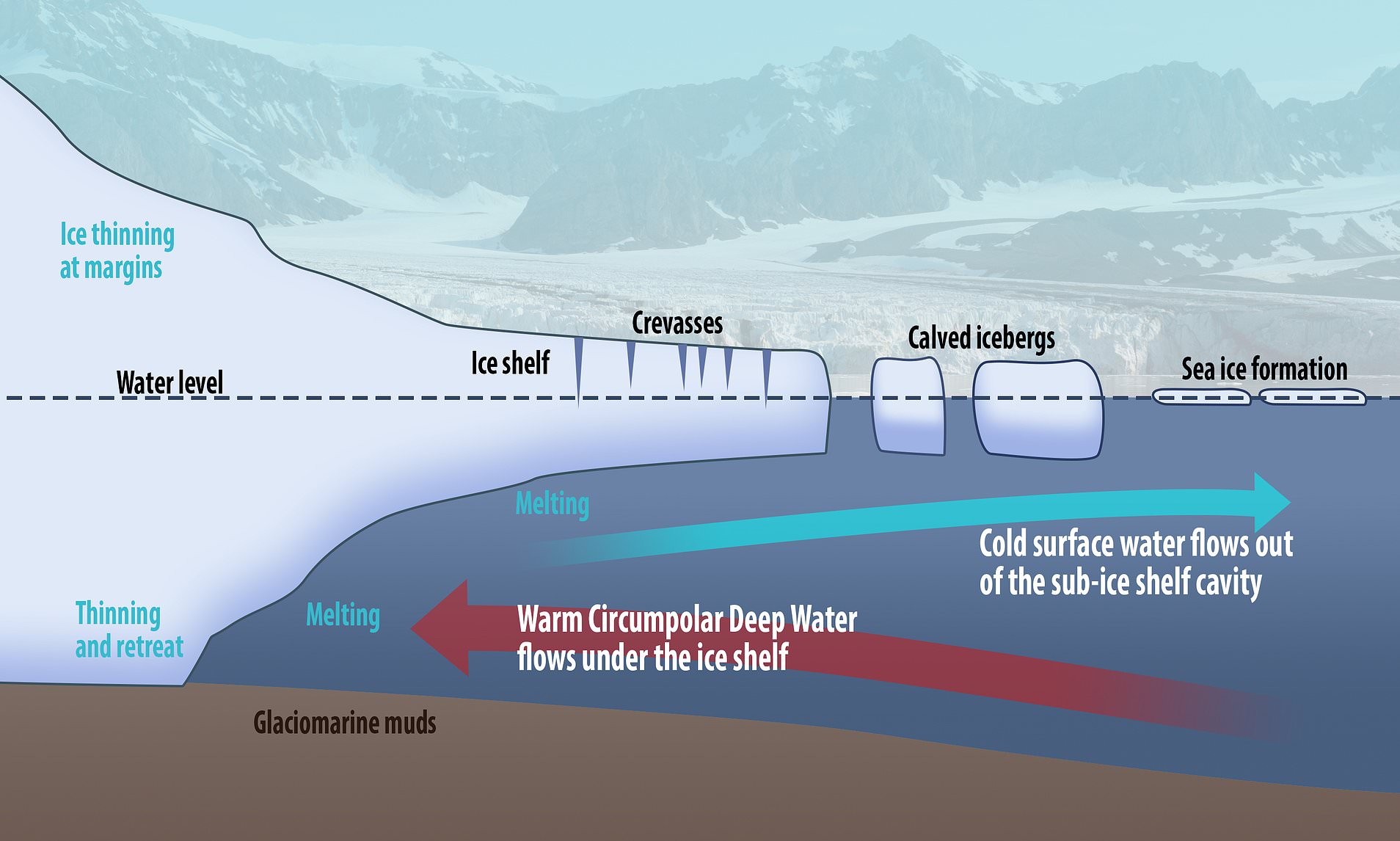
Enormous Antarctic glacier becoming unstable
Boaty McBoatface craft to explore further beneath ‘Doomsday glacier’ than ever before
Glacier the size of the UK contains enough water to raise global sea levels by 65cm
Harry Cockburn, Environment Correspondent,
Antarctica’s enormous Thwaites glacier, AKA the “Doomsday glacier”, is the size of Britain, but is becoming increasingly unstable and poses a major risk to millions of people living on coastlines around the world.
Thwaites contains enough water to directly raise sea levels by 65cm if it collapses, but there are fears it could also spark a chain reaction leading to
even greater sea level rises of several metres. Now, a new research mission has been launched using a fleet of underwater robots, to further investigate the melting ice sheet which is – for now – holding the
glacier back.
Independent 6th Jan 2022
“Don’t Look Up:” Hollywood tackles the myths that fuel climate denial — RenewEconomy

Hollywood’s primer on climate denial illustrates five myths that fuel the rejection of science – including a favourite of Australia’s federal government. The post “Don’t Look Up:” Hollywood tackles the myths that fuel climate denial appeared first on RenewEconomy.
“Don’t Look Up:” Hollywood tackles the myths that fuel climate denial — RenewEconomy
January 9 Energy News — geoharvey

Opinion: ¶ “Unpacking People’s Attitudes Toward Solar Power” • People in the US are increasingly concerned about the climate crisis, and eliminating fossil fuels from the global energy portfolio must take place. While the vast majority of the public supports the development of large-scale community-based solar installations, not everyone agrees. [CleanTechnica] Mojave Desert concentrating solar […]
January 9 Energy News — geoharvey
The nuclear fantasy – time that we ended it -theme for January 2022.

It WAS a great dream – when the atomic scientists thought that they could assuage their guilt by inventing ”atoms for peace”
But that was a great lie. The USA raced on with nuclear reactors producing fuel for nuclear weapons. The British and Russians followed suit – then France, India, Israel, China – just about every nation wants them – Middle Eastern rulers now salivating at the thought.
Everybody piously talks about ”peaceful nuclear”. Now there’s the new champion lie – ”nuclear to save the world from climate change”.
And that feat is to be accomplished by so-called Small Nuclear Reactors (SMRs) – thousands of super-expensive little unicorns that don’t exist. The lying salesmen (who have no conscience) will keep pretending that they’re ”little”, while economies of scale demand that the reactors are put together to make Big nuclear plants.
And still the purpose is – all for the weapons industry. Technology, expertise, funding – to support that real industry – Nuclear weapons – under the sea, on land, in space! The ordinary peasant is not so keen, so investment in SMRs isn’t really happening. The thing is pushed by grandiose gurus like Bill Gates – . and even Gates knows that tax-payer funding is the intended funding system.
I recommend a couple of posts on this website:
Establishment support, secrecy and corruption, in the promotion of dangerous nuclear power. Natrium reactors, like those at Santa Susana.

And don’t think, just because these articles are about America, that the Establishments in UK, Russia France, China etc are any better. The same sort of toxic macho-men are in control of governments there, too.
Time to take the toys from the boys
A warning against fetishizing nuclear power so it’s part of every solution

the enthusiasm overlooks some ugly truths about nuclear power.
Many alternative reactor designs are pitched as if they’re novel. They’re not. A good example is the Natrium reactor
The drawbacks of sodium technology should resonate especially loudly for Californians.
The 1959 explosion of a sodium-cooled test reactor at the government’s secretive Santa Susana Field Laboratory outside Simi Valley remains the worst nuclear accident in U.S. history
Today’s younger environmental activists may be more inclined to accept these promises today because their thinking wasn’t forged in the anti-nuclear protests of the 1960s and 1970s, as was that of their older colleagues.
The danger is that they, and society, may have to learn the harsh lessons of nuclear power’s past all over again.
Nuclear energy backers say it’s vital for the fight against global warming. Don’t be so sure, Los Angeles Times, BY MICHAEL HILTZIKBUSINESS COLUMNIST , JAN. 6, 2022
No one would have believed this possible only a few years ago, but nuclear energy has been creeping up in public estimation, despite its long record of unfulfilled promise and cataclysmic missteps.
The impetus has come from government and big business, among other sources.
Billions of dollars in incentives to keep existing nuclear plants operating and to get new nuclear technologies off the drawing board were enacted as part of the $1.2-trillion infrastructure bill signed late last year by President Biden.
You don’t compromise safety to keep a nuclear plant open so you can meet a carbon target—you need to have minimum, stringent safety standards. – EDWIN LYMAN, UNION OF CONCERNED SCIENTISTS……………

Some celebrity entrepreneurs have weighed in, without demonstrating that they have given the issue the thorough consideration it deserves. Elon Musk last month tweeted that “unless susceptible to extreme natural disasters, nuclear power plants should not be shut down.”Musk didn’t, however, define “extreme natural disasters” or mention the myriad other reasons that a plant might need to be shuttered, such as advanced age, upside-down economics or dangers in its own design or operation……………..
the enthusiasm overlooks some ugly truths about nuclear power.
The history of nuclear power in America is one of rushed and slipshod engineering, unwarranted assurances of public safety, political influence and financial chicanery, inept and duplicitous regulators, and mismanagement on a grand scale.
Many of the problems originated in the government’s decision to place the technology in the hands of the utility industry, which was ill-equipped to handle anything so complicated.
This record accounts for the technology’s deplorable public reputation, which has made it almost impossible to build a new nuclear plant in the U.S. for decades. Forgetting the history threatens to stage the same drama over again.
The debate over the nuclear power future is really two separate debates.
First, there are the optimistic expectations raised by alternatives to the design of the 93 reactors currently in operation in the U.S. — reactors in which a radioactive core heats water, producing steam to drive electricity-generating turbines.
Then there’s the question of what to do with the existing reactors, many of which have lasted well beyond their design lives. Only 28 of these have remained “competitive” — that is, economically viable — according to energy expert Amory Lovins.
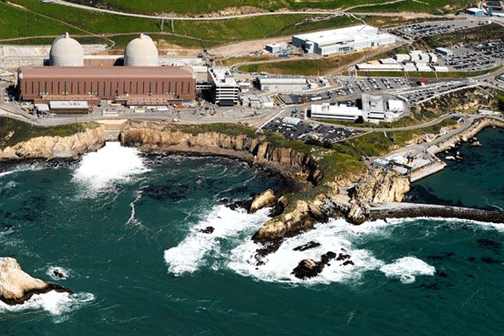
That existing fleet includes Diablo Canyon, whose owner, PG&E, said the plant was facing an unprofitable future when it made the decision to abandon plans to seek a permit renewal from the Nuclear Regulatory Commission.
Many alternative reactor designs are pitched as if they’re novel. They’re not. A good example is the Natrium reactor, which is cooled not by water but liquid sodium and is being promoted by TerraPower, a firm founded by Microsoft billionaire Bill Gates.
Far from an advanced new technology, sodium-cooled reactors date from the very dawn of the nuclear power age. They were considered as an alternative to water-cooled reactors for submarine power plants, for example, by Adm. Hyman Rickover, the founder of America’s nuclear navy.
Rickover, whose rigorous standards for technology and crew training made the nuclear navy a success, ordered a prototype sodium reactor for the submarine Seawolf. Almost instantly, the technology demonstrated its flaws.
While the Seawolf was still at the dock, the reactor sprung a leak. “It took us three months, working 24 hours a day, to locate and correct” the leak, Rickover told a congressional committee in 1957.
Rickover abandoned any thought of using the reactors in his submarines, finding them “expensive to build, complex to operate, susceptible to prolonged shut down as a result of even minor malfunctions, and difficult and time-consuming to repair,” as he advised his Navy superiors and technical experts at the Atomic Energy Commission in late 1956 and early 1957.
The drawbacks of sodium technology should resonate especially loudly for Californians.
The 1959 explosion of a sodium-cooled test reactor at the government’s secretive Santa Susana Field Laboratory outside Simi Valley remains the worst nuclear accident in U.S. history, venting an immense amount of radioactivity into the air and creating what former California EPA Director Jared Blumenfeld called “one of the most toxic sites in the United States by any kind of definition.”
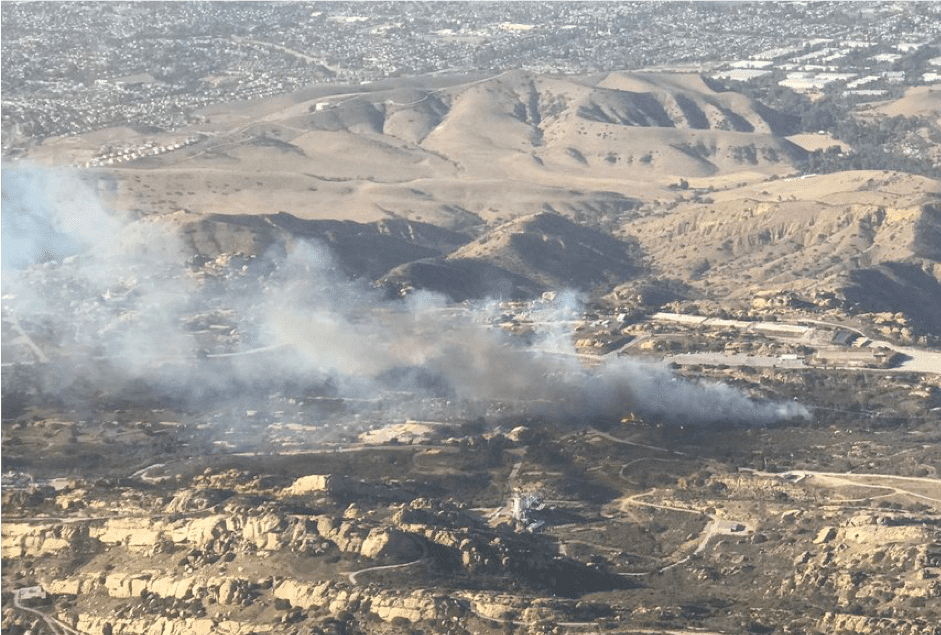
The three entities controlling portions of the site — Boeing Co., the U.S. Department of Energy and NASA — reached agreements with the state in 2007 and 2010 binding them to restore the site to “background” standards. Much of the work still hasn’t begun.
“There’s been a kind of cult that’s been trying to keep this technology alive for decades” despite persistent evidence of its inadequate reliability or sustainability, says Edwin Lyman, director of nuclear power safety at the Union of Concerned Scientists and the author of a report challenging safety and efficiency claims made for Natrium, among other alternative technologies.
“Pretty effective lobbyists” push the idea that “this is somehow a breakthrough technology that’s going to transform nuclear power,” Lyman said of sodium-cooled reactors.
“History tells us that it’s not a very reliable source of power and has a number of safety and security disadvantages that make one wonder why there’s such enthusiasm for it,” he said. None of the other alternatives, he adds, solve the most pressing problem of nuclear power: what to do with the radioactive waste produced by every plant.
………. TerraPower’s utility partner, PacifiCorp, a unit of Berkshire Hathaway (the conglomerate controlled by Warren Buffett), which is to take over the project once it’s operational, has no experience running a nuclear plant.
In any case, the Natrium reactor won’t become operational until 2028 at the earliest. That’s a deadline imposed by the government’s Advanced Reactor Demonstration Program, which is providing some of the funding…….
He cautions against “fetishizing nuclear power so it’s part of every solution.” His view is “you don’t compromise safety to keep a nuclear plant open so you can meet a carbon target — you need to have minimum, stringent safety standards.”
By that measure, there’s hardly any doubt that Diablo Canyon should be shut down, and the sooner the better.
The plant’s history makes that case…………………………………………….
The danger is that claims for the future of nuclear energy — that it will be a cheap and efficient path to a carbon-free future — will be as illusory as those of the past, when nuclear power was also promoted as safe and “too cheap to meter.”
Today’s younger environmental activists may be more inclined to accept these promises today because their thinking wasn’t forged in the anti-nuclear protests of the 1960s and 1970s, as was that of their older colleagues. The danger is that they, and society, may have to learn the harsh lessons of nuclear power’s past all over again. https://www.latimes.com/business/story/2022-01-06/column-nuclear-energy-backers-say-its-vital-for-the-fight-against-global-warming-dont-believe-them?fbclid=IwAR015ej03ZDoUA2kcNoc_mAqJS3D2N8T
Extraditing Julian Assange Threatens Journalists Worldwide

In countries where the press faces restriction and persecution, US interference sets a dangerous precedent. The Nation, By Hasan Ali January 2022
On December 14, while addressing the Foreign Relations Committee of the United States Senate, the ambassador-designate to Pakistan, Donald Armin Blome, pledged that he would champion the press in his new post. “Pakistani journalists and members of civil society face kidnappings, assaults, intimidation and disappearances,” he said, promising to advocate for expanded protections and to hold the perpetrators of these actions to account.
As a Pakistani journalist myself, I ought to have been relieved. In spite of all the talk of its impending decline, the United States remains the world’s preeminent superpower, and you would think that an incoming ambassador throwing his weight behind the media would augur better days for our embattled fraternity. Instead, I cannot help but question his moral authority to lecture anyone in the world on the issue of press freedom. Three successive administrations of the country he represents have mercilessly gone after Julian Assange, the long-tortured founder and publisher of Wikileaks, whom the United States government is trying to place in the dock on trumped-up charges of incitement and espionage.
On December 10—just four days before Blome made his speech—a British court ruled that Assange could be extradited to the United States to stand trial, where he faces a maximum sentence of 175 years’ imprisonment.
We have already read in these pages about the impact such a prosecution would have on the First Amendment. Let us now widen the net and examine what it will do to those of us who work outside the glittering republic. In Pakistan, the perils of telling the truth have never been greater. Scores of journalists—a handful of them spoke to The Nation in August—have been targeted because the state did not approve of their work. Indeed, so brazen has been this policy of intimidation that in the same week that this magazine published its report, the brother of one of the journalists profiled was abducted in broad daylight from the streets of Lahore.
The story is not very different beyond Pakistan’s borders either. In our neighbor to the east, India, which is supposed to be the world’s largest democracy, journalists are routinely charged with sedition and incitement, or else beaten and tortured for writing the wrong tweet. In Afghanistan, ever since the Taliban took control, hundreds if not thousands of reporters have fled, with the Afghan Journalists Safety Committee estimating that some 70 percent of the country’s news outlets have ceased operations. Then there is Iran, our Western neighbor, where female journalists are banned for blowing the whistle on workplace harassment, locked up for publishing material that is deemed irreligious, and murdered for taking photographs of public protests. Finally, there is China, with whom we share a border to the northeast. It ranks 177 of the 180 on the World Press Freedom Index and has become even more repressive in the wake of Covid 19.
Which returns us to the case of Assange, who is being punished for publishing documents that prove that the United States committed war crimes in Afghanistan and Iraq. Daniel Bastard, Asia-Pacific director of Reporters Without Borders, says, “The way the US has been treating Julian Assange is clearly giving a blank cheque to authoritarian governments around the world to crack down on press freedom and force into silence journalists and information providers who displease them.” His view is shared by his colleague Rebecca Vincent, who argues that the persecution of Assange will undermine US efforts to promote the cause of press freedom internationally. “If the Biden administration is serious about its commitment to media freedom, they would lead by example and end this more than decade-long persecution now.”………….
Sadly, what we have witnessed in the first 11 months of Biden’s premiership is a continuation of the same policy positions that left critics of the previous administration convulsing with anger. The United States continues to sell arms to Saudi Arabia; leaders of countries with which it has important strategic partnerships—Abdel Fatah el-Sisi and Volodomyr Zelensky, to name a couple—are being allowed to punish those who would hold them to account; and the preeminent chronicler of American atrocity, Julian Assange, is being tormented for doing what any courageous reporter with access to the same information would have done in a heartbeat………..
If the United States were to free Assange, it would send a powerful message to the political establishment of repressive regimes around the world that the US has ceased to believe that journalism is a crime.
Otherwise, things will carry on as they are. My colleagues will continue to be abducted in broad daylight; many will return to tell the tale to police officers who won’t register their complaints out of fear; some, like Mudassar Naaru, will disappear altogether. Others, like Saleem Shahzad, will be found dead in a ditch.
And all the while, the likes of Donald Blome will find themselves in drawing rooms with unscrupulous leaders who will earnestly nod their heads while listening to sermons on press freedom, without ever really feeling under pressure to change their ways. https://www.thenation.com/article/society/assange-extradition-journalism/witter
To preserve the planet, we must reduce our consumption of resources.

To save the planet, the degrowth movement calls not for us to sacrifice prosperity, but to redefine it. UNDARK, BY PETER SUTORIS 12.30.2021 THE GLOBAL CONVERSATION about climate change has revolved largely around a single, misguided idea: that we can replace carbon-intensive technologies with cleaner ones and reach the goal of net zero greenhouse gas emissions without fundamentally altering our economy. In other words, that we can achieve, and indefinitely maintain, green growth.
But a competing narrative argues that infinite growth on a finite planet is impossible, and that even supposedly green technologies will perpetuate the extraction of natural resources and the destruction of the natural environment. Even if these technologies help us mitigate climate change to an extent, they might backfire, for example, by disrupting biodiversity. In this narrative, the underlying problem lies not in the so-called cleanliness of our technologies but in our compulsion to keep growing our economies.
Proponents of this second view argue that to preserve the planet, we must reduce our consumption of resources, a strategy that has come to be known as degrowth. This approach calls for us to shrink parts of our economy, and to move away from measures such as gross domestic product as indicators of economic health…………
Degrowth doesn’t imply a radical decline in living standards, as some commentators have suggested, nor does it mean that poor people would become even poorer. This is because degrowth calls not only for reducing the extraction of resources but also for distributing those resources more equitably. Neither does degrowth mean that all sectors of the economy would shrink; sectors less dependent on resource extraction, such as education and health care, could keep expanding.
But even more importantly, degrowth is too often portrayed merely as an economic idea when it is, in fact, just as much a cultural notion. The culture of degrowth calls for us to view ourselves as stewards of the planet. It pushes us to recognize that our relationship with the natural environment is a two-way street — that we must take care of nature if we want nature to take care of us. And it calls for us to respect our planet’s limits, to look out for other species, and to recognize that our own fate is tied up with the health of the ecosystems we inhabit.
A culture of degrowth sees justice as intergenerational, and respects the rights of the world’s future inhabitants.
What would it take for society to embrace degrowth as a new cultural paradigm?
We can start by questioning the underlying ideologies that have enabled our economic system for decades, including extractivism, the idea that the earth is ours to exploit, and speciesism, the idea that human beings are morally superior to all other species, which fuels the widespread belief that non-human species are essentially disposable…………..
our current global system of infinite growth didn’t emerge by chance. It was partly an outgrowth of cultural forces that took hold in the post-World War II era: a revolution in advertising, media coverage that stressed the benefits of capitalism and globalization, and a drumbeat of Hollywood films depicting material wealth as the symbol of success.
Similar forces could be marshalled to drive a cultural shift toward degrowth…………..
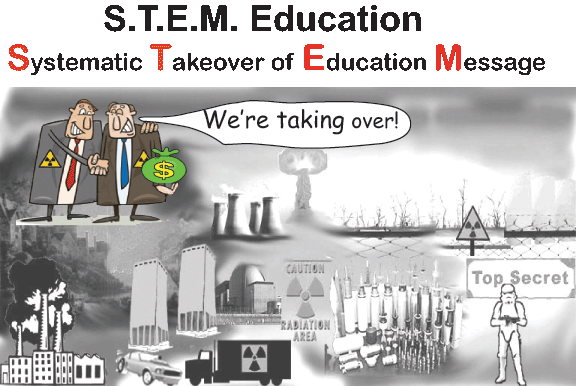
Education is another space that shapes culture. Many of the world’s education systems are currently focussed on churning out productive workers who can keep the infinite-growth economy spinning. Even at so-called elite educational institutions, critical thinking too often equates with problem solving for infinite growth. Our education systems — currently preoccupied with STEM subjects, and with imparting technology skills demanded by corporate employers — must place greater emphasis on creativity, imagination, and political engagement. We need to be able to imagine alternative futures before we can bring them into being, and degrowth is no exception…………
Ultimately, degrowth is inevitable. We will either choose this path voluntarily, or we will be forced into it violently and uncontrollably as a result of environmental disasters. If we want to prevent the suffering and tragedies that accompany such drastic shifts, we must bring about a culture of degrowth. And where the cultural winds blow, the political winds will follow.
Peter Sutoris, Ph.D., is an environmental anthropologist based at University College London, and the author of “Visions of Development” (Oxford University Press) and the forthcoming “Educating for the Anthropocene” (The MIT Press). More about his research can be found at www.petersutoris.com and he tweets @PSutoris. https://undark.org/2021/12/30/degrowth-isnt-just-about-the-economy-its-about-culture/
Maori workers exposed to radiation in cleaning up USA’s failed nuclear reactor in Antarctica
Detour: Antarctica – Kiwis ‘exposed to radiation’ at Antarctic power plant, https://www.nzherald.co.nz/travel/detour-antarctica-kiwis-exposed-to-radiation-at-antarctic-power-plant/NY5WTQ72JF4OFUW4F35ZSUCB6U/ 8 Jan, 2022 By Thomas Bywater, Thomas Bywater is a writer and digital producer for Herald Travel
In a major new Herald podcast series, Detour: Antarctica, Thomas Bywater goes in search of the white continent’s hidden stories. In this accompanying text series, he reveals a few of his discoveries to whet your appetite for the podcast. You can read them all, and experience a very special visual presentation, by clicking here. To follow Detour: Antarctica, visit iHeartRadio, or wherever you get your podcasts.
The Waitangi Tribunal will consider whether NZ Defence Force personnel were appropriately warned of potential exposure to radiation while working at a decommissioned nuclear reactor in Antarctica.
It’s among a raft of historic claims dating from 1860 to the present day before the Military Veterans Inquiry.
After an initial hearing in 2016, the Waitangi Tribunal last year admitted the Antarctic kaupapa to be considered alongside the other claims.
“It’s been a bloody long journey,” said solicitors Bennion Law, the Wellington firm representing the Antarctic claimants.
Between 1972 and the early 1980s, more than 300 tonnes of radioactive rubble was shipped off the continent via the seasonal resupply link.
Handled by US and New Zealand personnel without properly measuring potential exposure, the submission argues the Crown failed in its duty of care for the largely Māori contingent, including NZ Army Cargo Team One.
“This failure of active protection was and continues to be in breach of Te Tiriti o Waitangi,” reads the submission.
The rubble came from PM3A, a portable nuclear power unit on Ross Island, belonging to the US Navy. Decommissioned in 1972, its checkered 10-year operating history led it to be known as ‘Nukey Poo’ among base inhabitants. After recording 438 operating errors it was shut off for good.
Due to US obligations to the Antarctic Treaty, nuclear waste had to be removed.
Peter Breen, Assistant Base Mechanic at New Zealand’s Scott Base for 1981-82, led the effort to get similar New Zealand stories heard.
He hopes that NZDF personnel involved in the cleanup of Ross Island might get medallic recognition “similar to those who were exposed at Mururoa Atoll”. Sailors were awarded the Special Service Medal Nuclear Testing for observing French bomb sites in the Pacific in 1973, roughly the same time their colleagues were helping clear radioactive material from Antarctica.
A public advisory regarding potential historic radiation exposure at McMurdo Station was published in 2018.
Since 1975 the Waitangi Tribunal has been a permanent commission by the Ministry of Justice to raise Māori claims relating to the Crown’s obligations in the Treaty of Waitangi.
The current Military Veterans’ Kaupapa includes hearings as diverse as the injury of George Nepata while training in Singapore, to the exposure of soldiers to DBP insecticides during the Malayan Emergency.
Commenced in 2014 in the “centenary year of the onset of the First World War” the Māori military veterans inquiry has dragged on to twice the duration of the Great War.
Of the three claimants in the Antarctic veterans’ claim, Edwin (Chaddy) Chadwick, Apiha Papuni and Kelly Tako, only Tako survives.
“We’re obviously concerned with time because we’re losing veterans,” said Bennion Law.
Detour: Antarctica is a New Zealand Herald podcast. You can follow the series on iHeartRadio, Apple Podcasts, Spotify or wherever you get your podcasts.
Nuclear is not a practicable means to combat climate change.

“Nuclear is just not part of any feasible strategy that could counter climate change.”
Communiqué – Statement: Former Heads of Nuclear Regulation and Governmental Radiation Protection Committees: Nuclear is not a Practicable Means to Combat Climate Change. Nuclear Consulting Group 6th Jan 2022 www.ccnr.org/nuclear_climate_change_2022.pdf
Dr. Greg Jaczko, former Chairman of the U.S. Nuclear Regulatory Commission.
Prof. Wolfgang Renneberg, former Head of the Reactor Safety, Radiation Protection and Nuclear Waste, Federal Environment Ministry, Germany.
Dr. Bernard Laponche, former Director General, French Agency for Energy Management, former Advisor to French Minister of Environment, Energy and Nuclear Safety.
Dr. Paul Dorfman, former Secretary UK Govt. Committee Examining Radiation Risk from Internal
Emitters.
The climate is running hot. Evolving knowledge of climate sensitivity and polar ice melt-rate makes clear that sea-level rise is ramping, along with destructive storm, storm surge, severe precipitation and flooding, not forgetting wildfire. With mounting concern and recognition over the speed and pace of the low carbon energy transition that’s needed, nuclear has been reframed as a partial response to the threat of global heating. But at the heart of this are questions about whether nuclear could help with the climate crisis, whether nuclear is economically viable, what are the consequences of nuclear accidents, what to do with the waste, and whether there’s a place for nuclear within the swiftly expanding renewable energy evolution.
As key experts who have worked on the front-line of the nuclear issue, we’ve all involved at the highest governmental nuclear regulatory and radiation protection levels in the US, Germany, France and UK. In this context, we consider it our collective responsibility to comment on the main issue: Whether nuclear could play a significant role as a strategy against climate change.
The central message, repeated again and again, that a new generation of nuclear will be clean, safe, smart and cheap, is fiction. The reality is nuclear is neither clean, safe or smart; but a very complex technology with the potential to cause significant harm. Nuclear isn’t cheap, but extremely costly. Perhaps most importantly nuclear is just not part of any feasible strategy that could counter climate change. To make a relevant contribution to global power generation, up to more than ten thousand new reactors would be required, depending on reactor design.
In short, nuclear as strategy against climate change is:
• Too costly in absolute terms to make a relevant contribution to global power production
• More expensive than renewable energy in terms of energy production and CO2 mitigation, even taking into account costs of grid management tools like energy storage associated with renewables roll-out.
• Too costly and risky for financial market investment, and therefore dependent on very large public subsidies and loan guarantees.
• Unsustainable due to the unresolved problem of very long-lived radioactive waste.
• Financially unsustainable as no economic institution is prepared to insure against the full potential cost, environmental and human impacts of accidental radiation release – with the majority of those very significant costs being borne by the public.
• Militarily hazardous since newly promoted reactor designs increase the risk of nuclear weapons proliferation.
• Inherently risky due to unavoidable cascading accidents from human error, internal faults, and external impacts; vulnerability to climate-driven sea-level rise, storm, storm surge, inundation and flooding hazard, resulting in international economic impacts.
• Subject to too many unresolved technical and safety problems associated with newer unproven concepts, including ‘Advanced’ and Small Modular Reactors (SMRs).
• Too unwieldy and complex to create an efficient industrial regime for reactor construction and operation processes within the intended build-time and scope needed for climate change mitigation.
• Unlikely to make a relevant contribution to necessary climate change mitigation needed by the 2030’s due to nuclear’s impracticably lengthy development and construction time-lines, and the overwhelming construction costs of the very great volume of reactors that would be needed to make a difference.
1 This month
17 October, Free Public Talk on Nuclear Issues in South Australia
David Noonan will speak on public interest concerns over the new Roxby Downs Indenture Act 2026 on BHP copper-uranium mining and ore processing in SA, and on how AUKUS may face SA with a High-Level nuclear waste agenda.
Dr Jim Green will discuss international developments in the field of nuclear power including ‘small modular reactors’ and Generation 4 ‘advanced’ nuclear reactor concepts.


Help Aunty Sue Protect Her Land and Sacred Sites From Destructive Rocket Testing.
.

Australians deserve the truth
about
AUKUS – https://aukuspublicinquiry.com/

PETITION – To: Prime Minister Anthony Albanese and the Australian Labor Government

of the week – Australians for War Powers Reform (AWPR)
To see nuclear-related stories in greater depth and intensity

