Including nuclear power as ”sustainable” completely undermines the European taxonomy’s original aim of the Green Deal
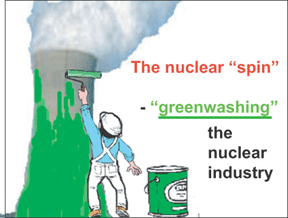
The published proposal is an incredible greenwashing of long outdated and dangerous technologies. It undermines the taxonomy’s original goal of providing investments for an ecological restructuring of society – the Green Deal.
Instead, the proposal keeps the nuclear technology, which has long since failed in reality, alive and tempts to rely on fossil gas for too long. Every euro that flows into nuclear and gas based on this
classification is missing for real sustainability and effective climate protection.
Ausgestrahlt 5th Jan 2022
https://www.ausgestrahlt.de/blog/2022/01/05/eu-taxonomie-analysiert-yellow-deal-statt-klimaschutz/
Government Wants YOU to Pay for New Nuclear

Thanks to CND for this information: The government is trying to force through controversial new legislation which will make consumers bankroll the nuclear power industry, whilst giving them no protection from spiralling costs. This will force thousands more families into fuel poverty. The electricity generated from nuclear power is double the costs of renewables. Nuclear […]
Government Want YOU to Pay for New Nuclear — RADIATION FREE LAKELAND (UK) ON BY MARIANNEWILDART
The government is trying to force through controversial new legislation which will make consumers bankroll the nuclear power industry, whilst giving them no protection from spiralling costs. This will force thousands more families into fuel poverty. The electricity generated from nuclear power is double the costs of renewables. Nuclear is hampered by generic design flaws, long delays and safety risks. It’s dangerous to people and planet. To meet Britain’s 2050 net zero goals, instead of forcing consumers to bankroll a failed industry, the government should be investing more in renewables.
Contact your MP, urging them to vote against the Bill on Monday 10th January. See briefing CND is sending to MPs.
We are writing now to urge you to vote against the Nuclear Energy (Finance) Bill which has its final reading in the House of Commons on Monday 10 January.
This controversial new legislation will force consumers to bankroll the nuclear power industry, whilst giving them no protection from spiralling costs. This will force thousands more families into fuel poverty.
The Bill will enable energy companies to charge consumers to construct and operate new nuclear power plants under a regulated asset base (RAB) funding model. Evidence shows that under such models, costs for nuclear power stations abandoned during construction as well as cost over-runs of $2.1 billion are all being passed on to consumers. Richard Hall, Chief Energy Economist at Citizens Advice, who gave evidence to the parliamentary Committee examining the Bill, argues ‘…consumers do not have any control over the risk. Essentially, they are the passive recipient of the risks.’
The electricity generated from nuclear power is twice the price of renewables. Nuclear is hampered by generic design flaws, long delays and safety risks. It’s dangerous to people and planet. To meet Britain’s 2050 net zero goals, instead of forcing consumers to bankroll this costly, inefficient and dangerous form of power generation, the government should be investing in renewables and making homes energy-efficient to reduce carbon emissions as well as energy bills.
As you know there is no “away” for nuclear wastes and the government are presently spending eyewatering amounts of money on public relations largely in Cumbria to try and persuade the County to bury heat generating nuclear wastes under our precious and irreplacable land and sea. The reason? Not for safety’s sake but in order to clear the decks for more nuclear crapola for which we all must pay time and time again in every way possible?
We urge you to vote against this Bill.
with many thanks
Marianne Birkby on behalf of
Radiation Free Lakeland
“Don’t Look Up” was good for climate cinema, even if you hated it
“Don’t Look Up” was good for climate cinema, even if you hated it
As critics debate Adam McKay’s latest film, perhaps the better question is where movies about climate change should go from here.
January 7 Energy News — geoharvey

World: ¶ “Volkswagen Is Finally Launching The ID Buzz!” • Without a doubt, an electric version of the iconic VW hippie bus was bound to attract interest. And it did, as Volkswagen dragged it out, over and over again. Now, it appears that Volkswagen will actually launch the ID. Buzz on March 9. So implies […]
January 7 Energy News — geoharvey
The Insufferable Hypocrisy of Western Governments Hell-Bent on Destroying Julian Assange
| By Eric Garris / Antiwar.com Blog In his New Year’s message, South China Morning Post chief news editor Yonden Lhatoo demands Western governments free WikiLeaks founder Julian Assange before preaching press freedom to everyone else |
The Australian government is complicit with USA and UK imperilling the health of Julian Assange, may well cause his death.
AUKUS alliance driving Assange to his death, https://independentaustralia.net/life/life-display/aukus-alliance-driving-assange-to-his-death,15904, By John Jiggens | 6 January 2022, The actions of the U.S., UK and Australia are imperiling the health of Julian Assange and could result in the tragic death of the publisher, writes John Jiggens.
THE NEWS THAT Julian Assange has suffered a stroke while detained in London’s Belmarsh Prison has strengthened the fears of Assange supporters that the AUKUS alliance is comfortable with the WikiLeaks’ founder’s death at their hands.
But would an Australian Government be complicit in a plot against one of its own citizens?
Consider these recent stories.
In September 2021, Yahoo! News revealed that Mike Pompeo, who was the CIA Director in 2017, became party to a scheme to kidnap Assange from the Ecuadorean Embassy or to assassinate him.
The Yahoo! investigation was based on conversations with 30 former U.S. officials. Among those interviewed, eight provided details on plans to kidnap Assange.
Greg Barns SC, a barrister and advisor to Julian Assange, told Bay FM:
“It was like something out of a James Bond film, except sadly, it was very true. There was a clear plan to take Assange out. We now have the Australian Government on notice that one of its citizens was the subject of a conspiracy to murder plot by the CIA.”
Further, he remarked:
The conduct of the CIA was outrageous, unlawful and represents a complete breach of the so-called alliance or friendship between Australia and the United States.
The CIA acts essentially as a criminal enterprise. It is state-sanctioned criminality. To be overtly planning to murder someone in any circumstances would amount to a conspiracy to murder for anyone else and the persons would face very serious criminal charges.
The Yahoo! report prompted prominent Assange supporters to write to Prime Minister Scott Morrison, asking if the Australian Government accepted the behaviour of an ally plotting to murder an Australian citizen and questioning whether Australian intelligence agencies participated in the plot or were notified about it.
Five weeks passed while Morrison’s office composed a 100-word reply.
It acceped no responsibility or accountability whatsoever. Indeed, Morrison’s reply did not deny Australian involvement or knowledge of the plot.
Instead it passed the buck, advising:
Concerns about the legality or propriety of the activities of Australian intelligence agency are best directed to the IGIS, the Inspector General of Intelligence and Security.’
During the UK High Court extradition appeal in October, the Courier Mail ran another story, titled ‘Assange snubbed Aussie help 29 times, says Payne’.
Why, in the middle of Assange’s High Court hearing, was Foreign Minister Marise Payne using her friends in the Murdoch media to portray Assange as un-Australian, snubbing her patriotic ‘’Aussie help’’?
Assange’s father John Shipton commented:
“I get no help from Marise Payne in any way whatsoever. Saying I have been snubbed 29 times by Julian is to defend her. It’s only to defend her. It’s nothing to do with Julian.”
The family have continually asked for Payne and Morrison to actively engage with Australia’s UK and U.S. allies. They see extradition as an outrageous surrender of Australian sovereignty and they expect that Morrison and Payne should tell UK Prime Minister Boris Johnson and U.S. President Joe Biden so.
Shipton, who has travelled to 50 countries to garner support for Julian, said:
“Everywhere I go, people ask where is the Australian Government in this? What is the substance of Australia in its relationship with the UK that it allows this show trial to go on without comment?”
Australia’s ambitious weapons plan -Joint Air Battle Management System (JABMS) AIR-6500
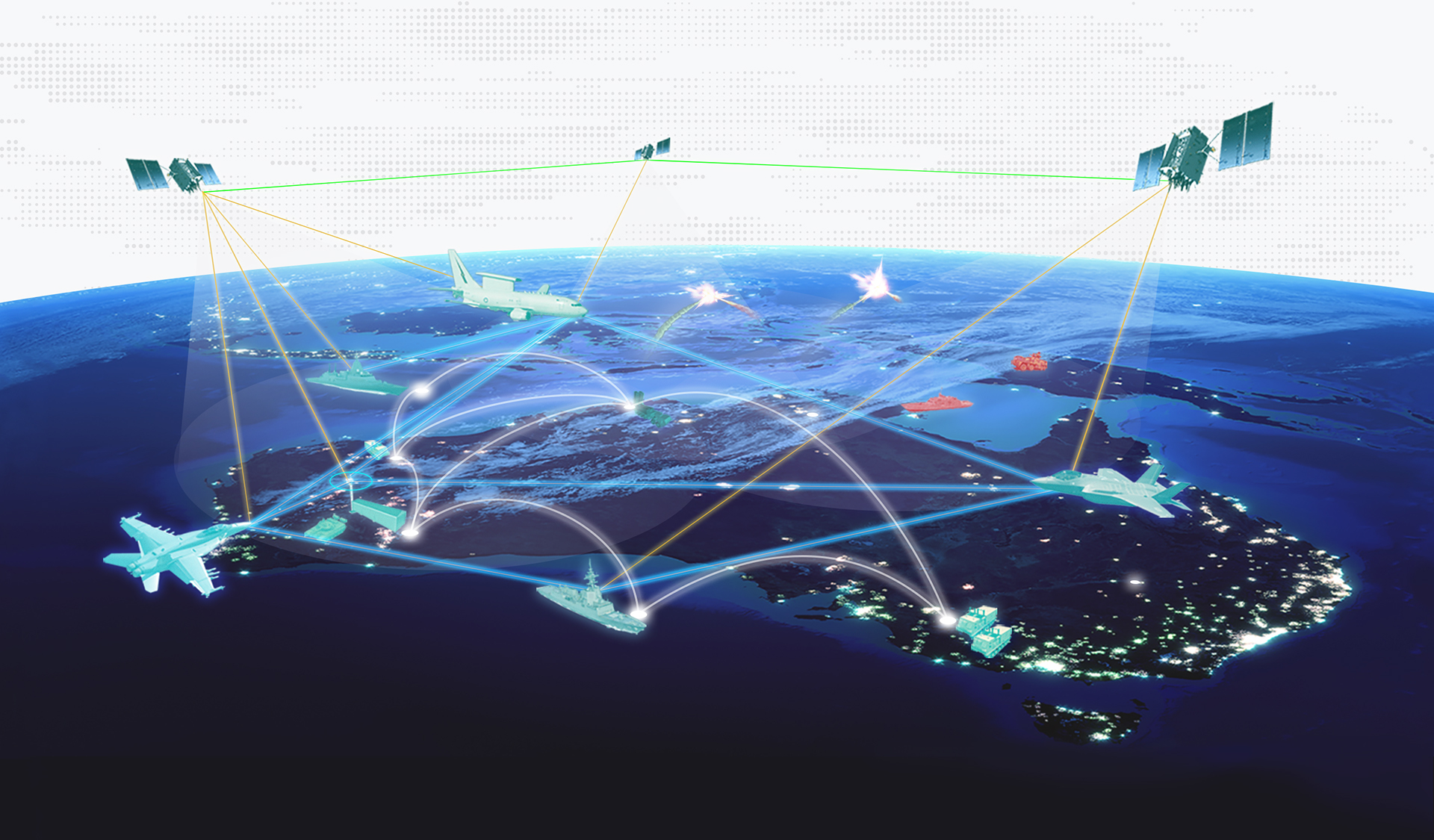
Move Over Nuclear Subs & F-35 Stealth Fighters, This Weapon System Is The ‘Most Ambitious’ Military Project In Australia, The Eurasian By Sakshi Tiwari– January 4, 2022 Australia, a key player in the Indo-Pacific region, has been making concerted efforts to increase its military capability. From hosting the first Marine Rotational force in 2011 to signing the AUKUS pact for a nuclear submarine, Australia has come a long way.
So far, the big projects the Australian Defence Force (ADF) has undertaken are for submarines, combat reconnaissance vehicles, F-35 fifth-generation stealth fighters, infantry fighting vehicles among others.
Now, the country is pursuing its most ambitious military project — the indigenous Joint Air Battle Management System (JABMS), which could be a game-changer in the near future. The JABMS, also called AIR-6500, forms the core of the future Integrated Air and Missile Defense capabilities, according to the Australian Defence Magazine.
The AIR 6500 is the cornerstone of the Royal Australian Air Force’s fifth-generation archway. Its goal is to bring all platforms and sensors from all warfighting domains together in a single interface that can track threats, organize a combined response, and guide that response toward the target. It’s emblazoned with the phrase “all sensor, best shooter.”
In August of last year, the Australian Department of Defense (DoD) chose Lockheed Martin and Northrop Grumman for the AIR6500 Phase I project, as previously reported by Airforce Technology.
(Ed. note: They have the nerve to call this ”indigenous technology)
Australia currently relies on Space-Based Infrared System (SBIRS) for surveillance, and one possibility for the next-generation OPIR satellites which are in the works would be to maintain this reliance. Both these systems are US-made………………..
The technology being provided to Australia comes from the US Army’s Integrated Air Missile Defense Battle Command System, which is at the heart of the US Army’s next-generation air and missile defense capacity, according to Zeitz. To put it another way, this model is an ‘all sensor, greatest shooter’ model.
“There are a large number of people who are actively working on AIR 6500 today and the majority of them are in Australia,” Steve Froelich, Lockheed Martin Australia (LMA) program executive for AIR 6500, said………………
The relationship between Australia and China remains strained due to the former’s participation in Quad [US, Japan, Australia and India], which China has termed as the Asian NATO. Canberra becoming a part of AUKUS for the acquisition of nuclear submarines has made matters worse.
https://eurasiantimes.com/move-over-f-35-nuclear-subs-this-weapon-most-ambitious-australia/—
Would the Murray-Darling Basin survive another Millennium drought?
Would the Murray-Darling Basin survive another Millennium drought?
The Millennium drought didn’t just expose river beds — it also exposed deep tensions between environmental and economic interests. More than a decade has passed since that drought broke, but is the Murray-Darling Basin better placed to fend off the consequences of another protracted dry spell?
The world’s greatest garbage dump – space !

441,449 LOW EARTH ORBIT SATELLITES. Operating, Approved and Proposed …………………..
THE WORLD’S LARGEST GARBAGE PIT
And not only do thousands of whole satellites threaten the heavens, but a phenomenal amount of debris orbits the earth as a result of satellites colliding, or exploding, or otherwise being destroyed while in space. During the 64 years that humans have been launching rockets, the protective blankets of the ionosphere and magnetosphere have become the Earth’s largest garbage pit.
According to the European Space Agency there are, in orbit around the Earth today, 7,790 intact satellites, of which 4,800 are functioning. Since 1957, there have been more than 630 breakups, explosions, collisions, and other satellite-destroying events. This has resulted in the creation of more than 9,700 tons of space debris. There are, in orbit today:
- 30,430 debris objects presently being tracked
- 36,500 objects larger than 10 cm in size
- 1,000,000 objects from 1 cm to 10 cm in size
- 330,000,000 objects from 1 mm to 1 cm in size
EFFECTS ON OZONE, EARTHQUAKES, AND THUNDERSTORMSOzone In a 2020 paper titled “The environmental impact of emissions from space launches: A comprehensive review,” Jessica Dallas and her colleagues at the University of New South Wales wrote that “ozone depletion is one of the largest environmental concerns surrounding rocket launches from Earth.”
In 2021, there were 146 orbital rocket launches to put 1,800 satellites into space. At that rate, to maintain and continually replace 100,000 low-earth-orbit satellites, which have an average lifespan of five years, would require more than 1,600 rocket launches per year, or more than four every day, forever into the future.
2020 and 2021 witnessed two of the largest Antarctic ozone holes since measurements began in 1979. The 2020 hole was also the longest-lasting on record, and the 2021 hole was only a few days shorter; larger than the continent of Antarctica, it began in late July 2021 and ended on December 28, 2021. Everyone is still blaming chlorofluorocarbons (CFCs), which were banned by the Montreal Protocol in 1978. Nobody is looking at rocket launches, of which there were more in 2020 and 2021 than in any previous year. In addition to the 146 orbital launches in 2021, there were 143 sub-orbital launches of rockets to over 80 kilometers in altitude, for a total of 289 high-altitude launches for the year, or almost one every day.
Earthquakes and Thunderstorms
Earthquakes and Thunderstorms
In 2012, Anatoly Guglielmi and Oleg Zotov reviewed evidence that the global use of electricity has an effect on both seismic activity and thunderstorms…………………………………………… Everyone is so focused on a virus, and on antennas on the ground, that no one is paying attention to the holocaust descending from space. https://www.cellphonetaskforce.org/wp-content/uploads/2022/01/441449-Low-Earth-Orbit-Satellites.pdf
Nuclear submarine visiting Gibraltar puts people and the environment in danger
Gibraltar fury erupts as US submarine told to leave Rock over ‘nuclear risk’
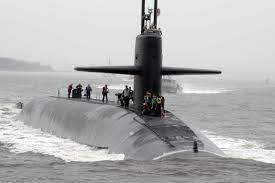
A US submarine has been urged to leave Gibraltar in order to stop putting the Rock at “nuclear risk”. Express UK, By MICHAEL CURZON, Tue, Jan 4, 2022. The USS Albany made a scheduled port visit in Gibraltar on December 30, 2021. Ecological campaigners criticised the visit as putting the Rock at a ”nuclear risk” over the New Year period and demanded the submarine to “leave”.
Spanish non-governmental organisation Verdemar Ecologistas en Acción said the presence of nuclear submarines at the rock puts thousands of people – along with the environment – at risk.
It said: “Campo de Gibraltar does not want to participate in any submarine war.
“We continue to insist that these submarines are floating bombs and put our families and our environment at risk.”
The organisation was equally critical in December following reports of a UK Astute-class vessel docking in Gibraltar. ………….
t also doubled down on its insistence that the submarine “leave and stop putting at nuclear risk” the Cadiz coast of the Strait of Gibraltar.
The USS Albany made a further stop in December off the coast of Limassol, Cyprus and engaged in coordinated operations with NATO.
Additional reporting Maria Ortega. https://www.express.co.uk/news/world/1544360/gibraltar-news-us-submarine-nuclear-risk-uss-albany
Falkland Islands in a nuclear-free zone, yet Britain deployed 31nuclear weapons there.
UK Deployed 31 Nuclear Weapons During Falklands War, January 5, 2022 British warships in 1982 were armed with dozens of nuclear depth charges in a nuclear-free zone in Latin America, Richard Norton-Taylor reports. Consortium News, By Richard Norton-Taylor Declassified UK.
The revelation is contained in a new file released to the National Archives. Marked “Top Secret Atomic,” it shows that the presence of the nuclear weapons caused panic among officials in London when they realized the damage, both physical and political, they could have caused.
The military regime in Argentina claimed the Falkland islands and invaded on April 2, 1982. The U.K. government under Margaret Thatcher dispatched a naval task force to the South Atlantic to retake the islands.
A Ministry of Defence (MoD) minute, dated April 6, 1982, referred to “huge concern” that some of the “nuclear depth bombs” could be “lost or damaged and the fact become public.” The minute added: “The international repercussions of such an incident could be very damaging.”
Nuclear depth bombs are deployed from navy ships to attack submerged submarines.
The unidentified official who wrote the minute continued:
“The secretary of state [John Nott] will wish to continue the long-established practice of refusing to comment on the presence or absence of UK nuclear weapons at any given location at any particular time.”
Heated Row
The existence of the weapons provoked a heated row between the MoD and the Foreign Office. The latter asked the MoD to “unship” the weapons. The Navy refused to do so……………………………….
Nuclear Free Zone
The Foreign Office was also anxious about the presence of the nuclear weapons because of the 1967 Treaty of Tlatelolco. This established a nuclear free zone in Latin America and surrounding waters, including the Falklands.
Although Britain had signed and ratified the treaty’s protocols other countries, including Argentina, had not done so. According to Freedman, Margaret Thatcher insisted that no ship carrying nuclear weapons would enter the three-mile territorial waters around the Falklands which would be a “potential breach” of the Tlatelolco treaty.
The MoD admitted in 2003 that British ships in the task force carried nuclear weapons and that a weapon container had been damaged. But the number of weapons had not been revealed before this document was transferred to the National Archives in Kew, south west London.
But a number of documents from the file have been weeded by the MoD or the Cabinet Office. They include an intriguing note, dated April 11, 1982, beginning “The Chiefs of Staff believe…” What they believed we are not allowed to know.
What About Gibraltar?
Many more documents are missing from a separate file, now declassified, entitled “Gibraltar: Impact of the Falklands Crisis”.
Gibraltarians, like the Falkland Islanders, inhabited a British “Overseas Territory” and were concerned because Spain supported Argentine claims of sovereignty over the islands just as it claimed Gibraltar, the large rock and British base on the southern tip of the Iberian peninsula.
Whitehall weeders have withheld no fewer than 73 documents from the Gibraltar file. They have done so under exemptions in the Freedom of Information Act, and, specifically, sections 27(i), 40 (2), and 41.
These cover information whose disclosure might “prejudice” the interest of the U.K. abroad, “personal data” and “information provided in confidence.” Passages in other documents in the file have also been excised.
What has the British government to hide? Documents declassified previously may offer some clues. Thatcher repeatedly expressed concern about the implications of the Falklands crisis for Gibraltar.
Despite the public rhetoric, successive U.K. governments have been prepared to negotiate about sovereignty of the Falklands and sought a joint sovereignty agreement with Spain over Gibraltar in 2000 and again in 2002. This article is from Declassified UK. https://consortiumnews.com/2022/01/05/73354/
Hundreds of thousands of satellites brightening the night sky with negative effects on the ecosphere
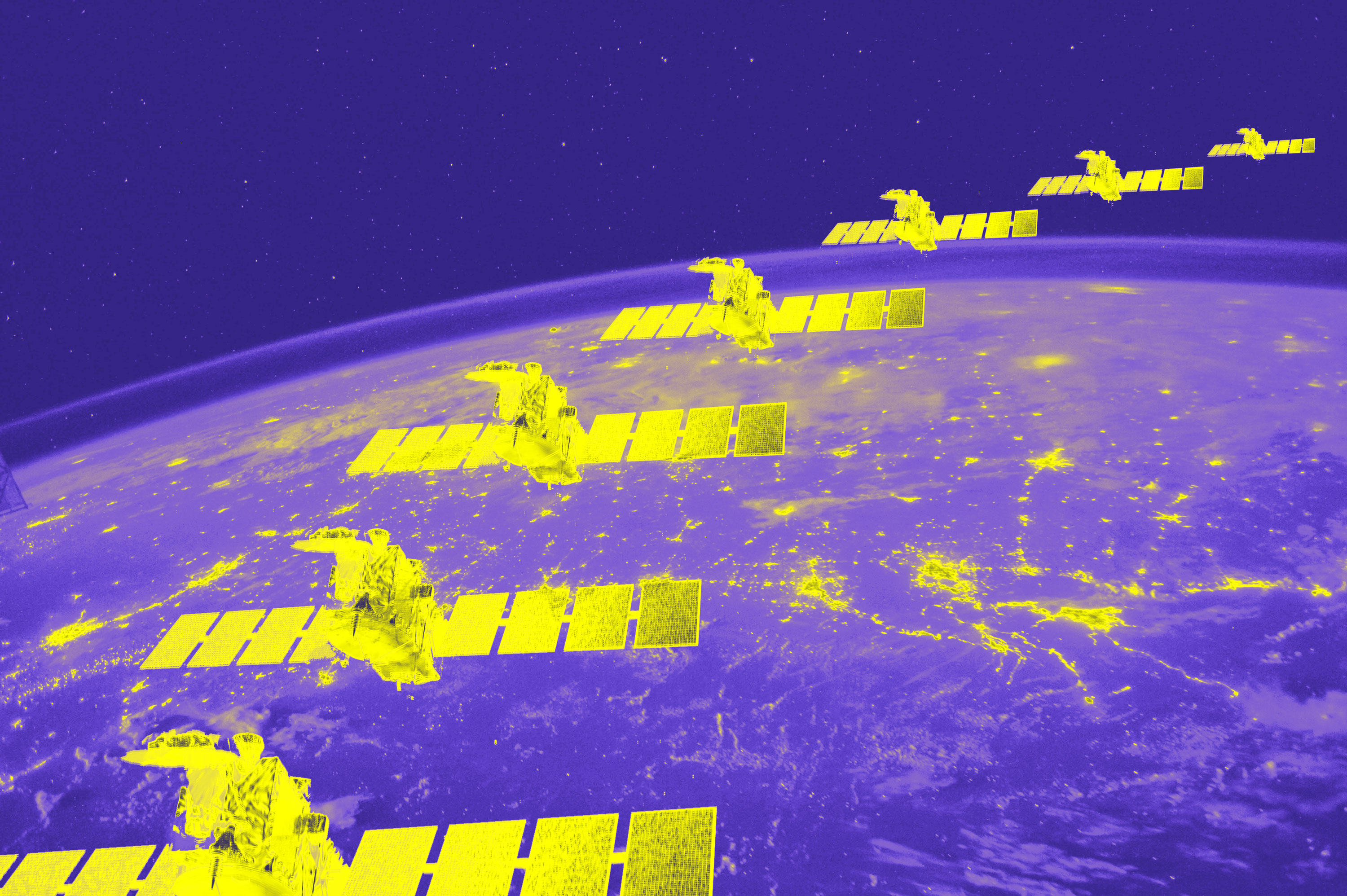
441,449 LOW EARTH ORBIT SATELLITES
Operating, Approved and Proposed
While the attention of a terrified world has been riveted on a virus, and while concern about radiation has been focused on 5G on the ground, the assault on the heavens has reached astronomical proportions. During the past two years, the number of satellites circling the earth has increased from 2,000 to 4,800, and a flood of new projects has brought the number of operating, approved, and proposed satellites to at least 441,449. And that number only includes low-earth-orbit (LEO) satellites that will reside in the ionosphere.
The satellite projects include the ones listed below. The companies are based in the United States unless otherwise indicated.
17,270 satellites already approved by the U.S. Federal Communications Commission:
- Amazon (Kuiper) – 3,236 satellites
- Astro Digital – 30 satellites
- Black Sky Global – 36 satellites
- Boeing – 147 satellites
- Capella Space Corp. – 7 satellites
- Globalstar (operating since 2000) – 48 satellites
- Hawkeye 360 – 80 satellites
- ICEYE – 6 satellites (FINLAND)
- Iridium (operating since 1998) – 66 satellites
- Kepler Communications – 140 satellites (CANADA)
- Loft Orbital – 11 satellites
- OneWeb – 720 satellites (UNITED KINGDOM)
- Planet Labs (operating) – 200 satellites
- R2 Space, LLC – 8 satellites
- Spire Global – 175 satellites
- SpaceX – 11,943 satellites
- Swarm – 150 satellites
- Telesat – 117 satellites (CANADA)
- Theia Holdings – 120 satellites
- Umbra Lab – 6 satellites
- Viasat – 24 satellites
Applications for 65,912 satellites pending before the FCC:
- Amazon (Kuiper) – 4,538 additional satellites
- AST & Science – 243 satellites
- Astra Space – 13,620 satellites
- Boeing – 5,789 additional satellites
- Black Sky Global – 14 additional satellites
- Fleet Space Technologies – 40 satellites (AUSTRALIA)
- Hughes Network Systems – 1,440 satellites
- Inmarsat – 198 satellites (UNITED KINGDOM)
- Kepler Communications – two additional constellations of 360 satellites and 212 satellites (CANADA)
- Lynk Global – 10 satellites (HONG KONG)
- Maxar Technologies – 12 satellites
- New Spectrum – 30 satellites (CANADA)
- OneWeb – 6,368 additional satellites (UNITED KINGDOM)
- Orbital Sidekick – 6 satellites
- SN Space Systems – 1,190 satellites (UNITED KINGDOM)
- SpaceX – 30,000 additional satellites
- Telesat – 1,554 additional satellites (CANADA)
- Terra Bella – 24 satellites (15 already operating)
- Viasat – 264 additional satellites
Constellations totaling 14,872 satellites announced by governments:……………
Other LEO constellations planned by U.S. and foreign companies, totaling more than 16,055 satellites:…….
Rwanda, which wants to catapult Africa into world leadership in space, filed an application with the International Telecommunication Union (ITU) on September 21, 2021 for 327,320 satellites. Its proposal includes 937 orbital planes, distributed in 27 orbital shells (layers of satellites at different altitudes), with 360 satellites in each plane.
- Rwanda Space Agency – 327,320 satellites (RWANDA)
TOTAL: 441,449 SATELLITES OPERATING, APPROVED AND PROPOSED (+18 constellations whose numbers are not yet known) Most of the above list of satellites would orbit at altitudes between about 325 km (200 miles) and 1,100 km (680 miles), except that some of Rwanda’s proposed orbits go as low as 280 km (174 miles). The above list does not include applications for satellites in geostationary orbit (GEO), or for LEO constellations of fewer than 5 satellites, or constellations in medium earth orbit (MEO) such as:
- Intelsat (at 8600 km) – 216 satellites (LUXEMBOURG)
- Mangata Networks (at 6,400 km and 12,000 km) – 791 satellites
- O3b (at 8,062 km) – 112 satellites (LUXEMBOURG)
BRIGHTENING THE NIGHT SKY Scientists have already begun to publish papers analyzing the effect all these satellites will have, not only on astronomy, but on the appearance of the night sky and the visibility of the stars to everyone on earth. An article published online on March 29, 2021 in Monthly Notices of the Royal Astronomical Society by scientists in Slovakia, Spain and the United States is titled “The proliferation of space objects is a rapidly increasing source of artificial night sky brightness.” The scattering of sunlight from all of the objects in space, wrote the authors, is causing a “new skyglow” during the beginning and end of each night that has already brightened the natural night sky by about 10 percent. The authors are concerned that “the additional contribution of the new satellite mega-constellations” would ruin the night sky to a much greater extent.
A group of Canadian astronomers have an article in the January 2022 issue of The Astronomical Journal. “Megaconstellations of thousands to tens of thousands of artificial satellites (satcons) are rapidly being developed and launched,” they write. “These satcons will have negative consequences for observational astronomy research, and are poised to drastically interfere with naked-eye stargazing worldwide.” They analyzed what the effect on astronomy will be if 65,000 new low-orbit satellites are launched. At 40 degrees latitude (mid-United States; Mediterranean; mid-China; Japan; Buenos Aires; New Zealand), say these authors, more than 1,000 of these satellites will be sunlit and visible in the sky in the summer even at midnight. At higher latitudes (northern U.S.; Canada; most of Europe; Russia), thousands of these satellites will be visible all night long. Another paper, titled Report on Mega-Constellations to the Government of Canada and the Canadian Space Agency, was commissioned by the Canadian Astronomical Society and submitted to the Canadian government on March 31, 2021. It is a moving document. …………………………………… https://www.cellphonetaskforce.org/wp-content/uploads/2022/01/441449-Low-Earth-Orbit-Satellites.pdf
What will happen if Russia and Ukraine go to war in the next year?
https://antibellum679354512.wordpress.com/2022/01/05/guest-contribution-what-will-happen-if-russia-and-ukraine-go-to-war-in-the-next-year/ Don Hank, MA Russian, Kutztown University of Pennsylvania
The not-so-carefully crafted narrative in the West is that Ukraine is the victim of the cruel aggressive Russian regime that enjoys watching others suffer, like a sadistic boy pulling the legs off grasshoppers and watching them squirm.
The coming war would all be an amusing little computer game except for the fact that the psychopathic US manipulators who indulge in this Russophobic/Sinophobic passtime are gambling with the very future of planet earth.
These reptilian predators inhabit the rarefied stratosphere of intrigue where reality and fantasy are blurred beyond usefulness. They are so far down the road of believing the product of their own overheated imagination that they have forgotten the simplest of realities, like the fact that millions of people would die instantly and half that many would watch their skin slowly peel off and their hair fall out in thick clumps after a nuclear attack. Major cities would become forests of twisted steel in a desert of glass. Military bases would be gone and aircraft carriers would sink to Davy Jones’ locker.
The war — all 30 minutes of it — would engulf the entire earth, compromising most of human, animal, plant and even microbial life. At least COVID might be conquered. Should we put that fact on the asset side of the ledger in defense of US foreign policy? Maybe not.
If the West happened to get the upper hand — killing a billion or so Eastern people (ie, Russians, Chinese, Iranians, for example), and the East killed only a half-billion Westerners, there would not be any certifiably non-radioactive champagne to uncork and sip in celebration of the “victory.” Nor would there be an intact country to host the festivities.
The sociopathic politicians whose thoughtless words and deeds triggered the conflagration would hardly be congratulated by their peers, who would turn on them with an unquenchable visceral hate.
People who understand the Kremlin and its designs don’t fall for this malarkey, but there is an army of gullible Westerners who enjoy this sort of fiction and they help perpetuate it. It is on display on these very boards.
But mercifully, most Washington politicians would not survive because the White House and capitol building would be the first targets of the Russian or Chinese ICBMs.
Of course, there are many other things that could happen if Ukraine and Russia go to war, but the main thing that the Westerner must know is that, should this happen, Russia will not be the aggressor.
It never was. The Western aggressor is setting a trap for Russia. But will it like the ending of its narrative?
Don Hank, Editor-in-Chief at New Silk Strategies (2016-present)
January 5 Energy News — geoharvey

World: ¶ “There Are Now 1,000 Electric Buses In Moscow!” • A little more than a year ago, I reported on Moscow getting its 500th electric bus. Just before Christmas, Moscow Transport got its 900th electric bus, and decorated it nicely with white and blue Christmas lights. Now, we’re barely into 2022 and the figure […]
January 5 Energy News — geoharvey
Anger as European Union is poised to subsidise the corrupt and rapacious nuclear industry

Germany and Austria have expressed their fury over a French victory on EU rules that would open the door to new investment in nuclear power. The European Commission’s proposed new “taxonomy” rules will allow private investment in atomic energy to be linked to climate policy subsidies as well as funding for gas-fuelled power stations to replace coal-fired generators.
Incensed Austrian ministers compared the Brusselsdecision, which was rushed through late on New Year’s Eve, to Adolf Hitler’s 1941 “Nacht und Nebel”, night and fog, decree to round upand destroy all resistance to the Nazis.
“The EU commission took a step towards greenwashing nuclear power and fossil gas yesterday in a night and fog action,” Leonore Gewessler, the Austrian climate protection minister, said. “They are harmful to the climate and the environment and destroy the future of our children.”
Greenpeace UK has urged Boris Johnson not to allow gas or nuclear to be included in Britain’s own green investment rules. “This loophole could be a drain for Europe’s climate ambitions, as they switch from phasing out dirty fuels, to phasing out dirty fuels only when it seems convenient. The UK must resist being pulled into this failing approach,” Doug Parr, the chief scientist and policy director of British Greenpeace, said.
Times 2nd Jan 2022
https://www.thetimes.co.uk/article/eu-capitals-at-odds-on-nuclear-power-kd2fsznr6
1 This month
17 October, Free Public Talk on Nuclear Issues in South Australia
David Noonan will speak on public interest concerns over the new Roxby Downs Indenture Act 2026 on BHP copper-uranium mining and ore processing in SA, and on how AUKUS may face SA with a High-Level nuclear waste agenda.
Dr Jim Green will discuss international developments in the field of nuclear power including ‘small modular reactors’ and Generation 4 ‘advanced’ nuclear reactor concepts.


Help Aunty Sue Protect Her Land and Sacred Sites From Destructive Rocket Testing.
.

Australians deserve the truth
about
AUKUS – https://aukuspublicinquiry.com/

PETITION – To: Prime Minister Anthony Albanese and the Australian Labor Government

of the week – Australians for War Powers Reform (AWPR)
To see nuclear-related stories in greater depth and intensity

