US Ex military man says nuclear submarines could arrive sooner, wants USA to get tough on China, re Taiwan
Nuclear subs can arrive much earlier than 2040, US ex-commander says Australia should be able to acquire nuclear submarines much earlier than a mooted 2040 delivery date, easing fears of a capability gap, according to a former top US military commander with responsibility for the Indo-Pacific. AFR, Andrew TillettPolitical correspondent In an interview with The Australian Financial Review, retired admiral Harry Harris said the AUKUS agreement the Morrison government struck with the United States and United Kingdom to access nuclear technology “changes the regional balance” amid growing alarm over China…………
Time for clarity on Taiwan
Mr Harris said the US needed to harden its position of “strategic ambiguity” over the defending Taiwan from a Chinese invasion to one of “strategic clarity” that makes it explicit how America would react to a Chinese attack.
Currently the US is not obliged by treaty to defend Taiwan, but US laws allow for arms sales to help Taiwan’s self-defence, leaving open the question of whether America would come to its aid. https://www.afr.com/politics/federal/nuclear-subs-can-arrive-much-earlier-than-2040-us-ex-commander-says-20211114-p598rm
The greenest energy is the energy we don’t use

The fact that Bill Gates’ .. book does not focus on energy efficiency – while giving nuclear energy a large and not very imaginative role – slightly annoys me. [ed. only slightly?] Because decision makers, young people, and many others will read the book and draw the wrong conclusions. But also, because it feels like a symptom of a broader issue: intellectually it is evident for most people that energy efficiency is a central, cost-effective and economically smart way to contribute to the green transition. Yet energy efficiency does not play a central role in many countries’ efforts to secure a green transition. It is as if they overlook the fact that the greenest and cheapest energy is the energy we don’t use at all
The greenest energy is the energy we don’t use, energypost.eu
November 12, 2021 by Martin Rossen As COP26 comes to a close, Martin Rossen, Senior Vice President, Head of Group Communication and Sustainability at Danfoss reminds us in a powerfully persuasive way why the most direct route to net-zero is managing consumption. Inspired by a glaring omission by Bill Gates in his recent book, Rossen draws our attention to the futility of developing new tech if we don’t prioritise making use of readily available energy efficiency solutions. According to IEA figures almost half of emissions reductions must come from efficiency and the solutions are already at hand. Article promoted by Danfoss.
The Glaring Omission
The summer of 2021 was the first time in a while that I not only felt the urge but also had time to read a book. No more government files and committees. I read Microsoft founder Bill Gates’ newest book “How to Avoid A Climate Disaster: The Solutions We Have and the Breakthroughs We Need.” …………
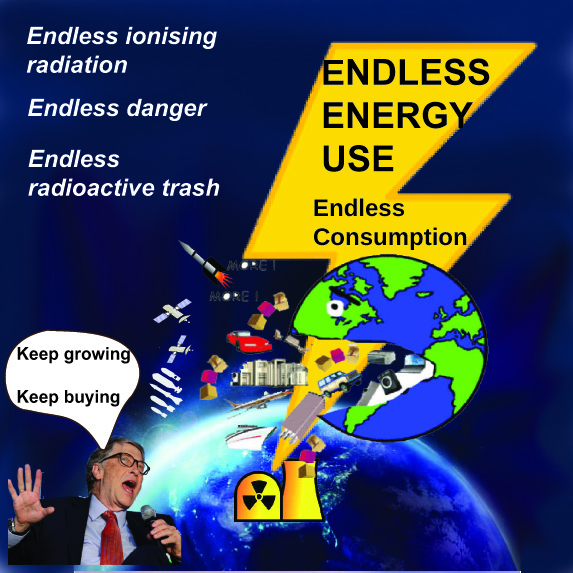
However ……. Bill Gates basically ignores that the greenest and cheapest energy is the energy we don’t use. I will get back to that, but let’s first look into climate action according to Bill Gates:
Primary Energy Consumption virtually unchanged through 26 years of COPs……. According to the British economist Helen Thompson, fossil fuels constituted 86% of the world’s primary energy consumption when COP1 was held in Berlin in 1995. What is the progress today, 26 years later? The answer is almost nothing. According to the latest numbers, fossil fuels now constitute 84% of the world’s primary energy consumption.
………Reversing the Energy Density Trend
Czech-Canadian environmental researcher Vaclav Smil, of whom Bill Gates is big fan, says the underlying challenge is the fact that humanity historically has moved in the direction of more and more energy-intense energy sources……….
Bill Gates encourages decision makers around the world to make big investments in new technologies. …….
IEA’s “Green Equation”
So, what’s the plan, I’m tempted to ask? To a large degree, I agree with Bill Gates’ conclusions – but I can’t help being a bit disappointed by the fact that he essentially ignores the importance of energy efficiency to the green transition. Bill Gates briefly mentions that energy efficiency could make the green transition easier, but after that, it is left out of his analysis.
Yet the International Energy Agency (IEA), a central source in the book, mapped out the cheapest and most effective path to reach the goals of the Paris agreement – let’s call it the green equation – like this: 36% of carbon reductions must come from renewable energy, 2% from switching fuels, 6% from nuclear power, 9% from carbon capture ands, 3% from other sources – and the biggest chunk, with a total of 44% reductions, has to come from energy efficiency. In other words, we can’t merely build windmills.
The world’s energy consumption has risen dramatically since 1945. For each day that passes, the green transition challenge we face is growing ………… it is important we become better at creating more societal value by using less energy, for example, by recycling it.
Now to the good news
Solutions already exist. In Denmark, we know that. We often live in an energy efficient manner – in bright, well-isolated homes with a secure water supply. This didn’t come by coincidence, but out of necessity.
During WWII, the Danes rationed. This included use of energy, so the living room temperature was to be kept at about 18 degrees Celsius. On a farm on the island of Als in the corner of Denmark, Danfoss’ founder Mads Clausen had the idea to develop a thermostatic expansion valve, which automatically keeps a constant temperature. The result? An improved indoor climate in millions of homes all over the world, as well as energy bills and emissions that have dropped. It was a green breakthrough before we knew we needed it. Today, the island of Als is one of the global centers of energy efficiency.
The solutions vary, but at their core, they are the same – they provide energy efficiency. According to the IEA, these are the solutions to be put into play if we are to overcome the many barriers on the road to climate neutrality………..
even in buildings with thermostats, heat pumps and other energy efficient solutions, we must take action. We need to equip our buildings with ‘intelligent’ systems – a ‘brain’ that links the buildings’ thermostats, heat pumps and air conditioning – as well as any other cooling and heating appliances– to big data that constantly optimizes energy consumption. The modern thermostat includes all factors in the equation – including the weather, showering habits of the inhabitants and expensive peak hours – and adjusts the consumption of energy accordingly. With solutions like this, according to the consultants ECOFYS, we can reduce CO2 emissions in Europe by 156 million tons – equaling the emissions of 82 million cars.
Industry, Transport and Food distribution
The industrial sector consumes a lot of energy and is responsible for one-fourth of the world’s emissions, so this sector demands our focus, too. Electric motors are a good place to start. In Europe alone, there are eight billion in use at the time of writing this. However, most of them only have two functions: they are either on or off. If electric motors were fitted with AC drives that enabled them to have adjustable speeds, the world’s demand for electricity could be reduced by 8%, according to the IEA – corresponding to the combined demand for electricity of India and France.
And then we have the transport sector that accounts for 24% of the world’s energy-related CO2-emissions. If cars are to be powered by electricity instead of gasoline, batteries and drives need to replace the combustion engine. This means that the gearbox of the future is a power module that converts power so the car can drive at various speeds. That movement is already on the way. What few people know is that Danfoss’ power modules already are installed in about 40 million cars, but there is still quite a way to go to replace the world’s 1.5 billion cars……….
Massive amounts of the world’s resources go into the production of food that is lost or wasted in areas without proper cooling facilities. In India, more than a third of food is lost on the journey from fields to the hungry population. It isn’t hard to imagine farmers’ disbelief and frustration in the face of this inconceivable loss of value. In many developing countries, proper cooling facilities in the supply chain can reduce the blatant waste of food (and associated emissions) by up to 40%, according to estimates.
The Solutions are already at hand
These are big numbers, and I could go on, because it is the same in practically the entire economy. We are not using our energy wisely. This results in a massive waste of energy. It costs fortunes on the energy bills of families and companies all over the world. It results in the emission of many billion tons of greenhouse gasses. And it makes the renewable energy infrastructure bill much bigger than it has to be.
We need to take this in hand, particularly in the Western World. It is necessary if we are to reach net zero. But also, because net zero is a zero-sum game, imposing a certain responsibility on us. We need to make an extra effort in the green transition so developing countries are not held back in their efforts to reach the same level of prosperity that we are privileged with.
Luckily, there are various energy-efficient solutions from many competent companies, that have a payback time of only a few years. That’s good because there is plenty of work to be done.
According to the IEA, the steam has gone off investments in energy-efficient buildings, equipment and vehicles. Both literally and figuratively speaking, we are wasting our energy at the same time we should be doing the exact opposite. It is a huge challenge many seem to forget: the green transition, in a lot ways, neither requires technological breakthroughs nor revolutions. It simply requires that we apply readily available cost-efficient solutions – not the least within energy efficiency.
The fact that Bill Gates’ .. book does not focus on energy efficiency – while giving nuclear energy a large and not very imaginative role – slightly annoys me. Because decision makers, young people, and many others will read the book and draw the wrong conclusions. But also, because it feels like a symptom of a broader issue: intellectually it is evident for most people that energy efficiency is a central, cost-effective and economically smart way to contribute to the green transition. Yet energy efficiency does not play a central role in many countries’ efforts to secure a green transition. It is as if they overlook the fact that the greenest and cheapest energy is the energy we don’t use at all. https://energypost.eu/the-greenest-energy-is-the-energy-we-dont-use/
COP 26 waters down the prospects of world action to stop coal pollution
Cop26: Alok Sharma in tears as India and China dilute pledge to phase out coal. A historic United Nations deal to end the use of coal power was watered down last night after a dramatic last-minute intervention from China and India.
Alok Sharma, the president of Cop26, was reduced to tears as he apologised to delegates for the way the late change was made. The deal, dubbed the Glasgow climate pact, had been set to include a pledge to accelerate the “phase-out” of coal power but this was switched late on to “phase-down”. The change in wording lessens the urgency with which countries are required to reduce the use of coal, the world’s strongest driver of climate change. Chris Stark, chief executive of the Climate Change Committee, an independent adviser to the government, said: “The writing is on the wall for fossil fuels now. We are in a new period of
action and if that is the legacy of Glasgow, I will be delighted.”
Times 14th Nov 2021
Action on global heating? Inadequate COP26 kept this possibility alive, by just a thread

The best that can be said about Cop26 is that it has kept the possibility of limiting global heating to 1.5C alive, if only by a thread. The worst outcome of this conference would have been if countries had agreed to next reopen their commitments to reduce emissions only in five years’ time, as was agreed in Paris in 2015. This would have been nothing short of a disaster. It would have firmly put the world on the path to catastrophic and irreversible overheating – involving the deaths of tens of millions of people and the total obliteration of some countries as a result of rising sea levels. It would have thrown away humanity’s last chance of
avoiding this fate.
Instead, countries have agreed to come back to revisit their commitments in a year’s time, and every year after that. Something
radical will need to shift in the next year or two in order to achieve the commitments that are urgently needed to limit warming to 1.5C. Take the UK’s net zero strategy, for example, which falls far short of what is needed in order for it to achieve its stated goal of net zero emissions by 2050. It has been estimated we need to be investing about 1% of GDP to meet this; but the government has committed just a fraction of that, and the strategy is further undermined by the government reneging on its own policy
commitments, including its recent scrapping of the green homes schemes and the delay in the phase-out of gas boilers.
Observer Editorial 13th Nov 2021
Questions still remain on the suspicious death of nuclear worker Karen Silkwood


Karen Gay Silkwood (February 19, 1946 – November 13, 1974) was an American chemical technician and labor union activist known for raising concerns about corporate practices related to health and safety of workers in a nuclear facility. Following her mysterious death, which received extensive coverage, her estate filed a lawsuit against chemical company Kerr-McGee, which was eventually settled for $1.38 million. Silkwood was portrayed by Meryl Streep in Mike Nichols‘ 1983 Academy Award-nominated film Silkwood.
She worked at the Kerr-McGee Cimarron Fuel Fabrication Site plant near Crescent, Oklahoma, United States. Silkwood’s job was making plutonium pellets for nuclear reactor fuel rods. This plant experienced theft of plutonium by workers during this era. She joined the union and became an activist on behalf of issues of health and safety at the plant as a member of the union’s negotiating team, the first woman to have that position at Kerr-McGee. In the summer of 1974, she testified to the Atomic Energy Commission about her concerns.
For three days in November, she was found to have plutonium contamination on her person and in her home. That month, while driving to meet with David Burnham, a New York Times journalist, and Steve Wodka, an official of her union’s national office, she died in a car crash under unclear circumstances.
Her family sued Kerr-McGee on behalf of her estate. In what was the longest trial up until then in Oklahoma history, the jury found Kerr-McGee liable for the plutonium contamination of Silkwood, and awarded substantial damages. These were reduced on appeal, but the case reached the United States Supreme Court in 1979, which upheld the damages verdict. Before another trial took place, Kerr-McGee settled with the estate out of court for US $1.38 million, while not admitting liability. https://en.wikipedia.org/wiki/Karen_Silkwood
Questions Still Remain In Suspicious Death Of Karen Silkwood
Anniversary of the mysterious death of Karen Silkwood

Massimo Greco https://www.facebook.com/groups/361888987167863/ 13 Nov 21, Museum of the Gulf Coast
This Day In History.…..On November 13, 1974, 28-year-old Karen Silkwood, who is from Nederland, is killed in a car accident near Crescent, Oklahoma, north of Oklahoma City. Silkwood worked as a technician at a plutonium plant operated by the Kerr-McGee Corporation, and she had been critical of the plant’s health and safety procedures.
Silkwood had an appointment with a union staff representative and a New York Times investigative reporter. At this meeting, she was to provide documentation to the reporter, showing charges that Kerr-McGee had been negligent in quality control and had falsified records were justified.
Police were summoned to the scene of an accident along Oklahoma’s State Highway 74: Silkwood had somehow crashed into a concrete culvert. She was dead by the time help arrived. An autopsy revealed that she had taken a large dose of Quaaludes before she died, which would likely have made her doze off at the wheel; however, an accident investigator found skid marks and a suspicious dent in the Honda’s rear bumper, indicating that a second car had forced Silkwood off the road.
The documents she was to have turned over to the reporter were never found.Silkwood’s father sued Kerr-McGee, and the company eventually settled for $1.3 million, minus legal fees. Kerr-McGee closed its Crescent plant in 1979.
Is nuclear power theway forward to combat the climate crisis – Allison Macfarlane cautions.
 | |||
|

Is nuclear power the way forward to combat the climate crisis?
Nuclear power can go horribly wrong and is notorious for cost overruns, but it is gaining high-profile champions. Aljazeera, By Patricia Sabga 12 Nov 2021 ”’ ………………………
Allison Macfarlane is a professor and the director of the School of Public Policy and Global Affairs at the University of British Columbia. Before that, she was chair of the US Nuclear Regulatory Commission.
She wrote an article for Foreign Affairs (paywall) this summer on the subject of nuclear energy and climate goals. Her arguments generated some pointed pushback (paywall) as world leaders descended on Glasgow, Scotland for COP26.
Macfarlane describes herself as neither a proponent nor a detractor of nuclear power, but an analyst who prefers to give a “measured analytical response” to questions surrounding nuclear energy.
She recently shared her views with Al Jazeera Digital’s Managing Business Editor Patricia Sabga about nations building more nuclear power plants to battle the climate crisis.
Allison Macfarlane: ……………… But I live in a pragmatic, realistic world. And I don’t think, at least in the next 10 or 20 years, that nuclear power will be able to have a big impact on reducing carbon emissions because we can’t build new plants fast enough.
PS: And why is that? Why can’t we build new plants fast enough?
AM: It’s complicated. These are mega projects, and they require a level of quality control and programme management that doesn’t exist in a lot of other industries. And though people may promote some of the newer reactor designs as being easy to produce in factories, if we look at the existing reactors that have been produced in factories – for instance, the ones that are under construction in Georgia, the Vogtle plant [where two additional reactor units are under construction] – the experience in factories has not been good.
The factory that built the modules for the Georgia plant built them incorrectly for years. They welded them incorrectly and they had to be rewelded at the reactor site. That factory led in large part to the bankruptcy of Westinghouse.
PS: You mentioned newer reactor designs. What are these designs and what challenges do they face?
AM: First of all, a lot of them aren’t new. A lot of these designs are 70 years old or older. But given that, there are new sorts of twists to some of these designs.
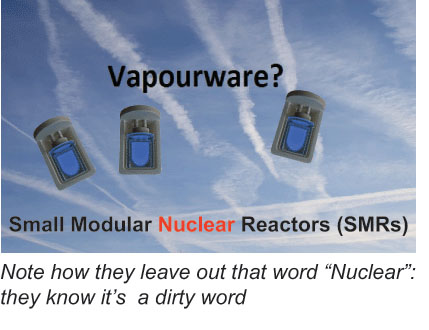
Many of them exist only on paper, or as small-scale models. And the way engineering works is that you design something – these days, it’s computer-assisted – and then you build a scale model. When you build the scale model, you see where you are wrong in your computer design, and so you fix that. Then you have to build the full-scale design. And when you scale up again, there will be things that you’ve gotten wrong in the scale model, and you’re going to have to fix that.
And so, for many of these designs, we’re still at the computer model stage. We haven’t done the other steps. And those steps take years. And when you get to the full-scale model, that’s really expensive. Where’s that money coming from?
PS: Let’s talk about expense then. In terms of just cost, how does nuclear stack up to say wind or solar?
AM: It’s significantly more expensive. Of course, it depends on what solar you’re talking about. But if you look at Lazard’s recent analysis of levelized costs of energy [an analysis that takes into account how much it costs to finance and build a power plant and to keep it running throughout its lifetime and then divides that cost by how much energy it kicks out each year] and you look at solar PV [photovoltaic] utility scale, and wind, they are significantly cheaper than nuclear.
AM: Expenses are dominated by the capital costs of plant construction. These plants are very expensive to build. I think we’re up to at least $14bn a plant for the Vogtle plants in Georgia. That’s for a thousand gigawatts generation capacity. They’re just really expensive to build and they take a long time to build. And so not only do you have the cost of the capital of building the plant, but you have the cost of the interest on the capital, which becomes a big cost.
That’s really what hurts nuclear. Now there are claims made about the small modular reactors that they’ll be cheaper. But because nobody’s ever built one, and nobody’s established the supply chains to build them and to operate them, we really have no idea what those will cost……………..
[on intermittency] Ten years ago, it was a really big deal. It’s becoming less of a deal, I think. What’s interesting to note is that when you talk to utility companies, they are really interested in having plants be load following [responding to surges and ebbs in power demand]. They’re really orienting themselves towards dealing with intermittency. But that means they need a plant that can ramp up and down quickly. Nuclear can’t do that. The existing nuclear fleet can’t do that. They’re either on or they’re off, and it takes a long time for them to ramp up to full scale on………….. https://www.aljazeera.com/economy/2021/11/12/is-nuclear-power-the-way-forward-to-combat-the-climate-crisis
More of the same on nuclear weapons? — Beyond Nuclear International

Biden’s nuclear weapons spending differs little from Trump’s
More of the same on nuclear weapons? — Beyond Nuclear International
Glasgow Wrap: Reactions to the ‘Glasgow Climate Pact’ — RenewEconomy

“Glasgow Pact” receives mixed reviews; praise for delivering a turning point for coal, while falling short of bridging gap to 1.5 degrees. The post Glasgow Wrap: Reactions to the ‘Glasgow Climate Pact’ appeared first on RenewEconomy.
Glasgow Wrap: Reactions to the ‘Glasgow Climate Pact’ — RenewEconomy
November 14 Energy News — geoharvey

COP26: ¶ “COP26 Climate Deal Includes Historic Reference To Fossil Fuels But Doesn’t Meet The Urgency Of The Crisis” • Nearly 200 nations reached a climate agreement at COP26. It references the role of fossil fuels in the climate crisis for the first time. India made an 11th-hour objection, however, that watered down the language […]
November 14 Energy News — geoharvey
The Australian Radiation Protection and Nuclear Safety Agency (ARPANSA) must be required to fully inform the Kimba community of the safety and financial risks of the nuclear dump

[importance of] the community at Kimba getting their own full and independent assessment and report on the government’s intentions for Napandee assisted by both government funding and by access to all records and information for that purposeAnother issue forThe Australian Radiation Protection and Nuclear Safety Agency (ARPANSA)
NAPANDEE ASSESSMENT
It is the intention of ANSTO to store intermediate level nuclear waste at the proposed nuclear waste management facility at Napandee near Kimba in South Australia for an indefinite period but suggested to be 30 years

Since it is merely the storage of the intermediate level waste ANSTO is suggesting that it is not necessary to obtain any licences from ARPANSA for that purpose and consequently will not be making any application to ARPANSA in that regard
This is clearly against the concept of the enabling legislation and irrespective of this suggestion ARPANSA as the statutory regulator must insist on ANSTO having an appropriate licences for both the storage of the intermediate waste at Napandee and for the construction of the required facility for the increased storage capacity at Lucas Heights
Should there be any reluctance by ARPANSA in enforcing the licensing compliance by ANSTO then legal action will need to be taken by way of mandamus by interested parties which would be the Kimba community to make certain that the required licences will be sought by ANSTO
In order to ensure that the community position is fully protected ARPANSA should provide adequate funding either directly or by
government grant to the community to enable them to obtain proper and detailed legal advice and to undertake any appropriate actions that may be required or necessary to protect their position
This should be coupled with the community at Kimba getting their own full and independent assessment and report on the government’s intentions for Napandee assisted by both government funding and by access to all records and information for that purpose
This is an essential requirement for enabling the community at Kimba to understand and negotiate with full knowledge of the safety case required for the Napandee facility as the independent assessment will no doubt be critical of the inappropriate and unsuitable site selection and nature of the facility by way of above the ground storage
The special rapporteurs of the United Nations Human Rights Council for the sound management and disposal of hazardous substances including nuclear wastes and for the rights of indigenous peoples are aware of the Kimba community concerns and will monitor the situation and if necessary take appropriate action to ensure protection of their human rights
Issue for The Australian Radiation Protection and Nuclear Safety Agency (ARPANSA): IS ANSTO’s NUCLEAR REACTOR VIABLE?
ISSUES FOR URGENT RESOLUTION BY ARPANSA
The Australian Radiation Protection and Nuclear Safety Agency (ARPANSA) is the national regulator of all federal government aspects of nuclear and radiation sources and activities with the prime objective of protecting and keeping safe the nation’s population and environment from the harmful effects of radiation and other nuclear pursuits.
In its regulatory role ARPANSA will shortly have to address issues linked to nuclear waste and collectively are probably the most important and significant situation that has had to be dealt with by ARPANSA since its foundation over twenty years ago
ANSTO VIABILITY
The first is the need for ARPANSA to obtain an independent andcomprehensive assessment and report on the proposed increased
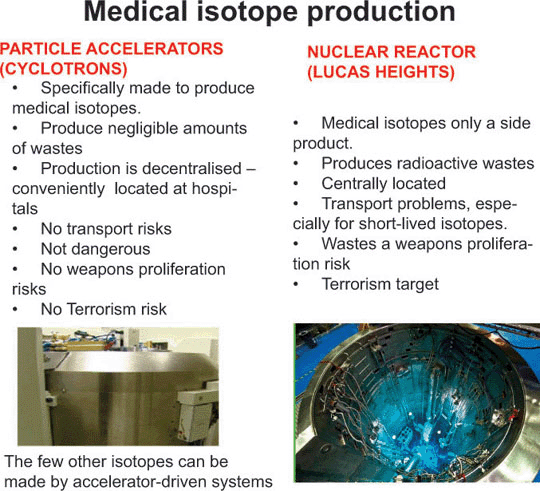
production of nuclear medicine by reactor generation by the AustralianmNuclear Science and Technology Organisation (ANSTO) at its Lucas Heights precinct
The reason behind this is that ANSTO is relying on its production of nuclear medicine as the mainstay of its activities and intends to become a major international producer and exporter of reactor generated nuclear medicine.
However this appears to be a misconceived and purposeless intention since nuclear medicine generated by reactor isotopes is in significant decline throughout the world due to its dangerous inherent state in being used in medical diagnosis and treatment
There is a world wide turning away by the medical profession from using reactor generated nuclear medicine because of its sever danger to patients coupled with its extremely high production costs.
More alternatives to this form of nuclear medicine are already extensively used as they are far safer and pose little risk to patients and additionally are much cheaper to produce with the involvement of major international drug companies
ARPANSA should seek the independent and expert assessment and review of the proposal and intentions by ANSTO as part of the licensing process for the increased storage facility for nuclear waste at Lucas Heights recently proposed by ANSTO
The assessment and review must include a financial examination to determine commercial and economic viability of the activities and proposals by ANSTO as this is an essential ingredient of the qualifications for the licence for the increased storage capacity
Since the suitably qualified experts for the assessment are not in Australia (as in any case this could create a conflict situation) ARPANSA will need to rely on and engage the highly qualified experts in this field available
from overseas
From the general tenor and prescriptions of the Australian Radiation Protection and Nuclear Safety Act 1998 and applicable regulations – which are referred to as the enabling legislation – it seems quite certain that the commercial and financial aspects must be included by ARPANSAin considering an application for a licence
This should be even more imperative since the funds sought by ANSTO for the increased storage capability at Lucas Heights are being provided by the federal government which is in direct and colloquial terms taxpayers’ money and it is an obligation of the government to protect public revenue and expenditure
There has never been any publicly released information by ANSTO on the financial aspects of the production and sale of its nuclear medicine but as justification for the production ANSTO has relied on the emotivearguments that in their lifetime everyone has or will have a need for nuclear medicine.
ANSTO claims that it has given to the government a recently commissioned independent study into future nuclear medicine supply in Australia and this study should be given to ARPANSA with all supporting information for assistance for its assessment and review as part of the licensing process.
Glasgow Brief: Australia given “Colossal Fossil” award as COP26 goes into overtime — RenewEconomy

Australia recognised as the worst performer in Glasgow, as the COP26 talks set to run for at least one extra day. The post Glasgow Brief: Australia given “Colossal Fossil” award as COP26 goes into overtime appeared first on RenewEconomy.
Glasgow Brief: Australia given “Colossal Fossil” award as COP26 goes into overtime — RenewEconomy
Taylor’s latest $500m carbon capture fund may already be headed for scrapheap — RenewEconomy

Taylor’s $500 million ‘low emissions tech’ fund that will support carbon capture and storage technologies is heading for defeat in the Senate. The post Taylor’s latest $500m carbon capture fund may already be headed for scrapheap appeared first on RenewEconomy.
Taylor’s latest $500m carbon capture fund may already be headed for scrapheap — RenewEconomy
Morrison chooses fossil fuels over farmers in “laughable” net zero modelling — RenewEconomy

Government modelling shows Morrison had a choice between two scenarios – one that favoured fossil fuels and another that favoured farmers. It chose fossil fuels. The post Morrison chooses fossil fuels over farmers in “laughable” net zero modelling appeared first on RenewEconomy.
Morrison chooses fossil fuels over farmers in “laughable” net zero modelling — RenewEconomy
1 This month.
20 September –National Day of Action in Melbourne on the International Day of Peace


Help Aunty Sue Protect Her Land and Sacred Sites From Destructive Rocket Testing.
.

Australians deserve the truth
about
AUKUS – https://aukuspublicinquiry.com/


PETITION – To: Prime Minister Anthony Albanese and the Australian Labor Government

of the week – Australians for War Powers Reform (AWPR)
To see nuclear-related stories in greater depth and intensity
 Antinuclear