Low dose radiation has its medical benefits, but has harmful effects on the immune system
Low dose ionizing radiation effects on the immune system, Science Direct, Environment International Volume 149, April 2021, 106212KatalinLumniczkya NathalieImpensb GemmaArmengolc SergeCandéiasd Alexandros G.Georgakilase SabineHornhardtf Olga A.Marting FranzRödelh DörtheSchaue
Abstract
Ionizing radiation interacts with the immune system in many ways with a multiplicity that mirrors the complexity of the immune system itself: namely the need to maintain a delicate balance between different compartments, cells and soluble factors that work collectively to protect, maintain, and restore tissue function in the face of severe challenges including radiation damage. The cytotoxic effects of high dose radiation are less relevant after low dose exposure, where subtle quantitative and functional effects predominate that may go unnoticed until late after exposure or after a second challenge reveals or exacerbates the effects.
For example, low doses may permanently alter immune fitness and therefore accelerate immune senescence and pave the way for a wide spectrum of possible pathophysiological events, including early-onset of age-related degenerative disorders and cancer.
By contrast, the so called low dose radiation therapy displays beneficial, anti-inflammatory and pain relieving properties in chronic inflammatory and degenerative diseases
In this review, epidemiological, clinical and experimental data regarding the effects of low-dose radiation on the homeostasis and functional integrity of immune cells will be discussed, as will be the role of immune-mediated mechanisms in the systemic manifestation of localized exposures such as inflammatory reactions.
The central conclusion is that ionizing radiation fundamentally and durably reshapes the immune system. Further, the importance of discovery of immunological pathways for modifying radiation resilience amongst other research directions in this field is implied………….. https://www.sciencedirect.com/science/article/pii/S016041202032167X
Nuclear power company First Energy prosecuted for corruption, but still finds it worthwhile to bribe politicians

It is the largest fine ever imposed by the U.S. Attorney’s Office for the Southern District of Ohio.
But it is a pittance when compared to the earnings it brought in last year: $1.1 billion. For that reason, the company’s stock has a 52-week range of between $26 and its current high of $39 a share.
Paying Bribes Got FirstEnergy In Trouble, But It Is Still Making Political Donations , Forbes, 15 Nov 21,
Has FirstEnergy Corp. learned anything from its nuclear energy scandal and criminal probe? Prosecutors say that if the company fully cooperates then it will drop the charges against it in three years. But the utility is still giving millions to lobby lawmakers — a bit cringeworthy, given the events.
It’s legal. But the company’s chief executive since March, Steven Strah, has said that FirstEnergy FE +1.2% will play a more subtle political role. The protocol now is strict oversight of its lobbying activities — the kind of thing that would avoid, for example, bribing public officials to keep open struggling nuclear plants. For sure, FirstEnergy’s campaign spending is already at $1.5 million this year. That is in line with the contributions it has been making for the last decade.
FirstEnergy is sticking to “the way they did business 50 years ago,“ said Ashley Brown, a former Ohio public utilities commissioner, who now leads the Harvard Electricity Policy Group. “That’s part of why they’re just a lobbying firm with a utility sideline.”
Brown’s comments appeared in a story by Eye on Ohio, which joined with Energy News Network in the endeavor. Eye on Ohio is a division of the Ohio Center for Journalism.
In a deferred prosecution agreement reached over the summer between FirstEnergy and federal prosecutors, the utility admitted that it conspired with and subsequently bribed public officials: $60 million, which was used to secure a $1.3 billion bailout package for its nuclear units and to also help defeat a voter initiative that would have thrown out that law.
The company was penalized $230 million — money to be split equally between the federal and state government. In Ohio, it will be used to help low-income citizens pay their utility bills. It is the largest fine ever imposed by the U.S. Attorney’s Office for the Southern District of Ohio. But it is a pittance when compared to the earnings it brought in last year: $1.1 billion. For that reason, the company’s stock has a 52-week range of between $26 and its current high of $39 a share.
Prosecutors said that they wanted the penalty to “sting” but they did not want to disrupt the company’s business. They filed one charge: conspiracy to commit honest services and wire fraud, which will be dismissed if FirstEnergy continues to cooperate.
“Our activity in this space will be much more limited than it has been in the past, with closer alignment to our strategic goals and with additional oversight and significantly more robust disclosure,” says CEO Strah, before investors. “These efforts, together with enhanced policies and procedures, will help to bring additional clarity around appropriate behaviors at FirstEnergy.”
The bargain between prosecutors and the utility examines how FirstEnergy took monies from its regulated units and then paid off public officials. Former Ohio House Speaker Larry Householder has already been charged. Former Ohio Public Utilities Commission Chairman Sam Randazzo has resigned his position. The power company used a dark money group called Generation Now to hide its efforts. A lobbyist has pleaded guilty along with a staffer for Householder, who set up the shady organization to receive the dirty money.
A New Track
Subsequent to this criminal settlement, Ohio’s Attorney General Dave Yost added FirstEnergy’s former CEO Charles Jones to a list of defendants his office is suing. (Prosecutors would not comment on whether Jones is also in criminal trouble.) The civil complaint also includes ex-FirstEnergy senior vice president Michael Dowling and Sam Randazzo.
The “corruption was more cancerous than previously thought––necessitating adding additional defendants and giving rise to additional claims,” the lawsuit says. Ohio’s legislature, meantime, has revoked the $1.3 billion bailout. …… https://www.forbes.com/sites/kensilverstein/2021/11/15/paying-bribes-got-firstenergy-in-trouble-but-it-is-still-making-political-donations—and-amends/?sh=1e29ece1150a
COP 26, especially Australia, has failed First Nations people

At this supposedly historic event, I saw a conference that relied on dated colonial constructs and ignored Indigenous people. I watched the Australian pavilion used to promote gas and carbon capture and storage, sponsored by corporations such as Santos. Outnumbered by fossil fuel lobbyists, First Nations people witnessed an aggressive big business approach to climate negotiations, hardly the turning away from and permanent closure of extractive, polluting industries that we are all calling for.
Guardian 15th Nov 2021
COP 26 – the death knell for coal power?
Boris Johnson has told a Downing Street press conference that the COP26
deal “sounds the death knell for coal power”. The Prime Minister, who
was accompanied at the press briefing at COP26 President Alok Sharma, said
the Glasgow climate deal was a “game-changing agreement” which sounds
“the death knell for coal power”.
iNews 14th Nov 2021
Worker safety before corporate profits! — — RADIATION FREE LAKELAND

By MIKE ALEWITZ REMEMBERING KAREN SILKWOOD (February 19, 1946 – November 13, 1974) Karen Silkwood died in 1974 under suspicious circumstances while traveling to a meeting with a reporter investigating unsafe conditions at a Kerr-McGee plutonium fuel plant in Oklahoma. These are excerpts from the dedication speech …. Worker safety before corporate profits! — By […]
Worker safety before corporate profits! — — RADIATION FREE LAKELAND
Australia hails COP26 “green light for more coal,” won’t budge on 2030 target — RenewEconomy

With the ink barely dry on Glasgow Climate Pact, the Morrison government settled straight back into its domestic routine of climate obfuscation and obstruction. The post Australia hails COP26 “green light for more coal,” won’t budge on 2030 target appeared first on RenewEconomy.
Australia hails COP26 “green light for more coal,” won’t budge on 2030 target — RenewEconomy
South Australia curtailed nearly as much wind and solar on Sunday as it used — RenewEconomy

South Australia produced nearly twice as much wind and solar as it could use, with curtailment records around the main grid. The post South Australia curtailed nearly as much wind and solar on Sunday as it used appeared first on RenewEconomy.
South Australia curtailed nearly as much wind and solar on Sunday as it used — RenewEconomy
South Australia renewable hydrogen hub wins Japanese backing — RenewEconomy

A green hydrogen pilot project being developed by Marubeni Corp and the South Australian government has won the backing of the Japanese government. The post South Australia renewable hydrogen hub wins Japanese backing appeared first on RenewEconomy.
South Australia renewable hydrogen hub wins Japanese backing — RenewEconomy
The lies of the land – “I don’t think, I know!” – Who suffers when truth lies bleeding? — Sustainability Bites

There is both anecdotal and empirical evidence demonstrating that lying by our political leaders is becoming more prevalent. And every lie erodes the trust bank of social capital, the keystone of our society’s resilience to deal with the growing environmental challenges coming at us with greater frequency.
The lies of the land – “I don’t think, I know!” – Who suffers when truth lies bleeding? — Sustainability Bites
November 15 Energy News — geoharvey

Opinion: ¶ “How Much Is Spent Supporting Fossil Fuels And Green Energy?” • Despite pledges to limit support, governments around the world spend more than $420 billion each year subsidizing non-renewable energy, according to the UN Development Programme. How do fossil fuel subsidies work and which countries are spending the most? [BBC] Abandoned open pit […]
November 15 Energy News — geoharvey
News -nuclear and climate- Australia and beyond

It’s all about COP26 this week, but the pandemic persists.And- the media’s gone quiet on nuclear issues, – but at COP26 and elsewhere, the nuclear lobby is working away relentlessly.
AUSTRALIA
Nuclear power for Australia? A crazy fantasy that would surely lose the election for the Liberals.
Submarines. Large hurdles to Australia getting nuclear submarines. Former Prime Minister Paul Keating scathing about Australia’s planned nuclear submarine deal. Australian-UK-US nuclear submarine deal makes the connection clear between civilian and military nuclear activities. US Ex military man says nuclear submarines could arrive sooner, wants USA to get tough on China, re Taiwan.
The Australian Radiation Protection and Nuclear Safety Agency (ARPANSA) must be required to fully inform the Kimba community of the safety and financial risks of the nuclear dump. Unanswered questions and problems in secretive Kimba Consultative Committee about the proposed nuclear waste dump.
Issue for The Australian Radiation Protection and Nuclear Safety Agency (ARPANSA): IS ANSTO’s NUCLEAR REACTOR VIABLE?
INTERNATIONAL
The greenest energy is the energy we don’t use
COP26 – while some progress has been made, a current policy world of 2.6C or 2.7C warming is still one with potentially catastrophic impacts on human and natural systems. COP 26 waters down the prospects of world action to stop coal pollution.
COP26 – Why Nuclear is NOT a Solution. https://www.youtube.com/watch?v=LjSMd1pmsqQ EU states split on classifying nuclear energy as ‘green’. Is nuclear power the way forward to combat the climate crisis? – Allison Macfarlane cautions.
Action on global heating? Inadequate COP26 kept this possibility alive, by just a thread. Experts alarmed at the weakening of climate targets at COP26. “Cover decision” – a draft outcome of COP26 climate talks – planet still headed for 2.4C of warming above pre-industrial levels. New draft of climate deal of COP26 weakens plans to get rid of fossil fuels.
The People’s Summit for Climate Justice plans ambitious pressure on governments for real action. At People’s Summit for Climate Justice, campaigners accuse COP26 of failing the climate. Greta Thunberg and youth activists filing legal petition to UN, urging for a declaration of “system-wide climate emergency”.
Study shows that the biggest delegation of all at COP26 is that of fossil fuel lobbyists. Unfair restrictions on observers at COP26 climate talks. Honest Government Ad | Net Zero by 2050 .
https://www.youtube.com/watch?v=1FqXTCvDLeo Carbon capture and storage – not all that it’s cracked up to be. China and Saudi Arabia blocking progress towards a deal at COP26.
A cross-continental electricity interconnector grid system may be a practical option for renewable energy.
Nuclear weapons. The environmental dimension of the use of nuclear weapons. Nuclear War and Climate Change: The Urgency for Action .
ICAN and PAX show how despite $billions still going to nuclear weapons, – $63 billion has moved away from this funding. “Perilous Profiteering: The companies building nuclear arsenals and their financial backers”
Escalation of nuclear tensions between USA and China as a result of the AUKUS deal. Winning and losing the nuclear peace.
Over time, radiation causes damage to the structure of nuclear reactors.
Wind and solar can supply most of world’s energy needs, most of the time, says study.
Bitcoin could be nuclear power’s last hope of salvation?
Unanswered questions and problems in secretive Kimba Consultative Committee about the proposed nuclear waste dump
Kazzi Jai 13 Nov 21, Fight to stop a nuclear waste dump in South Australia, For those who are time poor, here are some “gems” which stand out from the last DRAFT minutes of the KCC October 14th, 2021…..

The “community conversations” are not open to anyone. Apparently they invite an interest group – and then representatives are to be selected to represent that interest group ….
Honestly – we are talking of a small country town council area – population of around 1000 if you include the children too….and they want to be SELECTIVE of who they have at these COMMUNITY CONVERSATIONS???!!!

Next…apparently the bribe money aka Community Benefit Program money which was announced by Minister Pitt in May 2021, successful nominations will be selected this time, not by AusIndustry as in all the other times….but by the Minister himself! Anyone smell an up coming election in the air?Cultural Heritage Assessment Plan…..O..M.G!! Got to love those “tick the box” things! Makes you feel like you are doing something – when you’re not doing ANYTHING AT ALL!! And get this – The “process” outlined will ONLY TAKE PLACE AFTER THE SITE IS ACQUIRED!!!!!!
Gotta love the line regarding a question about possible High Level Nuclear Waste storage …”that was not the case, and reiterated that there is no intention to expand the scope of the facility“….BUT LATER IN THE FOLLOWING PARAGRAPHS says “we cannot speak for the decisions of future governments”!!!!
Do they take people for fools??
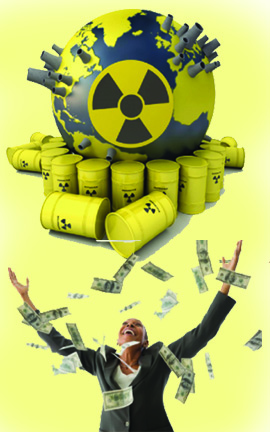
Notice that they are AVOIDING the term NATIONAL when referring to the Nuclear Dump? Is this deliberate? Because it will be the NATIONAL DUMP AND THAT IS WHERE ALL THE NUCLEAR WASTE WILL END UP!! WHETHER IT IS LOW, INTERMEDIATE OR HIGH!!Soil Management and Fire Hazard Management….Well, Well, Well…..Got very excited about – where the discussion would go on this one, – but alas, the discussion was curtailed to only within the confines of the proposed dump area! Too bad that OTHER FACTORS OUTSIDE THE PROPOSED DUMP AREA WILL AFFECT IT TOO!!
Another sideline little gem of information…..”Mr Osborn advised members that the CEO is expected to commence in January 2022, in the Adelaide office, and following a handover period, Ms Sam Chard, A/g Head of Division for ARWA, will move to another senior leadership role within the Australian Public Service.”
So does that mean she ISN’T staying as the General Manager of ARWA anymore after being the Acting Head of Division for ARWA?Another interesting comment …”Mr Osborn reminded members that ARWA is a separate entity from the facility, and will be looking at all radioactive waste management matters in Australia.“
….Just keep that one in your back pocket for future reference – In all likelihood the NRWMF may become a casualty of privatization by the Government to “cut loose” anything which presents ” a drain on public taxpayers’ purse strings”!! International Dump here we come!!
Oh….the Information Centre may be in town and may end up being staffed BY VOLUNTEERS!
Where are these HIGH PAYING JOBS??
They seem to be DISAPPEARING right before our eyes!!Then lo and behold…..Sam Chard made an appearance via video conference! Didn’t stay long, but long enough to say that ..”letters of comfort will be provided to ANSTO, meaning they may be able to start pre-conditioning their waste holdings…“
This is a BIT PREMATURE given that the Notice for Declaration by Minister Pitt was STILL OPEN when she made this comment on October 14th, 2021!! The Notice for Declaration only closed on October 22nd 2021!On that HIGH NOTE, I’ll leave it there…… https://www.facebook.com/groups/344452605899556
US Ex military man says nuclear submarines could arrive sooner, wants USA to get tough on China, re Taiwan
Nuclear subs can arrive much earlier than 2040, US ex-commander says Australia should be able to acquire nuclear submarines much earlier than a mooted 2040 delivery date, easing fears of a capability gap, according to a former top US military commander with responsibility for the Indo-Pacific. AFR, Andrew TillettPolitical correspondent In an interview with The Australian Financial Review, retired admiral Harry Harris said the AUKUS agreement the Morrison government struck with the United States and United Kingdom to access nuclear technology “changes the regional balance” amid growing alarm over China…………
Time for clarity on Taiwan
Mr Harris said the US needed to harden its position of “strategic ambiguity” over the defending Taiwan from a Chinese invasion to one of “strategic clarity” that makes it explicit how America would react to a Chinese attack.
Currently the US is not obliged by treaty to defend Taiwan, but US laws allow for arms sales to help Taiwan’s self-defence, leaving open the question of whether America would come to its aid. https://www.afr.com/politics/federal/nuclear-subs-can-arrive-much-earlier-than-2040-us-ex-commander-says-20211114-p598rm
The greenest energy is the energy we don’t use
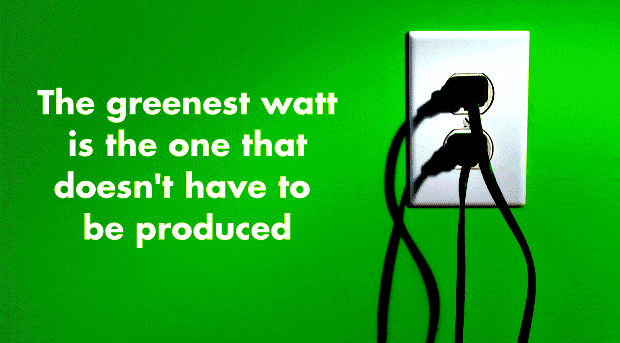
The fact that Bill Gates’ .. book does not focus on energy efficiency – while giving nuclear energy a large and not very imaginative role – slightly annoys me. [ed. only slightly?] Because decision makers, young people, and many others will read the book and draw the wrong conclusions. But also, because it feels like a symptom of a broader issue: intellectually it is evident for most people that energy efficiency is a central, cost-effective and economically smart way to contribute to the green transition. Yet energy efficiency does not play a central role in many countries’ efforts to secure a green transition. It is as if they overlook the fact that the greenest and cheapest energy is the energy we don’t use at all
The greenest energy is the energy we don’t use, energypost.eu
November 12, 2021 by Martin Rossen As COP26 comes to a close, Martin Rossen, Senior Vice President, Head of Group Communication and Sustainability at Danfoss reminds us in a powerfully persuasive way why the most direct route to net-zero is managing consumption. Inspired by a glaring omission by Bill Gates in his recent book, Rossen draws our attention to the futility of developing new tech if we don’t prioritise making use of readily available energy efficiency solutions. According to IEA figures almost half of emissions reductions must come from efficiency and the solutions are already at hand. Article promoted by Danfoss.
The Glaring Omission
The summer of 2021 was the first time in a while that I not only felt the urge but also had time to read a book. No more government files and committees. I read Microsoft founder Bill Gates’ newest book “How to Avoid A Climate Disaster: The Solutions We Have and the Breakthroughs We Need.” …………
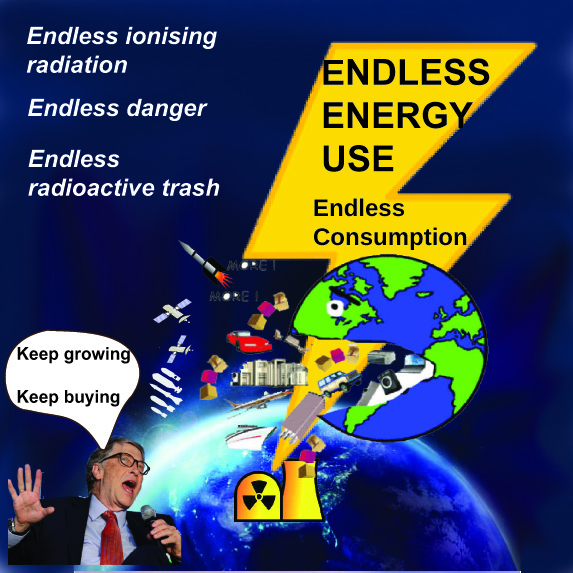
However ……. Bill Gates basically ignores that the greenest and cheapest energy is the energy we don’t use. I will get back to that, but let’s first look into climate action according to Bill Gates:
Primary Energy Consumption virtually unchanged through 26 years of COPs……. According to the British economist Helen Thompson, fossil fuels constituted 86% of the world’s primary energy consumption when COP1 was held in Berlin in 1995. What is the progress today, 26 years later? The answer is almost nothing. According to the latest numbers, fossil fuels now constitute 84% of the world’s primary energy consumption.
………Reversing the Energy Density Trend
Czech-Canadian environmental researcher Vaclav Smil, of whom Bill Gates is big fan, says the underlying challenge is the fact that humanity historically has moved in the direction of more and more energy-intense energy sources……….
Bill Gates encourages decision makers around the world to make big investments in new technologies. …….
IEA’s “Green Equation”
So, what’s the plan, I’m tempted to ask? To a large degree, I agree with Bill Gates’ conclusions – but I can’t help being a bit disappointed by the fact that he essentially ignores the importance of energy efficiency to the green transition. Bill Gates briefly mentions that energy efficiency could make the green transition easier, but after that, it is left out of his analysis.
Yet the International Energy Agency (IEA), a central source in the book, mapped out the cheapest and most effective path to reach the goals of the Paris agreement – let’s call it the green equation – like this: 36% of carbon reductions must come from renewable energy, 2% from switching fuels, 6% from nuclear power, 9% from carbon capture ands, 3% from other sources – and the biggest chunk, with a total of 44% reductions, has to come from energy efficiency. In other words, we can’t merely build windmills.
The world’s energy consumption has risen dramatically since 1945. For each day that passes, the green transition challenge we face is growing ………… it is important we become better at creating more societal value by using less energy, for example, by recycling it.
Now to the good news
Solutions already exist. In Denmark, we know that. We often live in an energy efficient manner – in bright, well-isolated homes with a secure water supply. This didn’t come by coincidence, but out of necessity.
During WWII, the Danes rationed. This included use of energy, so the living room temperature was to be kept at about 18 degrees Celsius. On a farm on the island of Als in the corner of Denmark, Danfoss’ founder Mads Clausen had the idea to develop a thermostatic expansion valve, which automatically keeps a constant temperature. The result? An improved indoor climate in millions of homes all over the world, as well as energy bills and emissions that have dropped. It was a green breakthrough before we knew we needed it. Today, the island of Als is one of the global centers of energy efficiency.
The solutions vary, but at their core, they are the same – they provide energy efficiency. According to the IEA, these are the solutions to be put into play if we are to overcome the many barriers on the road to climate neutrality………..
even in buildings with thermostats, heat pumps and other energy efficient solutions, we must take action. We need to equip our buildings with ‘intelligent’ systems – a ‘brain’ that links the buildings’ thermostats, heat pumps and air conditioning – as well as any other cooling and heating appliances– to big data that constantly optimizes energy consumption. The modern thermostat includes all factors in the equation – including the weather, showering habits of the inhabitants and expensive peak hours – and adjusts the consumption of energy accordingly. With solutions like this, according to the consultants ECOFYS, we can reduce CO2 emissions in Europe by 156 million tons – equaling the emissions of 82 million cars.
Industry, Transport and Food distribution
The industrial sector consumes a lot of energy and is responsible for one-fourth of the world’s emissions, so this sector demands our focus, too. Electric motors are a good place to start. In Europe alone, there are eight billion in use at the time of writing this. However, most of them only have two functions: they are either on or off. If electric motors were fitted with AC drives that enabled them to have adjustable speeds, the world’s demand for electricity could be reduced by 8%, according to the IEA – corresponding to the combined demand for electricity of India and France.
And then we have the transport sector that accounts for 24% of the world’s energy-related CO2-emissions. If cars are to be powered by electricity instead of gasoline, batteries and drives need to replace the combustion engine. This means that the gearbox of the future is a power module that converts power so the car can drive at various speeds. That movement is already on the way. What few people know is that Danfoss’ power modules already are installed in about 40 million cars, but there is still quite a way to go to replace the world’s 1.5 billion cars……….
Massive amounts of the world’s resources go into the production of food that is lost or wasted in areas without proper cooling facilities. In India, more than a third of food is lost on the journey from fields to the hungry population. It isn’t hard to imagine farmers’ disbelief and frustration in the face of this inconceivable loss of value. In many developing countries, proper cooling facilities in the supply chain can reduce the blatant waste of food (and associated emissions) by up to 40%, according to estimates.
The Solutions are already at hand
These are big numbers, and I could go on, because it is the same in practically the entire economy. We are not using our energy wisely. This results in a massive waste of energy. It costs fortunes on the energy bills of families and companies all over the world. It results in the emission of many billion tons of greenhouse gasses. And it makes the renewable energy infrastructure bill much bigger than it has to be.
We need to take this in hand, particularly in the Western World. It is necessary if we are to reach net zero. But also, because net zero is a zero-sum game, imposing a certain responsibility on us. We need to make an extra effort in the green transition so developing countries are not held back in their efforts to reach the same level of prosperity that we are privileged with.
Luckily, there are various energy-efficient solutions from many competent companies, that have a payback time of only a few years. That’s good because there is plenty of work to be done.
According to the IEA, the steam has gone off investments in energy-efficient buildings, equipment and vehicles. Both literally and figuratively speaking, we are wasting our energy at the same time we should be doing the exact opposite. It is a huge challenge many seem to forget: the green transition, in a lot ways, neither requires technological breakthroughs nor revolutions. It simply requires that we apply readily available cost-efficient solutions – not the least within energy efficiency.
The fact that Bill Gates’ .. book does not focus on energy efficiency – while giving nuclear energy a large and not very imaginative role – slightly annoys me. Because decision makers, young people, and many others will read the book and draw the wrong conclusions. But also, because it feels like a symptom of a broader issue: intellectually it is evident for most people that energy efficiency is a central, cost-effective and economically smart way to contribute to the green transition. Yet energy efficiency does not play a central role in many countries’ efforts to secure a green transition. It is as if they overlook the fact that the greenest and cheapest energy is the energy we don’t use at all. https://energypost.eu/the-greenest-energy-is-the-energy-we-dont-use/
COP 26 waters down the prospects of world action to stop coal pollution

Cop26: Alok Sharma in tears as India and China dilute pledge to phase out coal. A historic United Nations deal to end the use of coal power was watered down last night after a dramatic last-minute intervention from China and India.
Alok Sharma, the president of Cop26, was reduced to tears as he apologised to delegates for the way the late change was made. The deal, dubbed the Glasgow climate pact, had been set to include a pledge to accelerate the “phase-out” of coal power but this was switched late on to “phase-down”. The change in wording lessens the urgency with which countries are required to reduce the use of coal, the world’s strongest driver of climate change. Chris Stark, chief executive of the Climate Change Committee, an independent adviser to the government, said: “The writing is on the wall for fossil fuels now. We are in a new period of
action and if that is the legacy of Glasgow, I will be delighted.”
Times 14th Nov 2021
1 This month
17 October, Free Public Talk on Nuclear Issues in South Australia
David Noonan will speak on public interest concerns over the new Roxby Downs Indenture Act 2026 on BHP copper-uranium mining and ore processing in SA, and on how AUKUS may face SA with a High-Level nuclear waste agenda.
Dr Jim Green will discuss international developments in the field of nuclear power including ‘small modular reactors’ and Generation 4 ‘advanced’ nuclear reactor concepts.


Help Aunty Sue Protect Her Land and Sacred Sites From Destructive Rocket Testing.
.

Australians deserve the truth
about
AUKUS – https://aukuspublicinquiry.com/

PETITION – To: Prime Minister Anthony Albanese and the Australian Labor Government

of the week – Australians for War Powers Reform (AWPR)
To see nuclear-related stories in greater depth and intensity

