Tony Abbott, (highly unpopular former PM) on the pro nuclear bandwagon.

Take nuclear power to election: Abbott AAP. Paul Osborne and Matt Coughlan October 29, 2021 Former prime minister Tony Abbott says Scott Morrison should go to the election promising nuclear power as a major point of difference to Labor.
Mr Abbott’s comments came as Mr Morrison flew to Rome for this weekend’s G20 summit before attending the COP26 climate talks in Glasgow on Monday.
The Morrison government’s technology roadmap – which forms the basis of its net-zero by 2050 emissions policy – includes the prospect of small modular nuclear reactors in the future.
But Australian law currently bans nuclear power and polls show Australians remain concerned about its safety…………. https://www.aap.com.au/news/labor-warns-of-global-climate-consequences/
Another example of climate change damaging the nuclear industry -jellyfish increase clogging up cooling systems of reactors

human-induced climate change has raised ocean water temperatures, setting conditions for larger-than-usual jellyfish populations. Further, the relatively warm water near nuclear power plant discharge outlets may attract jellyfish swarms, according to one study. Also, pollution has lowered oxygen levels in sea water, which jellyfish tolerate more than other marine animals, leading to their proliferation.
Jellyfish attack nuclear power plant. Again. Bulletin, By Susan D’Agostino | October 28, 2021Scotland’s only working nuclear power plant at Torness shut down in an emergency procedure when jellyfish clogged the sea water-cooling intake pipes at the plant, according to the Scotland Herald. Without access to cool water, a nuclear power plant risks overheating, with potentially disastrous results (see: Fukushima). The intake pipes can also be damaged, which disrupts power generation. And ocean life that gets sucked into a power plant’s intake pipes risks death.
The threat these gelatinous, pulsating, umbrella-shaped marine animals pose to nuclear power plants is neither new nor unknown. (Indeed, the Bulletin reported on this threat in 2015.) Nuclear power plant closures—even temporary ones—are expensive. To protect marine life and avert power plant closures, scientists are exploring early warning system options. …………
The clash between gelatinous jellyfish and hulking nuclear power plants has a long history. These spineless, brainless, bloodless creatures shut down the Torness nuclear power plant in 2011 at a cost of approximately $1.5 million per day, according to one estimate. Swarms of these invertebrates have also been responsible for nuclear power plant shutdowns in Israel, Japan, the United States, the Philippines, South Korea, and Sweden.
Humans have unwittingly nurtured the adversarial relationship between jellyfish and nuclear power plants. That is, human-induced climate change has raised ocean water temperatures, setting conditions for larger-than-usual jellyfish populations. Further, the relatively warm water near nuclear power plant discharge outlets may attract jellyfish swarms, according to one study. Also, pollution has lowered oxygen levels in sea water, which jellyfish tolerate more than other marine animals, leading to their proliferation.
Some look at jellyfish and see elegant ballerinas of the sea, while others view them as pests. Either way, they are nothing if not resilient. Jellyfish are 95 percent water, drift in topical waters and the Arctic Ocean, and thrive in the ocean’s bottom as well as on its surface. Nuclear power plant operators might take note: Older-than-dinosaur jellyfish are likely here to stay. https://thebulletin.org/2021/10/jellyfish-attack-nuclear-power-plant-again/
Too expensive, too slow: Even the baseload argument doesn’t work for nuclear.
Too expensive, too slow: Even the baseload argument doesn’t work for nuclear. ReNeweconomy, Mark Diesendorf 29 October 2021 With the Glasgow climate summit approaching and the government’s announcement that Australia would buy nuclear-powered submarines instead of diesel, the nuclear industry and News Corp have predictably renewed their campaign for nuclear power stations in Australia.
This is of concern, because every dollar invested in nuclear power makes the climate crisis worse by diverting investment from renewable energy technologies. Having recently participated in a nuclear debate, I report here on the pro-nuclear arguments and expose their weaknesses.
The old baseload myth
Nuclear proponents still claim that electricity grids need baseload power stations, such as coal or nuclear, that can run 24/7 at full rated power, except when they break down or undergo maintenance and refuelling.
But, as readers of RenewEconomy know, the variability of wind and solar can be balanced with storage, new transmission links, demand response, and/or flexible power stations that can start up in seconds to minutes and can vary their output rapidly.
The latter include hydroelectricity with a single dam, pumped hydro (with two dams), other forms of gravitational energy storage, batteries, concentrated solar thermal with storage, and open-cycle gas turbines that can burn biofuels and green hydrogen and ammonia.
Despite the claims of proponents, modern nuclear reactors cannot compete in flexibility with the above technologies and measures. Furthermore, operating in a slightly flexible mode carries economic penalties for nuclear, whose electricity already costs 3–5 times that of wind and solar PV––see Lazard and CSIRO.
Dark doldrums (Dunkelflaute in German) are extended periods of low wind and solar. In the debate, a pro-nuclear speaker modified the baseload myth by claiming falsely that a recent report on dark doldrums by the leading German solar energy research organisation, the Fraunhofer Institute, admits that solar energy has failed.
However, the only report on dark doldrums by that institute identifies the issues and then sets out the solutions to maintaining generation reliability, namely the flexible technologies and methods listed above………………………………
The scale of the disaster resulted from the choice of nuclear technology. Yet at Kamisu, on the coast to the south of Fukushima, a wind farm located in the surf survived the tsunami and continued to generate electricity until the grid went down.
Proliferation
It’s well documented (see here and here) that India, Pakistan, South Africa and North Korea used “peaceful” nuclear energy to develop nuclear weapons and to cloak that development.
Furthermore, the UK supplemented its military-produced weapons-grade plutonium with plutonium reprocessed from its first generation of nuclear power stations. In France, the military and civil nuclear industries are entwined.
In addition, the following countries used “peaceful” nuclear energy to commence the development of nuclear weapons, but fortunately discontinued their programs: Argentina, Australia, Brazil, South Korea, Sweden and Taiwan, and probably Algeria and Libya. For Australia’s attempt in the 1960s, see the books by Richard Broinowski and Wayne Reynolds.
Nuclear submarines built by the USA and UK use highly enriched uranium that could be used directly in nuclear weapons. The AUKUS alliance could lead to increased pressure from members of the Australian Strategic Policy Institute, the Lowy Institute and others for Australia to develop nuclear weapons.
Even if the Australian government rejects that scenario, the perception exists and AUKUS could lead to a regional nuclear arms race.
Nuclear wastes
The standard pro-nuclear line is that the sum total of all the world’s nuclear wastes occupies a very small volume and therefore, by implication, is not a major problem. But nowhere in the world is there an operating, long-term, underground repository for high-level wastes.
Furthermore, the pro-nuclear line ignores the vast volumes of low-level wastes at uranium mines that are uncovered allowing radioactive dust to blow in the wind. The waste mountain at the Olympic Dam uranium-copper mine is already over 150 million tonnes.
Although the number of cancers caused annually will be very small, the total summed over thousands of years will be large.
High-level nuclear power wastes are stored temporarily in pools of water at nuclear power stations. The USA spent US$13.5 billion preparing an underground repository at an unsuitable site, Yucca Mountain, and then had to abandon it.
Finland has just commenced building its repository, Sweden is still thinking about building a final repository, and that’s about it.
Retired nuclear power stations have highly radioactive sections and are a major nuclear waste problem. The cost of decommissioning them and managing their wastes is comparable with their construction cost, but the nuclear industry only pays a fraction. …………………
Energy density
Another tactic used by nuclear supporters in recent years is based on “energy density”, the claim that 100 per cent renewable electricity scenarios would occupy vast areas of land, compete with food production and reduce biodiversity.
Yet the reality is that most wind and solar farms are erected on agricultural or marginal land. Although wind farms can span large areas, the land area actually occupied by the turbines, access roads and substation typically amounts to 1 to 2 per cent of the land spanned.
Wind farms are compatible with agriculture. Although the presence of solar farms excludes some forms of agriculture, they can be erected sufficiently high above ground for sheep to shelter beneath them. Both wind and solar farms contribute valuable rent to farmers. And, of course, rooftop solar occupies no land.
Too slow for climate mitigation
If national governments commit to net zero emissions by 2050 (which is likely to be too late for keeping global heating below 1.5 degrees), then they must achieve zero emissions from all energy (electricity, transport and heat) by about 2040. This is because energy is the least difficult sector to transition to zero emissions.
Agriculture and non-energy industrial processes will need more time to reduce emissions and, if possible, to capture carbon dioxide in order to offset emissions they cannot reduce.
Achieving zero energy emissions by 2040 entails achieving zero emissions from electricity by 2035, because electrifying transport and heat will take longer than transitioning electricity to renewables. Wind and solar farms can be planned and built in just three years.
Introducing nuclear power to Australia — including convincing the electorate, local governments and local populations, and building the infrastructure — would take at least 15 years, while taking financial resources away from renewables.
So new nuclear power stations could not contribute in time to assist the rapid electricity transition needed for climate mitigation. And once 100 per cent renewable electricity is established with the bulk of energy generation by cheap solar and wind, nuclear power could not compete economically. It’s a technology whose time has passed.Dr Mark Diesendorf is honorary associate professor, Environment & Governance Group, School of Humanities & Languages at the Faculty of Arts, Design & Architecture at UNSW. https://reneweconomy.com.au/too-expensive-too-slow-even-the-baseload-argument-doesnt-work-for-nuclear/
IPPNW statement on how WHO could advance the planetary health imperative to eradicate nuclear weapons — IPPNW peace and health blog

IPPNW was pleased to have the opportunity for the first time to make a statement to the World Health Organization Western Pacific Region Committee on how WHO could advance the planetary health imperative to eradicate nuclear weapons. Statement to WHO WPRO Regional Committee Meeting, Oct 2021 by International Physicians for the Prevention of Nuclear War […]
IPPNW statement on how WHO could advance the planetary health imperative to eradicate nuclear weapons — IPPNW peace and health blog
Energy Insiders Podcast: Mike Cannon-Brookes on the green energy future — RenewEconomy

Mike Cannon-Brookes discusses government policy failure, Sun Cable, the cost of capital, and whether the 1.5°C target can be met. The post Energy Insiders Podcast: Mike Cannon-Brookes on the green energy future appeared first on RenewEconomy.
Energy Insiders Podcast: Mike Cannon-Brookes on the green energy future — RenewEconomy
Temperature rises over 10 degrees Celsius in some parts of the “frozen earth wall” to reduce contaminated water at Fukushima Daiichi Nuclear Power Plant

October 28, 2021
As a countermeasure to reduce the amount of contaminated water from the Fukushima Daiichi Nuclear Power Plant, it was found that the temperature of the ground in some parts of the “frozen soil wall”, which freezes the ground around the buildings to prevent the inflow of underground water, has been rising above 0 degrees Celsius since the middle of last month, reaching a maximum of 10 degrees Celsius. The Tokyo Electric Power Company (TEPCO) is investigating the cause of the problem, saying that it does not affect the function of the wall to prevent the inflow of underground water.
The “frozen earth wall” is one of the measures to reduce the amount of contaminated water. Pipes are embedded around the buildings of the Fukushima Daiichi Nuclear Power Plant, and liquid at 30 degrees below zero is poured into the pipes and frozen, forming an “ice wall” that prevents groundwater from flowing into the buildings.
The Tokyo Electric Power Company (TEPCO) has installed thermometers in the “frozen earth wall” to measure the underground temperature, and in some areas located on the mountain side of the No. 4 reactor at the Fukushima Daiichi Nuclear Power Plant, the temperature, which is usually below freezing, has been rising and has been above zero since the middle of last month.
The temperature in the area where the increase was confirmed was between 1 meter and 4 meters deep, and the temperature exceeded 10 degrees Celsius on some days.
The freezing wall is about 10 meters thick, and TEPCO has stated that there is no significant difference in the water level between the inside and outside of the wall, so there is no impact on its ability to control the inflow of groundwater.
It is possible that water leaked from cracks in the drainage channel that intersects the frozen soil wall and seeped into the frozen area, causing the temperature to rise.
Freezing wall to be used for longer period than expected, “trump card” of countermeasure against contaminated water at Fukushima Daiichi Nuclear Power Plant, without sufficient verification

The frozen soil barrier wall at the Fukushima No. 1 Nuclear Power Plant of the Tokyo Electric Power Company (TEPCO) was built at a cost of 34.5 billion yen. Initially, TEPCO had planned to finish the work by 2021, but five years have passed since the freeze, and a large amount of contaminated water continues to be generated, with no prospect of even reaching zero. The ice wall, which will cost hundreds of millions of dollars to maintain every year, will enter long-term operation without sufficient verification. (Kenta Onozawa)
Freezing soil with cooling liquid, annual maintenance cost of billions of yen
The freezing wall was built to prevent groundwater from the mountains from entering the buildings where highly radioactive materials such as melted nuclear fuel (debris) remain after the accident. Freezing began in March 2004, and the entire area was frozen in nearly two years. The annual maintenance costs, including electricity for freezing, cost more than one billion yen when the system was first introduced, and TEPCO is bearing the cost.
From December 2007 to January 2009, there were a series of problems with cooling liquid leaking from a total of five frozen pipes. According to TEPCO, all of them are located under the road near the reactor building, and it is highly likely that the vibration of passing vehicles caused fatigue damage to the metal parts.
TEPCO, which had not envisioned long-term operation of the plant, had been repairing problems only after they occurred, but from this year, it has set a frequency for replacement of parts and will prepare replacement parts in advance. A spokesperson said, “The frozen earth wall is effective and will be used continuously. However, from this year, the frequency of replacement will be set and replacement parts will be prepared in advance.
Groundwater through gaps, limited effect
”In March 2006, TEPCO announced that it would build a freeze-earth wall at the Fukushima Daiichi Nuclear Power Plant.
In March 2006, TEPCO announced an estimate that the frozen soil wall prevented about 95 tons of groundwater per day from entering the buildings. Without the wall, the amount would have been 189 tons per day, and the company stressed that the amount had been halved.
However, there is a lack of evidence for the estimate, as it was based on an evaluation of the period when there was little rainfall, and it does not distinguish between the effects of other measures, such as the pumping up of groundwater by sub-drainage wells around the building. Toyoshi Sarada, chairman of the Nuclear Regulation Authority (NRA), has declared that “the main role of groundwater countermeasures is to pump up the sub-drainage.
At the press conference when the calculations were released, Naohiro Masuda, who was the chief decommissioning officer of TEPCO (now president of JNFL), stated clearly that “we will continue to verify” the effectiveness of the frost wall. However, the spokesman now avoids explaining, saying, “It is difficult to show the effects of individual measures.
Calls from the Regulatory Commission for an alternative plan
Initially, the government and TEPCO had set a goal of stopping the generation of contaminated water by around 2009. However, they still do not know where the groundwater is coming from.
The amount of contaminated water, which was 490 tons per day in FY2003, was reduced to about 140 tons in FY2008, but zero was not achieved, and the goal was set back to 100 tons in 2013. TEPCO said, “We will continue with the current measures until 2013. After that, we are still studying.
The cost of maintaining the frost wall will be covered by the electricity bills paid by consumers to TEPCO. In the regulatory commission’s study group, there is a strong opinion among experts that “from the viewpoint of cost-effectiveness, the frozen soil wall should be abandoned and steel plates or concrete walls should be embedded. In response to this opinion, TEPCO simply replied, “We are considering it,” and even 10 years after the accident, there is no end in sight to the contaminated water measures.
October 29 Energy News — geoharvey

Opinion: ¶ “Ford Performance Is Treating EVs Like The Cool Thing They Are” • Ford Performance took Vaughn Gittin, Jr to the Faroe Islands to make a neat video. Without making a huge deal of the vehicle’s efficiency, range, or green credibility, they just had some fun with the vehicle and showed customers that EVs […]
October 29 Energy News — geoharvey
No likelihood of Australian jobs in nuclear submarine construction, nor in big Pacific vessel
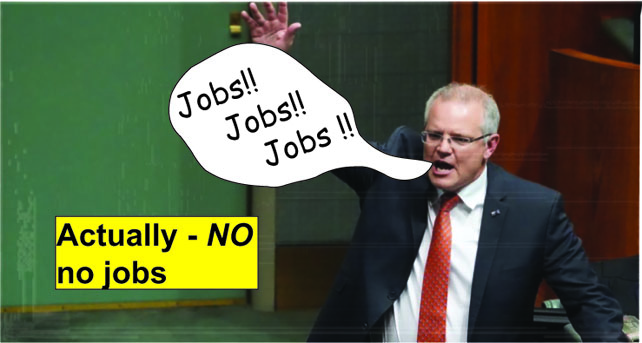
as the government comes under fire from Labor over hundreds of submarine construction jobs being at risk, Defence officials also revealed that a vessel intended to conduct disaster relief missions to the Pacific would now be built overseas instead of locally.
Hybrid nuclear submarine ‘unlikely’, navy chiefs say, AFR, Andrew Tillett
Political correspondentThe Royal Australian Navy has signalled it is unlikely to select a hybrid nuclear submarine design that combines British and American technology, in a significant concession to mitigate the risk of delays.
The head of the nuclear submarine taskforce, Vice-Admiral Jonathan Mead, told a Senate estimates hearing on Wednesday that Defence wanted to have at least one nuclear submarine before 2040 in a worst-case scenario and was looking to accelerate deliveries.
Officials also downplayed the possibility of leasing a submarine from the United States or the United Kingdom to avoid a capability gap with the ageing Collins class submarines, at a time China is rapidly shifting the balance in the Indo-Pacific with its military build-up.
But as the government comes under fire from Labor over hundreds of submarine construction jobs being at risk, Defence officials also revealed that a vessel intended to conduct disaster relief missions to the Pacific would now be built overseas instead of locally.
Among the mooted options are acquiring US-designed Virginia class submarines, the British Astute class, partnering with the UK on the design of its new attack submarines or a hybrid of the British and American boats.
| However, it is unclear what level of Australian content will be incorporated into the submarine despite the government’s intention to build them in Adelaide, nor whether it would be possible to use an American combat system in a UK-designed boat……….. As part of the Pacific Step-up announcement in 2018, the government said it would acquire a large-hulled support vessel for humanitarian missions in the south-west, but the committee heard the government had confirmed in recent months to buy the ship from overseas. “This is another Morrison government announcement not delivered,” Senator Wong said.Foreign Minister Marise Payne said a lack of capacity in Australian shipyards in Adelaide and Perth meant there was no room to build the new Pacific vessel…….“I don’t regard it as reneging on the commitment,” Senator Payne said. https://www.afr.com/politics/federal/hybrid-nuclear-submarine-unlikely-navy-chiefs-say-20211027-p593j3 |
Australia looking at existing design to ‘accelerate’ delivery of nuclear-powered submarines
Australia looking at existing design to ‘accelerate’ delivery of nuclear-powered submarines, SMH,
By Anthony Galloway 27 Oct 21,
Australia’s new fleet of nuclear-powered submarines would preferably be based on an existing design, Defence officials have revealed, as part of a plan to get the boats in the water before 2040 to avoid a massive gap in the nation’s maritime defences.
Prime Minister Scott Morrison announced last month it was dumping a $90 billion agreement with France to build conventionally powered submarines and would instead develop a nuclear-powered fleet with Britain and the United States under a new defence pact called AUKUS.
If it goes with an existing design, Australia would have to choose between the US’s Virginia-class submarines and Britain’s Astute-class boats. It is widely believed that Australia is more likely to develop a version of the Astute submarine because the British submarine is smaller and less expensive………….
Defence officials also revealed on Wednesday that a plan to build a new naval ship for the Pacific had been quietly dumped in favour of purchasing the vessel on the open market.
The Morrison government announced in 2018 that it would build a large, new naval ship that will cruise the South Pacific and help Australia’s neighbours deal with natural disasters.
But it was confirmed during the Senate estimates hearing that the government would instead purchase the ship to get into the water next year……….https://www.smh.com.au/politics/federal/accelerate-australia-looking-at-existing-design-to-build-nuclear-powered-submarines-20211027-p593ji.html
Half-baked plan to build half of each nuclear submarine in Australia, and conflicts of interest in the planners,
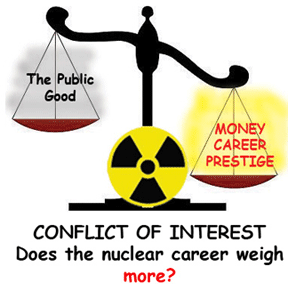
the three committee members have reportedly identified ‘conflicts of interest’
Australia could build front half of nuclear-powered subs, Australian Defence NewsBy Ewen Levick | Melbourne | 28 October 2021
More details on Australia’s intended acquisition of nuclear-powered submarines have come to light this week following a Senate Estimates hearing and an interview given to the AFR by Defence Minister Peter Dutton.
Both confirmed that Australia is seeking an unchanged mature design – either the UK Astute class or the US Virginia class – but sources told the AFR that Defence is leaning towards the Virginia class.
The sources also indicated that the rear half of the submarine and the nuclear reactor would be built overseas and joined together with a locally-built front half. According to the AFR, Defence has told industry that the submarine will include about 40 per cent local industry content.
ice Admiral Jonathan Mead told a Senate Estimates hearing that British and American designers are coming to Australia next year as part of the 18-month planning and evaluation process, which VADM Mead said would report to government ‘regularly’ and government will then decide whether that information is made public.
VADM Mead also said that Prime Minister Scott Morrison has personally established the timeline of having the first Australian boat “in the water by 2040” but VADM Mead could not define what “in the water” means in the Prime Minister’s context – whether that is an operational submarine or one prior to commissioning. The task force will identify this timeline and examine options of bringing that date forward or not over its 18-month tenure……………..
The hearing also revealed that Cabinet only signed off on the AUKUS decision ‘a day or two’ before the public announcement on September 16, Minister Dutton spoke to his French counterpart the day before the announcement, and CDF General Angus Campbell spoke to his counterpart only after the announcement.
Both CDF or Secretary Moriarty said they had not been party to discussions on potentially expanding AUKUS to include New Zealand, Canada or Japan.
If Defence’s preference for the Virginia class is correct, it would reinforce existing questions over the influence of Don Winter, a former US Navy secretary and Prime Minister Scott Morrison’s personally-appointed special advisor on naval shipbuilding, as well as the government’s Submarine Advisory Committee, which ‘provides independent critical peer review of the current and projected submarine capability’.
The members of this committee include Jim Hughes, a former vice president of submarines at Newport News Shipbuilding (the company that constructs the Virginia class submarines for the US Navy), and Donald Kirkland, Chairman of the Board of Huntington Ingalls Industries (HII – the company that owns Newport News Shipbuilding).
This committee was appointed by Minister Dutton and Minister for Defence Industry Melissa Price.
According to Greg Sammut, General Manager Submarines, the role of this committee in acquiring the nuclear-powered boats ‘hasn’t been determined yet’ and he could not say when it would be determined – although the three committee members have reportedly identified ‘conflicts of interest’ which Sammut says will be factored into any role that committee plays in the acquisition.
Given the role of Kirkland as chairman of HII, and that organisation’s role in building the Virginia class, has that been identified as a conflict of interest?” Senator Jordon Steele-John asked……
In a separate discussion of the Sovereign Shipbuilding Talent Pool (SSTP), which is a mechanism to redistribute Naval Group and Lockheed Martin workers affected by the cancellation of the Sea 1000 contract, Deputy Secretary of National Naval Shipbuilding Tony Dalton revealed that other companies’ employees eligibility for the SSTP will effectively be decided on a case by case basis.
So far, over 560 eligible people have been affected by the contract cancellation and 286 have applied for assistance through the SSTP, but only 13 job offers have been made and 11 people have accepted a new job. https://www.australiandefence.com.au/news/australia-could-build-front-half-of-nuclear-powered-subs
Scott Morrison’s ‘net zero plan’ includes small nuclear reactors
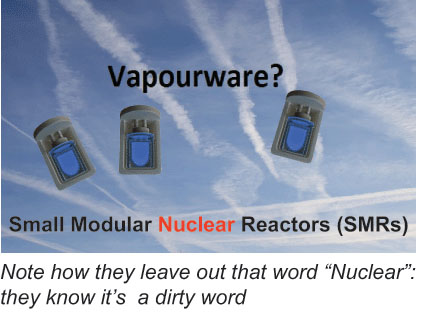
Australia’s net zero plan includes ‘small, modular nuclear reactors’ Paul Osborne, 27 Oct 21, Australia will closely watch the development of small modular nuclear reactors as the government seeks to achieve net-zero emissions by 2050. The Morrison government’s emissions plan released on Tuesday said “all technologies” were on the table.
…….. The plan noted that Australia was working with the UK on low emissions technology, including research into small modular reactors.
Prime Minister Scott Morrison told Perth radio 6PR on Tuesday he did not intend to lift the current ban on nuclear power in Australia…….https://inqld.com.au/news/2021/10/27/australias-net-zero-plan-includes-small-modular-nuclear-reactors/
Australia will closely watch the development of small modular nuclear reactors as the government seeks to achieve net-zero emissions by 2050. The Morrison government’s emissions plan released on Tuesday said “all technologies” were on the table.
There must be a Conservation Plan before uranium mining operations are permitted at the fragile ecosystem of Mulga Rock, Western Australia
Nuclear-Free W,A, 28 Oct 21, We focus on Vimy Resources Mulga Rock environmental approvals, expiring on the 16th of December. The State environmental approval states under condition 3, that the company must, ‘substantially commence’ by 16 December 2021. Vimy have had five years to get up and running and now we are seeing the unnecessary and unwanted clearing of an airstrip and re-establishment of the mine camp at Mulga Rock in an attempt to demonstrate ‘substantial commencement’. This is deeply disturbing when we have argued that the project still lacks crucial information and approvals such as;
they have not entered negotiations with the Upurli Upurli Nguratja registered native title claimant group and do not intend to negotiate with them;
they do not have a final investment decision to develop the mine;they do not have a Works Approval that they require from the Department of Water and Environmental Regulation;
they have not completed the Sandhill Dunnart Conservation Plan – a Federal requirement for the endangered species that has been recorded at the Mulga Rock area.
We are of strong view that no substantial works should be allowed at the site in the absence of a Conservation Plan for the increasingly vulnerable Sandhill Dunnart.
Is nuclear history repeating in South Australia?
 |
Is nuclear history repeating in South Australia? https://www.abc.net.au/radionational/programs/drive/is-nuclear-history-repeating-in-south-australia/13602456
By Patricia Karvelas on RN Drive Jason Bilney’s grandfather remembers the impacts of nuclear testing at Maralinga in South Australia’s far north, where atomic bombs were tested in the 1950s and 1960s.
Now, as chair of the Barngarla Determination Aboriginal Corporation, Jason has fought to have his people’s voice heard regarding a proposed nuclear waste facility at Napandee, on the Eyre Peninsula.
Guest
Jason Bilney, Chairperson of Barngarla Determination Aboriginal CorporationDuration: 7min 39secBroadcast: Mon 25 Oct 2021,
The European Commission struggles with push to have nuclear power included as clean and sustainable
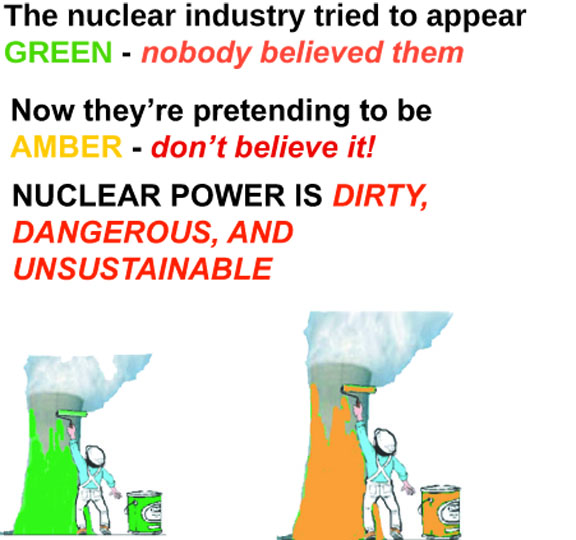
The Green Brief: Gas, nuclear and the EU taxonomy saga
By Frédéric Simon and Kira Taylor | EURACTIV.com 27 Oct 21, ……………………………..The EU taxonomy regulation has created three categories for sustainable investments: “green”, “enabling” and “transition”. In an interview with the FT, McGuiness said a possible compromise could be to create a new “amber” category for activities that are not “green” as such but are still helpful for the green transition. The Commission is also looking at redefining the “transition” category to prevent the taxonomy from becoming too “binary”, McGuiness said.
With the creation of a new intermediate category, and the definition of clear sustainability thresholds for nuclear and gas, the European Union may just have found the answer to a question that has been bogging down the taxonomy for years.
Some will denounce it as a fudge and an assault on the EU’s green objectives. Others will call it a pragmatic answer to one of the trickiest questions posed by the energy transition.
1 This month.
20 September –National Day of Action in Melbourne on the International Day of Peace


Help Aunty Sue Protect Her Land and Sacred Sites From Destructive Rocket Testing.
.

Australians deserve the truth
about
AUKUS – https://aukuspublicinquiry.com/

PETITION – To: Prime Minister Anthony Albanese and the Australian Labor Government

of the week – Australians for War Powers Reform (AWPR)
To see nuclear-related stories in greater depth and intensity
 Antinuclear