When talking about nuclear waste and radioactivity, blurring the figures is a good pro nuclear strategy!
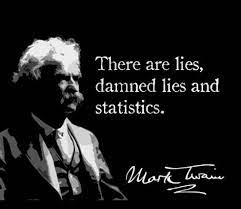
Kazzi Jai Fight to stop nuclear waste dump in South Australia , 3 Oct 21, · Something which really ticks me off is when percentages are quoted WITHOUT giving the actual figures involved AS WELL!
Case in point – Hef Griffiths is quoted in the latest minutes (August 2021 Kimba City Council) as saying….
“Mr Griffiths said that there is a lot of information about ILW remaining radioactive for 10,000 years, however the material that remains from synroc and reprocessing that’s returned from France indicates that after 300 years 99% of the radioactivity will have decayed away. After 600 years, 99.9% will have decayed away.”
Okay – let us assume that the highest upper level of ILW classification is 10^4 TeraBequerels/m3….which is the same as 10^16 Becquerels/m3.
Now it is IAEA and ARPANSA who choose to use Becquerels, so we will stick with those units. Becquerels are the International Unit (SI Unit) for radioactivity activity. It is defined as the number of times each second a nucleus in radioactive material decays and releases radiation. The higher the number of Becquerels, the more radioactive the material is. However, it is a very small unit.
37 billion Becquerels = 1 Curie. It can be written as 3.7 x 10^10 Becquerels or disintergrations per second…… Be mindful that 1 Curie of any radioactivity – alpha, beta or gamma – will fry you.
Okay….so let’s use some easy figures to get my point across.
Let us use hypothetically for example 100 TeraBecquerels as the nuclear waste in question for ease of mathematics. This would technically fall within the category of ILW in Australia, under Australia’s criteria.
It is sitting there, in its shielded cask.
What Hef Griffiths is saying is that in 300 years (approximately 12 generations of future people from us today – or looking back BEFORE European Colonization of Australia – to put it in perspective) that 99% of that waste would have decayed away. I will give him the benefit of the doubt, since AGAIN this information IS NOT REFERENCED, but that means that 1% activity REMAINS! So….that 100 TeraBecquerels of nuclear waste now measures 1 TeraBecquerel!! That is by no means SAFE to handle without shielding EVEN AT THAT STAGE….AND IS NO WHERE NEAR BACKGROUND LEVELS!!
Hopefully that puts this type of PRESENTATION IN CONTEXT!!
Percentages are OFTEN used to HIDE REAL TIME FIGURES!
This is NOT unique to the Nuclear Industry – it is a ploy often used in Politics to HOODWINK people to thinking that the figures ARE NOT IMPORTANT AT ALL – when in fact THEY ARE!!
ALWAYS ASK FOR EXACT FIGURES, WHEN PERCENTAGES ARE QUOTED!!
This was the SAME CASE when it came to the “Community Support” assessment – PERCENTAGES AGAIN ONLY QUOTED!
When they do this – THEY ARE TRYING TO GET AWAY WITH SOMETHING!! https://www.facebook.com/groups/344452605899556
“Low-carbon” misses the point — Beyond Nuclear International

Renewables displace 3–13 times more fossil-fueled generation per dollar than nuclear
“Low-carbon” misses the point — Beyond Nuclear International
https://wordpress.com/read/feeds/72759838/posts/3585195410
The view that climate protection requires expanding nuclear power has a basic flaw in its prevailing framing: it rarely if ever relates climate-effectiveness to cost or to speed—even though stopping climate change requires scaling the fastest and cheapest solutions. By focusing on carbon but only peripherally mentioning cost and speed, and by not relating these three variables, this approach misframes what climate solutions must do.
The climate argument for using nuclear power assumes that since nuclear power generation directly releases no CO2, it can be an effective climate solution. It can’t, because new (or even existing) nuclear generation costs more per kWh than carbon-free competitors—efficient use and renewable power—and thus displaces less carbon per dollar (or, by separate analysis, per year): less not by a small margin but by about an order of magnitude (factor of roughly ten). As I noted in an unpublished 17 Aug letter to The New York Times:
…[The Times’s 14 August] editorial twice extols “wind, solar and nuclear power” as if all three had equal climate benefits. They don’t. New electricity costs 3–8 (says merchant bank Lazard) or 5–13 (says Bloomberg New Energy Finance) times less from unsubsidized wind and solar than from nuclear power. Renewables thus displace 3–13 times more fossil-fueled generation per dollar than nuclear, and far sooner. Efficiency is even cheaper, beating most existing reactors’ operating costs. Competing or comparing all options…saves more carbon.
Thus nuclear power not only isn’t a silver bullet, but, by using it, we shoot ourselves in the foot, thereby shrinking and slowing climate protection compared with choosing the fastest, cheapest tools. It is essential to look at nuclear power’s climate performance compared to its or its competitors’ cost and speed. That comparison is at the core of answering the question about whether to include nuclear power in climate mitigation.
The “pro” discussion is also almost invariably focused entirely on the supply-side. Yet the International Energy Agency notes that, in 2010–2016, three-fourths of the world’s decarbonization came from energy savings. IEA also says renewables in 2010–20 decarbonized the world five times as much as nuclear growth did, but when the “pros” compare nuclear only with renewables, they are leaving out the cheapest half (or more) of the solution space—using energy more efficiently.
For example, the US in 2020 used 60% less energy per dollar of GDP than in 1975, and during that period, cumulative savings were 27 times the cumulative increase in supply from nuclear plus renewables. Looking forward, RMI’s Reinventing Fire (2011) rigorously showed how to quadruple the efficiency of using US electricity by 2050, at historically reasonable speed, and at an average cost one-tenth the cost of buying electricity today. That study’s findings have nicely tracked the decade of market evolution since, while the efficiency potential has considerably increased.
Continue readingUnknowns about Australia’s proposed nuclear submarines, especially weapons proliferation risks
U.S., UK Pledge Nuclear Submarines for Australia, October 2021 Arms Control Association,
By Julia Masterson, Australia could become the first non-nuclear-weapon state to field a nuclear-powered submarine as part of a new trilateral security partnership with the United States and United Kingdom known as AUKUS. The initiative was unveiled at a joint virtual press conference held Sept. 15.
…………… The United States has shared nuclear submarine propulsion technology only with the UK, a product of a series of Cold War agreements aimed to counter Soviet influence in Europe.
The UK Royal Navy operates three nuclear-powered submarine systems: the Vanguard-class ballistic missile submarine and the Astute- and Trafalgar-class attack submarines. Johnson said the AUKUS partnership will provide “a new opportunity to reinforce Britain’s place at the leading edge of science and technology, strengthening our national expertise.”
Morrison said that Australia will work with Washington and London over the next 18 months “to seek to determine the best way forward to achieve” a conventionally armed nuclear-powered submarine fleet. He also said that the submarines will be constructed “in Australia in close cooperation” with the UK and the United States. The submarines will reportedly be finished in time to be fielded in the 2040s. Early reports suggest Australia may lease U.S. or UK nuclear-powered submarines in the meantime, but the details remain unclear.
At a press conference in Canberra on Sept. 16, Morrison noted that “[n]ext-generation nuclear-powered submarines will use reactors that do not need refueling during the life of the boat. A civil nuclear power capability here in Australia is not required to pursue this new capability.”
A senior Biden administration official appeared to confirm on Sept. 20 that the vessels will be powered with HEU, as UK and U.S. submarines are, when they commented on Australia’s fitness for “stewardship of the HEU.” It remains unclear who would supply Australia with the fissile material necessary to fuel the submarines or whether the nuclear-powered submarines might be provided through a leasing arrangement.
Another unknown is whether the submarine design will be based on existing U.S. or UK attack submarines or an entirely new design. One of the reasons that Australia may lease U.S. or UK vessels in the near term is to “provide opportunities for us to train our sailors, [to] provide the skills and knowledge in terms of how we operate,” Australian Defense Minister Peter Dutton told reporters Sept. 19, suggesting the new submarines may share a similar design.
The AUKUS initiative is not limited to the new submarine project. It will also facilitate the sharing of information in a number of technological areas, including artificial intelligence, underwater systems, and quantum, cyber-, and long-range strike capabilities. Morrison said Australia will also enhance its long-range strike capabilities through the purchase of Tomahawk cruise missiles and extended range Joint Air-to-Surface Standoff Missiles.
………. Australian, UK, and U.S. officials have endeavored to assure the international community that the initiative does not pose a heightened proliferation risk………
Most nonproliferation experts, however, say the concern is not necessarily with Australia’s intentions but the precedent that the nuclear-powered submarine-sharing scheme would set. Although Australia’s new submarines would be conventionally armed, they clearly would be deployed for military use and will reportedly utilize HEU, which can also be used for nuclear weapons………
In a Sept. 21 letter to the editor published in The New York Times, Rose Gottemoeller, former U.S. undersecretary of state for arms control and international security, criticized the proposal to share HEU-fueled submarines with Australia. The proposal, she wrote, “has blown apart 60 years of U.S. policy” designed to minimize HEU use. “Such uranium makes nuclear bombs, and we never wanted it in the hands of nonnuclear-weapon states, no matter how squeaky clean,” she said.
As recently as May 2021, the UK and United States declared that they wanted to “reinvigorate” efforts to minimize the use of HEU, according to the official statement laying out the goals for the G7 Global Partnership Against the Spread of Weapons of Mass Destruction. (See ACT, June 2021.) Reducing the production and use of HEU “enjoys broad support but requires more solid political support,” the statement said.
Senior Biden administration officials have called the decision concerning Australia “a one-off,” implying that similar arrangements would not be made with other U.S. allies.
Despite support for the new initiative among the three capitals, the AUKUS partnership risks undermining U.S. and UK relations with allies, particularly France……………
Paris also cancelled a French-UK defense minister’s summit scheduled for the week of Sept. 20.https://www.armscontrol.org/act/2021-10/news/us-uk-pledge-nuclear-submarines-australia
Trevor St Baker and the latest push for nuclear energy
Trevor St Baker and the latest push for nuclear energy, Independent Australia, By David Paull | 2 October 2021 Quickly following the Morrison Government’s new ill-defined arrangements to obtain nuclear technology from its UK and U.S. (AUKUS) alliance partners, we have seen a new push from nuclear advocates for a domestic nuclear power industry.
Senator Matt Canavan, the Australian Workers Union (AWU) and pieces appearing in the Murdoch media have been leading the charge. There was also a puzzling link made by Deputy PM Barnaby Joyce on ABC’s Insiders.”
It wasn’t too long ago when Energy Minister Angus Taylor’s inquiry into a new domestic nuclear energy sector was held. Submissions by the nuclear industry and their lobbyists were widely condemned as containing shiploads of misinformation regarding the cost of nuclear versus renewables and the greenwashing of the carbon footprint. The Committee, however, recommended a partial lifting of the standing nuclear energy ban for ‘new and emerging technologies’.
The leading “new and emerging technology” is a reference to small modular reactors (SMRs), designed specifically to provide baseload power to the grid via a network of nuclear generators. As it turns out, Taylor has been leaking information to a far-right media outlet on the need to develop this sector in Australia with the co-operation of expertise from the UK, even with the assistance of our nuclear agency ANSTO.And here emerges a key player in this debate in Australia — the managing director of the company set up to develop this industry, Trevor St Baker.
With respect to his acknowledged need to de-carbonise our economy, Mr St Baker is on the record for claiming that “to reduce CO2 we must go nuclear” and that a rush to renewables would be a disaster for the power network. He claims that “intermittent” renewables are only projected to supply little more “than 25% annually any time soon” and that “electricity supply grids need synchronous generation supply for at least 40% of electricity demand at any time”.
Inherent in this way of thinking is that a dispatchable renewable power system backed by batteries cannot meet a base-load (24 hour) demand, a common theme expressed by other nuclear and fossil fuel lobbyists but an argument nonetheless increasingly on shaky ground. Nonetheless, the nuclear lobbying effort is attempting for all its might to gain momentum.
St Baker, depending on how you look at it, is a very clever businessman, one of the richest in Australia or one who is extremely “well connected”. His position on energy seems to many to be incongruous, attacking banks for withdrawing support for new fossil fuel ventures on the one hand yet investing substantially in renewable projects such as EV recharging stations through his Energy Innovation Fund……….
The Australian Nuclear Association (ANA) is our leading nuclear lobby group whose views on the need for a domestic nuclear industry mirror those views articulated by St Baker, including the view that SMR reactors are more or less “ready to roll”. Their latest media maintains that a poll has been conducted showing that ‘Australians support for considering nuclear energy reaches 70%’. However, the polls mentioned were conducted by the Liberal Party-affiliated Menzies Research Centre, so it’s hardly an independent poll given the Government’s past position on the issue and given the Centre’s position that ‘nuclear is beautiful’.
Like the international fossil fuel lobbying network, there are national and international bodies operating in tandem in the nuclear sector. The ANA is an affiliate of the World Nuclear Association (WNA) who it seems is conducting a vamped-up PR campaign to open new markets for nuclear power. Central to this is an emphasis on small modular reactor technology, announcing the first such reactors in Russia in December 2019 and now is most concerned by issues with licensing and design of SMRs. Other themes include the suitability of such technology for rapid changes in energy systems in response to climate issues.
Of course, this is what St Baker is banking on, literally with his considerable investment in the SMR technology. It is clear that the ruling political party in Australia would dearly love to get behind the nuclear transition as quickly as possible. The only real stumbling block is Labor’s opposition to the concept, public opinion and our adherence to the Nuclear Non-Proliferation Treaty.https://independentaustralia.net/politics/politics-display/trevor-st-baker-and-the-latest-push-for-nuclear-energy,15578
Are small nuclear reactors really the answer to UK’s green energy crisis?

the falling cost of wind and solar power, coupled with new technology to store energy off the grid for times when it is needed, made nuclear largely redundant.
“It’s too expensive, takes too long to develop, and we can’t afford to wait for it”
| Are small nuclear reactors really the answer to our green energy crisis? Small nuclear reactors are hailed as an answer to our energy crisis, but Jon Yeomans finds problems remain with the untested technology. Trawsfynydd’s fortunes could be about to change. It has been proposed as a possible site for a new type of nuclear reactor to be built by a consortium led by Rolls-Royce. Small modular reactors (SMRs) offer the promise of a new fleet of power stations that could be produced in a factory, loaded on to lorries and then trucked around the country for installation on decommissioned nuclear sites. The government believes these so-called “mini-nukes” will form a key part of its “green recovery” and is close to approving £215 million in funding to speed their development. The hope is that they could reduce the cost of nuclear power dramatically and help the UK to hit its target of net-zero emissions by 2050. But nothing is ever simple with nuclear. Can this dream become reality? With large-scale nuclear projects under a cloud, the government has warmed to the idea of smaller, nimbler technology, such as the SMRs proposed by Rolls-Royce. The Derby-based company is better known for producing aircraft engines, but since the 1960s it has also been responsible for the reactors on Britain’s nuclear submarines. These pressurised water reactors (PWRs) will form the basis of the SMRs it proposes to build in the UK. The big selling point of SMRs is that they can be made on a production line, reducing the huge costs of a project such as Hinkley. Rolls claims they solve “the conundrum of how to create affordable energy, and more of it, with a lower carbon footprint”. It says the scheme could generate £52 billion of “economic benefit” by 2050. The company’s SMRs will have a price tag of about £2 billion each, once the initial costs of building the factory are out of the way. It is thought Rolls would need to make 16 before the programme could pay its way, with financial support from the government required for at least the first four units. The SMRs would have a capacity of 470MW — enough to power one million homes. Critics of SMRs note there are few, if any, operating anywhere in the world. The American company Westinghouse is developing a lead-cooled reactor with 450MW capacity which won £10 million in UK government funding last year. NuScale, based in Oregon, is working on SMRs with an output of 77MW. But its first plant will not be operational until 2027. If the government gives the green light, Rolls will spend the next four years seeking approval from regulators while simultaneously building the first of a projected three factories in the UK. Company sources suggested the factories themselves could be a “levelling up” opportunity, bringing high-skilled jobs to the regions. It would take another four years for the first reactor to roll off the production line, pushing their start date into the next decade. Stephen Thomas, professor of energy policy at Greenwich University, said the falling cost of wind and solar power, coupled with new technology to store energy off the grid for times when it is needed, made nuclear largely redundant. “It’s too expensive, takes too long to develop, and we can’t afford to wait for it,” he said. A report by National Grid ESO (Electricity System Operator) this year envisaged at least two pathways to net zero by 2050 that did not rely on a large increase in nuclear. Instead, the gap in output would be made up by more renewable energy; more energy storage, in the form of batteries; and changing consumer behaviour to lower energy demand. Times 3rd Oct 2021 https://www.thetimes.co.uk/article/are-small-nuclear-reactors-really-the-answer-to-our-green-energy-crisis-pm9mrmtqg |
Vatican not happy with Australia getting nuclear submarines (that’s except for George Pell, who backs them)
Vatican drops its oar into Aussie bid for nuclear submarines, THE AUSTRALIAN, TESS LIVINGSTONE 3 Oct 21, The Vatican has raised concerns about AUKUS, Australia’s defence collaboration with the US and Britain, especially the agreement to help the Australian Navy acquire a fleet of eight nuclear-powered submarines.
Secretary of State Pietro Parolin, the main architect of the Vatican’s secretive agreement with the Chinese Communist Party government, spoke to journalists on September 23, during a meeting of the European’s People’s Party in Rome. He is second behind Pope Francis in the church hierarchy.
“The Holy See is against rearmament,’’ Cardinal Parolin said. “All the efforts that have been made and are being made by the Vatican are to eliminate nuclear weapons because they are not the way to maintain peace and security in the world. They create even more dangers for peace and even more conflict.’’
……… Cardinal George Pell, who has returned to Rome from Australia and was questioned last week about Cardinal Parolin’s views, backed the deal and the AUKUS partnership. “I agree, as do the vast majority of my fellow citizens and the political forces of government and opposition,’’ he told Italian newspaper Avvenire…….. https://www.theaustralian.com.au/world/vatican-drops-its-oar-into-aussie-bid-for-nuclear-submarines/news-story/8e5f5aede5b66ae8ca611655f42856b8
Australia should not be a climate laggard at Glasgow – Matt Kean
Matt Kean
Australia should not be a climate laggard at Glasgow. We should be leading the world and encouraging every other country to increase their climate ambitions
The danger of scamcoins — daryanenergyblog

Originally posted on daryanblog: I’ve talked quite a lot about online scams as well as cryptocurrencies recently. So what happens when they collide? You get the mother of all ponzi schemes! And unfortunately there are now several examples of fake cryptocurrencies doing the rounds, from Bitconnect, Plus token, USI tech, Qoin, and the daddy of…
The danger of scamcoins — daryanenergyblog
South Australia sets stunning new record, solar meets 106 pct of demand — RenewEconomy

Solar meets up to 106.1 pct of state demand in South Australia on Saturday morning, and later in the day rooftop solar alone reached 88.7 pct. The post South Australia sets stunning new record, solar meets 106 pct of demand appeared first on RenewEconomy.
South Australia sets stunning new record, solar meets 106 pct of demand — RenewEconomy
Taylor granted extra portfolios, to be supported by former IPA climate policy chief — RenewEconomy

Taylor gets extra ministerial responsibilities, and former IPA policy director Tim Wilson appointed assistant minister for energy and emissions reduction. The post Taylor granted extra portfolios, to be supported by former IPA climate policy chief appeared first on RenewEconomy.
Taylor granted extra portfolios, to be supported by former IPA climate policy chief — RenewEconomy
Morrison government to reward CCS projects with lucrative credits in ERF revamp — RenewEconomy

Taylor to reward carbon capture projects with potentially lucrative offset credits, channelling more subsidies to the controversial technology. The post Morrison government to reward CCS projects with lucrative credits in ERF revamp appeared first on RenewEconomy.
Morrison government to reward CCS projects with lucrative credits in ERF revamp — RenewEconomy
Regulatory madness promotes dirty diesel over renewable mini grid at Broken Hill — RenewEconomy

Transgrid may be forced to buy a pair of ageing, dirty diesel generators – rather than investing in a world-leading renewable micro-grid – due to Australia’s regulatory regime. The post Regulatory madness promotes dirty diesel over renewable mini grid at Broken Hill appeared first on RenewEconomy.
Regulatory madness promotes dirty diesel over renewable mini grid at Broken Hill — RenewEconomy
The fossil fuel industry’s CCS offsets scheme is aggressively absurd — RenewEconomy

The fossil fuel industry has won a fight to enable the granting of offset certificates to carbon capture projects. It’s so much worse than it sounds. The post The fossil fuel industry’s CCS offsets scheme is aggressively absurd appeared first on RenewEconomy.
The fossil fuel industry’s CCS offsets scheme is aggressively absurd — RenewEconomy
Could The Morocco-UK Power Project Be Developed Into A Western Europe And Africa Interconnector? — The Anonymous Widower

This page on the Xlinks web site, describes the Morocco-UK Power Project, which is proposed to generate solar and wind power in Morocco and deliver it to the UK. The plan envisages 10.5 GW of electricity being generated. There will be a 5GW/20GWh battery in Morocco. They will export 3.6 GW of electricity to the UK for […]
Could The Morocco-UK Power Project Be Developed Into A Western Europe And Africa Interconnector? — The Anonymous Widower
October 3 Energy News — geoharvey

Opinion: ¶ “Disconnection Caused the Climate Crisis. Reconnection Will Solve It” • A one principle binds together the daunting challenges and correlative solutions advanced by Paul Hawken and his team of researchers, essayists, and scholars in the book Regeneration: connection and reciprocity. We are pushings the natural systems that sustain us to the brink of extinction. […]
October 3 Energy News — geoharvey
1 This month
17 October, Free Public Talk on Nuclear Issues in South Australia
David Noonan will speak on public interest concerns over the new Roxby Downs Indenture Act 2026 on BHP copper-uranium mining and ore processing in SA, and on how AUKUS may face SA with a High-Level nuclear waste agenda.
Dr Jim Green will discuss international developments in the field of nuclear power including ‘small modular reactors’ and Generation 4 ‘advanced’ nuclear reactor concepts.


Help Aunty Sue Protect Her Land and Sacred Sites From Destructive Rocket Testing.
.

Australians deserve the truth
about
AUKUS – https://aukuspublicinquiry.com/

PETITION – To: Prime Minister Anthony Albanese and the Australian Labor Government

of the week – Australians for War Powers Reform (AWPR)
To see nuclear-related stories in greater depth and intensity

