Russia warns that AUKUS is a ” a great challenge to the international nuclear non-proliferation regime.”
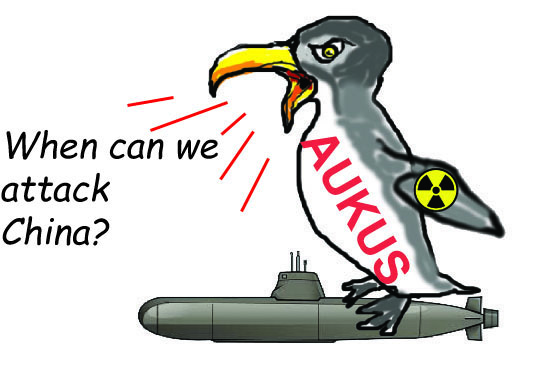
AUKUS deal leaves Russia ‘concerned’ that Australia will have nuclear-powered submarines, ABC 1 Oct 21, Russia says it is concerned that the AUKUS defence agreement between Australia, Britain and the United States will allow Australia to enter the select group of nations that operate nuclear-powered submarines.
Key points:
- Deputy Foreign Minister Sergei Ryabkov said the pact is a challenge to global nuclear non-proliferation
- The EU has delayed free trade talks with Australia for a month but denies it is in retaliation for ripping up a submarine deal with France
- The AUKUS announcement has angered China which has previously questioned Australia’s willingness to improve relations
Currently the United States, Russia, Britain, France and China operate such submarines.
The three-way pact, under which Australia will obtain nuclear submarine technology from the United States, has angered France and concerned China since it was announced………..
We are also concerned about the … partnership that will allow Australia, after 18 months of consultations and several years of attempts, to obtain nuclear-powered submarines in sufficient numbers to become one of the top five countries for this type of armaments,” Mr Ryabkov was quoted as saying by Russia’s TASS news agency.
“This is a great challenge to the international nuclear non-proliferation regime.”
China’s Foreign Minister Wang Yi said earlier in the week that the security pact brings a hidden danger to regional peace, stability and international order.
Foreign ministry spokesman Hua Chunying also questioned whether Australia really cared about improving relations with China.
The defence pact has worried some of Australia’s closer neighbours…………. https://www.abc.net.au/news/2021-10-02/russia-concerned-about-aukus-and-nuclear-submarines/100509258
Russian and American nuclear wastes in the Arctic may release radiation as global heating melts the ice.
Climate change: Arctic’s unknown viruses’ and nuclear waste, A rapidly warming Arctic could cause the spread of nuclear waste, undiscovered viruses and antibiotic resistant bacteria, a report has found. BBC, 2 Oct 21,
It said potential radioactive waste from Cold War nuclear submarines and reactors and damage from mining could be released as the ice melts.
The nine million square miles of Artic dates to about a million years old.
Co-author Dr Arwyn Edwards from Aberystwyth University said much of the Arctic is still unknown.
Writing in Nature Climate Change, Dr Edwards co-authored report with academics from universities in the United States and NASA’s Jet Propulsion Laboratory in Southern California.
The Arctic houses a diverse range of chemical compounds whether through natural processes, accidents or deliberate storage.
Nuclear waste, viruses and chemicals
Thawing permafrost, or permanently frozen land, has widely been seen as a contributor to greenhouse gas emissions as massive stores of Arctic soil carbon are released to the atmosphere as carbon dioxide and methane, as well as causing abrupt change to the landscape.
However, the research found the implications are more widespread and less understood – with potential for the release of nuclear waste and radiation, unknown viruses and other chemicals of concern.
Between 1955 and 1990, the Soviet Union conducted 130 nuclear weapons tests in the atmosphere and near surface ocean of the Novaya Zemlya archipelago off the coast of north-west Russia.
The tests used 224 separate explosive devices, releasing about 265 megatons of nuclear energy and more than 100 decommissioned nuclear submarines were scuttled in the nearby Kara and Barents seas.
Despite a Russian government launching a strategic clean-up plan, the review notes the area has tested highly for the radioactive substances caesium and plutonium, between undersea sediment, vegetation and ice sheets.
The United States’ Camp Century nuclear-powered under-ice research facility in Greenland also produced considerable nuclear and diesel waste.
Decommissioned in 1967, waste was left in the accumulating ice, which faces a longer term threat from changes to the Greenland Ice Sheet.
The 1968 Thule bomber crash in the same country also dispersed huge amounts of plutonium on the Greenland ice sheet……………………..
The report said despite its findings, it is still poorly understood and largely unquantified and further in-depth research in the area is vital to gain further insight into the risks……….. https://www.bbc.com/news/uk-wales-58724710
The sunken nuclear submarines: Russia’s ‘slow-motion Chernobyl’ at sea

One of them is the K-27, once known as the “golden fish” because of its high cost. The 360ft-long (118m) attack submarine (a submarine designed to hunt other submarines) was plagued with problems since its 1962 launch with its experimental liquid-metal-cooled reactors, one of which ruptured six years later and exposed nine sailors to fatal doses of radiation. In 1981 and 1982, the navy filled the reactor with asphalt and scuttled it east of Novaya Zemlya island in a mere 108ft (33m) of water. A tugboat had to ram the bow after a hole blown in the ballast tanks only sank the aft end.
The K-27 was sunk after some safety measures were installed that should keep the wreck safe until 2032. But another incident is more alarming. The K-159, a 350ft (107m) November-class attack submarine, was in service from 1963 to 1989. The K-159 sank with no warning, sending 800kg (1,760lb) of spent uranium fuel to the seafloor beneath busy fishing and shipping lanes just north of Murmansk. Thomas Nilsen, editor of The Barents Observer online newspaper, describes the submarines as a “Chernobyl in slow motion on the seabed”.

While the vast size of the oceans quickly dilutes radiation, even very small levels can become concentrated in animals at the top of the food chain through “bioaccumulation” – and then be ingested by humans. But economic consequences for the Barents Sea fishing industry, which provides the vast majority of cod and haddock at British fish and chip shops, “may perhaps be worse than the environmental consequences”, says Hilde Elise Heldal, a scientist at Norway’s Institute of Marine Research.
But an accident while raising the submarine, on the other hand, could suddenly jar the reactor, potentially mixing fuel elements and starting an uncontrolled chain reaction and explosion. That could boost radiation levels in fish 1,000 times normal or, if it occurred on the surface, irradiate terrestrial animals and humans, another Norwegian study found.
Russia’s ‘slow-motion Chernobyl’ at sea https://www.bbc.com/future/article/20200901-the-radioactive-risk-of-sunken-nuclear-soviet-submarines, By Alec Luhn, 2nd September 2020
Beneath some of the world’s busiest fisheries, radioactive submarines from the Soviet era lie disintegrating on the seafloor. Decades later, Russia is preparing to retrieve them.
By tradition, Russians always bring an odd number of flowers to a living person and an even number to a grave or memorial. But every other day, 83-year-old Raisa Lappa places three roses or gladiolas by the plaque to her son Sergei in their hometown Rubtsovsk, as if he hadn’t gone down with his submarine during an ill-fated towing operation in the Arctic Ocean in 2003.
Continue readingScott Morrison confirms he’s unlikely to attend UN climate summit in Glasgow
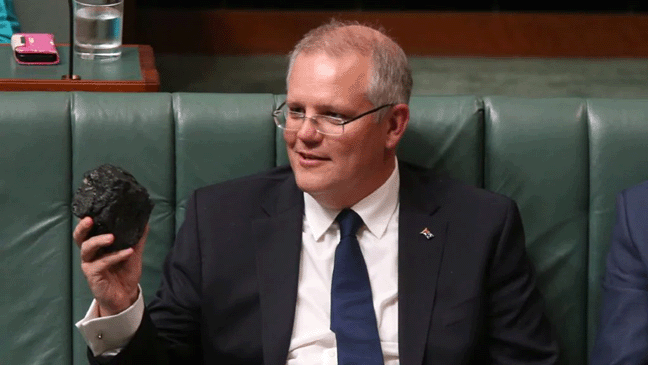
Scott Morrison confirms he’s unlikely to attend UN climate summit in Glasgow, SBS, 2 Oct 21, Scott Morrison says attending COP26 would require him to go into quarantine for a fourth time, disrupting his ability to “engage in my normal duties” as prime minister.
Scott Morrison has given the strongest indication yet he will not attend United Nations climate talks in Glasgow, blaming coronavirus quarantine requirements……
“I will have spent, if I do that, a total of four times 14-day quarantine, basically, in this building, not being able to engage in my normal duties around the country as much as I would like to.”
“That’s a long time for a prime minister to be in quarantine in a six-month period.”
More than 100 world leaders have so far indicated they will attend the summit in person………
Meanwhile, Nationals resisting coalition attempts to get a 2050 net zero emissions target over the line before Glasgow say they are yet to see the government’s plan for how to achieve it……… https://www.sbs.com.au/news/scott-morrison-confirms-he-s-unlikely-to-attend-un-climate-summit-in-glasgow/6649bcbf-6bcc-4ae5-8572-70e988624437
Scott Morrison’s ‘net zero by 2050’ emissions reduction plan will be filled with tricks and rorts
Scott Morrison’s ‘net zero by 2050’ emissions reduction plan will be filled with tricks and rorts
Ben Oquist, 2 Oct 21
Sometime this month Scott Morrison will announce a net zero by 2050 emissions-reduction target for Australia. This announcement will be made with the expectation of praise. However, much like the world was indifferent when Australia signalled it would no longer be using Kyoto credits to meet its Paris targets, so too will this announcement be dismissed. It’s not enough. The community, markets, state and territory governments and other world leaders have moved on and are demanding more.
Liberal Coalition prepares for greenwashing at the Glascow climate summit
Right faction hardheads will accept greenwashing ahead of Glasgow if that’s required to keep the Coalition in power, Guardian Katharine Murphy 2 Oct 21, But even if Scott Morrison lands net zero he would rather market his climate pivot at home rather than abroad – there’s an election to prepare for……………………………………….. Right now, Morrison is trying to land new climate commitments ahead of the Cop26 in Glasgow. While senior people insist Morrison’s net zero plane is going to land, on a runway, with zero casualties, either in the second or third week of October, climate policy can be lethal territory for Australian prime ministers, and not just prime ministers called Malcolm Turnbull (as Kevin Rudd and Julia Gillard can attest).
Morrison’s current trouble seems to be confined to a handful of Queensland Nationals as opposed to the entire right faction of the Liberal party, which was Turnbull’s cross to bear during rounds one and two of his internal climate wars.
Thus far, the right has been quiet. People say the majority view is grudging acceptance because of the shifting politics – although some conservatives report a growing backlash bubbling up from the base about a net zero commitment.
Morrison referenced the shifting politics when he met a deputation of mainly moderate Liberals earlier this week. This group of MPs was given some face time with Morrison after they asked to see him. The objective was to send a clear message: the group wanted a commitment to the net zero target. They did not want a handful of Queensland Nationals writing the government’s climate change policy.
…… If the centre of political gravity has shifted in favour of climate action in parts of the country where the Liberals need to hold or win seats, then the Liberal party will need to act, or (more pertinently) at least look like it’s acting.
If that’s the electoral reality, political hard heads in the right faction of the Liberal party can hold their noses about net zero if they believe greenwashing ahead of Glasgow is what’s required to keep Labor out of power.
But for some hardcore conservatives, Morrison revisiting the Coalition’s climate crime scene will be a provocation. It will be yet more proof of his obnoxious dictatorial pragmatism. It is not clear yet whether or not conservative feet will be stamped or rhetorical punches thrown. Perhaps they won’t, because there are always consequences for picking fights. But wise prime ministers prepare for all contingencies………..
Assuming the prime minister can land his net zero deal with Barnaby Joyce, Morrison would rather market his climate pivot at home rather than abroad……….https://www.theguardian.com/australia-news/2021/oct/02/right-faction-hardheads-will-accept-greenwashing-ahead-of-glasgow-if-thats-required-to-keep-the-coalition-in-power
Queensland coal plants hit by more huge write-downs, as failures and rooftop PV rattle market — RenewEconomy

Stanwell profits surge as CS Energy deals with Callide C failure, in a volatile year for Queensland’s state owned coal plants. The post Queensland coal plants hit by more huge write-downs, as failures and rooftop PV rattle market appeared first on RenewEconomy.
Queensland coal plants hit by more huge write-downs, as failures and rooftop PV rattle market — RenewEconomy
Renewable energy scores top honours at Resources Sector Awards — RenewEconomy

Gold Fields Australia and EDL won the Golden Gecko award for environmental excellence for their Agnew Hybrid Renewable project in Leinster, Western Australia. The post Renewable energy scores top honours at Resources Sector Awards appeared first on RenewEconomy.
Renewable energy scores top honours at Resources Sector Awards — RenewEconomy
Liberal-controlled oversight committee says Taylor’s ARENA changes should be cancelled — RenewEconomy

Senate oversight committee says controversial regulations that push ARENA into funding non renewable technologies, including CCS – be cancelled. The post Liberal-controlled oversight committee says Taylor’s ARENA changes should be cancelled appeared first on RenewEconomy.
Liberal-controlled oversight committee says Taylor’s ARENA changes should be cancelled — RenewEconomy
Taylor and Pitt pour another $250m into CCS projects that may not be complete until 2031 — RenewEconomy

Taylor and Pitt will spend another $250 million on controversial carbon capture projects – which may not be operational for almost a decade. The post Taylor and Pitt pour another $250m into CCS projects that may not be complete until 2031 appeared first on RenewEconomy.
Taylor and Pitt pour another $250m into CCS projects that may not be complete until 2031 — RenewEconomy
Turnbull challenges Morrison to go to Glasgow: “History is made by those who turn up” — RenewEconomy

Turnbull says Morrison’s absence from COP26 will send a message about his priorities, slamming the “nonsense of a gas led recovery.” The post Turnbull challenges Morrison to go to Glasgow: “History is made by those who turn up” appeared first on RenewEconomy.
Turnbull challenges Morrison to go to Glasgow: “History is made by those who turn up” — RenewEconomy
NSW will halve emissions in a decade, by doing the things Morrison refuses to do — RenewEconomy

NSW’s success in embracing a clean energy future comes by doing the things the Morrison government refuses to do. The post NSW will halve emissions in a decade, by doing the things Morrison refuses to do appeared first on RenewEconomy.
NSW will halve emissions in a decade, by doing the things Morrison refuses to do — RenewEconomy
October 1 Energy News — geoharvey

Opinion: ¶ “As Gas Prices Soar, People Are Mulling Alternatives To Heating Their Homes. Here’s What To Know” • Soaring natural gas prices have raised the specter of cold homes and inflated energy bills for millions of people over winter across Europe and the US. At the same time, pressure is mounting to reduce use […]
October 1 Energy News — geoharvey
Ionising radiation – the forgotten health disaster – theme for October 21

Today, it is fashionable to ingore the topic of ionising radiation. Indeed, as Australia moves towards proudly(?) becoming a part of the global nuclear chain, with the government’s rather vague plan to get nuclear submarines, the last thing anybody wants to talk about is nuclear radiation.
Australia has a sad history of prioritsing ”defence” and ”industry” over health. So, we ignored the health effects of atomic bomb tgests in the 1950s and 60s – the ”black rain” that fell on Aboriginal people (heck our government pretended that those people were not even there!). We ignored the health of uranium miners, and of the environment around uranium mines (still toxic to this day) In the interests of the uranium industry, to this day, it seems bad form for an Australian to talk about ionising radiation.
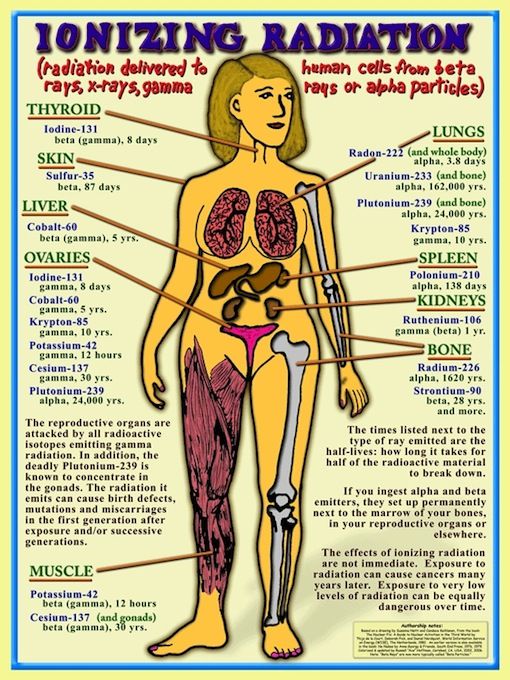
At the same time, Australia is in a panic over tiny viruses that can cause ill-health very quickly. It seems OK to ignore tiny radioactive particles that can cause illness and death decades later – especially as they affect children and women more than they affect men. Children are 10 to 20 times more sensitive to the carcinogenic effects of radiation than adults (little girls are twice as sensitive as boys) and fetuses are thousands of times more sensitive – one X ray to the pregnant abdomen doubles the incidence of leukemia in the child – Helen Caldicott,)
Worldwide, in the interests of the nuclear industry, and their paid politicians, there has been a concerted effort to NOT do the necessary laboratory and epidemiological research to clearly show the effects of nuclear activities on human health. One glaring example is that in what little research is encouraged, they’ll study the effcts of external radiation, – such as the waves of radioactive particles hitting people from an explosion – (e.g. Hiroshima, Fukushima) , but not the effects of longlasting internal radiation, – that is, of radioactive particles breathed in, or swallowed.
Today the big thing is – Wow – Australia’s going to ?grow up – join the global nuclear push! It is timely now to remember that slow global threat of ionising radiation. As Helen Caldicott has put it – ‘‘Recommending nuclear power as a solution to climate change is like recommending smoking as a solution to obesity’‘
Australia the sucker for cash-strapped U.S, and U.K submarine companies General Dynamics and BAE Systems

UK Prime Minister Boris Johnson is close to BAE, the UK defence contractor whose nuclear subs program is struggling. The submarine program in the US too is foundering, so the game plan by our AUKUS partners is to rope in the dopey Aussies for a hundred billion dollars-plus to finance their distressed submarine sectors.
Both US submarine builder General Dynamics and its British counterpart BAE are looking for a new income stream from Downunder.
$66 Billion Reasons: did Scott Morrison get the French submarines right? By Michael West| September 30, 2021 ….. Michael West investigates the awkward AUKUS alliance and whether Scott Morrison made the right call on French submarines.As if ……….being dead last in the developed world on climate action , Scott Morrison and his Coalition have now burnished their reputation for incompetence on the global stage.
In one fell swoop, the sudden AUKUS declaration, they have achieved a stunning betrayal of the French, further peeved our biggest trading partner China, upset half of Europe, shown the bird to New Zealand and our neighbours in the Asian region, and waved an open cheque-book at the US and the UK military industrial complex.
Yet, in their ardour to crawl back to the Mother Country and bat their debutante eyes at Washington, they appear to have got something right: axing the French submarines. Are our self-described band of “Superior Economic Managers” accidental heroes, or did they mean to get it right?
If they double down and splash $100b plus on nuclear submarines, they will have got it doubly wrong.
Defence correspondent Michelle Fahy has documented here the $90b shocker which is Australia’s deal with French shipbuilder Naval Group. Naval itself has an ugly history of corruption and there are serious questions about how the deal came about in the first place, indeed serious questions about the billions in public money smoked every year in Defence procurement.
Murder, corruption, bombings – the company at centre of Australia’s submarine deal
The arms company at the centre of a deadly criminal saga and numerous global corruption scandals, Naval Group, was selected by the Australian government to build our new fleet of submarines – a deal heralded as ‘one of the world’s most lucrative defence contracts’. How did this happen? In this special investigation Michelle Fahy discovers significant gaps in anti-bribery and corruption measures.
Yet there is upside. Scott Morrison and co have junked a deal which would have delivered a fleet of expensive, obsolete submarines 20 years too late for the war which the government’s champions in the media keep telling us we might have to fight against China. Even though a war with China is nothing more than a grotesque proposition, scaremongering by the weapons lobby and media to distract from corruption and mismanagement at home. Media war porn.
The same might be said of the F-35 Strike Fighter debacle and the BAE frigates scandal. Every large defence procurement is marred by billions of dollars in waste. But here’s the thing with the subs; there is a solid body of work which suggests submarines are already obsolete, nuclear or not. They can be tracked; they are a titanic waste of money.
The National Security College (Federal Government and ANU) published a working paper in May 2020 saying nuclear powered ballistic missile submarines will be detectable at sea.
Meanwhile, the French are complaining we owe them $US66 billion for reneging on the deal with Naval. That’s an ambit claim, to be sure. It might cost the government $5b-$10b all up, some already sunk, the rest to stave off an embarrassing court action; but the result so far is: one, no obsolete subs deal with the French, and two, only a mooted nuclear subs deal with the Brits and Americans which may never happen. Hopefully.
UK Prime Minister Boris Johnson is close to BAE, the UK defence contractor whose nuclear subs program is struggling. The submarine program in the US too is foundering, so the game plan by our AUKUS partners is to rope in the dopey Aussies for a hundred billion dollars-plus to finance their distressed submarine sectors.
The doctrine of the gullible Aussie is getting airplay in the US press. According to war contractor expert Charles Tiefer in Forbes:
“Under the cloud of smoke around the Australian submarine deal, are the unspoken aspects of the enrichment of American military contractors. There is no public mention of which American contractors will build the expensive parts of the expensive Australian submarines.”
Both US submarine builder General Dynamics and its British counterpart BAE are looking for a new income stream from Downunder.
Should the Coalition stay true to its track record of dithering though, it may soon become evident that submarines in general are a leviathan waste of money and public money ought to be expended on something less wasteful.
Scott Morrison might, unwittingly, have got it right. He might not have to spend much on submarines at all. The question then becomes, what has he got us into?
Back to the future
As three former prime ministers in Paul Keating, Malcolm Turnbull and Kevin Rudd have already pointed out, AUKUS puts Australians in greater danger, renders Australia a vassal to foreign power and antagonises our neighbours in the region.
Depending on how you count them, there are probably already four US bases in operation now:
- Pine Gap near Alice Springs, Northern Territory,
- Naval Communication Station Harold E. Holt, north of the town of Exmouth, Western Australia,
- Robertson Barracks in Darwin, Northern Territory,
- Australian Defence Satellite Communications Station near Geraldton, WA.
However, the US military already has access to all major Australian Defence Force (ADF) training areas, northern Australian RAAF airfields, port facilities in Darwin and Fremantle, and probably future access too to an expanded Stirling naval base in Pe
Under AUKUS, this may just be the beginning. It was largely ignored during the AUKUS media blitz and the dramatic cuckolding of the French but Peter Dutton had this to say at his press conference on September 16,
Unveiling plans for new facilities on Australian soil for US naval, air, and ground forces would entail “combined logistics, sustainment, and capability for maintenance to support our enhanced activities, including … for our submarines and surface combatants”. That is on top of “rotational deployments of all types of US military aircraft to Australia”.
If the plan is to shred Australia’s sovereignty and make us a target for China, he is succeeding with aplomb. We are about to be swamped by US military.
Forward to the past
It is poetic too, that at this very time we are striking even stronger and even more unnecessary ties with Westminster and Washington. Boris Johnson’s government is beset by the chaos which is Brexit, such chaos now that it has spawned a global energy emergency. While the EU has the wobbles on its trade deal with Australia, Boris is in the market for a friend.
It is poetic too, that at this very time we are striking even stronger and even more unnecessary ties with Westminster and Washington. Boris Johnson’s government is beset by the chaos which is Brexit, such chaos now that it has spawned a global energy emergency. While the EU has the wobbles on its trade deal with Australia, Boris is in the market for a friend………… https://www.michaelwest.com.au/aukus-french-submarines-scott-morrison/
1 This month
17 October, Free Public Talk on Nuclear Issues in South Australia
David Noonan will speak on public interest concerns over the new Roxby Downs Indenture Act 2026 on BHP copper-uranium mining and ore processing in SA, and on how AUKUS may face SA with a High-Level nuclear waste agenda.
Dr Jim Green will discuss international developments in the field of nuclear power including ‘small modular reactors’ and Generation 4 ‘advanced’ nuclear reactor concepts.


Help Aunty Sue Protect Her Land and Sacred Sites From Destructive Rocket Testing.
.

Australians deserve the truth
about
AUKUS – https://aukuspublicinquiry.com/

PETITION – To: Prime Minister Anthony Albanese and the Australian Labor Government

of the week – Australians for War Powers Reform (AWPR)
To see nuclear-related stories in greater depth and intensity

