Morrison and Joyce need to follow the trillions shifting to zero emissions — RenewEconomy

Regardless of whether Morrison and Joyce can come to a deal, investors are already shifting trillions of dollars in preparation for net zero. The post Morrison and Joyce need to follow the trillions shifting to zero emissions appeared first on RenewEconomy.
Morrison and Joyce need to follow the trillions shifting to zero emissions — RenewEconomy
Broken Hill is about to get a 50MW big battery to support wind and solar — RenewEconomy

AGL gets planning approval for a 50MW battery at Broken Hill, but its fate may still depend on network and storage choices by Transgrid. The post Broken Hill is about to get a 50MW big battery to support wind and solar appeared first on RenewEconomy.
Broken Hill is about to get a 50MW big battery to support wind and solar — RenewEconomy
How Corporations Won the War on Terror, by William Hartung — Rise Up Times

“To put such a figure in perspective, the $75 billion in Pentagon contracts awarded to Lockheed Martin that year was significantly more than one and one-half times the entire 2020 budget for the State Department and the Agency for International Development, which together totaled $44 billion.”
How Corporations Won the War on Terror, by William Hartung — Rise Up Times
Footage reveals highly radioactive area in crippled Fukushima Daiichi — Fukushima 311 Watchdogs
21 sept. 2021 The Nuclear Regulation Authority reveals footage of a highly radioactive area in Fukushima Daiichi, which may affect decommissioning plans. https://www.nippon.com/en/news/ntv20210921001/footage-reveals-highly-radioactive-area-in-crippled-fukushima-daiichi.html
Footage reveals highly radioactive area in crippled Fukushima Daiichi — Fukushima 311 Watchdogs
Support for Nuclear Ban Treaty Is Rising. Nuclear Nations Are on the Defensive.
Beyond politics, pressure to support the TPNW is being applied at the city, state and county levels by large municipalities like Sydney, Toronto, Paris and Washington, D.C., as well as smaller ones from Anchorage to Zurich to Helsinki. Around the world, in nuclear weapons-free countries as well as nuclear-armed nations, a growing number of people recognize that nuclear weapons — like chemical, biological and other banned weapons of mass destruction — should be declared illegal and unacceptable at every level.
Support for Nuclear Ban Treaty Is Rising. Nuclear Nations Are on the Defensive. Jon Letman, Truthout, September 24, 2021
Nuclear tensions and nuclear spending are on the rise, but the elevated danger of nuclear weapons is overshadowed as other urgent global threats from the COVID pandemic, climate and environmental emergencies, and other urgent crises dominate news headlines. The United Nations Treaty on the Prohibition of Nuclear Weapons (TPNW), which entered into force in January, receives scant media attention, even as the United Nations prepares to mark September 26 as the International Day for the Total Elimination of Nuclear Weapons.
Unlike other nuclear treaties and agreements, the TPNW, or nuclear ban treaty as it is also known, prohibits all activity including development, testing, production, acquisition, possession, stockpiling, and the use or threat to use nuclear weapons. The treaty also has provisions to assist victims of nuclear weapons use or testing, and for environmental remediation.
As the number of countries adopting and ratifying the TPNW grows, the division between treaty supporters and opponents remains stark. Proponents say the treaty represents a new norm in which nuclear weapons are not only immoral, but also illegal. Opponents see the treaty as too drastic, ineffective and as undermining nuclear deterrence policies.
Of the 122 countries which voted in 2017 to adopt the ban treaty, 56 are now state parties, having ratified the treaty. These include three of the world’s most populous nations: Mexico, Nigeria and Bangladesh. Chile became the most recent country to ratify the treaty on September 23. The TPNW has been ratified around the world from tiny island nations Tuvalu, Nauru and Malta to enormous countries like Kazakhstan, South Africa and Venezuela. Jamaica, Botswana, Bolivia, Palestine and the Philippines are also state parties, and both Indonesia and Brazil are expected to ratify in the coming months.
In contrast, the governments of all nine nuclear-armed states oppose the treaty, as do five nations hosting U.S. nuclear weapons (Belgium, Germany, Italy, Netherlands, Turkey) and “nuclear-endorsing” nations that include Australia, Japan, South Korea and all of the North Atlantic Treaty Organization (NATO) members.
Continue readingAs Frydenberg peddles net-zero, it’s still all about… coal
As Frydenberg peddles net-zero, it’s still all about… coal
Bernard Keane
The Morrison government’s climate policy recipe calls for lots of voter delusion but just a dash of political reality.
Mass youth protests to hit more than 1,400 locations weeks before COP 26 climate summit.
Young global climate strikers vow change is coming – from the streets
Mass youth protests to hit more than 1,400 locations weeks before Cop26 climate summit.
In ageing Germany, the young get desperate over climate
In one of the world’s most aged countries, some young people are resorting to drastic measures to voice their frustration at politicians’ failure to tackle climate change.
Low-lying nations have been demanding greater climate action at the UN this week
Low-lying nations have been demanding greater climate action at the UN this week
The United Nations General Assembly this week has heard desperate pleas for greater action on climate change from a raft of vulnerable nations.
Jane Goodall launches effort in support of planting 1 trillion trees by 2030
Jane Goodall launches effort in support of planting 1 trillion trees by 2030
Primatologist and conservation icon Jane Goodall has formally joined a global effort to counter climate change and the extinction crisis by planting a trillion trees within a decade.
September 24 Energy News — geoharvey

Opinion: ¶ “Why Are E-Bikes Taking Off In North America While Electric Motorcycles Stagnate?” • It used to be that there were bicycles, mopeds, and motorcycles, with fairly bright lines between these categories, but electrification is making a mess of all that, both practically and legally. There are now reasons why people prefer bicycles over […]
September 24 Energy News — geoharvey
This week – AUKUS, nuclear submarines and the new dangers of weapons proliferation and war.
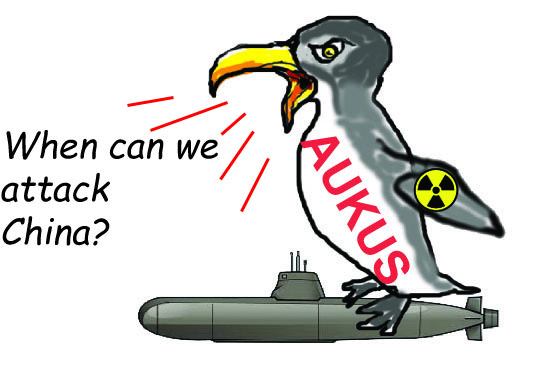
Paul Keating has explained the folly of antagonising China, constantly provoking further militarisation. Regional countries are concerned at the heightened militarisation, and the passage of nuclear submarines through their waters. The use of Highly Enriched Uranium (HEU) fuel brings risks of weapons proliferation. Now the previously nuclear-free zone looks like soon to be bristling with nuclear weapons .

And the big corporations that rule USA policy, UK policy, and now Australian policy, will be rejoicing. Watch as UK’s BAE Systems and USA’s General Dynamics fight it out for the loot from Australian tax-payers.
AUKUS, nuclear submarines, Highly Enriched Uranium and weapons proliferation
The AUKUS decision to equip Australia with SSNs not only is a fool’s errand but also could pose a grave threat to regional and international security.
Australia’s acquisition of SSNs under AUKUS could well open a Pandora’s box of proliferation with non-nuclear-weapon states such as Argentina, Brazil, Canada, Iran, Japan, Saudi Arabia and South Korea among others also going in for nuclear-powered submarines and keeping nuclear fuel (both low- and highly-enriched uranium) outside the scope of IAEA safeguards. This would weaken the IAEA safeguards (verification) system already facing challenges from new technologies and open up possibilities of diversion of nuclear material for nuclear weapons.
Australia’s nuclear-powered submarines will risk opening a Pandora’s box of proliferation, https://johnmenadue.com/australias-nuclear-powered-submarines-will-risk-opening-a-pandoras-box-of-proliferation/ By Tariq Rauf, 22, 2021 The AUKUS decision to equip Australia with SSNs not only is a fool’s errand but also could pose a grave threat to regional and international security.
After first suffering a seeming “brain snap” to acquire a fleet of nuclear-powered submarines (SSNs) some years back, at long last Australia has been promised a fleet of eight SSNs by the Biden administration under the newly minted and awkwardly named AUKUS (Australia, United Kingdom and United States) alliance against China.
Fresh from an ignominious debacle in Afghanistan that led to that bedevilled country once again falling under the repression of the murderous Taliban, the Biden administration has capped off its recent Afghan escapade by driving a stake through the global nuclear non-proliferation regime through its ill-advised decision to supply SSNs and related technology to Australia.
The problem
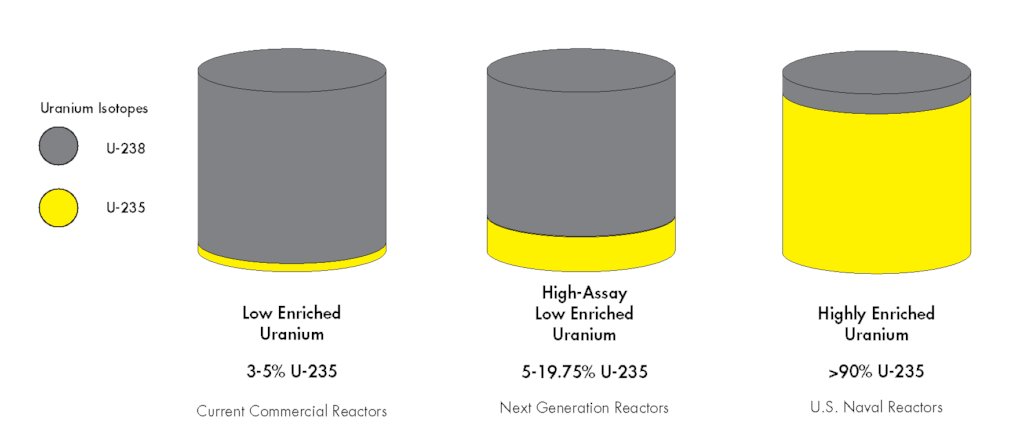
Nuclear-powered submarines of the United States (and the United Kingdom) reportedly are fuelled with highly-enriched uranium (HEU) of 93 per cent to 97 per cent enrichment level that can last for up to 33 years — this is the same enrichment level as for use in nuclear weapons. In contrast, French nuclear-powered submarines run on low-enriched uranium 5 per cent to 7.5 per cent enrichment level and need to be refuelled on average after about 10 years but do not need weapon-grade enriched uranium.
Nuclear ship propulsion technology and reactor design for military vessels as well as the isotopic composition and quantity of their nuclear fuel remains highly classified. When Canada was considering acquiring a fleet of SSNs in 1987, the two potential suppliers were France (Rubis/Améthyste-class) and the United Kingdom (Trafalgar-class).
In the case of the United Kingdom, Canada was informed that US Congressional approval would be required for the UK to construct and supply SSNs (with US design reactors and nuclear fuel) to Canada. The nuclear ship propulsion reactor design and nuclear fuel information would be subject to a high level of classification. With this requirement for secrecy, Canada would not have been able to provide detailed information to the IAEA under its Treaty on the Non-Proliferation of Nuclear Weapons (NPT) safeguards agreement (INFCIRC/164) thereby creating a loophole or gap in IAEA safeguards coverage in Canada. A certain (likely unspecified) large quantity of HEU for naval nuclear fuel would be taken out of safeguards for use in the SSNs and the spent fuel coming out the boats after 30 years or more also would be subject to secrecy. Thus the IAEA would not be able to measure the quantity or isotopic composition or to verify the HEU in naval use.
The IAEA Additional Protocol, to safeguards agreements, provides for the “broader conclusion” regarding the absence of undeclared nuclear material or activities. As such, to be clear and precise, were Australia to withhold from the IAEA information on and access to its naval nuclear fuel, then the IAEA would be unable to provide a broader conclusion for Australia under its additional protocol INFCIRC/217/Add.1.
Australia and the two other AUKUS states have communicated to the IAEA director general their intention for the Royal Australian Navy to acquire a fleet of SSNs and this means that at some future time Australia would be invoking paragraph 14 of its NPT safeguards agreement to exclude significant quantities of highly-enriched uranium for naval nuclear fuel. Thus, the claim by AUKUS states “that a critical objective of this cooperation will be to maintain “the strength of both the nuclear non-proliferation regime and Australia’s exemplary non-proliferation credentials” and that they will be “engaging with the IAEA throughout the coming months” is at best an oxymoron.
It should be matter of serious concern for the IAEA board of governors that the “IAEA will engage with them [AUKUS] on this matter in line with its statutory mandate, and in accordance with their respective safeguards agreements with the agency” — as this does not make much sense in that the paragraph 14 provisions on keeping HEU naval nuclear fuel out of safeguards apply only to Australia and not to the UK and the US (the latter two being nuclear-weapon states).
The only responsible course for the IAEA board of governors should be to warn Australia regarding the deleterious effects on safeguards should it implement paragraph 14 provisions and keep large quantities of HEU for its fleet of SSNs outside of IAEA safeguards. The IAEA board would be well advised to reject any request placed before it from Australia or from any other NPT non-nuclear-weapon state to implement paragraph 14 provisions. Rather, the board should take the responsible decision to revoke application of paragraph 14 of INFCIRC/153 (Corr.) and in all related safeguards agreements, much like the board rescinded the original provisions of the Small Quantities Protocol in 2005.
Australia’s acquisition of SSNs under AUKUS could well open a Pandora’s box of proliferation with non-nuclear-weapon states such as Argentina, Brazil, Canada, Iran, Japan, Saudi Arabia and South Korea among others also going in for nuclear-powered submarines and keeping nuclear fuel (both low- and highly-enriched uranium) outside the scope of IAEA safeguards. This would weaken the IAEA safeguards (verification) system already facing challenges from new technologies and open up possibilities of diversion of nuclear material for nuclear weapons. The AUKUS decision to equip Australia with SSNs not only is a fool’s errand but also could pose a grave threat to regional and international security.
This article was first published by the Toda Peace Institute and is reproduced with permission. Tariq Rauf was formerly head of verification and security policy coordination, office reporting to the director general of the International Atomic Energy Agency and previously advised Canada’s parliamentary committees on national defence and foreign affairs.
USA has conned Australia into paying for its super-costly nuclear submarine project

Last week’s AUKUS announcement was nothing more than PR stunt in Australia, with the government merely committing to spend the next 18 months deciding what to buy—which conveniently kicks any actual the decision far enough down the road to avoid the next federal election.
Has PM put Australia on the hook to finance struggling UK, US submarine projects? Michael West Media, By Marcus Reubenstein| September 23, 2021,
“Almost comical”. Experts lambast Scott Morrison’s “crazy” AUKUS deal to buy nuclear submarine tech from parlous UK and US programs. Marcus Reubenstein finds a real prospect Australia will be used to “underwrite” the foundering foreign submarine industry.
Twenty-five years of ongoing maintenance delays for nuclear submarines, chronic shortage of both parts and skilled workers, under capacity at shipyards, and attack class submarines missing from deployments for up to nine months. These sound like potential problems for Australia’s future nuclear submarine fleet but they are actual problems right now confronting the US Navy and its fleet of 70 submarines.
The US is at the cutting edge of nuclear propulsion. It has the largest and most sophisticated submarine fleet in the world, its first nuclear submarine was commissioned 67 years ago, and the US has literally decommissioned twice as many nuclear subs as Australia is planning to buy.
If the US cannot manage to keep its fleet in the water, how can the Morrison government commit up to $100 billion of taxpayer money to secure nuclear submarines and guarantee they will be always operational and ready for deployment?
Professor Hugh White, ANU Professor of Strategic Studies, former Deputy Secretary of Defence and an eminent figure in strategic policy, wrote in The Saturday Paper, “The old plan was to build a conventionally powered version of a nuclear-powered French submarine. It was crazy.”
“The new plan—to buy a nuclear-powered submarine instead—is worse”.
Says White, “There is a reason why only six countries, all of them nuclear-armed, operate nuclear powered subs.”
The sales pitch is underway
Last week’s AUKUS announcement was nothing more than PR stunt in Australia, with the government merely committing to spend the next 18 months deciding what to buy—which conveniently kicks any actual the decision far enough down the road to avoid the next federal election.
The ripples of the announcement, however, reached British shores in double-quick time. Just two days after the AUKUS alliance UK Defence Secretary Ben Wallis announced a $320 million (£170m) grant to be shared between BAE Systems and Rolls Royce to develop technology for Britain’s next generation submarines.
According to Department of Finance figures, In the past twelve months BAE Systems has collected $1.88 billion from Australian taxpayers. The Astute class submarine, touted as one of the two options Australia is considering, is manufactured by BAE Systems.
US Naval analyst, and Forbes Defense columnist, Craig Hooper predicts AUKUS could give the US Navy a big shot in the arm as well. He says a deal with Australia could effectively underwrite major improvements to the US Navy’s outdated submarine maintenance facilities by supporting “America’s decade-long, $US25 billion ($34.6 billion) effort to refit the U.S. Navy’s four aging public shipyards. With yard repair costs already high, America would go to great lengths to welcome any additional bidders for shipyard capability improvements.”
US subs in dry dock In a report published six months ago, the US Congressional Budget Office (CBO) found: “The Navy’s four shipyards have experienced significant delays in completing maintenance on its submarines (all of which are nuclear-powered).” ………. Should Australia go down the nuclear sub path what choice will it have other than to outsource the fleet’s maintenance? …..
Her Majesty’s sub optimal fleet
Britain, touted as the alternative nuclear submarine supplier to Australia, has problems of its own. The Royal Navy operates ten submarines, only four of them were designed and commissioned this century.
Like their American nuclear counterparts there are systemic problems keeping these subs in service……
That report also indicated significant delays to the BAE Systems built Astute hunter-killer submarines, the same class of nuclear submarine being touted for Australian as part of the AUKUS deal………. https://www.michaelwest.com.au/has-pm-put-australia-on-the-hook-to-finance-struggling-uk-us-submarine-projects/
Former subs boss blasts ‘hocus pocus’ nuclear deal
Former subs boss blasts ‘hocus pocus’ nuclear deal
A former head of ASC has blasted Australia’s “insane deal” with the US and the UK to build nuclear-powered submarines in Adelaide, deriding a “hocus pocus” announcement he says raises major issues about nuclear and defence capability. https://indaily.com.au/news/2021/09/20/former-subs-boss-blasts-hocus-pocus-nuclear-deal/ Tom Richardson @tomrichardson
Hans Ohff, who was managing director and CEO of the then-Australian Submarine Corporation from 1993 to 2002, says he does not believe the mooted submarine deal will materialise as planned for Australia, saying: “I believe it will be stymied because the US military establishment will not underwrite the tacit agreement made between the US President, the British and Australian PMs.”
Ohff insists “there will be no transfer of technical know-how to Australia”, arguing “the submarine propulsion train – not just the reactor – will be a black box accessible only to the US”.
In an emailed statement sent to InDaily’s Your Views, Ohff, who is also a research fellow at Adelaide University, said it was incumbent on the federal government “to inform the Australian people on the strategic, environmental, commercial, and political ramifications and consequences before deciding on the acquisition of nuclear-powered attack submarines”.
“We need to fully appreciate the issues and complexities associated with the design, assembly, operation and maintenance of nuclear submarines powered with highly enriched… weapons-grade uranium,” he said.
“We need to understand that the acquisition of HEU [Highly Enriched Uranium]-235 fissile material would challenge the spirit if not the letter of the Treaty of Non- Proliferation of Nuclear Weapons.”
Speaking to InDaily, he went further, saying the plan would have “unbelievable consequences, both here and in Europe” as well as “massive consequences for Outer Harbor”.It’s almost comical – if it wasn’t so serious… Prime Minister Morrison and his Defence Minister have blown up the bridge behind them
“There are big issues with putting highly enriched uranium reactors anywhere in Australia, let alone Outer Harbor,” he said.
In further correspondence, he said “a nuclear-safe site has to be identified [and] a concerned population will have to agree to the warehousing, installation, launching and pre-commissioning of submarines that include HEU-235 reactors”.
Ohff described the centrepiece of the new AUKUS security pact as effectively “spur of the moment between Biden, Johnson and Morrison”, saying: “In the end we won’t get the subs the Government wants to procure – it’s all hocus pocus.”
In the end, the US military is unlikely to agree to the transfer of technology,” he said.
“It’s almost comical – if it wasn’t so serious.”
Ohff said he had received concerned reactions from industry contacts “all over the place”.
“In Europe, everyone over there is shaking their head,” he said.
Ohff said he “agreed entirely” with strong criticism of the new subs plan by independent senator and former submariner Rex Patrick, who – like him – has also been an outspoken critic of the now-scuppered deal with Naval to provide a fleet of Shortfin Barracuda Attack Class vessels.
Ohff wrote for the Australian Strategic Policy Institute in 2017 that the French model “unites design and building risks, high program costs and an extended delivery schedule [but] promises few or no capability gains.
He told InDaily today the design was “not suitable for anything” but “that’s not the issue”.
“The issue is how to get out of that contract properly and into a new one – who wants to deal with Australia now for next generation submarines?” he said.
“It appears that Prime Minister Morrison and his Defence Minister have blown up the bridge behind them before securing an alternative solution to the ill-conceived, impractical and expensive French Attack submarine design,” Ohff said.
He said if the nuclear-powered subs were built at all, “it won’t be till the 2040s, and the world will have changed dramatically by then”.
“By 2040 the Virginia class will be an outdated design, no longer built for the US Navy [and] unlikely to be relevant for warfare in the second half of the 21st century,” he said.
“Carrier Battle Groups will no longer be effective against autonomous weaponry; and the China question will be resolved one way or another.
“[Australia] requires submarines now.
“Nuclear boats in 20 to 30 years will not resolve this issue [and] leasing nuclear submarines from [Britain or the US] is unrealistic.”
Ohff said the Life-of-Type Extension of the Collins Class fleet would be “more complex, more time-consuming and more expensive” than the Government expects, “leaving the Navy without submarines to train submariners, let alone fight a war”,
“If the government doesn’t expedite the procurement of modern SSKs [diesel-electric submarines] for operational availability by the 2030s, the Royal Australian Navy will no longer be a submarine navy,” he said.
He said a next-generation Collins Class would have been the “obvious choice”, criticising diplomatic missteps to date, including “Tony Abbott’s handshake-agreement with Japanese PM Shinzo Abe being overturned by [Malcolm] Turnbull in favour of the French”.
He said the German tendered price had been “a fraction of the French proposal [but] they were not selected on unexplained or spurious grounds”.
He said Australians “need to be satisfied that we have capacity to develop and deploy the management systems and procedures necessary to safely operate and maintain these vessel at sea and in port
“Thus, if the government doesn’t immediately commit to six conventional-powered AIP [Air-independent propulsion] subs that can be in service by mid-2030 the RAN will have no submarine squadron, save for a few ageing Collins boats.”
He said basing “a squadron of US Navy nukes in Australian waters would be politically untenable”, arguing: “Deploying Astute or Virginia-type submarines in the littoral waters of the [South China Sea] would be suicidal.”
Former Labor PM Paul Keating castigates Labor for supporting the Liberals’ AUKUS and submarine deal.
Keating turns fury on Labor and government over AUKUS deal https://www.smh.com.au/politics/federal/keating-turns-fury-on-labor-and-government-over-aukus-deal-20210921-p58tlc.html By Deborah Snow, September 22, 2021 Former prime minister Paul Keating has escalated his attack on the new AUKUS security partnership unveiled by the Morrison government, unleashing fury on his own side for supporting the deal and characterising it as the “surrender” of Australia’s control of its military.
In a no-holds-barred statement, the former Labor leader said Prime Minister Scott Morrison has led Australia away from the Asian century and back towards a “jaded and faded Anglosphere”, with the current ALP leadership “complicit in [a] historic backslide”.
Mr Keating takes particular aim at Labor’s foreign affairs spokeswoman Senator Penny Wong, saying that in her five years in the role she has “by her muted complicity with the government’s foreign policy and posture… neutered Labor’s traditional stance as to Australia’s right to strategic autonomy”.
“Instead Wong went along with the stance of [former coalition foreign minister] Julie Bishop and [current foreign minister] Marise Payne … and did it with licence provided by Bill Shorten as leader, and now, Anthony Albanese”.
Mr Keating’s furious broadside comes amid worsening diplomatic fallout from the AUKUS announcement, which saw Australia dump its $90 billion contract to acquire conventionally powered submarines from France in favour of a new, trilateral “security partnership” with the UK and the US which would provide the Royal Australian Navy with eight nuclear-powered submarines, at an as-yet-unknown cost.
Mr Morrison hailed the pact, unveiled to a surprised world on September 16, as a means of fostering deeper integration of Australian, US and UK security interests in the Indo-Pacific, along with enhanced access to a range of cutting-edge defence technologies and munitions…….
Mr Keating, who served as a member of the international advisory board of the China Development Bank, (alongside, at one stage, the former US secretary of state Henry Kissinger), has long championed Australia forging its own destiny in Asia.
He accused Mr Morrison of “shopping” Australia’s sovereignty by “locking the country and its military forces into the force structure of the United States” through the planned nuclear submarine acquisition.
“It takes a monster level of incompetence to forfeit military control of one’s own state”, he said, “but this is what Scott Morrison and his government have managed to do”
Mr Keating’s intervention will be deeply discomfiting to Labor, which initially hailed the AUKUS announcement an affirmation of “what Labor has been calling for: deeper partnerships with allied and aligned nations to build a region which is stable, prosperous and respectful of sovereignty”. Opposition Leader Anthony Albanese said Labor would insist on transparency around costs, an assurance that the deal would not lead to a domestic civil nuclear industry and a boost in local jobs.
However, as the diplomatic fallout builds, Senator Wong has become more critical of Mr Morrison’s handling of the deal, saying it has been done with “insufficient regard to… how this positions Australia with other partners.”
1 This month
17 October, Free Public Talk on Nuclear Issues in South Australia
David Noonan will speak on public interest concerns over the new Roxby Downs Indenture Act 2026 on BHP copper-uranium mining and ore processing in SA, and on how AUKUS may face SA with a High-Level nuclear waste agenda.
Dr Jim Green will discuss international developments in the field of nuclear power including ‘small modular reactors’ and Generation 4 ‘advanced’ nuclear reactor concepts.


Help Aunty Sue Protect Her Land and Sacred Sites From Destructive Rocket Testing.
.

Australians deserve the truth
about
AUKUS – https://aukuspublicinquiry.com/

PETITION – To: Prime Minister Anthony Albanese and the Australian Labor Government

of the week – Australians for War Powers Reform (AWPR)
To see nuclear-related stories in greater depth and intensity

