Malaysia and Indonesia warn Australia’s Indo-Pacific pact could trigger nuclear arms race
Malaysia and Indonesia warn Australia’s Indo-Pacific pact could trigger nuclear arms race, Taipei Times, 19 Sep 21
The new AUKUS alliance will involve Australia, the US and Britain exchanging technology and intelligence
Australia will have access to US nuclear technology, which will enable it to build nuclear submarines
Australia’s nuclear arms ban remains in new deal
Birmingham said there was no “quid pro quo” in Australia agreeing to step up its strategic relationship with the UK and the US.
He insisted that nuclear weapons would not be based within Australia’s jurisdiction. “We’ve been clear, Australia’s position in relation to nuclear weapons does not change, will not change,” he said yesterday.
“We will meet all of our non-proliferation treaty arrangements and obligations and not be changing any of our policies in relation to the nuclear weapons technology.”
Birmingham did not rule out an increase in the number of UK and US military personnel on Australian shores. “We already have US troops and marines who work in Australia on rotational deployments at times,” he said………….
it is not just the French who have been made uneasy by the AUKUS arrangement, which is still to be worked out in detail. Australia’s allies in the Indo-Pacific have also raised concerns over what the deal will mean for tensions in the region.
Malaysia said on Saturday that Canberra’s decision to build atomic-powered submarines could trigger a regional nuclear arms race, echoing concerns already raised by Beijing.
“It will provoke other powers to also act more aggressively in the region, especially in the South China Sea,” the Malaysian prime minister’s office said, without mentioning China……https://www.taipeitimes.com/News/world/archives/2021/09/20/2003764684
TV series ”Vigil” shows what life on board a nuclear submarine is like
What really happens on-board nuclear submarines, news.com.au
With nuclear submarines making headlines in Australia, a new series has shown what life on-board is really like.Grant Rollings, The Sun September 18, 2021 Lurking in the dark depths of the seas for months on end, nuclear submarines are even more secretive than the SAS.
Known as the Silent Service, their whereabouts cannot be revealed, images of the hi-tech interiors are classified and crew never discuss their missions.
But now, thanks to the geniuses behind hit TV series Line Of Duty, the bizarre world of the submariner is being brought to the surface in gripping BBC drama Vigil, which streams locally on Binge.
The six-part murder mystery, which pulled in six million viewers for each of its first two episodes in the UK, sees British actress Suranne Jones play a detective sent to a nuclear sub to investigate a death.
But she struggles with the claustrophobia and psychological pressure of living in such a confined space.
Vigil’s set designers had to create their Vanguard-class sub without drawings or photos, because their interiors are so secret.
So how realistic is it? Royal Navy veteran Captain Mike Davis-Marks, who spent 36 years on submarines, says: “They’ve done a good job getting a lot of it right. I enjoyed it.”
The 63-year-old is also pleased the show is lifting the lid on the top secret world, one whose contribution to defence is often overlooked.
He says: “It is good to see what life is like inside a submarine, even if it is a drama. There has never been a fitting memorial. We have been too secretive.”
As the series is at pains to show, life on these expensive “cigar tubes” – which are 150m long and four decks high – can be extraordinarily tough.
Away for three months at a time, the crew are never allowed to communicate with the outside world unless there is an extreme emergency.
Sending out any signal will compromise a sub’s position, so that means no streaming, internet or social media.
Shifts are six hours on, six hours off, repeated constantly, seven days a week.And privacy on board is in short supply, with bunks stacked so close together your nose almost touches the one above.
Captain Mike, who commanded one of the nuclear-powered hunter-killer submarines tasked with seeking out the enemy, says: “Submariners work 24/7. Often, the only way to know what day it is, is by the food you are eating…………….. https://www.news.com.au/entertainment/tv/streaming/what-really-happens-onboard-nuclear-submarines/news-story/2281442874cb66a6867541cc4b
What really happens on-board nuclear submarines, news.com.au
With nuclear submarines making headlines in Australia, a new series has shown what life on-board is really like.Grant Rollings, The Sun4 min readSeptember 18, 2021 Lurking in the dark depths of the seas for months on end, nuclear submarines are even more secretive than the SAS.
Known as the Silent Service, their whereabouts cannot be revealed, images of the hi-tech interiors are classified and crew never discuss their missions.
But now, thanks to the geniuses behind hit TV series Line Of Duty, the bizarre world of the submariner is being brought to the surface in gripping BBC drama Vigil, which streams locally on Binge.
The six-part murder mystery, which pulled in six million viewers for each of its first two episodes in the UK, sees British actress Suranne Jones play a detective sent to a nuclear sub to investigate a death.
But she struggles with the claustrophobia and psychological pressure of living in such a confined space.
Vigil’s set designers had to create their Vanguard-class sub without drawings or photos, because their interiors are so secret.
So how realistic is it? Royal Navy veteran Captain Mike Davis-Marks, who spent 36 years on submarines, says: “They’ve done a good job getting a lot of it right. I enjoyed it.”
The 63-year-old is also pleased the show is lifting the lid on the top secret world, one whose contribution to defence is often overlooked.
He says: “It is good to see what life is like inside a submarine, even if it is a drama. There has never been a fitting memorial. We have been too secretive.”
As the series is at pains to show, life on these expensive “cigar tubes” – which are 150m long and four decks high – can be extraordinarily tough.
Away for three months at a time, the crew are never allowed to communicate with the outside world unless there is an extreme emergency.
Sending out any signal will compromise a sub’s position, so that means no streaming, internet or social media.
Shifts are six hours on, six hours off, repeated constantly, seven days a week.And privacy on board is in short supply, with bunks stacked so close together your nose almost touches the one above.
Captain Mike, who commanded one of the nuclear-powered hunter-killer submarines tasked with seeking out the enemy, says: “Submariners work 24/7. Often, the only way to know what day it is, is by the food you are eating…………….. https://www.news.com.au/entertainment/tv/streaming/what-really-happens-onboard-nuclear-submarines/news-story/2281442874cb66a6867541cc4b
China fears that the nuclear-powered submarines could be armed with nuclear weapons at short notice
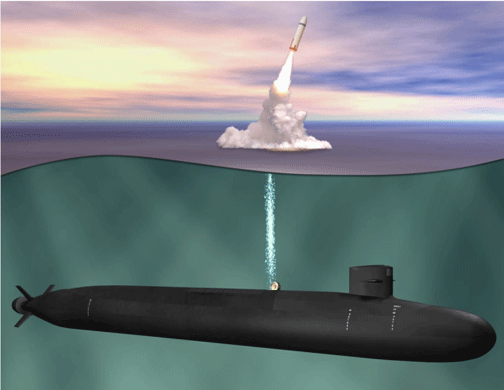
US FORCES US submarine launches Trident II nuclear missiles in stunning show of strength U.S,Sun Olivia Burke, Sep 19 2021
THE US Navy triumphantly test-launched Trident D5LE nuclear missiles on Friday in a stunning show of strength.
The scheduled two-missile deployment of the unarmed revamped weapon took place off the coast of Cape Canaveral, Florida from the USS Wyoming (SSBN-742) submarine……
The Navy boasted of the “unmatched reliability” of the new “sea-based nuclear deterrent” as tensions continue to increase with China.
It was the 184th successful Trident II (D5 & D5LE) SWS missile test flight and follows the last launch in February this year off the coast of Florida……..
“This same team is now developing the next generation of the Trident Strategic Weapon System, which will extend our sea-based strategic deterrent through 2084,”
The Navy also revealed the submarine missiles have been given “a life extension program to address potential impacts from aging and obsolescence”.
They are now primed to be stationed amongst the rest of the fleet alongside the UK Vanguard-class, US Colombia-class, UK Dreadnought-class.
With an estimated annual cost of $170million, the US spend a whopping $2.4million each year to run the Ohio-class submarines.
….the launch comes in the wake of the revelation of the UK’s and US’ plans to build nuclear-powered submarines for Australia.
AUKUS’ ALLIANCE
The alliance has angered China, who fear the subs could be armed at short notice with nukes, despite assurances they will only carry conventional weapons.
The countries leaders carefully navigated the announcement without directly mentioning China’s imposing power – but hinted at their intentions behind the move by discussing “democracy, freedom of navigation, and security.”
The new Indo-Pacific security pact, known as AUKUS, will give the land Down Under the technology to deploy nuclear-powered submarines.
It is part of an agreement intended to counter China’s rising military might – that they have splashed six times more cash on than Australia.
With 42 times more soldiers, 55 times more tanks, 13 times more submarines and 16 times more fighter jets, they eclipse the Aussies artillery.
And with 3.3 million troops in service, Beijing dwarves Australia’s 80,000 soldiers – but AUKUS has still managed to seriously ruffle some feathers.
CHINA’S FURY
Chinese Foreign Ministry spokesman Zhao Lijian condemned the alliance as “seriously damaging regional peace and stability, intensifying the arms race, and undermining the Treaty on the Non-Proliferation of Nuclear Weapons”.
China is believed to have between 250 and 350 nuclear weapons, compared to America’s colossal arsenal of 5,800 and Russia’s total of 6,375. ……. https://www.the-sun.com/news/3691458/us-submarine-trident-ii-nuclear-missiles-chinas-threats/
Nuclear submarines and their disadvantages
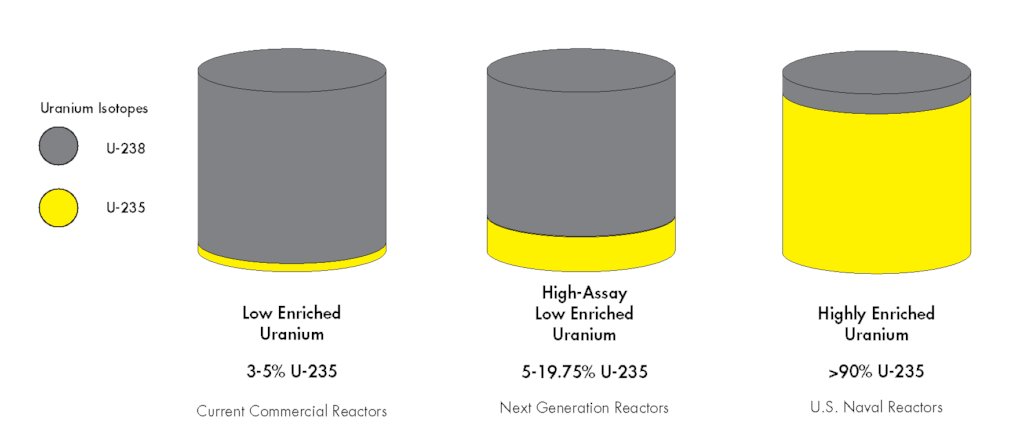
The US Virginia-class submarines typically use highly enriched uranium (HEU) that does not need replacing during the lifecycle of each submarine. Across the world, the US, Britain, Russia and India are the only countries to use HEU in naval reactors. Other countries like France use high-density, low-enriched uranium that will occasionally require swapping out with a replacement source.
HEU is one of the most dangerous metals on earth and also one of the simplest nuclear materials to work with. These twin traits also make it a security risk over fears rogue states or terrorists might develop a nuclear weapon, or mishaps trigger a serious accident. It is also why it has been targeted under non-proliferation treaties to reduce its use.
What are nuclear-powered submarines, anyway? A guide to Australia’s looming military addition,Guardian, Royce Kurmelovs. @RoyceRk2T, hu 16 Sep 2021
What are they and what design might Australia get?
It is not clear which submarine the Australian government will obtain, but the US navy’s latest design is the Virginia-class submarine. Manufactured by American aerospace and defence company General Dynamics, this submarine has gone through several iterations but is generally powered by a single nuclear reactor and can travel at more than 25 knots. Its crew includes 15 officers and 117 enlisted personnel, and the subs are used both in anti-submarine warfare and intelligence gathering operations.
The vessel is powered by a 210MW pressurised water nuclear reactor, inside of which the enriched uranium fuel is sealed. The reactor does not have to be refuelled over its 30-year lifespan …………..
What are the drawbacks of nuclear?
Because nuclear submarines tend to be larger, one downside is they can’t move into shallow waters, making them more easily detectable. During one war game in 2015, a Russian-built, Kilo-class diesel-powered submarine used by the Indian navy “sank” a US nuclear-powered sub – although the US navy has never acknowledged the sinking.
Traditionally Australia’s diesel-powered submarines are thought to have been complementary to US powered nuclear subs used by the US, making the recent announcement a surprise.
Nuclear submarines are also more complicated to maintain and service. Unlike the US and UK, Australia does not have a domestic nuclear power industry, which could provide a highly skilled workforce of engineers and nuclear physicists. Much of the work on the subs will probably have to be done overseas.
It is also not clear what plans are being made to handle the spent uranium. The Australian government has been working to build a controversial nuclear waste storage facility in Kimba in South Australia, but this proposal has so far been limited to low-level and intermediate waste from 100 sites around the country.
Are nuclear subs quieter?
It depends. Diesel-electric subs are quieter while running in electric mode, but must at some point surface or pop up a snorkel to run their diesel engines and recharge the batteries. When the diesel engines are running, these noisier than nuclear-powered subs. Nuclear subs also generate noise from the reactor, including the coolant pipes, turbines and steam generation.
What fuel do they use?
The US Virginia-class submarines typically use highly enriched uranium (HEU) that does not need replacing during the lifecycle of each submarine. Across the world, the US, Britain, Russia and India are the only countries to use HEU in naval reactors. Other countries like France use high-density, low-enriched uranium that will occasionally require swapping out with a replacement source.
HEU is one of the most dangerous metals on earth and also one of the simplest nuclear materials to work with. These twin traits also make it a security risk over fears rogue states or terrorists might develop a nuclear weapon, or mishaps trigger a serious accident. It is also why it has been targeted under non-proliferation treaties to reduce its use.
Will it be able to launch nukes?
If there is one thing the Australian government has been very clear about, it’s that the subs will not be armed with nuclear weapons and that Australia is not seeking to obtain nuclear weapons capability.
That’s not to say the submarine won’t be capable of doing so. Using the Virginia-class as an example, the build comes equipped with 12 vertical missile launch tubes and four 533mm torpedo tubes. It is capable of launching 16 Tomahawk cruise missiles in one salvo but can be modified to mount heavier weapons systems. While these missiles could potentially be built to carry a nuclear warhead, as of 2019 the only variations of the Tomahawk missile in operation were non-nuclear.
What happens when things go wrong?
Serving on a naval submarine has not always been a pleasant experience. For example, German U-boat crews in the second world war suffered devastating losses and many were killed not just in combat but from catastrophic mechanical failures, including asphyxiation from diesel exhaust or explosive decompression after flushing a toilet.When it comes to nuclear subs, radiation adds a new dimension, although there have been no known reactor meltdowns in the sinkings that have occurred to date.
The most recent nuclear sub disaster involved the Russian Kursk, which sank after a faulty weld on a torpedo caused an explosion that then detonated other torpedos. All of the 118 crew members died. Many were instantly killed in the initial blasts, although failsafes in the nuclear reactor shut it down without incident. The 23 sailors who survived the blasts spent six hours awaiting a rescue that did not come, and were killed in a desperate attempt to create oxygen. https://www.theguardian.com/australia-news/2021/sep/16/what-are-nuclear-powered-submarines-anyway-a-guide-to-australias-looming-military-addition
Nuclear submarine deal planned for 18 months – French ambassador says this is treasonous
Recalled French ambassador accuses Australia of ‘treason in the making’ https://www.theage.com.au/politics/federal/recalled-french-ambassador-accuses-australia-of-treason-in-the-making-20210918-p58ssg.html. By Anthony Galloway
France’s recalled ambassador to Australia has likened Canberra’s actions to treason after the Morrison government dumped a $90 billion submarine contract with Paris and instead decided to build nuclear-powered submarines with the United States and Britain.
France on Saturday has taken the extraordinary step of recalling its ambassadors from Australia and the US, as the fallout grows from a new defence pact that has infuriated French President Emmanuel Macron.
Speaking to The Sydney Morning Herald and The Age hours before he was recalled, France’s ambassador to Australia, Jean-Pierre Thebault, did not rule out suspending talks to allow French troops greater access to Australian military bases after his nation was “stabbed in the back”.
Adding insult to the process… we have very reliable reports from the independent press, which I thank, about the fact that all this was in the making for 18 months. Which means we have been blind-sided intentionally for 18 months…. The crime was prepared for 18 months,” he said.
France’s recalled ambassador to Australia has likened Canberra’s actions to treason after the Morrison government dumped a $90 billion submarine contract with Paris and instead decided to build nuclear-powered submarines with the United States and Britain.
France on Saturday has taken the extraordinary step of recalling its ambassadors from Australia and the US, as the fallout grows from a new defence pact that has infuriated French President Emmanuel Macron.
Speaking to The Sydney Morning Herald and The Age hours before he was recalled, France’s ambassador to Australia, Jean-Pierre Thebault, did not rule out suspending talks to allow French troops greater access to Australian military bases after his nation was “stabbed in the back”.
“Adding insult to the process… we have very reliable reports from the independent press, which I thank, about the fact that all this was in the making for 18 months. Which means we have been blind-sided intentionally for 18 months…. The crime was prepared for 18 months,” he said.
He slammed Australia for allowing a meeting to go ahead between Mr Dutton and Foreign Minister Marise Payne late last month with their French counterparts where they spoke about enhancing defence ties between the two countries.
“It is us, through letters that were sent by the President [Macron] some months ago to the Prime Minister [Scott Morrison], who proposed to look at more ambitious and new ambitious cooperations,” Mr Thebault said……….. The extraordinary move follows the Morrison government’s decision to tear up a $90 billion contract to buy 12 French submarines in favour of a new nuclear-powered fleet using technology from the US and United Kingdom under a new partnership called AUKUS.
Review of book: Long Half-life – The Nuclear Industry in Australia
Lowe highlights that there is a neglected dimension of uranium mining — its inefficiency. Lowe notes that at Ranger it would take 400 tonnes of ore to extract one tonne of uranium yellowcake. At 125,000 tonnes of production, that’s a lot of detritus, which highlights what a giant job is the “remediation” project currently underway at Ranger.
The replacement went ahead, called an Australia’s Open Pool Australian Lightwater (OPAL) reactor, built by an Argentinian company. Work began in 2002 and it was commissioned in 2006. A condition for its approval was that the waste problem would be solved. Of course, it wasn’t. Which makes the approval and construction of the OPAL reactor unconscionable.
IA Book Club: Long Half-life – The Nuclear Industry in Australia https://independentaustralia.net/politics/politics-display/ia-book-club-long-half-life–the-nuclear-industry-in-australia,15520#.YUbL77Fpoi8.twitter By Evan Jones | 19 September 2021 In his far-reaching review, Dr Evan Jones explores a book by Ian Lowe, which looks deep into Australia’s involvement with the nuclear industry.
Lowe has written a telling obituary for the nuclear industry in Australia, but the waste problem refuses to die. Long Half-life: The Nuclear Industry in Australia’ is available from Booktopia for $28.35 (paperback) RRP.
PHYSICIST Ian Lowe has just published another book, Long Half-life: The Nuclear Industry in Australia. Current generations might say — what nuclear industry? They would probably know about the British nuclear bomb tests on Australian soil (buzz words Woomera and Maralinga); perhaps fragments regarding the export of uranium yellowcake.
Australia has been integrally involved with nuclear since the atom bomb — indeed, before the bomb, as Adelaide-born Marcus Oliphant was a key figure in fostering and furthering the bomb’s development.
Lowe’s book conveniently ties all the threads together. Lowe has been intimately involved in the issue for over 50 years. The book usefully outlines in simple terms for outsiders (of which myself) the technical mysteries of splitting the atom and related discoveries. The book is soberly written, with occasional displays of outrage (John Howard “crass” and Alexander Downer “bumbling and sycophantic” in playing the U.S.’ deputy sheriff) and not a little wry humour.
The immediate consequence of the bomb in Australia was the creation of the Australian Security Intelligence Organisation (ASIO) in March 1949, due to concerns of “reds under the beds”. The Cold War was on in earnest.
Continue readingAustralia’s nuclear-powered submarine deal is fuelling anger in the country.
Australia’s nuclear-powered submarine deal is fuelling anger in the country. Here’s why 9 News
By CNN, 19, 2021 ” ……….it’s not only the French who are furious.Anti-nuclear groups in Australia, and many citizens, are expressing anger over the deal, worried it may be a Trojan Horse for a nuclear power industry, which the nation has resisted for decades
Australia, and many citizens, are expressing anger over the deal, worried it may be a Trojan Horse for a nuclear power industry, which the nation has resisted for decades.New Zealand Prime Minister Jacinda Ardern spoke personally to her Australian counterpart, Scott Morrison, to tell him the vessels would not be welcome in the waters of her country, which has been a no-nuclear zone since 1984………..
……. Australia’s anti-nuclear movement goes further back than that, to a strong protest movement in the 1970s. This emerged largely because of concerns around the environmental impacts of mining uranium — which Australia has huge reserves of — but also due to worries around risks to public health, particularly among communities living near proposed facilities.
There are also concerns around how to safely store nuclear waste. Explosions or leaks of stored waste can impact human health too, though such disasters are far less common than they once were.In 1977, the Movement Against Uranium Mining in Australia collected 250,000 signatures for a moratorium on extracting the metal, even though nuclear power wasn’t being used in the country.
…………. Greens Party leader Adam Bandt criticised the agreement in a tweet as putting “floating Chernobyls in the heart of Australia’s cities,” saying it “makes Australia less safe. “Bob Brown, a former Greens leader who campaigned against nuclear warships coming into Tasmania in the 1980s, told the Australian Financial Review on Thursday the deal put the country closer to developing a nuclear energy industry and warned of a backlash.
“I think it’s very cowardly what the government’s done,” Mr Brown said. “It’s made a decision without reference to the public, knowing the public would oppose it.” https://www.9news.com.au/national/explainer-australias-nuclearpowered-submarine-deal-is-fueling-anger-in-the-country-heres-why/86638c7e-2e65-43d8-abe8-5194cb26a30e
Anger grows over Australia’s submarine deal
Anger grows over Australia’s submarine deal https://www.news.com.au/technology/innovation/military/anger-grows-over-australias-submarine-deal/news-story/2c14a4b514a7e24768696242428e6498
It’s not just the French who are angry about Australia’s submarine deal with the US and UK. Now, the outrage is closer to home.
When news broke that the US and UK will help Australia build nuclear-powered submarines by sharing their technology and knowledge, the French were furious. But they’re not the only ones.
As part of the new trilateral security agreement – known as AUKUS – the submarine deal will allow for the design and construction process to be sped up. It will help ensure the West maintains it’s edge in combat under water.
As part of the new trilateral security agreement – known as AUKUS – the submarine deal will allow for the design and construction process to be sped up. It will help ensure the West maintains it’s edge in combat under water.
Australia’s decision to tear up a deal for the French submarines in favour of US nuclear-powered vessels sparked outrage in France, with President Emmanuel Macron recalling the nation’s ambassadors to Canberra and Washington in an unprecedented move.
There’s also anger brewing from China, with Beijing describing the new alliance as an “extremely irresponsible” threat to regional stability. China has also quenstioned Australia’s commitment to nuclear non-proliferation, warning the Western allies that they risked “shooting themselves in the foot”.
Closer to home, New Zealand Prime Minister Jacinda Ardern has warned Scott Morrison to keep the nuclear submarines away from her country’s waters, CNN reports. New Zealand has been a nuclear-free zone since the 1980s.
And right on our doorstep, many Australian residents and antinuclear groups are angry, concerned it may be Trojan Horse for a nuclear power industry. Because while Australia’s nuclear-powered submarines will not be nuclear-armed, the small reactors used to power them do produce weapons-grade uranium as waste.
The Nobel Peace Prize-winning International Campaign to Abolish Nuclear Weapons (ICAN), Australia tweeted about the deal: “The nuclear-powered submarine deal raises serious concerns over nuclear proliferation as the UK and US’ models use highly enriched uranium.
“This is not prestige, this is provocation.”
The nuclear-powered submarine deal raises serious concerns over nuclear proliferation as the UK and US’ models use highly enriched uranium.
This is not prestige, this is provocation.#nuclearbanpic.twitter.com/QZLSTjhLoq— ICAN Australia (@ican_australia) September 17, 2021
“Important questions remain over construction of the submarines and the potential imposition of military nuclear reactors on Adelaide or other cities, making construction sites and host ports certain nuclear targets,” said Gem Romuld, Director of ICAN Australia.
“Military nuclear reactors in Australia would present a clear nuclear weapons proliferation risk and become potential sites for nuclear accidents and radiological contamination long into the future.”
Green Party leader Adam Bandt even likened the move to putting “floating Chernobyls in the heart of Australia’s cities”
Dr. Jim Green, National nuclear campaigner, Friends of the Earth Australia, said that nuclear powered submarines typically use highly-enriched uranium (HEU) fuel. This would undermine global efforts to phase out the use of HEU because of WMD proliferation and security concerns.
“The government wants to build nuclear submarines in suburban Adelaide. Does that put a target on our back? Is it prudent to build nuclear submarines in a city of 1.3 million people?
“What alternative locations have been considered, if any?”
Regarding waste products, Dr Green said: “The government has been silent about disposal of the high-level and intermediate-level nuclear waste generated by a nuclear submarine program.
“ … Waste from a nuclear submarine program would be dumped on Aboriginal land, as is the case with the federal government’s current plan to dump Australia’s nuclear waste at Kimba in SA despite the unanimous opposition of Barngarla Traditional Owners.
.
Is AUKUS pact a signal to India to go for nuclear attack submarines?
With a new aircraft carrier, six new Kalvari class diesel attack submarines and Vishakhapatnam class of destroyers, the Indian Navy is going to be very potent force in the Indo-Pacific by 2025. By Shishir Gupta, Hindustan Times, New Delhi SEP 18, 2021 With Australia signing a pact with US and UK to go in for eight nuclear powered conventional attack submarines or SSNs to deter China in Indo-Pacific, India also needs to have a relook at its 1999 conventional submarine plan and move swiftly towards nuclear powered sub-surface vessels.
The AUKUS pact will not be without security ramifications for the Quad partners as there is a distinct possibility that China may build an SSN for its client Pakistan citing the transfer of nuclear reactor under AUKUS to Australia. This will create a bigger security headache for India and for other countries in the IOR. https://www.hindustantimes.com/india-news/is-aukus-pact-a-signal-to-india-to-go-for-nuclear-attack-submarines-101631944254552.html
Russia urges IAEA monitoring, ‘transparency’ on US-Australia nuclear sub pact,
Russia urges IAEA monitoring, ‘transparency’ on US-Australia nuclear sub pact, Press TV, Friday, 17 September 2021 Russia warns against Australia’s attempt to becoming a nuclear power under a trilateral pact Canberra signed with the United States and Britain earlier this week.
Russian Permanent Representative to the International Atomic Energy Agency (IAEA) in Vienna Mikhail Ulyanov said on Friday that “time has not come yet for such estimations” about Australia turning into a nuclear power.
Under a new Australia-UK-US alliance (Aukus), Canberra would be building at least eight nuclear submarines, using US technology.
The first of the submarines is expected to enter service is 2036.
Ulyanov warned that the plan “is alarming and makes you keep a close eye on that.”
“Australia is a non-nuclear power,” he said, adding that “all this should be closely supervised by the IAEA and its inspection mechanism.”……..
Many observers warned that the trilateral pact could lead to a situation very similar to the US-Russian arms race during the cold war…… https://www.presstv.ir/Detail/2021/09/17/666731/Russia-Australia-nuclear-powered-submarines-Aukus-
Special delivery service: Green hydrogen submarines are on their way — RenewEconomy

As Australia turns to nuclear power for its submarines, a UK prototype will test the use of autonomous green hydrogen submarines for freight transport. The post Special delivery service: Green hydrogen submarines are on their way appeared first on RenewEconomy.
Special delivery service: Green hydrogen submarines are on their way — RenewEconomy
September 19 Energy News — geoharvey

Opinion: ¶ “API Smashes Brakes As Momentum For Methane Action Grows” • Change may be inevitable, but the timeline for change is not. After a long history of climate denial and deception, the American Petroleum Institute is now all about delay. Delay action, delay accountability, delay change. Delay is everything: It’s all about delay. [CleanTechnica] […]
September 19 Energy News — geoharvey
Greens pick anti-nuclear candidate to challenge Treasurer Josh Fraudenberg

Greens pick anti-nuclear candidate to take on Frydenberg, The Age, By Annika Smethurst, September 17, 2021 Melbourne lawyer and activist Piers Mitchem has spent years researching global efforts to prevent the spread of nuclear weapons, and now he wants Josh Frydenberg’s job.
Days after the Morrison government unveiled plans for a new fleet of nuclear-powered submarines, the Greens will announce on Saturday that Mr Mitchem is its candidate for Kooyong – the seat in Melbourne’s affluent, leafy eastern suburbs held by the federal Treasurer.
………. Speaking to The Age ahead of the Greens announcement, Mr Mitchem described the Morrison government’s decision to purchase a new fleet of nuclear submarines as “a deeply, deeply worrying announcement” that could have profound implications for nuclear proliferation globally.
“The risk is that other countries, who have much stronger incentives to build nuclear weapons than Australia does, would rely on this precedent as a pretext for developing their own nuclear capabilities,” he told The Age.
“These submarines are likely to run on highly enriched uranium [HEU] – the same grade of uranium used in nuclear weapons – which would shatter a decades-long practice of non-nuclear states refraining from using HEU for military activities.
“Many Australians would also rightly be concerned at the prospect of these nuclear reactors floating in the harbours of their capital cities at any given time.”
Mirroring the party’s election strategy in the neighbouring seat of Higgins, the Greens will try and convince the well-heeled voters of Kooyong, which includes the suburbs of Hawthorn, Kew, Balwyn, Canterbury and Camberwell, that the Morrison government is beholden to the National Party, particularly on climate policies.
The Greens campaign is expected to focus on the return of Barnaby Joyce as the minor party tries to convince more progressive Liberal Party supporters voters to reject the Coalition.
In a direct attack on Mr Frydenberg as Treasurer, the Greens will also campaign on JobKeeper payments paid to big businesses during the pandemic which Mr Mitchem described as “one of the most unforgivable policy failures in the history of this country”…….
Greens leader Adam Bandt accused Mr Frydenberg, who suffered a sizeable swing at the 2019 election, of failing to deliver on climate change promises made during the last election……https://www.theage.com.au/politics/victoria/greens-pick-anti-nuclear-candidate-to-take-on-frydenberg-20210917-p58snj.html
Australia’s anti-nuclear movement ready for a big battle.
Anti-nuke campaigners prepare for a new battle, Mark Ludlow and Julie Hare, AFR Sep 16, 2021 ,
Veterans of the protest movement of the 1970s and 1980s are appalled at the Morrison government’s decision to sign up for nuclear-powered submarines, saying it is a slippery slope towards a nuclear energy industry in Australia.
Former Australian Greens leader Bob Brown, who first campaigned against nuclear warships visiting Tasmania in the 1970s, said the Australian public had been blindsided by the move.
Former Greens Leader Bob Brown says there will be a groundswell of opposition to nuclear submarines. Dominic Lorrimer.
“I think it’s very cowardly what the government’s done,” Dr Brown told The Australian Financial Review. “It’s made a decision without reference to the public, knowing the public would oppose it.
“In some ways, nuclear submarines are worse than nuclear power stations because the public gets no say. There has been no public consultation on this announcement.”
The government’s new defence deal with the United States and Britain was announced early on Thursday morning, with nuclear submarines expected to be made in Adelaide in the next 15 to 20 years.
Dr Brown, who was leader of the Australian Greens between 2005 and 2012, said supporters of a nuclear energy industry would use the submarine deal to once again push their cause, especially as Australia moves away from fossil fuels such as coal and gas.
‘There is a big stoush coming’
But he warned environmental and anti-nuclear campaigners would be re-energised by the decision, which would match any battles to fight uranium mining or radioactive waste dumps in the 1980s.
“Australia is not putting its toe in, but jumping into this. There is no dividing line. I think there will be enormous opposition to this. There is a big stoush coming,” he said.
“What are the people of Balmoral in Sydney going to think about nuclear
submarines parking at the bottom of their street? Or, indeed, everybody in Sydney.”
Dr Brown, who fasted for a week in 1976 on top of Mount Wellington in Hobart in protest against the arrival of the nuclear-powered warship USS Enterprise, called on capital cities to ban the new subs from docking.
The Nuclear Disarmament Party was at its most active in the 1980s, rallying against uranium mining and nuclear testing in the Pacific.
The party contested seven federal elections between 1984 and 2007, electing Jo Vallentine as a senator for Western Australia in 1984. (She later defected to the Greens).
It attracted star candidate and Midnight Oil lead singer Peter Garrett in 1984. He polled 9.6 per cent in NSW but was unsuccessful in winning a Senate seat…………
Queensland Conservation Council director Dave Copeman said the nuclear submarine announcement was “trading a bad idea for something worse” and could set a dangerous precedent.
“Australians don’t want nuclear power in Australia. It’s unsafe, expensive, uninsurable and creates radioactive waste that has 10,000-plus-year half-lives,” Mr Copeman said.
“While the Prime Minister said the announcement ‘does not signal a move towards domestic nuclear power’, seriously concerning questions remain, like how and where the radioactive nuclear waste from these submarines will be managed and stored.”
The QCC called on the Palaszczuk government to ban nuclear power and mining in Queensland.
The trilateral deal to build nuclear-powered submarines in Adelaide will increase Australia’s risk factor as a terrorist target, could prove to be a slippery slope towards the acquisition of nuclear weapons and will be viewed with hostility by other countries in the region, according to a leading expert on nuclear non-proliferation.
Tilman Ruff, who co-founded the International Campaign to Abolish Nuclear Weapons (ICAN) which won the 2017 Nobel Peace Prize, said there is a global movement to reduce the amount highly enriched uranium in circulation which, if it falls into the wrong hands, could be repurposed for nuclear weapons.
Dr Ruff, from Melbourne University, said the submarines to be constructed in Australia were based on old technology that was developed in the US in the 1950s and which had been shared with the UK in 1958.
“This is very old technology. The US has undertaken a pretty significant global effort over several administrations to try and reduce the amount of highly enriched uranium in civilian applications around the world,” Dr Ruff said.
Currently, are 174 nuclear ships and submarines in service across the world, he said.
“It has significant implications for Australia. It will be viewed with great hostility and I wouldn’t be surprised if there was a sharp rebuke from China and also raised the potential for a significant change in our relationship with New Zealand,” Dr Ruff said.
“But I fear might be a kind of slippery slope towards Australia potentially acquiring nuclear weapons itself.”
He said the best way Australia could clearly and unambiguously signal that it would not go down this path would be to become a signatory to the treaty on prohibition of nuclear weapons. https://www.afr.com/companies/energy/anti-nuke-campaigners-prepare-for-new-battle-20210916-p58s99
Nuclear submarine deal – the start of Morrison’s election campaign
Wrong way, go back on nuclear subs https://www.miragenews.com/wrong-way-go-back-on-nuclear-subs-634420/ 17 Sep 21,
The Greens have slammed the Morrison Government for upping its assault on lutruwita/Tasmania’s oceans and waterways.
As stated by Greens Senator for lutruwita/Tasmania, and Greens spokesperson for Healthy Oceans, Peter Whish-Wilson:
“Make no mistake today’s announcement is the unofficial start of Scott Morrison’s election campaign.
This is clearly sabre-rattling, preparing Australia for a khaki election and designed to be a distraction from the fact this Government is plagued with scandal and corruption.
“Short on detail but deeply concerning in its intent; building nuclear submarines in a new alliance with the US is a major provocation that ups the ante in a regional arms race and makes all Australians less safe. This in particularly risks the health of our oceans and coastal communities.
lutruwita/Tasmania’s oceans have been under constant attack from this Government.
“The last thing we want is dangerous nuclear reactors lurking off our coastlines.
“This is the contempt the Liberals hold for Tasmanian communities: they want to blast our oceans with seismic testing, expand oil and gas drilling in Bass Strait, pollute our waterways with fish farm expansion, and now they want to expose our oceans to floating nuclear reactors.
“The potential for accidents is significant, as has been shown recently with hundreds of safety issues reported in Scotland, and the European Union found that further research was needed on the impact of radiation on oceanic ecosystems resulting from nuclear submarines.
“A nuclear submarine accident off any coastline could spell disaster for the thousands of Tasmanians and Australians whose livelihoods depend on our fisheries and healthy oceans.
“The Greens are a party of peace and non-violence and have a long history of opposing nuclear submarines and nuclear energy projects. We simply won’t let this stand.”
1 This month
17 October, Free Public Talk on Nuclear Issues in South Australia
David Noonan will speak on public interest concerns over the new Roxby Downs Indenture Act 2026 on BHP copper-uranium mining and ore processing in SA, and on how AUKUS may face SA with a High-Level nuclear waste agenda.
Dr Jim Green will discuss international developments in the field of nuclear power including ‘small modular reactors’ and Generation 4 ‘advanced’ nuclear reactor concepts.


Help Aunty Sue Protect Her Land and Sacred Sites From Destructive Rocket Testing.
.

Australians deserve the truth
about
AUKUS – https://aukuspublicinquiry.com/

PETITION – To: Prime Minister Anthony Albanese and the Australian Labor Government

of the week – Australians for War Powers Reform (AWPR)
To see nuclear-related stories in greater depth and intensity

