Australian government’s Bill to weaken Environmental Law will be rejected in the Senate
 Key crossbench senators say they won’t support bid to change Australia’s environment laws
The Coalition plan to hand development approval powers to the states hits a further roadblock after Senate inquiry, Guardian, Graham Readfearn, @readfearn 27 Nov 20,
A Morrison government plan to change Australia’s environment laws to allow development approval powers to be handed to the states has hit a further roadblock, with three key crossbench senators saying in a report they will not support them.
The crossbenchers’ opposition means that, together with Labor and the Greens, the Morrison government’s laws would be voted down in the Senate.
But one crossbench senator told Guardian Australia he could change his mind once he had seen details in documents that the government has so far withheld.
A rushed Senate inquiry into the controversial changes delivered four reports late Friday, with Labor, the Greens and a crossbench group all confirming their opposition.
The government had gagged debate to push the legislation through the lower house – a move that outraged the Greens and Labor.
A final report from a major review of the Environment Protection and Biodiversity Conservation (EPBC) Act, carried out by Prof Graeme Samuel, was handed to the environment minister, Sussan Ley, in early November.
That report supported a move to devolve powers to the states, even though Guardian Australia has revealed the government was making moves to devolve powers months before the Samuel review.
Samuel’s interim report, released in July, found the environment was in unsustainable decline and the EPBC Act was not fit-for-purpose.
In their dissenting report to the inquiry, the crossbench senators Rex Patrick, Jacqui Lambie and Stirling Griff said they could not support the bill while key information was withheld……… https://www.theguardian.com/australia-news/2020/nov/27/key-crossbench-senators-say-they-wont-support-bid-to-change-australias-environment-laws
Victorian Inquiry finds nuclear power costly and risky
 Inquiry confirms nuclear energy’s [‘proven risks’] https://www.miragenews.com/inquiry-confirms-nuclear-energy-s-proven-risks/ A Victorian parliamentary inquiry has found nuclear power is ‘significantly more expensive than other forms of power generation’ and remains economically unviable without subsidies.
The inquiry has confirmed nuclear energy’s ‘identified and proven risks’.
The Australian Conservation Foundation (ACF) welcomed comments made at the tabling of the inquiry that the Victorian government has an ‘unequivocal commitment’ to retain the state’s long-standing nuclear ban.
The upper house inquiry into the prospects for nuclear power and uranium mining in Victoria has found:
- Nuclear energy is ‘significantly more expensive than other forms of power generation’ (finding 3) and without subsidies, a nuclear power industry is economically unviable in Australia (finding 5).
- Supposed advantages to nuclear energy put forward by nuclear proponents are speculative and do not outweigh the identified and proven risks (finding 9).
“This long-standing protection has served Victoria well and its retention is prudent and positive.
“ACF welcomes comments by inquiry member Nina Taylor that the Andrews Government has an ‘unequivocal commitment’ to retain the nuclear ban.
“Nuclear power is high cost and high risk and a distraction from the real energy choices and challenges we face. Our energy future is renewable, not radioactive.”
Astronomic costs to taxpayers of Britain’s nuclear sites
 UK’s nuclear sites costing taxpayers ‘astronomical sums’, say MPs
Public accounts committee says ignorance, incompetence and weak oversight to blame, Guardian, Damian Carrington Environment editor, @dpcarrington, Fri 27 Nov 2020 The Nuclear Decommissioning Authority (NDA) has a perpetual lack of knowledge about the state and location of waste on the 17 sites it is responsible for making safe, a powerful committee of MPs has found.
This results from decades of poor record keeping and weak government oversight, the MPs said. Combined with a “sorry saga” of incompetence and failure, this has left taxpayers footing the bill for “astronomical sums”, they said.
The NDA acknowledges that it still does not have full understanding of the condition of its sites, including 10 closed Magnox stations from Dungeness in Kent to Hunterston in Ayrshire, the MPs report said.
The NDA’s most recent estimate is that it will cost current and future generations of UK taxpayers £132bn to decommission the civil nuclear sites, with the work not being completed for another 120 years.
Since 2017, the NDA’s upper estimate of the cost of the 12-15-year programme just to get the sites to the ”‘care and maintenance” stage of the decommissioning process has increased by £3.1bn to £8.7bn. “Our past experience suggests these costs may increase further,” said the MPs’ report.
The lack of knowledge of the sites was a significant factor in the failure of a 2014 contract the NDA signed with a private sector company to decommission the Magnox sites. The government was forced to take back the contract in 2018 and the botched tender has now cost taxpayers £140m, the MPs found.
Sir Geoffrey Clifton-Brown, deputy chair of the public accounts committee (PAC), said: “Although progress has been made since our [2018] report, incredibly, the NDA still doesn’t know even where we’re currently at, in terms of the state and safety of the UK’s disused nuclear sites. Without that, and after the Magnox contracting disaster, it is hard to have confidence in future plans or estimates.” ……….
The UK has eight operating nuclear power plants, with all but one due to retire in the next decade. Only one new plant is being built, at Hinkley Point in Somerset, and it is years behind schedule and billions over budget.
Despite recent speculation over another new plant being given the go-ahead at Sizewell in Suffolk, Boris Johnson failed to announce this in his green industrial revolution plan last week. The government’s new national infrastructure strategy, published on Wednesday, said: “The government is pursuing large-scale nuclear projects, subject to clear value for money for both consumers and taxpayers.”
In 2015, the government stripped another private consortium of a £9bn contract to clean up the nuclear waste site at Sellafield. The company had been heavily criticised for its executives’ expense claims which included a £714 bill for a “cat in a taxi”. https://www.theguardian.com/environment/2020/nov/27/uks-nuclear-sites-costing-taxpayers-astronomical-sums-say-mps#_=_
Safety dangers of small modular nuclear reactors (SMRs)
 Nuclear power isn’t the answer to Nunavut’s energy problems, expert says. Nicole Bogart CTVNews.ca Writer, @nlynnbogart, November 27, 2020 TORONTO — Despite growing interest from the federal government and nuclear proponents, the Canadian Environmental Law Association warns that the safety implications of small modular reactors (SMRs) may outweigh the environmental pay off.
Theresa McClenaghan, executive director of the Canadian Environmental Law Association, says despite proponents’ claims that Canada’s North is a promising market for the small, transportable reactors, the technology isn’t suited for remote locations.
“They’re very inappropriate for remote locations. They’re very inappropriate for anywhere,” McClenaghan told CTV’s Your Morning Friday.
“You’d be talking about creating new kinds of waste that we don’t already have in Canada… [and] having to worry about very long distance transportation.” ……
The federal government has invested in research into the technology and is set to release an SMR action plan with a focus on Canada’s North by the end of this year.
Alberta, New Brunswick, Saskatchewan and Ontario have all signed a memorandum of understanding regarding development of small modular reactors…….
McClenaghan says the government is missing key concerns, including the security of the reactors.
“A very serious concern that no one is talking about is non-proliferation risks – and the risk of a diversion of the materials to weapons,” she said.
“That’s a serious risk for any nuclear technology. But especially when you start to distribute the materials like this and have less control, [and] the industry is hoping they can just leave the units without operators.”
McClenaghan adds that despite the industry’s claims that nuclear power doesn’t produce greenhouse gases, the production of SMRs would.
“Nuclear does produce greenhouse gases because you have to mine, transport, and refine. In fact, the full life cycle is two times as much as solar and six times as much as onshore wind,” she explained.
There are also growing concerns about the implications for Indigenous communities in Canada.
The Northwest Territories Energy Strategy is calling for communities to decide. There’s a whole history of decisions being made and imposed in communities. That’s how a lot of the diesel ended up there in the first place,” McClenaghan said, noting that affordable energy remains the biggest rallying cry for these communities.
“I have seen quite a bit of interest in hybrid systems where they can start to reduce the reliance on diesel, but take advantage for the times of year when solar isn’t available.” https://www.ctvnews.ca/climate-and-environment/nuclear-power-isn-t-the-answer-to-nunavut-s-energy-problems-expert-says-1.5207328
The global energy revolution
RethinkX 25th Nov 2020, We  are on the cusp of the fastest, deepest, most profound disruption of the energy sector in over a century. Like most disruptions, this one is being driven by the convergence of several key technologies whose costs and capabilities have been improving on consistent and predictable trajectories – namely, solar photovoltaic power, wind power, and lithium-ion battery energy storage.
Our analysis shows that 100% clean electricity from the combination of solar, wind, and batteries (SWB) is both physically possible and economically affordable across the entire continental United States as well as the overwhelming majority of other populated regions of the world by 2030.
Adoption of SWB is growing exponentially worldwide and disruption is now inevitable because by 2030 they will offer the cheapest electricity option for most regions. Coal, gas, and nuclear power assets will become stranded during the 2020s, and no new investment in these technologies is rational from this point forward.
November 27 Energy News — geoharvey

Science and Technology: ¶ “The Solar Discs That Could Beam Power From Space” • Now scientists are working on a concept of giant solar power stations in space that beam energy to Earth. The European Space Agency has realized the potential of these efforts and is looking to fund them. It is predicting that the […]
November 27 Energy News — geoharvey
Tasmania declares itself 100 per cent powered by renewable electricity — RenewEconomy

Tasmania declares it now produces enough renewable electricity to meet 100 per cent of its needs, with wind turbines at Granville Harbour coming online. The post Tasmania declares itself 100 per cent powered by renewable electricity appeared first on RenewEconomy.
Tasmania declares itself 100 per cent powered by renewable electricity — RenewEconomy
New AEMC chair – a head of innovation – to embrace rapid market transformation — RenewEconomy

The appointment of Anna Collyer as chair of the AEMC has been broadly welcomed, with the energy law expert to embrace a rapidly changing energy market. The post New AEMC chair – a head of innovation – to embrace rapid market transformation appeared first on RenewEconomy.
New AEMC chair – a head of innovation – to embrace rapid market transformation — RenewEconomy
Vestas lands turbine contracts for two major new wind projects in Victoria — RenewEconomy

Global Power Generation names Danish wind giant as turbine supplier, installer and OEM for two major wind power projects it is developing in Victoria. The post Vestas lands turbine contracts for two major new wind projects in Victoria appeared first on RenewEconomy.
Vestas lands turbine contracts for two major new wind projects in Victoria — RenewEconomy
EV tax will smash electric vehicle sales and lift emissions, UQ study finds — RenewEconomy

University of Queensland research into effect of taxing electric vehicles finds without introducing buying incentives will slash sales by 25% and increase emissions by 40%. The post EV tax will smash electric vehicle sales and lift emissions, UQ study finds appeared first on RenewEconomy.
EV tax will smash electric vehicle sales and lift emissions, UQ study finds — RenewEconomy
Inquiry confirms nuclear energy’s ‘proven risks’
Inquiry confirms nuclear energy’s ‘proven risks’
A Victorian parliamentary inquiry has found nuclear power is ‘significantly more expensive than other forms of power generation’ and remains economically unviable without subsidies.
The inquiry has confirmed nuclear energy’s ‘identified and proven risks’.
The Australian Conservation Foundation (ACF) welcomed comments made at the tabling of the inquiry that the Victorian government has an ‘unequivocal commitment’ to retain the state’s long-standing nuclear ban.
The upper house inquiry into the prospects for nuclear power and uranium mining in Victoria has found:
- Nuclear energy is ‘significantly more expensive than other forms of power generation’ (finding 3) and without subsidies, a nuclear power industry is economically unviable in Australia (finding 5).
- Supposed advantages to nuclear energy put forward by nuclear proponents are speculative and do not outweigh the identified and proven risks (finding 9).
“In 1983 the Cain state Labor government introduced the Nuclear Activities (Prohibitions) Act which prohibits uranium mining, nuclear power and waste facilities in the state,” said ACF campaigner Dave Sweeney.
“This long-standing protection has served Victoria well and its retention is prudent and positive.
“ACF welcomes comments by inquiry member Nina Taylor that the Andrews Government has an ‘unequivocal commitment’ to retain the nuclear ban.
“Nuclear power is high cost and high risk and a distraction from the real energy choices and challenges we face. Our energy future is renewable, not radioactive.”
A broad coalition of faith, union, environmental, Aboriginal and public health groups, representing millions of Australians, last year declared nuclear power has no role in Australia’s energy future and is a dangerous distraction from the pressing climate challenges. Their united statement demonstrates widespread community opposition to nuclear power.
Victorian Parliament: Legislative Council Committee finds that nuclear ban should stay
Parliament of Victoria
Inquiry into nuclear prohibition
Legislative Council Environment and Planning Committee
November 2020
Findings
FINDING 1: Regardless of technology development, priority should be given to the security, stability and accessibility of energy supply and the need to lower carbon emissions due to climate change and to ensure affordable energy.
FINDING 2: Current estimates of the cost of nuclear energy in Australia are unreliable and accurately costing the full cost is not possible without a detailed business case being undertaken.
FINDING 3: Notwithstanding the ambiguities of the costings, the Committee received substantial evidence that nuclear power is significantly more expensive than other forms of power generation and it is recognised that, currently, nuclear is at the high end of the cost range across all technologies.
FINDING 4: A business case is unlikely to be undertaken, given its costs and resources required, while a prohibition of nuclear energy activities remains and there is not likelihood of a plant being able to be built.
FINDING 5: Without subsidisation a nuclear power industry will remain economically unviable in Australia for now.
FINDING 6: Discussion about Victorian participation in the nuclear fuel cycle is entirely theoretical while the Commonwealth prohibitions remain in place.
FINDING 7: Until there is a change in the Commonwealth position, detailed discussions about emerging technologies in Victoria related to the nuclear fuel cycle and power generation are unlikely to advance.
FINDING 8: The success of any radioactive waste strategy relies on a level of acceptance and confidence across government, industry and the broader community of its legitimacy, effectiveness and integrity in its ability to deal with all facets of waste management, storage and disposal, including the long-term health and safety of workers, affected communities, particularly First Nations Peoples, and the environment.
FINDING 9: Those who propose a policy shift have not presented any argument, data or proof in support of their position that cannot be nullified by those arguing against. Any advantages are speculative in nature, and do not outweigh the identified and proven risks.
FINDING 10: The nuclear medicine industry is not hindered significantly by the current prohibitions against uranium or thorium exploration and mining. Current legislative prohibitions only prohibit mining and the construction or operation of certain nuclear facilities, such as nuclear reactors. This does exclude Victoria from hosting a nuclear research reactor or other nuclear facilities which could be used to increase supply of radioisotopes for medical or industrial purposes. The Committee notes that if Victoria did seek to establish a research reactor, Victorian and Commonwealth prohibitions would need to be repealed to allow this to happen. Therefore, a repeal of just Victorian legislation would not be sufficient to expand
our involvement in nuclear medicine beyond what is currently permissible.
FINDING 11: The current market for this material is receiving enough supply from international import and the OPAL reactor at Lucas Heights. The Committee does not believe that fully repealing the Nuclear Activities (Prohibitions) Act 1983 would have a material influence on the nuclear medicine sector, as it is unlikely Victoria’s involvement would increase beyond its current capacity.
FINDING 12: The Committee is not convinced that thorium exploration and mining is economically or technologically viable.
Contents…….. https://www.parliament.vic.gov.au/epc-lc/article/4350
Canada’s environmental groups join to oppose Small Nuclear Reactors (SMRs)
Canadian environmental groups oppose experimental small modular nuclear reactors, https://blackburnnews.com/midwestern-ontario/midwestern-ontario-news/2020/11/24/canadian-environmental-groups-oppose-experimental-small-modular-nuclear-reactors/ By Janice MacKay November 24, 2020 A number of groups have joined together to ask the federal government to halt its plans to fund experimental new small modular nuclear reactors (SMRs).
The Federal Government is preparing to launch the federal government’s SMR ” Action Plan” within weeks.
The SMR Action Plan is expected to include a strategy to fund and support the development of experimental nuclear reactors by private sector companies, the majority based in the US and UK.
In a media release, dozens of organizations from coast to coast have called the proposed new nuclear reactors a dirty, dangerous distraction from tackling climate change. They include Greenpeace Canada, Friends of the Earth Canada, Ralliement contre la pollution radioactive, Équiterre, the Coalition for Responsible Energy Development in New Brunswick, the Canadian Coalition for Nuclear Responsibility and Northwatch..
The Bloc Québécois, the NDP and the Green Party all oppose the government’s “small” modular nuclear reactor plan.
On November 13, Monique Pauze from the Bloc Québécois stated: “The Bloc Québécois denounces the intention of Ottawa to invest in nuclear energy to the benefit, once again, of the Ontario industrial sector, instead of financing the transition towards clean electricity. The Bloc calls for the abandonment of the anticipated deployment of small modular nuclear reactors. The Federal government is leading Canada towards a wall by betting on nuclear energy that is absolutely not clean.”
NDP natural resources critic Richard Cannings said in a statement: “Many Canadians have concerns about impacts of nuclear energy. When it comes to energy generation there are better ways forward. We have options that are cheaper and safer and will be available quicker. I think we should be supporting the development of energy storage solutions to help roll out renewables like solar and wind on a larger scale instead.”
On November 10, all three Green Party of Canada caucus members issued a statement and signed a letter to Minister O’Regan and Minister Navdeep Bains saying that: “Small nuclear reactors (SMRs) have no place in any plan to mitigate climate change when cleaner and cheaper alternatives already exist. The federal government must stop funding the nuclear industry and instead redirect investments towards smarter solutions. Nuclear fails on many grounds, including on the economics.”
Prof. Susan O’Donnell from the Coalition for Responsible Energy Development in New Brunswick said: “Building new nuclear reactors does not belong in a climate action plan. Leading researchers have shown that investing in renewable energy is the best path to net zero and that adding nuclear energy to the mix actually hinders rather than helps.”
Shawn-Patrick Stensil, Director of Programs at Greenpeace Canada, said: “The Liberal government is throwing good money after bad. Hypothetical new nuclear power technologies have been promising to be the next big thing for the last forty years, but in spite of massive public subsidies, that prospect has never panned out.”
The release pointed out the proposed reactors are still on the drawing board and will take a decade or more to develop. If built, their power will cost ten times more than wind or solar energy. The most advanced SMR project to date in the US has already doubled its estimated cost – from $3B to over $6B.
The federal government announced its first SMR grant of $20 million to Terrestrial Energy on October 15.
The environmental groups said they are shocked that the government is funding new nuclear energy development with no parliamentary review, while trying to avoid public scrutiny and debate. They called the consultation process leading to date on the SMR Action Plan a sham. Individuals and groups could only comment on the plan if they first signed on to a statement of principles supporting SMR technologies. They say nuclear power and uranium mining will always be dirty and dangerous. Radioactive waste will have to be kept out of the environment for tens of thousands of years, and there is no known means of achieving that.
The effect on Europe of the UN Treaty on the Prohibition of Nuclear Weapons
 Nuclear prohibition: Changing Europe’s calculations https://www.
 europeanleadershipnetwork.org/commentary/nuclear-prohibition-changing-europes-calculations/ Beatrice Fihn |Executive Director of the International Campaign to Abolish Nuclear Weapons (ICAN),Daniel Högsta |Campaign Coordinator of the International Campaign to Abolish Nuclear Weapons (ICAN), 25 Nov 20,
On 22 January 2021, nuclear weapons will be placed in the same category as chemical and biological weapons – the other weapons of mass destruction – illegal under international law. On that date, the Treaty on the Prohibition of Nuclear Weapons (TPNW) will enter into force and will change the legal and normative landscape around nuclear weapons. This has significant implications for any European governments complicit in the practice of deployment and potential use of nuclear weapons of mass destruction.
A historic milestone for nuclear disarmament Continue reading
Destructive potential of over a million tons of radioactive water into the Pacific
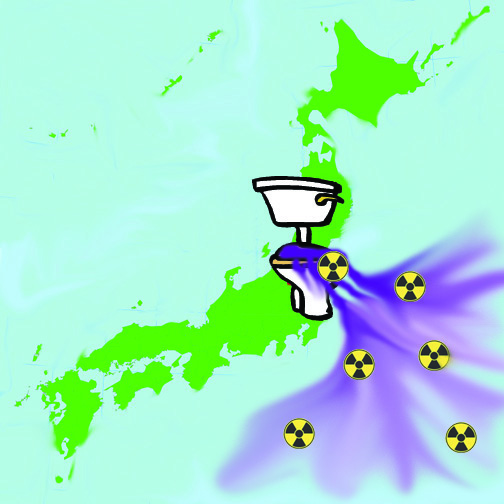 Almost Unnoticed Nuclear Pandemic Is Spreading in Japan, https://indepthnews.net/index.php/the-world/asia-pacific/3967-almost-unnoticed-nuclear-pandemic-is-spreading-in-japanBy Manlio Dinucci, MONTREAL (IDN) 4 Nov 20, – It was not Covid-19, therefore the news went almost unnoticed: Japan will release over a million tons of radioactive water from the Fukushima nuclear power plant into the sea. The catastrophic incident in Fukushima was triggered by the Tsunami that struck the north-eastern coast of Japan on March 11, 2011, submerging the power plant and causing the core of three nuclear reactors to melt.
The power plant was built on the coast just 4 meters above sea level with five-meter-high breakwater dams, in a tsunami-prone area with waves 10-15 meters high. Furthermore, there had been serious failures by the private company TEPCO (the Tokyo Electric Power Company) managing the plant, in the control of the nuclear plant: the safety devices did not come into operation at the time of the Tsunami.
Water has been pumped through the reactors for years to cool the molten fuel. The water became radioactive and was stored inside the plant in over a thousand large tanks, accumulating 1.23 million tons of radioactive water. TEPCO is building other tanks, but they will also be full by mid-2022.
TEPCO must continue pumping water into the melted reactors and has decided to discharge, in agreement with the government, the water accumulated so far into the sea after filtering it to make it less radioactive (however, to what extent it is not known) with a process which will last 30 years. There is also radioactive sludge accumulated in the decontamination filters of the plant, stored in thousands of containers, and huge quantities of soil and other radioactive materials.
As TEPCO admitted, the melting in reactor 3 is particularly serious because the reactor was loaded with Mox, a much more unstable and radioactive mix of uranium oxides and plutonium.
The Mox for this reactor and other Japanese ones was produced in France, using nuclear waste sent from Japan. Greenpeace has denounced the danger deriving from the transport of this plutonium fuel for ten thousand kilometres.
Greenpeace also denounced that Mox favours the proliferation of nuclear weapons, since plutonium can be extracted more easily and, in the cycle of uranium exploitation, there is no clear dividing line between civilian and military use of fissile material.
Up to now, around 240 tons of plutonium for direct military use and 2,400 tons for civil use (nuclear weapons can however be produced with them), were accumulated in the world (according to 2015 estimates), plus about 1,400 tons of highly enriched uranium for military use. A few hundred kilograms of plutonium would be enough to cause lung cancer to 7.7 billion inhabitants of the planet, and plutonium remains lethal for a period corresponding to almost ten-thousand human generations.
A destructive potential has thus accumulated, for the first time in history, capable of making the human species disappear from the face of Earth. The nuclear bombings of Hiroshima and Nagasaki; the more than 2,000 experimental nuclear explosions in the atmosphere, at sea and underground; the manufacture of nuclear warheads with a power equivalent to over one million Hiroshima bombs; the numerous accidents involving nuclear weapons and those involving civilian and military nuclear plants, all this has caused radioactive contamination that has affected hundreds of millions of people.
A portion of approximately 10 million annual cancer deaths worldwide – documented by WHO – is attributable to the long-term effects of radiation. In ten months, again according to the World Health Organization data, Covid-19 caused about 1.2 million deaths worldwide.
This danger should not be underestimated, but it does not justify the fact that mass media, especially television, did not inform that over one million tons of radioactive water will be discharged into the sea from the Fukushima nuclear power plant, with the result that it will further increase cancer deaths upon entering in the food chain.
1 This month
17 October, Free Public Talk on Nuclear Issues in South Australia
David Noonan will speak on public interest concerns over the new Roxby Downs Indenture Act 2026 on BHP copper-uranium mining and ore processing in SA, and on how AUKUS may face SA with a High-Level nuclear waste agenda.
Dr Jim Green will discuss international developments in the field of nuclear power including ‘small modular reactors’ and Generation 4 ‘advanced’ nuclear reactor concepts.


Help Aunty Sue Protect Her Land and Sacred Sites From Destructive Rocket Testing.
.
Australians deserve the truth
about
AUKUS – https://aukuspublicinquiry.com/

PETITION – To: Prime Minister Anthony Albanese and the Australian Labor Government

of the week – Australians for War Powers Reform (AWPR)
To see nuclear-related stories in greater depth and intensity

