Clear connection between (uneconomic) Small Nuclear Reactors and military use
 Western Europe cools on plans for nuclear power , Climate News Network, November 25th, 2020, by Paul Brown
“…………The UK’s decision to back the British company Rolls-Royce to develop SMRs means it is unlikely the government has the money or the political inclination to back the French as well.
Rolls-Royce has been badly hit by the Covid-19 pandemic because a large part of its business relies on the struggling aviation business, while it needs support because it makes mini-reactors to power British nuclear submarines. The proposed SMR research programme will allow nuclear-trained personnel to switch between military and civilian programmes.
Long out of office
The Rolls-Royce SMRs are a long shot from the commercial point of view, since they are unproven and likely to be wildly expensive compared with renewable energy. However, they have the political advantage of being British, and their development lies so far into the future that the current government will be out of office before anyone knows whether they actually work or are economic.
As far as the current crop of reactors is concerned, it is clear that at least those with graphite cores are nearing the end of their lives. Nuclear power has some way to go before it can expect a renaissance in the UK…….. https://climatenewsnetwork.net/western-europe-cools-on-plans-for-nuclear-power/
Biden’s climate pick is the Anti Morrison – the government and Murdoch are worried — RenewEconomy

Biden’s climate paths won’t be perfect, but new pick John Kerry wants climate issues front and centre. That’s Scott Morrison’s worst nightmare, and Murdoch’s media is already crying foul. The post Biden’s climate pick is the Anti Morrison – the government and Murdoch are worried appeared first on RenewEconomy.
Biden’s climate pick is the Anti Morrison – the government and Murdoch are worried — RenewEconomy
November 25 Energy News — geoharvey

Opinion: ¶ “A Harsh Reality In Coal Country – With Or Without Trump” • Colstrip, Montana, has been a poster child for the kind of coal mining community that looked to Donald Trump to bring back the industry and save their town. But after four years of Trump’s presidency, and with Joe Biden about to […]
November 25 Energy News — geoharvey
Fracking hell: Gas and coal projects march on across Australia — RenewEconomy

While state governments are basked in praise for ambitious clean energy policies, a flurry of fossil fuel projects quietly get the green light. The post Fracking hell: Gas and coal projects march on across Australia appeared first on RenewEconomy.
Fracking hell: Gas and coal projects march on across Australia — RenewEconomy
Renewables sector rides through pandemic, rooftop solar market stronger than ever — RenewEconomy

CER says that rooftop solar installs on track to set new records in 2020, and large-scale market has survived a Covid investment blip. The post Renewables sector rides through pandemic, rooftop solar market stronger than ever appeared first on RenewEconomy.
Renewables sector rides through pandemic, rooftop solar market stronger than ever — RenewEconomy
Green hydrogen export potential lifts Australia to No. 3 on global renewables index — RenewEconomy

Australia reaches highest position ever on EY Renewable Energy Country Attractiveness Index, boosted to third place by green hydrogen and solar export plans. The post Green hydrogen export potential lifts Australia to No. 3 on global renewables index appeared first on RenewEconomy.
Green hydrogen export potential lifts Australia to No. 3 on global renewables index — RenewEconomy
How to control solar, batteries and EVs: First, find out where they are located — RenewEconomy

The key to managing the booming installations of rooftop solar, battery storage and EVs is find out what lies behind the meter in South Australian homes. The post How to control solar, batteries and EVs: First, find out where they are located appeared first on RenewEconomy.
How to control solar, batteries and EVs: First, find out where they are located — RenewEconomy
Big batteries are getting bigger and smarter, and doing things fossil fuels can’t do — RenewEconomy

The string of new battery storage projects – bigger and smarter and multi-faceted – is eroding the case for gas. The post Big batteries are getting bigger and smarter, and doing things fossil fuels can’t do appeared first on RenewEconomy.
Big batteries are getting bigger and smarter, and doing things fossil fuels can’t do — RenewEconomy
China tipped to double solar installs to 85GW a year, pushing costs down by half — RenewEconomy

China is tipped to double solar installs to 85GW a year under its new five year plan, pushing costs down by half. The post China tipped to double solar installs to 85GW a year, pushing costs down by half appeared first on RenewEconomy.
China tipped to double solar installs to 85GW a year, pushing costs down by half — RenewEconomy
Olympic Dam uranium mine’s unlimited water access is killing the Arabana people’s mound springs
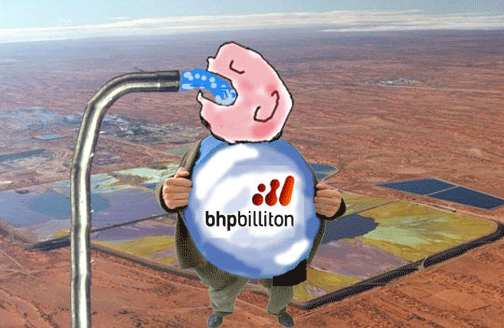
South Australia’s disappearing springs raise questions for miner BHP– https://www.smh.com.au/environment/sustainability/south-australia-s-disappearing-springs-raise-questions-for-miner-bhp-20201117-p56f6m.html
Few in big cities know about the ‘mound springs’, but they are of deep cultural significance for the Arabana people who hold native title over Lake Eyre and its surrounds.By Richard Baker November 23, 2020
Dotted around the vast arid harshness of outback South Australia are thousands of small springs fed by ancient waters from the Great Artesian Basin.
Few in big cities know about the “mound springs”, but they are of deep cultural significance for the Arabana people who hold native title over Lake Eyre and its surrounds. They are also a precious source of life for humans, animals and plants in a hostile environment.
A mound spring near the shore of Lake Eyre in South Australia.
But the Arabana people fear the extraction of tens of millions of litres of water from the basin each day by mining, petroleum and pastoral industries threatens the existence of the springs by reducing flow pressure in the aquifer to the extent that the springs dry up.
The federal parliamentary inquiry into Rio Tinto’s destruction in May of 46,000-year-old rock shelters at the Juukan Gorge in Western Australia has given the Arabana people the chance to put the fate of the springs on the national agenda.
“In our country there are over 6000 of these springs and they are of great significance to the Arabana people,” said the chair of the Arabana registered native title body, Brenda Underwood, in a submission to the inquiry.
“The springs themselves can be as small as a cup or large enough that you could swim in them, however, we don’t because of the stories associated with them. To us, and to many Australians, they are a beautiful sight in a harsh environment.
“Unfortunately, our springs are disappearing. How many have disappeared, we are not yet sure, but we are undertaking some research to find out just how many have actually disappeared.”
Rio Tinto’s blasting at Juukan Gorge drew widespread public criticism, prompted the resignation of its chief executive and put a spotlight on state and federal laws that are meant to balance the protection of Indigenous heritage against the commercial interests of miners.
In the case of the springs, another mining giant, BHP, is playing a central role. BHP is licensed by the South Australian government to extract the equivalent of up to 42 million litres of water per day from the Great Artesian Basin to operate the massive Olympic Dam copper, gold and uranium mine near Roxby Downs.
Millions of litres of water are also taken from the basin each day by pastoral stations and various petroleum companies, and more is lost through evaporation from thousands of disused bores that have not been properly capped.
RMIT environmental engineering expert Gavid Mudd has studied the mound springs closely for more than 20 years and said there was no doubt the extraction of so much groundwater had contributed to a reduction in flow pressure. Some had dried up entirely.
Although the Arabana submission to the inquiry acknowledges water users such as pastoralists and petroleum companies, it largely focuses on BHP’s water use and the unique South Australian laws that grant it a virtually unchallenged right to groundwater.
Under the 1982 Roxby Downs Indenture Act, the original Olympic Dam owner Western Mining and present owner BHP are afforded special privileges that trump Aboriginal heritage laws and almost all other state laws and regulations.
“Each day they [BHP] take 35 million litres of water from our springs and the Great Artesian Basin and now they wish to increase that amount to 42 million litres per day,” Ms Underwood’s statement said
“We are told that this will continue for at least the next 60 years. Given the number of springs that have disappeared, in 60 years we have a great fear that there will be none left whatsoever. The Arabana people have tasked me and the board of directors of the corporation to protect the springs. The big question is how?”
Ms Underwood and the 1000-strong Arabana community fear the South Australian government will be reluctant to change the status quo for BHP.
The mining company’s recent announcement to pause a planned $3 billion expansion of Olympic Dam is likely to see its water take remain about the mid 30 million litres per day mark.
The Arabana people have asked their Adelaide lawyer, Stephen Kenny, to advise them if the Commonwealth can get involved. Mr Kenny has said the Commonwealth could act to protect the springs, but previous cases such as that involving South Australia’s Hindmarsh Island suggested it would not.
to 23 November – the week in nuclear news, Australia and more
 As I decided previously, I’m leaving out the news on Coronavirus and Global Heating, important though they are.
Even so, this newsletter is too long. Especially as we seem to be in a sort of timewarp, waiting for a resolution in the USA, waiting for a new direction in the pandemic.
Some bits of good news – Future Crunch’s summary of good news. Jeff Bezos Created $10 Billion ‘Earth Fund’ to Meet Climate Crisis, First Grants of $800M Go to Iconic Environmental Groups
AUSTRALIA
What next as the Senate rejects the mandatory selection of Napandee as nuclear waste dump? Exposing the deceptions of Keith Pitt, Minister for Resources, on the failed nuclear waste dump plan. Exposing the deceptions of Samantha Chard General Manager of the National Radioactive Waste Agency.
Can a new mine save BHP’s loss-making Olympic Dam? .
Corporate vested interests win as Australian Government weakens Environmental Laws. Australian government is rushing to weaken Environmental Laws.
Australia’s Department of Defence captured by foreign weapons makers Thales, BAE.
INTERNATIONAL
Correcting 5 wrong opinions about the Treaty on the Prohibition of Nuclear Weapons.
Nuclear power hinders fight against climate change.
Standard nuclear reactor designs are still too costly, and safety features are only a third of nuclear costs.
Solar energy is bullish in the market; the same can’t be said for nuclear.
The creeping carbon costs of digital communication.
Book review: The Case for Degrowth.
Extradition hearing of Julian Assange – defence witnesses destroy myths, demonstrate his integrity
Exposing the deceptions of Keith Pitt, Minister for Resources, on the failed nuclear waste dump plan
 Peter Remta, 23 Nov 20, With some reluctance and an apology I really must now enter the fray because of the misleading and disingenuous statements on behalf of the government regarding the choice of Kimba for the government’s nuclear waste facility
on Keith Pitt, Minister forResources
Pitt keeps claiming that Kimba is “marginal” and “low value” land and hence the ideal site for the nuclear waste facility yet it is regarded as one of the prime and best agricultural areas in this country with an international reputation as to the wheat crop from that region
He is arguing against strong opinion and advice from many agricultural experts and economists
His next claim is that Kimba is the ideal and most suitable location for the facility which is completely at odds from the knowledgeable opinions and advice by international experts in nuclear waste management
In justifying the storage of intermediate level waste at Kimba Pitt claims that it will take many years and huge expense to find and develop a suitable permanent disposal facility for that waste
This is completely false as the Leonora site for an underground nuclear waste repository has been described by one of the leading and largest nuclear waste engineering consultants asglobally an outstanding location for the proposed underground repository
This view is shared by many other overseas experts who cannot understand Australia’s proposals for the above program facility at Kimba
Added to this the Leonora site can be brought to operational standards in line with all international safety requirements and prescriptions for less than $50 million compared to the government estimate of up to $350 million for the inadequate facility at Kimba
This is shown by the concept planning and designs already undertaken for the repository at Leonora which are far more advanced than the government’s proposals for Kimba
Exposing the deceptions of Samantha Chard General Manager of the National Radioactive Waste Agency
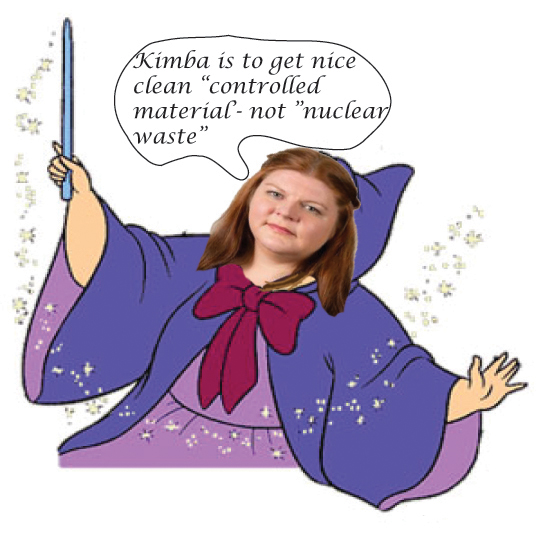 Peter Remta, 23 Nov 20, As I have mentioned previously this is not the first time that Chard has been untruthful as was established through the questioning of Senator Patrick in the recent Senate enquiry into the legislative changes for the Kimba proposal
At the estimates hearing on 22 February 2019 Chard interrupted her then responsible Minister to claim that the community development package of $30 million (her figure) including a community fund component of $20 million had always been contemplated when the initial enabling legislation was passed in 2012
However members of the committee advising the government on the implementation of the enabling legislation spanning several years in time claim that there was never any mention or even an oblique reference to anything in the way of a community fund as claimed by Chard
There was nothing in the various information released by the government including the official nomination guidelines regarding the community fund until its first mention on 12 December 2018
Moreover to have not remembered 580 documents on such an important issue of national significance as judicial review regarding this situation is completely unacceptable
If this is the best that our country can offer by way of ministerial and administrative capability on such an important issue then what hope do we have for the future
The situation was only exacerbated by the incompetent and unsatisfactory performance of the ANSTO management personnel at last month’s estimate hearing
To qualify myself I probably know more about nuclear waste in a global sense than anyone in Australia and it was through my efforts that the ANSTO personnel faced some of the uncomfortable questions at the estimates hearing last month
Joe Biden’s ” transition team” contains men with strong links to the weapons industry
A Washington Echo Chamber for a New Cold War, Reader Supported News, By Cassandra Stimpson and Holly Zhang, TomDispatch, 20 November 20 Yes, tensions are still rising between the world’s greatest emitter of greenhouse gases, historically speaking, and the country emitting the most at this very moment — not that the emerging cold war between the United States and China is often thought of in that context. Still, in the Trump era, now ending so ingloriously, the U.S. moved ever closer to just such a new cold war, as the president got ever angrier at China and the “plague” it had “unleashed on to the world,” his secretary of state denounced its policies, and U.S. aircraft carriers began repeatedly making their way into the disputed South China Sea.
As trade wars loomed and The Donald boomed, the Pentagon also began issuing documents deemphasizing the “forever wars” it had been involved in for nearly two decades and emphasizing instead the dangers of China (and Russia). Now, this country is preparing, however chaotically, to enter the Biden years, even if that other old man is still bitterly camped out in the White House. President Trump, who was perfectly ready to set the planet on fire (more or less literally), is nearly gone and you might think that the globe’s two largest carbon emitters would be ready to consider some kind of accommodation or even coordination to stop this world from going down in intensifying storms, rising sea levels, raging wild fires, and… well, you know the story.
Unfortunately, that would be logic, not interests — and the interests couldn’t be more real or, as Cassandra Stimpson and Holly Zhang of the Foreign Influence Transparency Initiative (FITI) at the Center for International Policy suggest today, more grimly lined up to promote that very cold war.
Only recently, for instance, we’ve had a look at Joe Biden’s 23-person “transition team” for the Pentagon, most of whom come from the hawkish think tanks that are so much a part of official Washington and eight of whom, as In These Times has reported, “list their ‘most recent employment’ as organizations, think tanks, or companies that either directly receive money from the weapons industry, or are part of this industry,” including the Center for Strategic and International Studies, discussed in today’s TomDispatch post. And so it goes, sadly enough, in Washington whoever the president may be.
-Tom Engelhardt, TomDispatch https://readersupportednews.org/opinion2/277-75/66316-a-washington-echo-chamber-for-a-new-cold-war
Forests affected by Fukushima Daiichi nuclear accident — Fukushima 311 Watchdogs

November 22, 2020 Forestry was once a thriving industry in Fukushima – until the 2011 nuclear disaster struck. More than 70 percent of the prefecture is covered with trees, but large areas have been abandoned or neglected. “It’s regrettable. I didn’t even imagine things were so bad,” says forester Akimoto Kimio, who visited a plantation […]
Forests affected by Fukushima Daiichi nuclear accident — Fukushima 311 Watchdogs
1 This month
17 October, Free Public Talk on Nuclear Issues in South Australia
David Noonan will speak on public interest concerns over the new Roxby Downs Indenture Act 2026 on BHP copper-uranium mining and ore processing in SA, and on how AUKUS may face SA with a High-Level nuclear waste agenda.
Dr Jim Green will discuss international developments in the field of nuclear power including ‘small modular reactors’ and Generation 4 ‘advanced’ nuclear reactor concepts.


Help Aunty Sue Protect Her Land and Sacred Sites From Destructive Rocket Testing.
.
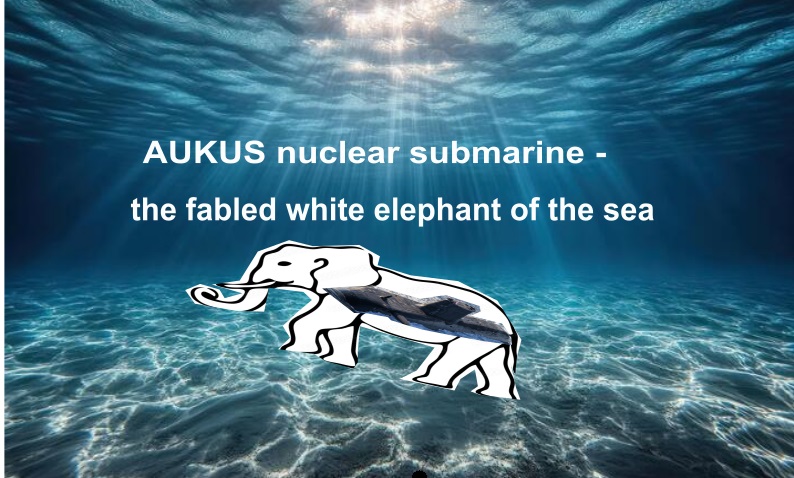
Australians deserve the truth
about
AUKUS – https://aukuspublicinquiry.com/

PETITION – To: Prime Minister Anthony Albanese and the Australian Labor Government

of the week – Australians for War Powers Reform (AWPR)
To see nuclear-related stories in greater depth and intensity

