No radioactive water dump! — Fukushima 311 Watchdogs

November 22, 2020 From GENSUIKIN The Japanese government appears ready to dispose of radioactive water contaminated by tritium and other radioactive materials from the crippled Fukushima Daiichi nuclear power plant into the Pacific Ocean. GENSUIKIN is asking for your support to prevent this reckless attempt by the government. Please see the end of the article […]
No radioactive water dump! — Fukushima 311 Watchdogs
Taiwanese protest plan to dump water from Japan nuclear plant into sea — Fukushima 311 Watchdogs

November 19, 2020 Taipei, Nov. 19 (CNA) A group of Taiwanese staged a protest in Taipei on Thursday against a plan by the Japanese government to release more than a million tonnes of water into the ocean from the disabled Fukushima nuclear power plant, starting in 2022. At the rally in front of the Ministry […]
Taiwanese protest plan to dump water from Japan nuclear plant into sea — Fukushima 311 Watchdogs
Release of Fukushima’s radioactive water into sea will harm entire Asia’s coasts: Indian experts — Fukushima 311 Watchdogs

November 18, 2020 The contaminants of the massive quantities of nuclear water will include radioactive isotopes such as cesium, tritium, cobalt and carbon-12 and may take from 12 to 30 years to decay. Japan’s decision to release radioactive contaminated water from its wrecked nuclear plant in Fukushima into the sea by 2022 has led to […]
Release of Fukushima’s radioactive water into sea will harm entire Asia’s coasts: Indian experts — Fukushima 311 Watchdogs
Resident against Japanese nuclear reactor OK’d for restart says safe evacuation impossible — Fukushima 311 Watchdogs

Former fisherman Yukitoshi Watanabe maintains that resuming operation of Tohoku Electric Power Co.’s Onagawa Nuclear Power Plant would be dangerous. In the Yoriisohama district of Ishinomaki, Miyagi Prefecture, as seen in this photo taken on Oct. 21, 2020, many signs protesting nuclear power have been set up by groups comprising youth in the community. November […]
Resident against Japanese nuclear reactor OK’d for restart says safe evacuation impossible — Fukushima 311 Watchdogs
“Tipping point”: Queensland zinc refinery commits to 100 pct renewables — RenewEconomy

Queensland zinc refinery Sun Metals commits to 100 per cent renewables, and will reach 80 per cent by 2030 in what is considered a turning point for Australia. The post “Tipping point”: Queensland zinc refinery commits to 100 pct renewables appeared first on RenewEconomy.
“Tipping point”: Queensland zinc refinery commits to 100 pct renewables — RenewEconomy
November 22 Energy News — geoharvey

Science and Technology: ¶ “Climate Change Could Lead To Landslide-triggered Tsunami In Alaska: Scientists” • Whittier, Alaska, has still not forgotten the tsunami of 1964, which killed 13 people and did $10 million in damages. But another tsunami threat looms large on the city with climate change, as Barry glacier could fall into the ocean […]
November 22 Energy News — geoharvey
Influence of weapons makers on U.S. policy, whether a Democrat or Republican administration
A Washington Echo Chamber for a New Cold War, Reader Supported News, By Cassandra Stimpson and Holly Zhang, TomDispatch, 20 November 20
 ar: what is it good for? Apparently, in Washington’s world of think tanks, the answer is: the bottom line.
In fact, as the Biden presidency approaches, an era of great-power competition between the United States and China is already taken for granted inside the Washington Beltway. Much less well known are the financial incentives that lurk behind so many of the voices clamoring for an ever-more-militarized response to China in the Pacific. We’re talking about groups that carefully avoid the problems such an approach will provoke when it comes to the real security of the United States or the planet. A new cold war is likely to be dangerous and costly in an America gripped by a pandemic, its infrastructure weakened, and so many of its citizens in dire economic straits. Still, for foreign lobbyists, Pentagon contractors, and Washington’s many influential think tanks, a “rising China” means only one thing: rising profits.
Defense contractors and foreign governments are spending millions of dollars annually funding establishment think tanks (sometimes in secret) in ways that will help set the foreign-policy agenda in the Biden years. In doing so, they gain a distinctly unfair advantage when it comes to influencing that policy, especially which future tools of war this country should invest in and how it should use them.
Not surprisingly, many of the top think-tank recipients of foreign funding are also top recipients of funding from this country’s major weapons makers. The result: an ecosystem in which those giant outfits and some of the countries that will use their weaponry now play major roles in bankrolling the creation of the very rationales for those future sales. It’s a remarkably closed system that works like a dream if you happen to be a giant weapons firm or a major think tank. Right now, that system is helping accelerate the further militarization of the whole Indo-Pacific region.
In the Pacific, Japan finds itself facing an increasingly tough set of choices when it comes to its most significant military alliance (with the United States) and its most important economic partnership (with China). A growing U.S. presence in the region aimed at counterbalancing China will allow Japan to remain officially neutral, even as it reaps the benefits of both partnerships.
To walk that tightrope (along with the defense contractors that will benefit financially from the further militarization of the region), Japan spends heavily to influence thinking in Washington. Recent reports from the Center for International Policy’s Foreign Influence Initiative (FITI), where the authors of this piece work, reveal just how countries like Japan and giant arms firms like Lockheed Martin and Boeing functionally purchase an inside track on a think-tank market that’s hard at work creating future foreign-policy options for this country’s elite.
How to Make a Think Tank Think
Take the prominent think tank the Center for Strategic and International Studies (CSIS), which houses programs focused on the “China threat” and East Asian “security.” Its Asia Maritime Transparency Initiative, which gets funding from the governments of Japan and the Philippines, welcomes contributions “from all governments in Asia, as well as corporate and foundation support.”
Unsurprisingly, the program also paints a picture of Japan as central “to preserving the liberal international order” in the face of the dangers of an “increasingly assertive China.” It also highlights that country’s role as Washington’s maritime security partner in the region. There’s no question that Japan is indeed an important ally of Washington. Still, positioning its government as a lynchpin in the international peace (or war) process seems a dubious proposition at best.
CSIS is anything but alone when it comes to the moneyed interests pushing Washington to invest ever more in what now passes for “security” in the Pacific region. A FITI report on Japanese operations in the U.S., for instance, reveals at least 3,209 lobbying activities in 2019 alone, as various lobbyists hired by that country and registered under the Foreign Agents Registration Act targeted both Congress and think tanks like CSIS on behalf of the Japanese government. Such firms, in fact, raked in more than $30 million from that government last year alone. From 2014 to 2019, Japan was also the largest East Asian donor to the top 50 most influential U.S. think tanks. The results of such investments have been obvious when it comes to both the products of those think tanks and congressional policies.
Think-tank recipients of Japanese funding are numerous and, because that country is such a staunch ally of Washington, its government can be more open about its activities than is typical. Projects like the Carnegie Endowment for International Peace’s “China Risk and China Opportunity for the U.S.-Japan Alliance,” funded by the Japanese Ministry of Foreign Affairs, are now the norm inside the Beltway. You won’t be surprised to learn that the think-tank scholars working on such projects almost inevitably end up highlighting Japan’s integral role in countering “the China threat” in the influential studies they produce. That threat itself, of course, is rarely questioned. Instead, its dangers and the need to confront them are invariably reinforced.
Another Carnegie Endowment study, “Bolstering the Alliance Amid China’s Military Resurgence,” is typical in that regard. It’s filled with warnings about China’s growing military power — never mind that, in 2019, the United States spent nearly triple what China did on its military, according to the Stockholm International Peace Research Institute. Like so many similarly funded projects inside the Beltway, this one recommended further growth in military cooperation between the U.S. and Japan. Important as well, it claimed, was developing “the capability to wage combined multidomain joint operations” which “would require accelerating operational response times to enhance firepower.”
The Carnegie project lists its funding and, as it turns out, that foundation has taken in at least $825,000 from Japan and approximately the same amount from defense contractors and U.S. government sources over the past six years. And Carnegie’s recommendations recently came to fruition when the Trump administration announced the second-largest sale of U.S. weaponry to Japan, worth more than $23 billion worth.
If the Japanese government has a stake in funding such think tanks to get what it wants, so does the defense industry. The top 50 think tanks have received more than $1 billion from the U.S. government and defense contractors over those same six years. Such contractors alone lobby Congress to the tune of more than $20 million each election cycle. Combine such sums with Japanese funding (not to speak of the money spent by other governments that desire policy influence in Washington) and you have a confluence of interests that propels U.S. military expenditures and the sale of weapons globally on a mind-boggling scale.
A Defense Build-Up Is the Order of the Day
An April 2020 report on the “Future of US-Japan Defense Collaboration” by the Atlantic Council’s Scowcroft Center for Strategy and Security offers a typical example of how such pro-militarization interests are promoted. That report, produced in partnership with the Japanese embassy, begins with the premise that “the United States and Japan must accelerate and intensify their long-standing military and defense-focused coordination and collaboration.”
Specifically, it urges the United States to “take measures to incentivize Japan to work with Lockheed Martin on the F-2 replacement program,” known as the F-3. (The F-2 Support Fighter is the jet Lockheed developed and produced in partnership with Mitsubishi Heavy Industries for the Japanese Defense Forces.) While the report does acknowledge its partnership with the embassy of Japan, it fails to acknowledge that Lockheed donated three quarters of a million dollars to the influential Atlantic Council between 2014 and 2019 and that Japan generally prefers to produce its own military equipment domestically.
The Atlantic Council report continues to recommend the F-3 as the proper replacement for the F-2, “despite political challenges, technology-transfer concerns,” and “frustration from all parties” involved. This recommendation comes at a time when Japan has increasingly sought to develop its own defense industry. Generally speaking, no matter the Japanese embassy’s support for the Atlantic Council, that country’s military is eager to develop a new stealth fighter of its own without the help of either Lockheed Martin or Boeing. While both companies wish to stay involved in the behemoth project, the Atlantic Council specifically advocates only for Lockheed, which just happens to have contributed more than three times what Boeing did to that think tank’s coffers.
A 2019 report by the Hudson Institute on the Japan-U.S. alliance echoed similar sentiments, outlining a security context in which Japan and the United States should focus continually on deterring “aggression by China.” To do so, the report suggested, American-made ground-launched missiles (GCLMs) were one of several potential weapons Japan would need in order to prepare a robust “defense” strategy against China. Notably, the first American GCLM test since the United States withdrew from the Cold War era Intermediate-Range Nuclear Forces Treaty in 2019 used a Lockheed Martin Mark 41 Launch System and Raytheon’s Tomahawk Land Attack Cruise Missile. The Hudson Institute had not only received at least $270,000 from Japan between 2014 and 2018, but also a minimum of $100,000 from Lockheed Martin.
In 2020, CSIS organized an unofficial working group for industry professionals and government officials that it called the CSIS Alliance Interoperability Series to discuss the development of the future F-3 fighter jet. While Japanese and American defense contractors fight for the revenue that will come from its production, the think tank claims that American, Japanese, and Australian industry representatives and officials will “consider the political-military and technical issues that the F-3 debate raises.” Such working groups are far from rare and offer think tanks incredible access to key decision-makers who often happen to be their benefactors as well.
All told, between 2014 and 2019, CSIS received at least $5 million from the U.S. government and Pentagon contractors, including at least $400,000 from Lockheed Martin and more than $200,000 from Boeing. In this fashion, a privileged think-tank elite has cajoled its way into the inner circles of policy formation (and it matters little whether we’re talking about the Trump administration or the future Biden one). Think about it for a moment: possibly the most crucial relationship on the planet between what looks like a rising and a falling great power (in a world that desperately needs their cooperation) is being significantly influenced by experts and officials invested in the industry guaranteed to militarize that very relationship and create a twenty-first-century version of the Cold War.
Any administration, in other words, lives in something like an echo chamber that continually affirms the need for a yet greater defense build-up led by those who would gain most from it.
Profiting from Great Power Competition……. https://readersupportednews.org/opinion2/277-75/66316-a-washington-echo-chamber-for-a-new-cold-war
Politics – what hope for civil society? theme for November 20
AS I write the tortuous American election process is going on. The USA used to be a world leader . This is a gripping example of 2 different ways to run the political process. With Trump – dictatorial ruthlessness – heading to fascism, with Biden, restraint, respect for the rule of law, and a co-operative effort.
 2020 has seen the continuing dictators, like Xi Jinping, Putin, Putin, Kim Jong Un, Bolsonaro, Bashar Al-Assad – , and also the drift to dictatorship in democratic countries, e.g India. As the world is faced with huge problems, many people seem to turn to uninformed, anti-science populist leaders – especially in English- language countries – USA, Britain, Australia.
So – the American election circus goes on: it is something of a test case for the world. To deal with global heating, nuclear dangers, and the pandemic, we need people of intelligence, respect for science, and the ability to co-operate.
Fortunately there are many thousands of people with all kinds of valuable skills , working on the global problems. Far too many great organisations to name here, and a lot of them under the wing of the United Nations.
 The achievements can be seen, and continue to evolve, First and foremost , there’s the U.N. Treaty on the Prohibition of Nuclear Weapons, It matters, whatever the bosses of the ‘nuclear nations’ say. There’s the global work towards the 2021 United Nations Climate Change
 Conference. But, however good the work of these agencies, it can succeed only with the participation and support of millions of people
The media has a huge role to play in explaining and promoting this. But will they?
Research on the intergenerational impacts of Maralinga nuclear tests
 Research on the intergenerational impacts of Maralinga nuclear tests supported by Moran Awardhttps://www.science.org.au/news-and-events/news-and-media-releases/research-intergenerational-impacts-maralinga-nuclear-tests
Henrietta Byrne from the University of Adelaide. Photo: suppliedHenrietta Byrne from the University of Adelaide is the recipient of the Academy’s 2021 Moran Award for History of Science Research.
She receives the award for her proposal entitled ‘Legacies of exposure: Tracing scientific and Indigenous understandings of exposures from the Maralinga atomic testing (1956–84)’.
Ms Byrne will explore how Australian science has responded to the question of intergenerational impacts of environmental exposures on bodies over time, focused around the British atomic testing conducted in Maralinga, South Australia between 1956 and 1968.
The National Archives of Australia and the Australian Institute of Aboriginal and Torres Strait Islander Studies library, as well as interviews with leading anthropologists, will inform her research.
Her work will not only provide an important examination of scientific understandings of environmental exposure, but will also focus explicitly on the Indigenous aspects of this history.
Ms Byrne said that the award will allow her to study the relationships between Indigenous knowledges, settler colonial histories and science and technology studies.
“I’m honoured to have the support of the Australian Academy of Science to undertake this study. It is a great opportunity to engage with the archives in a way that highlights the experiences and ongoing activism of Aboriginal people whose land was exposed to radiation.”
This research is part of her broader PhD project in Anthropology and Gender Studies on environmental exposures and epigenetics in Indigenous Australian contexts.
The Moran Award for History of Science Research is worth up to $5000, and is aimed at postgraduate students and other researchers with expertise in the history of Australian science. Applications for the 2022 award will open in early 2021.
Morrison might abandon Kyoto carryover, but Australia will remain friendless without stronger policies — RenewEconomy

Morrison may be considering abandoning plans to use a controversial Kyoto surplus to meet his 2030 target, but it won’t be enough to win friends on climate. The post Morrison might abandon Kyoto carryover, but Australia will remain friendless without stronger policies appeared first on RenewEconomy.
Morrison might abandon Kyoto carryover, but Australia will remain friendless without stronger policies — RenewEconomy
November 20 Energy News — geoharvey

Opinion: ¶ “Solar Panels + Agriculture: You Ain’t Seen Nothing Yet” • It seems like only yesterday that the idea of combining solar panels with agriculture was just a dream. Now, the US DOE is putting down $7 million to sow the seeds for a revolution in American farming. That might not seem like much, […]
November 20 Energy News — geoharvey
What next as the Senate rejects the mandatory selection of Napandee as nuclear waste dump?
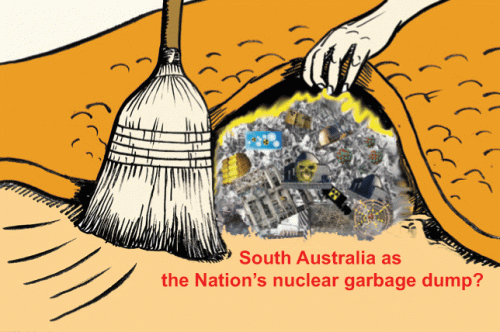
Minister Pitt insists he is not giving up on the legislation. Expert in radiation impacts Dr Tilman Ruff has recently called out Pitt’s recent declaration of ‘the urgent need of this facility’ in ‘saving lives’ as ‘reckless claims.’
A new stage in fight against radioactive waste bill, https://www.eurekastreet.com.au/article/a-new-stage-in-fight-against-radioactive-waste-bill?utm_medium=email&utm_campaign=Eureka%20Street%20Daily%20-%20Tuesday%2017%20November%202020&utm_content=Eureka%20Street%20Daily%20-%20Tuesday%2017%20Nove– Michele Madigan -17 November 2020
-
- ‘We have spent two very productive days at Parliament House speaking about our concerns regarding the proposed Kimba dump site and the Government’s attempts to pass legislation that intentionally takes away our rights to judicial review. Thank you to all of our supporters who helped get us there, this has been a long and expensive fight, but our voices are being heard.’
- This message from the No Radioactive Waste on Agricultural Land in Kimba or SA group (No Rad Waste) Radioactive Waste Management Amendment Bill 2020 was a good intimation that day to anxious followers that the hoped for blocking in the Senate of the Coalition’s Radioactive Waste Management Amendment Bill 2020 was indeed going to happen. ACF’s progressive checking of the Senate Agenda had already revealed that the Bill, listed as number 8 on Monday 9/11, had by Tuesday 10/11 slipped to number 23. On Wednesday 11/11 it had disappeared off the list.Did this mean the government, knowing it didn’t have the numbers, had given up on the legislation — at least for the present?Hope was confirmed for sure the next day. An Adelaide Advertiser’s 12th November article heading read: ‘Pauline Hanson’s One Nation torpedoes Kimba nuclear waste dump in SA.’
The article confirmed ‘The One Nation leader… has confirmed she will not back legislation to build the nuclear waste storage site at Napandee farm, near Kimba.’ The article then went on to explain that ‘Without One Nation’s two crucial votes — and Labor, the Greens, and independent senator Rex Patrick not backing the Bill — the government does not have enough votes for it to pass parliament without changes.’
- As Senator Hanson had told The Advertiser reporter, she ‘had serious concerns about the process to select Napandee, the level of community support, the waste site being built on farming land, and the facility storing intermediate radioactive waste above ground.’
-
So in the long journey of nearly five years since the Australianfederal government’s renewed search for a national radioactive waste facility, it seems a new stage has been reached.Here’s a question: did the federal Minister for Resources overreach himself? With the power to simply name the government’s preferred site, Minister Keith Pitt went a step further by presenting to Parliament the naming of the site.This meant that a passing of the government’s Amendment Bill would block off the chances for any opponent group ton take the processes leading to that decision to the courts — no judicial review.
I wrote of the progress of the bill in the House and later of the Senate Inquiry hearings.In a style reminiscent of recently ex-Minister, Joel Fitzgibbon, in the inquiry Labor Senators Carr and Gallacher chose to side with government in their questioning, comments and final vote.
However Labor, with their knowledge of community concerns, decided to follow Senator Jenny McAllister’s dissenting report and its unease regarding judicial review. Their resolution was ‘to ask for the amendment of removing the name of the Napandee site with the proviso, “Should our amendment be unsuccessful, we willoppose the Bill in the Senate.”’
The reasons? ‘This is a contentious issue and should have the highest levels of scrutiny to ensure that the principles of procedural fairness and natural justice have been applied given the national significance of this matter.’ This from the leader of the Opposition in the Senate, SA Senator Penny Wong’s Office to the Josephite SA Reconciliation Circle on 26th October.
In the meantime, president of No Radioactive Waste on Agricultural Land in Kimba or SA Peter Woolford had first heard of the Minister’s Pitt’s long awaited visit to Kimba and the Napandee site via an ABC’s North and West reporter on Tuesday October 27th. The Minister eventually confirmed that four of their group were permitted to meet with him. As well, of course, were meetings with the executive of the pro-dump District Council of Kimba and theWorking for Future pro-dump group.
‘A PR box ticking exercise’ was how Woolford named the Minister’s visit with their group. After the event it was harder to be dispassionate: ‘Pitt and Ramsey (the federal Member) certainly know what we think and the impact it’s had… it certainly got a little heated at times… We had 45 minutes and we raised many issues relating to the doubling handlingof ILW (intermediate-level waste), the vote unfairness, jobs, judicial review etc.’
With three crossbench votes needed in addition to the Greens and Labor to defeat the Bill, the Barngarla Determination Aboriginal Corporation (BDAC), headed by Chair Jason Bilney had long planned to travel to Canberra to meet with legislators.
COVID restrictions meant that the vital trip was delayed but perhaps providence meant that it took place at just the right time for the November Senate session. Both key opposition groups have long supported each others’ concerns.
So with the government unable to get the Senate numbers, what will happen next?
Minister Pitt insists he is not giving up on the legislation. Expert in radiation impacts Dr Tilman Ruff has recently called out Pitt’s recent declaration of ‘the urgent need of this facility’ in ‘saving lives’ as ‘reckless claims.’
Independent SA Senator Rex Patrick has long been involved with both BDAC and No Rad Waste groups. The Advertiser November 12th report above continued with the voice representing the other two of the vital No votes: ‘I want to make the right decision, not for the interim, I want to make the right decision for future generations,’ Senator Hanson said. ‘I’m not going to be badgered or pushed into this… It’s about looking after thepeople of SA, but also the whole of Australia.’
The SA Stock Journal’s September survey recorded 70 per cent of respondents were against the federal nuclear dump plan. In Aboriginal Way Spring 2020, Karina Lester, Chair of YNTAC, reported that four Aboriginal groups ‘right across the state’ including the Yankunyjatjara Native Title
Aboriginal Corporation have ‘submitted their concern.’
In November, it’s good to hear that South Australians aren’t alone in actively recognising that simply storing above ground, for at least ‘decades,’ nuclear waste that will be radioactive for 10,000 years is a pertinent national issue.
Can a new mine save BHP’s loss-making Olympic Dam?
 Can a new mine save BHP’s loss-making Olympic Dam? Peter Ker,Resources reporter
Nov 18, 2020 – There’s a school of thought at BHP that the best way to fix its loss-making Olympic Dam mine is with a bulldozer.
By demolishing the old smelter, refinery, acid plant and other surface infrastructure that so often cause the inconsistency at the mine, advocates say BHP could start again by spending a few billion dollars on world-class infrastructure to allow it to capitalise on Olympic Dam’s extraordinarily large copper, gold, silver and uranium resource….(Subscribers only)…. https://www.afr.com/companies/mining/can-a-new-mine-save-bhp-s-loss-making-olympic-dam-20201026-p568sn
European security officials fear that Trump may trigger a war against Iran
Security officials worry Israel and Saudi Arabia may see the end of Trump as their last chance to go to war with Iran, MSN insider@insider.com (Mitch Prothero) 18 Nov 20,
-
- European security officials are worried that outgoing president Donald Trump will trigger a military conflict with Iran in order to tie President-Elect Joe Biden’s hands, sources tell Insider.
- They also fear that Israel and Saudi Arabia may see the departure of Trump as a ticking clock they need to beat.
-
- “Both countries are run by immature leaders who have been screaming about the need for war with Iran for so long it’s possible they really believe that a Biden administration will be followed by an Iranian nuclear attack,” one source told Insider.
- Trump has elevated hardliners on Iran inside the Pentagon.
-
-
- European intelligence officials are alarmed about the possibility of military action towards Iran in the waning days of the Trump administration.
Concern that Trump — who has pushed for
-
- — or a combination of Israel or Saudi Arabia creating a military confrontation in the waning days of the administration has been a concern for over a week, according to three European intelligence officials who spoke with Insider.
One fear is of unilateral action by the US to force a military clash that might make it impossible for the incoming Biden
Israel conducted a series of attacks in Iran over the summer, in the knowledge that Trump was sympathetic to a
The fears were underlined last week, in the wake of Trump’s election defeat, when the president replaced much of
Biden — who enters office on Jan 21, 2021 — has not expressed any solid policy positions on Iran except to
Security officials say the US will be a ‘crippled world power’ until Biden takes over and fear Trump will declassify intelligence that will help Putin
Israel keeps blowing up military targets in Iran, hoping to force a confrontation before Trump can be voted out in November.
In the face of public opposition, Ottawa delays small nuclear reactor plan
 Ottawa delays small nuclear reactor plan as critics decry push for new reactors, Yahoo Finance Colin Perkel, The Canadian Press, Thu., November 19, 2020, “……… Industry critics were quick to pounce on the government’s expected SMR announcement. They called on Ottawa to halt its plans to fund the experimental technology. .. a major problem facing the industry is its growing mound of radioactive waste. This week, the government embarked on a round of consultations about what do with the dangerous material. Dozens of groups, including the NDP, Bloc Quebecois, Green Party and some Indigenous organizations, oppose the plan for developing small modular reactors. They want the government to fight climate change by investing more in renewable energy and energy efficiency. “We have options that are cheaper and safer and will be available quicker,” Richard Cannings, the NDP natural resources critic, said in a statement. … Joe McBrearty, head of Canadian Nuclear Laboratories, told the conference the company had signed a host agreement this week with Ottawa-based Global First Power for a demonstration SMR at its Chalk River campus in eastern Ontario. A demonstration reactor will allow for the assessment of the technology’s overall viability, he said |
|
1 This month
17 October, Free Public Talk on Nuclear Issues in South Australia
David Noonan will speak on public interest concerns over the new Roxby Downs Indenture Act 2026 on BHP copper-uranium mining and ore processing in SA, and on how AUKUS may face SA with a High-Level nuclear waste agenda.
Dr Jim Green will discuss international developments in the field of nuclear power including ‘small modular reactors’ and Generation 4 ‘advanced’ nuclear reactor concepts.


Help Aunty Sue Protect Her Land and Sacred Sites From Destructive Rocket Testing.
.
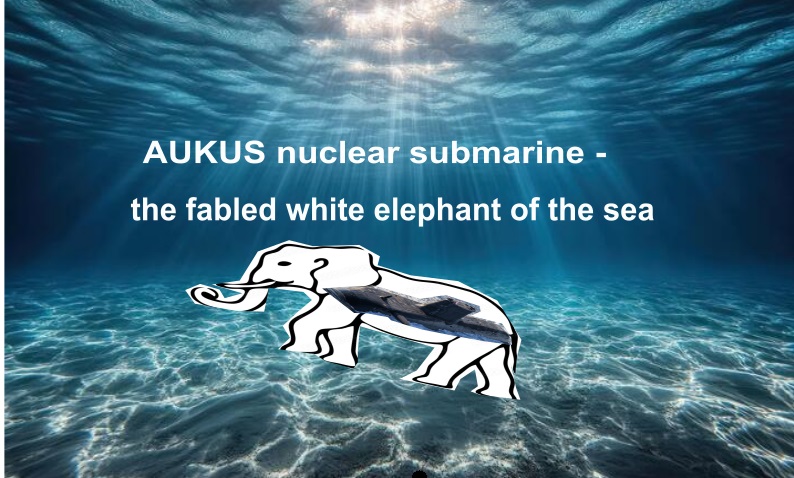
Australians deserve the truth
about
AUKUS – https://aukuspublicinquiry.com/

PETITION – To: Prime Minister Anthony Albanese and the Australian Labor Government

of the week – Australians for War Powers Reform (AWPR)
To see nuclear-related stories in greater depth and intensity

