Australia will benefit from shift to zero emissions, with no gas required — RenewEconomy

With wind and solar now the cheapest sources of energy, Australia would benefit from a switch to 100% renewables, with gas not needed as transition fuel. The post Australia will benefit from shift to zero emissions, with no gas required appeared first on RenewEconomy.
Australia will benefit from shift to zero emissions, with no gas required — RenewEconomy
NSW renewables plan marks a major new moment for climate action in Australia — RenewEconomy

The NSW government has hit on a magic formula for climate policy, but a dive into the details of its plans show there is more to be done. The post NSW renewables plan marks a major new moment for climate action in Australia appeared first on RenewEconomy.
NSW renewables plan marks a major new moment for climate action in Australia — RenewEconomy
Biggest solar farm outside main grids nearly complete, miner counts huge savings — RenewEconomy

The biggest solar farm to be built in Australia outside of its two main grids in nearing completion, and miners are already counting the savings. The post Biggest solar farm outside main grids nearly complete, miner counts huge savings appeared first on RenewEconomy.
Biggest solar farm outside main grids nearly complete, miner counts huge savings — RenewEconomy
November 9 Energy News — geoharvey

Opinion: ¶ “Green Hydrogen Nail, Meet Shale Gas Coffin (And Nuclear Could Be Next)” • If US President-Elect Joe Biden doesn’t do the fossil fuel industry any favors, he’ll only be following in the footsteps of outgoing President Donald J Trump. Intentionally or not, Trump has already overseen the demise of the domestic coal, oil, […]
November 9 Energy News — geoharvey
With Trump defeated, Morrison is now friendless at home and abroad on climate and energy — RenewEconomy

The defeat of Donald Trump and the green push by NSW leaves Scott Morrison virtually friendless – at home and abroad – in his resistance to zero emissions targets. The post With Trump defeated, Morrison is now friendless at home and abroad on climate and energy appeared first on RenewEconomy.
With Trump defeated, Morrison is now friendless at home and abroad on climate and energy — RenewEconomy
Renewables industry rejoices as Australia’s biggest electricity state goes green — RenewEconomy

The reaction to New South Wales’ $32bn renewable energy plan has been swift and overwhelmingly positive, from all sides of industry and the political spectrum. Well, almost… The post Renewables industry rejoices as Australia’s biggest electricity state goes green appeared first on RenewEconomy.
Renewables industry rejoices as Australia’s biggest electricity state goes green — RenewEconomy
New chief scientist says climate change has “no single solution” — RenewEconomy

This is a real worry. Cathey Foley has a background in the minerals industry. The ”no single solution” could be code for including gas, carbon capture, nuclear….
Australia’s new chief scientist, Cathy Foley, says climate change is a problem with “no single solution,” and one of the world’s greatest challenges. The post New chief scientist says climate change has “no single solution” appeared first on RenewEconomy.
New chief scientist says climate change has “no single solution” — RenewEconomy
Wind, solar and storage “price guarantee” key to lower costs for developers and consumers — RenewEconomy

NSW becomes the latest state to embrace price guarantees for clean energy projects, and the Berejiklian government sees them as key to lower energy prices. The post Wind, solar and storage “price guarantee” key to lower costs for developers and consumers appeared first on RenewEconomy.
Wind, solar and storage “price guarantee” key to lower costs for developers and consumers — RenewEconomy
Sunraysia solar farm lands registration, to begin production Tuesday — RenewEconomy

The long delayed Sunraysia solar farm receives its registration from the market operator and will begin production this week. The post Sunraysia solar farm lands registration, to begin production Tuesday appeared first on RenewEconomy.
Sunraysia solar farm lands registration, to begin production Tuesday — RenewEconomy
News this week, especially about nuclear issues

Inundation of news this week, mostly about the USA election. But also about coronoavirus and climate.
***************
AUSTRALIA
CLIMATE. Jo Biden’s win leaves Scott Morrison looking pretty silly on climate policy. Biden as president would pursue climate ‘cheaters’, such as Morrison’s Australia. Australian govt will feel the heat when a Biden administration rejoins the Paris climate agreement. Zali Steggall calls on Australia’s chief scientist to clarify position on net zero emissions by 2050.
Australian doctors accuse government of failing on climate change. Superannuation fund commits to net-zero emission investments after Brisbane man sues. North of Australia is headed for a severe heatwave.
NUCLEAR. Australian government’s Nuclear Waste Bill – divisive, undemocratic and racist processes. Farmers go to Canberra, to protest the law that forces a nuclear dump on Kimba’s agricultural land. South Australia’s Jim Whalley provides nonsensical and misleading propaganda, spruiking small nuclear reactors. Frazer Nash and The South Australian Chamber of Mines and Energy (SACOME) want nuclear power – “good for the environment”!! Worry rocket launch site will damage environment (also at Antinuclear) The plan to use nuclear bombs for fracking in Western Australia.
INTERNATIONAL
Politics – what hope for civil society?
The beginning of the end for nuclear weapons?
Some problems that will handicap the development of Small Nuclear Reactors.
As with every week, the Google headlines about nuclear power mostly lead to articles that promote it.
Farmers to Canberra, to protest the law that forces a nuclear dump on Kimba’s agriculutral land
 We are members of the Kimba community and proud and productive grain farmers who have travelled to Canberra to meet with Labor, Green and cross-bench Senators to put a face to those directly impacted by the proposed legislation to name Kimba as the site for Australia’s radioactive waste dump.
In our view the process the Government has employed to site this facility in Kimba over the last five years has been unfair, manipulative and completely lacking in transparency.
We are extremely concerned that the Governments proposed legislation currently awaiting Senate consideration intentionally removes our right to contest the decision and denies basic protections .
It is clear that productive farming land in Kimba is not the best, or even the right place for our nations radioactive waste. We urge the federal government to step back and review their selection process rather than continue trying to force this decision through via Parliament.
Quotes can be attributed to Toni Scott – Secretary, No Radioactive Waste on Agricultural Land in Kimba or SA Committee Media Contact – Kellie Hunt – 0428 572 411
Nuclear lobby is happy with the Biden-Harris election result

The nuclear lobby is quite happy with the Biden -Harris win. More on this later, as I try to delve  deeper into a possibly cosy relationship between Kamala Harris and the global nuclear lobby.
Meanwhile, the Atlantic Council writes confidently of the nuclear industry’s plans for future development under the new American administration.
Jo Biden’s win leaves Scott Morrison looking pretty silly on climate policy
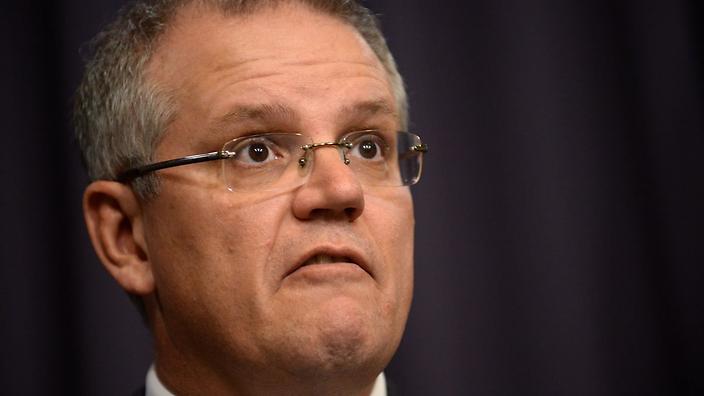 Biden win leaves Australia ‘isolated’ and lagging on climate goals, New Daily, Josh Butler 8 Nov 20, A Biden presidency will put an increasingly “isolated” Australian government under immense pressure to adopt strong environment and emissions policies, leading climate voices say, as the United States looks to again assume a global leadership role.It comes as former prime minister Malcolm Turnbull ridicules Scott Morrison’s plans for a ‘gas-led recovery’ as “BS” and “political piffle”, in calling for his former colleagues to back more ambitious climate targets……. President-elect Biden spoke of “the battle to save our planet by getting the climate under control”, while vice president-elect Kamala Harris also prominently mentioned the need “to combat the climate crisis” in her speech. Ambitious climate agendaMr Biden will reinsert the US into the Paris climate agreement on his first day in office. He pledged “to get every major country to ramp up the ambition of their domestic climate targets”, and will move to get the US power grid using 100 per cent clean energy by 2035. Crucially, he will commit the US to a policy of net-zero emissions by 2050. This change, Australian experts say, will leave Mr Morrison’s federal government out in the cold as the only one of our major trading partners without a similar target. “This will have huge ramifications in increasing action around the world,” Amanda McKenzie, CEO of the Climate Council, told The New Daily. “Australia will look isolated. Most countries have a net-zero target, many are looking more ambitious than that. Australia’s ‘climate-lite’ approach, of not doing a lot but claiming we are, won’t cut it.” All of Australia’s most important partners – the United Kingdom, Japan, South Korea, China, India, Canada, and now the US – have committed to concrete net-zero targets in coming years, meaning a balance between emissions produced and emissions removed. Last month, British PM Boris Johnson told Mr Morrison of the need for “bold action to address climate change” and “the importance of setting ambitious targets to cut emissions and reach net zero”. However, Mr Morrison has only committed Australia to the goal “in the second half of this century”. The federal government has also come under fire for the controversial plan to use ‘carryover credits’ from the previous Kyoto climate agreement to count against commitments under the Paris agreement. On Sunday, Mr Morrison said he looked forward to working with Mr Biden to lower emissions worldwide……… Pushing beyond net zeroRichie Merzian, climate and energy program director at The Australia Institute, said a Biden win will further pressure the federal government. “We could always hide behind the US when they were a laggard on climate, but no more. Biden will bring that pressure to bear on Morrison,” Mr Merzian told TND……. He added that Australia should scrap its reliance on Kyoto credits and pledge stronger action. “The most important period for climate action is the next 10 years … [a Biden win] does raise this and put this back as a front and centre issue,” Mr Merzian said. Australia Institute polling from last year found 62 per cent of Australians would back a net-zero target by 2050, or even earlier……. https://thenewdaily.com.au/news/2020/11/09/joe-biden-climate-change/ |
|
Biden – Harris win – a win for the climate
 Joe Biden and Kamala Harris cinch win, Climate Group responds, Mirage News 8 Nov 20, The Climate Group congratulates Joe Biden and Kamala Harris on their historic victory, as announced by the New York Times, Associated Press, and BBC.President-elect Biden’s climate and clean energy plan is the most ambitious we’ve seen from a major US presidential nominee. Under his administration and leadership, we are optimistic about the future of US climate action and the opportunity for renewed global collaboration to address the climate crisis.
Amy Davidsen, Executive Director at the Climate Group, said: “Concern for the climate played a major role in the 2020 presidential debates. President-elect Biden’s win shows that Americans expect their president to follow climate science and take the bold and necessary actions to get the US back on track as a leader….. https://www.miragenews.com/joe-biden-and-kamala-harris-cinch-win-climate-group-responds/
In Britain, as in America, Small Nuclear Reactors – useless – EXCEPT FOR helping the nuclear weapons industry
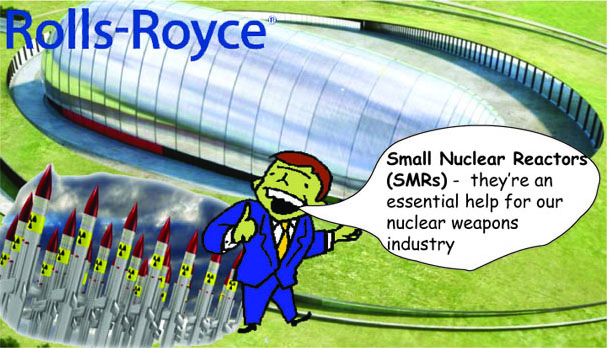
A secret military agenda. UK defence policy is driving energy policy – with the public kept in the dark, Beyond Nuclear
By David Thorpe, 8 Nov 20,The UK government has for 15 years persistently backed the need for new nuclear power. Given its many problems, most informed observers can’t understand why. The answer lies in its commitment to being a nuclear military force. Here’s how, and why, anyone opposing nuclear power also needs to oppose its military use.
“All of Britain’s household energy needs supplied by offshore wind by 2030,” proclaimed Prime Minister Boris Johnson at a recent online Conservative Party conference. This means 40 per cent of total UK electricity. Johnson did not say how, but it is likely, if it happens, to be by capacity auctions, as it has been in the recent past.
But this may have been a deliberate distraction: there were two further announcements on energy – both about nuclear power.
16 so-called “small nuclear reactors”
Downing Street told the Financial Times, which it faithfully reported, that it was “considering” £2 billion of taxpayers’ money to support “small nuclear reactors” – up to 16 of them “to help UK meet carbon emissions targets”.
It claimed the first SMR is expected to cost £2.2 billion and be online by 2029.
The government could also commission the first mini power station, giving confidence to suppliers and investors. Any final decision will be subject to the Treasury’s multiyear spending review, due later this year.
The consortium that would build it includes Rolls Royce and the National Nuclear Laboratory.
Support for this SMR technology is expected to form part of Boris Johnson’s “10-point plan for a green industrial revolution” and new Energy White Paper, which are scheduled for release later in the autumn.
Johnson will probably also frame it as his response to the English citizens assembly recommendations– a version of the one demanded by Extinction Rebellion in 2019 – which reported its conclusions last month.
While the new energy plan will also include carbon capture and storage, and using hydrogen as vehicle fuel, it’s the small modular reactors that are eye-popping.
They would be manufactured on production lines in central plants and transported to sites for assembly. Each would operate for up to 60 years, “providing 440MW of electricity per year — enough to power a city the size of Leeds”, Downing Street said, and the Financial Times copied.
The SMR design is alleged to be ready by April next year. The business and energy department has already pledged £18 million (US $23.48 million) towards the consortium’s early-stage plans.
They are not small
The first thing to know about these beasts is that they are not small. 440MW? The plant at Wylfa (Anglesey, north Wales) was 460MW (it’s closed now). 440MW is bigger than all the Magnox type reactors except Wylfa and comparable to an Advanced Gas-cooled Reactor.
Where will they be built? In the town of Derby – the home of Rolls Royce – where, as nuclear consultant Dr. David Lowry points out, the government is already using the budget of the Housing and Communities Department to finance the construction of a new advanced manufacturing centre site.
When asked why this site was not being financed by the business and energy department (BEIS), as you’d expect, a spokesperson responded that it was part of “levelling up regeneration money”.
Or perhaps BEIS did not want its budget used in such a way. Throwing money at such a “risky prospect” betrays “an irrationally cavalier attitude” according to Andrew Stirling, Professor of Science & Technology Policy at the University of Sussex Business School, because an “implausibly short time” is being allowed to produce an untested reactor design.
Only if military needs are driving this decision is it explicable, Stirling says. “Even in a worst case scenario, where this massive Rolls Royce production line and supply chain investment is badly delayed (or even a complete failure) with respect to civil reactor production, what will nonetheless have been gained is a tooled-up facility and a national skills infrastructure for producing perhaps two further generations of submarine propulsion reactors, right into the second half of the century.
“And the costs of this will have been borne not by the defence budget, but by consumers and citizens.”
Yes, military needs
UK defence policy is fully committed to military nuclear. The roots of civil nuclear power lay in the Cold War push to develop nuclear weapons. Thus has it ever been since the British public was told nuclear electricity would be “too cheap to meter”.
The legacy of empire and thrust for continued perceived world status are at the core of a post-Brexit mentality. It’s inconceivable to the English political elite that this status could exist without Great Britain being in the nuclear nations club, brandishing the totem of a nuclear deterrent.
“The civil-military link is undisputable and should be openly discussed,” agrees Dr Paul Dorfman at the Energy Institute, University College London.
Andrew Stirling talks of the “tragic relative popularity of (increasingly obsolescent) nuclear weapons”. The coincidental fact that civil nuclear installations are also crumbling provides a serendipitous opportunity for some.
The stores of plutonium in the UK are already overflowing and the military has its own dedicated uranium enrichment logistics.
Any nation’s defence budget in this day and age cannot afford a new generation of nuclear weapons. So it needs to pass the costs onto the energy sector.
“Clearly, the military need to maintain both reactor construction and operation skills and access to fissile materials will remain. I can well see the temptation for Defence Ministers to try to transfer this cost to civilian budgets,” observes Tom Burke, Chairman of think tank E3G.
The threat of nuclear proliferation
The threat of nuclear proliferation is therefore linked to the spread of civil nuclear power worldwide, says Dr David Toke, Reader in Energy Politics, Department of Politics and International Relations at the University of Aberdeen. David Lowry agrees: “India, Pakistan and above all Israel are obvious examples, each of which certainly has built nuclear weapons.”
It’s impossible to separate the tasks of challenging civil nuclear power without also challenging military nuclear interests, Stirling strongly believes. “The massive expense of increasingly ineffective military nuclear systems extend beyond the declared huge budgets. They are also propped up by large hidden subsidies from consumer and taxpayer payments for costly nuclear power.
“Huge hidden military interests will likely continue to keep the civil nuclear monster growing new arms. Until critics reach out and engage the entire thing, we’ll never prevail in either struggle.”
How new plants would be paid for still remains a question. Nuclear power is prohibitively expensive. https://wordpress.com/read/feeds/72759838/posts/3011373103
1 This month
17 October, Free Public Talk on Nuclear Issues in South Australia
David Noonan will speak on public interest concerns over the new Roxby Downs Indenture Act 2026 on BHP copper-uranium mining and ore processing in SA, and on how AUKUS may face SA with a High-Level nuclear waste agenda.
Dr Jim Green will discuss international developments in the field of nuclear power including ‘small modular reactors’ and Generation 4 ‘advanced’ nuclear reactor concepts.


Help Aunty Sue Protect Her Land and Sacred Sites From Destructive Rocket Testing.
.
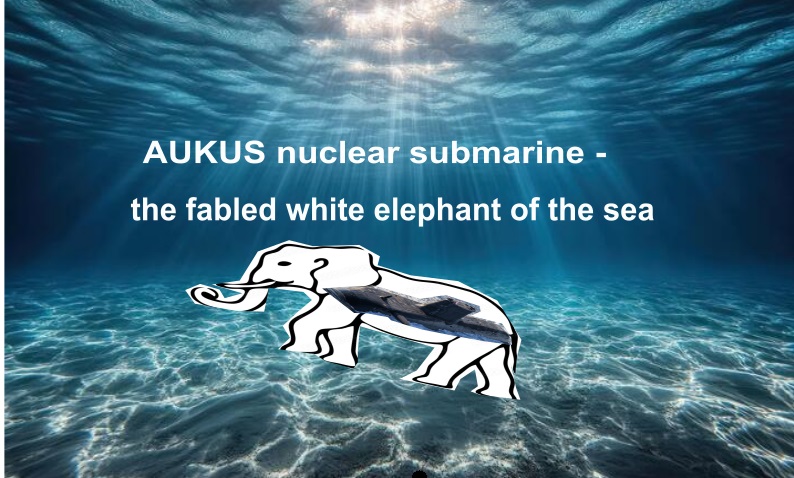
Australians deserve the truth
about
AUKUS – https://aukuspublicinquiry.com/

PETITION – To: Prime Minister Anthony Albanese and the Australian Labor Government

of the week – Australians for War Powers Reform (AWPR)
To see nuclear-related stories in greater depth and intensity

