Radioactive contamination halts work on SSEN subsea link near Dounreay. World War II airplanes to blame for radiation halting work on SSEN cable near Dounreay.
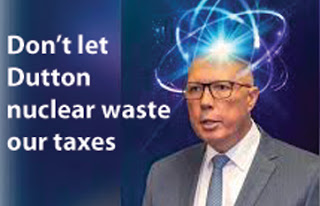
The signature [nuclear] Coalition policy for the 2025 election will be a huge government-owned energy monolith.
The overall costs will be borne by taxpayers because the publicly owned reactors will bear them. But the overall profits will be made by the private sector which will queue up for the construction contracts and whose profits will balloon as the costs of construction inevitably and uncontrollably blow out.
the real aim of the exercise is not to produce the cleanest energy at the lowest cost, but to keep the profits of the fossil industry flowing for as long as possible.
Crispin Hull, 17 Dec 24
Opposition Leader Peter Dutton’s announcement on nuclear energy last week contained a welcome development. For the first time since about 1989, the Coalition has acknowledged that only governments can do some of the really big-ticket items.
Since about 1990, the Coalition has said, Private Sector Good, Public Sector Bad. But with the program to build seven nuclear power stations, the Coalition acknowledges that only the public sector can do it.
The publication of Fightback! by then Opposition Leader John Hewson in 1992 was the touchstone of conservative policy: the private sector was more efficient and could do things quicker and better than the great big bloated public sector full of lazy, box-ticking public servants. Taxpayers and consumers would be much better off, they argued.
If you can find it in the Yellow Pages, they said, buy it there. Or these days, Google it. Don’t let the Government do it, they said. The Government is not the solution to the problem. The Government is the problem, as Ronald Reagan said. Get government out of the way, and the private sector will provide the solution.
So, what has happened now? The signature Coalition policy for the 2025 election will be a huge government-owned energy monolith.
Gulp.
That will require the unlearning of three decades of conservative policy.As it happens, though, much of that policy was a cruel hoax. Far from being cheaper and more efficient, the neo-liberal conservatives did not – to use market parlance – factor in two critical elements of private-sector contracting: fraud and profit gouging.
Since about 1990 in Australia we have seen, through privatisation, a major shift of wealth and income up to the top two percentiles at the cost of people on middle income. From employees and small business to the managers and shareholders of big business.
In the 1990s, the neo-liberals (read, the Coalition) harped on about reducing the role of government, particularly government spending. It did not happen. Government spending remained at 38 percent throughout the 1990s’ privatisations and downsizing. All that happened was that the spending went from public health, education, and welfare into subsidies and tax breaks for the fossil-fuel industry, other big corporates, and private health, education and other providers.
Public spending remained stubbornly the same.
It will be the same with the nuclear reactors. The overall costs will be borne by taxpayers because the publicly owned reactors will bear them. But the overall profits will be made by the private sector which will queue up for the construction contracts and whose profits will balloon as the costs of construction inevitably and uncontrollably blow out.
Importantly, even though the Coalition is going for a massive program of government spending and ownership for its nuclear reactors, it has relied on a private firm of economists to do the costings. Surely, if such a massive spend and risk is to be undertaken by the public sector, you would want the public sector to do the costings.
As it happens, we have that. The CSIRO has costed and re-costed nuclear energy and come up with the same result: higher electricity bills and greater dangerous carbon emissions.
The private-sector costings, on the other hand, look like an exercise in: “These are the conclusions upon which we have based our facts.”
This is because the real aim of the exercise is not to produce the cleanest energy at the lowest cost, but to keep the profits of the fossil industry flowing for as long as possible.
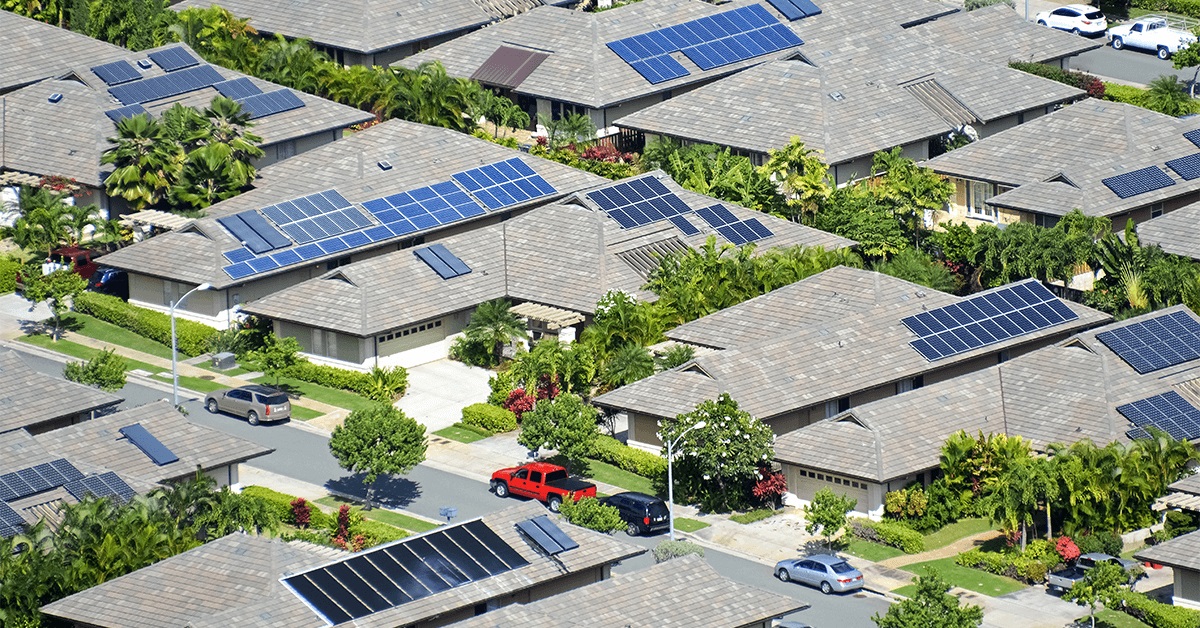
However, it is an electorally risky exercise. Not because a generally financially illiterate electorate will see nuclear as a white elephant, but rather because an ever-growing portion of the electorate has rooftop solar and know it pays off.
Further, in the unlikely event that nuclear goes ahead there will be times when the grid has too much power and domestic solar generators will be blocked from exporting their product to the grid because nuclear power stations cannot be turned on and off without enormous cost and difficulty.
That is going to annoy the owners of four million rooftop solar systems. It would be about as popular as taking away Medicare.
The electoral dynamics for nuclear are made worse for the Coalition because more than three million of those solar systems are on the roofs of stand-alone houses – in the very suburbs and regions which the Coalition hopes to take from Labor. That is about six million voters in an electorate of 18 million.
Moreover, those six million voters are proselytising about the value of solar, and lots of tenants and unit holders – hitherto shut out of solar – want to get a slice of the action sooner rather than later.
The big trouble with nuclear is spending vast amounts of public money with no electricity generation for at least a decade, more likely a lot more. Whereas every bit of renewable infrastructure generates from Day 1 and every battery stores from Day 1. Voters prefer the here-and-now to spending on something they might never see.
Nuclear is a matured industry. It not going to get much more efficient, if at all. Whereas the efficiency of solar, wind, and batteries continues on an upward trajectory well beyond previous expectations.
When you add electric vehicles, the renewables pay for themselves very quickly.
The task for Australia now is to reduce our reliance on our $30 billion a year of imported oil. And to reduce our reliance on $30 billion a year of thermal coal exports before the world does it for us. These are energy and national-security issues.
The Coalition’s decades-long nuclear program and Labor’s continued approval of coal mines fail to meet the urgency and magnitude of the national-security risks arising from climate change and fossil-fuel reliance.
A government’s first priority should be national security: not just from the threat of arms but the threats of disasters and supply-chain disruption.
We need politicians who think about the long-term security of their people not the short-term profits of big corporations and the donations which come from them.
Here are the facts re SMRs. Basically there are three types which generate less than 300 megawatts of electricity compared with current day 1000 megawatt reactors.
Light water reactors designs – these will be smaller versions of present-day pressurized water reactors using water as the moderator and coolant but with the same attendant problems as Fukushima and Three Mile Island. Built underground, they will be difficult to access in the event of an accident or malfunction.
SMRs will be expensive because the cost per unit capacity increases with decrease in reactor size. Billions of dollars of government subsidies will be required because Wall Street is allergic to nuclear power. To alleviate costs, it is suggested that safety rules be relaxed including reducing security requirements and a reduction in the 10 mile emergency planning zone to 1000 feet.
SMRs will be expensive because the cost per unit capacity increases with decrease in reactor size. Billions of dollars of government subsidies will be required because Wall Street is allergic to nuclear power. To alleviate costs, it is suggested that safety rules be relaxed including reducing security requirements and a reduction in the 10 mile emergency planning zone to 1000 feet.
High-temperature gas cooled reactors HTGR or pebble bed reactors. Five billion tiny fuel kernels consisting of high-enriched uranium or plutonium will be encased in tennis-ball-sized graphite spheres which must be made without cracks or imperfections –or they could lead to an accident. A total of 450,000 such spheres will slowly and continuously be released from a fuel silo, passing through the reactor core, and then re-circulated ten times. These reactors will be cooled by helium gas operating at high very temperatures (900 C).
A reactor complex consisting of four HTGR modules will be located underground, to be run by just two operators in a central control room. Claims are that HTGRs will be so safe that a containment building will be unnecessary and operators can even leave the site – “walk away safe” reactors.
However should temperatures unexpectedly exceed 1600 C the carbon coating will release dangerous radioactive isotopes into the helium gas, and at 2000C the carbon would ignite creating a fierce graphite Chernobyl-type fire.
If a crack develops in the piping or building, radioactive helium would escape, and air would rush in, also igniting the graphite.
Although HTGRs produce small amounts of low level waste they create larger volumes of high level waste than conventional reactors.
Despite these obvious safety problems and despite the fact that South Africa has abandoned plans for HTGRs, the US Department of Energy has unwisely chosen the HTGR as the “Next Generation Nuclear Plant”.
Liquid metal fast reactors (PRISM) It is claimed by proponents that fast reactors will be safe, economically competitive, proliferation resistant, and sustainable.
Fueled by plutonium or highly enriched uranium, and cooled by either liquid sodium, or a lead-bismuth molten coolant. Liquid sodium burns or explodes when exposed to air or water and lead-bismuth is extremely corrosive producing very volatile radioactive elements when irradiated.
Should a crack occur in the reactor complex, liquid sodium would escape, burning or exploding. Without coolant, the plutonium fuel could reach critical mass, triggering a massive nuclear explosion scattering plutonium to the four winds. One millionth of a gram of plutonium induces cancer and it lasts for 500,000 years. Extraordinarily, claims are that fast reactors will be so safe they will require no emergency sirens and emergency planning zones can be decreased from 10 miles to 1300 ft.
There are two types of fast reactors, a simple plutonium fueled reactor and a “breeder” in which the plutonium reactor core is surrounded by a blanket of uranium 238 which captures neutrons and converts to plutonium.
The plutonium fuel, obtained from spent reactor fuel will be fissioned and converted to shorter lived isotopes – cesium and strontium which last 600 years instead of 500,000. Called “transmutation”, the industry claims that this is an excellent way to get rid of plutonium waste. But this is fallacious, because only 10% fissions leaving 90% of the plutonium for bomb making etc.
Construction. Three small plutonium fast reactors will be grouped together to form a module and three of these modules will be buried underground. All nine reactors will then be connected to a fully automated central control room operated by only three operators. Potentially then, one operator could simultaneously face a catastrophic situation triggered by loss of off-site power to one unit at full power, in another shut down for refueling and one in start-up mode. There are to be no emergency core cooling systems.
Fast reactors require a massive infrastructure including a reprocessing plant to dissolve radioactive waste fuel rods in nitric acid, chemically removing the plutonium and a fuel fabrication facility to create new fuel rods. A total of 10,160 kilos of plutonium is required to operate a fuel cycle at a fast reactor and just 2.5 kilos is fuel for a nuclear weapon.
Thus fast reactors and breeders will provide extraordinary long-term medical dangers and the perfect situation for nuclear weapons proliferation. Despite this, the industry is clearly trying to market them to many countries including it seems, Australia.
After 22 failed energy policies, the Coalition is being guided by a roadmap to higher bills and higher emissions.
On the front cover of Frontier Economics’ costings of the Coalition’s nuclear policy is a stock photo entitled fork in road, implying that we’re at some kind of juncture where we must decide between a nuclear or renewables path.
In 1969 John Gorton’s Liberal government chose the nuclear path with the construction of the Jervis Bay nuclear power plant project. As Gorton later said, “We were interested in this thing because it could provide electricity to everybody and it could, if you decided later on, it could make an atomic bomb.”
In 1971 Billy McMahon’s Liberal government cancelled the project after a review deemed it too expensive. The cleared site became a massive car park at Murray’s Beach.
No nuclear power station was built in the intervening 27 years before John Howard introduced a federal ban on nuclear power. There were no attempts to overturn the ban during the next 18 years of Liberal government.
At the start of the 1970s we were indeed at an energy crossroads, we took the road towards coal, and as one of those who’d like to pass a safe climate on to the next generation, I wish we had taken the road towards nuclear instead. Our emissions would be dramatically lower
In 1997, just before he banned nuclear, Howard took us down a different path – he announced the mandatory renewable energy target, a plan to add a tiny slice of renewable energy to our sliver of hydroelectricity. In 2009, in what was perhaps the last act of bipartisanship on domestic energy, parliament agreed to massively increase the target to 20% renewables by 2020. Today we’re just shy of 40%, and the government’s policy is to double it again by the end of this decade.
Howard’s modest renewable energy target was surely more successful than he ever intended, in great contrast to the 22 failed energy policies the Coalition famously held during its last tenure. Its latest energy policy began shortly after the last election, when in August 2022 Peter Dutton tasked Ted O’Brien to “examine the potential for advanced and next-generation nuclear technologies to contribute to Australia’s energy security and reduce power prices”. We had to wait until Friday for the costings, published after many of the country’s journalists had filed their last stories for the year.
Here are four reasons why in my opinion the costings, prepared by Frontier Economics, completely undermine the Coalition’s 23rd energy plan:
1. The Coalition plans for lower household income and the collapse of heavy industry
Of the three scenarios the independent market operator Aemo published in June, the Coalition has chosen what’s known as progressive change, giving Aemo’s preferred scenario, known as step change, to Labor.
Under the Coalition’s scenario, large industrial load collapses in 2030, signalling the closure of smelters and presumably datacentres – goodbye AI! By 2050 industrial demand is down by 62%. Over the 25-year modelling period, household disposable income will be down a whopping $2.8tn more compared to Labor’s plan.
With a pivot away from electrification, under the Coalition’s plan Australians will burn an additional 273bn litres of petrol and diesel through to 2050 costing $465bn and an additional 1,831 PJ of gas costing at least $36bn. Even if the Coalition’s purported cost savings were credible, this $501bn would mean that Australia’s total energy bill would be considerably higher.
On top of this, the Coalition’s plan would see a 61% reduction in rooftop solar, meaning that millions fewer Australians would be able to slash their electricity bills.
Currently we are paying hundreds of millions to three coal power stations to stay open for a couple of years. The Coalition budgets nothing to coax the other 14 coal power stations on the east coast to extend their lives by a decade or more.
Economist Steven Hamilton has calculated that the Coalition’s plan would see the power sector emit about 1,000 million tonnes of carbon dioxide above our current trajectory. The Coalition’s crabwalk away from electrification would add a further 723 MtCO2.
The Coalition has chosen an energetically and fiscally poorer Australia with higher energy bills and higher emissions. I’ve long suspected that the Coalition hasn’t bothered to read or understand Aemo’s last seven years of modelling, and this pretty much clinches it.
2. The analysis lowballs nuclear’s cost then punts it over the horizon
Frontier appears to have made the rookie error of confusing the nuclear industry term nth of a kind (Noak) with next of a kind. The Noak cost is not what we’d pay for the next reactor built, but a cost target we’d theoretically hit eventually if we got really good at building them. If you build, say, eight identical reactors on a site, the last one should cost a lot less – and provided nothing goes wrong, theoretically you’d approach the Noak cost.
If Australia were to achieve Frontier’s costs, it’d be the cheapest nuclear built in the western world this century, by a wide margin. Frontier’s head, Danny Price, told the ABC on Friday that he wouldn’t put himself in the category of a nuclear expert, so maybe it’s no surprise that the modelling appears to confuse Noak with next-of-a-kind pricing.
Frontier are, however, modelling experts, so the next thing they did was with eyes wide open. The modelling pushes the vast majority of the cost of nuclear beyond 2050, so if the program is delayed it would appear cheaper and if the cost triples, it’d barely show in the analysis. Nice work!
Next, Frontier assumes that building nuclear reactors will get cheaper every year – what’s known as a positive learning rate. In reality, the US nuclear industry is famous for its negative learning rate – is that a forgetting rate? – meaning that Noak costs are more theory than practice.
3. The Coalition’s unrealistic schedule leaves us short of power
As I told a recent nuclear inquiry – the eighth since 2005 – there’s not a hope in hell that Australia can deliver its first nuclear power reactor producing power before 2040. Even with fantastical assumptions, such as a Coalition that controls both Houses of Parliament, states quickly overturning their bans, the first project sailing through environmental approvals and court challenges and fast build times, it’s almost impossible to achieve the first nuclear kilowatt hour before 2044.
Czechia, a country with 66 years of nuclear experience, embarked on a nuclear construction project in 2022. If all goes well the first unit will start commercial operation in 2038. Australia is at least six years behind this project, and we face many more barriers, so 2044 for our first really does seem optimistic.
4. Our grid doesn’t have room for these reactors
Frontier’s analysis assumes that Australia builds 13.3GW of nuclear, equivalent to 12 AP-1000 reactors, and that these run flat out when they’re not off for refuelling and maintenance.
The problem is that for much of the year Australia uses less power. Our minimum system load (MSL) is already below 10GW and on its way down to 2GW around the end of this decade, thanks to rooftop solar. The inflexible manner in which the Coalition plans to run the reactors would result in masses of excess power and require that we turn off massive amounts of renewables, both utility-scale and rooftop solar. Alternatively we could soak up the excess nuclear energy with gigantic battery farms.
Over the weekend I sent a polite text message to Danny Price, the consultant behind the Coalition’s modelling, explaining that I’m not a newcomer to nuclear and outlining three of the above flaws. Price replied:
“Thanks for sending me your credentials and your generous offer to set me straight, but I will decline. I’ve got all the help and technical advice I need. I know you are just protecting you (sic) financial interest. I get it, but please don’t contact me again.”
Contrary to Coalition belief, I am not a large investor in renewable energy (nor am I a billionaire). This shows the depths of the culture wars we’re in – where impugned motives trump rational discussion. I took the opportunity to reply:
“Since you misinterpreted my motives, allow me this: Less than 2% of my investments are in Australian renewables – similar to millions of superannuation accounts I’m advised – and if the renewables transition slows, the value of those investments would likely increase.”
The fact is, over the last six years, Australia has added wind and solar generation equivalent to the annual output of six gigawatt scale nuclear reactors, according to data from OpenElectricity.
If we’re at a crossroads it’s one where the Coalition took a sharp turn, based on what looks to me like some really sloppy advice. Let’s hope that Australians stay on the path to a cheaper, cleaner and more prosperous energy future.
Simon Holmes à Court is a Director of The Superpower Institute, convener of Climate 200 and an adviser to the Smart Energy Council
Despite a clever comms strategy, there are significant credibility issues around the assumptions on which the cost estimates are based.
The Coalition has moved a considerable way on climate and energy since Scott Morrisson brought a lump of coal into the parliament and told us not to be afraid. On Friday, the Coalition finally released the long-awaited details of the nuclear plan it will take to the election and, once again, asks us not to be afraid – of the price tag, the higher climate pollution and a range of other variables.
However, despite a clever comms strategy, there are significant credibility issues around the assumptions on which the cost estimates are based, and there are other critical issues that have been left unanswered. Australians have a right to consider all the issues they are being asked to vote on, with facts rather than political rhetoric. These issues can be broadly listed under three headings: the economics, the environment and the law.
The Coalition makes the point that many countries use nuclear power. It is true that 9% of global energy capacity comes from nuclear power, which the International Energy Agency (IEA) estimates could increase to about 11% if and when planned projects come online. But the world is voting with its feet, with the IEA reporting that around the world 560GW of new renewable power was installed in 2023, compared with 7.1GW of new nuclear. At COP29 in Baku this year, the conversations were not about whether to invest in renewables, but how to roll them out faster.
The primary reason the world is not embracing nuclear energy on a grand scale is simple: cost (although in Japan’s case, it’s also about safety).
The Frontier Economics report, which the Coalition is using to make its case, is written in an opaque way that makes direct comparisons difficult. Essentially, the report admits that the capital cost of nuclear is $10,000/kW, while solar and wind are $1,800 and $2,500 respectively.
So how is it that the Coalition’s modelling suggests that a world where nuclear makes up more than a third of the east coast energy grid could possibly be cheaper?
It’s easy to come up with the answer you want when you base your modelling on rubbery assumptions.
Firstly, we should appreciate that even a $10,000/kW estimate for nuclear is considerably optimistic if we look at the experience of comparable countries over the past decade. The cost at the off-cited Hinkley C plant in the UK has, to date, risen to $27,515/kW. Three others – France (Flamanville 3), Finland (Olkilutoto 3) and the US (Vogtle) – are between $15,000 and $16,900.
Delays have been a key factor in driving up the cost of nuclear power. The longer it takes to build and operate a plant, the higher the cost of finance. The Coalition believes we can overturn national and state legislation and acquire land and planning approvals virtually overnight. And then we’ll just install an ‘off-the-shelf’ nuclear power plant, ready to run.
By its own admission, having to tweak nuclear power plants so they operate at maximum safety and efficiency can blow out build times and costs. It beggars belief that the Coalition claims Australia, which has no nuclear energy capability, could ship, build and integrate into the grid with no challenges, with a 50,000-strong nuclear workforce appearing by magic.
There is no mention of the costs of extending the life of existing ageing coal-fired power stations, or the likelihood that these plants will increasingly fail as they reach end-of-life, raising energy costs as supply falls short and, increasingly, the likelihood of blackouts. And, apparently, nuclear waste can be transported and stored without cost
The Coalition also argues that, because wind and solar energy are not always “on”, we’ll need to build a lot more capacity, along with transmission and storage. It calls this “overbuild”, but its assumptions have overegged what that need might realistically look like, especially as battery storage becomes cheaper over time (unlike the experience of nuclear) and of longer duration.
Finally, to arrive at these rose-tinted costs, the Coalition has had to cut back on estimates of the amount of energy we will demand over the next two decades by almost half what the Australian Energy Market Operator says we need. That’s because it’s assumed we won’t worry about EVs or electrification. This is why the Coalition will undo Australia’s 2030 43% emissions reduction target, which we are set to get very close to, taking us back to our Morrison-era status of global climate pariah.
And this is the kicker. Under the Coalition’s plan, our modelling shows Australia’s domestic emissions will rise by around one billion – yes billion – tonnes, at a cost of $240bn to the economy, society and environment, based on Infrastructure Australia’s cost of carbon methodology.
The Coalition’s track record on climate and energy has always been poor. In this latest iteration supporting nuclear power, its credentials have been further diminished on climate, energy and the economy.
Nicki Hutley is an independent economist and councillor with the Climate Council
Peter Dutton’s steady progress away from the traditions of his own party continued in Friday’s nuclear policy costings, one of the more disingenuous documents foisted on Australians by either party for quite some time.
Given that the job of the Coalition and Frontier Economics was to invent a set of numbers to claim that a build-from-scratch nuclear power industry would be cheaper than renewables with storage — when the objective truth is the latter is far cheaper — it’s unsurprising the modelling was so shambolic…………………………….. (Subscribers only )https://www.crikey.com.au/2024/12/16/peter-dutton-nuclear-plan-costing-fossil-fuels-coal-economy/
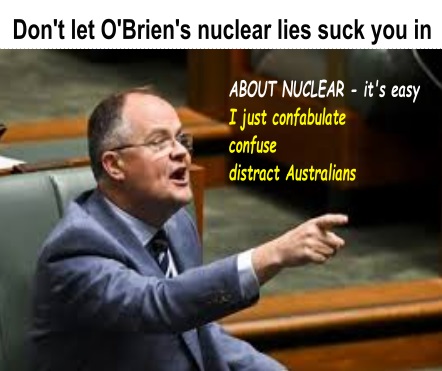
Comments about Ted O’Brien’s (Opposition energy spokesperson) disrespectful and dishonest questioning of witnesses during the hearings of the Inquiry into nuclear power generation in Australia. Maybe these comments could even be useful to future witnesses, if they were forewarned.
At today’s hearing in Lithgow one of the witnesses started to call him out. This is the first time that I can remember anyone really challenging him. It would be helpful if he was called out more clearly, ideally in a way that strikes at the heart of his dishonesty. Make it hard for him to use these tactics.
He regularly asks questions along the following lines:
“Have you read such and such a report?” (99% of the time the witnesses have not.) He then quotes or paraphrases (or misrepresents) something out of the report and asks the witness to answer “Yes” or “No” to some loaded proposition. When the witness doesn’t give him the Yes/No answer he wants, he interrupts them and insists that they answer Yes or No. Loaded questions might be along the following lines:
Based on this report, would you agree that nuclear is a viable option?
Or
Do you think you know better than the [unquestionably authoritative] author of this report?
(These are not direct quotes, just the general gist. See below for a specific example.)
This approach is disrespectful, because it is unreasonable to expect witnesses to have read every official report that O’Brien chooses to use (or misuse) to back up his position. Of course, O’Brien knows they haven’t read the report.
It is also disrespectful, because it is generally used for the purpose of making a fool of the witness in order to destroy their credibility.
It is dishonest, because he quotes or paraphrases the reports selectively, out of context, and probably misrepresents the reports.
An example from today’s hearing in Lithgow (11/12/2024) illustrates the point. It can be heard from 1.24.55 on the following link:
These two witnesses stood up for themselves, but on many other occasions throughout these hearings, the witnesses have been left looking silly, even though the fault is with O’Brien’s dishonest approach. (Note that a similar approach is used by Coalition “Supplementary Member” of the Inquiry, Simon Kennedy.)
Ted O’Brien: “My question was going to go to your comments on the timing for the construction of those plants — Generation 3, Generation 3+. And my question is, Do you recognise the experience of the International Atomic Energy Agency with respect to advice on the timing of introducing nuclear energy to new nations? And also the experience and authority of ANSTO, the government’s nuclear technology advisers, when it comes to the construction of nuclear power plants?”
Geoffrey Miell (retired mechanical engineer): “I look at the actual construction times around the world….”
O’Brien then interrupted Miell’s very reasonable answer and demanded that he give a Yes/No answer to the question “Do you recognise…?”
When Miell offered a variation of his original response, O’Brien asked, “Does that mean you do not recognise their experience and expertise sir?”
After this, at 1.28.25, Sarah Elliot (nursing academic and member of NSW Nurses and Midwives Association) called O’Brien out:
“I will say that I have read transcripts Mr O’Brien where you have misled …[interrupted by bickering between Chair Repacholi and Deputy Chair O’Brien]… Mr O’Brien can I ask you to afford this panel the respect you gave to the last ones. We may not be in agreeance with your views, but can you please respect this panel that is before you right now … I’m disgusted with your behaviour as a representative of…”
The dishonesty of O’Brien’s line of questioning is exposed when you read the latest CSIRO GenCost draft report. That report makes the following comment about the IAEA’s timing estimates:
“Nuclear development lead time
“The development lead time includes the construction period plus all of the preconstruction activities such as planning, permitting and financing. Many stakeholders have agreed with the GenCost estimate of at least 15 years lead time for nuclear generation. Those stakeholders that are more optimistic cite two alternative sources, the International Atomic Energy Agency (IAEA) who have an estimate of 10 to 15 years and the recent completion of a nuclear project in the United Arab Emirates (UAE) had a 12 year lead time. Both estimates are in relation to building nuclear for the first time. This consultation draft provides additional analysis of nuclear lead times to examine this issue more closely. We examine recent construction times and their relationship with the level of democracy in that country.
So the IAEA’s estimate is a 2015 estimate. In the 9 years since then we’ve seen massive blowouts in construction times in the US, UK, France and Finland. Those projects were already in trouble in 2015, but since then they’ve blown out much more, while the VC Summer plant in South Carolina was abandoned part way through construction. But O’Brien still uses the 2015 IAEA estimate to put witnesses on the spot. As for ANSTO, their credibility was demolished by John Quiggen in the following article. https://www.crikey.com.au/2024/03/20/coalition-nuclear-power-ansto-csiro-small-modular-reactors/
Another example was when O’Brien used the first Frontier Economics report (the second can be expected any day) to say the total system cost of the electricity grid in 2050 will be five times what the ALP Government has claimed (AEMO’s ISP report). He also completely misrepresented Minister Bown’s response to that report. However, on this occasion, Tennant Reed (Australian Industry Group), who had actually read the Frontier Economics report, interrupted him (5.55.50). This caused a problem for O’Brien, because his brazen dishonesty was exposed by a real expert. Unfortunately, Reed was too polite. He didn’t call out O’Brien’s dishonesty. He just explained the source of the difference between AMEO’s ISP figure and the figure in Frontier Economics report. “The two numbers are different sorts of number, rather than greatly in disagreement with each other.”
See the following YouTube link from 5.53.50:
See the following YouTube link from 5.53.50:
Inquiry Into Nuclear Power Generation In Australia, Melbourne, 04/12/2024
The above two examples are examples of where O’Brien was actually challenged, but, unfortunately, not exposed for the charlatan that he is. I am hopeful that if witnesses are forewarned of his tactics, they might be in a better position to stand up to him, ideally to expose him, but definitely not to be intimidated by his dirty tactics.
Re: “South Australia’s Copper Strategy”, Submission To: The Department of Energy and Mining c/o DEM.engagement@sa.gov.au
“SA’s Copper Strategy lacks ‘social license’ and fails contemporary public interest expectations and environmental and legislative standards”
By: Mr David Noonan B.Sc., M.Env.St., Independent Environment Campaigner and Consultant, 12 Dec 2024
The SA Copper Strategy is potentially an important way forward for the SA Gov to instigate and require needed reform in the copper – uranium mining sector in our State.
As an individual I provide this public input and 8 x Public Interest Recommendations (p.11) toward required reform in the sector ‘as part of the development of the refreshed SA Copper Strategy’ due to be released in 2025.
The Department of Energy and Mining should provide a Public Forum on the Copper Strategy before finalisation, I request to attend and participate and offer to be a Member of a Panel Discussion. I raise part of my relevant Background at p.12.
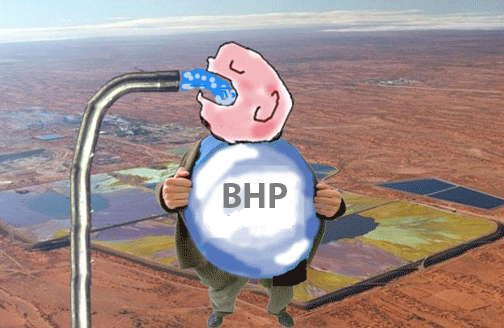
At this stage, the SA Copper Strategy lacks ‘social licence’ and the BHP run copper sector continues to fail contemporary public interest expectations and proper environmental and legislative standards.
Further, the core related Northern Water Project lacks needed ‘social license’ as the SA Gov has to date failed to set clear public commitments to ‘shared benefits’ in protection for the Mound Springs.
It is most important for SA’s Copper Strategy and Northern Water Project realise priority protection for the unique and fragile Mound Springs of the Great Artesian Basin (GAB) with a clear commitment to replace BHP extraction of GAB waters across both Wellfields A and B.
And it is axiomatic the SA Premier can-not credibly look to spend billions of dollars of public monies on water supply and not respect, save and protect the Mound Springs of GAB. – as gems of our State.
Social license, the Gov’s political credibility and public interest standing depend on this outcome.
Please feel free to contact on any aspect of these issues.
Yours sincerely
David Noonan B.Sc., M.Env.St., Independent Environment Campaigner and Consultant, Conservation SA Representative on the Northern Water Project ‘Stakeholder Reference Group’, Seaview Downs, South Australia
It’s hard to take the Coalition’s nuclear energy policy seriously, so we didn’t. And frankly, why would they put taxpayers on the hook for the biggest public funded project in history when renewables are crowding private investment en masse? https://www.youtube.com/watch?v=fSeaybp9oAA
The Coalition has released long-awaited detail on its nuclear energy policy, claiming its plan to build seven nuclear power stations would be A$263 billion cheaper than Labor’s renewables-only approach.
The figures are contained in an analysis prepared by Frontier Economics. I’ve conducted preliminary analysis of the document, and found key assumptions that differ from other similar analyses, including that from Australia’s premier science organisation, CSIRO.
What’s more, the analysis is lacking crucial information about how the figures were calculated. This prevents researchers and the public from understanding the full implications of the Coalition’s policy.
A successful transition to clean energy is vital if Australia is to tackle the climate crisis. It’s also central to addressing rising power bills and keeping the economy on track. There is more than one way to lower Australia’s emissions, but the Coalition has work to do before next year’s election to show voters it has a reliable plan.
The Coalition goes nuclear
The Coalition’s nuclear plan involves building seven nuclear reactors at the sites of former or current coal plants.
The Coalition says under its plan, Australia’s energy mix in 2050 would comprise 54% renewables, 38% nuclear and the rest a mix of storage and gas. In contrast, Labor’s plan would have Australia running almost entirely on renewable energy by mid-century.
The Coalition’s plan could increase emissions and allow polluting coal-fired power stations to continue running for longer than currently forecast.
The thorny question of cost
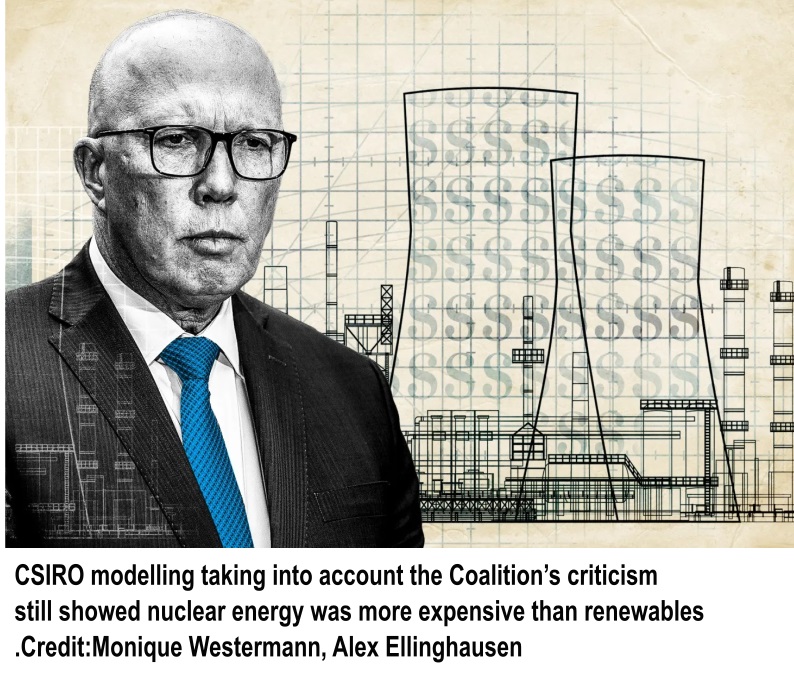
The cost of the Coalition’s proposal is a key point in the debate. According to CSIRO analysis, “nuclear power does not currently provide the most cost-competitive solution for low-emission electricity in Australia”. This position is at odds with the Coalition’s claims.
Earlier this week, CSIRO released its draft GenCost report. It estimates the cost of building new electricity generation, storage, and hydrogen production in Australia out to 2050.
The analysis involves calculating average costs over the plant’s life, which takes into account the costs of both building and running it. This calculation is formally known as the “levelised cost”.
The levelised cost helps investors understand how much the plant’s electricity must sell for, if they are to get a return on their investment.
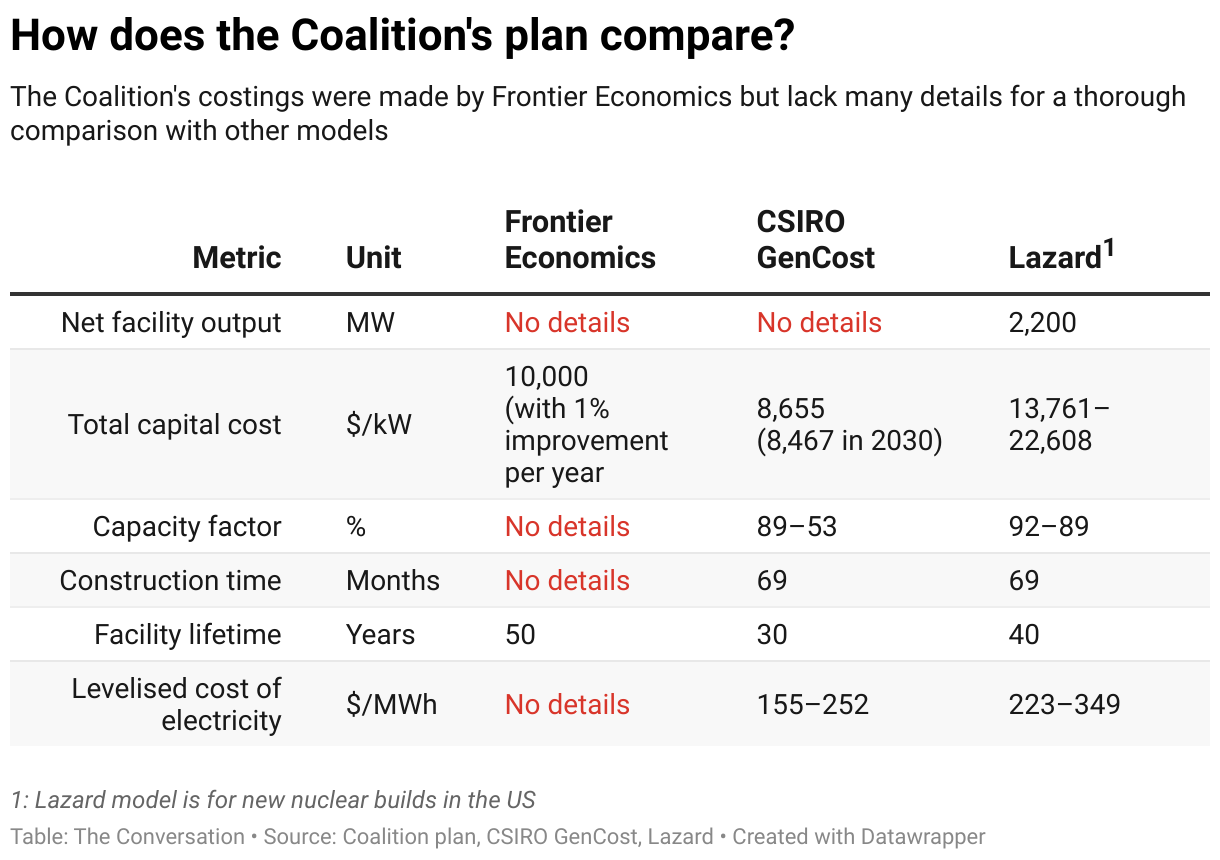
The Frontier Economics report does not contain a levelised-cost estimate or a “capacity factor”, which captures how often a plant is running at maximum power. This makes it difficult to probe the figures it provides. This oversight must be corrected to allow robust scrutiny of the Coalition’s costings.
How does the Coalition’s plan compare?
The Coalition’s costings were made by Frontier Economics but lack many details for a thorough comparison with other models
Metric
Unit
Frontier Economics
CSIRO GenCost
Lazard1
Net facility output
MW
No details
No details
2,200
Total capital cost
$/kW
10,000 (with 1% improvement per year
8,655 (8,467 in 2030)
13,761–22,608
Capacity factor
%
No details
89–53
92–89
Construction time
Months
No details
69
69
Facility lifetime
Years
50
30
40
Levelised cost of electricity
$/MWh
No details
155–252
223–349
1: Lazard model is for new nuclear builds in the US
The scenario presented by Frontier Economics also reportedly assumes the Coalition plan will not need notable additions of transmission infrastructure to transport electricity under its plan. This is because the proposed nuclear plants would be built at the sites of old coal-fired power stations, where transmission infrastructure already exists.
The Coalition has used this purported benefit when promoting its plan, and says the transmission infrastructure needed under Labor’s renewables policy would be prohibitively expensive.
However, as others have noted, the Coalition may need to build substantial new transmission infrastructure. This is because Australia’s electricity demand is forecast to surge in coming decades, and transmission infrastructure will have to be upgraded to cope.
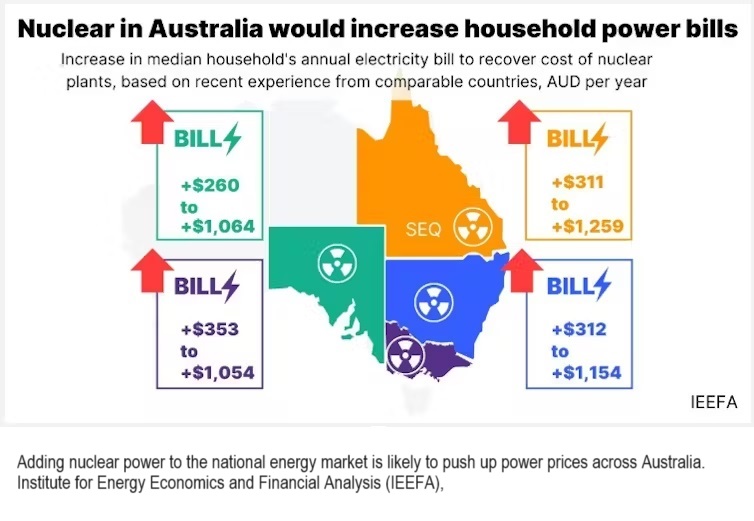
Analysis also suggests the Coalition’s plan will not reduce consumers’ power bills. The Institute for Energy Economics and Financial Analysis found household electricity bills could rise by $665 a year, on average, if nuclear energy were introduced in Australia. For a four-person household, the bill rise would be $972 a year.
The institute also noted the tendency for huge cost overruns among nuclear power plants built overseas.
A time-critical issue
CSIRO’s GenCost analysis assumes nuclear power plants operate for 30 years. Frontier Economics assumes capital construction costs are averaged out over 50 years, which could partly explain its lower cost estimate.
Meanwhile, the Coalition claims the plants would operate for 80-100 years.
Long lifetimes are possible for nuclear reactors. For example, in the United States, 20 reactors are expected operate for up to 80 years. But many reactors have retired long before this age.
The time required to build the seven nuclear plants is also fiercely debated. CSIRO says the quickest possible time frame for developing and building a nuclear reactor in Australia is 15 years.
In the Frontier report, the first nuclear reactors would come online from 2036 and production would ramp up between 2040 and 2050.
Australian voters will decide
The Coalition says adding nuclear power to the energy mix will make electricity cheaper, cleaner and more reliable. But it has not yet provided solid evidence to support these claims.
What’s more, we don’t yet know how the Coalition plans to overcome community opposition to nuclear power, how it plans to store nuclear waste, and how it will get around state government bans on nuclear energy. Having reliable water sources will also be important, as France discovered during drought.
Clearly, the debate has a long way to run before voters make their choice at the ballot box next year. Let’s hope by that time, we have the information we need.
It might seem weirdly appropriate that the federal Coalition should release its nuclear power policy costings on Friday the 13th, considered an unlucky day in western superstition. But that would be to downplay the sheer lunacy, rank dishonesty, and clear danger in Peter Dutton’s energy plans.
Shows like Edward Scissorhands are horror fantasies played out on a screen. But the Peter Dutton and Ted O’Brien nuclear plan is a horror show we may have to live and breathe. After so many years, the Coalition is still playing culture wars on the most fundamental issues of our time – and all at the behest of the fossil fuel industry.
It doesn’t matter at which level you look at it, this energy policy makes no sense at all. You could look at it backwards, from behind, sideways, leave it out in the sun for a few days, or even bury it in the garden (please do), the only thing that would change is that it might smell more than it does now.
It would likely take until Christmas to go through all the lies, deceptions and misunderstandings that comprise this policy and these costings, but let’s just focus on a couple of the important ones for now.
The reference to the sheer lunacy and the danger of the Coalition policy comes in Dutton’s desire to simply ignore climate science, along with basic engineering and economics.
Emissions reductions are put off to the never never. And, as Dutton revealed in his press conference through his comments on rooftop solar, he simply does not have a clue about the basic concepts of the energy system.
Dutton and Co simply want to bring a crashing halt to Australia’s only successful emission reductions efforts – the transition to green energy – and walk away from the country’s natural advantages in wind, solar and storage and the industries that are emerging from that.
They even have the chutzpah to claim that it will result in lower emissions. Which, inevitably, is pure bunkum. But, as Donald Trump has demonstrated, if you “flood the zone with shit”, something will stick – mostly to the front pages of mainstream media.
And that’s what we saw on Friday. A planned leak of the findings resulted in claimed headline “savings” – emblazoned across the front pages of the cheer-leading Murdoch media and the AFR this morning – that the nuclear power plan will save $264 billion.
It is of course, a complete nonsense, and obviously so to anyone who is paying attention, or even bothered to read the Coalition document. We are talking about completely different scenarios, and taking traditional accounting methods away from the international norm.
Dutton and his media followers have made a big deal of Frontier Economics costings of the Australian Energy Market Operator’s Integrated System which is the basis of Labor policy.
Frontier concedes, however, that the cost of AEMO’s “step change” plan is about what it says it is – $122 billion, based on the standard accounting practice of “net present value.”
But, at the urging of the Coalition, Frontier has published an additional number, around $600 billion, based on the “real cost” and throwing in some more transmission spending.
Dutton has used that number to insist that AEMO and Labor had lied to the Australian people. But it was the former Coalition government who instructed AEMO to cost it this way. And for good reason – it is standard international accounting practice. It is Dutton and O’Brien who are now spreading the lies.
Indeed, the Frontier Economics report actually reveals that the claimed $264 billion in savings parroted by the mainstream media are from two entirely different scenarios. One is from AEMO’s “Step Change”, the other from the Coalition’s version of “progressive change.”
The actual savings on a like for like basis are much smaller, if you can believe Frontier’s costings of nuclear.
Progressive change assumes that demand will not be as great as forecast by AEMO. It assumes much smaller electrification (thanks to the gas industry) and slower uptake of EVs (thanks to the oil industry). It then ignores the $75 billion a year of extra fuel costs that would result from that.
Now let’s go to the Coalition’s plan to shut down just one third of the main grid’s ageing coal fired generators by 2034 – with the rest trying to stay on line until nuclear power plants can be built.
The Coalition says it still thinks the first nuclear power plant can be built by the mid-2030s. The rest of the industry says this will be pretty much impossible until the mid 2040s.
Keeping the coal fired power stations open will not just increase pollution – both within the grid and the industries that depend on it – it will also puts grid reliability at risk.
This week, AEMO had to issue several lack of reserve alerts as another heatwave approached the eastern states. The main reason was that Origin, despite being promised up to $450 million to keep Australia’s biggest coal generator on line for another two years, reported another breakdown at Eraring.
At Bayswater, a unit is offline because of a tube leak. One third of the coal units in Victoria are also offline due to unplanned outages, and so is the country’s newest and “most efficient” coal generator at Kogan Creek, which is also the country’s largest single generation unit.
Dutton and O’Brien insist that these ageing and increasingly decrepit coal fired power plants will only have to operate “a few years longer”. But they are kidding themselves. Their own modelling confirms that.
They are still setting a timeline of 2035 for the first reactors. Will these be large scale of small commercial small modular reactor. No one has built one, or even got a licence to build one.
The Coalition insists that new nuclear can be built, from scratch, in a country with no nuclear infrastructure or know-how to speak of, no work force and no regulatory base ,in about a dozen years. There’s also a golden replica of the Sydney Harbour Bridge at the bottom of your packet of Cornflakes.
A dozen years is the average “delay” in the big nuclear power plants being built in western democracies – the UK, France, and Finland – all of whom have been operating nuclear power plants for decades.
Dutton and O’Brien are now telling us their nuclear plan will result in 14 gigawatt of nuclear capacity – double what they previously said. And Frontier’s modelling shows that coal is going to have to last a lot longer, beyond the official lifetime limits of the coal generators.
Even the Australian Energy Council, one of the most conservative of lobby groups that represents the coal generator owners, believes this is a bad idea and “could result in reliability issues.”
But let’s go back to the conventional way of measuring costs – net present value. The Frontier report includes it, at the very last page of its report. It shows that the difference in costs, on their calculations, is actually $62 billion over 25 years for the step change scenario.
But even that is on the basis of some heroic assumptions on the costs of nuclear. Frontier puts the total cost, including 14 GW of new nuclear power plants, at $142 billion (see table above).
Let’s look at the cost of Hinkley C, the first nuclear power station to be built in the UK for decades. At just 3.2 GW, its cost has already blown out to $A92 billion and is running at least 14 years late from its promised timeline. What does the Coalition know that the rest of the nuclear world does not know?
The Coalition’s vision for renewables also beggars belief. Under its modelling, it estimates the share of wind, solar and hydro will be less than 50 per cent in 2050. That’s in the “progressive” plan that appears to be their chosen one.
If you take the current level of renewables, the already committed large scale projects, and the continued roll out of rooftop and behind the metre solar, the Coalition is essentially telling everyone that the construction of new large scale wind and solar more or less comes to an end with their election next year.
The stupidity of the idea is frightening. Quite how the Coalition figures it could keep the lights on in the 2030s and 2040s is beyond belief.
The Coalition are also trying to convince people that somehow their plan does not need new transmission, or much back-up.
All generation needs back-up, and all generation needs transmission. A 1.4 GW nuclear power plant will be nearly twice the size of the current biggest unit in Australia’s main grid, the currently broken Kogan Creek coal fired generator.
That means it needs twice as much back-up, because if it trips suddenly – which it inevitably will, just look at the patchy performance of the new nuclear power plant in Finland – then the market operator needs to be able to fill in the gaps at a moment’s notice. That’s expensive.
And then, of course, is what to do with your rooftop solar. If the Coalition wants its fleet of nuclear power plants to run “always on” then there may be no room on the grid for your rooftop solar.
Your best bet might be to buy a battery, or better still an electric vehicle. You don’t have to leave the grid, but you will want to make sure that you can have power without it. And you sure don’t have to believe Dutton’s nonsense about solar not being able to charge EVs and batteries at the same time.
But the safest and cheaper option might be to ensure these idiots don’t get elected.
Solutions for Climate Australia today called out figures provided by Peter Dutton on the future cost of power from nuclear reactors as expensive and a failure to tackle climate pollution.
“While we are waiting decades for Mr Dutton’s nuclear reactors, the Coalition proposes to pour money into propping up expensive, ageing coal power stations that are already failing, and massively increasing climate pollution.
“CSIRO’s optimistic estimates of the costs of nuclear reactors last week show them as twice as expensive as the renewable energy pathway. Somehow Mr Dutton claims using the most expensive source of electricity will bring down consumer costs.
“Even more bizarrely, the federal Coalition’s plan relies on Australians using 45% less electricity than the independent electricity operator forecasts.
“What matters to consumers in the cost of living crisis we have here and now is the cost of electricity, and yet Mr Dutton is proposing a fantasy to build hugely expensive nuclear reactors on the taxpayer’s dime, decades from now.”
“Yesterday the Liberal Tasmanian Government made a joint announcement with the Labor Federal Government for an offshore wind zone that will produce 20 GW of electricity.”
“It’s time the federal Coalition gets serious about deploying the sun and wind power we have right here and now to bring down power prices and keep the lights on.”
There’s something dramatically splendid about King Louis XV of France’s famous statement in 1757 – “After me, the deluge”, interpreted to mean that he knew his reign would leave France in a terrible mess, but meanwhile, let’s enjoy the wealth and fun.
Well, I’m not sure that the predicted election win in Australia for the Liberal-National Coalition will result in wealth and fun, but I think that its aftermath will be a mess.
But, in the meantime, as Peter Dutton has now delivered the Coalition’s statement on the costs of its nuclear power plan, Australia can expect a deluge of another kind – the pro-nuclear propaganda. Australia has had a preview of how this will work, in 2023, with the highly successful campaign to defeat the referendum on an Indigenous Voice to Parliament.
One must give due credit to an American influence – the Atlas Network – for perfecting the spin system. To very briefly outline the work of the Atlas Network: it is a global infrastructure of 500+ ‘Think-Tanks’ including the Centre for Independent Studies, the Institute of Public Affairs and LibertyWorks. Posing as impartial advisers, these “Think Tanks” provide reports and articles designed to direct governments and educational and other social organisations towards policies that improve the profits of big corporations, and remove barriers to their profits. The barriers would be regulations, especially those involved with protecting the environment, and the rights of Indigenous people.
Apart from some funding, and training support, the real focus of the Atlas Network is on LANGUAGE – teaching the stink tanks how to use words to manipulate thinking. George Orwell alerted the world to the way in which fascism uses language, and wrote of “Newspeak”. Now the Atlas Network perfects the method – repetitively using vague and deceptive words to convey a lying message that is aimed at molding public opinion.
Sometimes these words are straight out lies: sometimes just vague words in which the meaning is distorted. The word “elite” is a good example – now used to discredit scientists and other experts so that the public comes to distrust them, and to rubbish their opinions, and their reports, particularly about regulations to protect the environment and Indigenous rights.
FEAR is indeed the currency of the Atlas Network. Fear and distrust of regulations, of officers and organisations involved in human rights and environmental protection. So these stink tanks work to weaken laws, and discredit agencies of human support – such as the United Nations.
Side by side with those messages of fear, come the lying messages of reassurance – for example the story that global heating is not happening, or, if it is, it has nothing to do with human activities such as greenhouse gas emissions. So we don’t need to worry or to do anything to stop these emissions. So we are reassured that nuclear power is “clean “green” “safe” “cheap” “nothing to do with weapons”.
Jeremy Walker explained the process by which the Atlas Network architecture of influence operated in the lead-up to the Voice referendum in 2023.
But we mustn’t let the Americans take all the glory for destroying the Indigenous Voice to Parliament. We have our own Australian spin network – called “Advance”, (sometimes “Advance Australia”). Advance has been around for some years. Financially and ideologically backed by a group of prominent business leaders, Advance’s membership and funding is obscure. Like Atlas, it teaches the think tanks, and some universities, how to word misinformation campaigns about climate change, indigenous rights, and nuclear power. It also spreads these messages via the conventional, and the social media, especially Facebook. Advance is at present working strenuously to discredit and destroy The Greens, the only political party genuinely opposing the nuclear industry.
So – how to deal with the deluge?
Australia has some fine journalists in the mainstream and the alternative media. They are already pointing out the flaws in the Coalition’s argument for nuclear power. Cost seems to be the main one: it is noted that Dutton’s costing is refuted by the CSIRO and the Institute for Energy Economics and Financial Analysis. Other big factors are delay, the increased greenhouse emissions, the opposition of some rural communities.
So Australia’s reputable commentators are doing a good job, in shining light on what is now the Coalition’s big election policy – nuclear power for Australia.
The anti-nuclear movement has a history of respectfully answering peo-nuclear proponents, sometimes in the same detailed jargonistic language that nuclear physicists and engineers prefer to use. At the political and academic level, they have done so well, providing effective information and detail. However, apart from Helen Caldicott, no-one has been game to spit it out forcefully to the great unwashed. The result is that – being ‘dazzled with science’, we ordinary mortals are inclined to just give up, and “leave it to the experts”.
Australia, the only continent with one national government, is blessed with world-leading renewable energy resources, and is already well on the way to genuinely clean energy, especially in rooftop solar. Australia now has the opportunity to lead the world in this. Our nuclear-free movement can promote the consciousness of a positive clean energy future for Australia, by using clear, forceful, jargon-free messages.
My worry is that there will now be a well-funded barrage of simplistic pro-nuclear propaganda -that will reach people everywhere, of all levels, especially in the outer suburbs and the regions – where everybody is watching Facebook, YouTube etc, and where in the ‘mainstream’, Murdoch media dominates anyway.
Will the nuclear-free movement be able to counteract the Atlas/Advance language methods? Atlas/Advance are so very good at it – using brief, repetitive, misleading language.They have the “hooray” words – “justice”, “life”, “freedom” and those “positives” – “clean” “green” etc. They have the “negatives” – “Hitler, “taxes” – and words used negatively “elites” “bureaucrat”, “government official” and “public servant”. And as well, they use vague, really, almost meaningless words – that waffle, weaken, and obscure the argument- “may” “can” “could” “might”, “arguably”.
We don’t know when the federal election will take place. At the moment, Peter Dutton’s nuclear plan is receiving much media scepticism. But it’s very early days. Advance is already swinging into action – starting with the anti-Greens campaign. The deluge will follow in no time.
But – I’m hoping that sensible people across Australia will have learned from the debacle of the Voice referendum. There are some very sound and thoughtful people out in the regions – where Dutton says that nuclear reactors will be placed, and these people are already resisting in a clear and practical way.
Apr 15, 2026 01:00 AM in Canberra, Melbourne, Sydney
Join the International Physicians for the Prevention of Nuclear War (IPPNW) on Tuesday, April 14th for a timely webinar exploring the risks associated with nuclear power and challenging the myth that it offers a simple, safe, carbon-free solution to the climate crisis
21 April Webinar: No Nuclear Weapons in Australia
Start: 2026-04-21 18:00:00 UTC Canberra, Melbourne, Sydney (GMT+10:00)
End: 2026-04-21 19:30:00 UTC Canberra, Melbourne, Sydney (GMT+10:00)
Event Type: Virtual A virtual link will be communicated before the event.









 Antinuclear