Climate change and its impacts are not just the future: they are now
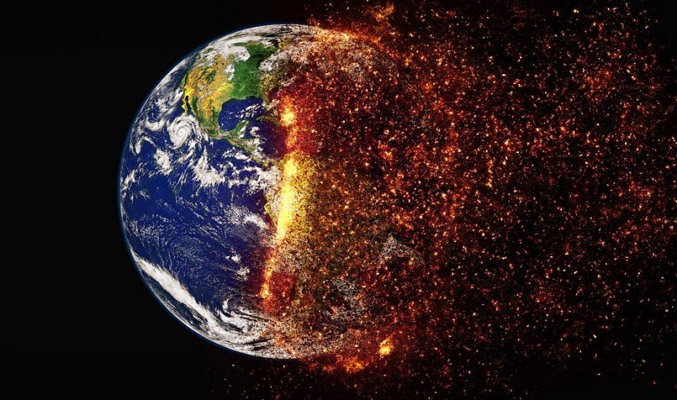
Everything Is Unprecedented. Welcome To Your Hotter Earth, NPR, REBECCA HERSHER, NATHAN ROTT, LAUREN SOMMER-30 Aug 20,
|
The upshot of climate change is that everyone alive is destined to experience unprecedented disasters. The most powerful hurricanes, the most intense wildfires, the most prolonged heat waves and the most frequent outbreaks of new diseases are all in our future. Records will be broken, again and again. But the predicted destruction is still shocking when it unfolds at the same time. This week, Americans are living through concurrent disasters. In California, more than 200,000 people were under evacuation orders because of wildfires, and millions are breathing smoky air. On the Gulf Coast, people weathered a tropical storm at the beginning of the week. Two days later, about half a million were ordered to evacuate ahead of Hurricane Laura. We’re six months into a global pandemic, and the Earth is on track to have one of its hottest years on record. Climate scientist Camilo Mora of the University of Hawaii says if our collective future were a movie, this week would be the trailer. “There is not a single ending that is good,” he says. “There’s not going to be a happy ending to this movie.” Mora was an author of a study examining all the effects of climate change. The researchers concluded that concurrent disasters will get more and more common as the Earth gets hotter. That means we will live through more weeks like this one — when fires, floods, heat waves and disease outbreaks layer on top of one another. “Keep in mind that all these things are related,” Mora explains. “CO2 is increasing the temperature. As a result, the temperature is accelerating the evaporation of water. The evaporation of water leads to drought that in turn leads to heat waves and wildfires. In places that are humid, that evaporation — the same evaporation — leads to massive precipitation that is then commonly followed by floods.” Disease outbreaks are also more likely. The most recent U.S. National Climate Assessment warns that changing weather patterns make it more likely that insect-borne illnesses will affect the U.S. Climate change is also causing people and animals to move and come in contact with one another in new and dangerous ways. If humans dramatically reduce greenhouse gas emissions immediately, scientists say it will help avoid the most catastrophic global warming scenarios. Worldwide emissions are still rising, and the United States is the planet’s second-largest emitter. Mora says helping people connect the dots between the current disasters and greenhouse gas emissions should be every scientist’s priority. “That’s the million-dollar question,” he says. “How do we speak to people in a way that we get them to appreciate the significance of these problems?” Hurricanes and climate change Climate change is making the air and water hotter, and that means more power for hurricanes. “Whenever you get ocean temperatures that are much above average, you’re asking for trouble,” meteorologist Jeff Masters explains. “And we’ve seen some of the warmest ocean temperatures on record for the Atlantic basin this year.” Hot water is like a battery charger for hurricanes. As a storm moves over hot water, like Hurricane Laura did this week, it captures moisture and energy very quickly. In recent years, scientists have seen evidence that global warming is already making storms more likely to grow large and powerful and more likely to intensify quickly. …….. Scientists have also found that hurricanes are dropping more rain, which means more flooding. Flooding is consistently the most deadly and damaging effect of a hurricane. Studies show many people underestimate the flood risks from hurricanes. Just a few inches of moving water can make it impossible to stay on your feet or control your car. Add all that to the current pandemic, and you get a dangerous situation, especially for people living in the path of the storm. As NPR has reported, safe options for people who evacuate this year could be limited because group shelters might accept fewer people in order to maintain social distancing. ………. “People are becoming more vulnerable as this COVID crisis goes on,” Morris says, as more people get laid off or run out of savings. “We have frankly been failing to serve the most vulnerable, and the people who have been made vulnerable by these cascading catastrophes.” Wildfires and Climate Change The fingerprints of climate change are all over the Western wildfires, too. ………. Fires are burning more frequently and intensely in places where they’ve always occurred, and they’re creeping into places where they were previously rare. …………….. How bad it eventually gets depends on how quickly the world can reduce carbon emissions. But the past weeks should make clear: “Climate change and its impacts are not the future,” says Crystal Kolden, a fire scientist at the University of California, Merced. “They are now.” https://www.npr.org/2020/08/28/905622947/everything-is-unprecedented-welcome-to-your-hotter-earth?utm_campaign=storyshare&utm_source=twitter.com&utm_medium=social |
|
Australian government seeks to regurgitate Tony Abbott’s anti environment laws
 ‘Taking an eraser’ to Australia’s wildlife: ad blitz planned to fight environment law Coalition accused of ‘breach of faith’ as it seeks to introduce almost exact replica of failed Abbott government legislation, Guardian, Lisa Cox, Sat 29 Aug 2020 Conservation groups will launch an advertising campaign aimed at building support for stronger national environment laws in response to what they say is a “breach of faith” by the Morrison government. Groups including Birdlife Australia, WWF and the Australian Conservation Foundation will begin a “Before it’s gone” campaign on Sunday with radio, print, TV and billboard advertisements featuring high-profile species including the koala and greater glider. It follows the Morrison government this week introducing legislation to hand greater powers to the states that included no measures to ensure maintained or strengthened protection for threatened species or ecosystems. Continue reading |
Big oil plans to flood Africa with plastic
Big Oil Is in Trouble. Its Plan: Flood Africa With Plastic. https://www.nytimes.com/2020/08/30/climate/oil-kenya-africa-plastics-trade.html
Faced with plunging profits and a climate crisis that threatens fossil fuels, the industry is demanding a trade deal that weakens Kenya’s rules on plastics and on imports of American trash. NYT, By Hiroko Tabuchi, Michael Corkery and Carlos Mureithi, Aug. 30, 2020
Confronting a climate crisis that threatens the fossil fuel industry, oil companies are racing to make more plastic. But they face two problems: Many markets are already awash with plastic, and few countries are willing to be dumping grounds for the world’s plastic waste……..
Last year, Kenya was one of many countries around the world that signed on to a global agreement to stop importing plastic waste — a pact strongly opposed by the chemical industry. Emails reviewed by The Times showed industry representatives, many of them former trade officials, working with U.S. negotiators last year to try to stall those rules.
The industry thinks it has found a solution to both problems in Africa.
According to documents reviewed by The New York Times, an industry group representing the world’s largest chemical makers and fossil fuel companies is lobbying to influence United States trade negotiations with Kenya, one of Africa’s biggest economies, to reverse its strict limits on plastics — including a tough plastic-bag ban. It is also pressing for Kenya to continue importing foreign plastic garbage, a practice it has pledged to limit.
Plastics makers are looking well beyond Kenya’s borders. “We anticipate that Kenya could serve in the future as a hub for supplying U.S.-made chemicals and plastics to other markets in Africa through this trade agreement,” Ed Brzytwa, the director of international trade for the American Chemistry Council, wrote in an April 28 letter to the Office of the United States Trade Representative.
The United States and Kenya are in the midst of trade negotiations and the Kenyan president, Uhuru Kenyatta, has made clear he is eager to strike a deal. But the behind-the-scenes lobbying by the petroleum companies has spread concern among environmental groups in Kenya and beyond that have been working to reduce both plastic use and waste. Continue reading
Minigrids – the clean energy revolution across Africa and Asia
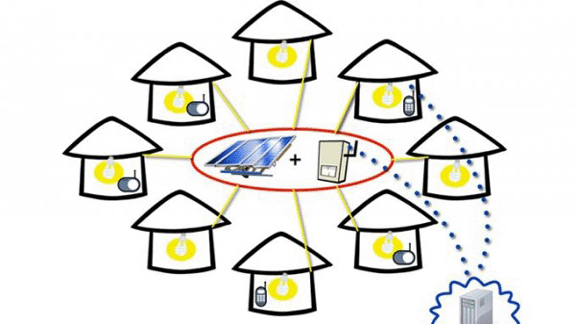 The little-known clean energy revolution https://energy.economictimes.indiatimes.com/news/renewable/the-little-known-clean-energy-revolution/77742430
There are about 5,500 mini-grids in operation across 12 countries in Africa and Asia, according to The State of the Global Mini-grids Market Report 2020 published by the international non-governmental organization Sustainable Energy for All and BloombergNEF, Bloomberg, August 26, 2020,
Over the last decade, the number of people in the world without access to electricity has fallen drastically — from 1.4 billion in 2010 to about 900 million in 2018, according to the United Nations. And yet, if current trends persist, the world won’t be able to meet the UN’s sustainable development goal of universal access to electricity by 2030, with as many as 600 million still lacking basic 21st century services.
It doesn’t have to be so. A new technology has matured and become affordable that could help achieve the laudable goal, and it’s called mini-grids.
There are about 5,500 mini-grids in operation across 12 countries in Africa and Asia, according to The State of the Global Mini-grids Market Report 2020, published by the international non-governmental organization Sustainable Energy for All and BloombergNEF earlier this year. The report’s authors found that mini-grids could meet the needs of half the people who still need access to electricity in those regions.
As the name suggests, mini-grids are small, isolated versions of larger power grids. They increasingly use solar power as an energy source, with support from batteries or diesel generators. Because the cost of solar power has fallen drastically , mini-grids have become much cheaper than installing long-distance transmission lines from a central electricity grid.
Universal power access will require $128 billion of spending, the report found, but the world is on track to spend only about $63 billion on mini-grids over the next decade. Plugging the gap would cost less than $600 per target household reached.
The need goes beyond money. “Today the mini-grid market is nascent, despite being the least-cost option for electricity access in many areas,” the report concludes. The international Mini-Grids Partnership, which includes the World Bank and other development agencies from rich countries, has approved $2 billion in awards since 2012 but only disbursed 13% of the money, with many projects stuck because of policy uncertainties.
In 2017, the country passed a law to help mini-grid development, which streamlines the online application process, offers $350 in government subsidies per user once grids with more than 30 users are up and running, and provides for compensation if the main power grid eventually arrives in an area served by a mini-grid. Developers in Nigeria now have simpler processes and clearer guidelines to follow.
The upshot is that mini-grids have become a much more attractive investment. “Now you see a lot of companies flocking to Nigeria,” says Ruchi Soni, program manager at Sustainable Energy for All. “We hear from partners that they would like to replicate Nigeria’s success in their country.”
This offshoot of the clean energy revolution has three benefits: mini-grids can help provide access to electricity to those who lack it and do so in a cleaner and cheaper way. Few things in life are win-win-win.
Welcome to the ‘Pyrocene,’ an Epoch of Runaway Fire
Fire scholar Stephen J. Pyne proposes a pyrocentric view of the last 10,000 years — and warns that California’s wildfires herald a very combustible future. Bloomberg City Lab By Laura Bliss, August 27, 2020 It isn’t just California that’s burning. This summer, smoke from massive wildfires in Siberia choked skies as far as Alaska and set new pollution records, in a second consecutive year of unprecedented blazes in the Arctic Circle. Rising temperatures, a loss of precipitation, and parched vegetation are hallmarks of climate change, scientists say, as are the increasingly extreme wildfires that result, from the arid Western U.S. to some of coldest places on Earth. Continue reading
Renewables and Covid-19 combine to cut Australia’s greenhouse emissions — RenewEconomy

Covid-19 travel restrictions and continued renewables growth contribute to fall in Australia’s emissions, but benefits set to be short lived. The post Renewables and Covid-19 combine to cut Australia’s greenhouse emissions appeared first on RenewEconomy.
Renewables and Covid-19 combine to cut Australia’s greenhouse emissions — RenewEconomy
Solar tariffs reshaped to favour batteries, EVs, and west-facing panels — RenewEconomy

Western Australia to manage booming rooftop solar market by refining grid export payments to batteries and electric vehicles, and paying more at peak times. The post Solar tariffs reshaped to favour batteries, EVs, and west-facing panels appeared first on RenewEconomy.
Solar tariffs reshaped to favour batteries, EVs, and west-facing panels — RenewEconomy
August 30 Energy News — geoharvey

Opinion: ¶ “Power To The People: Why Clean Energy Must Give More Australians A Slice Of The Pie” • Renewable energy is cheap partly because it requires little human intervention, which means lower electricity prices. It means more money can be given back to the community in other ways. But its jobs rely mostly on […]
August 30 Energy News — geoharvey
August 29 Energy News — geoharvey

Opinion: ¶ “Hurricanes, Fires, Floods And Locusts: Science Says Climate Change Is Here But The RNC Refuses To Believe” • The US military warned about climate change in 1990, predicting death, desperation, and tension in distant lands. Now the Hurricanes, fires, and floods are here in the US. But watching the Republican National Convention, you’d […]
August 29 Energy News — geoharvey
Kazzi Jai reports on the latest Senate hearing on Nuclear Waste Amendment Bill
 Kazzi Jai Fight To Stop Nuclear Waste In The Flinders Ranges, 28 Aug 20, I will try and keep this summation as brief as possible regarding the Senate Hearing with DIIS this morning.
Peter Remta comments on the answers given to the Senate Committee Inquiry into the Nuclear Waste Bill
 Is there a solution?
Yes
1 Simply ignore the dubious results of the ballot last year and hold a fresh ballot with a wider voting base and full explanations of both sides of the issue to be voted on so that it becomes a much stronger and properly informed decision
by the voting community……
3.. The immediate withdrawal or suspension of the parliamentary consideration of the proposed legislation the subject of the committee’s inquiry.
*****************************************************************
These are draconian legislative changes intended to reduce the risks of hindering or stopping the facility’s establishment by the government which should probably be achieved by those changes but this is not the way that
Australia’s democratic and judicial process should be used.
What is being proposed by the bill is really little different to the autocratic and severely harsh prescriptions of notorious dictators which effectively removed he rule of law as we understand that concept.
To make the situation even more ludicrous is that it is being left to a small community with a dubiously interpreted voting majority and insufficient knowledge and advice to effectively determine one of the most important issues to confront this country.
The department now claims that 39 of the 45 positions will be at Kimba who will all apparently be permanent residents as there will not be any fly-in/fly-out positions
It is quite meaningless for the department to conclude that the proposed facility to centralise and modernise radioactive waste management in Australia according to international best practice as already at this stage there is a failure to comply with the international prescriptions for that purpose which may no doubt jeopardise the licensing of the facility.
resolution was put by councillor G J Baldock whose family are the owners of Napandee which is one of the two sites at Kimba accepted for nomination and this must surely be a serious breach of conflict and pecuniary interest by him which would have completely excluded him from any involvement in the relevant discussions and voting on the motion.
Peter Remta, 21 Aug 20, SENATE COMMITTEE INQUIRY – NATIONAL RADIOACTIVE WASTE MANAGEMENT AMENDMENT (SITE SPECIFICATION, COMMUNITY FUND AND OTHER MEASURES) BILL 2020
My comments primarily relate to the written answers by the Department of Industry Science Energy and Resources to the questions put on notice at the Senate committee hearing on 30 June 2020
7. Answer to Question by Senator Hanson-Young:
Question:
What does ANSTO understand is the proportion of your waste that would make up what is stored at the Kimba site?
Answer:
As per the Australian Radioactive Waste Management Framework dated April 2018, it is anticipated that the wastes resulting from ANSTO’s operations and nuclear medicine production will account for approximately 78 per
cent* of all wastes that would be managed at the National Radioactive Waste Management Facility (NRWMF).
*This figure is subject to revision as more information becomes available.. Continue reading
Liberal govt to transfer national environmental protection to the States – open slather for BHP’s uranium mine expansion
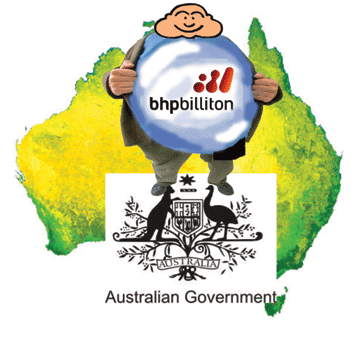
State control of EPBC Approvals is proposed through use of unenforceable “Bilateral Agreement” instruments, with little or no State law in place to even reflect the requirements of the Environmental Protection and Biodiversity Conservation Act.
ARPANSA Codes can reflect vested nuclear industry practices rather than best scientific evidentiary standards.
Australia already has a failing record in regulation of uranium mining, in environmental protection and mine rehabilitation issues. Transferring Approvals to States and use of ARPANSA Codes in graded assessments will further compromise environmental protection standards and practise.
Federal fast track of BHP’s Olympic Dam mine expansion already raises serious concern that credible assessment of key feasible public interest Alternatives to BHP’s mine proposal will be compromised:
If passed by the Senate, the transfer of EPBC Act Approval powers to the State of SA will fatally compromise the integrity of Approval Conditions to BHP’s Olympic Dam uranium mine expansion.
Liberal’s to transfer EPBC Act Approval of uranium mining to States & Territories, using ARPANSA Codes as a ‘National Standard’, fails the public interest test
Briefing by Independent Environment Campaigner David Noonan – 28 August 2020
The federal Liberal gov’s “Streamlining Environmental Approvals Bill” amends the Environment Protection and Biodiversity Conservation Act 1999 (EPBC Act) in a flawed and controversial response to the Samuel Review EPBC Act Interim Report. Any EPBC legislation must await the Final Report and not pre-empt development of credible “National Standards” for real environmental protection.
The national interest in EPBC Act protection of Matters of National Environmental Significance (NES) is at risk. Significant concern exists over proposed ‘devolution’ (transfer) of EPBC Act Approval powers to States and Territories. State Approvals of major resource, mining and development projects are mired in ‘conflict of interest’, corporate influence and vested – not public – interests.
This Briefing focuses on EPBC Act “Protection of the Environment from Nuclear Actions” Section 21 & 22 controlled actions in uranium mining and milling. In this case, the EPBC Act protected Matter of NES is “the environment” – requiring “whole of environment” scope of impact assessments.
The Samuel Review, Box 12 Nuclear activities (p.52) states: “To be able to ensure community confidence in these ‘nuclear’ activities, the Commonwealth should maintain the capacity to intervene. To achieve this, the key reform directions proposed by the Review are:
• The National Environmental Standards for MNES should include one for nuclear actions. To provide community confidence, the Standard should reflect the regulatory guidelines and protocols of all relevant national laws and requirements.”
However, the Samuel Review (p.110) specifies inadequate ARPANSA Codes as a ‘National Standard’ for nuclear action assessments; OR use of State frameworks judged compliant with these Codes.
In addition, “graded” (limited) assessments as set out in ARPANSA Codes are to replace the scope of “whole of environment” impact assessments for nuclear actions – including for uranium mining.
This Briefing presents an initial critique of the proposed transfer of EPBC Act Approval powers to the States and of the use of ARPANSA Codes as a National Standard for uranium mining nuclear actions. Continue reading
You can have four more years of Trump, or you can have a habitable planet. But you can’t have both.
 Climate Apocalypse Now, Maybe it’s just a failure of human imagination to understand what is coming, Rolling Stone, By JEFF GOODELL 28 Aug 20
And, of course, we are fucking it up. We are heating up the planet so fast that large parts of it will be uninhabitable by the end of the century. We are amping up storms like Hurricane Laura — it is the strongest storm to hit the Louisiana coast since 1856 — and turning the Gulf Coast into a shooting gallery — which city is going to get hit next? New Orleans? Houston? Tampa? Miami? They are all living on borrowed time. And it’s not just the hurricanes: As Greenland melts and Antarctica falls into the Southern Ocean, they will be swamped by rising seas, as will virtually every other low-lying city in the world. The rich will huddle behind sea walls; the poor will flee or drown.
We are mowing down rainforests, destroying the lungs of the planet, and pushing animals — and the viruses they carry — into new places, increasing the risks of spillover into humans. You think Covid-19, with a fatality rate of about one percent (depending on risk group), is bad? Wait until a Nipah virus, with a fatality rate of 50 percent or higher, morphs in a way that allows asymptomatic transmission. ………..
Maybe it’s a failure of human imagination to understand what is coming. Maybe it’s a failure of democracy and the media (including writers like myself). After all, at this vital turning point in the climate crisis, at a moment when most scientists agree is the last chance to save a stable climate, America elected a president who sees science as a church for losers, and who believes the climate crisis is a hoax perpetuated by the Chinese. ……
Maybe the real message that Mother Nature is sending with these storms and fires in the midst of the Republican National Convention is not to Trump, but to us. And it says this: You can have four more years of Trump, or you can have a habitable planet. But you can’t have both. https://www.rollingstone.com/politics/political-commentary/hurricane-laura-california-wildfire-climate-crisis-jeff-goodell-1050746/
South Australian MP Peter Treloar says “Kimba nuclear waste dump is a federal issue”, but he’s fine with it anyway
Kimba nuclear waste site OK with Member for Flinders ahead of proposed new electoral boundaries, ABC, ABC Eyre Peninsula, By Evelyn Leckie and Gary-Jon Lysaght 28 Aug 20
With proposed electoral boundaries changing for the Eyre Peninsula, local MP Peter Treloar is poised to take on a community that remains divided on hosting the country’s nuclear waste.
Key points:
- Proposed electoral boundaries may lead to Kimba falling within the state seat of Flinders
- Peter Treloar is poised to take on Kimba’s nuclear waste storage issues
- The Kimba community remains divided on the region’s nuclear waste site
The Member for Flinders, whose electorate is slated to include Kimba after the redistribution, said although the nuclear waste dump was ultimately a federal issue, he had no problem with its proposed location.
“The Kimba community have decided themselves that they’re prepared to be accepting of that, so this process is playing out in the federal jurisdiction,” Mr Treloar said………
Earlier this year a cross-party parliamentary committee found “significant risk” that local Indigenous groups were not consulted about the nuclear dump to a standard required under international law. ……
https://www.abc.net.au/news/2020-08-27/flinders-member-weighs-in-on-nuclear-waste-in-kimba/12603022
A second Trump term would mean severe and irreversible changes in the climate
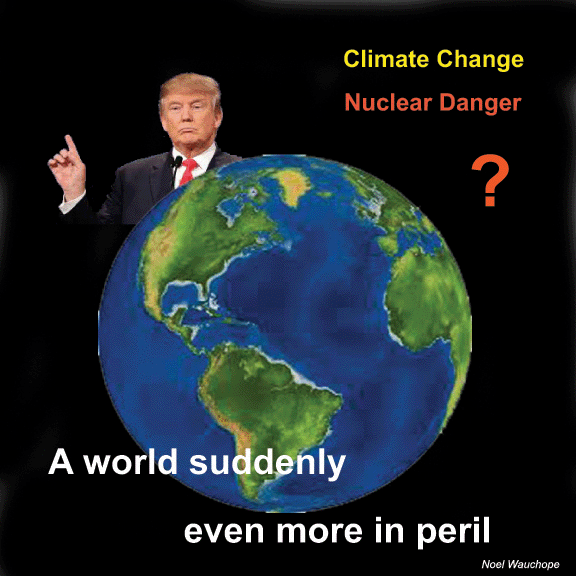 A second Trump term would mean severe and irreversible changes in the climate No joke: It would be disastrous on the scale of millennia. VOX, By David Roberts@drvoxdavid@vox.com Aug 27, 2020, I f Donald Trump is reelected president, the likely result will be irreversible changes to the climate that will degrade the quality of life of every subsequent generation of human beings, with millions of lives harmed or foreshortened. That’s in addition to the hundreds of thousands of lives at present that will be hurt or prematurely end.
This sounds like exaggeration, some of the “alarmism” green types are always accused of. But it is not particularly controversial among those who have followed Trump’s record on energy and climate change……..
………..a Trump victory would make any reasonable definition of “success” on climate change impossible….
More Trump will ensure the continued escalation of global temperatures
We know from the latest IPCC report that the climate target agreed to by nations — no more than a 2° Celsius rise in global average temperatures — is not a “safe” threshold at all. Going from 1.5° to 2° means many more heat waves, wildfires, crop failures, migrations, and premature deaths. We know that every fraction of a degree beyond 2° means more still, along with the increasing risk of tipping points that make further warming unstoppable. Continue reading
1 This month
.
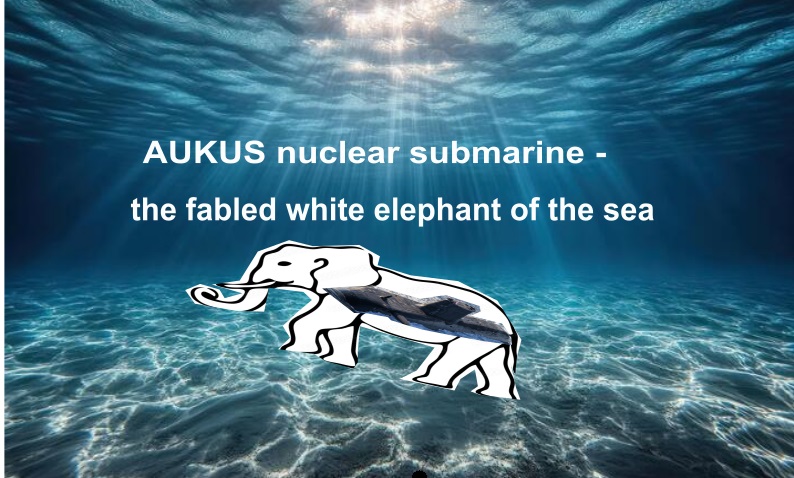
Australians deserve the truth
about
AUKUS – https://aukuspublicinquiry.com/

PETITION – To: Prime Minister Anthony Albanese and the Australian Labor Government

of the week – Australians for War Powers Reform (AWPR)
To see nuclear-related stories in greater depth and intensity

