ABC sacking of journalist Emma Alberici – part of years of ABC management kowtowing to the Australian government
|
ABC has for too long been unwilling to push back against interference – at its journalists’ expense, The Conversation Denis Muller
Senior Research Fellow, Centre for Advancing Journalism, University of Melbourne August 27, 2020 For those who watch the affairs of the ABC through the eyes of a critical friend, the removal of Emma Alberici, made public on August 21, is deeply disturbing.It is the climax to a destructive series of events that began more than two years ago and once again draws attention to two serious weaknesses in the ABC’s management arrangements. One is structural: the editor-in-chief is fatally compromised in that role by also being managing director. The managing director has corporate responsibilities that conflict with his or her editorial responsibilities every time the government tightens the financial screws………… after six years of cumulative budget cuts by the Abbott-Turnbull-Morrison administrations, the total effective reduction in ABC funding will amount to A$105.9 million per year by 2022. And as for defenders in cabinet, the present communications minister, Paul Fletcher, is as mute as a swan. Clearly all this has sapped morale. In September 2018, a dossier compiled by Michelle Guthrie was leaked, revealing an email in which Justin Milne, as chair of the ABC, told her to get rid of Alberici, declaring the government “hate her”. Over the preceding months, the government had repeatedly criticised stories Alberici had done in her role as chief economics correspondent. Guthrie’s dossier came to light in The Age and Sydney Morning Herald at a time when the ABC had decided to sack her. In the ensuing “firestorm” – Milne’s word – he was consumed as well. Read more: ABC inquiry finds board knew of trouble between Milne and Guthrie, but did nothing Milne had been concerned also with the work of political editor Andrew Probyn. He wanted Guthrie to “shoot” Probyn because the government hated him too and his continued presence was putting at risk half-a-billion dollars in funding for the ABC. Assuming Milne and Guthrie were telling the truth, there could not be a clearer instance of how the government was using funding to undermine the ABC’s editorial independence. The effects of this sustained intimidation are felt a long way down the ABC’s editorial food chain…….. There has been no sign the ABC’s journalists have been getting that kind of protection, least of all from the board. Instead, they are at the mercy of a vindictive government, urged on by its mates in News Corporation, which has a vested interest in weakening the ABC and shamelessly campaigns for exactly that. |
Gas is not a transition fuel to a safe climate. That ship has sailed
Gas is not a transition fuel to a safe climate. That ship has sailed, https://www.theage.com.au/environment/climate-change/gas-is-not-a-transition-fuel-to-a-safe-climate-that-ship-has-sailed-20200826-p55pec.html, Penny Sackett, 27 Aug 20
Australia’s chief scientist from 2008 to 2011 If gas-fired electricity emissions can be lower than that from coal-fired plants, should Australia expand its fossil gas industry as a means of combating climate change? The answer is a clear no if we want to avoid the worst climate change outcomes.
Science has repeatedly demonstrated that the most important action to limit global warming to well below 2 degrees is to begin to reduce all fossil fuel consumption – coal, yes, but oil and gas too – in this decade.
The primary difficulty is the large mismatch between what is required to meet that stated climate goal of the Paris Agreement and what nations have actually pledged to do. Worse still, the current policies of many countries, Australia included, would increase their national production of fossil fuels, increasing emissions above their own weak pledges.
This so-called “production gap” is the subject of a recent multi-institutional, multi-national report led by the Swedish Environment Institute. Its analysis shows that governments are planning to produce about 50 per cent more fossil fuels by 2030 than would be consistent with a 2-degree pathway and 120 per cent more than would be consistent with a 1.5-degree pathway. This means that plans for fossil fuel development or extension that are already on the table must be shelved to hold warming to the Paris target range.
Consistent with other research, the report demonstrates that to have a 66 per cent chance of holding warming to well below 2 degrees, coal, oil and gas production must all decline significantly in the next decade. That is why increasing gas development to displace coal is no longer a viable approach to maintaining a reasonably safe climate.
Over the past 30 years, coal-to-gas “fuel-switching” has played a role in reducing emissions in the United States and Britain. However, the latest information from the US Energy Information Administration shows that the US energy grid has decreased its emissions from a shift to non-fossil fuel sources by almost as much as a shift to gas. Despite the shale boom, non-carbon energy sources have now overtaken any other single source of fossil fuel in supplying energy to the US grid.
In Britain, renewables played a large role in reducing emissions in the electricity grid. Between 2006 and 2016, the renewables share of electricity production rose from 2 per cent to 25 per cent, even excluding large hydro. While the 1990’s “dash for gas” was responsible for the largest cumulative amount of avoided greenhouse emissions in Britain since 1990, the situation is different now. In 2017, the transition to renewable energy was the largest driver in its electricity sector’s emission reductions. In second place was lower electricity demand (think what we could do with energy efficiency in Australia), while coal-to-gas switching came in third.
The world we live in has already changed dramatically with global average temperatures now 1.1 degrees above pre-industrial levels. Cyclones and storm surges are more intense. Droughts are more damaging. Fire seasons are longer and bushfires more fierce. Billions of animals died in last year’s Australian bushfires alone. Entire species are becoming extinct at rates far above normal. The point of no return may have already passed for Arctic sea ice – in 15 years, globes in schoolrooms may show white ice at only one pole.
At 2 degrees of warming, heatwaves would be even more severe and more deadly to humans, animals and agriculture. Sydney and Melbourne would need to brace for 50-degree days. The fire weather that produced Australia’s Black Summer would become at least four times more likely, the amount of water available to feed dams and rivers in NSW would be reduced by 30 per cent from what was typical mid last century, and coral reefs around the world would almost certainly be eliminated.
We have all the tools to avoid that future of 2 degrees of warming. What has been lacking is coherent, science-based action that does not add yet more fuel to the climate fire. Today, when the enormous human, economic and ecological costs of even 1.1 degrees of warming are so clear, when prices of renewable energy have plummeted, and several non-fossil energy storage options are available, gas is not a transition fuel to a safe climate. That ship has sailed.
Planned and rapid coal-to-renewables switching is now the responsible path. Gas will have a role in the near term, certainly, but the science is clear. The role of gas needs to be a significantly declining one, not a growing one, if we are to avoid the worst of climate change so that Australia’s future is safe, sustainable and competitively modern.
Penny Sackett was Australia’s chief scientist between 2008 and 2011. She is an honorary professor at the Climate Change Institute, Australian National University.
Where does gas fit in our low carbon future? In an ever shrinking corner — RenewEconomy

We won’t completely shift from gas soon, but the amount of gas we need will decline. And the smarter, more innovative and more productive we are, the faster demand for gas will decline. The post Where does gas fit in our low carbon future? In an ever shrinking corner appeared first on RenewEconomy.
Where does gas fit in our low carbon future? In an ever shrinking corner — RenewEconomy
Grid Reliability Fund finally makes it to parliament, to push CEFC into gas — RenewEconomy

Angus Taylor finally tables amendments needed to establish $1B Grid Reliability Fund – in deal that will allow CEFC to invest in gas generation. The post Grid Reliability Fund finally makes it to parliament, to push CEFC into gas appeared first on RenewEconomy.
Grid Reliability Fund finally makes it to parliament, to push CEFC into gas — RenewEconomy
New wind and solar improving grid reliability and lowering costs, AEMO says — RenewEconomy

AEMO says all states expected to be within new reliability standard this summer thanks to new wind and solar capacity, but catastrophic events still a risk. The post New wind and solar improving grid reliability and lowering costs, AEMO says appeared first on RenewEconomy.
New wind and solar improving grid reliability and lowering costs, AEMO says — RenewEconomy
August 26 Energy News — geoharvey

Opinion: ¶ “Electric Trucks Are Coming. Where Should They Go?” • Electric trucks made national headlines earlier this month when a study from Woods Mackenzie projected that 54,000 electric trucks would be on US roads by 2025 – approximately 27 times current stock. We know that electric trucks are coming. But where should they go? […]
August 26 Energy News — geoharvey
Aldi Australia says it will be 100 per cent renewable by end of 2021 — RenewEconomy

Aldi pledges to source 100% renewable electricity for its Australian operations by as early as 2021, after rolling out almost 32MW of solar and signing two wind offtake deals. The post Aldi Australia says it will be 100 per cent renewable by end of 2021 appeared first on RenewEconomy.
Aldi Australia says it will be 100 per cent renewable by end of 2021 — RenewEconomy
CEC warns against solar industry review becoming Abbott-style witch hunt — RenewEconomy

CEC warns against repeat of a Tony Abbott-style renewable energy witch hunt as federal Coalition announces a review of Australia’s rooftop solar industry. The post CEC warns against solar industry review becoming Abbott-style witch hunt appeared first on RenewEconomy.
CEC warns against solar industry review becoming Abbott-style witch hunt — RenewEconomy
Disarray in New South Wales Right-wing parties, over One Nation’s Bill to overturn ban on uranium mining
 Environmental groups have been critical of the government’s consideration of Mr Latham’s bill, with the Nature Conservation Council warning uranium mining would threaten water supply.
Berejiklian government to pursue its own uranium push, By Alexandra Smith, August 24, 2020
The Berejiklian government will pursue its own push to allow uranium mining in NSW, after cabinet ministers backed away from supporting One Nation’s nuclear power bill in the upper house.
The bill, introduced by Mark Latham, would lift the 33-year ban on uranium mining and nuclear power, but on Monday night cabinet agreed that it would consider its own bill.
In March, Deputy Premier John Barilaro stunned colleagues when he said his party would support Mr Latham’s bill, despite not taking the issue to the Nationals’ party room.
Mr Barilaro, a long-time supporter of nuclear power, said the government should “lift the ban on nuclear energy” and confirmed his party would support it.
But the move angered several senior ministers, with one saying: “I did not get into Parliament to support a One Nation bill”, while another said: “Crossbenchers don’t set the government’s agenda”.
A shift in policy around uranium mining in NSW has still not been considered by the Coalition joint party rooms, which will not meet this week because only the upper house is sitting.
Mr Barilaro has now been tasked with commissioning more research around uranium mining and will report back to cabinet before any policy decisions are made.
A senior minister said Transport Minister Andrew Constance told cabinet that he could not support the One Nation bill because it could significantly impact electorates, including Bega.
Another minister told cabinet that there needed to be strategic and economic merit and community consultation around uranium mining.
Asked about the bill before it was presented to cabinet on Monday, NSW Energy Minister Matt Kean said uranium was not a viable resource.
“Right now the uranium price is about $30 per pound, that is well below the price needed to extract this from the ground. I think this is more about headlines than actually going to see anything result from digging it out of the ground,” Mr Kean said.
A senior minister, who spoke on the condition of anonymity because the issue was before cabinet, said “uranium mining will never happen so it’s just about letting Barra [Barilaro] have a win.”
“Sometimes the fights with Barra are just not worth it,” the minister said.
Mr Latham could bring the bill on for a vote this week, after the Legislative Council was recalled for another week of sitting days. The bill has been sitting on the business paper for more than a year.
The upper house is also expected to focus this week on troubled public insurer icare.
Environmental groups have been critical of the government’s consideration of Mr Latham’s bill, with the Nature Conservation Council warning uranium mining would threaten water supply.
The council’s chief executive Chris Gambian said the “sweetheart deal with One Nation yet again places multinationals ahead of the people of regional and rural NSW”.
A parliamentary inquiry report recommended the government support the nuclear power bill.
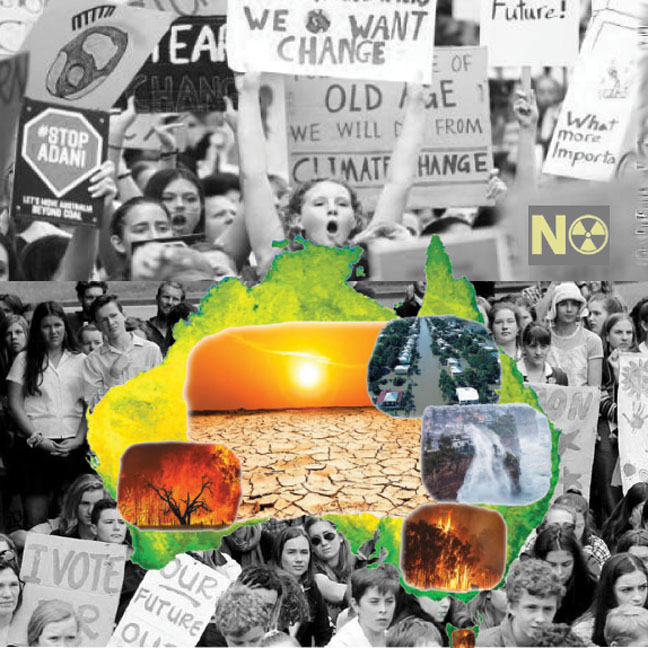
Nearly 90% of young Australians want real action on climate change
|
Young people send strong climate message, Pro Bono Maggie Coggan | 24 August
“We see the world in a different light. Politicians need to start listening to us and taking action,” a youth leader says.
Nearly 90 per cent of young people say they feel unprepared for future climate disasters and want politicians to give them a bigger voice on climate change, a new report finds. Conducted in the wake of the catastrophic summer bushfire season, the new Australian Institute for Disaster Resilience and World Vision Australia research found that despite hazards such as bushfires, floods, drought and tropical cyclones posing a greater threat, young people said they were more likely to learn about earthquakes at school. This left 88 per cent of survey respondents feeling unprepared and unable to protect themselves and their communities, even though nearly two-thirds (64 per cent) had experienced at least three events such as bushfires, heatwaves and drought in the past three years. “We anticipate that we will experience personal impacts from natural hazards in the future, whether we are living in capital cities, regional centres, or rural areas,” respondents said. “The 2020 bushfires demonstrated that you need not live in the bush to be affected by a bushfire. We are experiencing these persistent worries while having to contend with life, school, growing up and everything else that comes with being a young person in Australia.” It is the most comprehensive consultation of children and young people on climate change, disasters, and disaster-resilience in the country, with 1,500 people participating in the online survey, supported by UNICEF Australia, Plan International, Save the Children, Oaktree and Australian Red Cross. Young people concerned, but not heard ………… A full copy of the report can be found here. https://probonoaustralia.com.au/news/2020/08/young-people-send-strong-climate-message/ |
|
Nuclear power – a big financial risk, must get tax-payer subsidy
 Nuclear plants need government subsidy—expert https://manilastandard.net/business/power-technology/332276/nuclear-plants-need-government-subsidy-expert.html posted August 24, 2020 at 07:05 pm by Alena Mae S. Flores, An energy analyst said the country’s planned nuclear power development carries a lot of risk and will need government subsidy to make it feasible.“Nuclear, obviously has tail risks and as an analyst, I will look at it from a financial perspective…Nuclear in my view is totally uneconomic without government subsidy,” Sara Jane Ahmed, an energy finance analyst at the Institute for Energy Economics and Financial Analysis, said during a forum by the Institute for Climate and Sustainable Cities.
Ahmed said that of the top 10 major nuclear developments in the world, most of them were 10 to 15 years behind schedule, “and they are double or triple the original investment and the cost to consumers are prohibitively expensive without a lock-in subsidy.” |
|
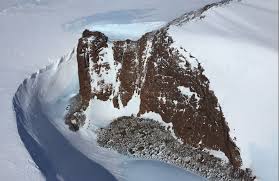
Ice melting at a surprisingly fast rate underneath Shirase Glacier Tongue in East Antarctica
- East Antarctic melting hotspot identified
- https://www.sciencedaily.com/releases/2020/08/200824092000.htm
- August 24, 2020
- Source:
- Hokkaido University
- Summary:
- Ice is melting at a surprisingly fast rate underneath Shirase Glacier Tongue in East Antarctica due to the continuing influx of warm seawater into the Lützow-Holm Bay.
-
Hokkaido University scientists have identified an atypical hotspot of sub-glacier melting in East Antarctica. Their findings, published in the journal Nature Communications, could further understandings and predictions of sea level rise caused by mass loss of ice sheets from the southernmost continent.
The 58th Japanese Antarctic Research Expedition had a very rare opportunity to conduct ship-based observations near the tip of East Antarctic Shirase Glacier when large areas of heavy sea ice broke up, giving them access to the frozen Lützow-Holm Bay into which the glacier protrudes.
“Our data suggests that the ice directly beneath the Shirase Glacier Tongue is melting at a rate of 7-16 meters per year,” says Assistant Professor Daisuke Hirano of Hokkaido University’s Institute of Low Temperature Science. “This is equal to or perhaps even surpasses the melting rate underneath the Totten Ice Shelf, which was thought to be experiencing the highest melting rate in East Antarctica, at a rate of 10-11 meters per year.”
- The Antarctic ice sheet, most of which is in East Antarctica, is Earth’s largest freshwater reservoir. If it all melts, it could lead to a 60-meter rise in global sea levels. Current predictions estimate global sea levels will rise one meter by 2100 and more than 15 meters by 2500. Thus, it is very important for scientists to have a clear understanding of how Antarctic continental ice is melting, and to more accurately predict sea level fluctuations.
Most studies of ocean-ice interaction have been conducted on the ice shelves in West Antarctica. Ice shelves in East Antarctica have received much less attention, because it has been thought that the water cavities underneath most of them are cold, protecting them from melting.
- During the research expedition, Daisuke Hirano and collaborators collected data on water temperature, salinity and oxygen levels from 31 points in the area between January and February 2017. They combined this information with data on the area’s currents and wind, ice radar measurements, and computer modelling to understand ocean circulation underneath the Shirase Glacier Tongue at the glacier’s inland base.
The scientists’ data suggests the melting is occurring as a result of deep, warm water flowing inwards towards the base of the Shirase Glacier Tongue. The warm water moves along a deep underwater ocean trough and then flows upwards along the tongue’s base, warming and melting the ice. The warm waters carrying the melted ice then flow outwards, mixing with the glacial meltwater.
The team found this melting occurs year-round, but is affected by easterly, alongshore winds that vary seasonally. When the winds diminish in the summer, the influx of the deep warm water increases, speeding up the melting rate.
“We plan to incorporate this and future data into our computer models, which will help us develop more accurate predictions of sea level fluctuations and climate change,” says Daisuke Hirano.
Traditional Owners block road to Adani coal mine in central Queensland
‘We want them out’: Traditional Owners block road to Adani coal mine in central Queensland, SBS, 24 Aug 20, An Adani spokesperson said construction on the mine was continuing despite the blockade.
Protesters, including Traditional Owners of Wangan and Jagalingou country, have blocked the main road to the controversial Adani Carmichael coal mine in central Queensland.
More than 20 people had established a camp across the road from the site and negotiators from Mackay and the Whitsundays were at the scene, a Queensland Police spokesperson said on Monday afternoon. No arrests had been made.
The blockade follows a decade-long campaign against the construction of the mine, located more than 400 kilometres inland from Mackay, which is set to be one of Australia’s largest coal mines when completed.
Wangan and Jagalingou man Adrian Burragubba said the blockade aimed to re-establish control of the land and force the mining giant to abandon the project.
“We’re taking back control of our land, that’s what we’re doing here. We’re doing it because we’ve been ignored, as the original Wangan and Jagalingou people, we’ve been ignored through this whole process,” he said.
“We demand an end to the destruction of our unceded territory. We demand Adani Australia abandon their Carmichael mine project immediately. We want them out, we want them to pack up and leave our tribal lands.”
Mr Burragubba was bankrupted in 2018 after repeated failed court actions to stop the Galilee Basin project………
Adani downsized the project in 2018 from a 60 million-tonne-a-year mine, costing $16.5 billion, to a 10-to-15 million tonnes a year mine, costing about $2 billion.
Construction of the site commenced in 2019 following final approvals from the federal and state governments. HTTPS://WWW.SBS.COM.AU/NEWS/WE-WANT-THEM-OUT-TRADITIONAL-OWNERS-BLOCK-ROAD-TO-ADANI-COAL-MINE-IN-CENTRAL-QUEENSLAND
Gas is not transition energy we were promised, new research suggests
 Gas is not transition energy we were promised, new research suggests, SMH, By Nick O’Malley, August 24, 2020 — The good news about natural gas is that when it is burnt it creates between 40 and 50 per cent less carbon dioxide than coal would to create the same amount of energy.This is why it has been embraced by some climate activists and governments as a useful energy source to replace coal and oil while renewable energy technologies catch up with global energy demand.
But the good news ends there, and there is a lot more to the story.
Before it is burnt natural gas is mostly made up of methane, and methane is estimated to be about 28 times more potent a greenhouse gas than carbon dioxide over a 100-year period.
Over a 20-year period – about the time scientists believe we have to try to prevent the worst impacts of global warming – it is up to 80 times more potent at warming the planet than carbon dioxide.
The United States’ Environmental Protection Agency estimates that for every cubic metre of methane extracted by the US oil and gas industry, 1.4 per cent escapes into the atmosphere as so-called fugitive emissions.
But more recent research suggests this estimate is drastically low, and that, in fact, the industry in the US is leaking 13 million metric tonnes of methane a year, or 2.3 per cent.
It is not yet clear how much fugitive methane is released by the Australian gas industry, but new technologies now allow scientists to accurately measure it and the data is expected to be published in the coming months.
The US Environmental Defence Fund estimated that, in America, if just 3 per cent of methane escapes, gas is no cleaner an energy source than coal……. https://www.smh.com.au/environment/climate-change/gas-is-not-transition-energy-we-were-promised-new-research-suggests-20200824-p55ovg.html
Frank Barnaby, nuclear weapons scientist and global hero
he gave evidence in Japan against the used of mixed uranium and plutonium oxide fuel, known as MOX, in a reactor at Fukushima. “Frank’s testimony was so impressive and read by the governor of the region that it stopped the loading of MOX fuel for more than 10 years,” said Shaun Burnie of Greenpeace International. In 2011, the reactor was overwhelmed by a devastating tsunami, but because of this intervention Japan was spared the release of many hundreds of tons of fission products – “in other words the evacuation of 50 million plus and the end of central Japan as a functioning society.
|
Frank Barnaby obituary Radiation physicist at Aldermaston who went on to warn of the dangers posed by the civil and military uses of nuclear energy, Guardian, Tim Radford, 25 Aug 20,
The nuclear weapons scientist Frank Barnaby, who has died aged 92, became one of the most effective critics of the international arms race. As the cold war superpowers competed with ever more advanced weaponry to wage a war that could never be won, Barnaby helped amass an arsenal of reliable information and informed argument to keep an anxious public aware of the deadly devices being developed supposedly to keep the world safe. By the close of the cold war and the beginning of the collapse of the Soviet Union in 1989 he and others had assembled an informal international bureaucracy of peace and provided the intellectual ammunition to persuade politicians, military and public to accept a dramatic reduction in the nuclear weaponry. He contributed dozens of articles to New Scientist and the Guardian, all of them highlighting the rapid advance in technologies of mass destruction and the mechanisms that could spark global thermonuclear war. His persuasive arguments used only the information to hand, and calm reasoning. In the early years of Margaret Thatcher’s government in Britain, and Ronald Reagan’s in the US, global investment in the military was huge. Even before a sharp rise in US spending in 1980, military activities worldwide consumed $1m every minute. US forces already used 10% of all the aluminium, copper, lead, zinc, nickel, molybdenum, tin, chromium, iron and manganese in the US each year. The military consumption of oil alone, Barnaby argued, was about two-thirds that of the whole of Africa at the time. The defence industry had become the world’s second biggest business – after oil – and 40% of the world’s research scientists were funded out of military budgets; while military and defence establishments employed at least 27 million civilians. Soviet and US governments put a military satellite into orbit ever four days on average for two decades………. in 1946 was conscripted into the RAF, leaving after two years to begin a science degree and then a doctorate in nuclear physics through the University of London, before joining the Atomic Weapons Research Establishment at Aldermaston, Berkshire – the laboratory that was to become the focus of marches and demonstrations by the Campaign for Nuclear Disarmament. As a radiation physicist, he twice monitored nuclear weapons tests at a site in Maralinga, South Australia, in 1956 and 1957. ….. He quit Aldermaston in 1957 to become a lecturer at University College London, and joined the Pugwash Conference on Science and World Affairs, a Nobel peace prizewinning group founded by the mathematician philosopher Bertrand Russell. This organisation of distinguished scientists from both sides of the iron curtain served, at the height of the cold war, as almost the only informal contact between two mutually hostile power blocs. In 1967 he became its executive secretary. Then from 1971 to 1981 he was director of the influential Stockholm International Peace Research Institute, known as Sipri, and began writing books and articles on the accelerating advance of nuclear weaponry, its proliferation, and its possible uses. And in those years, and from his later platform as a professor of peace studies at the Free University of Amsterdam (1981-85), he warned of the developments that made the world an increasingly dangerous place. Cruise missiles and other technologies effectively ended the deterrent strategy of Mutually Assured Destruction because they offered the possibility of a nuclear contest that could be “winnable”, but only with a pre-emptive all out first strike. He predicted the coming of the automated battlefield, and of the potential for plutonium as a terror weapon: with a planetary stockpile in 1989 of 2,000 metric tons, who would miss a few kilograms? ……… Working with Greenpeace International in 2001, he gave evidence in Japan against the used of mixed uranium and plutonium oxide fuel, known as MOX, in a reactor at Fukushima. “Frank’s testimony was so impressive and read by the governor of the region that it stopped the loading of MOX fuel for more than 10 years,” said Shaun Burnie of Greenpeace International. In 2011, the reactor was overwhelmed by a devastating tsunami, but because of this intervention Japan was spared the release of many hundreds of tons of fission products – “in other words the evacuation of 50 million plus and the end of central Japan as a functioning society. That was Frank.” While in Stockholm, he met Wendy Field, a young diplomat from Adelaide working in the Australian Embassy. They married in 1972. He is survived by Wendy, their two children, Sophie and Benjamin, and five grandchildren. • Charles Frank Barnaby, physicist and nuclear disarmament expert, born 27 September 1927; died 1 August 2020 https://www.theguardian.com/world/2020/aug/24/frank-barnaby-obituary |
|
1 This month
.
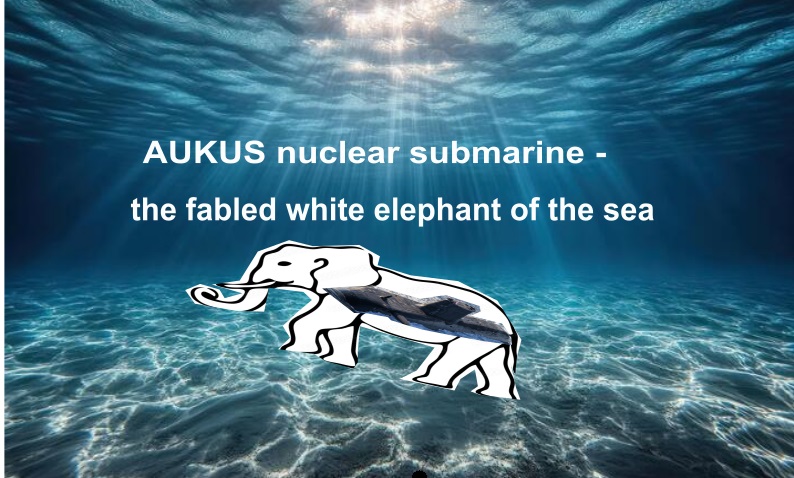
Australians deserve the truth
about
AUKUS – https://aukuspublicinquiry.com/

PETITION – To: Prime Minister Anthony Albanese and the Australian Labor Government

of the week – Australians for War Powers Reform (AWPR)
To see nuclear-related stories in greater depth and intensity

