Farmers in Canadian County oppose the stigma of nuclear waste dump plan, very like the dump threat to Eyre Peninsula
residents still have concerns about a high-level nuclear waste DGR in their community.
 “The folks in South Bruce, who I would consider the key and primary stakeholders in all of this, are concerned about … health and safety, and the stigma that will be attached to” nuclear waste, Grant explawelined. These stakeholders are also worried about “the value of land and businesses in the immediate vicinity as l as along the transportations route from where the high-level nuclear waste is currently stored into the community.”
The siting process has disrupted families’ property values and farm planning and decision making.
We’ve invested 25 years into this property,” Stein said. And “people aren’t interested in moving into an area that might have all of Canada’s high-level nuclear waste.”
A Change.org petition against the DGR has accumulated over 1,300 signatures as of early May, and community members have formed a group called Nuclear Tanks No Thanks to counter the NWMO’s plans
South Bruce divided over nuclear waste, Farms.com Community members clash over the site selection for a high-level nuclear waste deep geologic repository By Jackie Clark, Staff Writer Farms.com Bryon Mckee |May 12 2020
South Bruce is an Ontario municipality that boasts “rolling hills, scenic highways and warm-hearted people,” on its website. However, over the last several months, a debate over a plan to build an underground nuclear waste facility has divided the community.
Proposals in Bruce County…….
……….The DGR would require about 250 acres or the surface facilities and 1,500 acres for the underground repository. ……..some residents have not found the community engagement to be satisfactory. Continue reading
A Covid-19 Green Recovery for Australia
Seizing the moment: how Australia can build a green economy from the Covid-19 wreckage, As the government prepares plans for economic recovery, investors and green groups alike say this is a once-only opportunity to move towards zero emissions
This is the first a new series, The Green Recovery, looking at the environmental challenges of a post-pandemic world, Guardian, by Adam Morton 13 May 20 There is a growing case that recovery from the coronavirus offers Australia a chance to succeed where it has failed for more than a decade: to break away from the climate wars and head in a new direction.
Here and overseas, the idea of helping jumpstart an economic rebuild after the pandemic-forced shutdown by also tackling the other great existential challenge of the time is gaining currency across the political spectrum.
It has been supported not just by climate activists and conservationists, but by industry, banks, energy companies, unions and major investors.
Kristalina Georgieva, the head of the International Monetary Fund, articulated the push in late April while addressing the heads of 30 countries at the annual Petersberg Climate Dialogue. She rejected the suggestion that the health crisis and the economic crash caused by the “great lockdown” that followed meant steps to fight the climate crisis should be paused.
“Nothing is further from the truth,” she said. “We are about to deploy a massive fiscal stimulus which can help us address both crises at the same time.
“If this recovery is to be sustainable – if our world is to become more resilient – we must do everything in our power to promote a green recovery. In other words, taking measures now to fight the climate crisis is not just a ‘nice-to-have’. It is a ‘must-have’ if we are to leave a better world for our children.”
Implicit in Georgieva’s call is that this may be a one-off opportunity to reduce greenhouse gas emissions and avoid what scientists warn would be a catastrophe for vast swathes of the planet.
Others agree. The German government has called for recovery programs to invest in future-proof jobs that would cut emissions, rather than return to business as usual. Britain has proposed an accelerated take-up of green technologies, saying it could have a profound impact on “our societies’ future sustainability, resilience and, ultimately, wellbeing”.
The idea of a green stimulus has been supported by governments in countries as diverse as Pakistan, Portugal, Canada and the United Arab Emirates, backed by major business energy giants including BP and Shell, and promoted by the World Bank, which has published a series of blog posts with detailed suggestions of how to respond.
Significant money supports this stance. Global investor groups representing members responsible for more than $55tn in assets warned governments to avoid focusing on short-term, big-emitting projects when backing clean growth, which could create jobs while improving things that have a less obvious monetary value – such as clean air. Again, the opportunity borne from crisis was central to the message. “The path we choose in the coming months will have significant ramifications for our global economy and generations to come,” the groups said in a statement……
States lead, federal government drags its feet
In Australia, the discussion about a green recovery did not begin as urgently as elsewhere, reflecting perhaps the country’s notoriously difficult climate politics and a media tendency to treat climate as a second-order issue unless it is the subject of a political fight.
That began to change last week. Industry groups the Smart Energy Council and Clean Energy Council hosted online summits on green recovery themes with attendances in the thousands. Speaking at both, Innes Willox, the chief executive of the Australian Industry Group, said recovery from the Covid-19 pandemic and setting a path for net zero were overlapping issues that should be dealt with together to boost growth.
The AIG is among a number of Australian interest groups, research organisations and experts working on what a sustainable rebuild could look like, built on evidence that renewable energy is now the cheapest source to invest in.
Just as striking as Willox’s call was that, across the two summits, every state and the ACT was represented either by a premier, energy minister or, in Tasmania’s case, state-owned clean energy agency. Queensland’s Annastacia Palaszczuk spoke about the potential to develop a battery manufacturing industry and claimed green hydrogen resources would eventually surpass the state’s liquefied natural gas exports. South Australia’s energy minister, Dan van Holst Pellekaan, praised his Labor predecessors for helping develop the state into a world leader in renewable energy generation (while taking a swipe at them over cost) and said he hoped the state would run on 100% clean electricity before 2030.
Fellow Liberal Matt Kean, from New South Wales, said his government was considering its electricity strategy and net zero plan in the wake of the pandemic to see what measures could be brought forward to support the economy. He said they would be subject to three tests: “Will they deliver decarbonisation? Will they deliver jobs? And will they deliver faster economic growth?”
On Thursday, the Tasmanian Liberal government went further, launching a draft renewables energy action plan for reaching 200% renewable energy generation by 2040, a goal that means the creation of a vast clean export industry. The state’s energy minister, Guy Barnett, said the shift to renewable energy was more important than ever in the wake of the pandemic.
“As a result of Covid-19, there are unprecedented challenges facing Australian households and industries. By seizing Tasmania’s immense potential, renewable energy can grow our economy, attract investment, create jobs and support Australia’s transition to renewable supply,” he said………
Practical solutions on the horizon
Environment Minister Sussan Ley not to support protection of Murray-Darling river systems
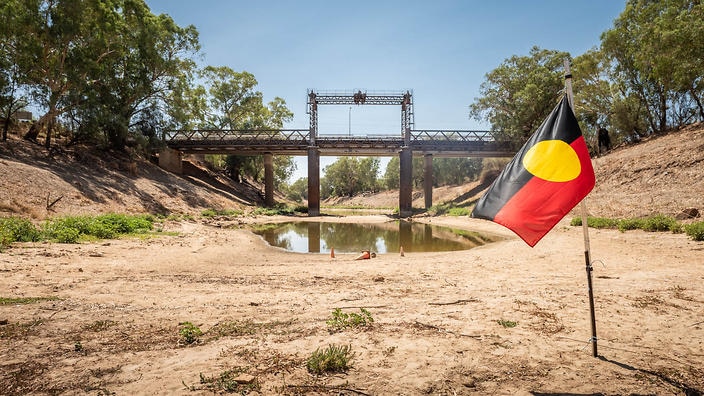
Murray-Darling systems not assessed for endangered listing after officials warned Coalition would not  support it
FoI documents reveal struggling systems were ‘clear candidates’ for protection but Sussan Ley ‘unlikely to support’ it, Guardian, Lisa Cox, Wed 13 May 2020 Struggling river and wetland systems in the Murray-Darling Basin were not assessed for listing as critically endangered after officials warned the Morrison government would not support protecting them.
Environment department staff said the two ecological communities were “clear candidates” for assessment for a critically endangered listing, documents released under freedom of information show. But the environment minister, Sussan Ley, was “unlikely to support” their inclusion on the 2019 list of species and habitats under consideration for protection, they told the threatened species scientific committee.
The department also told the committee the work required to do the assessment would have “significant resource implications”.
The two communities are known as the “wetland and inner floodplain of the Macquarie Marshes”, and the “Lower Murray River and associated wetlands, floodplains and groundwater systems from the junction of the Darling River to the sea”.
Both were listed as critically endangered by then environment minister Mark Butler in the final days of the Labor government in 2013.
After the Coalition won government, both listings were disallowed under the new environment minister, Greg Hunt. It followed a campaign against the critically endangered listings by the National Irrigators Council.
Humane Society International, the organisation behind the nomination that led to the 2013 listings, renominated the river and wetlands systems for assessment for a critically endangered listing last year.
In a briefing to the threatened species scientific committee, officials said a tool the department used for conservation assessments had ranked the two communities as the highest priorities from a conservation perspective among a group of five ecological communities nominated for listing in 2019.
But neither made it on to the proposed priority assessment list, which is given to the environment minister to consider before they determine the nominations that will make it on to the final list.
The briefing to the committee is the same document that led to Guardian Australia last week revealing the government had stopped listing major threats to species under national environmental laws…….
Labor’s environment spokeswoman, Terri Butler, said it was “outrageous” the Morrison government had not followed scientific advice. She said the government was attempting “to influence the outcomes of scientific processes designed to protect our environment”.
Richard Kingsford, the director of the Centre for Ecosystem Science at the University of New South Wales, said the scientific research on the two communities showed both had high levels of biodiversity and were degrading significantly as a result of reduced flooding.
“The question would be: why were they ruled out at that first step?” he said…… https://www.theguardian.com/environment/2020/may/13/murray-darling-systems-not-assessed-for-endangered-listing-after-officials-warned-coalition-would-not-support-it
Rainfall patterns many thousands of miles away were altered by nuclear bomb tests.
 I have read that Ernest Titterton, the English physicist, who master-minded nuclear activities in Australia, made sure to stop the radiation testing of rain along Australia’s East Coast, during the period of France’s nuclear testing in the Pacific. I have not been able to verify this, but I believe that it’s true – given what we know of this man’s loyalty to thnuclear industry, and disdain for the health and lives of nuclear victims.
|
Cold War Nuclear Weapons Tests Changed Rainfall Thousands of Miles From Detonation Sites
Sci Tech Daily, By UNIVERSITY OF READING MAY 13, 2020 RADIOACTIVE PERIOD FOLLOWING NUCLEAR BOMB TESTS CHANGED RAINFALL PATTERNS THOUSANDS OF MILES FROM THE DETONATION SITES.
Nuclear bomb tests during the Cold War may have changed rainfall patterns thousands of miles from the detonation sites, new research has revealed. Scientists at the University of Reading have researched how the electric charge released by radiation from the test detonations, carried out predominantly by the US and Soviet Union in the 1950s and 1960s, affected rainclouds at the time. The study, published in Physical Review Letters, used historic records between 1962-64 from a research station in Scotland. Scientists compared days with high and low radioactively-generated charge, finding that clouds were visibly thicker, and there was 24% more rain on average on the days with more radioactivity…… It has long been thought that electric charge modifies how water droplets in clouds collide and combine, potentially affecting the size of droplets and influencing rainfall, but this is difficult to observe in the atmosphere. By combining the bomb test data with weather records, the scientists were able to retrospectively investigate this. ……. Although detonations were carried out in remote parts of the world, such as the Nevada Desert in the US, and on Pacific and Arctic islands, radioactive pollution spread widely throughout the atmosphere. Radioactivity ionises the air, releasing electric charge……. Reference: “Precipitation modification by ionisation” by Harrison, G., Nicoll, K., Ambaum, M., Marlton, G., Aplin, K., Lockwood, M., 13 May 2020, Physical Review Letters. |
|
Cheap electricity is back, and the next casualty will be a coal fired generator — RenewEconomy
The recent decline in electricity prices is astonishing. And with more than 6GW of large scale wind and solar about to enter the grid, the next big casualty will be a coal generator. The post Cheap electricity is back, and the next casualty will be a coal fired generator appeared first on RenewEconomy.
via Cheap electricity is back, and the next casualty will be a coal fired generator — RenewEconomy
Australia’s reputation as solar leader under threat if ARENA funding not extended — RenewEconomy

Angus Taylor’s decision to halt government support for solar and wind research is so surprising because it put’s Australia’s leadership under threat. The post Australia’s reputation as solar leader under threat if ARENA funding not extended appeared first on RenewEconomy.
via Australia’s reputation as solar leader under threat if ARENA funding not extended — RenewEconomy
AEMC to fast-track ruling on proposed delay to five-minute settlements — RenewEconomy
AEMC seeks views on proposed introduction of five-minute settlement rule change, as regulators focus on Covid-19 response. The post AEMC to fast-track ruling on proposed delay to five-minute settlements appeared first on RenewEconomy.
via AEMC to fast-track ruling on proposed delay to five-minute settlements — RenewEconomy
May 13 Energy News — geoharvey
Opinion: ¶ “The Renewable Energy Transition Is Coming To Asia” • Even in the era of the coronavirus, technology disruption is reshaping the global energy landscape fundamentally. A key impetus is the dramatic, ongoing deflation in the cost of solar energy and battery storage. Both have seen costs drop 80% to 90% over the last […]
Experts warn of growing fossil fuel influence in Morrison’s Covid-19 response — RenewEconomy
Environmental groups warn of the influence the fossil fuel industry is exerting over the Morrison government’s economic response to Covid-19. The post Experts warn of growing fossil fuel influence in Morrison’s Covid-19 response appeared first on RenewEconomy.
via Experts warn of growing fossil fuel influence in Morrison’s Covid-19 response — RenewEconomy
Stimulus Summit website launched, energy ministers summit planned for August — RenewEconomy

Missed the Stimulus Summit? SEC has you covered with new website and links to recordings of all of the day’s presentations. The post Stimulus Summit website launched, energy ministers summit planned for August appeared first on RenewEconomy.
via Stimulus Summit website launched, energy ministers summit planned for August — RenewEconomy
How the Murdoch press defended fossil fuel industry while Australia burned — RenewEconomy

Greenpeace investigation highlights how Murdoch press used misinformation to protect the fossil fuel industry from blame for climate fuelled bushfires. The post How the Murdoch press defended fossil fuel industry while Australia burned appeared first on RenewEconomy.
via How the Murdoch press defended fossil fuel industry while Australia burned — RenewEconomy
Tasmania unveils action plan to reach 200 per cent renewables — RenewEconomy

Tasmania Liberal government unveils action plan for 200 per cent renewables goal, including interim target to unlock $7 billion of renewables investment in next decade. The post Tasmania unveils action plan to reach 200 per cent renewables appeared first on RenewEconomy.
via Tasmania unveils action plan to reach 200 per cent renewables — RenewEconomy
13 top Australian non government organisations say that the Kimba nuclear waste dump plan is illogical
There is no logic behind the proposal to move intermediate-level waste from interim above-ground storage at Lucas Heights to interim above-ground storage at the Kimba site. The proposed double-handling is illogical, it exposes communities to unnecessary risk, and ARPANSA’s Nuclear Safety Committee has indicated that it is not consistent with international best practice.
[ The group makes 10 excellent RECOMMENDATOINS to the Senate Committee]
Joint NGO Submission to the Senate Economics Legislation Committee Inquiry into National Radioactive Waste Management Amendment (Site Specification, Community Fund and Other Measures) Bill 2020 Submission 101
The National Radioactive Waste Management Amendment Bill amends the National Radioactive Waste Management Act to specify a site near Kimba in South Australia for a nuclear waste ‘facility’ ‒ a repository for low-level waste and an above-ground ‘interim’ (indefinite) store for long-lived intermediate-level waste.
The Bill is deeply flawed and should be rejected. Further, the existing Act is deeply flawed and should be repealed Continue reading
Catholic Religious Australia (CRA) question government’s plan for nuclear waste dump near Kimba, South Australia
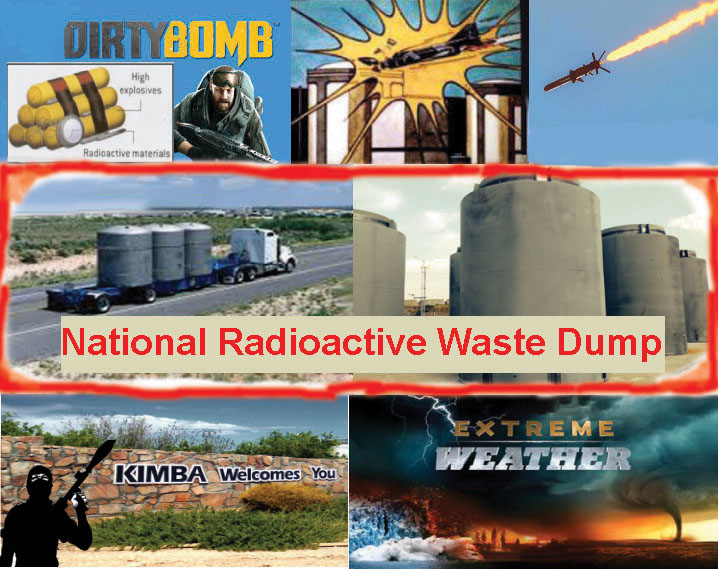
Time for action over proposed nuclear dump, https://thesoutherncross.org.au/opinion/2020/04/24/time-for-action-over-proposed-nuclear-dump/ Michele Madigan April 24, 2020
The reality is that over 90 per cent of the waste, measured by radioactivity, is intermediate long-lived waste including the nuclear spent fuel rods and also the parts of the previous nuclear reactor.
The Barngala initiated a legal action protesting their exclusion. Sadly their appeal has recently been denied. As Barngarla Traditional Owner Jeanne Miller laments, Aboriginal people with no voting power are put back 50 years, ‘again classed as flora and fauna’.
With Pope Francis’s designation of practical Care for Earth as the 8th Beatitude, a wonderful Lenten/post-Lenten penance might be a concerned letter to alert an Opposition or cross bench SA senator at Parliament House, Canberra 5600. The Senate vote is likely at the end of June.
Australia listened to the science on coronavirus. Imagine if we did the same for coal mining
 Australia listened to the science on coronavirus. Imagine if we did the same for coal mining The Conversation, Matthew Currell Associate Professor in Environmental Engineering, School of Engineering, RMIT University, Adrian Werner, Professor of Hydrogeology, Flinders University, Chris McGrath, Associate Professor in Environmental and Planning Regulation and Policy, The University of Queensland, Dylan Irvine, Senior lecturer in hydrogeology, Flinders University -12 May 20,
We interrogated scientific evidence available to governments and Adani over almost a decade. Our analysis shows governments failed to compel Adani to fully investigate the environmental risks posed by its water plans, despite concerns raised by scientists.
There is also evidence the government approval decisions were influenced by the political climate and pressure exerted by members of government.
Our findings come as the Morrison government conducts a ten-yearly review of the Environmental Protection and Biodiversity Conservation (EPBC) Act. It is critical these laws – Australia’s most important environmental legislation – are reformed to put rigorous, independent science at the core.
Advice ignored
In mid-2019, the federal and Queensland governments approved groundwater management plans for Adani’s Carmichael coal mine. It granted the company unlimited access to groundwater in central Queensland’s Galilee Basin.
We and other experts warned the mine threatens to damage aquifers, rivers and ecosystems – in particular, the Doongmabulla Springs Complex. This system contains more than 150 wetlands which support rare plant communities found nowhere else on earth.
The springs are of major cultural significance to the Wangan and Jagalingou people.
We analysed the full suite of evidence on the groundwater plans from agencies and scientists with expertise in hydro-geology. The evidence, provided to state and federal environment ministers, spanned almost a decade and included at least six independent scientific reviews.
The evidence highlighted major shortcomings, and gaps in knowledge and data. For example – ………
Once-in-a-decade chance
Our analysis exposes flaws in how evidence informs major government decisions. It also shows why reform of the Environmental Protection and Biodiversity Conservation Act is so urgent.
The laws are currently under review. Many reputable organisations and scholars have proposed ways the legislation can better protect the environment, increase its independence from government and put science at the core.
Independent scientific committees, such as the federal IESC, are commissioned by governments to advise on mining proposals. We suggest such committees be granted greater powers to request specific data and studies from mining companies to address knowledge gaps before advice is issued.
Alternatively – or in addition – a new independent national commission should be established to oversee environmental impact assessments conducted by mining and other development proponents.
This commission should be empowered to interrogate and resolve key scientific uncertainties, free from political interference. Its recommendations to government should take into account a wide range of expert advice and public feedback.
This would not only improve the evidence base for decisions, but may also speed up assessments – ensuring more effective resolution of uncertainties that often lead to protracted conflict and debate about a mine’s impacts.
Such reform is urgently needed. Australia is suffering unprecedented water stress, environmental harm and declining trust in government.
Australian governments listened to the science when it needed to flatten the curve of COVID-19. The same approach is needed if we’re to preserve the places we love and the ecosystems we depend on. https://theconversation.com/australia-listened-to-the-science-on-coronavirus-imagine-if-we-did-the-same-for-coal-mining-138212
1 This month
25 October – Film –Britain’s Nuclear Bomb Scandal: Our Story – part of the Adelaide Film Festival,
Screening and Conversation
A screening of Britain’s Nuclear Bomb Scandal: Our Story (2024) followed by a talk with 2026 Bettison and James Awardee and Tradtional Owner Karina Lester in conversation with Simone Tur.
When: Sun 25 Oct, 12:00pm-Screening, 1:15pm-Talk
Where: The Mercury
Free admission, register below by clicking on BUY TICKETS and select free event tickets, at end of web page:
https://www.adelaidefilmfestival.org/program/2026/britains-nuclear-bomb-scandal-our-story
.
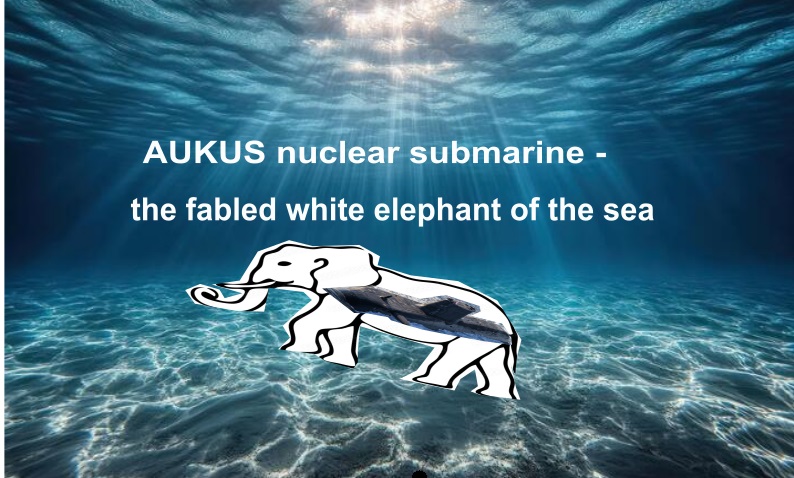
Australians deserve the truth
about
AUKUS – https://aukuspublicinquiry.com/

PETITION – To: Prime Minister Anthony Albanese and the Australian Labor Government

of the week – Australians for War Powers Reform (AWPR)
To see nuclear-related stories in greater depth and intensity

