The absurd cost of Australia going nuclear – theme for June 2020
The global nuclear industry is in deep shit. It was so, before the pandemic. It’s in an even worse financial state now.
So, it’s not surprising that there’s a concerted campaign going on – to foist off this dangerous, out-dated and super-expensive technology onto nations that are nuclear-free. Australia is an enticing target customer. (Never mind that renewable energy technologies are ever cheaper, and Australia is blessed with a wealth of these)
That is why we now have Nuclear Inquiries going on in several States, and in the Federal government. Their first target is to remove the anti-nuclear legislation that is now in place in most states, and federally.
There’s also the move to weaken the Environmental Protection and Biodiversity Conservation Act (EPBC). They want to get rid of sections that protect against the special radioactive dangers of the uranium industry.

It’s not just the Yanks wanting to sell off their costly nuclear wares. There’s a determined little nuclear lobby here amongst Australians – military hawks, self-serving politicians, and ambitious and greedy people who want the fame and the money, which will come to a few, if they can get the Australian tax-payers to buy that atomic dream.
That dream – which will be a nightmare – involves the entire toxic nuclear chain, from uranium mining through to geewhiz untested new nuclear technology, nuclear reprocessing, and the importing of the world’s radioactive trash.
The very first step in this nightmare could well be the ill-conceived and rushed move to set up a stranded nuclear waste centre in Kimba, south Australia. That little enterprise has already cost the tax-payer plenty – in the attempt to brainwash farming communities that nuclear waste is fine to have near your farm.
If there’s one silver lining that might come out of Australia’s current economic gloom in this pandemic ?recovery period, – it could be the public realisation that Australia does not need the huge costs and hazards of nuclear power, and nuclear weapons.
We have enough expense with that white elephant at Lucas Heights, the Opal nuclear reactor. ANSTO has grand plans to expand that, when they should be looking to modern, non-nuclear , more practical, ways of producing mediacl radioisotopes.
Cameron and Toni Scott: brief but compelling critique of National Radioactive Waste Management
 Cameron and Toni Scott – to Senate Committee on
National Radioactive Waste Management Amendment (Site Specification, Community Fund and Other Measures) Bill 2020 [Provisions] Submission 82
We are active residents of the Kimba Community and are involved with many community organisations within
the town. We own and operate a farming business and have 3 small children.
Over the past 5 years my husband and I have been involved with this process as direct neighbours of the first
round of nominations at Kimba. We have found the process inconsistencies extremely frustrating and stressful.
I ask that you please take our views and recommendations into consideration and I would be happy to be
called as a witness to provide further information in the form of a hearing.
Ballot figures were manipulated to justify broad community support.
– Voting boundaries were restricted and disregarded active members of our community who live within
close proximity to Kimba and Napandee site.
– Submissions from locals living alongside site but outside council boundary were ignored or considered
not relevant for the Minister to report on.
– 94.5% of all submissions received were opposed to the siting of this facility in Kimba.
– Petitions were not reported in Ministers announcements.
– Doubling handling of ILW waste is unnecessary, costly and
– Farming land is not a suitable location for radioactive waste
We recommend that the Government please further investigate options of more suitable land that could
potentially permanently dispose of both LLW and ILW radioactive waste to rule out double handling and
separating the waste.
We also recommend that the Department and Minister Canavan’s figures used to justify Broad Community
Support be looked at in depth, as it is so important that a site such as a National Radioactive Waste Facility
which would be a permanent fixture of our Community does in fact have the broad community support
required for a successful outcome.
May 15 Energy News — geoharvey
Opinion: ¶ “Boiling Point: Giant Batteries Are Changing Everything For Clean Energy” • Southern California Edison announced that it’s buying 770 MW of batteries. So one California utility is buying more energy storage than was installed in the entire US last year. But the CEO of SCE’s parent company called it “just another stepping stone.” […]
Australian investors play key role in huge 690MW solar and battery project – America’s largest — RenewEconomy

Australian investors join with Warren Buffett to back 690MW solar and battery project given final all-clear by US federal government. The post Australian investors play key role in huge 690MW solar and battery project – America’s largest appeared first on RenewEconomy.
Taylor praises health of Australia’s carbon markets, but delays more reforms — RenewEconomy
Yet another reform put on the back burner, as Taylor praises the health of Australia’s fledgling carbon market, despite plunge in offset markets. The post Taylor praises health of Australia’s carbon markets, but delays more reforms appeared first on RenewEconomy.
via Taylor praises health of Australia’s carbon markets, but delays more reforms — RenewEconomy
UNSW solar researcher wins global award, as funding remains in doubt — RenewEconomy

UNSW Engineering Associate Professor Brett Hallam has been awarded the 2020 IEEE Stuart R Wenham Young Professional Award – the top global gong for young researchers. The post UNSW solar researcher wins global award, as funding remains in doubt appeared first on RenewEconomy.
via UNSW solar researcher wins global award, as funding remains in doubt — RenewEconomy
Balancing act: Tesla battery system earns university nearly $74,000 in 3 months — RenewEconomy

1.1MW Tesla Powerpack battery system at UQ generated $73,938 revenue in Q1 2020, mostly by helping balance the grid, including jumping in when a Victoria coal unit failed. The post Balancing act: Tesla battery system earns university nearly $74,000 in 3 months appeared first on RenewEconomy.
via Balancing act: Tesla battery system earns university nearly $74,000 in 3 months — RenewEconomy
How Tesla big battery pulled in the cash as it kept lights on in South Australia — RenewEconomy

Tesla big battery at Hornsdale lifts revenue five-fold after playing crucial role in keeping lights on, and has already earned more than the cost of the battery. The post How Tesla big battery pulled in the cash as it kept lights on in South Australia appeared first on RenewEconomy.
via How Tesla big battery pulled in the cash as it kept lights on in South Australia — RenewEconomy
Whistleblower, Dr. Bright, Testifies on “Scientific Integrity in the COVID-19 Response” — Mining Awareness +
“Whistleblower Testifies on ‘Scientific Integrity’ in US Coronavirus Response By VOA News Updated May 14, 2020 10:38 AM A U.S. health official who alleges in a whistleblower complaint he was removed from his position for prioritizing science in the government’s coronavirus response is set to tell lawmakers Thursday that the public must be told the […]
Taiwan groups reject Japan plan to dump radioactive wastewater — Fukushima 311 Watchdogs
May 13, 2020 Taipei, May 13 (CNA) About 20 environmental protection groups on Wednesday delivered a petition to the Japan-Taiwan Exchange Association, expressing opposition to the discharge of radioactive wastewater from the Fukushima Daiichi nuclear plant into the Pacific Ocean. Roughly 1.2 million metric tons of contaminated water remains from the magnitude 9.0 earthquake […]
via Taiwan groups reject Japan plan to dump radioactive wastewater — Fukushima 311 Watchdogs
The China bashing, a war with the PRC on the horizon? — limitless life

OpEdNews Op Eds 5/14/2020 at 17:38:07 H3’ed 5/14/20 The China bashing, a war with the PRC on the horizon? By Dave Lefcourt (Page 1 of 3 pages) (View How Many People Read This) No comments Become a Fan (21 fans) US. Secretary State Mike Pompeo Press Briefing criticizing China’s role in spreading Corona Pandemic U.S. Secretary State Mike Pompeo Press Briefing […]
via The China bashing, a war with the PRC on the horizon? — limitless life
Marty and Rachel Yates: the wrong nuclear dump process- individuals nominate their own land for their own personal gain
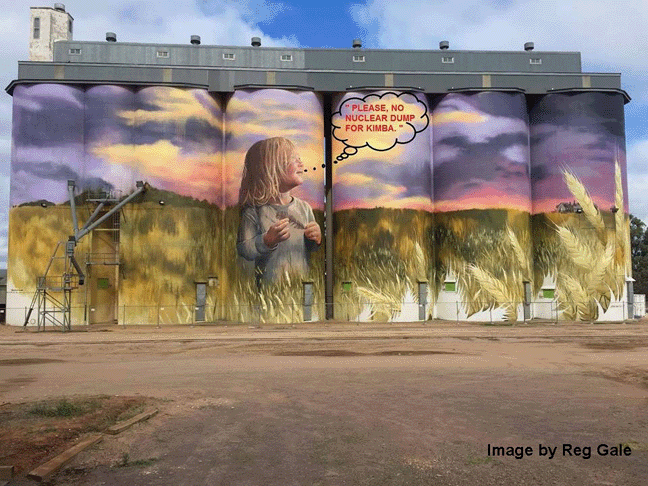
The current process where individuals nominate their own land for their own personal gain and then seek community support is completely backwards and does nothing but cause angst and divide communities.
We recommend the Committee:
Withdraw or reject the Bill on the grounds that neighbour support has not been met. The 100%
direct neighbour support is based on just two landowners as the majority of the land
surrounding the Napandee site is owned by the nominator themselves. Almost half of the
neighbours within the 5km radius to this site remain opposed. This does not constitute broad
neighbour support.
As farmers and neighbours to the selected site, it is of deep concern that radioactive waste could
be allowed to jeopardise Kimba and the Eyre Peninsula’s agricultural industries. The entire Eyre
Peninsula is very proud of its clean and green image, however, if a nuclear waste dump is
constructed in Kimba, no matter which way you look at it, the Eyre Peninsula will never be able to
lay claim to this image again. Clean and green does not go together with nuclear/radioactive
waste.
Marty & Rachel Yates – to Senate Committee on National Radioactive Waste Management Amendment (Site Specification, Community Fund and Other Measures) Bill 2020 [Provisions] Submission 90
We are very close neighbours to the Napandee site and are active members of the Kimba
community where we continue to live, farm and raise our young family. We are third generation
farmers and completely devastated with the news that Napandee has been selected as the site to
host the National Radioactive Waste Management facility (NRWMF) because this means the
facility will be forced upon us. We would never ever choose to live near a radioactive waste dump.
Our small country town has been targeted since 2015 when Rowan Ramsey initiated the proposal
that his property in Kimba could host the national radioactive waste facility. Since then, our once
close knit community has been torn apart by a flawed process that has been designed to divide
and conquer with the promise of jobs and money. The damage caused by this process is real and
will be lasting.
It has been extremely difficult and stressful five years for us. We have done our utmost to
request a fair, open and transparent process but instead have been presented with a very one
sided affair where the goal posts have constantly moved.
We were neighbours to the original nominated site at Cortlinye which was removed, along with
Pinkawillinie, from the process in 2016 due to lack of community support. To our dismay, a group
of locals did not accept this decision and in early 2017 proceeded to nominate two more sites in
Kimba. One called ‘Napandee’ and one called ‘Lyndhurst’. Despite being told by the Department of
Industry Innovation and Science (DIIS) that this would never come back to Pinkawillinie, it did,
because Napandee is located in the Hundred of Pinkawillinie. We now find ourselves even closer
neighbours to the Napandee site than we were to Cortlinye. We have continually stated our
opposition as neighbours but because we don’t share a fence it feels like we don’t really matter.
As farmers and neighbours to the selected site, it is of deep concern that radioactive waste could
be allowed to jeopardise Kimba and the Eyre Peninsula’s agricultural industries. The entire Eyre
Peninsula is very proud of its clean and green image, however, if a nuclear waste dump is
constructed in Kimba, no matter which way you look at it, the Eyre Peninsula will never be able to
lay claim to this image again. Clean and green does not go together with nuclear/radioactive
waste.
Only 4.5% of South Australia is arable land. There is so much unproductive land in the whole of
Australia that would be a more suitable option than farming land to store radioactive waste. This
is where the current process falls down because it only allows nominations from volunteer
landowners so even though there may be better options out there, this process won’t allow them
to be considered because they have not volunteered.
We find it staggering that Kimba was allowed to re-enter the process after initially being removed
due to lack of community support but the Leonora nomination was not accepted even though they
say they are able to provide a final deep burial site for Australia’s most toxic waste which would
completely remove the need to double handle the waste and save many tax payer dollars. Continue reading
The push to weaken Australia’s law regulating the uranium industry, in the review of Environmental Protection and Biodiversity Conservation (EPBC) Act

Uranium, extinction, expedited approvals and extreme risks: the need for stronger environmental laws, https://www.onlineopinion.com.au/view.asp?article=20887
| By Mia Pepper – 14 May 2020 |
This year a Review Committee is examining the cornerstone of Australia’s environmental laws – the Environmental Protection and Biodiversity Conservation (EPBC) Act 1999. This review comes hot on the heels of three inquiries into nuclear power driven by conservative politicians and pressure from the nuclear lobby. This cohort are pushing for the removal of laws banning nuclear power, a push the current federal government has already ruled out.
They are also pushing to weaken regulatory requirements for uranium mine assessments through the EPBC Act. There is currently no national prohibition on uranium mining, but prohibitions exist in Victoria, NSW, Queensland, WA, Tasmania and Victoria. SA and the NT have a long and contested history of supplying uranium to fuel nuclear power plants overseas. Uranium from SA and the NT fuelled the Fukushima reactor during the 2011 meltdowns, fires and explosions ‒ a discomforting legacy given that there was ample evidence long before the Fukushima disaster of corruption and inadequate safety standards in Japan’s nuclear industry.
Following the Fukushima disaster the UN Secretary General advised that Australia have “an in-depth assessment of the net cost impact of the impacts of mining fissionable material on local communities and ecosystems.” No such assessment has been carried out. Worse still, the appointment of a former uranium mining company executive to the EPBC Review Committee suggests that there may be some support within the government for a weakening of uranium mining regulations rather than the necessary strengthening.
The reality of uranium mining in Australia has been one of leaks, spills, accidents, license breaches and a failure to rehabilitate. Of the 15 uranium mines that have operated, just two are still mining (Olympic Dam and Beverley Four Mile), one is preparing for closure (Ranger), another is preparing for a second round of rehabilitation failing previous attempts (Rum Jungle), three are on life support in extended care and maintenance; and the remaining sites are all contaminated and require ongoing monitoring and maintenance at the expense of taxpayers.
That track-record strongly suggests the need for greater scrutiny and a strengthening not a weakening of regulations. Proposed changes by the nuclear industry include changing the definition of ‘nuclear actions’ in the EPBC Act to remove the “mining and milling” of uranium. The impact of this would reduce requirements for whole-of-environment assessments for uranium projects and reduce federal oversight. Existing processes desperately need improvement given recent failures around transparency, upholding principles and objects of environmental laws, political influence in decision making, expedited process and unfounded exemptions.
The Ranger uranium mine in the tropical NT, owned by Rio Tinto and operated by ERA, will begin rehabilitation in 2021, a project set to cost in excess of $1 billion. There are ongoing concerns about the funding and adequacy of the proposed rehabilitation. Meeting the regulatory requirement to secure radioactive wastes and other toxins from the environment for 10,000 years is inherently difficult, not least because there is a long history of routine, daily leakage of large volumes of contaminated liquid.
Not far from Ranger, the government-owned Rum Jungle mine has been leaking radioactive and acidic materials into the East Branch of the Finniss River since it was closed in 1971. The NT government has released new plans to remediate the site which is likely to cost in excess of $300 million, but there is still no commitment from the NT or Federal governments to fund this important work.
The legacy threats from uranium mines are unlike the threats from other mines and a repeated failure to contain this waste suggests that mining uranium should be banned, or at the very least have the strictest possible regulations.
There are many other examples of industry and regulatory failure. At the former uranium mine at Radium Hill in SA, the tailings dam was shoddily constructed and was not capped when the mine closed. The Port Pirie uranium treatment plant in SA is still contaminated over 50 years after its closure. SA regulators failed to detect a mining exploration company’s dumping of low-level radioactive waste in the Arkaroola Wilderness Sanctuary. At the Beverley Four Mile in-situ leach uranium mine in SA, contaminated wastewater is routinely dumped in groundwater ‒ a process permitted by regulators who should know better.
In yet another regulatory failure, BHP’s proposal for a new tailing’s facility at its Olympic Dam copper/uranium mine in SA has been fast-tracked without requirements for federal approval. The decision not to assess the new tailings dam came after the Australian National Committee on Large Dams gave three existing tailings dams at Olympic Dam a risk ranking of ‘extreme’ – this ranking is given to tailings facilities that if failed would cause the death of over 100 people. The independent review of tailings followed the Samarco tailings disaster in Brazil, a joint venture project between BHP and Vale, which killed 19 people. The new proposed tailings should be assessed to determine the risk and likelihood of failure; instead, the facility has been fast-tracked avoiding scrutiny under the EPBC Act.
Cameco’s proposed Yeelirrie mine in WA provides another example of unseemly haste and unseemly exemptions. The WA EPA recommended that Yeelirrie not be approved because of the likelihood the mine would cause multiple species extinctions. Despite this recommendation the former State Environment Minister approved the mine weeks before losing his seat and the Liberal party lost Government in the 2017 WA election. In a similar scenario, the mine was given federal approval on the eve of announcing the 2019 federal election. That federal approval followed direct lobbying of Ministers and the Department and resulted in a set of conditions that no longer require the company to prove the mine won’t cause species extinction.
A 2003 report by the federal Senate References and Legislation Committee found “a pattern of underperformance and non-compliance” in the uranium mining industry and it concluded that changes were necessary “in order to protect the environment and its inhabitants from serious or irreversible damage”. The same could be said now. Subsequent reviews of uranium mining regulations in Queensland, WA and Canada identify unique risks with uranium mining and calls for improved and increased regulations that meet those specific challenges and risks.
The push from the industry to weaken regulations should be wholeheartedly rejected and instead the EPBC Committee could consider advice from former UN Secretary General to hold an “in-depth” assessment of the uranium sector and its impacts.
The torture that awaits Julian Assange in the US.
 From the frying pan into the fire. The torture that awaits Julian Assange in the US.https://www.thecanary.co/uk/analysis/2020/05/10/from-the-frying-pan-into-the-fire-the-torture-that-awaits-julian-assange-in-the-us/
Tom Coburg 10th May 2020 WikiLeaks founder Julian Assange is currently held in Belmarsh prison awaiting hearings that could see him extradited to the US to face prosecution for alleged espionage-related offences.
Award-winning US journalist Chris Hedges described the torture that would await Assange in the US prison system, adding “they will attempt to psychologically destroy him”. If extradited, Assange would likely be detained in accordance with ‘Special Administrative Measures’ (SAMs). One report equates this to a regime of sensory deprivation and social isolation that may amount to torture.
Journalists speak out
US journalist Chris Hedges spoke about the treatment Assange is likely to receive in the US. He argues that the US authorities will “psychologically destroy him” and that conditions imposed could see him turned into a ‘zombie’ to face life without parole:
Australian journalist John Pilger agrees:
If Julian is extradited to the US, a darkness awaits him. He’ll be subjected to a prison regime called special administrative measures… He will be placed in a cage in the bowels of a supermax prison, a hellhole. He will be cut off from all contact with the rest of humanity.
From the frying pan…
Assange is already in a precarious position, alongside all other UK prisoners. Belmarsh is a high-security Category A facility and, as with all other prisons in the UK, inmates there are at risk to infection from coronavirus (Covid-19).
On 28 April, the BBC reported that there were “1,783 “possible/probable” cases of coronavirus – on top of 304 confirmed infections across jails in England and Wales”. Also that there were “75 different “custodial institutions”, with 35 inmates treated in hospital and 15 deaths”.
Vaughan Smith, who stood bail for Assange, reported that the virus was “ripping through” Belmarsh:
We know of two Covid-19 deaths in Belmarsh so far, though the Department of Justice have admitted to only one death. Julian told me that there have been more and that the virus is ripping through the prison.
Assange has a known chronic lung condition, which could lead to death should he become infected with coronavirus. Assange’s lawyers requested he is released on bail to avoid succumbing to the virus, but that request was rejected.
As for the psychological effects of segregation, a European Committee for the Prevention of Torture and Inhuman or Degrading Treatment or Punishment report argued that it can “can have an extremely damaging effect on the mental, somatic and social health of those concerned”.
…and into the fire
It’s likely that Assange will be placed under SAMs if he is extradited to the US. The Darkest Corner, a report authored by the Allard K. Lowenstein International Human Rights Clinic and The Center for Constitutional Rights, describes how SAMs work.
In its summary, the report explains that:
SAMs are the darkest corner of the U.S. federal prison system, combining the brutality and isolation of maximum security units with additional restrictions that deny individuals almost any connection to the human world. Those restrictions include gag orders on prisoners, their family members, and their attorneys, effectively shielding this extreme use of government power from public view.
It continues:
SAMs deny prisoners the narrow avenues of indirect communication – through sink drains or air vents – available to prisoners in solitary confinement. They prohibit social contact with anyone except for a few immediate family members, and heavily regulate even those contacts. And they further prohibit prisoners from connecting to the social world via current media and news, limiting prisoners’ access to information to outdated, government-approved materials. Even a prisoner’s communications with his lawyer – which are supposed to be protected by attorney-client privilege – can be subject to monitoring by the FBI.
It ominously adds that: “Many prisoners remain under these conditions indefinitely, for years or in some cases even decades”. Moreover, these conditions can be used as a weapon to force a prisoner to plead guilty:
In numerous cases, the Attorney General recommends lifting SAMs after the defendant pleads guilty. This practice erodes defendants’ presumption of innocence and serves as a tool to coerce them into cooperating with the government and pleading guilty.
The report provides further details on how SAMs incorporate sensory deprivation and social isolation measures that “may amount to torture”. Also, it argues that the SAMs regime contravenes both US and international laws.
ECHR article 3
Should the UK courts agree to extradite Assange, he could face months, if not decades, of psychological torture. However, Article 3 of the European Court of Human Rights states clearly: “No one shall be subjected to torture or to inhuman or degrading treatment or punishment”. Under that article, the US extradition request should be rejected by the UK courts.
For a publisher to be subjected to such a nightmare scenario would be intolerable.
Australian Radiation Protection and Nuclear Safety Agency now has the chance to prove they put health and safety first
James Shepherdson No Nuclear Waste Dump Anywhere in South Australia , 13 May 20, This should be a huge opportunity for arpansa to step up and prove to the Australian people that they really are going to put public safety at the forefront of their decision and reject any licence application for the temporary secondary storage of intermediate level waste . If not one can only conclude that they are just as corrupt as our pollies ,not independent at all and prepared to ignore what they themselves claim to be world’s best practice https://www.facebook.com/groups/1314655315214929/
1 This month
25 October – Film –Britain’s Nuclear Bomb Scandal: Our Story – part of the Adelaide Film Festival,
Screening and Conversation
A screening of Britain’s Nuclear Bomb Scandal: Our Story (2024) followed by a talk with 2026 Bettison and James Awardee and Tradtional Owner Karina Lester in conversation with Simone Tur.
When: Sun 25 Oct, 12:00pm-Screening, 1:15pm-Talk
Where: The Mercury
Free admission, register below by clicking on BUY TICKETS and select free event tickets, at end of web page:
https://www.adelaidefilmfestival.org/program/2026/britains-nuclear-bomb-scandal-our-story
.
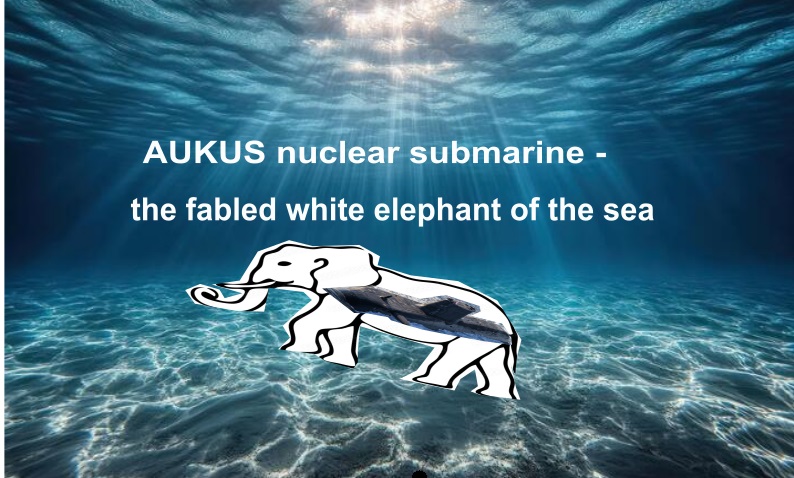
Australians deserve the truth
about
AUKUS – https://aukuspublicinquiry.com/

PETITION – To: Prime Minister Anthony Albanese and the Australian Labor Government

of the week – Australians for War Powers Reform (AWPR)
To see nuclear-related stories in greater depth and intensity

