Beyond Uranium Canberra. Group calls for an end to Kimba waste plan, wants Inquiry into nuclear waste management
Many thousands of Australians live on transport corridors and have not been informed about the risks or given a say.
The federal regulator has stated that
the ANSTO waste is safe where it is and there is no urgent need to
move it. Further, continuing access to nuclear medicine is not
dependent on a nuclear waste dump and the absence of such a
facility has not hindered the practice of nuclear medicine.
Beyond Uranium Canberra. re National Radioactive Waste Management Amendment (Site Specification, Community Fund and Other Measures) Bill 2020 [Provisions]. Submission No. 59
Beyond Uranium Canberra believes a full independent inquiry into the
best way to manage our most dangerous waste must be held. The
government must stop targeting remote and regional areas and give
Aboriginal people a right of veto for proposals that threaten their
country and culture.
We believe that nuclear power has no role in Australia’s energy future
and is a dangerous distraction from the climate challenges facing
Australia. Although a pro-nuclear NSW upper house inquiry has been
initiated by One Nation MLC Mark Latham who has recommended
removing the state’s long-standing legislative ban on uranium mining
and opening the door to nuclear power, Labor committee members
have reaffirmed their party’s opposition to uranium mining and
nuclear energy.
The inquiry report recommends the repeal of the Uranium Mining and
Nuclear Facilities (Prohibitions) Act , but a dissenting statement by
Labor committee members states that a ‘Labor Government will
maintain a ban on uranium exploration, extraction and export’ and a
‘Labor Government will not introduce nuclear power in NSW’.
The Australian Conservation Foundation has said Australia is blessed
with outstanding renewable resources and does not need to explore
dangerous nuclear energy options. The state ban on uranium mining
in NSW should remain. Uranium mining in NSW would risk the health
of the environment and regional communities for scant promise of
return. There is little to be gained and a lot to lose. We have no
confidence in nuclear reactor concepts that do not exist in the real
world of civilian electricity production. Small nuclear reactors exist on
paper, in corporate funding pitches and on military submarines – they
are not a credible response to the climate crisis.
Australia’s embattled uranium sector has been hard hit by the
commodity price collapse that followed the 2011 Fukushima nuclear
crisis, which was fuelled by Australian uranium. Since then uranium
operations have been routinely deferred or scrapped in jurisdictions
A broad coalition of civil society organisations, representing millions
of Australians, last year declared nuclear power has no role in
Australia’s energy future and is a dangerous distraction from real
progress on the climate challenges facing Australia.
Most of Australia’s waste is currently produced and stored at Lucas
Heights, south of Sydney, and ANSTO has acknowledged it can be
managed on-site for decades. The federal regulator has stated that
the ANSTO waste is safe where it is and there is no urgent need to
move it. Further, continuing access to nuclear medicine is not
dependent on a nuclear waste dump and the absence of such a
facility has not hindered the practice of nuclear medicine.
Most Australians are opposed, and affected communities are deeply divided.
Many thousands of Australians live on transport corridors and have not been informed about the risks or given a say. The ‘broad community consent’ the federal minister seeks does not exist.
Employment promises are deeply implausible and have been
repeatedly inflated. Agriculture and tourism are both market-sensitive
sectors and any planned facility could negatively impact these
industries.
A full independent inquiry into the best way to manage our most
dangerous waste must be held. The government must stop targeting
remote and regional areas and give Aboriginal people a right of veto
for proposals that threaten their country and culture. There are
significant cultural heritage concerns at and opposition from many
Aboriginal Traditional Owners where mining is allowed.
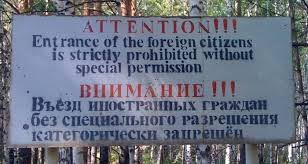
Russia: big rise in coronavirus cases, and the pandemic’s danger to their secret nuclear cities.

|
Concern as coronavirus threatens Russia’s closed ‘nuclear cities’ https://www.theguardian.com/world/2020/apr/28/concern-as-coronavirus-threatens-russias-closed-nuclear-cities
Rosatom nuclear chief warns of ‘particularly alarming situation’ in three areas as country reports biggest daily rise in cases, Reuters in Moscow 29 Apr 2020 Alexei Likhachev, Rosatom chief, said the pandemic ‘creates a direct threat’ to Russia’s nuclear cities. The head of Russia’s state-run nuclear corporation has expressed concern about the spread of the new coronavirus to three “nuclear cities”, including one that houses a top-secret research institute that helped develop the Soviet atomic bomb. The cities are closely linked to Russia’s nuclear industry, which is managed by the Rosatom corporation. Several are closed to foreigners and Russians require special clearance to enter them as facilities located there are closely guarded secrets. Rosatom chief Alexei Likhachev said special deliveries of ventilators and personal protection equipment (PPE) were being sent to the closed town of Sarov, east of Moscow, and other towns where dozens of cases of the virus have been registered. “This [pandemic] creates a direct threat to our nuclear towns. The situation in Sarov, Elektrostal [and] Desnogorsk is today particularly alarming,” he said in an online speech to Russia’s nuclear industry workers. “The situation in Sarov is exacerbated by an outbreak of the illness in the nearby Diveyevo monastery,” he said, without elaborating further. Likhachev made his remarks on a day when Russia reported its biggest daily rise in new coronavirus cases. Russia now ranks eighth worldwide with 93,558 confirmed cases, though its death toll of 867 is still far below that of many other countries. Moscow, which accounts for more than half of Russia’s cases, and many other regions have imposed stay-at-home orders to curb the spread of the virus. Sarov, which was so secret that it did not appear on maps until the breakup of the Soviet Union in 1991, remains an important part of Russia’s nuclear military complex, defence experts say. It is home to a research institute that gained prominence last year when five of its scientists died in a mysterious accident at a military testing site in the far north. Rosatom said the incident had occurred during a rocket engine test on a sea platform. Some US experts said they suspected it had been a botched test of a new missile vaunted by the president, Vladimir Putin. Last week, Rosatom said seven people at Sarov’s All-Russian Scientific Research Institute of Experimental Physics had been diagnosed with coronavirus, bringing the total number of cases in the city – which has a population of about 95,000 – to 23. It said the outbreak in Sarov had begun when a retired couple returned to the city from a Russian holiday resort and that more than 100 people had since been isolated to stop it spreading further. |
|
For General Electric, offshore wind looks like a winner, but Small Nuclear Reactors a costly folly.
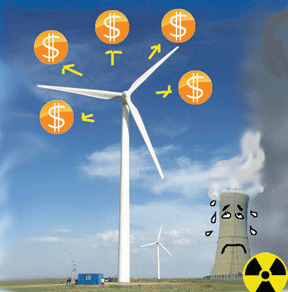 GE Power Plays: Wind Might Blow Coal, Gas And Nuclear Away, Seeking Alpha, Apr. 29, 2020 Keith Williams
GE offshore wind: massive offshore turbine Haliade-X 12MW looks like a winner.
GE-Hitachi Nuclear Energy may be a receding opportunity.
GE might sell its steam power business and rationalise its fossil fuel interests.
The power and renewables businesses are important in considering investment in GE.
………. Nuclear Small Modular Reactors : GE-Hitachi BWRX-300
There is a lot of talk in the nuclear industry and also in political circles from groups who are opposed to solar PV and wind developments, yet who acknowledge the need for low emissions technologies. The World Nuclear Association (WNA) has an excellent summary of many proposed developments in the area of Small Modular Nuclear Reactors (SMRs). The list of projects is long but many (most) seem to be struggling. A key point from the WNA report is the following : “Licensing is potentially a challenge for SMRs, as design certification, construction and operation licence costs are not necessarily less than for large reactors.” This is a huge red flag for any SMR project.
A second objection is cost of nuclear power versus solar PV/wind plus storage. There is a lot of information about these relative costs, including well into the future. I am not aware of any studies that suggest that any nuclear technology will be able to compete with renewables and storage on price. A recent study (December 2019) by the Australian Energy Market Operator (AEMO) and CSIRO concluded that SMR nuclear reactors will generate power costing ~8x that of rooftop or solar PV and wind, with solar and wind costs of power generation being similar.
……. With Small Modular Reactors the poster child of nuclear power supporters, it is clear that there is a lot riding on this potential saviour for the nuclear industry after Fukushima and recent delays and cost blowouts in the European (especially UK, French and Finnish) nuclear industries.
With current focus on emissions reductions and the climate emergency, this is an excellent time for low emissions technologies. However, the need is now and renewables (solar PV and wind) plus storage (pumped hydro and batteries) are making a lot of progress in addressing the needs. My question is whether the cost structure and long lead times mean that nuclear technology is too expensive and late to play a part.
A recent summary of the current state of the nuclear industry as a whole is depressing reading for someone who is enthusiastic about the nuclear industry’s prospects. A lot has to happen in the next decade and SMR technology isn’t ready yet. Is GE investing a lot in a technology that can’t compete with the dramatic advances in solar PV, wind and battery storage?……
GE’s adventures in nuclear developments seem like the kind of speculative play GE could happily fund when it was one of the world’s biggest and most powerful engineering companies. It doesn’t have that status anymore and my take is that it needs to cut its cloth and focus on projects that will have more immediate commercial outcomes. Of course, that is asking for a big rethink about how GE sees itself, but does it really have a choice if it wants to survive?
Offshore wind business
While there is some apprehension in the wind industry, especially in the US and China, as changes in regulations come into force next year, and 2020 has been messed up by COVID-19, there is a long-term future for wind power; offshore wind prospects look huge………
GE Renewable Energy is a major wind turbine supplier, with more than 42,000 of its turbines (mostly onshore) installed. Its role in the wind industry is extensive, from manufacture, digital optimization, operations and maintenance. Its onshore turbines range in size from 1MW to 5MW. GE installed ~50% of onshore turbines in the US last year, a 40% increase compared with the number of onshore turbines it installed in the US in 2018.
The offshore market is still emerging, with turbines substantially bigger than those used onshore. …..
The area that looks to me as if it could become a big winner is in offshore wind turbine developments, ….
A lot of investors have GE in their portfolios and a lot more are probably reflecting on whether GE might once again become a secure safe-haven investment. My biggest issue with GE is that it seems to me it is yet to understand that it is no longer the huge and dominant business that can afford to make big bets that burn a lot of cash. The current SMR nuclear programs in GE seem to be in this category. They have a very low chance of success but require major resources. I’d prefer not to have these distractions in a company I invest in….. https://seekingalpha.com/article/4340805-ge-power-plays-wind-might-blow-coal-gas-and-nuclear-away
AEMO lays out “action plan” to manage 75 pct wind and solar by 2025 — RenewEconomy

AEMO says there are no technical issues to prevent main grid operating at 75% renewables by 2025, but it needs market rules and regulations to catch up and be flexible. The post AEMO lays out “action plan” to manage 75 pct wind and solar by 2025 appeared first on RenewEconomy.
via AEMO lays out “action plan” to manage 75 pct wind and solar by 2025 — RenewEconomy
Zero contact and zero emissions: “Covid safe” electric taxis to launch in Sydney — RenewEconomy

Fleet of 120 electric taxis offering hygienic transport alternative will launch in Sydney in coming weeks, the first in planned 2,000 fleet as part of a “Clean Air Taxi” initiative by new e-taxi platform ETaxiCo. The post Zero contact and zero emissions: “Covid safe” electric taxis to launch in Sydney appeared first on RenewEconomy.
via Zero contact and zero emissions: “Covid safe” electric taxis to launch in Sydney — RenewEconomy
Emissions fall for first time since 2015, as renewables set new records — RenewEconomy

Australia’s emissions in 2019 fell to their lowest level in four years, but we are still a long way from the cuts needed to meet the Paris Agreement targets. The post Emissions fall for first time since 2015, as renewables set new records appeared first on RenewEconomy.
via Emissions fall for first time since 2015, as renewables set new records — RenewEconomy
Cherry Tree wind farm delivers first generation to Victorian grid — RenewEconomy

The 57MW Cherry Tree wind farm near Seymour delivers first power to the grid in Victoria, just under two months after last of the project’s turbines were installed. The post Cherry Tree wind farm delivers first generation to Victorian grid appeared first on RenewEconomy.
via Cherry Tree wind farm delivers first generation to Victorian grid — RenewEconomy
Taylor, department refuse to release findings of ‘expert panel’ into emissions reductions — RenewEconomy

Angus Taylor again refuses to details of advice to government about energy and emissions policies, refusing a RenewEconomy FOI request. The post Taylor, department refuse to release findings of ‘expert panel’ into emissions reductions appeared first on RenewEconomy.
The week in nuclear and climate news – Australia

While we are preoccupied with the pandemic, global heating is not going away. Climate Change Made 2019 The Warmest Year On Record. Eleven of 12 hottest years have occurred since 2000, new climate report warns. What happens after coronavirus will determine our climate‘s future.
Coronavirus illustrates the unsafety of nuclear facilities. In the USA , and presumably in Russia and other countries, too, nuclear power stations have to be refuelled, a process that involves many hundreds of workers – a real problem for “social distancing”. Compare that situation with solar and wind power plants, where the fuel is delivered directly, all by itself – requiring no transport, no armies of workers.
That, and other considerations, such as astronomic costs, do not deter the American government, locked as it is in the embrace of the nuclear lobby. Now they are coming straight out with the admission, or perhaps the boast, that new nuclear reactors are essential for the nuclear weapons industry. I am sure that it is the same in Russia.
A bit of good news – For the First Time in 240 Years, White-Tailed Eagles Spotted Flying Over England
AUSTRALIA
Covid 19 shows that Australia’s security means a lot more than military preparedness.
Australia goes backwards in latest world press freedom index.
Investigative journalism – Australian govt’s devious ploy to further dispossess the Bangarla Aboriginal people.
Current Review of Environment Protection and Biodiversity Conservation Act (EPBC) ? – it’s all about promoting the polluters.
Another revolving door– Air Chief Marshal (ret’d) Mark Binskin AC straight into BAE warships maker.
NUCLEAR. Federal govt’s Kimba nuclear waste dump plan
Kimba community’s $20 Million dollars can only be accessed ONCE THE NUCLEAR DUMP IS UP AND RUNNING!
South Australia’s Greens fight to stop nuclear waste dumping on Kimba .
SUBMISSIONS
An initial brief look at the submissions to the Senate Nuclear Waste Bill Inquiry.
- In Kimba “Informed Consent” not possible, as the community was not properly informed.
- Geraldine Gillen: Napandee nuclear waste dump -illegal, damaging to agriculture’s image, unwanted, unnecessary.
- Susan Craig: South Australia’s $27.9 billion food, wine and tourism markets endangered by Kimba nuclear waste dump plan.
- Caring for South Australia reject nuclear waste dumping: it will jeopardise South Australian food production.
- Katrina Lester: major South Australian Aboriginal groups not consulted in Kimba nuclear waste dump decision.
- Ngoppon Together Reconciliation Group: Kimba nuclear waste dump opposed by Indigenous, and other South Australians.
- Annie McGovern: stop pretending that the Kimba nuclear waste dump is a”medical necessity”.
- Kim Mavromatis on Radioactive Waste Bill: community consent? transport dangers, on agricultural land. poor process.
- Brett Stokes: South Australian law has been repeatedly breached by the deceptive National Radioactive Waste Dump plot.
CLIMATE. Australia’s climate experts urge govt to use rebuilding economy to combat global heating. Planning for waterways – a vital need, as Australia’s river systems are affected by global heating.
No green new deal for Australia as Coalition tightens embrace of fossil fuels. Fossil fuel web leading Australia to a Deadly Recovery. Govt scheme to underwrite gas, hydro and coal power needs investigation – Zali Steggall. When Coalition spends big on oil, it misses a huge green economic opportunity for Australia. Emissions Reduction Minister Angus Taylor Taylor to loosen Australia’s lax fuel standards to support oil sector. Former PM Turnbull says his biggest leadership failure was on climate change
Queensland’s Supreme Court bars Aboriginal activists from Queensland’s Adani coal mine site.
RENEWABLE ENERGY. Australian rooftop solar continues to weather Covid-19 storm – at “very healthy levels”. South Australia could meet state Liberals’ 100 pct renewables target 5 years early. Australia’s main grid sets new milestone for negative prices over weekend. NSW government paves way for more – and bigger – rooftop solar systems. AEMO to resume new connections after solar constraints lifted in West Murray. On-site solar is key to cost competitive renewable hydrogen. Huge Dundonnell wind farm powers past 100MW-mark in Victoria. Wind and solar could play key role in future of Australia’s aluminium industry . ARENA makes case for more funding, points to jobs, costs and investment gains.
INTERNATIONAL
To save the planet, cultural, social and political transformation is essential; new technologies only part of the answer. Arctic marine life threatened as a result of Alaskan sea ice disappearing. International climate ministers meet to discuss green recovery post COVID-19. European Solar Generation Breaks Records, As Coronavirus Shutdowns Reduce Air Pollution.
Animals in radiation zones are not doing well.
Occupational Radiation Exposure: Serious Risks and Safety Solutions.
Animals in radiation zones are not doing well.
Kimba community’s $20 Million dollars can only be accessed ONCE THE NUCLEAR DUMP IS UP AND RUNNING!

|
Kazzi Jai Fight To Stop Nuclear Waste In The Flinders Ranges, 27 Apr 20, The “Advance Money” suggested b
 y the Kimba Council to come out of the $20 Million dollars can only be accessed ONCE THE DUMP IS UP AND RUNNING! The $20 Million Dollars – is part of the $31 Million Dollars – which is a ONCE OFF PAYMENT for a nuclear dump which will be operational and accepting nuclear waste for 100 years, then closed and monitored for a further 200 years until radioactive levels of the permanently disposed above ground Low Level Nuclear waste decrease to normal background levels. What happens to the 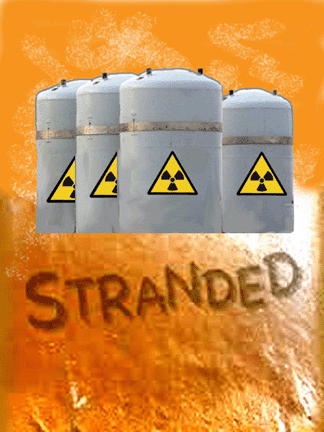 above ground dry storage “temporary” Intermediate Level Nuclear Waste is anyone’s guess – most likely will become STRANDED OR ZOMBIE WASTE – which remains dangerous for 1000’s of years! What is the other $11 Million dollars of the $31 Million used for? $8 million is made available ONLY FOR FOUR YEARS for community skills and development during the licensing and construction period of the dump. The up to $3 Million is available ONLY FOR THREE YEARS and is to “strengthen Indigenous skills training and cultural heritage protection in the community”. The Community Benefits Program Money otherwise known as Bribe money, is only spent on things which are visible – usually up to $100,000 dollars for each item max. suggested. The community are “owed” up to $2 million dollars for staying in “the program” for the last year, and it is managed through AusIndustry. There is no way it is spent on destitute people….. Because Minister Canavan left in such a hurry and only “announced” the site – it is still in limbo. If he had declared the site as per the CURRENT ACT…then there are still grounds to appeal. HOWEVER the NEW MINISTER Keith Pitt wants to amend the Act so that the Napandee site IS WRITTEN INTO THE LEGISLATION – which means there is NO APPEAL PROCESS apart from arguing about it through Constitutional Law – which is a totally different ball game!
That is my understanding. https://www.facebook.com/groups/941313402573199/ |
|
A $20 MILLION fund to compensate the Kimba community for hosting a contentious radioactive waste dump should be indexed because the COVID-19 pandemic is likely to further delay the project, the local council says.
Opposition against the project continues to surface with a parliamentary Joint Committee on Human Rights finding there was a significant risk that indigenous peoples were not adequately consulted, and their right to culture and self-determination was not fully protected.
Laws are before the Federal Parliament to formalise the decision to make Napandee, on the Eyre Peninsula, the site for a repository and give it $20 million to support the long-term viability of the town.
But leaders of the Kimba Council say it has already spent five years involved in the site selection process.
The council has already planned to use the fund for a $1 million expansion of Kimba’s health centre and agricultural research and development.
South Korea’s government dismissed rumours about North Korean leader Kim Jong Un being gravely ill
|
North Korean leader Kim Jong-un health rumours dismissed by South Korean intelligence, ABC News, 27 Apr 20, South Korea’s Government has dismissed rumours that North Korean leader Kim Jong-un is in a fragile condition, as speculation about his health intensifies amid the North’s silence on his whereabouts. Unification Minister Kim Yeon-chul told a closed-door forum in Seoul that South Korea had “enough intelligence to confidently say that there are no unusual developments” in rival North Korea that would back up speculation about Mr Kim’s health, his ministry said. The minister did not reveal what specific intelligence led to that conclusion, but stressed that it was reached after a thorough analysis. His comments are a reiteration of earlier South Korean statements that Mr Kim appeared to be handling state affairs normally and that no unusual activities had been detected in North Korea. Those comments, however, failed to dispel the rumours about Mr Kim, partly because past outside intelligence reports on developments in North Korea have sometimes turned out to be wrong. ….. As the absolute leader of a country with a nuclear weapons program, Mr Kim’s health is a matter of intense interest both regionally and globally. If something were to happen to him, it could lead to instability in North Korea. Mr Kim hasn’t publicly anointed a successor, and that has prompted questions about who would take control of North Korea if he is gravely ill or dies….. serious unrest could occur if a power struggle erupts between those supporting the Kim dynasty and those who want non-Kim rule…….. https://www.abc.net.au/news/2020-04-28/kim-jong-un-health-rumours-south-korea-intelligence/12191504 |
|
USA government puts nuclear industry ahead of public health risk
As Pandemic Rages, Federal Nuclear Regulators Put Keeping Reactors Running Ahead 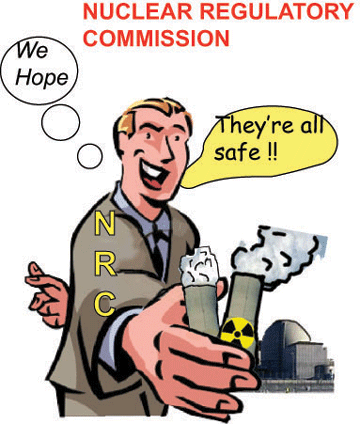 of Public Health and Safety https://www.ewg.org/energy/23141/pandemic-rages-federal-nuclear-regulators-put-keeping-reactors-running-ahead-public-27 Apr 20,
The federal government’s toothless nuclear “watchdog” has historically shown more concern for keeping dangerous aging reactors running than for Americans’ safety from a nuclear accident. So how is the Nuclear Regulatory Commission, or NRC, responding to the coronavirus pandemic?
-
-
- Letting nuclear power plants cut back their workforces to facilitate social distancing – but letting them make up for the reduced numbers by requiring the remaining control room operators and other key employees to work back-to-back 84-hour weeks, heightening the danger of worker exhaustion that could contribute to a reactor accident.
-
- Telling the agency’s on-site safety inspectors – two or more resident inspectors at each plant – to work from home, and allowing plants to defer required inspections of piping systems critical to cooling the reactors.
- Keeping reactor refueling crews of up to 1,500 technicians traveling from plant to plant, working in crowded conditions and staying in nearby communities, increasing the likelihood of crew members spreading the virus
The U.S. has 58 nuclear power plants housing 96 nuclear reactors in 29 states. Each plant employs 500 to 1,000 workers. Every 18 to 24 months, plants are powered down for four to six weeks for refueling, done in the spring or fall, when electric demand is low. According to the Nuclear Energy Institute, or NEI, the lobbying arm of the nuclear industry, refueling is scheduled at 56 plants this year.
On March 20, the NEI wrote the NRC to request that refueling crews have “unfettered access to travel across state lines” and unrestricted access to local hotels and food services, and to be prioritized for personal protective equipment. The NRC responded by allowing a reduction in the required number of plant personnel, and allowing an increased work week for remaining employees of 12-hour days for up to 14 days straight.
That worries Beyond Nuclear, a nonprofit that advocates “for an energy future that is sustainable, benign and democratic.”“Nuclear plant operators on extended 12-hour shifts, who can now be assigned to work two consecutive 84-hour weeks, will suffer excessive fatigue,” Beyond Nuclear’s director of plant oversight, Paul Gunter, said in a news release. “This not only compromises their immune systems, but makes catastrophic mistakes more likely.” The release cited the infamous Three Mile Island nuclear accident, in 1979, which it said was attributed to “mechanical failure worsened by operator fatigue and error.”
One week after the Nuclear Institute’s letter, the NRC directed resident inspectors to work from home, “only coming on site for risk-significant in-plant operations.” The agency has also allowed utilities operating the plants to request postponement of inspections and maintenance. “There are some ancillary activities during an outage that can be deferred,” an NRC spokesperson told Bloomberg.Among the “ancillary” activities that can be deferred is inspection of piping critical to cooling the reactors. Beyond Nuclear says three plants, in Illinois, Florida and Texas, have requested 18-month deferments of inspections of steam generator tubes that are subject to extreme heat, radiation and vibration. Failure of the piping, says the International Atomic Energy Agency, could lead to “core damage or large release events” of radiation.At least four nuclear plants – Fermi 2, near Detroit, Susquehanna, near Berwick, Pa., Limerick, near Pottstown, Pa., and Vogtle, near Waynesboro, Ga. – have seen cases of COVID-19
The Pottstown Mercury reports that local officials asked Exelon, the owner of Limerick, to postpone refueling because they found the company’s plans to address the pandemic inadequate. Regardless, the company went ahead with refueling and didn’t begin social distancing until workers told the press they were “terrified” that they’re working in a “breeding ground” for COVID-19.Nearly 30 Limerick workers have tested positive for the virus, according to The Philadelphia Inquirer. But Vogtle has by far the biggest outbreak, with 143 workers testing positive. It’s unknown how many nuclear plant workers nationwide have tested positive, because the NRC has not reported cases.“The key question,” Edwin Lyman, director of nuclear power safety for the Union of Concerned Scientists, told Utility Dive, “is how much additional risk will the NRC allow nuclear plants to accept in order to keep them running during the crisis?”Good question.
-
International climate ministers meet to discuss green recovery post COVID-19
 International climate ministers meet to discuss green recovery post COVID-19 https://www.miragenews.com/international-climate-ministers-meet-to-discuss-green-recovery-post-covid-19/ This week environment ministers from 30 countries will meet in a two-day (27 – 28 April) online conference to discuss how to organise a green economic recovery after the worst of the COVID-19 pandemic is over. They will also aim to agree on how to proceed with ambitious carbon reductions despite the postponement of this year’s UN Climate Change Conference (COP26).
The ‘Petersberg Climate Dialogue’ will be hosted by Svenja Schulze, Germany’s Federal Environment Minister and Alok Sharma, the UK Secretary for Business and Energy and designated President of COP26.
Helen Clarkson, CEO of The Climate Group, an international non-profit with a mission of accelerating climate action said:
“The impact of COVID-19 has been devastating. As the world seeks to address the longer-term impact of this crisis, there is an opportunity for governments to help rebuild society differently. A side effect of the reduced economic activity we are seeing is cleaner air and clearer skies – through positive international cooperation we can begin to understand how we keep those things without compromising on economic growth.
“We have received signals from our partners, including 300 of the world’s largest businesses, that their commitment to climate action overwhelmingly remains in spite of the challenging circumstances. Just last week, nine members of our global electric vehicles initiative EV100, including the likes of Ingka Group, Unilever and LeasePlan, called on the EU to retain 2020 CO2 targets for cars, vans and trucks.
“Electric vehicles and renewable, efficient energy are profitable, long term investments. We need these smart green stimulus policies to not just maintain momentum but rapidly ramp-up investment to another level, and help deliver the halving of emissions we need in this decade.”
Animals in radiation zones are not doing well

above – Chernobyl bird at right has facial tumour
Not thriving, but failing https://beyondnuclearinternational.org/2018/03/11/not-thriving-but-failing/ https://beyondnuclearinternational.org/2018/03/11/not-thriving-but-failing/ Animals in radiation zones are not doing well, By Linda Pentz Gunter
It started with wolves. The packs around the Chernobyl nuclear plant, which exploded on April 26, 1986, were thriving, said reports. Benefitting from the absence of human predators, and seemingly unaffected by the high radiation levels that still persist in the area, the wolves, they claimed, were doing better than ever.
Appearances, however, can be deceptive. Abundant does not necessarily mean healthy. And that is exactly what evolutionary biologist, Dr. Timothy Mousseau and his team began to find out as, over the years, they traveled to and researched in and around the Chernobyl disaster site in the Ukraine. Then, when a similar nuclear disaster hit in Japan — with the triple explosions and meltdowns at Fukushima Daiichi on March 11, 2011 — Mousseau’s team added that region to its research itinerary.
Mousseau has now spent more than 17 years looking at the effects on wildlife and the ecosystem of the 1986 Chernobyl nuclear disaster. He and his colleagues have also spent the last half dozen years studying how non-human biota is faring in the wake of Fukushima. Ninety articles later, they are able to conclude definitively that animals and plants around Chernobyl and Fukushima are very far indeed from flourishing.
Mousseau’s findings strongly contradicted earlier work including the 2006 Chernobyl Forum report which claimed the Chernobyl zone “has become a wildlife sanctuary,” and a subsequent article published in Current Biology in 2015 that said wildlife was “thriving”around Chernobyl.
“I suppose everyone loves a Cinderella story,” speculated Mousseau, who is based at the University of South Carolina. “They want that happy ending.” But Mousseau felt sure the moment he read the Forum report, which, he noted, “contained few scientific citations,” that the findings “could not possibly be true.
What Mousseau found was not unexpected given the levels of radiation in these areas and what is already known about the medical effects of such long-term exposures. Birds and rodents had a high frequency of tumors.
“Cancers are the first thing we think about,” Mousseau said. “We looked at birds and mice. In areas of higher radiation, the frequency of tumors is higher.” The research team found mainly liver and bladder tumors in voles and tumors on the head, body and wings of the birds studied.
But Mousseau wanted to look beyond cancers, which is what everyone expects to find and what researchers had looked for, but only in humans. There were few wildlife studies, a fact Mousseau found surprising, given nature’s ability to act as a sentinel for likely impending human health impacts.
Mousseau and his fellow researchers found cataracts in birds and rodents. Male birds had a high rate of sterility. And the brains of birds were smaller. All of these are known outcomes from radiation exposure.
“Cataracts in birds is a problem,” Mousseau said. “A death sentence.”
Mental retardation has been found among children exposed to radiation in utero. Mousseau and colleagues discovered the same pattern in the birds they studied. “Birds already have small brains, so a smaller brain size is a definite disadvantage,” he said.
There were also just fewer animals in general. “There were many fewer mammals, birds and insects in areas of higher radiation,” Mousseau said. And they had their hunch as to why.
He and his colleagues extracted sperm from the male birds they caught and were shocked to find that “up to 40% of male birds in the radiologically hottest areas were sterile.”
The birds’ sperm were either deformed or dead. None would be able to reproduce. The discovery, he said, was “not at all surprising. These are the levels of radiation known to influence reproduction. At the same time, there is no safe level of radiation below which there aren’t detectable effects.”
Fewer birds have already been observed in the contaminated areas around Fukushima, said Mousseau. “Although it’s too early to assess the long term impact on abundance and diversity around Fukushima, there are very few butterflies and many birds have declined in the more contaminated areas. If abundance is compressed, biodiversity will follow.”
The consequences of radiation exposure, says Mousseau, “will have a tremendous impact on the quality of life of these animals, and the length of quality of life. It need not necessarily be cancers,” that cause these damages he said. “There is no doubt that the levels of radiation in Chernobyl and Fukushima generate genetic damage.”
Read more about Dr. Timothy Mousseau’s work.
Wind and solar could play key role in future of Australia’s aluminium industry — RenewEconomy

Wind and solar could play key role in the future of Australia’s aluminium industry, particularly as dependence on coal becomes a reliability rather than an asset. The post Wind and solar could play key role in future of Australia’s aluminium industry appeared first on RenewEconomy.
via Wind and solar could play key role in future of Australia’s aluminium industry — RenewEconomy
1 This month
25 October – Film –Britain’s Nuclear Bomb Scandal: Our Story – part of the Adelaide Film Festival,
Screening and Conversation
A screening of Britain’s Nuclear Bomb Scandal: Our Story (2024) followed by a talk with 2026 Bettison and James Awardee and Tradtional Owner Karina Lester in conversation with Simone Tur.
When: Sun 25 Oct, 12:00pm-Screening, 1:15pm-Talk
Where: The Mercury
Free admission, register below by clicking on BUY TICKETS and select free event tickets, at end of web page:
https://www.adelaidefilmfestival.org/program/2026/britains-nuclear-bomb-scandal-our-story
.
Australians deserve the truth
about
AUKUS – https://aukuspublicinquiry.com/

PETITION – To: Prime Minister Anthony Albanese and the Australian Labor Government

of the week – Australians for War Powers Reform (AWPR)
To see nuclear-related stories in greater depth and intensity

