Bushfire Survivors for Climate Action taking legal action against NSW Environment Protection Authority
  ‘Kick them into action’: Fire group takes EPA to court over climate, SMH, By Peter Hannam, April 20, 2020 Lisa Roberts spent 25 years building a native plant business that was as sustainable as they come, with off-grid solar power and water harvesting, only to see it go up in flames in the recent bushfires.Her home and nursery in Wandella in southern NSW reduced to rubble, Ms Roberts fled to Canberra, powerless to act as fires threatened another venture in nearby Pialligo. Living in the smoke-choked capital also damaged her vocal cords, which have still not recovered. “A part of me totally rages at the world for its totally inadequate response to climate change,” Ms Roberts said. “Everybody’s safety is at risk.” That anger is being now channelled into a legal challenge against the NSW Environment Protection Authority. Bushfire Survivors for Climate Action, of which Ms Roberts is a member, began the suit last week with the NSW Environmental Defenders Office “to kick [the EPA] into action”, she said. EDO chief executive David Morris said the case, in the Land and Environment Court, would seek to force the EPA, which does not have a climate policy, to use its powers to keep communities safe from the increasingly severe impacts of a warming world. Mr Morris said the EPA was chosen as a test case among similar agencies nationally in part because of a section of the Protection of the Environment Operations Act 1997. That section requires the agency to “develop environmental quality objectives, guidelines and policies to ensure environment protection”. “It’s an opportunity for the EPA to recognise they have a legal obligation to take action,” he said. “They should have a policy and a plan to address the greatest threat to the environment.”…….. https://www.smh.com.au/environment/climate-change/kick-them-into-action-fire-group-takes-epa-to-court-over-climate-20200418-p54kzl.html
|
|
Climate Change Multiplies the Threats of Infectious Diseases
Climate Change Multiplies the Threats of Infectious Diseases, BY Daniel Ross, Truthout, April 19, 2020 
As the novel coronavirus continues to rage like a wildfire across the planet, its devastating toll has left many asking whether climate change — another multifaceted phenomenon with global reach — has played a part in spreading, even triggering, the pandemic. Some, like Katharine Hayhoe, a climate change scientist and professor of public policy at Texas Tech University, have been able to provide answers.
“Climate change didn’t cause the pandemic, and climate change directly causes very few of them,” Hayhoe told Truthout. “But what climate change does is it interacts with, and in many cases has the potential to exacerbate the impacts.”
For those well-versed in the mechanics of climate change, this comes as no surprise — scientists, policy makers and other experts have long acknowledged the links between global warming and the spread of infectious diseases, promulgating the sorts of findings described in the wide-ranging 2018 Intergovernmental Panel on Climate Change report, detailing what efforts are needed to limit global warming to 1.5 degrees Celsius.
Dig down, and this multilayered issue has knock-on effects — from the way rising temperatures exacerbate certain health problems to the disruptions that extreme weather events have on the global supply chain — that are inextricably linked with one another. What’s more, the governmental response to the coronavirus crisis, say experts, offers a troubling glimpse into what might happen in the future as the global thermometer inches upwards.
“What it underscores in the first instance is how underprepared we are,” said Sherri Goodman, a senior fellow at the Wilson Center’s Environmental Change and Security Program and Polar Institute.
As a former first deputy undersecretary of defense in environmental security, she coined the term “threat multiplier” to describe climate change’s kaleidoscopic impacts.
“Our systems — institutional, infrastructure, health, emergency response — could all be overwhelmed from the climate crisis,” Goodman said, warning that the time for wholesale climate resiliency preparedness is upon us. “What we have now is history accelerating itself — things are happening so fast.”
“Where Can These People Go?”
Perhaps most salient in terms of current events is the issue of zoonotic diseases spread between animals and humans, like the COVID-19 virus, which is believed to have originated in bats before being transferred to humans via scaly animals like pangolins. As the world’s population growth continues to rise, natural habitats will continue to be encroached upon and destroyed, not only removing valuable carbon sinks like rainforests but creating environments in which notorious zoonotic disease carriers like bats and rats thrive.
Climate change is also likely to encourage the spread — both in terms of seasonal risk and geographic reach — of “vector-borne” diseases. These are illnesses like West Nile Virus and Lyme Disease that are borne by mosquitoes, ticks and fleas, and already account for a significant number of deaths annually.
According to Sheri Weiser, a professor of medicine at the University of California, San Francisco (UCSF), there’s still much to learn about how rising temperatures are impacting the spread of infectious diseases. “But we know the common cause of climate change and COVID-19 — the globalization that’s driving fossil fuel emissions — contributes to the pre-conditions that pave the way for viruses like that,” Weiser said.
Indeed, there’s already an extensive library of medical literature detailing how climate change can impact human health. Extreme weather events — a symptom of a warming planet — can lead to fluctuating temperatures which have been shown to contribute to and worsen cardiovascular and cerebrovascular diseases, kidney disorders and a host of other illnesses. On top of that, extreme heat and humidity can limit the effectiveness of certain medications used to treat these conditions………
the Trump administration’s slash-and-burn approach to the scientific wing of the federal government is the elephant in the room during the COVID-19 pandemic.
Last September, for example, the U.S. Agency for International Development (USAID) effectively shuttered its PREDICT program, which was charged with identifying and combating new emerging viruses. With the COVID-19 death toll in the U.S. now well into five figures, USAID has injected more than $2 million to kickstart the program, at least temporarily. The Environmental Data and Governance Initiative recently found that the Trump administration has repeatedly, “and sometimes successfully,” sought to cut funding aimed at the Centers for Disease Control and Prevention for fighting global pandemics. Nevertheless, the Trump administration isn’t alone in neglecting science and research; for nearly two decades now, the amount of federal funds funneled toward basic research has shrunk markedly……. https://truthout.org/articles/climate-change-multiplies-the-threats-of-infectious-diseases/?eType=EmailBlastContent&eId=71649a96-ad00-4169-afc2-bb1b572e3345
David Attenborough – humans have last chance to save the planet
|
Attenborough’s grim warning on last chance, Herald Sun, Alison Kershaw, Press Association
April 19, 2020 Sir David Attenborough has urged people to “stop waste of any kind”, saying the world is precious and should be “celebrated and cherished”.
The broadcaster and naturalist warns humans have a “last chance” to change their behaviour and save the planet, as he urged politicians to address “the biggest problem humanity has ever faced”. In an interview on the BBC’s Andrew Marr Show, Attenborough, 93, said it will be the younger generation who will have to make changes because “they will be able to see the consequences of what they do”. He added: “My lot are dying off and we are the ones that caused the problem.” He suggested people should see the world and their time in it as precious, saying “that’s the fundamental attitude”. ….. Attenborough has worked with Netflix to produce an upcoming documentary called A Life On Our Planet which looks at the challenges facing earth and what can be done to address them. https://www.heraldsun.com.au/news/breaking-news/attenboroughs-grim-warning-on-last-chance/news-story/f0dd55d3c63f52df76909dbf4701c4ff |
|
After the pandemic, – the need for a new economic consensus

New Statesman 16th April 2020, To tackle the climate crisis, the world cannot return to normal after
Covid-19. This moment must be used to build a new economic consensus founded on justice, care and sustainability. The same fractures exposed by this pandemic are the fault lines along which the battle for climate justice is fought.
Many of the people most vulnerable in the current crisis will be worst affected by environmental breakdown, while those who are enriched by this pandemic are likely to benefit in the future. Reports this week that UK hedge funds are cashing in on Covid-19 ring eerily similar to now regular stories of investors betting on climate collapse, water
scarcity and crop failure, and investing in the infrastructures and technologies of disaster.
And just as many nations and communities have been abandoned in our response to this pandemic, it is all too easy to imagine a future in which communities from Jakarta to east Yorkshire are left to fend for themselves amid accelerating climate breakdown. Indeed, to imagine it one has only to look at the present.
Post-crisis stimulus should be directed towards green infrastructure and innately low carbon forms of work like health and social care, proven so vital and so undervalued by this crisis. Debts must be written off to allow those countries most vulnerable to climate crisis to build resilience against it. And having exposed austerity as an ideological choice, rather than a necessity, we must ensure these mistakes are never repeated, and social safety nets are both valued and strengthened.
Rapid Transition Alliance 16th April 2020, Andrew Simms: In the debate over the global response to Covid19 a battle of hashtags has broken out between those urging a quick return to ‘normal’, and those saying that ‘normal’ had many problems and the crisis has revealed both the need and an opportunity for changing direction, and a shift of economic purpose.
How rooftop solar owners are saving more while #stayinghome — RenewEconomy

#Stayinghome to help fight Covid-19 is not all bad news for power bills. We asked a number of solar households what they were experiencing at home. The post How rooftop solar owners are saving more while #stayinghome appeared first on RenewEconomy.
via How rooftop solar owners are saving more while #stayinghome — RenewEconomy
“Performance issues” hobble output at ground-breaking solar farm — RenewEconomy

The output at one of Australia’s landmark solar projects, and one of the biggest solar farms in Queensland, has been hobbled by “performance issues.” The post “Performance issues” hobble output at ground-breaking solar farm appeared first on RenewEconomy.
via “Performance issues” hobble output at ground-breaking solar farm — RenewEconomy
The women who told Chernobyl’s story — Beyond Nuclear International

Writers captured the pain — and the truth
via The women who told Chernobyl’s story — Beyond Nuclear International

April 19 Energy News — geoharvey

Opinion: ¶ “Designing An End To A Toxic American Obsession: The Lawn” • Lawns cover 2% of the US. Maintaining them produces more greenhouse gases than they absorb. They are biodiversity deserts that have contributed to vanishing insect populations. They require more irrigation than any agricultural crop grown in the country. But there are alternatives. […]
Parliamentary committee finds that Kimba nuclear waste dump law may breach Indigenous human rights

|
Kimba nuclear waste dump law risks breaching Indigenous human rights, committee finds https://www.abc.net.au/news/2020-04-16/risk-kimba-nuclear-dump-may-breach-human-rights-committee-says/12154474 ABC North and West SA By Gabriella Marchant 17 Apr 20, A cross-party parliamentary committee has found “significant risk” that local Indigenous groups were not consulted about a proposed nuclear waste facility to a standard required under international law.
Key points:
A report by the Joint Committee on Human Rights found that given Barngarla traditional owners unanimously vetoed the proposed facility, the Federal Government’s decision to press ahead with a bill to build it risked breaching Barngarla rights to culture and self-determination. The proposed site outside Kimba on South Australia’s Eyre Peninsula is on land traditionally associated with the Barngarla people and would store Australia’s low to medium-level radioactive waste, most of which is created by nuclear medicine. Two non-binding independent ballots were conducted to gauge community support for the proposal; one for residents in the local government area surrounding the site, the other among Barngarla Determination Aboriginal Corporation members, who largely did not qualify for the first ballot. While more than 60 per cent of voters in the Kimba local government ballot supported the facility, 100 per cent of Barngarla voters rejected the proposal. Rights ‘may not be sufficiently protected’The committee found the site’s nomination seemed to “rest heavily on the local council ballot from which native title holders were excluded, which the Minister uses as evidence of local community support”.
|
|
Scientists predict that 2020 is likely to be the planet’s hottest year on record
2020 expected to be Earth’s warmest year on record, scientists say, Doyle Rice, USA TODAY, 17 Apr 20,
- This year’s warmth is “unusual,” given the lack of a strong El Niño.
- Already, through the first three months of the year, it’s the second-warmest on record.
- There’s a 99.9% chance that 2020 will end among the five warmest years on record.
Federal scientists announced Thursday that 2020 has nearly a 75% chance of being the warmest year on record for the planet Earth.
Already, through the first three months of the year, it’s the second-warmest on record, trailing only the El Niño fueled year of 2016, the National Oceanic and Atmospheric Administration (NOAA) said.
This year’s warmth is “unusual,” given the lack of a strong El Niño, a natural warming of tropical Pacific Ocean water that influences temperatures worldwide, according to Deke Arndt of NOAA’s National Centers for Environmental Information.
He said both February and March were the warmest months on record without an El Niño present. The long-term trend of ongoing heat the planet continues to see is primarily because of the emission of greenhouse gases from the burning of fossil fuels, he said.
Even if 2020 ends up not being the warmest year, NOAA said there’s a 99.9% chance that 2020 will end among the five warmest years on record.
The warmth has been nearly global so far this year: “Record-hot January-through-March temperatures were seen across parts of Europe, Asia, Central and South America, as well as the Atlantic, Indian and western Pacific Oceans,” NOAA said. “No land or ocean areas had record-cold temperatures during this period.”
Climate change:Antarctic glacier retreated 3 miles in 22 years, threatening global sea-level rise
What winter?:Earth just had its second-warmest December-February on record……
Sea-level rise:Greenland and Antarctica are now melting six times faster than in the 1990s https://www.usatoday.com/story/news/nation/2020/04/16/global-warming-2020-expected-warmest-year-record-noaa-said/5144767002/
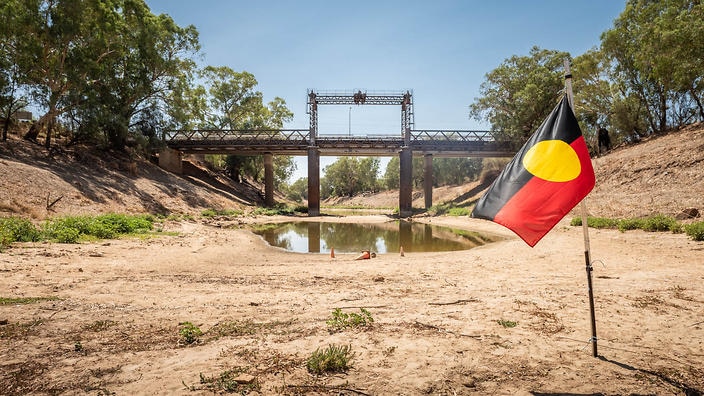
Amid climate change threat to the Murray Darling river system, the States haggle
|
No water, no leadership: new Murray Darling Basin report reveals states’ climate gamble, The Conversation
April 17, 2020 Daniel Connell, Research Fellow, Crawford School of Public Policy, Australian National University A report released today investigating how states share water in the Murray Darling Basin describes a fascinating contrast between state cultures – in particular, risk-averse South Australia and buccaneering New South Wales. Perhaps surprising is the report’s sparse discussion of the Murray Darling Basin Plan, which has been the focus of irrigators’ anger and denunciation by National Party leaders: Deputy Prime Minister Michael McCormack and NSW Deputy Premier John Barilaro. In general terms, the Murray Darling Basin Plan was originally intended to make water management in the Murray Darling Basin more environmentally sustainable. Its critics see it as a restraint on development, and complain it has taken water away from irrigators during a time of extreme drought. In response to McCormack and Barliaro’s criticisms of the plan in late 2019, federal water minister (and senior National Party figure) David Littleproud commissioned Mick Keelty as Interim Inspector General of MDB Water Resources. For the new report, Keelty investigated the changing distribution of “inflows” – water flowing into the River Murray in the southern states. Climate change has brought the inflow to just a trickle. This dramatic reduction over the past 20 years is what Keelty has described as “the most telling finding”. He also investigated the reserve policies under which the three states choose – or don’t choose – to hold back water in Hume and Dartmouth Dams to manage future droughts. Keelty says there’s little transparency or clarity about how much water states are allocated under the Murray Darling Basin Agreement (the arrangement for sharing water between the states which underpins the Basin Plan). This failure in communication and leadership across such a vital system must change. Sharing water across three statesOne major finding of Keelty’s inquiry is that the federal government has little power to change the MDB Agreement between the three states, which was first approved in 1914-15. Any amendment requires the approval of all three governments. To increase the volume of water provided to NSW irrigators, South Australia and Victoria would need to agree to reduce the volumes supplied to their own entitlement holders. That will not happen. Why has the agreement lasted so long? Over the past century it has proved robust under a wide range of conditions. Its central principle is to share water with a proportion-of-available-flow formula, giving each state a percentage of whatever is available, no matter whether it’s a lot, or not much. After receiving its share of the River Murray flows, each state is then free to manage its allocation as it wishes. …… Reliability of water supply What’s more, each state makes its own decision about how its state allocation is shared between its entitlement holders (95% of water goes to irrigators the rest supplies towns and industry). South Australia chooses to distribute a much smaller proportion to its entitlement holders than New South Wales. It also restricted the number of licences in the 1970s. That combination ensures a very high level of reliability in supply. Victoria took a similar approach…….. When climate change is taken into account these differences between the three states result in their irrigators having significantly different risk profiles. The climate change threat to the basin is very realDespite climate denial in the National Party, the threat is very real in the MDB. The report describes a massive reduction in inflows over the past 20 years, approximately half compared with the previous century. One drought could be an aberration, but two begins to look like a pattern. The report also suggests that in many cases irrigator expectations of what should be normal were formed during the wet period Australia experienced between the second world war and the 1990s. Added to this have been business decisions by many irrigators to sell their entitlements and rely on the water market, a business model based on what now seems like unrealistic inflow expectations. In effect, successive New South Wales governments – a significant part of the state’s irrigation sector in the southern part of the state and the National Party – gambled against the climate and are now paying a high price. In desperation, they’re focusing on alternative sources. This includes the water in Hume and Dartmouth held under the reserves policy of the two other states; environmental entitlements managed by the Commonwealth Environmental Water Holder; the very large volume of water lost to evaporation in the lower lakes in South Australia; and the possibility of savings resulting from changes to management of the system by the Murray-Darling Basin Authority. Failure in leadership and communicationFor reasons already outlined, the state reserves policy is not likely to change and use of the Commonwealth Environmental Water Holder environmental water entitlements would not be permitted under current legislation. Management of the lower lakes is being reviewed through another investigation so is not discussed in the report. The report also states that management of the MDB Authority is subject to regular detailed assessment by state governments, and they have assessed its performance as satisfactory. However the report was critical of the performance of all MDB governments with regard to leadership and communications suggesting that failures in those areas were largely responsible for the public concern which triggered its investigation. https://theconversation.com/no-water-no-leadership-new-murray-darling-basin-report-reveals-states-climate-gamble-136514 |
|
With dry and windy conditions, new areas of ‘smoldering’ reported near Chernobyl nuclear plant
The fire began to burn in the region back on April 3, near the town of Pripyat, located over two hours north of the country’s capital of Kiev and near the border with Belarus.
Police say they arrested a 27-year-old man who is being accused of starting the fire last week. On Monday, police said that another local resident burned waste and accidentally set dry grass ablaze.
The location of the fire was reportedly only one kilometer (less than one mile) away from the Chernobyl nuclear power plant, the site of the world’s largest nuclear catastrophe back in April 1986.
However, Greenpeace Russia, on Monday, warned that the fire being in close proximity of the power plant posed a radiation risk.
“Higher-than-usual” radiation levels were first reported by the AP on April 5, and are being carefully monitored as the fire continues.
According to Reuters, Chernobyl tour operator, Yaroslav Yemelianenko, shared on Facebook that the fire was only two kilometers away from where “the most highly active radiation waste of the whole Chernobyl zone is located.” He called on officials to warn people of the danger.
Emergency services said on Tuesday morning that there were still some acreage “smoldering” in the Chernobyl Exclusion Zone, but that the zone contained no open fire.
Acting Chairman of the State Environmental Inspectorate, Yegor Firsov, later said that the fire in the Chernobyl exclusion zone was extinguished, and cited some rain that moved through the region as one helpful factor.
Hundreds of firefighters, as well as several planes and helicopters, battled the blaze for 10 days.
………Strong winds increased the difficulty in containing what’s left of the blaze and new areas of “smoldering” were reported in the Exclusion Zone, but did not pose a threat to any critical facilities, reported officials……..
Dry weather across much of eastern Europe has allowed for a more volatile environment for fire to thrive.
Through April 13, only two percent of the month’s normal rainfall has fallen in Kiev. Since the beginning of 2020, the city has been much drier than normal, only recording 81 mm of rain instead of the average 150 mm.
The dry weather has also caused crop losses already this year across Ukraine, with further damage possible should the dry stretch continue.
Keep checking back on AccuWeather.com and stay tuned to the AccuWeather Network on DirecTV, Frontier and Verizon Fios.
April 17 Energy News — geoharvey

Opinion: ¶ “Coronavirus And The Fragility Of Auto-Centric Cities” • The coronavirus has exposed the ills of continued automobile-centric urban planning practices that adversely impact equity, health, and the climate. Some of us can work at home and conveniently make grocery runs in our automobiles. But many in this country are not so lucky. [CleanTechnica] […]
Thousands rush to S.A. home battery scheme before subsidy winds back — RenewEconomy

More than 5,000 solar households apply for battery subsidy in just five weeks, in a last-minute rush to access a $6000 discount via state government home storage scheme. The post Thousands rush to S.A. home battery scheme before subsidy winds back appeared first on RenewEconomy.
via Thousands rush to S.A. home battery scheme before subsidy winds back — RenewEconomy
1 This month
25 October – Film –Britain’s Nuclear Bomb Scandal: Our Story – part of the Adelaide Film Festival,
Screening and Conversation
A screening of Britain’s Nuclear Bomb Scandal: Our Story (2024) followed by a talk with 2026 Bettison and James Awardee and Tradtional Owner Karina Lester in conversation with Simone Tur.
When: Sun 25 Oct, 12:00pm-Screening, 1:15pm-Talk
Where: The Mercury
Free admission, register below by clicking on BUY TICKETS and select free event tickets, at end of web page:
https://www.adelaidefilmfestival.org/program/2026/britains-nuclear-bomb-scandal-our-story
.
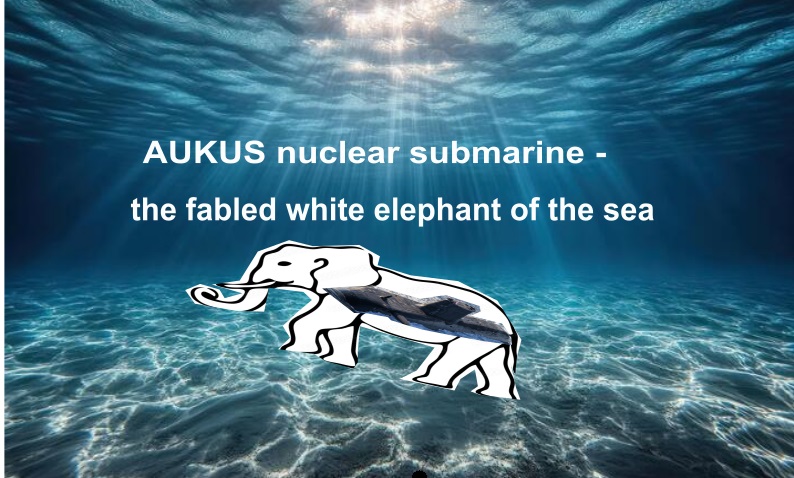
Australians deserve the truth
about
AUKUS – https://aukuspublicinquiry.com/

PETITION – To: Prime Minister Anthony Albanese and the Australian Labor Government

of the week – Australians for War Powers Reform (AWPR)
To see nuclear-related stories in greater depth and intensity

