Nuclear Business as Usual — Mining Awareness +

While other small business go the wall as collateral fallout of COVID19 , the military and civil nuclear global industrial complex continues with business as usual and even seeks to benefit from the pandemic. Here in Cumbria the BAE shipyard at Barrow continues to build its next generation Weapons of Mass Destruction – nuclear submarines…
ARENA future clouded as Taylor fudges on board appointments — RenewEconomy

Future of ARENA remains uncertain after energy minister chooses to renew terms of existing board for only three months. The post ARENA future clouded as Taylor fudges on board appointments appeared first on RenewEconomy.
via ARENA future clouded as Taylor fudges on board appointments — RenewEconomy
April 16 Energy News — geoharvey

Science and Technology: ¶ “Scientists Confirm Dramatic Melting Of Greenland Ice Sheet” • Greenland’s ice sheet melted dramatically in the summer of 2019, researchers confirmed. A study reveals the loss was largely down to a persistent zone of high pressure. If such high pressure zones become regular weather features, future melting could be twice as […]
Australians installed 22,661 home battery systems in 2019 — RenewEconomy

Australian households invested in almost two-and-a-half “Big Batteries” worth of home energy storage in 2019, installing 22,661 systems over the course of the year with a total capacity of 233MWh, and taking further control over their energy supply. The post Australians installed 22,661 home battery systems in 2019 appeared first on RenewEconomy.
via Australians installed 22,661 home battery systems in 2019 — RenewEconomy
SA Water to build solar farm on former oil refinery site — RenewEconomy

SA Water to build a solar farm on a former oil refinery site to help power the Adelaide desalination plant. The post SA Water to build solar farm on former oil refinery site appeared first on RenewEconomy.
via SA Water to build solar farm on former oil refinery site — RenewEconomy
Climate Change Authority launches review into stalled Emissions Reduction Fund — RenewEconomy

Climate Change Authority launches a fresh review of the Morrison Government’s Emissions Reduction Fund, following flatlining project participation. The post Climate Change Authority launches review into stalled Emissions Reduction Fund appeared first on RenewEconomy.
via Climate Change Authority launches review into stalled Emissions Reduction Fund — RenewEconomy
Australia deploying new renewables at ten times global average — RenewEconomy

New report confirms special status of Australia as “global pathfinder” for renewable energy, deploying new wind and solar 10 times faster per capita than the global average. The post Australia deploying new renewables at ten times global average appeared first on RenewEconomy.
via Australia deploying new renewables at ten times global average — RenewEconomy
13 Australian peak Non Government Organisations seek stronger Environmental Law on Nuclear Issues

Joint ENGO Submission on Nuclear Issues as they Relate to the Environmental Protection & Biodiversity Conservation Act Review 2020
This submission is made on behalf of the following national and state peak environment groups:
-
- Australian Conservation Foundation,
- Australian Nuclear Free Alliance,
- Friends of the Earth Australia,
- Greenpeace Australia Pacific,
- Mineral Policy Institute,
- The Wilderness Society,
- Arid Lands Environment Centre,
- Environment Centre NT,
- Environment Victoria,
- Conservation Council SA,
- Conservation Council WA,
- Nature Conservation Council NSW and Queensland Conservation Council.
This submission outlines the importance of retaining s140A of the EPBC Act which prohibits nuclear power; the retention of uranium exploration and mining in the definition of a Nuclear Action and the inclusion of Nuclear Actions as a Matter of National Environmental Significance (MNES).
This submission is made in consideration of the broader objects and principles of the Act and is based on evidence from recent inquiries into both nuclear power and uranium mining. There is clear evidence that nuclear activities can have a significant environmental and public health risk and, in many cases, irreversible impacts, and this is consistent with the current dedicated legislative prohibitions for both nuclear power and scrutiny for uranium mining.
While the current Act does not include a prohibition on uranium mining we strongly advocate that there be a national ban on uranium mining consistent with state legal or policy prohibitions in New South Wales, Queensland, Tasmania, Victoria and West Australia Written by Mia Pepper, Jim Green, Dave Sweeney, David Noonan & Annica Schoo.
Summary of Recommendations
Uranium:
• that uranium mining and milling be included in s140A prohibitions as nuclear actions that the Minister must not approve, on the basis that the nuclear industry has failed to successfully remediate any uranium mine in Australia and has impacts inconsistent with the objects and principles of the EPBC Act.
• if the above recommendation is not adopted that uranium mining and milling remains within the definition of a ‘nuclear action’ and that nuclear actions continue to be listed as MNES and the protected matters continue to be listed as the ‘environment’ and so be subject to full environmental assessment at the state level
• DAWE to initiate an inquiry into the human and environmental impacts of uranium mining, as advised by the UN Secretary General following the Fukushima nuclear disaster, noting that Australian uranium was present in each of the Fukushima Daiichi reactors at the time of multiple reactor meltdowns
. • regulatory reform for existing operating mines • that the review committee recommend DAWE prioritise the rehabilitation of abandoned uranium mines and processing facilities, exploration sites and uranium mines that have been in care and maintenance for more than two years.
Nuclear Power:
• the retention of s140A of the EPBC Act 1999 which states “No approval for certain nuclear installations: The Minister must not approve an action consisting of or involving the construction or operation of any of the following nuclear installations: (a) a nuclear fuel fabrication plant; (b) a nuclear power plant; (c) an enrichment plant; (d) a reprocessing facility.”
Other Matters:
• a National Environmental Protection Authority be established
• the effectiveness of assessment bilateral agreements be reviewed, and approval bilateral agreements are not pursued
• legislate requirements for mine closure, address activities that are used to avoid mine closure and to work with states and territories to remediate existing legacy mine sites
• there be established internal process for DAWE to pursue the listing of newly identified species by referring to the Threatened Species Scientific Committee
• that the principles of free, prior and informed consent become a mandatory operational principle within the EPBC Act along with a governance mechanism to operationalise this principle……… . https://dont-nuke-the-climate.org.au/wp-content/uploads/2020/04/Joint_Sub_EPBC_Nukes_FINAL.pdf
A brief Submission to the the Review of the Environment Protection and Biodiversity Conservation Act 1999

 I first tried to use their online formal submission form. I found several of the questions they posed to be confusing, and obfuscated the issues. So, I gave up on their form, and just wrote my own ideas
Noel Wauchope, SUBMISSION TO EPBC REVIEW.
It is obvious that the polluting industries, especially mining, are keen to further weaken Australia’s environmental protection laws.
Announcing the statutory review of the commonwealth’s Environment Protection and Biodiversity Conservation Act (EPBC) last October, the Morrison government pitched it as an opportunity to weaken the Howard era laws even further and make it easier still for environmentally destructive projects to be approved. 2
A particular case for scrutiny is in the uranium/nuclear industry. A very telling example of the weakness of the EPBC Act is in the sudden approval given by the then Environment Minister, Melissa Price, for the Yeelirrie uranium project to go ahead, in complete contradiction of its rejection by WA Environmental Protection Agency . The current EPBC Act specifies protection for species at risk of extinction. Still, the approval went ahead, the EPBC Act apparently a toothless tiger. 3
Australian governments, State and federal, are under relentless lobbying by the nuclear industry. There are several nuclear Inquiries going on at State level, and one Federal nuclear Inquiry. Despite the clear knowledge of nuclear power’s high costs, safety dangers and terrorism risks, the global nuclear lobby’s push is to remove Australia’s nuclear prohibition laws. The EPBC Act contains two strong nuclear prohibitions, which should not be changed – EPBC Act 1999 section 140A No approval for certain nuclear installations and EPBC Act 1999 section 22 What is a nuclear action?
2. https://www.theguardian.com/commentisfree/2020/mar/28/with-the-climate-crisis-and-coronavirus-bearing-down-on-us-the-age-of-disconnection-is-over
3. https://www.sbs.com.au/news/labor-questions-shonky-wa-uranium-mine-deal
Call for Australian government to delay review of its Environment laws
|
Environment groups ask government to delay review of Australia’s conservation laws https://www.theguardian.com/australia-news/2020/apr/16/environment-groups-ask-government-to-delay-review-of-australias-conservation-laws
Six organisations raise concerns with environment minister Sussan Ley about the impact of the bushfires and coronavirus, Lisa Cox 16 Apr 2020 Some of Australia’s biggest environmental organisations have asked the government to delay the completion of its statutory review of Australia’s national environment laws.Six groups – the Australian Conservation Foundation, WWF, the Wilderness Society, Environmental Justice Australia, Humane Society International and Birdlife Australia – have raised concerns with the environment minister, Sussan Ley, about the impact of the bushfire and coronavirus crises on the review process. The independent review of the Environment Protection and Biodiversity Conservation Act (EPBC Act) occurs once every 10 years and is due to publish its final report in October. But the process this year has been affected by back-to-back crises that began with the unprecedented bushfires through spring and summer. The government extended its timeframe for submissions to the review to the end of this week to give the public and organisations time to respond to the fire crisis.
But the fires were almost immediately followed by the massive economic and social upheaval caused by the global outbreak of Covid-19. The review has also lost one of the members of its expert panel due to the departure of Andrew Macintosh, leaving it without an environmental law expert. Macintosh stepped down from the review after he was named one of the commissioners on the bushfire royal commission. The government has so far said it intends to continue with the review’s timetable to publish a draft report in June and a final report in October. A spokesman for Ley said the review’s chair, Graeme Samuel, could request an extension for the final report but “he has not indicated a need to do so at this stage”. In their letter, the environment groups ask the government “to be cognisant of the current series of crises” and extend the timeframes for the draft and final reports to ensure “there will be space for meaningful consultation and deliberation”. “Extending timeframes will also enable you to be sure there is requisite sectoral expertise on the advisory panel, which is currently missing,” they say, in reference to both Macintosh’s departure and the failure of the government to appoint an ecologist to the review. When the review was announced last year, the government said it would “tackle green tape” and reduce delays in approvals of major projects. Environment groups, however, have long called for an overhaul of the act, which has been failing to stem Australia’s rate of extinction. In their letter, they say the Covid-19 crisis has affected the capacity of NGOs, business and the community to “meaningfully engage in the EPBC review process”. “We are also highly concerned that the majority of the review will take place without the ability for the reviewer and his panel to visit the natural areas that are at stake, see the impact of the 2019-20 summer bushfires and hear from the communities and organisations working to protect Australia’s unique biodiversity and see their work,” the letter states. Environment groups, however, have long called for an overhaul of the act, which has been failing to stem Australia’s rate of extinction. In their letter, they say the Covid-19 crisis has affected the capacity of NGOs, business and the community to “meaningfully engage in the EPBC review process”. “We are also highly concerned that the majority of the review will take place without the ability for the reviewer and his panel to visit the natural areas that are at stake, see the impact of the 2019-20 summer bushfires and hear from the communities and organisations working to protect Australia’s unique biodiversity and see their work,” the letter states. Ley’s office did not indicate any plan to replace Macintosh on the panel. “While Prof MacIntosh has been a valuable source of advice in the early stages of the review before focussing on the bushfire royal commission, he was one of many people with expertise in a range of areas who have assisted Prof Samuel on all aspects of the review and their contribution will be specifically acknowledged in the final report,” the spokesman said. Australia’s fire crisis caused a spike in concern about the environment among voters. Polling published by the Australian National University in February found about half the respondents listed the environment as the most or second most important issue in deciding their vote. A new poll of 1,024 Australians for the Places You Love alliance of environment groups found 87% were worried species were now at more risk of extinction unless something is done to protect habitat after the bushfires. In the immediate aftermath of the fires, a government analysis found 113 species had needed urgent attention after at least 30% of their habitat was burnt. The effect of social distancing restrictions due to Covid-19 has meant that scientists have had to shut down or scale back some field work that was to assess the full impact of the fires on wildlife. |
|

Make Australia’s environment laws stronger- Have your say before submissions close Friday!
K-A Garlick, Nuclear Free WA, 16 Apr 20 |
We have an opportunity to make our environmental laws stronger and better protect our unique wildlife. The panel of experts reviewing the EPBC Act law want to know what matters to you.
Have your say before submissions close Friday!
As we have seen in the case of Yeelirrie, our current environmental laws are failing. There is a very real threat from the pro nuclear lobby group to remove the nuclear power ban and the uranium triggers from the EPBC Act. We are encouraging people to write in their submission to keep the ban on nuclear power and keep the uranium triggers.
There is a great website, Don’t Nuke the Climate that has all the information on making a submission. Click here.
Also to assist you is a great interview with Dave Sweeney – Yeelirrie and the democratic deficit (RTR Understorey) and a video Yeelirrie – A case for environmental reform.
This once in a decade review of the Environment Protection and Biodiversity Conservation Act, known as the EPBC Act, could be the turning point for Australia’s unique and incredible wildlife.
Tell the expert panel, that you want stronger environment laws that keep the nuclear power ban and the uranium trigger and that protect wildlife, habitats and ecosystems.
Australia’s political revolving door between military industry and government – Reynolds and Reith
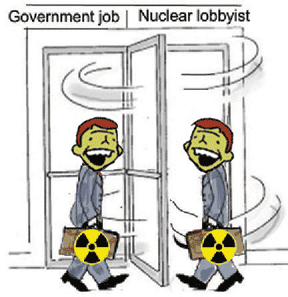
Senator the Hon Linda Reynolds CSC
MILITARY INDUSTRY REVOLVING DOOR, MichaelWest.com 15 Apr 20
The “spruiker-in-chief” of defence industry has been involved with promoting military industry interests since the late 1980s when she co-founded the WA Defence Industry Council. Reynolds combined a career in the army reserves with political staffing roles for the Liberals, and a stint with industry giant Raytheon, before becoming a senator for WA in 2014. From 2 March 2019, she served as Minister for Defence Industry before being promoted to Defence Minister on 29 May 2019…….. https://www.michaelwest.com.au/linda-reynolds/
The Hon Peter Reith AM
MILITARY INDUSTRY REVOLVING DOOR
Former Howard government defence minister Peter Reith created a storm of protest when he quit politics and started work within a day or two for Tenix Defence (now BAE Systems Australia) as a consultant on government relations. Tenix Defence was Australia’s largest military industry corporation and a significant contractor to the department over which Reith had just had oversight. ……..more https://www.michaelwest.com.au/peter-reith/ …… https://www.michaelwest.com.au/linda-reynolds/
Study finds that New South Wales rivers, lakes and lagoons are warming twice as fast as ocean
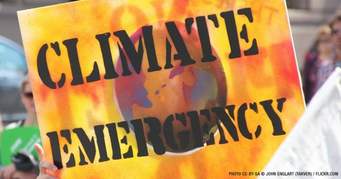 NSW rivers, lakes and lagoons warming twice as fast as ocean, finds 12-year study ABC By Amy Greenbank 16 Apr 20, Dominic Boyton’s Merimbula oyster farm in southern NSW has been in the family for four decades.
His father passed it onto him seven years ago but he’s worried about its future viability given the latest findings from the University of Sydney (USYD). Key points:
Researchers discovered the state’s coastal rivers, lakes and lagoons were warming twice as fast as the ocean. The average temperatures in those marine ecosystems were up 2.16 degrees Celsius, making breeding harder for some aquatic life. “Warmer waters could mean we’ll see oysters disappearing up the coast or a new outbreak of algae blooms and disease we haven’t seen before,” Mr Boyton said. Oysters, he said, were sensitive to heat and because they were difficult to relocate it put growers like him in a vulnerable position. The world-first study also posed a big problem for the state’s multi-million-dollar fishing and aquaculture industry, which underpinned the economies of many coastal towns. Marine biologist Elliot Scanes analysed 12 years of data from 166 NSW estuaries and found the composition of those waterways was shifting. “We didn’t expect it to be so fast,” he said.
Acidity also rose in all waterways and at the same time creeks and lagoons were becoming less salty. “This study is the first major evidence we have to show estuaries are changing on this scale,” Dr Scanes said. The marine biologists said coastal ecosystems were being forced to adapt and there would be winners and losers. While some species of fish and prawns are likely to be more resilient, shellfish like oysters could be badly affected…… https://www.abc.net.au/news/2020-04-14/nsw-inland-water-ways-warming-twice-rate-of-ocean-study-finds/12147462 |
|
While we focus on coronavirus, the planet is still heating
 All eyes are on coronavirus… but what about the planet? With COVID-19 all anyone is talking about at the moment, we take a look at where that leaves the environment, Pro Bono Australia, 14th April 2020 Maggie Coggan As many countries shut their borders, impose heavy-duty lock down laws, and scramble to deal with the financial and social implications of coronavirus, the climate crisis has shifted out of focus.
But environmental advocates warn that just because attention is elsewhere it doesn’t mean the environment isn’t suffering, or that action to mitigate the impacts of climate change should come to a grinding halt.
The crisis is still happening
At the end of March, the Great Barrier Reef experienced its third major bleaching event in the last five years.
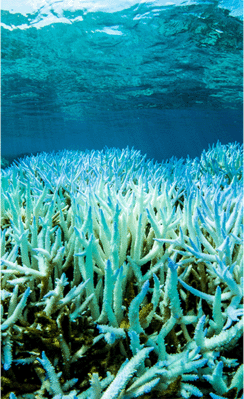 The Great Barrier Reef Marine Park Authority confirmed soon after that the bleaching was caused by warming waters associated with climate change.
Nathaniel Pelle, a senior Greenpeace campaigner, told Pro Bono News that while the reef could recover, it needed drastic emission reductions globally and in Australia.
He said something that wouldn’t help was the fossil fuel industry actively trying to weaken environmental protections, attracting corporate subsidies from government stimulus packages and forging ahead with mining projects.
“We’ve seen the petroleum exploration licence fees suspended in South Australia and a lot of oil and gas companies calling for assistance as well,” Pelle said.
“Controversial coal and gas projects like the Metropolitan mine, the Vicary Coal Mine, the Glendale mine, and the Narrabri Mine are continuing apace, even while communities don’t have the opportunity to participate, while expert witnesses aren’t necessarily going to be available and scientific investigation is impossible.”
The Victorian Premier Daniel Andrews, also recently came under fire for lifting the ban on onshore gas exploration in mid-March, a move environment groups warned could lead to worse bushfires and droughts.
Gavan McFadzean, the Australian Conservation Foundation climate change program manager, also said it was critical that a close eye was kept on the fossil fuel industry.
“These are times often when the fossil fuel sector may attempt to entrench its longevity as an economic powerhouse,” McFadzean told Pro Bono News.
“They have been ramping up their political donations federally in recent years and have the kind of political access that could shape economic reform as we come out of this crisis.”
He added that the postponement of climate talks such as the United Nations Intergovernmental Panel on Climate Change and the Cop26 in Glasgow meant that global targets and action would have to hold off until at least 2021.
He said while it was understandable the events were postponed, it was critical that once the virus was under control climate action once again took centre stage.
“The Cop26 event was going to be the most important conference since Paris in 2016… it was the conference where countries were going to be setting targets,” McFadzean said.
“It’s going to be really important that climate issues return to the national stage as COVID-19 gets under control, because climate change is also a central threat to society and the global economy as we know it.”
Emissions are going down – But not for long …….
Pelle said that if Australia and the rest of the world emerged from the crisis looking towards the energy solutions of the 21st century then the globe could see a recovery that worked for everyone.
“We could see a recovery that works for communities, that works for people, that makes people’s lives better and tackles the climate crisis at the same time, instead of a deliberate economic contraction and disruption to everyone’s lives,” he said.
A chance to start again
McFadzean said while the COVID-19 crisis was far from over, it was a good time to start imagining what a different kind of economy and climate future might look like if things were done differently.
“This means positioning ourselves to be an exporter of renewable energy to the world as we strive to make our future energy needs from low emission sources, recover our transport sector and move towards lower emissions vehicles, stronger pollution standards and electric vehicles,” he said………
https://probonoaustralia.com.au/news/2020/04/all-eyes-are-on-coronavirus-but-what-about-the-planet/
Changing the rules to make nuclear waste look ‘safer’ – USA leads the way
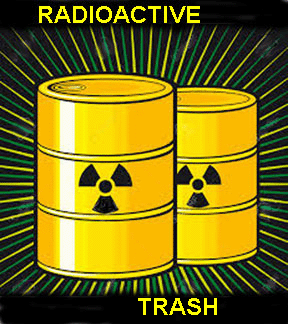
 Nuclear agency proposes deregulating disposal of some US radioactive waste, https://www.chemistryworld.com/news/nuclear-agency-proposes-deregulating-disposal-of-some-us-radioactive-waste/4011533.articleBY REBECCA TRAGER 1 16 APRIL 2020.The US Nuclear Regulatory Commission (NRC) is facing protests after proposing that low-level radioactive waste be disposed of in commercial landfills not explicitly designed to hold it, rather than at licenced radioactive waste sites. The NRC’s proposal, issued in March, declares that the agency’s intent is to limit this deregulation to ‘very low level radioactive wastes’, but Public Employees for Environmental Responsibility (Peer) states that the actual proposal allows doses to the public equivalent to more than 900 chest x-rays over a lifetime, with a cancer risk 20 times higher than the upper end of the US Environmental Protection Agency’s acceptable risk range.
For its part, the NRC anticipates that its proposal would provide ‘an efficient means’ for it to issue specific exemptions for disposal, or for licensees to transfer appropriate material to these exempt facilities. Comments on the NRC’s proposal are due by 20 April.
1 This month
25 October – Film –Britain’s Nuclear Bomb Scandal: Our Story – part of the Adelaide Film Festival,
Screening and Conversation
A screening of Britain’s Nuclear Bomb Scandal: Our Story (2024) followed by a talk with 2026 Bettison and James Awardee and Tradtional Owner Karina Lester in conversation with Simone Tur.
When: Sun 25 Oct, 12:00pm-Screening, 1:15pm-Talk
Where: The Mercury
Free admission, register below by clicking on BUY TICKETS and select free event tickets, at end of web page:
https://www.adelaidefilmfestival.org/program/2026/britains-nuclear-bomb-scandal-our-story
.
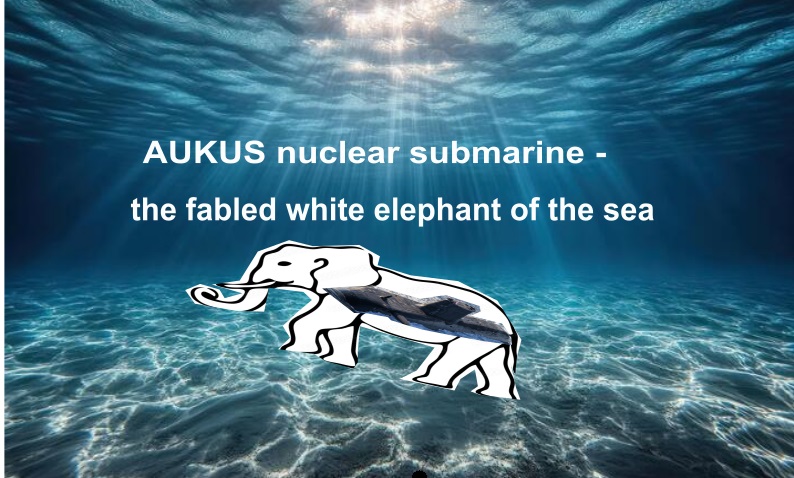
Australians deserve the truth
about
AUKUS – https://aukuspublicinquiry.com/

PETITION – To: Prime Minister Anthony Albanese and the Australian Labor Government

of the week – Australians for War Powers Reform (AWPR)
To see nuclear-related stories in greater depth and intensity

