BARNGARLA COURT WIN OVER NUCLEAR DUMP.

Jim Green, 18 July 23
Today, in a history making moment, The Federal Court of Australia through Her Honour Justice Charlesworth, handed down a decision which was favourable to the applicant the Barngarla Determination Aboriginal Corporation. This has resulted in the quashing of the decision to place the waste dump site at Napandee near Kimba.
“I am so happy for the women’s sites and dreaming on our country that are not in the firing line of a waste dump. I fought for all this time for my grandparents and for my future generations as well.” – Aunty Dawn Taylor, Barngarla Elder.
“This result today is about truth telling. The Barngarla fought for 21 years for Native Title rights over our lands, including Kimba and we weren’t going to stop fighting for this. We have always opposed a nuclear waste dump on our country and today is a big win for our community and elders.” – Jason Bilney, Chairperson Barngarla Determination Aboriginal Corporation.
“Every Australian, whether First Australians or more recent Australians have the right to independent scrutiny of Government. Today the Federal Court has set aside the declaration for the nuclear waste facility reinforcing how important these rights of independent review are. It has been a significant dispute which has created much pressure on Barngarla and their legal team they should be proud of their efforts to hold the government to account.” – Nick Llewellyn-Jones lawyer for Barngarla.
“The Barngarla have opposed the radioactive waste dump at Kimba since it was first suggested. We have fought for 7 years, to be heard, to be seen and to be respected. We welcome this decision and expect that this will be the end of this threat to our country, heritage and culture. We, the Barngarla have always stood strong and believe that this decision is reflective of staying steadfast; it shows that if you have a voice and want it to be heard, never give up. Continue to be loud. Continue to use your voice. Don’t rely on others to speak for you. Speak up for what’s right. Truth telling is what led us today. We are proud.” – The Barngarla People.
DUTTON’S RISKY NUCLEAR REACTOR PLAN THREATENS 12,000 FARMS
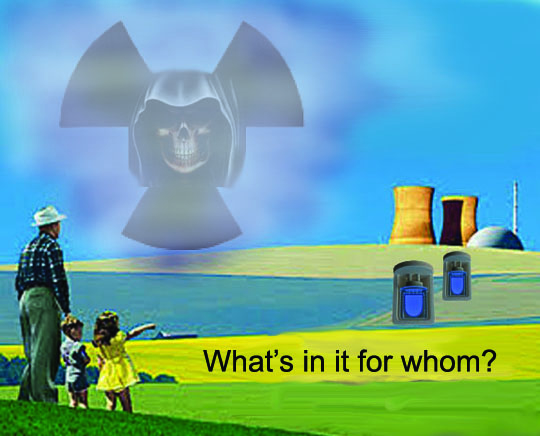
FOOD PRODUCTION ACROSS THE COUNTRY ON HIGH ALERT FROM DUTTON’S RISKY REACTOR PLAN
Agriculture Minister Murray Watt, 18 July 24
The fallout from Peter Dutton’s expensive and risky nuclear reactor announcement continues with new revelations that nearly 12,000 farms across Australia could be impacted.
The LNP’s announcement that nuclear reactors would be built at seven sites across the country could have serious implications for the agricultural sector.
The regions selected by Mr Dutton are major contributors to Australia’s food supply with significant cattle, milk, lamb, grain and vegetable production nearby.
Various states in the United States of America, including Illinois, California, Indiana, Maryland, Missouri and Florida set out detailed guidelines to be followed by farmers, processors and distributors within an 80-kilometere radius of nuclear reactors (known as the “ingestion zone”) to protect their food supply, in the event of a nuclear accident.
Analysis of ABS and local government data by the Parliamentary Library has found approximately 11,955 farms are located within an 80-kilometre radius of the Coalition’s selected sites.
Mr Dutton must urgently explain whether Australian farmers, processors and distributors within a similar ingestion zone will be forced to replicate the expensive actions recommended by American counterparts.
On top of this, leaks have occurred in recent years at nuclear reactors in the United States, Japan, India and Europe, in some cases contaminating agricultural land, crops and water sources.
Eating contaminated foods and drinking contaminated milk and water could have a harmful, long-term effect on the health of the wider community.
Mr Dutton needs to explain his plan to prevent such leaks, how he will manage them if they occur and how he would compensate affected farmers.
Agriculture Minister Murray Watt: –
“Peter Dutton’s risky nuclear plan is not only expensive, slow and unreliable, it also poses a threat to the agricultural industry.
“Based on international practice, farmers would need to take expensive steps during a nuclear leak and would need to inform their customers that they operate within the fallout zone.
“It’s bizarre that the Nationals and Liberals are putting at risk our prime agricultural land like this, especially without the decency to explain it to farmers and consumers how they’d mitigate all the potential impacts.”
BACKGROUND:
Parliamentary library analysis of farm businesses within the 80km ingestion zone of each proposed reactor.
- Collie (WA): Approximately 1,150 agricultural establishments. Major agricultural products include beef cattle, milk, lamb, barley, and carrots.
- Callide (Qld): Approximately 1,040 agricultural establishments. Major agricultural products include beef cattle, cotton, vegetables, wheat, and herbs.
- Hunter (NSW): Approximately 1,650 agricultural establishments. Major agricultural products include beef cattle, milk, chicken (meat), eggs, and hay.
- Latrobe Valley (VIC): Approximately 4,175 agricultural establishments. Major agricultural products include milk, beef cattle, vegetables, applies, and strawberries.
- Mt Piper (NSW): Approximately 1,280 agricultural establishments. Major agricultural products include beef cattle, cultivated turf, lamb, mushrooms, and other vegetables.
- Port Augusta (SA): Approximately 260 agricultural establishments. Major agricultural products include wheat, barley, lamb, wool, hay, and eggs.
- South Burnett/Darling Downs (Qld): Approximately 2,400 agricultural establishments. Major agricultural products include beef cattle, pork, sorghum, cotton, and milk
Government moves quietly on towards radiation facility for nuclear submarine programme
ARPANSA approves siting licence for ASA Controlled Industrial Facility
17 July 2024
ARPANSA has issued a licence to the Australian Submarine Agency to prepare a site for the prescribed radiation facility known as the ‘Controlled Industrial Facility’. The proposed Controlled Industrial Facility will provide low-level waste management and maintenance services to support the Submarine Rotational Force – West program, which is being planned at the existing HMAS Stirling Navy Base, Garden Island, Rockingham, Western Australia.
ARPANSA is responsible for licensing Commonwealth entities that use or produce radiation and applies a
strict review and assessment process once a licence application is received………………………..
The siting licence approval is the first stage of a stringent licencing process that requires separate applications for siting, construction, operation and decommissioning.
Parliament is considering legislation to establish a dedicated naval nuclear power safety regulator, the Australian Naval Nuclear Power Safety Regulator (ANNPSR). Until the new regulator is established, ARPANSA will regulate nuclear and radiological safety for ASA.
Future applications for the Controlled Industrial Facility are likely to be made while ARPANSA remains the regulatory authority for nuclear and radiological safety for ASA. The CEO has committed to continuing to invite public comment on all future ASA facility licences considered by ARPANSA……,,, https://www.arpansa.gov.au/arpansa-approves-siting-licence-asa-controlled-industrial-facility?fbclid=IwZXh0bgNhZW0CMTEAAR1xXw4CRdQCPOLg3sp1MqQAl-RCQHby8KJjOf_X_BXL3OxmKyMmq2nH9Xw_aem_gN1-iDIpedU70PUZyyEqJQ&sfnsn=mo
TODAY. More American media madness

Once again, I’m at risk of sounding callous about that shooting of Donald Trump. Of course it was nasty, frightening and wrong. And deserves media coverage.
Yes, it was big stuff, and doesn’t the media love it! Especially in the USA. Was it a lone attacker? Was he sent by Joe Biden? Was it the CIA? Was it organised by elite satanic paedophiles? Was it an elaborate “friendly fire” organised by the Republicans?
America being the crazy place that it is, the gun lobby will no doubt use it as an argument for having more people with guns around at such a function – as they argued for teachers armed in the classroom. (I always thought that was a dangerous one – teachers can get so cross with some kids!)
But meanwhile, other important stuff is not getting noticed in the “mainstream” media.
Like for example, the continued atrocities in Gaza. Bombing of tent communities. Bombing of schools.
Like for example – that the Democratic party has no plans to alter its policy of unconditional arms support for Israel. Meanwhile Biden mouths pious motherhood statements regretting the suffering of the Gazan people.
Like for example – the belligerent Washington Summit Declaration containing, among other things -“Investing in our Chemical, Biological, Radiological and Nuclear defence capabilities”. But the USA and European both support the United Nations Biological Weapons Convention. What happened to that?
Like for example – Unconditional support for Ukraine’s victory over Russia at a time and on terms set by Ukraine and its allies, not by Russia (no negotiation) And approval for F-16s to attack inside Russian territory. And Ukraine’s “irreversible path” to NATO Membership.
Sadly, the corporate media is becoming irrelevant to the important things going on in the world.
It really matters little whether the Republicans or the Democrats get in at the next USA election. Both are controlled by wealthy corporations, especially weapons makers. The Biden administration will torpedoe us to World War 3. Trump will destroy all democratic institutions, and create a global zeitgeist of fear and distrust, also leading to World War 3.
Do Americans have the brains to vote for somebody other than those two useless parties?
Australian nuclear news headlines – week to 22 July
Headlines as they come in:
- Nuclear does not mean reliable power for Australia – by Peter Farley
- A realistic time frame for building nuclear- by Peter Farley
- What are the steps (and the COSTS) to building nuclear power stations – by Peter Farley Behind the plans for Australia to become a nuclear dumping ground and leverage synergies with the US military alliance and civilian nuclear.
- Nuclear option would mean shutting off shedloads of cheap solar to use expensive power.
- AUKUS – Australia-United Kingdom-United States nuclear pact endangers us all
- Australia’s secret support for the Israeli assault on Gaza, through Pine Gap.
- Indigenous group considers legal battle over proposed Port Augusta nuclear power plant.
- HMAS Stirling nuclear waste management facility approval has Rockingham residents worried. Australia:
- Opposition’s nuclear power plans open the door for nuclear weapons.
- How close are we to chaos? It turns out, just one blue screen of death.
- Peter Dutton’s nuclear power policy puts longevity in doubt
- Agriculture ministers raise ‘serious’ concern over nuclear plans,
- Nuclear power plan puts thousands of farms in “radiation alert zone”
- Can the Voices model help communities fight off nuclear reactors?
- Enough water for nuclear reactors in NSW but scientists worry about wildlife
- Dutton’s Quixotic Proposal: Nuclear Lunacy Down Under.
- Renewables caught in misinformation crossfire from Australia’s nuclear cheerleaders
- Acknowledging an important win – and the power of collective action
- From the archives. BARNGARLA COURT WIN OVER NUCLEAR DUMP
- DUTTON’S RISKY NUCLEAR REACTOR PLAN THREATENS 12,000 FARMS,
- Nuclear awakening ‘a decade or two late’, says AER
- Government moves quietly on towards radiation facility for nuclear submarine programme
- Dutton’s nuclear ‘frolic’ a recipe for higher bills and blackout risk: Bowen
- Greens up pressure against nuclear.
- “Battering ram of bad faith actors:” CEC says nuclear push causing confusion, delays and higher costs.
- Sealed away in steel and concrete is Australia’s nuclear waste legacy at Lucas Heights in Sydney’s south.
- China is installing the wind and solar equivalent of five large nuclear power stations per week.
- Nuclear too slow to replace coal, and baseload “simply can’t compete” with wind and solar, AEMO boss says.
- Liberals push for ‘nuclear debate’.
Dutton’s nuclear ‘frolic’ a recipe for higher bills and blackout risk: Bowen

ByMike Foley July 16, 2024 — https://www.theage.com.au/politics/federal/dutton-s-nuclear-frolic-a-recipe-for-higher-bills-and-blackout-risk-bowen-20240716-p5jtz8.html
Energy Minister Chris Bowen will declare the next election is a make-or-break moment for clean energy, claiming the opposition’s “ideological pursuit” of nuclear power would cripple the renewables rollout.
In his first major speech since the opposition last month revealed details of its pledge to build nuclear reactors, Bowen will say Australians can choose “reliable renewables or risky reactors – but not both”.
He will argue the money flowing into clean energy projects under Labor’s goal to boost renewables from 40 to 82 per cent of the electricity grid by 2030 would dry up under a Coalition government.
“All these investments and many more like them are at risk because of the policy uncertainty caused by an ill-informed nuclear frolic,” Bowen will say, according to a draft of a speech he will give to the National Press Club in Canberra on Wednesday.
The opposition has said that its first nuclear reactor would not be built until at least 2035, with experts saying it could take until at least the mid-2040s.
Opposition Leader Peter Dutton and some Liberal MPs have said a Coalition government would encourage continued investment in renewables without specifying what proportion they want to see in the grid.
However, senior Nationals, including leader David Littleproud, have said the nuclear policy would facilitate a reduction in renewable energy.
The grid operator has said the cheapest way to expand the grid and switch from ageing coal-fired power stations is to secure private investment in renewables.
Bowen will claim the opposition’s nuclear plan would spook international investors and renewable project spending would falter if the Coalition were elected.
“Their ideological pursuit of nuclear reactors in two decades’ time would wreck the renewables rollout now,” he said.
“When David Littleproud says we need to ‘sweat the coal assets for longer’, he is describing a recipe for reliability ruin.
“In the context I’ve outlined of ageing and unreliable coal-fired power stations, we can only imagine what that would do for affordability and reliability.”
Bowen’s renewables target is key to Labor’s pledge to cut emissions by 43 per cent by 2030 and reduce household power bills by $275 by 2025.
But these goals have been jeopardised by community opposition to wind and solar farms and delays to crucial transmission lines.
Experts warn the delays could add hundreds of dollars to power bills, but Bowen is adamant his aims are achievable.
He will challenge the Coalition to detail how it would incorporate nuclear plants into the increasingly renewables-dominated grid, given reactors are intended to run continuously rather than be ramped up and down in response to demand.
“In Australia, nuclear and renewables are simply incompatible,” Bowen will say.
“Is the Coalition’s plan to curtail zero-cost renewable energy to make room for expensive nuclear energy … or is their plan to bankroll these baseload plants to bid into the system at prices where they’ll bleed money? Either one is a recipe for Australians to pay much more.”
Nuclear too slow to replace coal, and baseload “simply can’t compete” with wind and solar, AEMO boss says
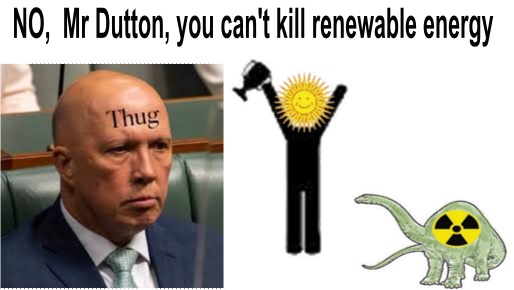
Giles Parkinson, Jul 16, 2024, https://reneweconomy.com.au/nuclear-too-slow-to-replace-coal-and-baseload-simply-cant-compete-with-wind-and-solar-aemo-boss-says/
The head of the Australian Energy Market Operator, Daniel Westerman, has rejected nuclear power as an option to replace Australia’s ageing coal fleet, saying it is too slow and expensive, and that baseload power sources in any case won’t be able to compete in a grid dominated by wind and solar.
The comments by Westerman at the Clean Energy Summit in Sydney on Tuesday, come as the federal Coalition intensifies its push for nuclear power, outlining plans to build nuclear facilities at seven current and former coal generation sites across the country.
Westerman says the updated roadmap released by AEMO last month, known as the 2024 Integrated System Plan, does not consider nuclear because it remains outlawed in Australia and is not part of any government policy package. But he said it was clear from AEMO’s work with CSIRO in the GenCost report that nuclear was expensive, and too slow.
“To be clear, AEMO does not form the view that one form of energy is ‘good’ and another ‘bad’,” Westerman said.
“Our engineers and economists are focused on finding the least-cost path to reliable and affordable energy for Australian consumers.
“Even on the most optimistic outlook, nuclear power won’t be ready in time for the exit of Australia’s coal-fired power stations. And the imperative to replace that retiring coal generation is with us now.
“In fact, the old notion of “baseload” generation which runs constantly, then supplemented with “peaking generation” for the daily peaks in demand, simply does not reflect the way our power system works today, or into the future.
“When the sun is shining and wind is blowing, renewable generation produces energy at zero marginal cost, and “baseload” energy simply can’t compete. It is either pushed out of the market entirely, or has to sell its energy at a loss if it can’t flex up and down to absorb the peaks and troughs of variable renewable supply.
Westerman’s comments were echoed by Damien Nicks, the CEO of AGL Energy which is the country’s biggest producer of coal power, all of which will close by 2035.
“We haven’t got time to wait,” Nicks said. We need to build 12 GW of both firming and renewables over that period of time and we have to get on with it. Nuclear is not part of our strategy.”
Rob Wheals, the former head of gas company APA who now heads iron ore billionaire Andrew Forrest’s renewable investor Squadron Energy, agreed. “Nuclear does not actually solve the problem(of impending coal closures) …. we’ve got to get on with the job of building and rebuilding Australia’s energy system.”
The AEMO ISP outlines plans to deal with the expected retirement of all of Australia’s coal fleet over the next 10 to 15 years, and the costs involved to build new wind, solar and storage, as well as transmission lines – which AEMO puts at $122 billion.
That figure – along with the conclusions from the GenCost report – have been repeatedly attacked by the federal Coalition, right wing “think tanks” and mainstream media outlets. They claim that the ISP ignores costs such as networks, and consumer energy resources, which will be one of the major components of the transition.
Westerman rejected this. “It does not include the cost of distribution networks whose plans are made at a local level…and it does not include the cost of consumer devices like rooftop solar systems, because those investment decisions are made by consumers themselves,” he said.
The ISP maps out a dramatic transition in Australia’s main electricity grid, from around 60 gigawatts (GW) now, including 20 GW of rooftop solar, to more than 300 GW and more than 86 GW of rooftop solar, with demand doubling as a result of economic growth and electrification in homes, industry and transport.
This will require 60 GW of large scale wind (up from 12 GW now), 58 GW of large scale solar (up from 10 GW), and 44 GW of battery storage capacity.
It will also need 15 GW of gas capacity, up from 11.5 GW now, but that meant that around 13 GW of new capacity would be needed as much of existing capacity is ageing and will need to be replaced.
He said gas will not be used much – maybe just 5 per cent of the time – but it will be important to meet demand peaks, and also to fill gaps in so-called “dunkelflaute” the German word for extended wind and solar droughts which may be apparent in states like Victoria, particularly in winter.
One of the biggest challenges remains the management of consumer energy resources, particularly rooftop solar, which are largely uncontrolled. This meant that protocols had to be introduced to protect “minimum load” levels which would enable AEMO to remain control of the grid and keep the lights on.
Westerman said the overall pace of investment needs to increase, and the connections process – cited by investors as one of the biggest causes of project delays – also needs to be streamlined.
He said the capacity of new generation and storage projects in various stages of the connection process in the National Electricity Market had grown to close to 43 GW from 30 GW a year ago.
AEMO is also working on the engineering requirements to accommodate periods of 100 per cent renewables on the main grid. Already new milestones had been reached, including renewables reaching more than 70 per cent of NEM demand, rooftop solar alone providing 50 per cent of the NEM, and more than 100 per cent in South Australia.
He noted that South Australia, which leads the country and the world with a 70 per cent renewable share – wind and solar – over the past year, had also met more than 90 per cent of its supply with wind and solar, mostly rooftop PV, even when the state grid was electrically separated from the rest of the NEM as a result of a storm last year.
“Australia is leading the world in proving how to reliably source the majority of electricity for a developed economy from the wind and the sun.
China is installing the wind and solar equivalent of five large nuclear power stations per week

Instead of nuclear, solar is now intended to be the foundation of China’s new electricity generation system.
Who is going to be the economic winner in that global economic transition? It’s going to be China.”
energy experts are frustrated with the progress of Australia’s transition, including the discussion of nuclear power and the “weaponisation of dissent” from community groups over new wind farms and transmission lines.
ABC Science / By technology reporter James Purtill, 16 July 24, https://www.abc.net.au/news/science/2024-07-16/chinas-renewable-energy-boom-breaks-records/104086640
In short:
China is installing record amounts of solar and wind, while scaling back once-ambitious plans for nuclear.
While Australia is falling behind its renewables installation targets, China may meet its end-of-2030 target by the end of this month, according to a report.
What’s next?
Energy experts are looking to China, the world’s largest emitter and once a climate villain, for lessons on how to rapidly decarbonise.
While Australia debates the merits of going nuclear and frustration grows over the slower-than-needed rollout of solar and wind power, China is going all in on renewables.
New figures show the pace of its clean energy transition is roughly the equivalent of installing five large-scale nuclear power plants worth of renewables every week.
A report by Sydney-based think tank Climate Energy Finance (CEF) said China was installing renewables so rapidly it would meet its end-of-2030 target by the end of this month — or 6.5 years early.
It’s installing at least 10 gigawatts of wind and solar generation capacity every fortnight.
By comparison, experts have said the Coalition’s plan to build seven nuclear power plants would add fewer than 10GW of generation capacity to the grid some time after 2035.
Energy experts are looking to China, the world’s largest emitter, once seen as a climate villain, for lessons on how to go green, fast.
“We’ve seen America under President Biden throw a trillion dollars on the table [for clean energy],” CEF director Tim Buckley said.
“China’s response to that has been to double down and go twice as fast.”
Smart Energy Council CEO John Grimes, who recently returned from a Shanghai energy conference, said China has decarbonised its grid almost as quickly as Australia, despite having a much harder task due to the scale of its energy demand.
“They have clear targets and every part of their government is harnessed to deliver the plan,” he said.
China accounts for about a third of the world’s greenhouse gas emissions. A recent drop in emissions (the first since relaxing COVID-19 restrictions), combined with the decarbonisation of the power grid, may mean the country’s emissions have peaked.
“With the power sector going green, emissions are set to plateau and then progressively fall towards 2030 and beyond,” CEF China energy policy analyst Xuyang Dong said.
So how is China building and connecting panels so fast, and what’s the role of nuclear in its transition?
Like building solar farms near Perth to power Sydney
Because its large cities of the eastern seaboard are dominated by apartment buildings, China hasn’t seen an uptake of rooftop solar like in Australia.
To find space for all the solar panels and wind turbines required for the nation’s energy needs, the planners of China’s energy transition have looked west, to areas like the Gobi Desert.
The world’s largest solar and wind farms are being built on the western edge of the country and connected to the east via the world’s longest high-voltage transmission lines.
These lines are so long they could span the length of our continent.
In Australian terms, it’s the equivalent of using solar panels near Perth to power homes in Sydney.
Mr Buckley said China’s approach was similar to the Australian one of developing regional “renewable energy zones” for large-scale electricity generation.
“They’re doing what Australia is doing with renewable energy zones but they’re doing it on steroids,” he said.
What about ‘firming’ the grid?
One of the issues with switching a grid to intermittent renewables is ensuring a steady supply of power.
In technical terms, this is the difference between generation capacity (measured in gigawatts) and actual energy output (measured in gigawatt-hours, or generation over time).
Renewables have a “capacity factor” (the ratio of actual output to maximum potential generation) of about 25 per cent, whereas nuclear’s is as high as 90 per cent.
So although China is installing solar and wind generation equivalent to five large nuclear power plants per week, their output is closer to one nuclear plant per week.
Renewables account for more than half of installed capacity in China, but only amount to about one-fifth of actual energy output over a year, the CEF’s Tim Buckley said.
To “firm” or stabilise the supply of power from its renewable energy zones, China is using a mix of pumped hydro and battery storage, similar to Australia.
“They’re installing 1GW per month of pumped hydro storage,” Mr Buckley said.
“We’re struggling to build the 2GW Snowy 2.0 in 10 years.”
There are some major differences between Australia and China’s approaches, though. Somewhat counterintuitively, China has built dozens of coal-fired power stations alongside its renewable energy zones, to maintain the pace of its clean energy transition.
China was responsible for 95 per cent of the world’s new coal power construction activity last year.
The new plants are partly needed to meet demand for electricity, which has gone up as more energy-hungry sectors of the economy, like transport, are electrified.
The coal-fired plants are also being used, like the batteries and pumped hydro, to provide a stable supply of power down the transmission lines from renewable energy zones, balancing out the intermittent solar and wind.
Despite these new coal plants, coal’s share of total electricity generation in the country is falling.
The China Energy Council estimated renewables generation would overtake coal by the end of this year.
The CEF’s Xuyang Dong said despite the country’s reliance on coal, “having China go green at this speed and scale provides the world with a textbook to do the same”.
“China is installing every week the equivalent of what we’re doing every year.”
Despite this speed, China wasn’t installing renewables fast enough to meet its 2060 carbon neutrality target, she added.
“According to our analysis, [the current rate of installation] is not ambitious enough for China.”
What about nuclear?
China is building new nuclear plants, although nowhere near as fast as it once intended.
In 2011, Chinese authorities announced fission reactors would become the foundation of the country’s electricity generation system in the next “10 to 20 years”.
But Japan’s 2011 Fukushima disaster prompted a moratorium on inland nuclear plants, which have to use river water for cooling and are more vulnerable to frequent flooding.
Meanwhile, over the following decade, solar became the cheapest electricity in the world.
From 2010 to 2020, the installed cost of utility-scale solar PV declined by 81 per cent on a global average basis.
As well as cheap, it was safe, which made solar farms quicker to build than nuclear reactors.
Instead of nuclear, solar is now intended to be the foundation of China’s new electricity generation system.
Authorities have steadily downgraded plans for nuclear to dominate China’s energy generation. At present, the goal is 18 per cent of generation by 2060.
China installed 1GW of nuclear last year, compared to 300GW of solar and wind, Mr Buckley said.
“That says they’re all in on renewables.
“They had grand plans for nuclear to be massive but they’re behind on nuclear by a decade and five years ahead of schedule on solar and wind.”
How is China transitioning so fast?
In June of this year, on the eve of the Coalition’s nuclear policy announcement, former Queensland Premier Annastacia Palaszczuk, who’s now a Smart Energy Council “international ambassador”, led a delegation of Australians to the world’s largest clean energy conference in Shanghai.
The annual Smart Energy Conference hosts more than 600,000 delegates across three days.
Its scale underlines China’s increasing dominance of the global clean energy economy and, for some attendees, prompted unenviable comparisons with Australia’s progress.
Mr Buckley, who was part of the delegation, said he was “blown away”.
“China is winning this race.”
John Grimes, the Smart Energy Council CEO who also attended, said Australia could learn from the Chinese government’s ability to execute a long-term, difficult and costly transition plan, rather than relying on market forces to find a solution.
“Australia’s transition is going too slow, there was a lost decade of action,” he said.
“The world today spends about $7 trillion a year on coal, gas and oil and that money is going to find a new home.
Who is going to be the economic winner in that global economic transition? It’s going to be China.”
He and other energy experts are frustrated with the progress of Australia’s transition, including the discussion of nuclear power and the “weaponisation of dissent” from community groups over new wind farms and transmission lines.
Stephanie Bashir, CEO of the Nexa energy advisory, said Australia’s transition was tangled in red tape.
“The key hold-up for a lot of projects is the slow planning approvals,” Ms Bashir, who also attended the conference, said.
“In China they decide they’re going to do something and then they go and do it.”
The Australian Energy Market Operator’s (AEMO) plan to decarbonise the grid and ensure the lights stay on when the coal-fired power stations close requires thousands of kilometres of new transmission lines and large-scale solar and wind farms.
Australia is installing about half the amount of renewables per year required under the plan.
Due to this shortfall, many experts say its unlikely to meet its 2030 target of 82 per cent renewables in the grid and 43 per cent emissions reduction.
“We need to build 6GW each year from now until each power station closes, and so far we’re only bringing online 3GW,” Ms Bashir said.
“If we identify some projects are nation-building … and we need them for transition, we just have to get on with it.”
Mr Buckley predicted China would accelerate its deployment of renewables.
“My forecast is it will lift 20 per cent per annum on current levels.”
Greens up pressure against nuclear

newsroom, July 16, 2024 , https://www.2hd.com.au/2024/07/16/greens-up-pressure-against-nuclear/
Local government Greens candidates from Singleton, Maitland and Cessnock have met with Senator David Shoebridge, doubling-down on their opposition to the Coalition’s nuclear energy plans.
Last month the federal opposition unveiled its controversial energy policy, which would involve building nuclear reactors at seven locations across Australia.
Two of those are flagged for NSW, including at Muswellbrook’s former Liddell power station.
Singleton Greens local government candidate Louise Stokes says while some Upper Hunter residents are enjoying less air pollution with the closure of Liddell, what the Coalition is proposing will saddle them up with a more dangerous industry.
“Battering ram of bad faith actors:” Clean Energy Council says nuclear push causing confusion, delays and higher costs
Giles Parkinson, Jul 16, 2024, https://reneweconomy.com.au/battering-ram-of-bad-faith-actors-cec-says-nuclear-push-causing-confusion-delays-and-higher-costs/
The head of the Clean Energy Council, Kane Thornton, has launched a forceful attack on the pro-nuclear lobby, describing it as littered with bad faith actors, disinformation, and praying on a weakened mainstream media.
Thornton said Australia is poised to finally take advantage of its unique competitive advantage to produce low-cost, zero-emissions power that will transform the Australian economy, but the country’s ability to deliver reform and generational change is fragile and being undermined by vested interests.
“Bad faith actors are using a weakened media, praying on communities increasingly anxious about the uncertainty and tensions in the world around us to tear things down,” Thorntold said in an opening address to the Clean Energy Summit in Sydney on Tuesday.
“Vested interests are stepping up to tell their story and peppering it with mistruths and outright disinformation. They are undermining the very things that would build our nation’s future and resilience in an unstable world, to further their own short term political agenda.”
”The battering ram of bad faith actors today is nuclear power. We all know it’s several times more expensive than renewables and storage and is two decades away at best.”
Thornton noted that heavily promoted nuclear technologies such as small nuclear reactors still do not exist in commercial form, and coal power in Australia would be long gone before they could be delivered, if ever they could.”
Despite this reality, we are having a national debate about nuclear power. The Australian public are being confused and misled,” Thornton said.
”Investors know nuclear is not a commercially viable option for Australia and will never be realised here. But this debate is nevertheless deeply unhelpful for Australia’s international reputation as a safe place to invest, giving a perception that Australia’s energy policy remains deeply fractious and at risk of radical U-turns from one election to another.
”If we can’t have a sensible discussion about energy policy, then our problems as a nation go far beyond balancing our energy mix. We have suffered for over 15 years through the climate wars.
”These distractions and the inaction are why power prices are higher today and the energy transition is all the harder. It’s why we are playing catchup to reform our energy markets, fix and build out the grid, train the workforce, developing the standards and practices we should expect.”
Thornton said the rooftop solar market remained strong, and the battery storage market was also robust. “It’s the energy we need to charge these batteries that needs to happen much quicker,” he said.
Thornton said he hoped that the federal government’s Capacity Investment Scheme, which seeks 32 GW of new wind, solar and storage, will be one of the last “missing pieces” of the energy transition puzzle and help accelerate the rollout.
‘It needs to move quickly and deliver the investment confidence the market is seeking. If it works, we can expect a wave of large-scale renewable energy projects come forward,” he said.
But Thornton said that, given the disinformation around nuclear, the industry needed to work together to give confidence in the future of renewables.
“We need to recognise that change doesn’t always come easy. For some people it can create anxiety and uncertainty,” he said.
”They look for clarity, to people they trust. They want to understand lived experience and how new technology or projects in their community will impact their lives.”
Sealed away in steel and concrete is Australia’s nuclear waste legacy at Lucas Heights in Sydney’s south
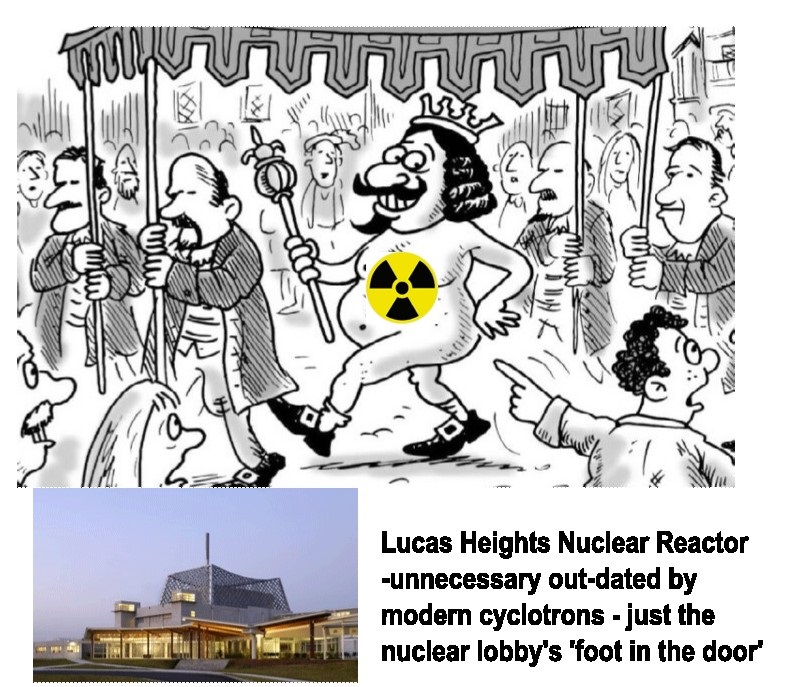
ABC News, By political reporter Matthew Doran, 15 July 24
Whenever there is a debate about nuclear power in Australia, one question regularly pops up: What do we do with the waste?
It can’t just be taken to the local dump along with garbage or rubble, and it has to be handled with immense care and stored in particular ways while it remains dangerous — sometimes for decades, and in the case of high level waste up to thousands of years.
Despite nuclear power generation still being a subject of political debate rather than reality, and nuclear-propelled submarines being decades away from being tied up at local docks, many Australians don’t know we are already producing, processing, and storing nuclear waste.
One of the largest repositories is Australia’s Nuclear Science and Technology Organisation (ANSTO) at the Lucas Heights nuclear facility, in Sydney’s south.
The ABC was invited inside……………………………………………………………………………………………………
The type of contaminated waste coming into the vast warehouse for assessment and processing is what’s classified as “low-level”.
Much of it includes items like rubber gloves, gowns, glassware, and old laboratory equipment from ANSTO’s nuclear medicine facility
It’s still contaminated and needs to be meticulously picked through, categorised, and stored away until it’s no longer dangerous, sealed away in the steel drums lining the shelves of multiple warehouses dotted across the Lucas Heights site.
Decades of legacy
Bags and bags of contaminated material sit in bins at the edge of the warehouse we’re standing in.
All the waste comes from ANSTO itself. While the organisation doesn’t store waste for others, it does assist with the material they produce………………. It’s brought into the warehouse, and scanned with high-tech machinery before ANSTO figures out the best way to store it – and for how long.
…. “A lot of the waste that we bring in is really very quickly able to be sent out to the normal tip, because working with nuclear medicine, which generates most of our waste, we have a lot of short-lived isotopes,” Paula Berghofer, head of waste management , says.
…………………………………………………………………………………………………………………… ANSTO’s Lucas Heights site is home to the only nuclear reactor in the country.
It’s a facility used to create radioactive isotopes for use in areas such as nuclear medicine. ……..
Lucas Heights’ OPAL reactor is currently undergoing maintenance.
It’s not used for power generation and doesn’t create waste anywhere near the level of radioactive material that would come from such a reactor.
However, that’s not to say there isn’t decades-old nuclear waste stored at the site.
Some drums and blocks of radioactive material, encased in concrete and steel tombs weighing many tons, have been here for decades.
Among them, are remnants of the original nuclear reactor at Lucas Heights – known as MOATA – which operated between 1961 and 1995, and was decommissioned 15 years ago.
“It will remain here, safely monitored and stored, until Australia has a disposal operation available for us to send it to,” Ms Berghofer says……………………………………………………………………………………………………………………
Offshore processing

There’s another warehouse, which looks a little different, on the Lucas Heights campus.
It’s newer. It’s taller. It’s wrapped in extra layers of security.
When you walk inside, it’s striking how empty it is. Apart from two huge cylinders, standing on their ends, at one side of the building
“While Australia has a very important role in the nuclear space, we are comparatively small, and we certainly don’t have the infrastructure or really the need or desire to install what is a very large price reprocessing facility here,” Ms Berghofer says.
“So it makes sense for us to have those international agreements, so that we can send this overseas to the experts, where they can reprocess it and send us back an equivalent.”
Again, these canisters are also intended for a national nuclear waste dump, once it is established. https://www.abc.net.au/news/2024-07-16/australias-nuclear-waste-legacy-lucas-heights-ansto/104091600
Experts argue for an Australian ban on nuclear weapons ahead of UN Summit
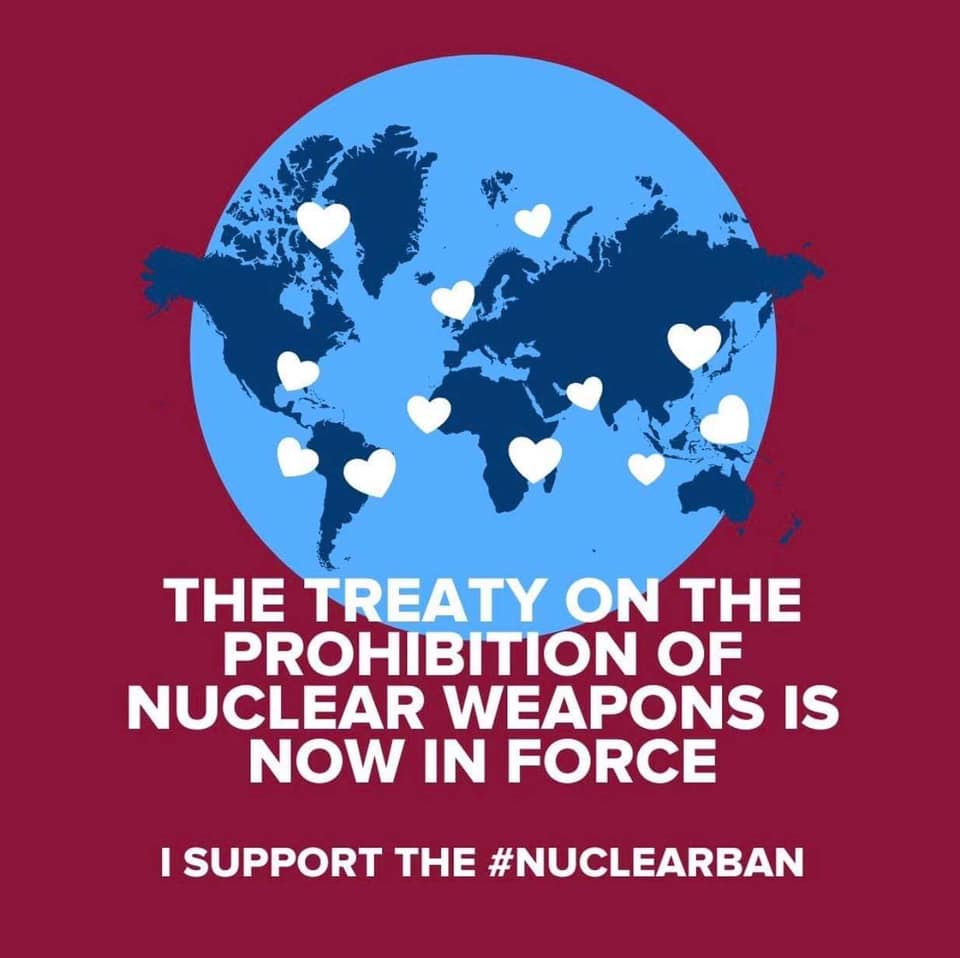
University of Melbourne experts are urging Australia to sign and ratify the UN Treaty on the Prohibition of Nuclear Weapons (TPNW) to commit most effectively to nuclear disarmament and non-proliferation.
The argument was made in ‘Luck is not a strategy: it’s time to prohibit Nuclear Weapons’, the second paper in a series prepared by the University of Melbourne’s Initiative for Peacebuilding to stimulate discussion of key issues on the agenda at the upcoming UN Summit of the Future.
Associate Professor Tilman Ruff AO, co-founder of the International Campaign to Abolish Nuclear Weapons (ICAN), which received the 2017 Nobel Peace Prize, ICAN Australia director Gem Romuld and Executive Director of ICAN Melissa Parke argue it is important Australia signs the Treaty before taking a seat on the UN Peacebuilding Commission in 2025.
Almost half the world’s nations have already joined the TPNW, which contains the only comprehensive prohibition of nuclear weapons and the only internationally agreed framework to eliminate nuclear weapons in a time-bound, verified way.
The TPNW is also the first nuclear weapons agreement to address the harm done by nuclear weapons use and testing.
Associate Professor Ruff argues Australia’s involvement is particularly critical given the number of available deployed nuclear weapons is increasing for the first time in two decades, along with explicit nuclear threats, and two nuclear-armed states – Russia and Israel – are prosecuting war, risking nuclear escalation.
No disarmament negotiations are underway, while hard won treaties limiting nuclear weapons have been abolished.
“Additional signatories, such as Australia, will contribute to the universalisation of the ban treaty, and its effectiveness,” Associate Professor Ruff said.
“For as long as we remain outside the treaty, promoting a role for nuclear weapons and assisting in their possible use in our defence policies, we are contributing to the problem.”
The Summit of the Future will be held from 22–23 September 2024 in New York, gathering world leaders to forge a new international consensus on how we deliver a better present and safeguard the future.
The Initiative for Peacebuilding, which brings together multidisciplinary research, engagement, and education to advance peacebuilding and conflict prevention in the Indo-Pacific region, plans to release a series of five policy briefs ahead of the Summit.
Associate Professor Ruff called for Australian leaders to harness this moment of great danger to sign the TPNW and then work towards ratification, just as Australia has joined the treaties banning other inhumane and indiscriminate weapons, including chemical and biological weapons, landmines and cluster munitions.
“Nuclear weapons are abhorrent, immoral, and illegal under international law. They are the worst weapons of mass destruction, and have no place in a secure and healthy future. Australia needs to signal its firm agreement and expedite signature and ratification of the UN-TPNW,” he said.
Nuclear news – week to 15 July

Some bits of good news – Ancient conservation practice restoring the Middle East. Restoration of Maple River offers hope for future conservation initiatives. China cleans up its air and water.
TOP STORIES
NATO SUMMIT: Collectively Losing Their Minds. For 75 Years, NATO Has Been Terrorizing the Globe. German Parliamentarian in Washington Says No to NATO – Yes to Peace.
The Atlas Network and the Council for National Policy: America’s global revolution. The Atlas Network’s transnational revolution. https://johnmenadue.com/the-atlas-networks-transnational-revolution/ https://www.youtube.com/watch?v=bZ_AG6irJ_g
Climate. Temperatures 1.5C above pre-industrial era average for 12 months, data show.
Noel’s notes. The NATO statement – absurdity and collective suicide? The insanity of rampant mindless new technology.
****************************************************
AUSTRALIA.
- Experts argue for an Australian ban on nuclear weapons ahead of UN Summit.
- Book – “Nuked” on Aukus ‘fiasco’ says decision to embrace pact will ‘haunt’ Labor for years.
- South Australia’s renewable triumph is stunning proof that Dutton’s nuclear plans are a folly. No room for nuclear: AGL Energy, Australia’s biggest supplier of AGL baseload power, says flexibility is key as it plans to dump coal for renewables in a decade.
- Aboriginal supporter of right-wing racism, Warren Mundine’s interests in mining uranium -not doing too well.
- The Institute of Public Affairs (IPA) just exploded their argument that the “Atlas Network” is tinfoil hat conspiracy.
- Don’t make my home a nuclear power hub– nuclear reactors in Latrobe Valley unsafe and unrealistic ALSO AT https://antinuclear.net/2024/07/12/2-a-dont-make-my-home-a-nuclear-power-hub-nuclear-reactors-in-latrobe-valley-unsafe-and-unrealistic/
- Decoded: Defence Department’s deadly deceits.
- Power-hungry data centres are booming in Australia. Can the grid cope?
- Game of Mates. The Australian War Memorial and its military industrial conflicts of interest.
- More Australian nuclear news at https://antinuclear.net/2024/07/09/nuclear-and-associated-news-to-16-july
NUCLEAR ITEMS
| ATROCITIES. The Lancet study estimates death toll in Gaza 186,000 or even more. Counting the dead inGaza: difficult but essential. ‘Horrific Massacre’: Israel Bombs Gaza School Used as Refugee Camp, Killing Dozens. | CLIMATE. Texas Nuclear Power Plant Hit By Hurricane Beryl. | ECONOMICS.Analyst Says Nuclear Industry Is ‘Totally Irrelevant’ in the Market for New Power Capacity.New Brunswick’s nuclear-powered rate hikes.New nuclear is ‘too expensive’ for UK zero-carbon energy target.EDF pulls out of competition to build mini-nuclear reactors in Britain.€130 Billion Nuclear Dream in Europe Meets Financial Reality. |
| EMPLOYMENT. With global race to decarbonize electricity sector, demand for skilled nuclear workers heats up.https://nuclear-news.net/2024/07/09/2-b-with-global-race-to-decarbonize-electricity-sector-demand-for-skilled-nuclear-workers-heats-up/ | ENERGY.“The Sun has won”: exponentially growing solar destroys nuclear, fossil fuels on price.Solar power will lead globally- says Rocky Mountain Institute (RMI). South Australia locks in federal funds to become first grid in world to reach 100 per cent net wind and solar. U.S. Solar and Wind Power Generation Tops Nuclear for First Time. | ENVIRONMENT. NATO’s nuclear bases have poisoned water and fish. |
| ETHICS and RELIGION. The false equivalency of nuclear disarmament and nuclear abolition. | EVENTS. 13 – 25th July PROTEST ACTION AT LAKENHEATH -Stop nuclear weapons returning to Lakenheath UK –sign on at https://lakenheathallianceforpeace.org.uk/sign-up/ 24 July. Rally – Washington – Stop the Gaza Genocide | HISTORY.July 16 – New Mexico anniversaries – of first nuclear weapons test, and of Church Rock radioactive waste disaster. The dirty history of ‘Nukey Poo’, the reactor that soiled the Antarctic. ALSO AT https://antinuclear.net/2024/07/12/2-a-the-dirty-history-of-nukey-poo-the-reactor-that-soiled-the-antarctic/ |
| LEGAL. First Nation challenges nuclear waste decision in federal court. | MEDIA. The Corporate News Media at Work, Julian Assange And The Criminalization of Journalism: A Story Of Moral Injury And Moral Courage. Book “Nuked” , on Aukus ‘fiasco’ says decision to embrace pact will ‘haunt’ Australia’s Labor for years. NATO member to fight ‘pro-war propaganda’ – official. 16 July marks 79 years since the Trinity test. | OPPOSITION to NUCLEAR . Anti-nuclear protestors to march from Norwich to Lakenheath. First Nations and allies resist proposed radioactive waste repository. Hundreds of Scientists Urge Biden to Cancel $100 Billion Nuclear Weapons Boondoggle. |
| POLITICS.Biden’s press conference and the war hysteria of American imperialismUS Mayors for Peace Call for Dialogue in a Time of Nuclear Danger. Tracking Dissent: US Officials Who Have Resigned Over The War on Gaza.Newly Signed Bill Will Boost Nuclear Reactor Deployment in the United States. Joe Biden Just Signed a Popular, Bipartisan Nuclear Power Bill. Advocates Say It’s a Sign of Things to Come. Biden signs ADVANCE Act. Now what?Scottish Nuclear Free Local Authorities Convenor seeks ‘respect’ for Scotland’s stance on nuclear power | POLITICS INTERNATIONAL and DIPLOMACY.NATO Washington Summit Declaration – a delusional March of Folly.NATO: From Cold War Defensive Coalition to Global Military Behemoth- https://www.youtube.com/watch?v=1vDfxo653cY NATO at 75: obsolete but still risking nuclear war, seeking dragons to slay.Medea Benjamin DISMANTLES Biden NATO Reelect Pitch. https://www.youtube.com/watch?v=sJDvmAWcuUIInside the NATO Summit in Washington, D.C. Serbia’s Nuclear Energy Quest Opens Geopolitical Flash Point For China, Russia, And The West. |
| SAFETY. US bases in Europe on high alert for possible terrorist attack: US Department of Defense. | SECRETS and LIES. US-made missile suddenly ‘transformed’ into a ‘Russian’ one and killed 40 civilians. Sellafield bosses ignored and punished this whistleblower. | SPINBUSTER. Kiev missile attack. What happened? [i] |
| TECHNOLOGY. Hinkley Point C, the £46 billion mega-project digging tunnels under the sea Blow to Miliband’s nuclear ambitions as top mini-nuke lab faces closure. Point Lepreau nuclear power plant has a generator ‘issue,‘ says NB Power. Utility doesn’t know how long it will take to fix. | WASTES. Radioactive Real Estate: Finding a Forever Home for Nuclear Waste. Ignace, Ontario, betrayed by Council, on nuclear waste decision, Radioactive Waste: Symposium Primer -Samuel Lawrence Foundation – https://www.youtube.com/watch?v=l4c28c3jLY0 Water leaks reported at Germany’s Asse II radwaste facility. Decommissioning. Radiation levels assessed for on-site burial plan at old nuclear power station |
| WAR and CONFLICT. Gaza deal must allow Israel to keep fighting -Netanyahu. How Netanyahu Has Systematically Foiled Talks to Release Hostages From Hamas Captivity. US war games in Pacific seek global participation in imperialist maneuvers. | WEAPONS and WEAPONS SALES. Pentagon keeps commitment to Sentinel nuclear missile as costs balloon. Wall Street Journal finally admits high-tech Western weapons ‘useless’ in Ukraine conflict. Russian Officials Vow Response to US Missile Deployment to Germany. |
Nuclear energy a ‘job killer’ for the Hunter Valley, senator declares
By Jamieson Murphy, July 15 2024
Nuclear energy will be a “job killer” in the Hunter Valley and scare away potential renewable energy investment, Greens Senator David Shoebridge has declared………………………… (Subscribers only) more https://www.newcastleherald.com.au/story/8694928/nuclear-energy-a-job-killer-in-hunter-valley-says-shoebridge/
No room for nuclear power, unless the Coalition switches off your rooftop solar
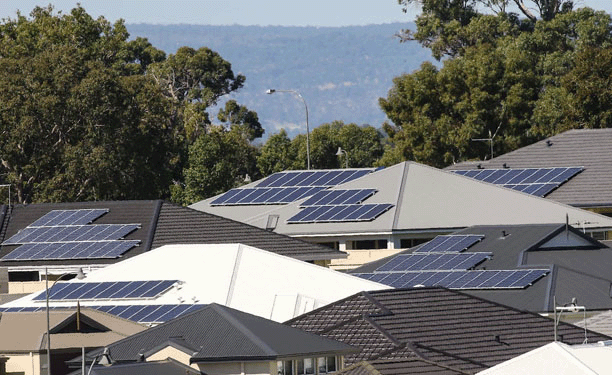
The only way to make nuclear power work in Australia is to switch off cheap renewable energy. Stop exporting electricity from your rooftop solar system. Forget feed-in tarrifs. The system has to call on baseload nuclear power first, or the plan makes no sense whatsoever. And to make space for nuclear in 10-15 years, you’d have to somehow make coal financially viable now.
Bill Grace, Adjunct Professor, Australian Urban Design Research Centre, The University of Western Australia Jul 15, 2024, https://reneweconomy.com.au/no-room-for-nuclear-power-unless-the-coalition-switches-off-your-rooftop-solar/
Before renewables came along, coal-fired power stations pumped out electricity (and carbon emissions) 24 hours a day. But now, this type of “always on” baseload power is no longer necessary or commercially viable.
This is one of many reasons why the Coalition’s proposed nuclear strategy is flawed. Even if nuclear power was cheap, which it isn’t, it would have to be the least appropriate energy source going around.
Why? Because the world has changed. The greening of the electricity grid means we need far more flexibility. Solar and wind can do the heavy lifting, provided we have enough storage (batteries, pumped hydro and other technologies) and something we can quickly switch on and off to fill the gaps, such as gas or (eventually) hydrogen.
The only way to make nuclear power work in Australia is to switch off cheap renewable energy. Stop exporting electricity from your rooftop solar system. Forget feed-in tarrifs. The system has to call on baseload nuclear power first, or the plan makes no sense whatsoever. And to make space for nuclear in 10-15 years, you’d have to somehow make coal financially viable now.
Comparing the cost of electricity
The price we pay for electricity as customers is a function of the wholesale price retailers pay, to secure energy from generators, plus the cost of transporting it (transmission and distribution).
To compare the cost of nuclear power to other sources, we need to take a closer look at each generator’s capital and operating costs.
For capital costs, the market operator and most energy analysts turn to the CSIRO GenCost report. It finds conventional nuclear power stations cost 40% more to build than coal, 2.5 times more than onshore wind and 5 times more than large-scale solar.
Operating costs reflect both fixed costs (such as maintenance) and variable costs (such as fuel). The less time the plant operates, the higher the capital and operating costs per megawatt hour (MWh) of output.
Both coal and nuclear can operate around 90% of the time at full capacity, while both wind and solar only operate at full capacity some of the time. So it’s best to compare annual operating costs on the basis of the actual energy generated in a year. Even on this basis it costs less to operate onshore wind and solar than coal or gas, mainly because there is no fuel cost.
Nuclear plants are incredibly complex and cost about five times more to maintain and manage than onshore wind and large scale solar. And that’s not including the high cost of decommissioning the plant, or treating and disposing of used fuel and wastes during its use.
South Australia offers a glimpse of the future
So far this analysis assumes all of the power plants operate at their optimum capacity. But the real world is not like that.
The market operator is required to supply electricity according to customer demand, which they do by dispatching the cheapest form available at the time.
This is onshore wind and solar, when available. However, network demand for electricity is also heavily influenced by what customers are doing to meet their own demand with rooftop solar.
South Australia has lots of rooftop solar plus large-scale onshore wind and solar power plants. Just take a look at the hour-by-hour supply of electricity to SA customers on July 6 this year
On this day in the middle of winter, private rooftop solar reduced demand by more than half in the middle of the day. Renewables (mainly wind) provided almost all the network electricity demand. A small amount of electricity was supplied by gas turbines (which are not baseload power generators) and batteries. No coal or gas generation was imported from other states.
About one third of SA homes have rooftop solar. As take-up inevitably grows, total network demand will continue to fall.
SA was the first state to see network demand fall below zero back in October 2021.
In the southwest of Western Australia the market operator is projecting network loads will become negative in coming years, something I predicted a decade ago.
As baseload generation is used less and less, it costs more and more per MWh and becomes less competitive and commercially viable. This is the main reason coal fired power stations are closing and baseload generation is becoming redundant.
SA is a predictor of the whole of Australia in coming years. If coal is not commercially viable into the future, then how can nuclear possibly be, when it is far more expensive?
Switching off solar and propping up coal
According to analysis by the Smart Energy Council the Coalition’s proposed seven nuclear reactors would only provide 3.7% of Australia’s electricity demand by 2050.
However, even if nuclear was to be a significant component of the mix by 2040 (under a very optimistic scenario), it wouldn’t be compatible with renewables already on rooftops and in the network.
That’s because nuclear power stations have very limited flexibility to power up, or power down. So if they are always on, something else has to be switched off. The only solution would be to “curtail” (switch off) cheap renewable energy, including exports from your rooftop solar.
For nuclear to be a significant energy source in future, Australia would have to start making more room for baseload power generation now. Existing coal-fired generators would have to be made financially viable so they can continue to operate until they’re eventually replaced by nuclear.
Meanwhile renewable generators and rooftop solar exports would have to be either disallowed from supplying the network or financially undermined – by government subsidies for coal and gas plants. The result of either would of course be higher costs and higher emissions.
The market operator’s Integrated System Plan for the National Electricity Market aligns with my analysis of the WA network. That is, the optimum energy solution, from both a cost and emissions perspective, is a combination of:
- renewable generation (mainly wind and solar)
- storage in the form of pumped hydro and batteries
- small amounts of gas, eventually replaced by hydrogen, to fill in the gaps.
There is neither room, nor need, for nuclear energy in Australia.
1 This month

of the week – Disrupting War & Militarism in Oceania. Active solidarity. Radical practice.
 Antinuclear