June 28, 2024 by: Dr Binoy Kampmark, https://theaimn.com/assanges-release-exposing-the-craven-media-stable/ The WikiLeaks project was always going to put various noses out of joint in the journalistic profession. Soaked and blighted by sloth, easily bought, perennially envious, a good number of the Fourth Estate have always preferred to remain uncritical of power and sympathetic to its brutal exercise. For those reasons, the views of Thomas Carlyle, quotingthe opinion of Edward Burke in his May 1840 lecture that “there were Three Estates in Parliament; but in the Reporters’ Gallery yonder, there sat a Fourth Estate more important far than they all” seem quaintly misplaced, certainly in a modern context.
The media response to the release of WikiLeaks founder Julian Assange from his scandalous captivity after pleading guilty to one count of conspiracy to obtain and disclose national defence information under the US Espionage Act of 1917 provides a fascinating insight into a ghastly, craven and sycophantic tendency all too common among the plodding hacks.
Take, for instance, any number of journalists working for the Australian Broadcasting Corporation, official national broadcaster and devotee of the safe middle line. One, a breakfast news anchor for the network’s meandering twenty-four-hour service, has a rather blotted record of glee regarding the mistreatment of Assange over the years.
Michael Rowland, torturously insipid and ponderously humourless, had expressed his inexpressible joy when the Ecuadorian government cut off Assange’s access to the Internet while confined to the country’s London embassy. “A big gold star to Ecuador,” he chirpedon March 28, 2018. Andrew Fowler, another journalist and far more seasoned on the rise of WikiLeaks, reproachedRowland on Twitter, as the X platform was then called. “Why would silencing a fellow journalist be supported?” For Rowland, the matter was as clear as day. “That remains a disputed opinion, Andrew. Publisher and activist yes. But you put yourself in a small camp calling him a journalist.”
These points matter, because they go to the central libelling strategy of the US government’s prosecution so casually embraced by mainstream outlets. In such a generated smokescreen, crimes can be concealed, and the revealers shown to be those of bad faith. Labels can be used to partition truth, if not obscure it altogether: a publisher-activist is to be regarded more dimly than the establishment approved journalist.
The point was rather well made by Antony Loewenstein, himself an independent journalist keen to ferret out the grainier details of abusive power. When interviewedby none other than Rowland himself, he explained, with unflagging patience, the reasons why Assange and Wikileaks are so reviled by the orthodox scribblers of the Fourth Estate. WikiLeaks, he stated with salience, had confronted power, not succumbed to it.
Rowland could only reiterate the standard line that Assange had admitted guilt for a “very serious offence”, refusing to examine the reasons for doing so, or the implications of it. Again, the vulgar line that Assange had “put US lives at risk” with the WikiLeaks disclosures was trotted out like an ill-fed nag. Again, Loewenstein had to remind Rowland that there was no evidence that any lives had been exposed to harm, a point made in several studies on the subject from the Pentagon to the Australian Defence Department.
The tendency is pestilential. While more guarded in his current iteration as a professor of journalism, Peter Greste, formerly a journalist for Al Jazeera, was previously dismissive in the Sydney Morning Herald of Assange’s contributions as he was brutally evicted from the Ecuadorian Embassy in London. “To be clear, Julian Assange is no journalist, and WikiLeaks is not a news organisation.” An organisation boasting “the libertarian idea of radical transparency” was “a separate issue altogether from press freedom.
While approving the publishing activities centred on the release of the Collateral Murder video showing the killing of civilians including two Reuters journalists by Apache helicopters, and the release of the Afghanistan War Logs, the Iraq War Logs and “Cablegate”, Greste fell for the canard that the publisher did not redact names in documents to “protect the innocent” by dumping “them all onto his website, free for anybody to go through, regardless of their contents or their impact they might have had.”
There is no mention of the decrypting key carelessly included in WikiLeaks: Inside Julian Assange’s War on Secrecy by its bumbling authors David Leigh and Luke Harding, or the fact that the website Cryptome was the first to publish the unredacted files ahead of WikiLeaks. There is certainly no discussion of the extensive redacting efforts Assange had made, as many of his collaborators testify to, prior to the release in November 2010.
Writing on June 25 in The Conversation, Greste displaysthe emetic plumage of someone who has done an about face. “It is worth pausing for a moment to consider all Assange has been through, and to pop a bottle of champagne to celebrate his release,” he writes distastefully, also reflecting on his own carceral experiences in an Egyptian prison cell. He also claims that the role of WikiLeaks, in checking “the awesome power that governments wield”, should be celebrated, while stating, weakly, that he never believed that Assange should “have been charged with espionage.”
In such shifting views, we see wounded egos, cravenness, and the concerns about an estate whose walls had been breached by a usurping, industrious publisher. By all means use the spoils from Assange and his leakers, even while snorting about how they were obtained. Publish and write about them in the hope of getting a press award. Never, however, admit that Assange is himself a journalist with more journalism awards than many have had hot dinners. In this grotesque reality, we are now saddled with a terrifying precedent: the global application of a US espionage statute endangering journalists and publishers who would dare discuss and run material on Washington’s national security
Peter Hannam Economics correspondent, Guardian, Fri 28 Jun 2024
A nuclear-powered Australian economy would result in higher-cost electricity and would “sound the death knell” for decarbonisation efforts if it distracts from renewables investment, a report by Bloomberg New Energy Finance (BNEF) argues.
The report comes as ANZ forecast September quarter power prices will dive as much as 30% once government rebates kick in. A separate review by the market watchdog has found household energy bills were 14% lower because of last year’s rebates.
BNEF said the federal opposition’s plan to build nuclear power stations on seven sites required “a slow and challenging” effort to overturn existing bans in at least three states, for starters.
Even if they succeeded, the levelised cost of electricity – a standard industry measure – would be far higher for nuclear power than renewables. Taking existing nuclear industries in western nations into account, their cost would still be “at least four times greater than the average” for Australian wind and solar plants firmed up with storage today, Bloomberg said.
“Nuclear could play a valuable, if expensive, role in Australia’s future power mix,” the report said. “However, if the debate serves as a distraction from scaling-up policy support for renewable energy investment, it will sound the death knell for its decarbonisation ambitions – the only reason for Australia to consider going nuclear in the first place.”
Bloomberg’s analysis complements CSIRO’s GenCost report that also found nuclear energy to be far more costly than zero-carbon alternatives. Australia’s lack of experience with the industry would result in a learning “premium” that would double the price of the first nuclear plant, according to the CSIRO.
Bloomberg also found that assuming the opposition’s seven plants had a generation capacity of 14 gigawatts, they would supply only a fraction of the total market.
If governments tried to rely on inflexible generators – whether coal-fired or nuclear – as renewables increased, they would have to resort to subsidies and other market interventions at a cost to taxpayers, Bloomberg said.
“This report speaks for itself,” the energy minister, Chris Bowen, said. “It’s another example of experts confirming that nuclear energy is too slow, too expensive and too risky for Australia.
“The Albanese government’s plan is the only plan backed by experts to deliver clean, cheap, renewable power available 24/7, and get us to net zero by 2050.”
Guardian Australia sought comment from the opposition energy spokesperson, Ted O’Brien.
ANZ, meanwhile, expects residential electricity prices to begin to see big falls starting from next month as federal and state rebates take effect.
@ANZ_Research predicts electricity prices in the September quarter could fall by 30% as fresh rebates kick in. That would lop a large 0.7 percentage points off the inflation rate (to be recovered later unless the rebates continue). pic.twitter.com/fjHWP8duEn— @phannam@mastodon.green (@p_hannam) June 27, 2024
From 1 July, all households in Queensland get a $1,000 rebate, those in Western Australia the first of two $200 rebates and nationally the first of four $75 rebates from the federal government will arrive.
In the September quarter, ANZ estimates consumer prices will fall 0.7 percentage points, temporarily dampening overall inflation – assuming those rebates aren’t extended again.
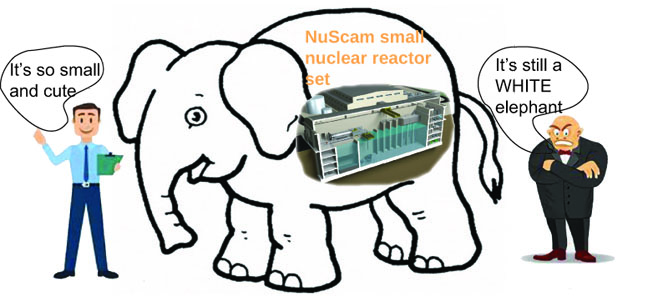
Concerns over the potential cost of small modular reactors (SMRs) and the electricity they produce continue to cast a shadow over growing optimism for new nuclear.
Proponents say that the recent faltering history of large nuclear projects missing schedules and running over budget are just teething problems for a new industry in the midst of a difficult economic climate.
However, critics claim it as proof that nuclear is not economically viable at all, and it will take too long faced with pressing climate issues.
There is little doubt that new nuclear will, at least initially, be more expensive to develop, build, and run than many are hoping.
New Generation IV reactors, such as SMRs, are likely to produce hidden costs inherent in the development of first-of-a-kind technology, while high commodity and building material prices, stubbornly high inflation, and interest rates at levels not seen for decades are adding to mounting expenses for the new developers.
NuScale’s cancelled deal to supply its SMRs to a consortium of electricity cooperatives due to rising power price estimates prompted The Breakthrough Institute’s Director for Nuclear Energy Innovation Adam Stein to write that advanced nuclear energy was in trouble.
Speaking during an event at the American Nuclear Society (ANS) 2024 Annual Conference in June, Stein said nothing had changed to fix the fundamental challenges nuclear faces since he wrote that in November, but there was a greater sense of urgency.
“Commodity prices have come down slightly, though interest rates are largely still the same and those are risks, or uncertainties, that are outside of the developer’s control,” Stein said during an event at the American Nuclear Society (ANS) 2024 Annual Conference.
“Until those can be considered a project risk, instead of unknown uncertainties, they are not going to be controlled at all and can drastically swing the price of any single project.”
Enthusiastic hype
These criticisms clash with growing enthusiasm (critics say ‘hype’) surrounding the new technology.
Twenty two countries and 120 companies at the COP28 conference in November vowed to triple global nuclear capacity by 2050, and developers are making sweeping promises about the capabilities and affordability of their latest creations, many of which will not be commercially available in North America or Europe until the early 2030s.
SMRs, defined as reactors that generate 300 MW or less, cost too much, and deployment is too far out for them to be a useful tool to transition from fossil fuels in the coming 10-15 years, according to a recent study by the Institute for Energy Economics and Financial Analysis (IEEFA).
“SMRs are not going to be helpful in the transition. They’re not going to be here quick enough. They’re not going to be economic enough. And we really don’t have time to wait,” says co-author of the study Dennis Wamsted.
Existing SMRs in China (Shidao Bay), Russia (floating SMR such as the Akademik Lomonosov), and in Argentina (the still under-construction CAREM) have all cost significantly more than originally planned, the IEEFA says in the study ‘Small Modular Reactors: Still too expensive, too slow, and too risky.’
Construction work on the cutting-edge CAREM project has been stalled since May due to cost-cutting measures by Argentina’s President Javier Milei, the head of National Atomic Energy Commission (CNEA) told Reuters.
The billions of dollars the U.S. and Canadian governments are pouring into nuclear power through subsidies, tax credits, and federally funded research, would be better spent on extra renewables, Wamsted says.
Some 260,000 MW of renewable energy generation, mostly solar, is expected to be added to the U.S. grid just through to 2028, the study says citing the American Clean Power Association, way before any new nuclear is expected to be plugged in.
“Federal funds to nuclear is, in our opinion, a waste of time and money,” says Wamsted.
In some ways, the nightmare for WikiLeaks founder Julian Assange is coming to an end. After taking refuge at the Ecuadorian embassy in London in 2012, he was arrested in 2019 by Britain, who have since been trying to extradite him to the United States on charges that by publishing official secrets he violated the Espionage Act (FAIR.org, 12/13/20; BBC,6/25/24). Once he enters a guilty plea, he will be sentenced to time served and walk away a free man (CBS, 6/25/24).
Assange’s case has attracted the attention of critics of US foreign policy, and those who value free speech and a free press. His family has rightly contended that his treatment in prison was atrocious (France24, 11/1/19; Independent, 2/20/24). A group of doctors said he was a victim of “torture” tactics (Lancet, 6/25/20). In 2017, Yahoo! News (9/26/21) reported that the “CIA plotted to kidnap the WikiLeaks founder, spurring heated debate among Trump administration officials over the legality and practicality of such an operation” and that CIA and Trump administration insiders “even discussed killing Assange, going so far as to request ‘sketches’ or ‘options’ for how to assassinate him.”
His supporters noted that the charges against him came after he harmed the US imperial project, particularly by leaking a video showing US troops killing Reuters journalists in Iraq (New York Times, 4/5/10). Under his watch, WikiLeaks also leaked a trove of diplomatic cables that the New York Times (11/28/10) described as an “unprecedented look at back-room bargaining by embassies around the world, brutally candid views of foreign leaders, and frank assessments of nuclear and terrorist threats.”
Press freedom and human rights groups like the International Federation of Journalists and Amnesty International had long called for his release. Several major news outlets from the US and Europe—the New York Times, Guardian, Le Monde, Der Spiegel and El País—signed a letter calling for his release (New York Times, 11/28/22). They said his “indictment sets a dangerous precedent and threatens to undermine America’s First Amendment and the freedom of the press.
Hostility toward press freedom
Assange’s loved ones and supporters are certainly glad to see him come home (Guardian, 6/25/24). But let’s be perfectly clear-eyed: The entire ordeal and his plea deal are proof of a hostile climate toward a free press in the United States and the wider world, and its chilling effect on investigative journalism could substantially worsen.
Assange’s deal has echoes of the end of the West Memphis Three case, where three Arkansas men were wrongfully convicted as teenagers of a heinous triple homicide in 1993 (Innocence Project, 8/19/11). The three re-entered guilty pleas in exchange for time served. They won their freedom, but their names were still attached to a terrible crime, and the state of Arkansas was able to close the case, ensuring the real killer or killers would never be held accountable. It was an imperfect resolution, but no one could blame the victims of a gross injustice for taking the freedom grudgingly offered.
Something similar is happening with Assange. It compounds the persecution already inflicted on him to force him to declare that exposing US government misdeeds was itself a high crime.
“On a human level, we’re thrilled that he’s out of prison, including the time in the embassy,” said Chuck Zlatkin, a founding member of NYC Free Assange, a group that has held regular protests calling for his release. “We’re thrilled for him personally.”
But the deal shows how eager the US government is to both save face and remain a threatening force against investigative reporters.
‘Criminalization of routine journalistic conduct’
As Seth Stern, the director of advocacy at the Freedom of the Press Foundation (6/24/24), said in a statement:
It’s good news that the DoJ is putting an end to this embarrassing saga. But it’s alarming that the Biden administration felt the need to extract a guilty plea for the purported crime of obtaining and publishing government secrets. That’s what investigative journalists do every day.
The plea deal won’t have the precedential effect of a court ruling, but it will still hang over the heads of national security reporters for years to come. The deal doesn’t add any more prison time or punishment for Assange. It’s purely symbolic. The administration could’ve easily just dropped the case, but chose to instead legitimize the criminalization of routine journalistic conduct and encourage future administrations to follow suit. And they made that choice knowing that Donald Trump would love nothing more than to find a way to throw journalists in jail.
And that is all happening while threats against leakers and journalists remain. Edward Snowden, the source in the Guardian’s investigation (6/11/13) into National Security Agency surveillance, still resides in Russia in order to evade arrest. I recently wrote about the excessive sentencing of the man who leaked tax documents to ProPublica and the New York Times showing how lopsided the tax system is in favor of the rich (FAIR.org, 2/2/24). NSA contractor Reality Winner was sentenced to five years in prison for leaking documents to the Intercept on the issue of Russian interference in the 2016 US election (Vanity Fair, 10/12/23)
Laura Poitras, one of the journalists who brought Snowden’s revelations about NSA surveillance to light, said that Assange’s conviction could silence reporters doing investigative reporting on the US government (New York Times, 12/21/20). Chelsea Manning, Assange’s source for these investigations, spent only seven years in prison out of the 35 years of her sentence thanks to presidential clemency, but that is still a harrowing experience (NPR, 5/17/17).
‘Not transparency’ but ‘sabotage’
Worse, some in the so-called free press have rallied behind the government. The Wall Street Journal editorial board (4/11/19) cheered the legal crusade against Assange, arguing that the leaks harmed national security. “Assange has never been a hero of transparency or democratic accountability,” the Murdoch-owned broadsheet proclaimed.
The neoconservative journal Commentary (4/12/19) dismissed the free press defenders of Assange, saying of Wikileaks’ investigations into US power: “This was not transparency. It was sabotage.”
And the British Economist (4/17/19) said, in support of Assange’s extradition to the US:
WikiLeaks did some good in its early years, exposing political corruption, financial malfeasance and military wrongdoing. But the decision to publish over 250,000 diplomatic cables in 2010 was malicious. The vast majority of messages revealed no illegality or misdeeds. Mr. Assange’s reckless publication of the unredacted versions of those cables the following year harmed America’s interests by putting its diplomatic sources at risk of reprisals, persecution or worse.
Unsurprisingly, Murdoch outlets gave the plea deal a thumbs down. “Don’t fall for the idea that Mr. Assange, the founder of WikiLeaks, is a persecuted ‘publisher,’” the Wall Street Journal editorial board (6/25/24) warned.
The New York Post editorial board (6/25/24) disparaged Assange’s motives, saying he “wasn’t interested in justice or exposing true abuse; he simply relished obtaining and releasing any secret government or political material, particularly if US-based.” Alleging that the documents he published were sensitive, the paper argued in favor of government secrecy: “Uncle Sam needs to keep some critical secrets, especially when lives are on the line.”
In reality, US intelligence and military officials have never been able to trace any deaths to WikiLeaks‘ revelations (BBC, 12/1/10; Guardian, 7/31/13; NPR, 4/12/19)—and certainly have never identified any damage anywhere nearly as serious as the very real harms it exposed. (NPR did quote a former State Department lawyer who complained that WikiLeaks‘ exposes “can really chill the ability of those American personnel to build those sorts of relationships and have frank conversations with their contacts.”) Alas, some publications side with state power even if journalistic freedom is at stake (FAIR.org, 4/18/19).
‘Punished for telling the truth’
Assange’s case is over, but he walks away a battered man as a result of the legal struggle. And that serves as a warning to other journalists who rely on brave people in high levels of power to disclose injustices. Stern is right: Another Trump administration would be horrendous for journalists. But the current situation with the Democratic administration is already chilling.
“All he was being punished for was telling the truth about war crimes committed by this country,” Zlatkin told FAIR.
And without a real change in how the Espionage Act is used against journalists, the ability to tell the truth to the rest of the world is at risk.
“We’re still not in a situation where we as a general population are getting the truth of what’s being done in our name,” Zlatkin said. “So the struggle continues.”
Opposition Leader Peter Dutton’s pledge to build seven nuclear energy plants, if elected, has triggered heated political debate – mostly about the costs and timetable of the plan. But the concept of nuclear energy in Australia must overcome an arguably even bigger hurdle: how to dispose of high-level nuclear waste.
Nuclear power is only a viable alternative to fossil fuel burning if there is somewhere to store the waste – and only if this can be done safely, without exorbitant cost and with community support.
A CSIRO analysis last month showed there is no economic argument for nuclear energy in Australia, even without considering the substantial cost of waste disposal and storage. Include waste in the maths, and the Coalition’s proposal looks a whole lot worse.
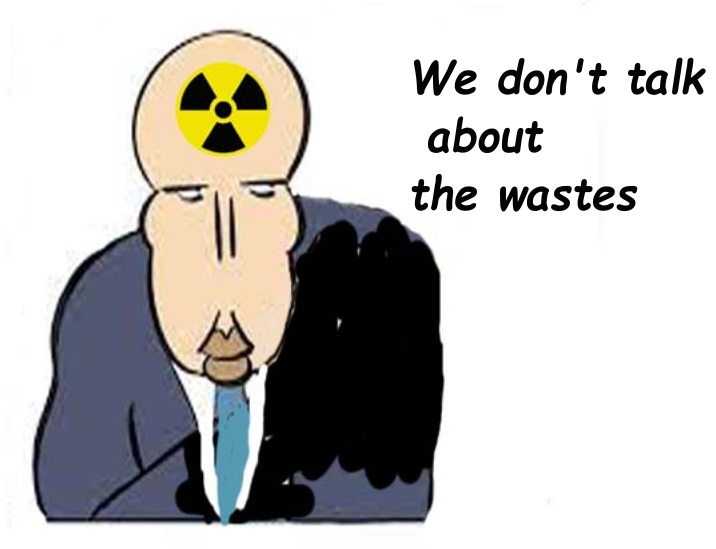
What’s more, nuclear power stations produce high-level radioactive waste. It is dangerous for hundreds of thousands of years — and so far, the world has failed to deliver a safe, permanent storage method. Is this a problem Australia really wants to take on?
What is high-level nuclear waste?
Nuclear reactors work by using fission, or the splitting of uranium atoms, to produce energy. Once the uranium has been used to produce energy it is considered “spent”. Spent fuel can either be disposed of or reprocessed to recover and reuse some of its contents, such as plutonium. Both spent and reprocessed nuclear fuel must eventually be disposed of.
Nuclear waste is classed according to how much radiation it emits – either low, intermediate or high. Nuclear power plants produce high-level waste, which is radioactive for a very long time.
Negative health effects in humans from exposure to high-level radiation include birth defects, impaired tissue and organ functioning, and increased risk of cancer.
Nuclear waste only becomes safe after it decays. For high-level waste, this can take hundreds of thousands of years. That means the waste must be disposed of and stored for a very, very long time.
How is high-level nuclear waste currently stored?
No permanent and safe storage for high-level nuclear waste is yet in operation.
The current temporary options are either “wet” or “dry” storage. Wet storage entails putting the waste in a pond and covering it with several metres of water to keep it cool. Dry storage involves putting the waste in containers made of concrete and steel.
These options are not a long-term solution. They are vulnerable to corrosion as well as natural disasters such as cyclones, tsunamis, earthquakes, fires and floods.
There are also risks from human-induced hazards such as war, terrorist attack, arson and accidents. For example, Russia’s invasion of Ukraine has threatened the safety of Ukrainian nuclear facilities such as the Zaporizhzhya plant, where spent nuclear fuel rods are reportedly kept in metal casks inside concrete containers in an open-air yard.
Can we put it underground?
Each reactor – even the small ones – will produce several tonnes of high-level waste each year – far more than the Coke can-sized amount of waste Dutton claims. The Coalition says it would find a permanent solution for storing nuclear waste from the plants. This is easier said than done.
The only permanent storage solution on the cards around the world is to place it in a “deep geological repository”. This involves encasing the waste and lowering it into a chamber drilled far underground. There are many challenges associated with this storage method. They include:
cost: the construction, decommissioning, closure and monitoring of such a facility in South Australia has been estimated at A$41 billion
siting: the location must be geologically stable, to prevent waste from escaping over many thousands of years
transport: the further waste has to be moved, the greater the safety risks. This is relevant to the Coalition’s plan, under which seven nuclear sites would be distributed around Australia
preventing corrosion and leakage: the waste container must be sufficiently robust to corrosion and the invasion of microbes. The shaft to the underground storage also needs to be sealed
social acceptance: in a democratic country such as Australia, communities must agree to host a nuclear waste site and be satisfied it is safe. This includes securing “free, prior and informed consent” from Traditional Owners.
Finland is the country closest to realising this storage method. It has selected a site for a deep geological repository 500 metres underground, and begun construction. But the project has taken decades and suffered numerous technical problems.
Scientists have also raised safety concerns, such as how the project will perform over the very long term, including during freezing of rocks in the next ice age.
Neither the United Kingdom nor the United States has moved beyond temporary storage of high-level nuclear waste.
The Coalition must come clean
Other nations have struggled to find long-term solutions for nuclear waste storage. There is every reason to expect Australia would face the same problems.
Importantly, Australia has for decades failed to find a suitable place for the long-term storage of small quantities of low- and intermediate-level nuclear waste from medical isotopes and the Lucas Heights research reactor. Even though these wastes are comparatively benign, every proposal has faced strong local opposition.
In some ways, the nightmare for WikiLeaks founder Julian Assange is coming to an end. After taking refuge at the Ecuadorian embassy in London in 2012, he was arrested in 2019 by Britain, who have since been trying to extradite him to the United States on charges that by publishing official secrets he violated the Espionage Act (FAIR.org, 12/13/20; BBC,6/25/24). Once he enters a guilty plea, he will be sentenced to time served and walk away a free man (CBS, 6/25/24).
Assange’s case has attracted the attention of critics of US foreign policy, and those who value free speech and a free press. His family has rightly contended that his treatment in prison was atrocious (France24, 11/1/19; Independent, 2/20/24). A group of doctors said he was a victim of “torture” tactics (Lancet, 6/25/20). In 2017, Yahoo! News (9/26/21) reported that the “CIA plotted to kidnap the WikiLeaks founder, spurring heated debate among Trump administration officials over the legality and practicality of such an operation” and that CIA and Trump administration insiders “even discussed killing Assange, going so far as to request ‘sketches’ or ‘options’ for how to assassinate him.”
His supporters noted that the charges against him came after he harmed the US imperial project, particularly by leaking a video showing US troops killing Reuters journalists in Iraq (New York Times, 4/5/10). Under his watch, WikiLeaks also leaked a trove of diplomatic cables that the New York Times (11/28/10) described as an “unprecedented look at back-room bargaining by embassies around the world, brutally candid views of foreign leaders, and frank assessments of nuclear and terrorist threats.”
Press freedom and human rights groups like the International Federation of Journalists and Amnesty International had long called for his release. Several major news outlets from the US and Europe—the New York Times, Guardian, Le Monde, Der Spiegel and El País—signed a letter calling for his release (New York Times, 11/28/22). They said his “indictment sets a dangerous precedent and threatens to undermine America’s First Amendment and the freedom of the press.
Hostility toward press freedom
Assange’s loved ones and supporters are certainly glad to see him come home (Guardian, 6/25/24). But let’s be perfectly clear-eyed: The entire ordeal and his plea deal are proof of a hostile climate toward a free press in the United States and the wider world, and its chilling effect on investigative journalism could substantially worsen.
Assange’s deal has echoes of the end of the West Memphis Three case, where three Arkansas men were wrongfully convicted as teenagers of a heinous triple homicide in 1993 (Innocence Project, 8/19/11). The three re-entered guilty pleas in exchange for time served. They won their freedom, but their names were still attached to a terrible crime, and the state of Arkansas was able to close the case, ensuring the real killer or killers would never be held accountable. It was an imperfect resolution, but no one could blame the victims of a gross injustice for taking the freedom grudgingly offered.
Something similar is happening with Assange. It compounds the persecution already inflicted on him to force him to declare that exposing US government misdeeds was itself a high crime.
“On a human level, we’re thrilled that he’s out of prison, including the time in the embassy,” said Chuck Zlatkin, a founding member of NYC Free Assange, a group that has held regular protests calling for his release. “We’re thrilled for him personally.”
But the deal shows how eager the US government is to both save face and remain a threatening force against investigative reporters.
‘Criminalization of routine journalistic conduct’
As Seth Stern, the director of advocacy at the Freedom of the Press Foundation (6/24/24), said in a statement:
It’s good news that the DoJ is putting an end to this embarrassing saga. But it’s alarming that the Biden administration felt the need to extract a guilty plea for the purported crime of obtaining and publishing government secrets. That’s what investigative journalists do every day.
The plea deal won’t have the precedential effect of a court ruling, but it will still hang over the heads of national security reporters for years to come. The deal doesn’t add any more prison time or punishment for Assange. It’s purely symbolic. The administration could’ve easily just dropped the case, but chose to instead legitimize the criminalization of routine journalistic conduct and encourage future administrations to follow suit. And they made that choice knowing that Donald Trump would love nothing more than to find a way to throw journalists in jail.
And that is all happening while threats against leakers and journalists remain. Edward Snowden, the source in the Guardian’s investigation (6/11/13) into National Security Agency surveillance, still resides in Russia in order to evade arrest. I recently wrote about the excessive sentencing of the man who leaked tax documents to ProPublica and the New York Times showing how lopsided the tax system is in favor of the rich (FAIR.org, 2/2/24). NSA contractor Reality Winner was sentenced to five years in prison for leaking documents to the Intercept on the issue of Russian interference in the 2016 US election (Vanity Fair, 10/12/23)
Laura Poitras, one of the journalists who brought Snowden’s revelations about NSA surveillance to light, said that Assange’s conviction could silence reporters doing investigative reporting on the US government (New York Times, 12/21/20). Chelsea Manning, Assange’s source for these investigations, spent only seven years in prison out of the 35 years of her sentence thanks to presidential clemency, but that is still a harrowing experience (NPR, 5/17/17).
‘Not transparency’ but ‘sabotage’
Worse, some in the so-called free press have rallied behind the government. The Wall Street Journal editorial board (4/11/19) cheered the legal crusade against Assange, arguing that the leaks harmed national security. “Assange has never been a hero of transparency or democratic accountability,” the Murdoch-owned broadsheet proclaimed.
The neoconservative journal Commentary (4/12/19) dismissed the free press defenders of Assange, saying of Wikileaks’ investigations into US power: “This was not transparency. It was sabotage.”
And the British Economist (4/17/19) said, in support of Assange’s extradition to the US:
WikiLeaks did some good in its early years, exposing political corruption, financial malfeasance and military wrongdoing. But the decision to publish over 250,000 diplomatic cables in 2010 was malicious. The vast majority of messages revealed no illegality or misdeeds. Mr. Assange’s reckless publication of the unredacted versions of those cables the following year harmed America’s interests by putting its diplomatic sources at risk of reprisals, persecution or worse.
Unsurprisingly, Murdoch outlets gave the plea deal a thumbs down. “Don’t fall for the idea that Mr. Assange, the founder of WikiLeaks, is a persecuted ‘publisher,’” the Wall Street Journal editorial board (6/25/24) warned.
The New York Post editorial board (6/25/24) disparaged Assange’s motives, saying he “wasn’t interested in justice or exposing true abuse; he simply relished obtaining and releasing any secret government or political material, particularly if US-based.” Alleging that the documents he published were sensitive, the paper argued in favor of government secrecy: “Uncle Sam needs to keep some critical secrets, especially when lives are on the line.”
In reality, US intelligence and military officials have never been able to trace any deaths to WikiLeaks‘ revelations (BBC, 12/1/10; Guardian, 7/31/13; NPR, 4/12/19)—and certainly have never identified any damage anywhere nearly as serious as the very real harms it exposed. (NPR did quote a former State Department lawyer who complained that WikiLeaks‘ exposes “can really chill the ability of those American personnel to build those sorts of relationships and have frank conversations with their contacts.”) Alas, some publications side with state power even if journalistic freedom is at stake (FAIR.org, 4/18/19).
‘Punished for telling the truth’
Assange’s case is over, but he walks away a battered man as a result of the legal struggle. And that serves as a warning to other journalists who rely on brave people in high levels of power to disclose injustices. Stern is right: Another Trump administration would be horrendous for journalists. But the current situation with the Democratic administration is already chilling.
“All he was being punished for was telling the truth about war crimes committed by this country,” Zlatkin told FAIR.
And without a real change in how the Espionage Act is used against journalists, the ability to tell the truth to the rest of the world is at risk.
“We’re still not in a situation where we as a general population are getting the truth of what’s being done in our name,” Zlatkin said. “So the struggle continues.”
The Government has accidentally left behind an unexploded bomb for an incoming Labour Government. Should it go off, it will be early evidence for the argument that Starmer can’t be trusted. The bomb in question is whether or not to go ahead with building another large French nuclear power station at Sizewell in Suffolk.
Our current experience with building large French nuclear power stations is no
Tom Burke on how an incoming Labour Government will have to deal with the unexploded political bomb of nuclear left behind by the Conservatives
BYLINE SUPPLEMENT, JUN 26, 2024, You know something is changing in British politics when our better-known political commentators start turning up at Green Party events. They have not found it easy to make much sense of what such a heterodox coalition offers voters. But there is no doubting that their presence signals an old order in transition………………………………………………………………….
The Nuclear Legacy
The Government has accidentally left behind an unexploded bomb for an incoming Labour Government. Should it go off, it will be early evidence for the argument that Starmer can’t be trusted. The bomb in question is whether or not to go ahead with building another large French nuclear power station at Sizewell in Suffolk.
Our current experience with building large French nuclear power stations is not encouraging. Although, unusually, we are not alone in this respect. No-one else, including the French themselves, has been able to do so either. Indeed, France has now decided not to even try to build any more of the type of reactors intended for Sizewell as they are too expensive and difficult to build. They will build a different design instead.
The French reactor we are currently building at Hinkley Point was promised to cost £5.6 billion in 2008 and be producing the electricity to cook turkeys on by 2017. In today’s money it will cost nearer to £46 billion and not be producing electricity before 2030. To get EDF to invest, the then Labour Government promised EDF an index linked price for its electricity.
This means that, were it available now, electricity from Hinkley Point would cost £130/MWh. Since National Grid will sell you electricity today for about £80/MWh why would anyone buy more expensive nuclear electricity? To get EDF to build Hinkley Point a Conservative Government bought 35 years’ worth of electricity in advance at a fixed price. To pay for the difference between what EDF can get from the wholesale market there will be tax on everyone’s electricity bill.
It is beyond my understanding why any sane person would want to repeat this experience. Yet that is just what the Conservative Government, with Labour support, was planning to do. It is often argued that building a second station using the same reactors will be cheaper. If that were so, someone needs to explain why the French have already decided not to build any more. Is there something they know that we don’t?
Labour now face a particular difficulty on Sizewell. Since their wind-back of the green prosperity plan, they have doubled down on their promise to deliver carbon-free electricity by 2030. So let us, for argument’s sake, put aside any reservation about whether this is practical. We, and our children, will all certainly be better off if they can deliver carbon-free, secure and affordable electricity to consumers by 2030.
But construction of Sizewell cannot start until after 2030. What then, is the case for forcing homeowners and businesses to pay a tax on their energy bills to finance an unnecessary nuclear power station? And what would this do to the scale and speed of investment in the energy efficiency and renewables which are cheaper and faster ways to get both bills and carbon emissions down? , https://www.bylinesupplement.com/p/post-election-a-different-kind-of
WikiLeaks founder Julian Assange, 52, has struck a plea deal with the United States that is set to end a years-long legal pursuit over the release of classified documents.
He is expected to plead guilty to conspiring to unlawfully obtain and disseminate classified national defence information in a court in the Northern Mariana Islands at 9am on Wednesday (AEST) but will avoid jail time in the US after spending several years fighting extradition from London’s maximum-security Belmarsh Prison.
Why was Julian Assange released?
Assange is en route to Saipan, the largest of the Northern Mariana Islands, which are a US commonwealth in the western Pacific. There he will face a US Federal Court judge on a single charge of breaching the Espionage Act with the mass release of secret documents leaked by former intelligence analyst Chelsea Manning.
He faced 18 espionage charges after being indicted in early 2019 by the US Justice Department, which began legal proceedings to seek his extradition from Britain in the same year.
The charges sparked a global outcry over press freedom and led a cross-party coalition of Australian politicians, including former Nationals leader Barnaby Joyce and teal independent Monique Ryan, to travel to the US in 2023 to pressure the Biden administration to drop its pursuit.
US President Joe Biden told a press conference earlier this year he was “considering” a deal over Assange, after Prime Minister Anthony Albanese raised it during his October 2023 US visit.
“I’ve made it clear that enough is enough – that it’s time it was brought to a conclusion,” Albanese said.
How long did Assange spend in prison?
Assange was first detained in 2010 and sent to London’s Wandsworth Prison after a Swedish court ordered his arrest on sex crime allegations. He was freed on bail with a £240,000 surety, but in February 2011, a London court ordered Assange’s extradition to Sweden.
What does the plea deal mean for Assange’s future?
Assange is expected to face a US judge at 9am local time in Saipan, who is expected to approve the plea deal, meaning he will avoid the maximum 175 years he faced in the US under the original charges.
His future is largely unknown beyond that, however, in a post on social media platform X on Tuesday morning celebrating Assange’s release, WikiLeaks said he was expected to return to Australia.
What has been the Australian government’s response?
Albanese has so far been tight-lipped about Assange’s release. But Coalition and Greens MPs welcomed the announcement. Opposition foreign affairs spokesman Simon Birmingham said he welcomed the fact Assange’s decision to plead guilty would bring an end to the “long-running saga”.
Nationals MP Joyce said the issue was about “extraterritoriality” and went beyond Assange as an individual. “It’s about an issue, about an Australian citizen, who did not commit a crime in Australia,” he said.
The opposition claims Australia is an outlier in the developed world in not having nuclear, yet Germany and Italy have closed their plants.
So much has been said by the Coalition about what nuclear energy could do for Australia, with so little evidence to back it up, that it can be hard to keep up with the claims.
The key assertion by Peter Dutton and Ted O’Brien is that nuclear would lead to a “cheaper, cleaner and consistent” electricity supply. None of this has been supported.
Not cheaper: the available evidence suggests both nuclear and gas-fired electricity – which Dutton says we would need a lot more of – would be more expensive for Australian consumers than the currently proposed mix of renewable energy, batteries, hydro, new transmission lines and limited amounts of gas.
Not cleaner: stringing out the life of old coal plants and adding gas would increase heat-trapping greenhouse gas emissions.
Not more consistent: the Coalition is proposing a small post-2040 nuclear industry that, even in a best-case scenario, is likely to provide only a fraction of Australia’s electricity. It wants less solar and wind but has not explained how this would help keep the lights on as coal plants shut.
There has been less attention on the Coalition’s repeated suggestion that Australia is the only one of the world’s top 20 economies that either doesn’t have or hasn’t signed up to nuclear energy.
It’s a point that has been raised to imply a bigger point: that nuclear energy is flourishing elsewhere and Australia is out on a limb by not having it.
Let’s test that.
Germany, the world’s third biggest economy, shut its remaining nuclear plants in April last year, following through on a commitment after the 2011 Fukushima disaster in Japan to accelerate its shift away from atomic power. It was the end of a nuclear power industry that had operated since the 1960s.
Germany is also using less coal power – it is at its lowest level in decades – and instead backing renewable energy. It has an 80% renewables target for 2030.
Italy, Europe’s third biggest economy, also had a nuclear industry from the 60s, but shut its plants in 1990 after a referendum. Its rightwing government has suggested it would like to reopen the industry. It hasn’t yet.
Germany and Italy are connected to the European power grid, which gets about 20% of its electricity from nuclear energy, mostly from France’s decades-old plants. But to suggest either is a “nuclear country” is to stretch the truth to breaking point.
Indonesia has toyed with the idea of nuclear energy since opening an experimental reactor in 1965 but nothing has been developed. A US company has signed an MoU to study “developing a thorium molten salt reactor for either power generation or marine vehicle propulsion”, and Indonesian officials say they expect nuclear to play a small role in a future grid dominated by renewable energy. But no plants are under construction and the regulatory work to establish an industry has not been done.
Saudi Arabia also has no nuclear plants. It has been considering developing an industry for about 15 years and invited bids to build two large nuclear plants to help replace fossil fuels. But it is mostly backing renewables and has set a goal of 50% of electricity coming from solar by 2030.
Counting Australia, that means five of the G20 has no nuclear industry and attempts to change that are, at best, at an early stage.
That’s not necessarily a good thing. The evidence suggests nuclear energy will be needed for the world to eradicate fossil fuels, especially in places that do not have Australia’s extraordinary access to renewable energy resources. Every country will have to find its own way.
But it is evidence that the Coalition’s claim that nuclear energy is “used by 19 of the 20 biggest economies”, as Dutton put it last week, is misleading.
The data from an annual statistical review by the Energy Institute tells us there is no global wave of nuclear energy investment or construction. Global generation peaked in 2006, dipped after the catastrophe in Japan and has more or less flatlined since.
Paul Keating has launched a broadside at Peter Dutton’s nuclear policy, accusing him of “seeking to camouflage” the Coalition’s “long held denialism in an industrial fantasy”.
The former Labor prime minister said in a statement the plan for seven nuclear power plants amounted to “resort to the most dangerous and expensive energy source on the face of the earth”.
The Coalition argues that nuclear power will help it achieve net zero by 2050, but abandoning the interim 2030 target has prompted warnings the policy will reduce investment in renewables that bring prices down.
“Dutton, like [Tony] Abbott, will do everything he can to de-legitimise renewables and stand in the way of their use as the remedy nature has given us to underwrite our life on earth,” Keating said.
“Dutton, in his low rent opportunism, mocks the decency and earnestness which recognises that carbon must be abated and with all urgency.”
On Tuesday, Dutton said the federal Coalition wants “to have renewables in the system but we want to do it in a responsible way”, with nuclear energy providing baseload power.
Australia “can’t be reliant on the weather for the ability to turn on the lights. A modern economy just doesn’t work like that”, the opposition leader told reporters.
“I want to make sure we’ve got renewables in the system. We’re happy for batteries, but we can’t pretend that batteries can provide the storage,” he said.
Keating argued the Coalition policy attacks Labor’s efforts to create a “reliable and dependable framework for investment in renewables – the one thing, however late in the piece, the country needs to rely upon to lift the carbon menace off its back”.
Earlier, the shadow energy minister, Ted O’Brien, revealed an independent authority would determine how much nuclear power is produced at each of its seven proposed sites, despite the Coalition claiming it would set the proportion of nuclear in the national energy mix.
On Sunday, O’Brien urged Labor to respect that if the Coalition wins the next election, it arguably has a mandate for nuclear power, but then refused to commit to the opposition dropping the policy if it loses the poll, due by 2025.
In a cagey interview with the ABC’s Insiders, O’Brien repeatedly refused to reveal or even say if he knew how much of Australia’s power could be supplied by nuclear, nor to say if the Coalition would push ahead if local communities rejected the plan.
Asked if electricity prices would go up as coal power plants shut down and nuclear is unavailable for at least 10 years, O’Brien said: “You’re right in that if you have limited supply then prices go up.”
O’Brien said the Coalition’s proposal was to bring in more gas supply and that it supports “the continuation of rolling out renewables”.
Last Monday the Nationals leader, David Littleproud, had suggested the Coalition wanted to cap or limit the rollout of large-scale renewables, but was immediately contradicted by Simon Birmingham, a leading moderate who said they are an “important part of the mix”.
O’Brien confirmed there is “no discussion about capping investment” and Littleproud had since acknowledged this is not Coalition policy.
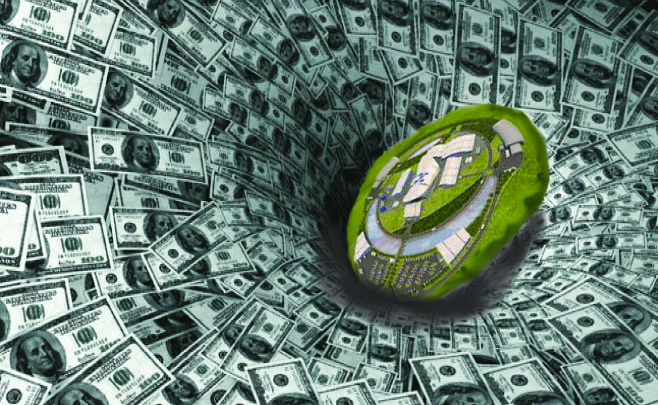
The Smart Energy Council has estimated the Coalition’s pledge to build seven nuclear reactors could cost taxpayers as much as $600bn while supplying just 3.7% of Australia’s energy mix by 2050.
But O’Brien noted although the Coalition had nominated seven sites there was potential for “multi-unit sites” such as multiple 300 megawatt small modular reactors on the same site.
“In terms of exactly how many on any plant, we’ll be leaving that to the independent nuclear energy coordinating authority,” he said. “It is right we want multi-unit sites. That’s how to get costs down.”
O’Brien said the Coalition would release details of the energy mix “in due course”, after further announcements on gas, renewable energy and market reforms.
“The real question is not – on nuclear, for example – how much it costs. But: is it value for money?”
O’Brien said it would be “crystal clear” how much nuclear the Coalition is planning to implement but up to the independent authority “to work out at each site what’s the feasibility of certain technologies and only from there, can you come down to a specific number of gigawatts”.
This week the deputy Nationals leader, Perin Davey, suggested if communities are “absolutely adamant” they didn’t want nuclear power plants then the Coalition “will not proceed”, but was contradicted by Littleproud.
O’Brien said the Coalition would undertake a two-and-a-half-year consultation with communities, claiming he didn’t think they would reject nuclear power.
“Ultimately the decision … will be a matter for the minister.”
O’Brien said he would base any decision on the “independent coordinating authority’s feasibility report, what is in our national interest, and what’s in the community interest” including “economic, social, and environmental issues”.
O’Brien said that the prime minister, Anthony Albanese, must answer “if we actually get a mandate, will they respect and will he facilitate the uplifting of the moratorium?”
O’Brien then refused to say if the Coalition would ditch the nuclear plan if it lost the election, arguing that it is also advocating for renewables and gas but would not be expected to jettison those.
“We’re doing this because it’s in our national interest,” he said.
On Sunday the environment minister, Tanya Plibersek, told Sky News that the Coalition plan could cost $387bn, and that the CSIRO had estimated that each reactor would cost $8 to 9bn.
Plibersek has approved 54 renewables projects since Labor was elected in May 2022, with a total of 8.6 gigawatts of capacity, comparable to 8.6 large-scale nuclear reactors.
Littleproud said the Coalition would be “upfront and honest” and acknowledged when asked about the $387bn figure that “there is an upfront capital cost”.
“There is an upfront cost but you get to amortise that over 80 or 100 years,” he said.
The federal Coalition’s pledge to build nuclear reactors on seven sites in five states if elected has continued to raise questions this week.
Ted O’Brien, the shadow energy minister, says the plants can operate for between 80 and 100 years, providing “cheaper, cleaner and consistent 24/7 electricity” compared with renewables.
That claim comes despite the CSIRO’s Gencost report estimating each 1-gigawatt nuclear plant could take 15-20 years to build and cost $8.4bn. The first may be double that given the high start-up costs.
But what does the state of the nuclear energy internationally tell us about the Coalition’s proposal?
What is the state of the global nuclear industry?
The world opened five nuclear reactors last year and shut the same number, trimming 1GW of capacity in the process, says Mycle Schneider, an independent analyst who coordinates the annual world nuclear industry status report.
During the past two decades, it’s a similar story of 102 reactors opened and 104 shutting. As with most energy sources, China has been the biggest mover, adding 49 during that time and closing none. Despite that burst, nuclear provides only about 5% of China’s electricity.
Last year, China added 1GW of nuclear energy but more than 200GW of solar alone. Solar passed nuclear for total power production in 2022 while wind overtook it a decade ago.
“In industrial terms, nuclear power is irrelevant in the overall global market for electricity generating technology,” he says.
As for small modular reactors, or SMRs,nobody has built one commercially. Not even billionaire Bill Gates, whose company has been trying for 18 years.
The CSIRO report examined the “contentious issue” of SMRs, and noted that one of the main US projects, Utah Associated Municipal Power Systems, was cancelled last November. Even then, its estimated costs in 2o2o of $18,200/kiloWatt, or more than double that of large-scale plants at $8,655/kW (in 2023 dollars).
“In late 2022 UAMPS updated their capital cost to $28,580/kW citing the global inflationary pressures that have increased the cost of all electricity generation technologies,” CSIRO said. “The UAMPS estimate implies nuclear SMR has been hit by a 57% cost increase which is much larger than the average 20% observed in other technologies.”
So at least some nations are still building large reactors?
Of the 35 construction starts since 2019, 22 were in China and the rest were Russian-built in various nations. Russia sweetens its deals by agreeing to handle the waste from the plants it builds.
“The US has blacklisted CGN and CNNC, which are the two major [Chinese] state-owned nuclear companies [in China] that could respond to an international call for tender,” Schneider says. “So could you imagine that Australia would hire a Chinese company under those conditions to build nuclear reactors?”
Aren’t allies like France an option?
France’s EDF was a poster child for the industry, not least because nuclear provides almost two-thirds of the country’s electricity. However, the firm has €54.5bn ($88bn) debt and hasn’t finished a plant since 2007.
Construction of its Hinkley Point C plant in the UK – two giant, 1.63GW units – began in 2018, aiming for first power from 2025. Rounds of delays now mean it might not fire up until 2031 and the costs may approach $90bn when it is complete.
South Korea’s Kepco has been active too, building the 5.6GW Barakah plant in the United Arab Emirates. As Schneider’s report notes, the UAE “did not agree” to the disclosure of cost, delays or impairment losses.
That Kepco debt totals an astonishing $US154bn ($231bn) is perhaps “a slight indication that they cannot have made tonnes of money in the UAE”, Schneider says.
The 4.5GW Vogtle plant reached full capacity in April, making it the US’s largest nuclear power station. Its first two units exceeded $US35bn, with the state of Georgia’s Public Service Commission saying cost increases and delays have “completely eliminated any benefit on a lifecycle costs basis”.
Can these plants really run 80-100 years?
Of the active 416 nuclear reactors, the mean age is about 32 years. Among the 29 reactors that have shut over the past five years, the average age was less than 43 years, Schneider says.
There are 16 reactors that have been operating for 51 years or more. “There is zero experience of a 60-year-old operating reactor, zero. It never happened. Leave alone 80 years or beyond,” he says. (The world’s oldest, Switzerland’s Beznau, has clocked up 55 years with periods of outages.)
CSIRO’s report looked at a 30- or 40-year life for a large nuclear plant as there was “little evidence presented that private financing would be comfortable” with risk for any longer.
As plants age, maintenance costs should increase, as they have in France. That’s not the case in the US, though, with declining investment in the past decade even as the average reactor age has jumped from 32 to 42 years.
“You have two options as to the outcome: either you hit an investment wall, so you have to have massive investments all over the place at the same time, or you get a very serious safety or security problem somewhere,” Schneider says.
US plants have been running an “incredible” 90% of the time over the past decade. Compare that with France’s load factor in 2022 of just 52%, he says.
“The best offshore wind farms in Scotland have a five-year average load factor of 54%.”
The next chair of the Climate Change Authority, former NSW Liberal treasurer Matt Kean, has already voiced his scepticism at a push towards nuclear energy.
news.com.au Jessica Wang and Jack Quail, 24 June 24
Incoming Climate Change Authority chair and former NSW Liberal treasurer Matt Kean has poured cold water on the Coalition’s nuclear plans, arguing that a turn to atomic energy would take “far too long” and be “far too expensive”.
Appointed to the position by the Albanese government on Monday, Mr Kean, who announced he was quitting politics just last week, also served as energy and climate change minister under former NSW premier Gladys Berejiklian.
Speaking alongside Prime Minister Anthony Albanese and Energy and Climate Change Minister Chris Bowen, Mr Kean said he would take a “pragmatic approach” to energy policy, and would not be driven by ideology in his role.
“If we get the transition right, we cannot only put downward pressure on electricity bills for families and businesses right across the country but protect our environment and make our economy even stronger and more prosperous for everyone,” he told reporters in Canberra.
“I will be making decisions and providing advice of the government based on facts.”
While not directly commenting on the Coalition’s proposal to build seven Commonwealth-owned nuclear power plants by 2050, Mr Kean said advice he had received as NSW energy minister showed the cost and time frame of nuclear energy ruled it out as a viable option.
…………………………………… Asked if there were other Liberals that were sceptical with the Coalition’s proposed rollout of nuclear power, Mr Kean pointed to analysis conducted by the Australian Energy Market Operator and the CSIRO.
…………………….Announcing Mr Kean’s appointment, Mr Albanese also took a swipe at the Coalition’s plans and the Opposition Leader Peter Dutton.
“This is about delaying the investment that is required,” he said.
“Mr Dutton is on the fringe of Australian politics. He is nowhere near the centre, he is out there on the hard right of Australian politics, being driven by ideology, not common sense.”……………….
Lambie blast Dutton over nuclear switch
Tasmanian senator Jacqui Lambie has unleashed on Peter Dutton’s nuclear ambitions, blasting it as a poorly thought-out plan he pulled “out of his clacker”.
The firebrand politician took aim over a lack of detail over nuclear waste, with Senator Lambie also questioning whether Australia has the experts to execute the project, saying that Australian specialists were “miles behind”.
While Senator Lambie flagged she was open to considering a removal of a federal prohibition on nuclear power, she didn’t hold “much hope” Mr Dutton’s plan would eventuate, she told Today……………………………..
Issues around storing nuclear waste are another tension point.
Senator Lambie pointed to the Coalition’s fumbled plans to build a low-level nuclear waste dump in South Australia’s regional Kimba area that were abandoned by the Albanese government following a Federal Court ruling.
“They had nine years just to find somewhere to put low-level waste and they blew that out of their backside,” she said.
“You want to actually wait for them to do nuclear in the next 10, 15 years … good luck with that, honestly, and this is without even having the high-level waste.”……………………………..
Mr Dutton has previously claimed a 450 megawatt reactor would only produce waste “equivalent to the size of a can of Coke each year” that would be stored on site and then moved to a “permanent home” once the reactor retires.
This, however, has been criticised by experts, who claim a large-scale reactor would produce tonnes of waste.
………………………………….. Government will ‘override’ states on nuclear: Joyce
Nationals MP and former deputy prime minister Barnaby Joyce says a future Coalition government would steamroll the states to secure Australia’s atomic future, in a move he said was “certainly in our national interest”.
Aussie voters are divided on Opposition Leader Peter Dutton‘s nuclear power plans, according to a new poll.
According to the latest Resolve Political Monitor survey, 41 per cent support the use of atomic energy, with 37 per cent opposed and 22 per cent undecided.
The latest findings raise the stakes for both Labor and the Coalition when federal parliament resumes on Monday.
The findings revealed that 30 per cent of voters do not have a strong view on nuclear power, which suggests that 62 per cent favour or are open to atomic energy.
Prime Minister Anthony Albanese said developing nuclear projects when wind and solar delivered cheaper energy was ‘economic madness’ following claims it would cost $600 billion to build the seven nuclear plants.
The Coalition is preparing to unveil policies for gas-fired power stations and household renewable programs
The research also found that 43 per cent of voters support using renewables as well as gas-fired power, while 33 per cent prefer the Coalition’s proposal for nuclear energy.
The remainder were undecided.
‘This tells us that while many voters do not reject nuclear out of hand, they can favour an energy pathway that does not include it,’ Resolve director Jim Reed told the Sydney Morning Herald.
Voters prefer renewables over all other forms of energy, with to 84 per cent in favour of rooftop solar.
There was comparatively little support for large-scale wind farms, with only 37 per cent holding a favourable view of those on land, and 34% of turbines off-coast.
Meanwhile, 37 per cent favoured nuclear power when the option was listed alongside renewables and fossil fuels, and only 33 per cent supported coal power.
53 per cent of voters backed gas-fired electricity.
The Resolve Political Monitor surveyed 1003 eligible voters from Thursday to Sunday.
The questions were put to respondents soon after the Coalition announced plans to fund seven nuclear power plants.
For many decades, the world, led by the USA, has swallowed the lie that nuclear weapons keep us safe.
“Deterrence” – what a hollow, hypocritical notion that is!
Along with that huge deception, there has been the deception that Israel does not have nuclear weapons -(it has 90 nuclear warheads, with fissile material stockpiles for about 200 weapons.)
Greedy, unethical, leaders of weapons manufacturers have continued to ply their wares – especially in the USA, but also among other Western powers, and Russia, and China, India, Pakistan, and Middle Eastern powers. And public and politicians have bought the lie, as clever lobbying preys on emotions of fear and patriotism.
Suddenly, the lie is all too apparent.
Why did Israel evacuate 91,000 citizens recently?
They feared an attack by Hezbollah.
Now that fear is starkly real – as Israel perpetrates atrocities on the Muslim people of Gaza, other Muslims are enraged and seek revenge.
What better target than Israel’s supposedly non-existent stash of nuclear weapons?
Apart from this current very real anxiety about Israel, this situation demonstrates the reality that nuclear weapons sites – (and indeed all nuclear sites) are the very opposite of public safety facilities.
It is almost comic, that politicians, and communities, seem comfortable with the idea of being incinerated, as long as the other side is incinerated too!
If by some magic, a nuclear conflagration in the Middle East is now avoided, perhaps the world will wake up to the peril of our safety deterrents being really our suicidal threats.
“Jam tomorrow, jam yesterday, but never ever jam today!” So says the White Queen in Lewis Carroll’s Through the Looking Glass and What Alice Found There.” It’s entered the vernacular to describe a never-fulfilled promise. It turns out it’s also the federal Coalition’s energy policy.
Last Wednesday, on a single sheet of parchment, the Australian electorate was presented with a faint outline of the Coalition’s nuclear plans. There was precious little detail. A couple of reactors in this state, a couple in this one, and so on, all at sites hosting current or former coal fired power stations.
There were no costings. Just a lot of promises to stop renewables, and bulldoze any opposition from the states, the site owners and local communities, and to have the first nuclear operating by 2035, a timeline no one believes.
Over the weekend, there was nothing but confusion. Consider this exchange from Coalition energy spokesman Ted O’Brien and the ABC’s David Speers.
O’Brien: “Peter Dutton has made it clear. He’s more than happy for this election to be a referendum on cheaper, cleaner and consistent electricity.”
Speers: “And he said nuclear energy.”
O’Brien: “Nuclear is part of a balanced energy mix.”
Speers: “If you don’t win, that’s it?”
O’Brien: “Very happy to be public about that.”
Speers: “So if you don’t win, that’s it?”
O’Brien: “When it comes to, if we don’t win, firstly, we plan to win. And we are doing nuclear energy as part of that.”
Speers: “If you don’t win, you drop it?”
O’Brien: “It’s the right thing by this nation. There’s people like you who will run commentary on it.”
Speers: ‘I am asking if you accept the referendum.”
O’Brien: “I didn’t say it’s a referendum.”
Speers: “Peter Dutton said he’s very happy for this to be a referendum on energy and nuclear power.”
O’Brien: “You’re right. Because we want cheaper, cleaner and consisent”
Over the weekend the Smart Energy Council released a quick analysis that put the cost of the Coalition energy plan between $118 billion and $600 billion, pointing to the series of massive over-runs of every single large scale nuclear power station that has begun construction in western economies in the last three decades.
But just park those numbers for a moment. The killer observation was that the Coalition nuclear plan would account for less than four per cent of the country’s electricity needs by around 2045. Less than four per cent.
This was highlighted by energy transition expert Simon Mason on LinkedIn. He put the nuclear rollout in the context of Australia’s energy needs over the next few decades – assuming that coal closes as planned.
The Coalition wants to stop renewables, so transmission lines don’t need to be built. Do you spot the gap? The Coalition, apparently, wants to fill it with the most expensive fuel currently available, fossil gas.
O’Brien was asked about this on the ABC. How much nuclear will be part of the energy grid under the Coalition plan? He channelled the White Queen, again.
“Firstly, I’m a Liberal. I appreciate and respect that investors want to make money. But to be really clear, our focus is on the Australian people who want to save money. And so we have designed this policy with a crystal clear vision of Australians paying for cheaper, cleaner …”
No real answer there. He did go on to say that it was the Coalition’s hope that to build “multi” nuclear units at the seven sites it has chosen across five states.
That, if it’s true, will require a significant expansion of transmission infrastructure to support that. None of the sites chosen are fitted out to deal with any units of the size contemplated by the Coalition – up to 1.4 GW – let alone “multiple” units.
And the fact is that those sites are owned by private companies, which are already in the process of filling up available transmission capacity with billions of dollars of investments in their own battery, hydro and hydrogen projects.
So, if the Coalition were – as National leader David Littleproud repeatedly demands – to stop the rollout of wind, solar, storage and transmission, and to rip up contracts for wind and solar written by the Commonwealth – then Australia is simply not going to have enough power.
But are they really going to stop renewables? O’Brien didn’t seem to know. He refused to answer any questions about the planned “mix” of technologies.
If it doesn’t stop renewables in their tracks, then they are still going to need all the transmission lines – 5,000kms not the 28,000 kms that the Coalition claims – that the nuclear plan is supposedly designed to avoid. But of course, that claim is bunkum anyway.
The Coalition is forging ahead despite the fact that big energy users, such as the aluminium smelters, say they don’t want nuclear. The utility industry says it is not interested. Bankers and insurers won’t touch it with a barge pole, because of the risks.
Former chief scientist Allan Finkel, an admirer of nuclear technology, says it would not be possible to get nuclear in Australia before the mid 2040s, even if we wanted to. He says a focus on nuclear rather than renewables makes climate targets impossible to meet.
This was a point taken up, with typical vigour, by former prime minister Paul Keating over the weekend.
“Dutton, like Abbott, will do everything he can to de-legitimise renewables and stand in the way of their use as the remedy nature has given us to underwrite our life on earth,” Keating wrote.
“By his blatant opposition to renewables, Dutton calls into question and deprecates all the government has done to provide Australian business with a reliable and dependable framework for investment in renewables.”
But what do we hear? Ziggy Switkowski, who just a few years ago said large scale nuclear had had its day, is now singing its praises.
But another ardent support of the flick to nuclear is Dr Adi Patterson, the former boss at ANSTO, who describes the CSIRO GenCost report as a “form of fascism” and compares the Australian Energy Market Operator to “Animal Farm”. He says large scale nuclear is not a good idea, and says he has been saying as much for more than two years.
“People are not listening,” he told Sky News. “I think we should be building reactors at the scale of a large wind turbine.”
Patterson suggested that 5 MW so called “micro” reactors being promoted by the likes of Bill Gates, Westinghouse and Rolls Royce could be spread right across the grid. “They could literally be built in our backyard,” Patterson told Sky News. “These are being built now,” he added. Which is actually not true – they are an idea, not yet a thing.
Consider this, though. Just to match the capacity of retiring coal fired power stations, for a start, would require around 4,000 of these nuclear micro reactors to be scattered across the country – in our backyards, as Patterson suggests – a bit like Labor’s community batteries rollout , but with nuclear in place of lithium ion.
What could possibly go wrong?
“I’m sure I’ll take you with pleasure!” the White Queen said. “Two pence a week, and jam every other day.” Alice couldn’t help laughing, as she said, “I don’t want you to hire me – and I don’t care for jam.” “It’s very good jam,” said the Queen. “Well, I don’t want any to-day, at any rate.” “You couldn’t have it if you did want it,” the Queen said. “The rule is, jam to-morrow and jam yesterday – but never jam to-day.” “It must come sometimes to ‘jam to-day’,” Alice objected. “No, it can’t,” said the Queen. “It’s jam every other day: to-day isn’t any other day, you know.” “I don’t understand you,” said Alice. “It’s dreadfully confusing!”From: Through the Looking Glass and What Alice Found There.









 Antinuclear