Radio: Radioactive Show broadcasts second part of the India nuclear story
 From the Radioactive Show’s radio team. 4 April Gem and I have finished part 2 of our radio series on our anti-nukes learning trip to India earlier this year. For Melbourne people you can hear it tomorrow at 10am on 3cr.
Or Part 1 and 2 will be on www.3cr.org.au under ‘Radioactive Show’ for the next month! Description of tomorrow’s show below:
“The Peoples’ Movement against nukes at Kudankulam”
The second of two shows exploring anti-nuclear movements in India and the connection with Australia’s looming uranium export deal with India. This show hones in on the momentous struggle against a nuclear power plant at Kudankulam in Tamil Nadu.
It features interviews and sounds from our trip there in January this year. Tune in to hear rousing accounts of the protest, its people and ideals.
Thanks to Bhargavi Da Shin and Aran Mylvaganam for help with translations from Tamil to English.
Listen up and let’s stop the nukes deal!
Podcast: Radioactive Show : Anti-Nuclear Struggles of India
Anti-Nuclear Struggles of India http://www.3cr.org.au/podcast 29 March 14
Part One of Two
Two special shows explore the anti-nuclear movement in India and its connections to the export of Australian uranium. In Part One we speak with Achin Vanaik of the Coalition for Nuclear Disarmament and Peace, Kumar Sundaram, a prolific organiser and Bhargavi Dilipkumar from People for Social Action. All recordings undertaken while on a learning trip to India, connecting the movements across aspirational nuclear-free borders.
See NITV News story Minister for Indigenous Affairs snubs Aboriginal tradiational owners?
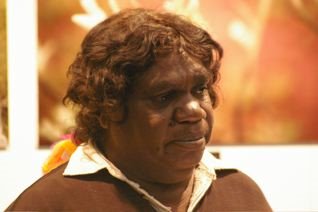 Natalie Wasley, 20 march 14 Yesterday Dianne Stokes and Kylie Sambo from Muckaty were in Canberra for a
  series of meetings.They met Senator Rachel Siewert (Greens), NT Senator Nova Peris and Resources Minister Ian MacFarlane.
Despite a request to meet, Senator Nigel Scullion refused to meet the women, as well as turning down requests from delegations representing Maningrida, Central Land Council and the Northern Land Council Senator Scullion is one of only two NT Senators (Nova Peris being the other) and also Minister for Indigenous Affairs.
See NITV news story linked below-Intro on Muckaty i http://www.sbs.com.au/ondemand/video/199701571622/NITV-News-19-March-part-1
New interactive Website showcases Wheatbelt Aboriginal community

This website is an interactive tool designed for the Wheatbelt Aboriginal community to showcase all of the projects they have developed and implemented on country, from fire management to biodiversity and sustainable agriculture projects. The community are driving the development of the website and we see the community using it to help develop their own projects on country.
The website is designed to give Wheatbelt Natural Resource Management a new way of sharing projects with the community. Local schools and training organisations will be able to use the website as a learning tool for students. We also see this project being used by Aboriginal Natural Resource Management organisations that evolve as the Noongar people gain greater access to country in the future. The Noongar people, as Traditional Owners of the Wheatbelt region, have a great responsibility to look after country and we foresee the website enhancing the opportunities for Noongar people to access and work on country.
The project also aims to bring together the Aboriginal and non-Aboriginal community to manage many projects, including sites of cultural significance, on private property within the Wheatbelt. The website will aim to show how the two groups can work together and reduce the perceived threat of country being taken away from non-Aboriginal Landholders.
New website showcases Aboriginal land management
 Learning lie of the land http://www.inmycommunity.com.au/news-and-views/local-news/Learning-lie-of-the-land/7657879/ A NEW website showcasing the land management practices Aboriginal people have carried out in the Wheatbelt was launched in Northam on Thursday.
It features short films and interviews about Noongar land management projects recorded over the past five years.
The website was designed by natural resource management group Wheatbelt NRM and will be managed by the Aboriginal community.
Wheatbelt NRM Aboriginal facilitator Kerry Horan said the website highlighted a range of projects, such as the use of fire to enhance biodiversity and the preservation of significant cultural sites. “One story that is featured is about the clean-up of a ngamma, or rock hole, at Derbidin near Wyal-katchem,” Ms Horan said.
“These ngammas are important to Aboriginal people because they provided a source of water during the dry season and as meeting places to socialise, share information and trade goods.
“The ngamma also feature prominently in the Nyitting (Noongar word for dreaming).”
Six stories are already featured on the site and it will undergo further development over the next five years, with another 15 stories to be recorded.
“The Noongar have a responsibility to look after country and we see this project as enhancing opportunities for them to do that,” Ms Horan said.
The website is at moorditjboodjar.com.au.
AUDIO: Construction of nuclear submarines for Australia?
 AUDIO: Australian Defence Minister researches submarine construction in the UK http://www.abc.net.au/news/2014-03-12/australian-defence-minister-researches-submarine/5314574?section=business Wed 12 Mar 2014,Louise Yaxley Source: AM | Duration: 3min 7sec
The Defence Minister David Johnston is in Scotland inspecting the way Britain is building its nuclear powered submarines. His visit is part of official talks with his UK counterpart. Senator Johnston has high praise for the UK submarines as he struggles with the expense and complexity of choosing the best option for Australia.
AUDIO: Young Marshallese join Nuclear Survivors on anniversary of atomic bombing
AUDIO: Youth gather in Marshall Islands for Nuclear Survivors project http://www.radioaustralia.net.au/international/radio/program/pacific-beat/youth-gather-in-marshall-islands-for-nuclear-survivors-project/1272616 28 February 2014, Tomorrow marks 60 years since the Castle Bravo nuclear test which contaminated four of the atolls in the Marshall Islands.
Youth gather in Marshall Islands for Nuclear Survivors project (Credit: ABC)
The fall out from the blast impacts on the health and wellbeing of the Marshallese to this day.
To mark the anniversary, youth representatives from other nuclear-affected areas including Japan and Kazakhstan will join the young people of Marshall Islands for a week of digital storytelling workshops centred around Nuclear Survivors Day.
Rico Ishi, is co-ordinator of the youth delegates attending the Nuclear Futures workshop. Presenter: Richard Ewart Speaker: Rico Ishi, Youth Delegate Co-ordinator at Nuclear Futures
AUDIO: UN and World Bank fund renewable energy across the Pacific
AUDIO: Renewable energy funding across the Pacifichttp://www.radioaustralia.net.au/international/radio/program/pacific-beat/renewable-energy-funding-across-the-pacific/1270348 25 February 2014, One million dollars of extra funding has been allocated to boost renewable energy projects across the Pacific.
The Pacific Renewable Energy Project is being promoted by the Secretariat of the Pacific Regional Environment Programme (SPREP) and, with additional support from the UNDP and World Bank, is providing practical assistance to Pacific Island nations to meet their renewable energy targets.
Presenter: Richard Ewart
Speaker: Sill’a Ualesi Kilepoa, Project Manager, Pacific Renewable Energy Project, SPREP
AUDIO: Why did we have nuclear bomb testing in Australia?
 AUDIO THE HISTORY OF NUCLEAR TESTING IN AUSTRALIA HTTP://WWW.ABC.NET.AU/OVERNIGHTS/STORIES/S3924604.HTM?SITE=MELBOURNE Monday, January 13, 2014 by Helen Richardson Nuclear Testing in Australia Why did we have Nuclear Testing in Australia? What were the reasons for the tests, the role of the Australian government, how much did the Australia people know and what has been the long term impact? Trevor Chappell discussed this with Richard Broinowski, a former diplomat and author of “Fact or Fission”
AUDIO: Nuclear Bomb Testing in Australia
 AUDIO: The beginning of nuclear testing in Australia and the lasting effects https://radio.adelaide.edu.au/the-beginning-of-nuclear-testing-in-australia-and-the-lasting-effects/
Nuclear weapons were first tested in Australia by the British at the Montebello Islands on October 3 1952.
Elizabeth Po and Adrian Glamorgan of Perth’s community radio RTR FM’s Understorey program look at effects of these tests.
They hear from ex-serviceman Max Kimber, along with aboriginal elders, Uncles Glen Cooke and Kev Buzzacott, former WA Senator Jo Vallentine and Dr Peter Underwood from Medical Association for Prevention from War, along with Nancy Milne remembering her father’s courageous exploits as a journalist in 1952.
Understorey’s seven part series on the nuclear industry
December 18: Care or neglect? Fukushima’s silent fallout
December 11: From one disaster to another
December 4: Shorts and sandals nuclear policy
November 27: Regulating the nuclear village
November 20: Stay or go?
November 13: Geiger counting on a future
November 6: The aftershocks keep coming

AUDIO: new findings on problems in uranium mining clean-up
AUDIO Uranium clean-up strategies challenged by new study A European study indicates that the clean-up and decontamination process after uranium mining might be more complicated than previously thought. French and German scientists examined a wetland in France that had been impacted by mining, and discovered that uranium can be highly mobile, and easily spread. They say mining companies must learn to check and test for this mobile form of uranium more thoroughly…….
LUCY CARTER: Dr Gavin Mudd, an environmental engineer at Monash University, says this study disproves some key information that mining companies have relied on when cleaning up and restoring sites.
LUCY CARTER: Is this something that we should be concerned about?
GAVIN MUDD: I think it’s something we should definitely take a lot of note of, because some of the same sort of technologies have been used at uranium mines in Australia. There’s certainly active discussion in Ranger and so on about wetlands should be part of a final rehabilitated land form at Ranger. So I think it has very big relevance for Australia and globally.
LUCY CARTER: Would you like to see Australian mining companies have a close look at this study?
GAVIN MUDD: Absolutely. I think it’s very, very important research that raises a lot of questions about our common approach to mine rehabilitation for uranium.
GAVIN MUDD: There’s some basic assumptions we’ve always made about the behaviour of uranium in the environment and so we’ve used that to design rehabilitation and remediation strategies at uranium mines and former nuclear sites. And so they’ve basically shown that sometimes those strategies are clearly not viable……http://www.abc.net.au/news/2013-12-18/uranium-clean-up-strategies-challenged-by-new-study/5163462
AUDIO: Australia’s radiation affected veterans denied justice yet again
 they’ve been treated like second-class citizens.
“This really is disgusting. How is it that these people, subject to the fury of a nuclear blast, aren’t even entitled to a gold card for their medical treatment as other veterans are?”
AUDIO Aussie nuclear veterans ‘disgusted’ by bid failure http://www.sbs.com.au/news/article/2013/12/17/aussie-nuclear-veterans-disgusted-bid-failure Australian veterans of British nuclear tests say they’re disgusted by the latest setback to their campaign for compensation. (Transcript from World News Australia Radio) Australia’s Human Rights Commission has decided it can’t consider the case of the 300 veterans because the matter is out of its jurisdiction.
The decision has left the veterans’ lawyers saying it’s the end of their campaign.
Murray Silby spoke to some of the veterans, including Avon Hudson “They’ll act with extreme disgust at the government and the Human Rights Commission. I mean we shouldn’t wait on the Human Rights Commission. This should have been addressed by governments of the past, but given the Human Rights heard this I have no time for the Human Rights (Commission) now.”
Avon Hudson says he and his fellow veterans have lost faith in a system that should have protected their rights.”I don’t know anybody that was there when I served there that hasn’t had either cancer or some other illness induced by radiation. Continue reading
AUDIO: Fall of worker into Ranger uranium mine radioactive slurry pit
A UDIO Worker ‘fell in’ to radioactive slurry pit, ABC Radio AM Michael Coggan reported this story on Saturday, December 14, 2013
SIMON SANTOW: The operators of the Ranger uranium mine in the Northern Territory are facing fresh allegations they are cutting corners on safety.
A worker told his union he sunk up to his armpits into radioactive slurry while helping to clean up a massive toxic spill caused by the collapse of part of the mine’s processing plant last weekend.
The company that runs the mine, Energy Resources of Australia, says it can’t confirm the workplace accident and is checking the validity of the claim. Michael Coggan reports from Darwin.
MICHAEL COGGAN: When a 1,400 cubic metre leach tank at the Ranger uranium mine fell apart last Saturday, workers had to evacuate to avoid being hit by the mixture of sulphuric acid and uranium it was holding…….
MICHAEL COGGAN: What does that say about the safety of the mine site?
BRYAN WILKINS: I think this is fairly typical of safety on that mine site. And it goes to show when the minister said the mine was safe the other day, he obviously wasn’t right. There still are safety issues on that site, and there needs to be that full independent inquiry that we called for…….http://www.abc.net.au/am/content/2013/s3911651.htm
Senator Waters gets no straight answers on the Government’s plan to hand uranium assessment to the States
Senator WATERS: …..Am I clear in that you will attempt to retain Commonwealth land and water but will not attempt to retain jurisdiction over state-run projects?
The hand over of EPBC nuclear approvals to states, Senate estimates committee 18 Nov 2013 | Scott Ludlam
“……...Senator WATERS: “…….Could you please explain to me: what is the intended effect of the alteration to the scope of the bilateral agreement as regards nuclear actions and Great Barrier Reef Marine Park waters and Commonwealth waters? What is the effective change? It is on page 7, particularly clause 12.3. ……..
AUDIO: Australia a large contributor to the failure of Warsaw UN climate talks
AUDIO: Australia, Japan under fire at UN climate talks http://www.radioaustralia.net.au/international/radio/program/asia-pacific/australia-japan-under-fire-at-un-climate-talks/1223390 21 November 2013, Climate activists are hoping that environment ministers from around the world will be able to make some progress before this year’s United Nations climate talks in Warsaw draw to a close.
The ministerial phase wraps up the two week conference, with representatives hoping to narrow the differences between countries… as they work towards a signing a new pact on emissions cuts.
But a gulf has opened up between rich and poor countries, and delegates have hit out at decisions made by Australia and Japan.
Presenter: Bill Birtles “,………… One of the main issues is whether or not we get a new mechanism on loss and damage. Developing countries are asking for a new mechanism, developed countries want to talk about it under an existing mechanism’.
BIRTLES: Loss and damage is an issue that has split rich and developing countries. Rich countries, such as the US, Australia and Canada have sought to keep talks on loss and damage reparations off the agenda until after 2015. Saleemul Huq says their stance prompted a walk-out this week by developing nations.
HUQ: ‘The fear from the developed countries is that this is the path to being made liable for compensation which may or may not be the case but right now in Warsaw it’s not about compensation. It’s about having a mechanism to allow these discussions to continue in the future’………
BIRTLES: And Suleemul Huq says its not just Japan disappointing delegates. He says Australia’s decision not to send a Minister and the Abbott government’s plan to scrap the carbon tax has also dampened the mood.
HIRATE: ‘The mood is quite bad. Australia and Japan have set us back with their own domestic problems and announcements about reneging on their commitments, so that has set us back here’.
1 This month

of the week – Australians for War Powers Reform (AWPR)
To see nuclear-related stories in greater depth and intensity
 Antinuclear