A major scorecard gives the health of Australia’s environment less than 1 out of 10
|
A major scorecard gives the health of Australia’s environment less than 1 out of 10, The Conversation, Albert Van Dijk, Professor, Water and Landscape Dynamics, Fenner School of Environment & Society, Australian National University, Luigi Renzullo, Senior Research Fellow, Australian National University, Marta Yebra, Senior lecturer, Australian National University, Shoshana Rapley, Research assistant, Australian National University, March 30, 2020
2019 was the year Australians confronted the fact that a healthy environment is more than just a pretty waterfall in a national park; a nice extra we can do without. We do not survive without air to breathe, water to drink, soil to grow food and weather we can cope with.Every year, we collate a vast number of measurements on the state of our environment: weather, oceans, fire, water, soils, vegetation, population pressure, and biodiversity. The data is collected in many different ways: by satellites, field stations, surveys and so on.
We process this data into several indicators of environmental health at both national and regional levels. The report for 2019, released today, makes for grim reading. It reveals the worst environmental conditions in many decades, perhaps centuries, and confirms the devastating damage global warming and mismanagement are wreaking on our natural resources. Immediate action is needed to put Australia’s environment on a course to recovery. Environment scores in the redFrom the long list of environmental indicators we report on, we use seven to calculate an Environmental Condition Score (ECS) for each region, as well as nationally. These seven indicators – high temperatures, river flows, wetlands, soil health, vegetation condition, growth conditions and tree cover – are chosen because they allow a comparison against previous years. In Australia’s dry environment, they tend to move up and down together, which gives the score more robustness. See the interactive graphic below [on original] to find the score for your region. Nationally, Australia’s environmental condition score fell by 2.3 points in 2019, to a very low 0.8 out of ten. This is the lowest score since at least 2000 – the start of the period for which we have detailed data. Condition scores declined in every state and territory. The worst conditions were seen in the Northern Territory (0.2 points), New South Wales (0.3 points) and Western Australia (0.4 points), with the latter also recording the greatest decline from the previous year (-5.7 points). What is most striking is that almost the entire nation suffered terrible environmental conditions in 2019. In each case, the changes can be traced back to dry, hot conditions. Only parts of Queensland escaped the drought…… Even before the fires, 40 plant and animal species were added to the threatened list in 2019, bringing the total to 1890. Following the fires, more species are likely to be added in 2020. We’re not doomed yetLast year was neither an outlier nor the “new normal” – it will get worse. Greenhouse gas concentrations continued to increase rapidly in 2019, causing the temperature of the atmosphere and oceans to soar. Australia’s population also continued to grow quickly and with it, greenhouse gases emissions and other pollution, and our demand for land to build, mine and farm on. Whether we want to hear it or not, last year represented another step towards an ever-more dismal future, unless we take serious action. https://theconversation.com/a-major-scorecard-gives-the-health-of-australias-environment-less-than-1-out-of-10-133444 |
|
|
With the pandemic, and the bushfires, we now must strengthen the Environment Protection and Biodiversity Conservation Act (EPBC)
in the immediate term we need to advocate for vital improvements to the EPBC. It is extraordinary that the Howard legacy of deliberately excluding a project’s climate impacts from the triggers to require assessment still hasn’t been remedied. That must now be fixed, as must the fact that there is no mechanism for assessing the cumulative ecological impacts of various proposals. After this summer’s destruction of huge areas of remaining healthy ecosystems, we need to institute, in both legislation and the practice of assessment, a presumption of protection instead of a culture of managed destruction.

|
With the climate crisis and coronavirus bearing down on us, the age of disconnection is over https://www.theguardian.com/commentisfree/2020/mar/28/with-the-climate-crisis-and-coronavirus-bearing-down-on-us-the-age-of-disconnection-is-overTim Hollo
We can no longer pretend that we’re separate from each other and from the natural world @timhollo, Sat 28 Mar 2020 Everything is connected. It’s hard to imagine right now that, just weeks ago, the truism of ecological politics was treated as hippy nonsense by mainstream politics.
Announcing the statutory review of the commonwealth’s Environment Protection and Biodiversity Conservation Act (EPBC) last October, the Morrison government pitched it as an opportunity to weaken the Howard era laws even further and make it easier still for environmentally destructive projects to be approved. And, regardless of clear statements from scientists and strong advocacy by campaign groups, it looked like it would get away with it because, back then, we were still living in the age of disconnection when the environment and the economy could be seen as separate things, in competition with each other. But then the summer arrived, delivering one after the other two massive wake-up calls. In the age of consequences, with the climate crisis and a deadly pandemic bearing down on us, it’s impossible to pretend that we are separate from each other and from the natural world. A pandemic, more than almost any other phenomenon, shows that all our lives are inextricably intertwined, for now and forever, whether we like it or not. It brings into sharp focus the impossibility of trying to keep economics, health, environment, education and social justice treated as separate questions with separate answers. It heightens awareness of our vital need, as social beings, to stay connected to each other as well as we possibly can while keeping our physical distance. It shows how the “efficient”, on-demand world that capitalism has constructed is so incredibly fragile that a series of shocks can bring it to the point of collapse. And with the rules of neoliberal economics being broken by governments the world over, it demonstrates that massive policy interventions, shifting the entire structure of the global economy, are possible. This heralded a shift in thinking that went deeper than personal impact. Perhaps due to the remarkably low loss of human life compared with the scale of the disaster, there was a tremendous focus on the more than a billion mammals, birds and reptiles killed. We mourned the thousands of koalas and the numerous species being pushed towards extinction if their habitats aren’t restored. The true legacy of this summer could be a vital turning point in recognising that “the environment” isn’t something “over there”. The environment is the air we breathe and the water we drink; it’s the soil in which we grow our food; it’s the animals we identify with and the landscapes imprinted on our souls; the environment is us, all of us, together, integrally connected with everyone and everything else on this beautiful blue marble floating in space. Damage the environment and we damage ourselves. And not just some of us – all of us together. Continue to think in our compartmentalised, linear fashion, and we’ll keep missing what’s coming, be it weeks of smoke, runs on toilet paper, or deadly pandemic What started to become clear thanks to the fires was rammed home by Covid-19. We are only as healthy as the least healthy among us. Everything we do relies on extraordinary networks of activity by people we’ve never met, crisscrossing the globe. And responding to a health crisis that was likely triggered in part by environmental destruction has world-changing impacts on the economy, on education, on social justice, on geopolitics. The age of disconnection is over. To bring us back to where we started, where does that leave the review of the EPBC Act? We have an opportunity now to not just push for a new generation of environment laws, but to re-evaluate the whole deal, to cultivate a new political settlement based on ecological principles of living well together in harmony with the natural world, understanding our place as part of it as First Peoples did for millenniums, with an economy designed to serve people and planet.
As part of this, in the immediate term we need to advocate for vital improvements to the EPBC. It is extraordinary that the Howard legacy of deliberately excluding a project’s climate impacts from the triggers to require assessment still hasn’t been remedied. That must now be fixed, as must the fact that there is no mechanism for assessing the cumulative ecological impacts of various proposals. After this summer’s destruction of huge areas of remaining healthy ecosystems, we need to institute, in both legislation and the practice of assessment, a presumption of protection instead of a culture of managed destruction. All this will, of course, be attacked as “green tape” and we have to be ready to actively defend it instead of changing the subject – and defend it on ecological grounds. Regulation is a vital part of the connective tissue which holds the body politic together. Removing it sees us fall apart. Covid-19 is, among other things, showing us the consequences of deregulating markets in health services, food supply and more. Having that conversation in this way means we won’t just be advocating for marginal improvements, but will be working to change politics. We’ll be building into the political common sense the idea that corporations absolutely should be regulated to enforce environmental and social responsibilities, and that we can no longer consider shareholder profit to be their sole focus. That helps move our politics towards altering the DNA of corporations so they operate as part of the body politic rather than as cancer cells. The flip side of this systemic shift is to institute legal rights for the natural world. If BHP has legal rights, why shouldn’t the Great Barrier Reef? Rights of nature is an increasingly mature legal field, instituted from New Zealand to Bolivia, India to parts of the US. We can and should at least insert them as a normative principle in the goals of the EPBC. While we’re thinking at that level, a new ecological political settlement will need a rethink of federalism. Our system sees national and state governments cooperating to shut out community participation and scientific advice to facilitate destructive development. An effective regime based on a presumption of protection would see federal, state, territory and local governments enabling communities to collectively develop creative ideas at their local level, within the context of expert scientific advice, and coordinating those ideas at a regional and continental level. If we shift environmental regulation from a process that is primarily responsive to demands of developers into a proactive, constructive, community-led system, we can see it morph from a defensive protection stance into one of active restoration, repair and regeneration. It can lead to the greening of cities and towns as we embrace the fact that habitats are not just “over there” but among us. It can create industrial jobs in coalmine rehabilitation. It can support regenerative agriculture, and cooperative sharing of scarce water. It can even open space for community-led conversations about relocation as the overheating world retreats from rising seas and inland desertification is inevitable. Supporting and enabling communities to make decisions is also vital for rebuilding confidence in democracy, which has collapsed in recent years. The ongoing panic-buying response to Covid-19 suggests that the abject failure of government to provide leadership through the fires worsened this further. This is now an opportunity to rethink governance, reclaim agency for communities, build practices of trust and social cohesion, embedded in respect for expert advice. Now it’s important to recognise that with this government we’re not going to get these kinds of changes. At best we might hold off the push to weaken the EPBC even further. But that shouldn’t stop us advocating for what we need. Quite the opposite. Politics, like the natural world it operates within, is a system. It works in complex ways because all it is is the collected actions of humans, influenced by each other and by external impetuses such as the weather. Or viruses. Donella Meadows, the modern mother of systems thinking, wrote that the most effective leverage point to change a system is “the mindset or paradigm out of which the system … arises”. It’s critical, then, that we confront the paradigm which sees environmental protection as of marginal importance at best, and as a barrier at worst. It’s vital that we challenge the mindsets of human disconnection from and dominance over nature. Advertisement
Over the past three months, a huge number of people made that conceptual leap. In recent weeks the crisis has become such that even mainstream politics finds it impossible to ignore. At the same time, over this period numerous people decided to just get on with it, without waiting for government. In both bushfire response and the tremendous mutual aid response to Covid-19, millions of us are setting up local projects, or joining existing ones, that make life better, generate social cohesion, reduce our footprint, and cultivate an ethic of care – for ourselves, for each other, for the natural world we are part of. If enough of us start doing this in our communities, and if enough submissions to the EPBC inquiry call for reforms that are embedded in ecological thinking, we will be putting a whole lot of small chocks under the lever. Each of those chocks is tiny. But together they can tip the balance. All of a sudden, especially at a moment like this, change will come. • Tim Hollo is executive director of the Green Institute and visiting fellow at the Australian National University’s school of regulation and global government (RegNet)
|
|
Submission re National Waste Dump Bill: Flawed process: the pretense that this National issue is just a Local issue
 Noel Wauchope, 26 Mar 20, Flawed process: the pretense that this National issue is just a Local issue Noel Wauchope, 26 Mar 20, Flawed process: the pretense that this National issue is just a Local issueThe whole process of selection for a nuclear waste site prior to, and including this Bill is flawed. This obviously National project has been treated as not even a State project, but just as one of concern only to a small local community. As if no-one else in the State, nor in the whole country were concerned, this amendment doesn’t just specify only South Australia – it specifies just one site, Napandee, near Kimba, as an above ground nuclear waste store.
The planned waste facility is illegal under South Australian law.
In confining discussion to the local community, the federal government not only plans to impose the waste dump on South Australia, but fails to consult the South Australian community, and indeed the Australian community, on the long transport of radioactive wastes, and the ports involved in this transport., – probably Whyalla in South Australia, and probably Port Kembla in New South Wales. And even in consulting the local community, the government made sure to exclude the Bangarla Aboriginal people, who oppose the waste dump, that threatens their traditional rights in the area.
Unnecessary imposition of stranded wastes The Bill establishes indefinite “temporary” storage of ANSTO nuclear fuel wastes, and Intermediate Level Wastes – i.e Stranded Wastes. It means unnecessary double handling of these wastes. It could mean a security and safety risk for the area for at least 10,000 years, and certainly does mean this for at least 100 years.
ANSTO has the space, the capacity, and the experienced staff for Extended Storage at Lucas Heights.
Damage to the local society and to the Eyre Peninsula’s agricultural reputation. It is already apparent that this issue has divided and damaged the Kimba community. ARPANSA guidelines regarding agricultural land are completely ignored. Here I can best illustrate this by quoting a comment on Your Say. It’s in relation to the 2016 S.A. Nuclear Royal Commission, but it’s applicable here, too :
Kristen Jelk, Your Say Last month I was in China promoting an Australian product that comes from SA which is pitched as a clean, green, environment. The full potential of the market in China for South Australian produce is immeasurable. From a Chinese consumers point of view, the environmental conditions where the product is sourced or grown, is pivotal to the choices made when purchasing. Chinese consumers will pay top prices for products that are considered SAFE – produced where the source is known to be an unpolluted clean environment. Perception is everything, and if a consumer becomes aware that SA had developed a nuclear waste dump, then that perception of a safe environment will be shattered. It will not matter that the dump is in a desert, nor will it matter if the dump is considerable distance from prime agricultural land, nor will it matter if experts assure of safety standards.The perception that would prevail is that SA will be a dumping ground for nuclear waste. If this is a discussion over commercial viability verses environmental risks long term, then I would argue that the real cost of the dump being located in SA is the loss in the perception that SA is a “clean, green” state. Questions would be raised over validity of the safety of the states produce. Science does not dispel the pervading distrust of nuclear waste storage. Impassioned long standing anti-nuclear supporters cannot be placated and therefore ongoing discourse over the proposed dump will just shine a brighter light on the discussion world wide. The long term impact on the revenue of export sales will, without doubt be affected. To risk the potential of long term growth in export sales due to a short term vision on job creation,( which is questionable ) is not good economics. SA has the potential to be a renewable energy ambassador with exciting projects already in development. We have to think globally, not locally if we are to sustain economic growth based on the real tangible asset that we have, which is our environment. http://yoursay.sa.gov.au/discussions/nuclear-community-conversation-comment-on-the-specific-recommendations-in-the-final-report So many things wrong with the National Radioactive Waste Management’s process: Pretense that it’s essential for nuclear medicine. The so-called Intermediate Level Wastes, i.e. spent fuel rod wastes from Lucas Heights emanate from the nuclear reactor’s operation, and not from the (mostly short-lived radioisotopes from nuclear medicine). The Kimba communityn was conned into the belief that they are somehow responsible for the ongoing production of nuclear medicine. Wobbly language – Definition of ” immediate neighbours” changed from one phase to the next. The term “broad community” support being determined by one minister’s definition. Landowner able to nominate without first consulting with community. Community supporting members closer to the site than the township of Kimba not given a vote . I write as an Australian, who lives in another state, not South Australia. I think that it is unnecessary to transport dangerous radioactive trash for very long distances across and around our continent, – and the whole thing based on one farmer volunteering his land (for a substantial payment), – this national decision to be made really by one government Minister, with no consultation with the national public. The “dual facility” – above ground higher level stranded waste storage, combined with the low-level waste permanent dump, is a bad idea, fraught with problems. The problems are not just for the local community, but for their descendants for generations, and also for all the communities along the transport route, including n other States. |
|
|
Tax-payers funded Matt Canavan’s expensive trip to attend coalmine opening
The former resources minister used the occasion to give a speech attacking ‘self-indulgent’ environmentalists, Guardian, Christopher Knaus, Wed 25 Mar 2020
The former resources minister Matt Canavan billed taxpayers for a $5,390 charter flight to travel 150km to attend the opening of a coalmine, where he gave a speech attacking “self-indulgent” environmental activists.
Canavan took the private charter flight from Mackay to Colinsville, a three-hour drive, so he could get to the opening of the $1.76bn Byerwen mine in north Queensland.
At the opening, Canavan gave a speech attacking what he described as “hypocritical, self-indulgent activists” holding back the dreamers of the mining industry…….
The most recent parliamentary expense reports, released last week, show Canavan later billed taxpayers for the $5,390 charter flight ….. The expense was listed as “unscheduled travel” by the independent parliamentary expenses authority and the finance department…….
The expense is roughly the same as that incurred by the former Liberal MP Bronwyn Bishop, who chartered a $5,227 helicopter for a return trip from Melbourne to a golf course near Geelong for a Liberal party function.
Canavan quit as minister last month to support Barnaby Joyce’s bid to return to the leadership position. He has described himself as running on an “unashamedly pro-coal” platform.
 The Guardian previously reported that Canavan had omitted two properties worth more than $1m from his current declaration of interests to parliament. He declared “nil” interests in real estate despite owning two houses in Yeppoon, Queensland and Macquarie in Canberra.
Canavan said he was not required to declare the interests to the 46th parliament because they’d been declared to the previous parliament, an argument that conflicts with official advice. https://www.theguardian.com/australia-news/2020/mar/25/matt-canavan-billed-taxpayers-5390-for-charter-flight-to-attend-coalmine-opening
The lingering horror of the nuclear bomb tests at Maralinga
 The lesser known history of the Maralinga nuclear tests — and what it’s like to stand at ground zero https://www.abc.net.au/news/2020-03-24/maralinga-nuclear-tests-ground-zero-lesser-known-history/11882608, ABC Radio National By Mike Ladd for The History Listen I thought I knew all the details about Maralinga, and the nuclear bomb tests that took place there six decades ago.But when I set out to visit ground zero, I realised there were parts of this Cold War history I didn’t know — like Project Sunshine, which involved exhuming the bodies of babies. The lesser known history of the Maralinga nuclear tests — and what it’s like to stand at ground zero https://www.abc.net.au/news/2020-03-24/maralinga-nuclear-tests-ground-zero-lesser-known-history/11882608, ABC Radio National By Mike Ladd for The History Listen I thought I knew all the details about Maralinga, and the nuclear bomb tests that took place there six decades ago.But when I set out to visit ground zero, I realised there were parts of this Cold War history I didn’t know — like Project Sunshine, which involved exhuming the bodies of babies.
Maralinga is 54 kilometres north-west of Ooldea, in South Australia’s remote Great Victoria Desert. Between 1956 and 1963 the British detonated seven atomic bombs at the site; one was twice the size of the bomb dropped on Hiroshima. There were also the so-called “minor trials” where officials deliberately set fire to or blew up plutonium with TNT — just to see what would happen. One location called “Kuli” is still off-limits today, because it’s been impossible to clean up. I went out to the old bomb sites with a group of Maralinga Tjarutja people, who refer to the land around ground zero as “Mamu Pulka”, Pitjantjatjara for “Big Evil”. “My dad passed away with leukaemia. We don’t know if it was from here, but a lot of the time he worked around here,” says Jeremy Lebois, chairperson of the Maralinga Tjarutja council. Thirty per cent of the British and Australian servicemen exposed to the blasts also died of cancer — though the McClelland royal commission of 1984 was unable to conclude that each case was specifically caused by the tests. It’s not until you stand at ground zero that you fully realise the hideous power of these bombs. Even after more than 60 years, the vegetation is cleared in a perfect circle with a one kilometre radius. “The ground underneath is still sterile, so when the plants get down a certain distance, they die,” explains Robin Matthews, who guided me around the site. The steel and concrete towers used to explode the bombs were instantly vaporised. The red desert sand was melted into green glass that still litters the site. Years ago it would have been dangerous to visit the area, but now the radiation is only three times normal — no more than what you get flying in a plane. The Line of FireAustralia was not the first choice for the British, but they were knocked back by both the US and Canada. Robert Menzies, Australia’s prime minister at the time, said yes to the tests without even taking the decision to cabinet first. David Lowe, chair of contemporary history at Deakin University, thinks Australia was hoping to become a nuclear power itself by sharing British technology, or at least to station British nuclear weapons on Australian soil. “In that period many leaders in the Western world genuinely thought there was a real risk of a third world war, which would be nuclear,” he says. The bombs were tested on the Montebello Islands, at Emu Field and at Maralinga. At Woomera in the South Australian desert, they tested the missiles that could carry them. The Blue Streak rocket was developed and test-fired right across the middle of Australia, from Woomera all the way to the Indian Ocean, just south of Broome. This is known as “The Line of Fire” The Line of Fire from Woomera to Broome is, funnily enough, the same distance from London to Moscow,” Mr Matthews says. Just as the Maralinga Tjarutja people were pushed off their land for the bomb tests, the Yulparitja people were removed from their country in the landing zone south of Broome. Not all the Blue Streak rockets reached the sea. Some crashed into the West Australian desert. The McClelland royal commission showed that the British were cavalier about the weather conditions during the bomb tests and that fallout was carried much further than the 100-mile radius agreed to, reaching Townsville, Brisbane, Sydney and Adelaide. “The cavalier attitude towards Australia’s Indigenous populations was appalling and you’d have to say to some extent that extended towards both British and Australian service people,” Professor Lowe says. There are also questions over whether people at the test sites were deliberately exposed to radiation. “You can’t help but wonder the extent to which there was a deliberate interest in the medical results of radioactive materials entering the body,” Professor Lowe says. “Some of this stuff is still restricted; you can’t get your hands on all materials concerning the testing and it’s quite likely both [British and Australian] governments will try very hard to ensure that never happens.” Project SunshineWe do know that there was a concerted effort to examine the bones of deceased infants to test for levels of Strontium 90 (Sr-90), an isotope that is one of the by-products of nuclear bombs. These tests were part of Project Sunshine, a series of studies initiated in the US in 1953 by the Atomic Energy Commission. They sought to measure how Sr-90 had dispersed around the world by measuring its concentration in the bones of the dead. Young bones were chosen because they were particularly susceptible to accumulating the Sr-90 isotope. Around 1,500 exhumations took place, in both Britain and Australia — often without the knowledge or permission of the parents of the dead. Again, it was hard to prove conclusively that spikes in the levels of Strontium 90 during the test period caused bone cancers around the world. The Maralinga tests occurred during a period that Professor Lowe describes as “atomic utopian thinking”. “Remember at that time Australians were uncovering pretty significant discoveries of uranium and they hoped that this would unleash a vast new capacity for development through the power of the atom,” he says. Some of the schemes were absurdly optimistic. Project Ploughshare grew out of a US program which proposed using atomic explosions for industrial purposes such as canal-building. In 1969 Australia and the US signed a joint feasibility study to create an instant port at Cape Keraudren in the Kimberley using nuclear explosions. The plan was dropped, but it was for economic not environmental or social reasons. The dream (or was it a nightmare?) of sharing nuclear weapons technology with the British was never realised. All Australia got out of the deal was help building the Lucas Heights reactor. The British did two ineffectual clean-ups of Maralinga in the 1960s. The proper clean-up between 1995 and 2000 cost more than $100 million, of which Australia paid $75 million. It has left an artificial mesa in the desert containing 400,000 cubic metres of plutonium contaminated soil. The Maralinga Tjarutja people received only $13 million in compensation for loss of their land, which was finally returned to them in 1984. As we were leaving the radiation zone, the Maralinga Tjarutja people spotted some kangaroos in the distance. Over the years some of the wildlife has started to return. Mr Lebois takes it as a good sign. “Hopefully, hopefully everything will come back,” he says. |
|
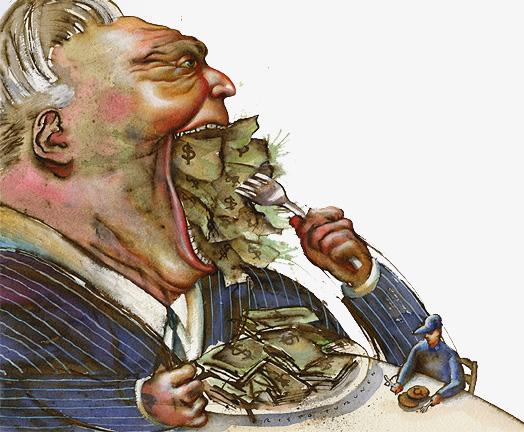
The Morrison govt’s emergency measures are a massive subsidy to Australia’s largest corporations.
|
Bankster Bailout: will the trickle-down package trickle beyond the banks and big business? Michael West Media, by Michael West | Mar 20, 2020 The Morrison Government’s emergency measures to protect the economy are another massive subsidy from embattled taxpayers to Australia’s largest corporations. They are a failure of government to govern. Michael West reports.
Question: why would a bank lend money to a business with no customers? Answer: it wouldn’t. Question: who will benefit from the Reserve Bank’s massive loan and money-printing program? Answer: banks, bond traders and corporate customers. Question: why? Answer: because the Government has delivered control of its money-printing program to the Reserve Bank and the banks. Instead of simply printing money and handing it to those who need it – indeed to those who will spend it – it is also giving the banks cash for loans (assets) which they are keen to offload. Question: if you were a banker would you lend money to a high risk small business or would you lend it to Qantas, Exxon or Energy Australia? Answer: the latter. You are more likely to get your money back from an airline which is protected by Government, an oil and gas multinational which extracts $10 billion a year from Australian seabeds and pays no tax or an oligopoly which provides essential services and also pays almost no tax. A whole generation of young people, and many not so young, are struggling to pay the rent and survive the coronavirus. But what does the Government do?
This Government really does have trouble actually governing. Lest it be accused of spending too much, its routine accusation against arch-rival Labor, and although it has already more than doubled the nation’s debt, the Government has decided to outsource its spending decisions to the banks. Ironically, the banks have today emerged to say the $90 billion loan package announced this week won’t work. Commonwealth Bank chief, Matt Cormyn, has just stated the obvious, small businesses don’t need a loan as much as direct assistance. Even if they did need a loan it would take a month to organise the $90 billion program and by then, we suspect, it might be too late anyway. Small businesses needed “direct” assistance, Cormyn told the ABC. As for the QE program, it is more nuanced than our explanation above – written to capture the essence of what is going on here (the very mention of the letters QE make the eyes glaze over and that sleepy feeling come on). Dissecting QETo the Reserve Bank’s QE program, Quantitative Easing or QE is technobabble for the RBA creating new money or, as they say, “printing money”. But there is a twist to this QE — a twist which has entirely eluded the mainstream media. Rather than the Government raising money – that is by issuing bonds – it has designed a program, a liquidity facility effectively, to be operated by the banks. In other words, the banks get money at attractive rates and they are expected to lend it to their customers. Herein lies the rub; how do the banks lend their new billions to small businesses with no customers? Anybody who has been awake over the last ten days and has engaged in the old-fashioned activity of conversation will have heard story after story about people who had a business last month but barely have one now. Their problem is not how to grow their business by borrowing money. They don’t have any customers. To be more specific, and as predicted here, the government has privatised its QE program. Instead of issuing bonds and deciding who needs it most, it has outsourced that decision-making process to the banks. How QE works, a simple explanation:………. So, the government has so far seen interest rates cut despite it being clear there will be little relief from even lower rates – and despite the banks declining to pass it all on to customers. It has buck-passed its QE program to the banks – which in reality is more of a liquidity bail-out than anything which can help small business. It has already had its $90 billion loan program queried by the banks themselves – all while ramping up its buying of assets from the banks. Over the past week the Reserve Bank’s repo holdings have soared to $20 billion which means they are using taxpayer money to cover the banks’ risk in their mortgage lending books. Most of this is RMBS, bundles of residential mortgages. Question: what will be the upshot of the coronavirus crisis? Answer: big business will grow in power and market dominance. https://www.michaelwest.com.au/bankster-bailout-will-the-trickle-down-package-trickle-beyond-the-banks-and-big-business/ |
|
Coronavirus: How deadly and contagious is this COVID-19 pandemic?
 Coronavirus: How deadly and contagious is this COVID-19 pandemic? Coronavirus: How deadly and contagious is this COVID-19 pandemic?
https://www.abc.net.au/news/2020-03-22/covid-19-how-deadly-and-contagious-is-coronavirus/12068106 Story Lab
By Annika Blau and Simon Elvery Coronavirus isn’t the first pandemic to sweep the globe in recent years. Epidemics like bird flu, Ebola, SARS and swine flu are still fresh in our memories.So how does COVID-19, the disease caused by coronavirus, compare? And what sets it apart from the flu seasons we face each winter? Here’s how Dr Norman Swan, host of the ABC’s Coronacast, explains it:
|
|
A nuclear power station is inappropriate for the Central Coast
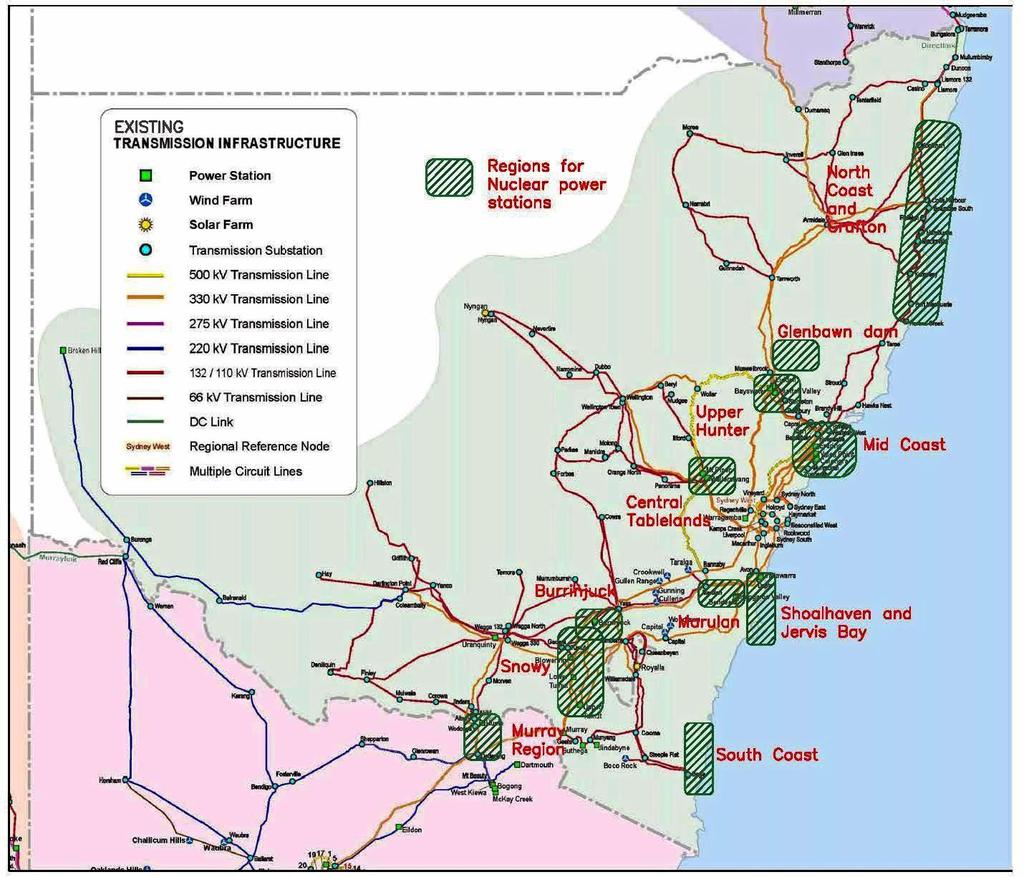 A nuclear power station is inappropriate for the Central Coast, https://coastcommunitynews.com.au/central-coast/news/2020/03/a-nuclear-power-station-is-inappropriate-for-the-central-coast/ Chris Castellari, Avoca Beach MARCH 22, 2020 A nuclear power station is inappropriate for the Central Coast, https://coastcommunitynews.com.au/central-coast/news/2020/03/a-nuclear-power-station-is-inappropriate-for-the-central-coast/ Chris Castellari, Avoca Beach MARCH 22, 2020
Just a few points as to why a nuclear power station is inappropriate for the Central Coast. Nuclear power stations can’t be built under existing law in any Australian state or territory. |
|
National Radioactive Waste Management must come clean. Kimba is the start of continued high level nuclear waste dumping
 Eyre Peninsula Tribune, March 4th 2020 , GARY CRUSHWAY
I write in response to a recent letter (Happy to answer questions raised, Letters to the Editor, February 20) from Sam Chard of the National Radioactive Waste Management Facility.
Forget toilet paper, consumers are panic buying solar
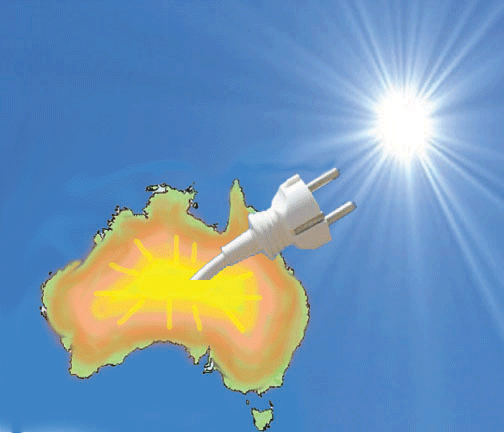 Byron Bay’s Smart Energy is seeing an unprecedented surge in sales and enquiries of solar and home storage as consumers look to shore themselves up in uncertain times. pv magazine,
Byron Bay’s Smart Energy is seeing a record sales quarter after an unprecedented 41% increase in sales and a 400% increase in battery enquiries over the last two weeks as panicking consumers look to protect themselves in times of uncertainty.
In uncertain times people rush to certainties. It is said that the only certainties are death and taxes, but what about pasta, toilet paper and solar PV? We certainly need to eat, to use the toilet, and just as certainly as the tax bill comes, so too does the electricity bill, so why not do whatever we can to lessen the impact?
When other industries and businesses are shrinking and self-isolating, Smart Energy is taking on additional resources and looking for ways to support local communities and installers as the solar and battery retailer enjoys an unprecedented surge for its products.
In a statement, Elliot Hayes, co-founder and managing director of Smart Energy said that there are many contributing factors to the growth, the main two being consumers seeking out greener purchases following the recent natural disasters in Australia and economic downturn, and consumers looking to future-proof their homes.
And why wouldn’t consumers look to future-proof their homes with solar PV and an energy storage system?……..
The solar industry in Australia expected to take quite a hit from the Coronavirus outbreak considering most panels in the market come from China, where the virus originated. Of course, many in the industry are doing it tough, but BloombergNEF reports that the production of PV components in China is already resuming, and whilst shortages may exist in the short-term, China is expected to meet its export demand before its domestic market. https://www.pv-magazine-australia.com/2020/03/19/forget-toilet-paper-consumers-are-panic-buying-solar-pv/?fbclid=IwAR3wceEHrP9MVgguwPW4092RhgYZ4GVNt7iM4abDe4XpTXOJfPf33ThqrkU
After backlash from colleagues, NSW Deputy Premier John Barilaro backs down from nuclear power support
 Barilaro retreats on Nationals support for One Nation nuclear bill, https://www.smh.com.au/politics/nsw/barilaro-retreats-on-nationals-support-for-one-nation-nuclear-bill-20200317-p54avo.html, By Lisa Visentin,March 17, 2020 Deputy Premier John Barilaro has walked back his party’s support for a One Nation bill to allow nuclear power in NSW, as the issue threatened to split the Coalition.Mr Barilaro, a long-time advocate of nuclear energy, alarmed some Coalition MPs when he declared two weeks ago that the National Party would support Mark Latham’s bill to overturn a ban on uranium mining.
But the Nationals’ leader changed his tune on Tuesday, telling a budget estimates hearing the matter would first need to be considered by the party room as well as the cabinet.
Mr Barilaro made the unilateral call to back Mr Latham’s bill during an interview on Sky News on March 3 before consulting his party room, triggering concern among some National MPs and angering some of his Liberal cabinet colleagues.
“I’ve since then had to pull that back to the point where I’ll have to go through the National party room, the parliamentary team, before we get to that position,” Mr Barilaro told the hearing.
“What I’m committing to is advocating for a policy that the party stands for and let’s see what happens when we get to the floor of Parliament.”
However, Mr Barilaro reiterated his strong personal support for nuclear energy, in particular “small nuclear reactors”, which he dubbed “the iphone of reactors”.
In a terse exchange, Labor MLC Adam Searle asked Mr Barilaro whether he was aware small nuclear reactors “don’t exist anywhere in the world at the moment”.
Mr Barilaro responded that he was “advocating for a technology that we know is on the horizon,” saying the Russians “would probably have small modular reactors on the market in the next two to three years.”
When quizzed about whether he’d discussed with his Coalition colleagues where in NSW the reactors could be located, Mr Barilaro floated the option of his own electorate of Monaro, on the state’s southern border.
“I haven’t even ruled it out of my own electorate. There you go. There’s your press release for today. Can’t wait to see it,” he said.
Mr Barilaro has previously grounded his support for Mr Latham’s bill as being consistent with the National Party’s policy position to “support nuclear energy in Australia as part of the energy mix for the future”, adopted at last year’s state conference.
He confronted an immediate backlash from within the cabinet, which had yet to consider the issue, with at least four senior ministers saying they would not support his push to back the bill. One minister told the Herald they were prepared to quit cabinet rather than support it.
The split followed a parliamentary inquiry into Mr Latham’s bill, chaired by Liberal MLC Taylor Martin, which concluded the government should support it.
The two Labor MPs on the inquiry – John Graham and Mick Veitch – opposed the findings in a dissenting statement which reaffirmed Labor’s “longstanding and unequivocal platform position in relation to nuclear exploration, extraction and export.”
Mr Latham was also on the inquiry, which was comprised of eight MLCS, including three Liberals, two Labor, and one member apiece from the Nationals and the Shooters, Fishers and Farmers party.
Doctors again call on Australian govt about Julian Assange’s precarious health, risk of coronavirus
 Almost 200 medical doctors say Julian Assange’s health is at increased risk from coronavirus, https://www.thecanary.co/global/world-news/2020/03/18/almost-200-medical-doctors-say-julian-assanges-health-is-at-increased-risk-from-coronavirus/
 John McEvoy 18th March 2020 On 18 March, almost 200 medical doctors wrote to Australian foreign minister Marise Payne to warn that Julian Assange’s health is at increased risk from the new coronavirus.
“Mr Assange could die in prison”
This is the latest in a number of letters sent by Doctors for Assange to express concern over the WikiLeaks publisher’s deteriorating health.
On 22 November, the group signed an open letter addressed to UK home secretary Priti Patel, saying: “we have real concerns, on the evidence currently available, that Mr Assange could die in prison”.
In a follow-up letter published on 4 December, the doctors wrote:
When the UK, as a Permanent Member of the United Nations Security Council, repeatedly ignores not only the serious warnings of the United Nations Special Rapporteur on Torture, but also its unequivocal investigative and remedial obligations under international and human rights law, the credibility of the UK’s commitment to human rights and the rule of law is fatally undermined.
Fertile breeding grounds”
The latest letter, signed by medical doctors from countries including the UK, Australia, Sweden, and the US, was written in light of the recent coronavirus pandemic.
The letter reads:
We wrote to you on December 15 2019 that Julian Assange’s life is at risk due to nearly a decade of human rights abuse including arbitrary detention, psychological torture and medical neglect. Now, with the president of the Prison Governor’s Association warning that prisons provide “fertile breeding grounds” for coronavirus, Julian Assange’s life and health are at heightened risk due to his arbitrary detention during this global pandemic. That threat will only grow as the coronavirus spreads. …
We therefore stand by our previous calls for the Australian Government to urgently intervene to protect the life, health and human rights of its citizen Julian Assange, before it is too late, whether due to coronavirus or any number of catastrophic health outcomes.
Coronavirus is the latest threat to Assange’s life, adding onto years of arbitrary punishment and psychological torture.
Legal challenge about Adani’s planned water use for giant coal mine
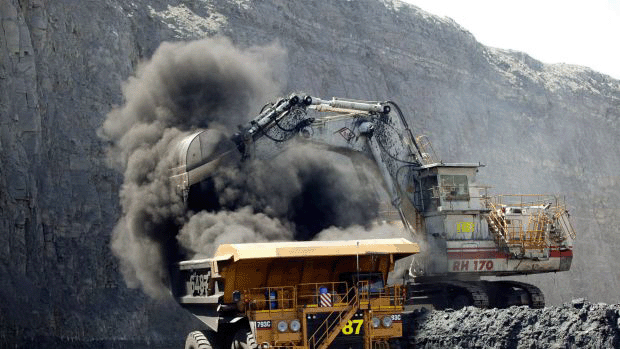 Morrison government faces legal challenge over Adani pipeline plan, Brisbane Times, Peter Hannam, March 16, 2020 The Morrison government’s failure to activate the so-called “water trigger” when assessing the proposed Adani coal mine in Queensland will be challenged in the Federal Court.
Lawyers acting for the Australian Conservation Foundation will test the government’s decision not to refer Adani’s North Galilee Water Scheme, a pipeline supplying the mine, for a thorough assessment as intended by the law.
The water trigger, introduced by the Rudd-Gillard government in mid-2013, was meant to require the government to assess the impact on water of all large coal mines and coal seam gas developments.
However, the government treated Adani’s plan to draw 12.5 billion litres a year from the Suttor River in central Queensland as a pipeline that was not a “large coal mining development”, nor did it involve one.
Similarly, it viewed the pipeline proponent, Adani Infrastructure Pty Ltd, as “a different legal entity” from the coal mine proponent, Adani Mining Pty Ltd.
The foundation plans to test both reasons for the failure not to activate the water trigger in court, arguing that the government made an error in law by ignoring infrastructure that was critical for the coal mine to proceed.
Tony Windsor, the former independent MP who was a key architect of the trigger, said reliable long-term access to clean water was “vital for regional communities and demands that we sustainably manage our rivers and aquifers”.
“Allowing companies to split up mining projects and assess them in isolation makes a nonsense of the process,” he said. “You don’t see much looking at just one piece of the jigsaw – you need to look at the whole puzzle.”……..https://www.brisbanetimes.com.au/environment/sustainability/morrison-government-faces-legal-challenge-over-adani-pipeline-plan-20200316-p54an6.html?ref=rss&utm_medium=rss&utm_source=rss_feed
A radioactive waste dump will NOT unite the Kimba community
Paul Waldon This Is Not Progress!
The socially, economically and environmentally blind radioactive waste embracing Mayor of Kimba is now calling for unification in a community that he helped divide, while proclaiming extra services for the dying towns hospital that may prove to be unattainable. He ignorantly goes on to imply that only a radioactive dump will give birth to upgraded communication network for the town.
Meanwhile the ignorant farmer come nuclear profiteer has falsely touted opportunities for the town of Kimba, a town now in decline, where property values are falling, people are vacating and its own people are driving outside the region to shop.
We have heard a speaker for the Department of Industry, Innovation and Science continually claim a “strong level of information,” if so why haven’t they answered questions pertaining to the lack of consultation regarding the determination of transport routes, availability of resources, training, infrastructure emergency preparedness, response and risk management for potential incidents during any shipment, this is but a few issues the DIIS have failed to address.
And let us not forget that Kimba’s unemployment @ 2%, minus those too old, too young, unable to work due to restraints and those opposed to the dump, makeup a number that could be a quarter of that 2%, which is likely to be insufficient to manage a radioactive dump.
The half full ANSTO facility at Lucas Heights which has seen recent upgrades costing the taxpayer millions of dollars is the most logistical centralized site for a radioactive dump when based on volume of waste per kilometer.
Time that Australia closed the door on the dangerous distraction of nuclear power
 Fukushima nine years on: Warnings for Australia https://independentaustralia.net/environment/environment-display/fukushima-nine-years-on-warnings-for-australia,13685#.Xm3ACigBj88.twitter Fukushima nine years on: Warnings for Australia https://independentaustralia.net/environment/environment-display/fukushima-nine-years-on-warnings-for-australia,13685#.Xm3ACigBj88.twitter
By Dave Sweeney | 15 March 2020 The anniversary of the Australian uranium-fuelled Fukushima nuclear disaster is no time to open the door to an expanded nuclear industry in Australia, writes Dave Sweeney.
NINE YEARS AGO this week the world learned to pronounce the word Fukushima as the March 11, 2011 Great Eastern earthquake and tsunami devastated large areas of Japans eastern seaboard. It also breached the safety and back-up systems at the Tokyo Electric Power Company’s Fukushima Daiichi nuclear complex leading to mass evacuations, hundreds of billions of dollars in economic loss and the release of large amounts of radioactive contamination. The crisis continues today with Japanese nuclear authorities confirming active intervention will be required for at least four more decades to stabilise the stricken site, contested and continuing releases of radioactive water to the Pacific and mounting waste management concerns. Fukushima means “fortunate island” but the luck largely melted down alongside the reactor and Fukushima remains a profound environmental, economic and human disaster that continues to negatively impact lives in Japan and far beyond. Against the shadow of Fukushima, the current pro-nuclear push in Australia is even more startling as it all started in the back of a big yellow truck in Australia. In October 2011, the Australian Parliament was formally advised that a load of Australian uranium was fuelling the Fukushima complex at the time of the disaster. Australian radioactive rocks are the source of Fukushima’s fallout, but sadly the miners and their political fellow travellers have been more focused on managing the political fallout. In September, 2011, the UN Secretary-General called on Australia to conduct:
This never happened. Instead of scrutiny, we have a swag of conservative state and federal politicians and commentators lining up to beat the zombie drum for this down but not dead sector. Their fanciful claims of economic benefit belie the reality of an embattled sector that has failed to deliver the dollars and has never made sense. And recently these atomic advocates have been joined by a conga line of nuke-spruikers championing domestic nuclear power and seeking public funds for a technology whose time has passed in the case of old reactors or whose time is not here, and never likely to be, in the case of so-called “next-generation” reactors. As home to around 35% of the world’s uranium reserves, Australia is a significant player in the global nuclear trade and what we do, or fail to do, matters. Since the 1980s the “modern” period of Australian uranium mining has been dominated by two major operations – Ranger in Kakadu and Olympic Dam in northern South Australia. Processing of stockpiled ore limps on at Ranger but mining has ended and parent company Rio Tinto is now focussed on rehabilitation work. The era of uranium mining in Kakadu is over – now comes the costly and complex clean-up and repair. At Olympic Dam, the world’s biggest mining company, BHP is seeking to expand operations. However, this move is being driven by the growing global demand for copper, not because of any appetite for uranium. And the big Australians plan poses a big threat to the SA environment and the local workforce. The company is persisting with a development model based on the continuation of “extreme risk” tailings dams and massive water consumption in Australia’s driest state. Meanwhile, smaller uranium operations mines like Honeymoon in SA or undeveloped projects like Cameco’s Kintyre and Yeelirrie projects in WA have been deferred or placed on extended care and maintenance due to the depressed uranium market and low commodity price. The sector’s prevailing business model is to sort the paperwork, duchess conservative politicians and commentators and hope for better times. Historically the sector has been constrained by political uncertainty, restrictions on the number of mines, a consistent lack of social license and strong Aboriginal and community resistance. Recent years have seen fewer political constraints but a dramatic decline in the price of uranium and popularity of nuclear power following Fukushima Australia’s uranium industry generates less than 0.2% of national export revenue and accounts for less than 0.02% of jobs in Australia – under one thousand people are employed in Australia’s uranium industry. The sector is an economic minnow and a waste, risk and cost whale. In an attempt to jump-start the flat-lining uranium trade successive federal governments have embraced enthusiasm rather than evidence. They have failed to scrutinise the sector, preferring to further remove already scant environmental and public health protections and fast-track increasingly irresponsible uranium sales deals including to India, Ukraine and the UAE. Australia’s uranium sector is high risk and low return. It means polluted mine sites at home and nuclear risk and insecurity abroad. And it fuelled Fukushima. This anniversary, it is time to learn one simple lesson from Fukushima. Radioactive risk is more constant than a politician’s promise or corporate assurance. For Australia, this means it is time to close the door on the dangerous distraction of domestic nuclear power and open the door to a credible and independent review of costs and consequences of the uranium sector. Dave Sweeney is the Australian Conservation Foundation’s nuclear-free campaigner and was a member of the Federal advisory panel on radioactive waste. You can follow him on Twitter @nukedavesweeney. |
|
|
1 This month
.

Australians deserve the truth
about
AUKUS – https://aukuspublicinquiry.com/

PETITION – To: Prime Minister Anthony Albanese and the Australian Labor Government

of the week – Australians for War Powers Reform (AWPR)
To see nuclear-related stories in greater depth and intensity

