New involvement of Attorney General in press freedom
The order could shield News Corp’s Annika Smethurst and the ABC’s Dan Oakes and SamClark who were named in Australia Federal Police (AFP) warrants used during raids in June and have not yet been cleared of any criminal charges. The move, however, has ignited debate about an elected politician’s direct involvement in police matters and press freedom.
Now, Smethurst, Oakes and Clark can only be charged if the Attorney-General gives written consent to the charges. A directive was signed to the Commonwealth Director of Public Prosecutions (CDPP) in September, the details of which have only come to light this week. The decision follows legal challenges from both the ABC and News Corp Australia over the legitimacy of the raids and the warrants used.
“The direction means where the CDPP independently considers that there is a public interest in a prosecution for one of the relevant offences involving a journalist, the consent of the Attorney-General will also be required as a separate and additional safeguard,” Porter said in a statement.
“This will allow the most detailed and cautious consideration of how an allegation of a serious offence should be balanced with our commitment to freedom of the press.
“I have previously said that I would be seriously disinclined to approve prosecutions of journalists except in the most exceptional circumstances and would pay particular attention to whether a journalist was simply operating according to the generally accepted principles of public interest journalism.”
Porter hasn’t yet commented on the cases regarding Smethurst, Oakes or Clark.
An ABC spokesperson called the directive a ‘welcome step’, but said the organisation continues to look forward to the results of the two press freedom inquiries which have been triggered by the raids.
“The Attorney General’s directive is a welcome step. It is one plank in a raft of legislative reform that the ABC identified in its submissions to the two concurrent media freedom parliamentary inquiries,” said the spokesperson.
“The ABC looks forward to seeing the recommendations from those inquiries as well as an expeditious conclusion to the current AFP investigation into ABC journalists.”
“The direction issued by The Attorney General is unremarkable. They make the Commonwealth Department of Public Prosecution seek the Attorney General’s consent to take legal action against journalists in a few more instances but they offer no comfort for journalists disclosing information in the public interest that they are safe from prosecution for doing their job,” said Reid.
“This so-called safeguard falls a long way short of what media organisations are seeking to recognise the role of journalists to keep the public informed.”
The Law Council of Australia has also weighed in on the move, with president Arthur Moses SC citing grave concerns over the Attorney General’s involvement with press freedom.
“I have grave concerns that this sort of direction undermines the independence of the CDPP by requiring her to obtain the consent of the Attorney General before prosecuting an offence,” Moses said.
“What will enhance press freedoms in this country is a proper review of our laws to ensure that the actions of journalists doing their job as a watchdog of government are not criminalised and put at risk of prosecution.
“I have no doubt the Attorney General would act in good faith. But it puts the Attorney General – a politician – in the position of authorising prosecutions of journalists in situations where they may have written stories critical of his government.
“It creates an apprehension on the part of journalists that they will need to curry favour with the government in order to avoid prosecution. The media must be able to lawfully report on matters of public interest without fear or favour.
“Journalists should not need to fear prosecution because of a story that embarrasses government.”
The government seeks to intimidate the media
The national security bureaucracy doesn’t want a police state. It is more ambitious than that. The hope is to return Australian culture to the conformity and political quietude of the 1950s.
Now the government seeks to intimidate the media through laws and criminal prosecutions into a deferential posture once more, with editors becoming habituated to asking permission before they publish.
Clinton Fernandes, The Witness K case and government  secrecy https://www.thesaturdaypaper.com.au/opinion/topic/2019/09/28/the-witness-k-case-and-government-secrecy/15695928008833 In recent months, I have sat in court as an observer as Canberra lawyer Bernard Collaery has faced charges over disclosing information about the Australian Secret Intelligence Service (ASIS). On Thursday, Collaery’s case was back before the Supreme Court of the Australian Capital Territory. It is a good time, then, to consider this case and the national security state’s assault on Australia’s democratic culture more generally.
In 2004, ASIS installed listening devices in the government offices of newly independent Timor-Leste to eavesdrop on its internal discussions during oil and gas negotiations with Australia. The espionage operation occurred while Alexander Downer and John Howard, who were respectively foreign minister and prime minister at the time, said they were deploying Australia’s resources against extremist Muslim terrorism in Indonesia.
But the Timor operation diverted precious ASIS resources away from the war on terror. On September 9, 2004, Jemaah Islamiyah terrorists succeeded in bombing the Australian embassy in Indonesia. To make matters worse, the Timor bugging occurred under cover of an aid project, jeopardising the safety of Australian aid workers everywhere.
A senior ASIS officer, known only as Witness K, expressed concerns about the Timor bugging operation. His career is believed to have suffered as a consequence. He approached the inspector-general of intelligence and security and obtained permission to speak with a lawyer – Bernard Collaery. Both men are now on trial: Collaery in the ACT Supreme Court, where he will exercise his constitutional right to a jury trial, and Witness K in the ACT Magistrates Court……. Continue reading
Ballot dates confirmed for Flinders Ranges on nuclear waste dump issue
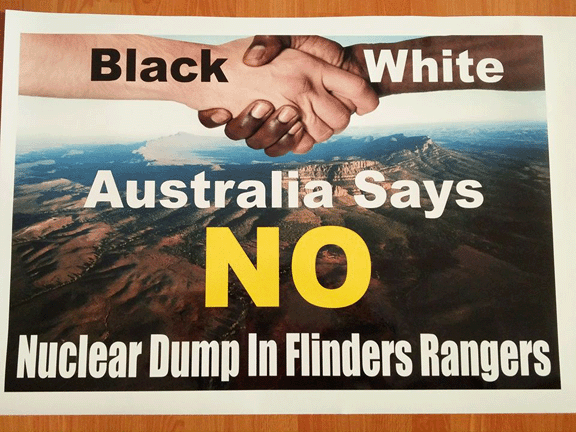 Flinders Ranges Council confirms ballot dates for waste facility, Transcontinental, Amy Green, 1 Oct 19
Communities in the far north are one step closer to finding out if they will have a radioactive waste management facility in their backyard with ballot dates confirmed by both councils in contention.
Voting commences in the District Council of Kimba next week, while the Flinders Ranges Council have confirmed that it will hold a community ballot between November 11 and December 12.
- Notes banned during committee meetings
- Closed meeting sparks secrecy concerns
- Barngarla group loses out in legal battle
“In addition to the ballots, anyone can have their say through the submissions process.”
But the Australian Conservation Foundation’s Dave Sweeney said the ballots are divisive and are raising tensions in otherwise cohesive communities.
“The ballot is important and essential obviously for communities in the affected areas to have a say and voice their opinion,” he said.
“But this is not a decision just for Kimba or just for Hawker, it’s a national radioactive waste management facility and the government has turned it into a bidding war or a how much are you prepared to fight struggle between two regional communities.
“The ballot and the government’s entire approach has been divisive, unnecessarily divisive. They are consistently asking people to make decisions and take positions on the basis of completely insufficient evidence.
“You wouldn’t buy a secondhand car on the basis of what we know about this project, yet they are asking communities to sign off yes or no about radioactive waste that will need to be managed for 10,000 years.”https://www.transcontinental.com.au/story/6412542/flinders-ranges-council-confirms-ballot-dates-for-waste-facility/
Queensland Liberal National Party opposes nuclear power
Queensland LNP breaks with federal branch to oppose nuclear power, Amy Remeikis, 3 Oct 2019 Queensland LNP says it supports a greater focus on energy efficiency measures
One of the biggest detractors of the federal Queensland Liberal National party’s push to investigate nuclear energy as a potential power source for Australia has come from within its own house.
The state LNP opposition has publicly declared its opposition to making any changes to the current bipartisan ban on nuclear energy generation, declaring the government would be better served in its goals by focusing on renewable energy sources, in a marked split from their federal state colleagues.
Australia is once again looking at nuclear energy as a potential solution to its power woes, after a group of Coalition MPs, led by a cohort from Queensland, pushed the federal party room into investigating the prospect, through a parliamentary inquiry.
But in a move which has surprised their federal counterparts, the Queensland state LNP spokesman for energy, Michael Hart, made a written submission to the inquiry, announcing his arm of the party’s opposition to any attempt to allow nuclear energy generation, citing the risks to the communities and the environment.
Instead, Hart said the Queensland LNP supports “greater focus” on “energy efficiency measures, along with encouraging investment in renewable energy options like wind and solar, in combination with battery storage when it is technologically and economically feasible to do so”.
“It is considered that Australia’s rich renewable energy resources are more affordable and bring less risk than the elevated cost and risk associated with nuclear energy,” Hart submitted.
“The LNP encourages additional jobs and investment in Queensland’s renewable energy industry, while also supporting resource jobs and exploration which provides baseload power and employment for thousands of Queenslanders.
“In addition to the possibility of accidents and operational failure, nuclear facilities can be a potential target for terrorists. Securing insurance around such possibilities would be virtually impossible.
“In conclusion, the commercial, as well as the political risks, associated with nuclear energy are substantial. To this end, the LNP is strongly committed to an energy policy that delivers safe, affordable and reliable energy to consumers, while fulfilling Australia’s international emissions reduction obligations.
“We believe this can be achieved without lifting the moratorium on nuclear energy generation. Accordingly, we would encourage the committee to ensure an increased emphasis is placed on measures to encourage investment in renewable energy that creates green jobs and lowers electricity bills, for both consumers and industry, which does not (underlined) include nuclear energy”.
The state Labor government established a 50% renewable energy target by 2030 upon winning power in 2015.
The federal inquiry was established after a group of Coalition MPs, led by Hinkler LNP member Keith Pitt and Queensland LNP senator James McGrath, pushed for an investigation into whether nuclear power should be considered as part of the mix, as the government hunts for a long term solution to Australia’s surging energy prices.
Not wanting to reignite the war that led to the downfall of the national energy guarantee, and ultimately, Malcolm Turnbull’s leadership, the government acquiesced to calls for an investigation, which was established after a recommendation from Angus Taylor.
The state LNP position stands in stark contrast to their federal colleagues, including conservative senator Amanda Stoker, who said that “Australia must develop a nuclear energy industry”, as well as her Queensland colleague Gerard Rennick.
McGrath has publicly pushed for the nuclear discussion in numerous interviews and his own social media, as well as within the party room. Pitt, who describes himself as “technologically agnostic”, said the discussion had to be had.
“The first priority for the nations future energy needs will always be reliability and affordability,” he said. “As technology changes I expect our energy mix will also change over a period of time. I am completely technology agnostic in terms of the fuel types that might be utilised. Currently Queensland has the country’s youngest fleet of coal fired generators and I expect they will continue to be a critical part of Queensland’s energy mix into the future.”
He demurred from any questions on the split between state and federal lines, saying the state arm could “speak for themselves”, but attacked the state Labor government for its price management of the state owned power assets.
But the submission did give Queensland Labor senator, Murray Watt, a late week boost.
“This submission shows the LNP’s state MPs have had enough of their federal counterparts’ pointless culture war against renewable power,” he said. “Even the LNP’s state MPs acknowledge that renewables are a cheaper and safer way of meeting our future energy needs.
“They have also slammed their federal counterparts’ pursuit of nuclear power as a massive waste of time and resources.
“The Queensland LNP’s federal representatives should stop wasting everyone’s time by pursuing their obsession with nuclear power and get behind cheaper and safer means of meeting our energy needs.”
A Kimba resident says there’s no going back: a plea to vote NO to nuclear dump
Kimba residents to vote on waste facility, RACHEL YATES, 30 Sept 19, https://www.eyretribune.com.au/story/6412750/kimba-residents-to-vote-on-waste-facility/While I would really like to see an extra 45 jobs in our community, this ‘process’ has made me very sceptical and I have very little trust in the government to keep their word, especially when we don’t even know who will actually be running the ‘facility’.
There are still so many unknowns in regards to the dump and yet we are being asked to vote on something that will be here forever.
We won’t be able to change our minds once it is here.
No matter what has been promised or how safe they say it is, this facility will be forced onto people in this community.
I am a neighbour and my family and I still do not want to live anywhere near it.
Nuclear waste should not be dumped on agricultural land.
I can live with being blamed for losing this ‘opportunity’ if we are not chosen but, if we are, and I have to live near this, I will never ‘get over’ feeling like the government and my community has forced this on me and my family.
So far, the government has broken numerous promises and continually change the rules to suit themselves.
Can you truly trust them?
The upcoming vote is our final chance to have a say.
This is it!
There is no going back.
Please, please make sure you are absolutely certain before casting your vote.
If you have even the slightest doubt, please vote no.
Nuclear waste dump for Kimba? Residents to vote soon
This is supported by the reality that the Palmer/federal Liberal agreement on preferences at the last federal election saw a overwhelming victory for the Liberals.
Importantly, the Palmer policy was strong advocacy for nuclear power in Australia, which saw the strong Liberal victory, so to me the wheels are rolling and the only impediment ironically is the large and increasing investment in South Australia in renewable energy.
As far as Kimba accepting the international nuclear waste the circumstantial evidence is overwhelming, once the decision to accept the higher level waste was made and confirmed prior to the last federal election.
After 60 years of nuclear reactors at Lucas Heights, Kimba is political heaven for our national Parliament.
A yes vote at Kimba means a $300 million investment by the federal government almost immediately, or they could have their ‘facility’ at Leonora in Western Australia for no cost to taxpayers and in a much more isolated area without the risks and without breaching their own guidelines.
So next week Kimba may well be going in to the history books for different reasons to their up-to annual $80 million export agriculture.
Good luck with whatever their decision.. I don’t have a vote even though I am a partner in a farming business of almost 100 years, near a preferred site.
50+ groups sign joint civil society statement on domestic nuclear power
 Friends of the Earth Australia is proud to be among the 50+ groups to sign the following statement calling for a clean, green, nuclear-free future.
The statement has been submitted to the federal inquiry into nuclear power (you can read the FoE submission about ‘small modular reactors’ here and our statement about nuclear power and climate change here).
The strong level of trade union support for a nuclear-free future is very welcome, with key national unions and peak union bodies including the ACTU endorsing the statement below.
*************************************************
Our nation faces urgent energy challenges. Against a backdrop of increasing climate impacts and scientific evidence the need for a clean and renewable energy transition is clear and irrefutable. All levels of government need to actively facilitate and manage Australia’s accelerated transition from reliance on fossil fuels to low carbon electricity generation.
The transition to clean, safe, renewable energy should also re-power the national economy. The development and commercialisation of manufacturing, infrastructure and new energy thinking is already generating employment and opportunity. This should be grown to provide skilled and sustainable jobs and economic activity, particularly in regional Australia.
There should be no debate about the need for this energy transition, or that it is already occurring. However, choices and decisions are needed to make sure that the transition best meets the interests of workers, affected communities and the broader Australian society.
Against this context the federal government has initiated an Inquiry into whether domestic nuclear power has a role in this necessary energy transition.
Our organisations, representing a diverse cross section of the Australian community, strongly maintain that nuclear power has no role to play in Australia’s energy future.
Nuclear power is a dangerous distraction from real movement on the pressing energy decisions and climate actions we need. We maintain this for a range of factors, including:
- Waste: Nuclear reactors produce long-lived radioactive wastes that pose a direct human and environmental threat for many thousands of years and impose a profound inter-generational burden. Radioactive waste management is costly, complex, contested and unresolved, globally and in the current Australian context. Nuclear power cannot be considered a clean source of energy given its intractable legacy of nuclear waste.
- Water: Nuclear power is a thirsty industry that consumes large volumes of water, from uranium mining and processing through to reactor cooling. Australia is a dry nation where water is an important resource and supply is often uncertain.
- Time: Nuclear power is a slow response to a pressing problem. Nuclear reactors are slow to build and license. Globally, reactors routinely take ten years or more to construct and time over-runs are common. Construction and commercialisation of nuclear reactors in Australia would be further delayed by the lack of nuclear engineers, a specialised workforce, and a licensing, regulatory and insurance framework.
- Cost: Nuclear power is highly capital intensive and a very expensive way to produce electricity. The 2016 South Australian Nuclear Fuel Cycle Royal Commission concluded nuclear power was not economically viable. The controversial Hinkley reactors being constructed in the UK will cost more than $35 billion and lock in high cost power for consumers for decades. Cost estimates of other reactors under construction in Europe and the US range from $17 billion upwards and all are many billions of dollars over-budget and many years behind schedule. Renewable energy is simply the cheapest form of new generation electricity as the CSIRO and the Australian Energy Market Operator concluded in their December 2018 report.
- Security: Nuclear power plants have been described as pre-deployed terrorist targets and pose a major security threat. This in turn would likely see an increase in policing and security operations and costs and a commensurate impact on civil liberties and public access to information. Other nations in our region may view Australian nuclear aspirations with suspicion and concern given that many aspects of the technology and knowledge base are the same as those required for nuclear weapons. On many levels nuclear is a power source that undermines confidence.
- Inflexible or unproven: Existing nuclear reactors are highly centralised and inflexible generators of electricity. They lack capacity to respond to changes in demand and usage, are slow to deploy and not well suited to modern energy grids or markets. Small Modular Reactors (SMRs) are not in commercial production or use and remain unproven and uncertain. This is no basis for a national energy policy.
- Safety: All human made systems fail. When nuclear power fails it does so on a massive scale. The human, environmental and economic costs of nuclear accidents like Chernobyl and Fukushima have been massive and continue. Decommissioning and cleaning up old reactors and nuclear sites, even in the absence of any accidents, is technically challenging and very costly.
- Unlawful and unpopular: Nuclear power and nuclear reactors are prohibited under existing federal, state and territory laws. The nuclear sector is highly contested and does not enjoy broad political, stakeholder or community support. A 2015 IPSOS poll found that support among Australians for solar power (78‒87%) and wind power (72%) is far higher than support for coal (23%) and nuclear (26%).
- Disproportionate impacts: The nuclear industry has a history of adverse impacts on Aboriginal communities, lands and waters. This began in the 1950s with British atomic testing and continues today with uranium mining and proposed nuclear waste dumps. These problems would be magnified if Australia ever advanced domestic nuclear power.
- Better alternatives: If Australia’s energy future was solely a choice between coal and nuclear then a nuclear debate would be needed. But it is not. Our nation has extensive renewable energy options and resources and Australians have shown clear support for increased use of renewable and genuinely clean energy sources.
The path ahead:
Australia can do better than fuel higher carbon emissions and unnecessary radioactive risk.
We need to embrace the fastest growing global energy sector and become a driver of clean energy thinking and technology and a world leader in renewable energy technology.
We can grow the jobs of the future here today. This will provide a just transition for energy sector workers, their families and communities and the certainty to ensure vibrant regional economies and secure sustainable and skilled jobs into the future.
Renewable energy is affordable, low risk, clean and popular. Nuclear is simply not.
Our shared energy future is renewable, not radioactive.
Nuclear waste dump ballot to go ahead in Kimba, South Australia
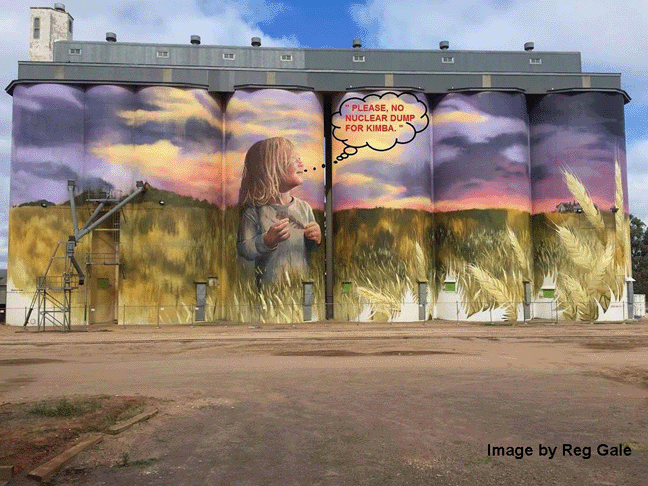
Robyn Wood Note the end with a quote from the Kimba pro nuker who will profit by selling his land. No quote from nuclear opponents. Have a read of the comments, most of them are opposed to the nuclear waste dump plan. The Barngarla people’s request for an injunction to stop the Kimba vote has been denied. The Kimba ballot is happening now. The Flinders Ranges council has agreed to do a risk assessment, but Canavan is not going to wait for the results before doing the Flinders ballot in November.
It plans to post out ballot papers on Thursday, asking locals if they back locating the National Radioactive Waste Management Facility at one of two nominated sites in the region.
The vote comes after the Federal Court on Friday rejected another bid by the Barngarla people to stop it going ahead, pending more court action next year.
The Barngarla, who possess rights over much of the region around Kimba, have argued the poll is unlawful because it excludes native title holders.
Two sites near Kimba have been short-listed as potential locations for a low-level radioactive waste storage facility, while a third is near the Flinders Ranges town of Hawker.
The federal government is yet to reveal its preferred location but said recently it was mindful of the need to reach a decision.
On Friday the government said as well as the Kimba ballot and one to be conducted in the Hawker region in November, business owners and residents within a five-kilometre radius of the three nominated sites would also be surveyed.
The Barngarla had claimed their exclusion from the Kimba ballot was based on their Aboriginality and would impair their human rights or fundamental freedoms as native title owners.
Rejecting that argument in July, Justice Richard White ruled the council’s actions did not contravene racial discrimination laws.
On Friday, Justice Craig Colvin rejected the Barngarla’s argument that its chances of winning on appeal were strong and said the basis for an immediate injunction had not been made out.
National Radioactive Waste Management Taskforce general manager Sam Chard said the decision confirmed the community ballots could proceed.
“What this means is that after more than two years of consultation, communities will have multiple ways in which they can have their say on the proposal,” Ms Chard said.
‘”Whether individuals are for or against the facility, we’re confident the communities at the centre of the process are well informed.”
The Kimba council said it intended pushing ahead with the ballot as there was “no legal impediment” to it going ahead.
“Council’s position has always been to facilitate the ballot on behalf of the minister for resources and northern Australia so our community could have its voice heard,” Mayor Dean Johnson said.
The council plans to post out the voting papers on October 3, with the ballot to close on November 7.
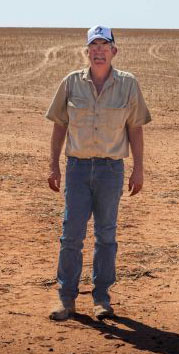 Support for the nuclear waste facility is thought to be mixed across the local community.
Jeff Baldock, who has nominated his Kimba farm as a possible site, is backing the project as a “once-in-a-lifetime opportunity to secure Kimba’s future”.
Sir David Attenborough slammed the Australian government’s response to climate change
|
David Attenborough says Australian government ‘doesn’t give a damn’ about rest of the world, Telegraph, UK, Giovanni Torre, perth 24 SEPTEMBER 2019 While the United Kingdom has reduced its carbon emissions over the past 12 Sir David said the current Australian government had departed from the Sir David noted that Mr Morrison brought a lump of coal into one of “If you weren’t opening a coal mine okay I would agree, it’s a joke. But you Sir David noted that Mr Morrison had campaigned for re-election on a Speaking from Chicago, Mr Morrison defended his government’s record on
|
NSW Deputy Premier John Barilaro wants to “normalise”nuclear power
NSW Deputy Premier calls for nuclear vote within three years, AFR, Aaron Patrickn 30 Sept 19, NSW Deputy Premier John Barilaro suggested holding a non-binding vote at the next federal election to approve the introduction of nuclear power, a step that could help overcome entrenched opposition from the left to the low-emissions technology.
The leader of the state National Party is one of the leading political advocates for nuclear power, which is currently being investigated by parliamentary inquiries at the federal level and in NSW and Victoria.
“We could quite simply have a plebiscite at the 2022 election,” he told a conference run by the Australian Nuclear Association in Sydney. “We need to normalise [?] the conversation.
“Bit by bit it has become the norm. The negativity isn’t happening anymore. Australia is welcoming the conversation.”[?]
Supporters of nuclear power have been buoyed by the new political interest in nuclear, which received a boost when federal Energy Minister Angus Taylor initiated the federal inquiry last month.
At the University of Technology Sydney on Friday, several hundred engineers, regulators and policy experts gathered at the conference to discuss international developments and the Australian outlook.
“The conference is genuinely standing room only,” South Australian nuclear advocate Ben Heard said. “I have never seen it like this. Something is changing down under.”
The federal Coalition’s current policy is not to legalise nuclear power, but some federal and state Coalition MPs hope that developing community attitudes, and the pressure for action on global warming, could change the political environment.
The Labor Party and the Greens remain adamantly opposed. Labor climate change and energy spokesman Mark Butler has challenged the government to identify which cities, suburbs or towns would be the location for future nuclear reactors……..
Under a plan advocated by members of the Australia Nuclear Association, the federal government would build at least 20 nuclear power plants from 2030 to 2050.
At a cost of around $6 billion each, each plant would have a generating capacity of 1000 megawatts, which is about half AGL’s NSW Liddell power station, which is due to close in 2023…….
Nuclear critics, including former prime minister Malcolm Turnbull, have said that the cheapest way to reduce emissions is to combine wind and solar power with some form of storage.
Although batteries have very limited capacity at the moment, experts expect them to improve in coming years. https://www.afr.com/companies/energy/nsw-deputy-premier-calls-for-nuclear-vote-within-three-years-20190929-p52vz2
Nuclear submarines for Australia? Dangerous, would require costly taxpayer insurance
|
Nuclear subs idea worth floating It has been debated in some quarters for years that Australia should operate and maintain nuclear-propelled attack submarines. ……. This prospect raises two significant policy issues for Australia. The first is whether the commonwealth can operate and maintain nuclear submarines in a sovereign environment that has no civilian nuclear power industry to supply the nuclear-trained staffs, as well as build and maintain the infrastructure that is necessary. The second is whether Australia is prepared to establish an indemnification and regulatory environment that would be critical to safely and effectively operate and maintain nuclear vessels for 50 years. ……. A unique aspect of such submarines is the enormous amount of energy stored in their reactor cores. Built, operated, and maintained properly, this energy is released in a controlled manner over a long period. A sudden, uncontrolled release of this energy could be catastrophic, not only to the submarine, but to people and property nearby. Given that private insurance typically does not cover nuclear risks, an effective scheme to indemnify possible victims of a nuclear accident could be critical. Without such an indemnity scheme, companies might be unwilling to provide components and services to maintain and operate propulsion plants. As Australian policymakers and the public debate the nuclear submarine option for the Royal Australian Navy, it could be valuable for them to broaden their understanding of what it would take to establish: • A sovereign and robust industrial capability to operate and maintain submarines equipped with mobile nuclear power propulsion plants; • A rigorous regulatory scheme to ensure mobile power reactors are safely built, tested, operated, maintained and deactivated; • An indemnity scheme to cover third-party liabilities in the event of a “nuclear” incident; • Training and development paths for regulators, engineers, operators and maintainers; and • Facilities necessary to service nuclear-powered submarines……. https://www.theaustralian.com.au/commentary/nuclear-subs-idea-worth-floating/news-story/61c003a41e9303ca7883561983da90ac |
|
Scott Morrison on climate change: he just doesn’t “get it
 Morrison’s condescending response to kids and climate https://independentaustralia.net/politics/politics-display/morrison,13153 By Graeme McLeay | 29 September 2019 The best you can say about Prime Minister Scott Morrison is that he doesn’t get it.He and his conservative colleagues in the Coalition do not understand the science of climate change despite what our own scientists are telling them. The only way to explain his behaviour otherwise is to believe that he is deliberately setting out to deceive us.
First, there was the visit with U.S. President Donald Trump. No one would argue that good relations with the United States are not positive for Australia but his closeness to Trump tells us something about his mindset.
Trump is the President who vowed to revive coal, opened up federal parklands to oil and gas, attempted to reverse Obama’s plan to limit coal pollution and California’s vehicle pollution laws, decimated the U.S. Environmental Protection Agency, and withdrew from the Paris Agreement.
At least, French President Emmanuel Macron when visiting Trump raised climate change with him as Morrison surely would have if he understood the science.
Then it gets worse. Morrison continues his sojourn in the U.S. visiting an Australian owned cardboard factory while leaving Foreign Minister Marise Payne to attend the UN Climate Conference.
Had he himself gone he might have learned what the IPCC had to say: that in the last five years climate change has accelerated, a matter of some importance to Australia you might think, given the evidence from our own scientists. They tell us heat waves will increase, sea levels will rise, perennial droughts and a more severe bushfire seas. Continue reading
Pacific Island nations urge action on climate change at UN
Lyn Allen and Richard Ledger’s nuclear submission – for the public good
Allen, Lyn and Ledgar, Richard Submission No 30
to the FEDERAL. Inquiry into the prerequisites for nuclear energy in Australia… Extracts “…..there are overwhelming economic, environmental and social reasons why nuclear energy is not an appropriate contributor to Australia’s energy mix.
If Australia is going to move to a sustainable future then we need to concentrate on producing energy from renewable resources. Uranium is not a renewable resource and even more so than coal, uranium mining produces waste that remains toxic for thousands of years.
Additionally, while nuclear power generation does not produce greenhouse gases, greenhouse gases are produced at every step in the process from mining to refinement and building nuclear power generation facilities. Like uranium mines, nuclear power stations expose the community and the environment in which they are built to significant risks ……
The future of Australia’s energy generation should to take advantage of our abundant natural resources such as sun, wind, tidal potential. Nuclear power station are massively expensive to build and take years to complete, whereas wind and solar generators and new storage technology (such as the batteries installed in South Australia) can be developed quickly and relatively inexpensively …
water. Generating nuclear power needs large quantities of water. Given Australia’s climatic conditions, the shortage of water in many of our major river systems,
Many countries around the world that currently use nuclear power are already starting to phase it out in favour of wind and solar generation. Australia can get in front of the energy production business by putting our skills, and efforts into an alternative energy grid that suits our climate, is safe for future generation and takes advantage of ‘free’ sources of energy.
Submission for the public good: to Federal Nuclear Inquiry – Noel Wauchope
Recommendation. There is no need to change Australia’s laws prohibiting nuclear activities. They were devised to protect Australians from the health, and safety risks of nuclear facilities, – far-sighted in that they have saved Australia from the unnecessary expense of a now collapsing industry. Meanwhile Australia is very well placed to put energy and funds into truly modern developments, and could become a world leader in energy efficiency and renewable energy.
To start with, the title of this Inquiry , featuring the word “prerequisite” really makes clear the major issue.
What is the major prerequisite?
Obviously the one important prerequisite is to repeal Australia’s laws banning nuclear activities.
First the Federal Law would have to be repealed. (a1)
Then – State Laws – Victoria’s NUCLEAR ACTIVITIES (PROHIBITIONS) ACT (a2) -and South Australia’s Nuclear Waste Storage Facility (Prohibition) Act 2000 (a3)
(a1) https://www.environment.gov.au/epbc/what-is-protected/nuclear-actions
(a2) http://www8.austlii.edu.au/cgi-bin/viewdb/au/legis/vic/consol_act/naa1983337/
Once these laws are repealed, then nuclear industry proponents will be free to spend much money on publicising the benefits of the industry. With helpful politicians and press, particularly from the predominant Murdoch media, this will give the industry huge boost. As Australia moves further into drought and water shortages, they will claim that nuclear power is essential to solve climate change. (Even if nuclear power could combat climate change, it would take decades to establish, and by then it would be too late.)
So – that is what the global nuclear industry needs, especially for South Australia, which has specific legislation against spending public money on promoting the nuclear industry .
While Australians have concerns about cost, safety, environment , health, wastes, Aboriginal rights, weapons proliferation etc, I am sure that the nuclear lobby will be able to overcome those hesitations, with an effective programme.
So, I have my doubts that the Terms of Reference matter all that much, but – here goes. I understand that the emphasis in this Inquiry is on Small Modular Nuclear Reactors (SMRs)
a . waste management, transport and storage. Continue reading
1 This month


Help Aunty Sue Protect Her Land and Sacred Sites From Destructive Rocket Testing.
.

Australians deserve the truth
about
AUKUS – https://aukuspublicinquiry.com/

PETITION – To: Prime Minister Anthony Albanese and the Australian Labor Government

of the week – Australians for War Powers Reform (AWPR)
To see nuclear-related stories in greater depth and intensity

