
Antinuclear

Australian news, and some related international items

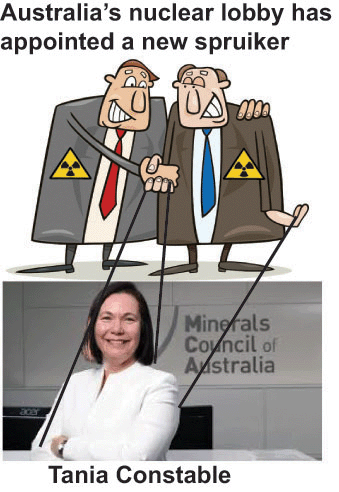
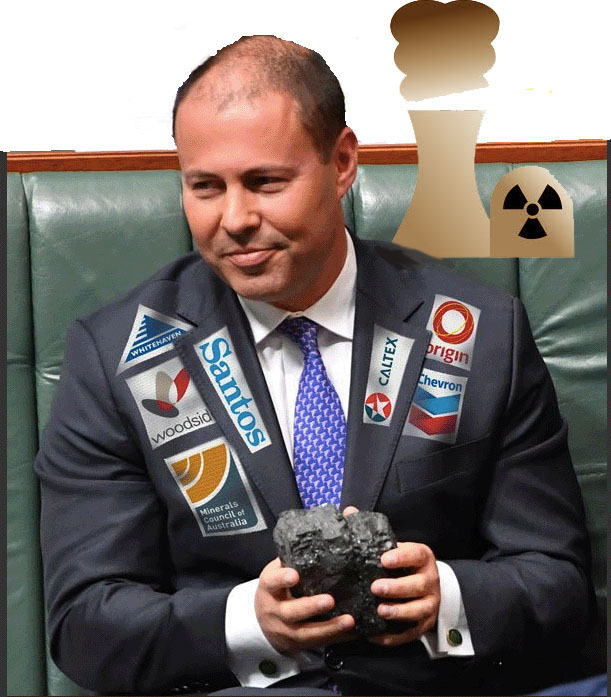
Minerals Council of Australia again pushing pro nuclear propaganda

Mining industry renews push for nuclear option,  https://www.theage.com.au/business/the-economy/mining-industry-renews-push-for-nuclear-option-20190913-p52r2r.html, By Nick Toscano

September 16, 2019 Australia’s mining sector has launched a fresh push to lift the prohibition on nuclear energy arguing new-look compact nuclear reactors could provide the “cheapest, zero-emissions” baseload power to replace retiring coal-fired power stations.

As the resources industry prepares for a transition away from fossil fuels in coming decades, the Minerals Council of Australia has told a federal government inquiry that nuclear power must be explored as part of the future energy mix to address the worsening problem of rising power prices and deteriorating energy grid reliability.

“Only a commitment to restore energy affordability and reliability will reverse this drift, and nuclear power – especially innovative small modular reactors – will go a long way to providing clean, reliable and lower-cost power for Australian homes and businesses,” said Tania Constable, chief executive of the lobby group which represents mining giants including BHP and Rio Tinto.

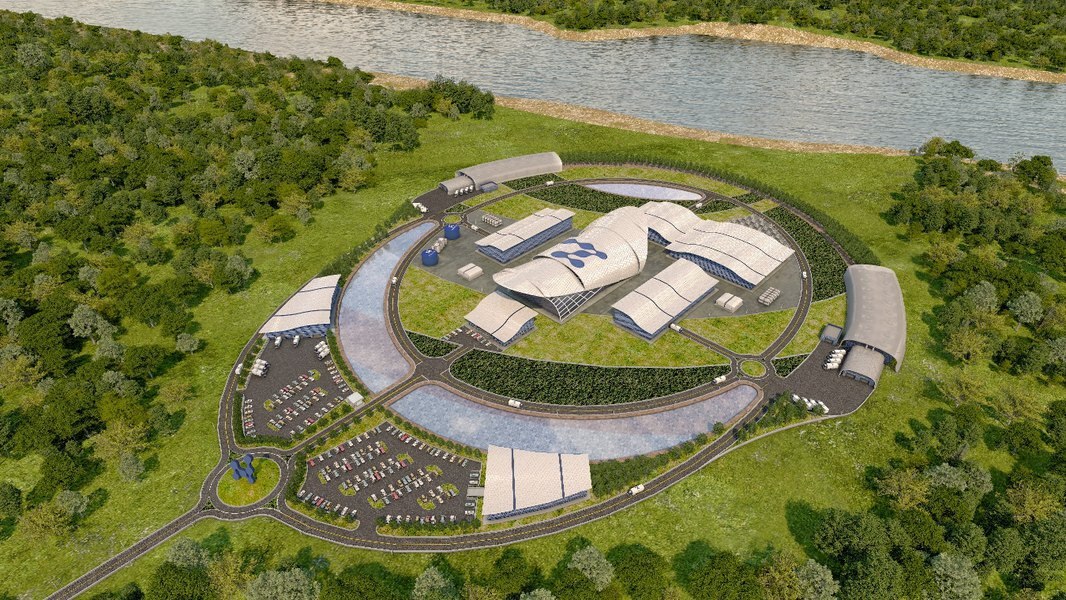
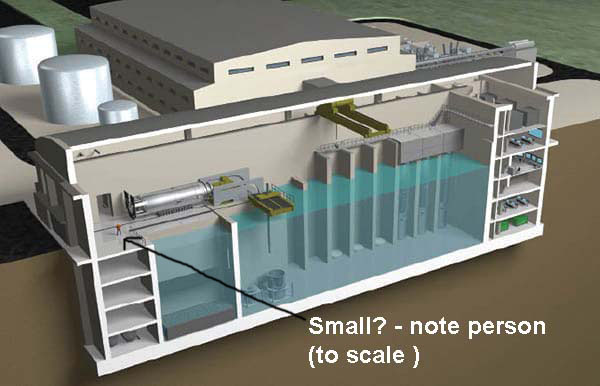
Touted by some as the next generation of nuclear power, small modular reactors (SMRs) can be built in factories and assembled on location.

Their deployment is under consideration in a number of countries including the United States and Canada although their cost is not yet known as none are yet commercially available.

Apart from existing run-of-water-hydro, the Minerals Council said, nuclear was the only energy source capable of providing affordable, continuous and zero-emissions power at industrial scale.

“It is a mature, proven and safe power generation … yet Australia’s ban on nuclear power means that our communities and businesses are denied its many benefits,” Ms Constable said.

Australia has a third of the world’s economically recoverable uranium, which is mined and exported for use around the world, but domestic nuclear energy is banned under federal legislation.

The mining group’s calls for nuclear are contained in a submission to a federal parliamentary inquiry launched by Energy and Emissions Reduction Minister Angus Taylor to investigate the potential for nuclear as a future power source for Australia.

At the inquiry’s first public hearing, prominent business leader and nuclear physicist Ziggy Switkowski, who headed a 2006 review of nuclear power for the Howard government, said while the window for large, gigawatt-scale nuclear power plants had closed,  SMRs could provide opportunities in regional towns and mining sites for generation of “clean, safe baseload power”.

But, he added, it would likely be more than a decade until it was known whether small modular reactors were suitable for Australia and about 15 years to bring such a plant online.

Dr Switkowski said nuclear power was comparable to renewable energy in its low level of greenhouse gas emissions but was not weather-dependent in the same way as wind and solar generation.

The challenges to supporting a nuclear energy strategy, he said, included that the lack of political and public support and the fact that the risk of a catastrophic nuclear failure such as Chernobyl in Ukraine or Fukushima in Japan was not “negligible”.

Former prime minister Malcolm Turnbull last week voiced the opinion of many critics, saying it was obvious that nuclear power was more expensive than renewables and battery storage and describing the push for nuclear power as “loopy” and a “distraction” for politicians.

September 16, 2019 Posted by | AUSTRALIA - NATIONAL, politics | Leave a comment

Climate crisis confronts Morrison

Climate crisis confronts Morrison https://www.theguardian.com/australia-news/2019/sep/16/environmental-groups-warn-against-push-for-nuclear-power-in-australia  Paul Karp @Paul_Karp16 Sep 2019

When parliament resumes on Monday Scott Morrison will play host to Fijian prime minister Frank Bainimarama.

Defence, labour mobility, trade, investment, illegal fishing and climate change are all on the agenda for the bilateral meeting. Bainimarama was heavily critical of Morrison at the Pacific Islands forum, saying the Australian PM had insulted and alienated Pacific leaders over his failure to back stronger emissions targets.

The climate crisis will also be forced back onto the agenda by the member for Warringah, Zali Steggall, who will bring a motion, seconded by independent MP Helen Haines, calling on the government to decarbonise the economy by 2050 to reduce the health impact and linking it to extreme weather events.

Earlier in September the Australian Medical Association formally declared climate change a health emergency; Steggall’s call will be backed by peak health bodies pointing to heat related illnesses, respiratory diseases and hypoallergenic conditions caused by global heating.

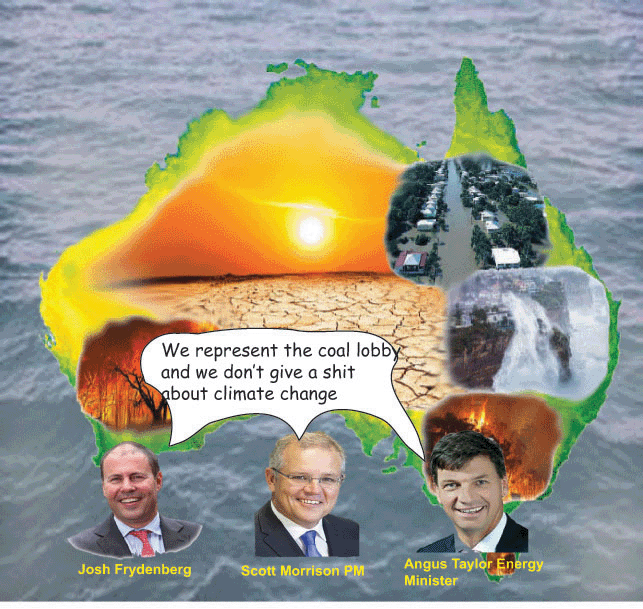
Australia is in the grip of early-spring fires in New South Wales and Queensland and a drought that could see parts of NSW run out of water as early as November.

Steggall said the “unprecedented fires” and the “shocking drought” are “events causing terrible health impacts which are going to get more severe as the world continues to warm”.   https://www.theguardian.com/australia-news/2019/sep/16/environmental-groups-warn-against-push-for-nuclear-power-in-australia

September 16, 2019 Posted by | AUSTRALIA - NATIONAL, climate change - global warming, politics | Leave a comment

Australia/s government , servant of the coal industry, has no plan for UN Climate Summit

Australia to attend climate summit empty-handed despite UN pleas to ‘come with a plan’ The Conversation, Frank Jotzo, Director, Centre for Climate and Energy Policy, Crawford School of Public Policy, Australian National University
September 16, 2019 
This story is part of Covering Climate Now, a global collaboration of more than 250 news outlets to strengthen coverage of the climate story.
Climate action will be on the world stage again at a meeting of world leaders in New York on September 23. The United Nations has convened the event and urged countries to “come with a plan” for ambitious emissions reduction.

UN Secretary-General António Guterres called the meeting because he says global efforts to tackle climate change are running off-track. He wants leaders to present concrete, realistic pathways to strengthen their existing national emissions pledges and move towards net zero emissions by 2050.

Australia is not expected to propose any significant new actions or goals. Prime Minister Scott Morrison – in the US at the time to visit President Donald Trump – will not attend the summit. Foreign Minister Marise Payne will attend, and is likely to have to fend off heavy criticism over Australia’s slow progress on climate action.

Australia has gained an international reputation as a climate action laggard – plagued by political acrimony over climate change, offering few policies to reduce emissions and embroiled in diplomatic rifts with our Pacific neighbours over, among other things, support for coal.

For many afar, it is difficult to understand the policy vacuum in a country so vulnerable to climate change……..

Come with a plan, and make it good

The landmark Paris agreement includes a global goal to hold average temperature increase to well below 2°C and pursue efforts to keep warming below 1.5°C above pre-industrial levels.

Countries set so-called “nationally determined contributions” (NDCs) outlining an emissions reduction target and how they will get there.

…… Australia’s emissions are rising

Australia’s annual greenhouse gas emissions are about 12% lower than in 2005, the base year for the Paris target. But since 2013 they have steadily risen, and are continuing to rise…….

We could do so much better

With meaningful policy effort, Australia could meet the Paris target without resorting to Kyoto credits, and possibly meet a much more ambitious target………

2050: defining a strategy

Limiting the risk of catastrophic climate change demands that global emissions fall rapidly in coming decades. Keeping temperature rise to 2°C or less means reducing emissions to net-zero.

Australia will be expected to table strategies to get to net-zero by 2050 next year, at the UN’s climate COP, or “conference of the parties”.. That process should be a chance for Australian governments, industry and civil society to put heads together about how this could work.

The year 2050 is beyond the horizon of most corporate interests vested in existing assets, and it allows greater emphasis on long term opportunities than on short term adjustments. This should encourage a more open discussion than the often acrimonious debates about 2030 emissions targets and short-term policies.

Australia should show the world it can imagine a zero-emissions future, and hatch the beginnings of a plan for it. It would help position the nation’s resources industries for the future and help with our international reputation. https://theconversation.com/australia-to-attend-climate-summit-empty-handed-despite-un-pleas-to-come-with-a-plan-123187

September 16, 2019 Posted by | AUSTRALIA - NATIONAL, climate change - global warming, politics | 1 Comment

Arnaud Coquillard’s submission to Federal Nuclear Inquiry rejects nuclear power, calls for care for the planet


Coquillard, Arnaud (59) Says that the government is considering Generation IV nuclear reactors, but they don’t even exist yet. Their safety over time is uncertain. They still produce toxic wastes. Uranium mining is also environmentally harmful. Australia should deveop non nuclear clean energy technologies. 

Please think of the people that you represent, the responsibility you have towards humanity, the plant and animal kingdom  and the planet as a whole. Compare that responsibility to the minority of corporate, businessman that pressure you to have nuclear power plant.”

September 14, 2019 Posted by | AUSTRALIA - NATIONAL, politics | Leave a comment

Eric Gribble’s submission to the Federal Nuclear Inquiry in favour of nuclear power

Gribble , Eric (38) addresses the question of ionising radiation – nuclear power development is safe, but held back by  “a widespread paranoid concern due to a lack of understanding of what radiation is.”

Goes on to explain that radiation can be beneficial – quotes some dubious science from 2002 and 1992…. “It appears that slightly elevated levels of radiation are beneficial but levels above 100 mSv the risk appears to increase. .. “ Quotes some study showing that radiation decreases incidence of lung cancer. Claims that Fukushima nuclear accident caused only one death due to material falling upon a man. No evidence of cancer caused.

Uses Hiroshima studies to dismiss concerns about radiation dangers…

Says nuclear power “is safe and the only option

Renewables do not stack up on a cost basis.”

Raves on about hydroponics and space “… If space travel is to become a reality using existing technology mankind will need a massive amount of energy. Energy to make rocket fuel. ….. Nuclear energy will open up the future. “”

. “Nuclear energy is the energy source of the future, Australia cannot afford to continue to let opportunities slide.”

It is easy to be a green. You simply oppose everything, dams, nuclear, fossil fuels, the free enterprise system, whatever. Yet there are many people (probably most people) out there who are as concerned about the environment as the most rabid green but do not support the green movement.”

September 14, 2019 Posted by | AUSTRALIA - NATIONAL, politics | Leave a comment

The politics of ANSTO’s nuclear isotopes – mainly for export, not for home use

Kazzi Jai No Nuclear Waste Dump Anywhere in South Australia, 14  Sept 19 So…..according to ABC’s radio AM and then PM reports yesterday – different reports by different reporters…. the whole situation appears as follows…..The BRAND SPANKING NEW, JUST RECENTLY LICENSED $200 million NEW FACILITY at ANSTO which was built to deal with the aim of increasing our output of 10 million doses per year up from the 500,000 doses per year of Molybdenum 99 , which is used to produce Technetium-99m which is used for IMAGING PURPOSES TO DIAGNOSE various conditions, is down. Keep in mind that this increased production is AIMED AT BEING A MAJOR EXPORT PLAYER ON THE WORLD’S EXPORT MARKET – NOTHING TO DO WITH SERVICING AUSTRALIANS.

Anyway, now there seem to be a FAULTY VALVE and the facility has to be closed down to fix it.

Sooooo……we are required now to source our Molybdenum from overseas. No big deal actually – we have done it many times in the past before – in fact that was one of the reasons why people didn’t want OPAL built as we had sourced our supplies from overseas without problems, and our domestic requirements quite small and remains so today.

But our usual – and yes it is “usual” – overseas source is from South Africa – surprise surprise (home country to Adi btw), and they are down for scheduled maintenance for the next week or so. Sooooo….we are only in possession of 31% of what we normally produce before the facility was on line.

Now here comes the interesting bit. In the Senate Estimates committee hearing 2017 Adi Paterson stated that only 28% of production goes to Australian hospitals, and the rest, 72% goes to overseas export. This figure really hasn’t changed since OPAL came on line back in 2006. Sooo…we in Australia aren’t in any hardship at all given what Adi stated then!

But wait…there’s more! Part of the PM report by the ABC was an interview with a Kalgoorlie doctor saying that he will have to ration and decide which patients need to have this now “short in supply” imaging isotope. Remember it is not a medicine – it is an imaging isotope to detect disease and for organ structure diagnosis. He said that the major cities would not be affected as they can use 3 – 4 alternative ways to diagnose these conditions using CT’s etc but he had no access to that equipment in Kalgoorlie. Given that Kalgoorlie only has a population of 29,000 wouldn’t you think that you would then send these patients TO A CITY CENTRE IN THIS CASE PERTH TO DO THE DIAGNOSIS AND THE FOLLOWUP IF REQUIRED????? I mean – yes it is 600 kms from Perth, but those conditions often need more expert care than is often funded to the smaller centres such as Kalgoorlie…….

September 14, 2019 Posted by | AUSTRALIA - NATIONAL, health | Leave a comment

Potential impact of radioactive wastes on water activities in the Spencer Gulf

September 14, 2019 Posted by | Federal nuclear waste dump, South Australia | Leave a comment

Temperatures 10C above average forecast as 130 bushfires continue to burn

Bureau of Meteorology says stubborn high pressure system will create hot and dry conditions over weekend and next week, Guardian,    Josh Taylor @joshgnosis, Sat 14 Sep 2019 Firefighters in New South Wales and Queensland are gearing up for a week of unseasonably warm weather as they continue to battle blazes across the two states.

And the former head of NSW’s urban fire service says early Australian bushfire seasons are here to stay, as he urges the federal government to step in as resources and firefighting assets stretch beyond current capacity.

Greg Mullins served as commissioner of Fire and Rescue NSW from 2004 until his retirement in 2017 and currently sits on the Climate Council, a national climate change communications body.

With NSW bushfires making an early mark in 2019 – including the destruction of nine homes over the past week in the state’s north – Mullins says authorities should prepare for more of the same in coming years.

He says the entire Australian strategy of tackling bushfires – sharing firefighting resources between states as the risk moves from northern states in spring to southern states in summer – is under threat.

Climate change has made nights and winters warmer, increasing the possibility extreme bushfires would burn in different states simultaneously……

The above-average spring temperatures are likely to continue over spring. Bom researchers reported last week in the Conversation that there could be months of above-average temperatures and below-average rainfall in large parts of NSW and Queensland as a result of record warm temperatures above Antarctica.

The Actuaries Institute’s quarterly climate index released this week also showed autumn 2019 ranked as the second-highest for extreme temperatures since the index started in 1981.

The Actuaries Institute chief executive, Elayne Grace, said there was a “growing urgency” to understand the occurrence of extremes in climate and the impacts of climate change on businesses and communities. https://www.theguardian.com/australia-news/2019/sep/14/temperatures-10-degrees-above-average-forecast-as-130-bushfires-continue-to-burn

September 14, 2019 Posted by | AUSTRALIA - NATIONAL | Leave a comment

Media silence on Julian Assange’s imprisonment encourages governments to intimidate journalists

All around the world, Assange’s treatment seems to have given the green light to governments to intimidate and hassle journalists. Australian police, for instance, recently conducted a raid on journalist Annika Smethurst’s home. Smethurst had not long before that revealed that the Government had been secretly requesting permission to spy on its own citizens.

He must not be extradited’ – Vivienne Westwood on Julian Assange

The media blackout on Julian Assange’s imprisonment   https://independentaustralia.net/business/business-display/the-media-blackout-on-julian-assanges-imprisonment,13094   By Mint Press News | 11 September 2019,  The same media that has spent years dragging Assange’s name through the mud is now engaging in a blackout on his treatment.

If you are waiting for corporate media pundits to defend freedom of the press, you’re going to be disappointed.

The role of journalism in a democracy is publishing information that holds the powerful to account — the kind of information that empowers the public to become more engaged citizens in their communities so that we can vote in representatives that work in the interest of “we the people.”

There is perhaps no better example of watchdog journalism that holds the powerful to account and exposes their corruption than that of WikiLeaks, which exposed to the world evidence of widespread war crimes the U.S. military was committing in Iraq, including the killing of two Reuters journalists; showed that the U.S. Government and large corporations were using private intelligence agencies to spy on activists and protesters; and revealed how the military hid tortured Guantanamo Bay prisoners from Red Cross inspectors.

It’s this kind of real journalism that America’s First Amendment was meant to protect but engaging in it has instead made WikiLeaks publisher Julian Assange the target of a massive smear campaign for the last several years — including false claims that Assange is working with Vladimir Putin and the Russians and hackers, as well as open calls by corporate media pundits for him to be assassinated. Continue reading

September 14, 2019 Posted by | AUSTRALIA - NATIONAL, media | Leave a comment

Fear of drought, flood and fires leads farmers to plea for urgent action on climate change 

Fear of drought, flood and fires leads farmers to plea for urgent action on climate change   ABC, NSW Country Hour, By Tim Fookes  13 Sep 19

  Extreme weather variabilities have farmers like Robert Lee, who has just watched more of his cattle leave for greener pastures, on edge.

Key points:

  • A group of farmers concerned about the future has formed a lobby group, Farmers for Climate Action
  • About 200 farmers from around NSW attended a conference this week to lobby for more action on climate change
  • A climate scientist says farmers bring new perspectives that people may not have considered

The farmer from Larras Lee, in central west New South Wales, has lived through drought before, but not like this.

“The cattle I had were about to start calving, and I just haven’t got enough to feed them,” he said.

“I was proud of those cows that have gone this week; I bred them, and I regret I have to sell them.”

Having already destocked, Mr Lee knows of other farmers destocking because there is a better opportunity for them in southern NSW and Victoria where they have had rain.

“The agents tell me how embarrassed they are with the amount of rain they’ve had in Victoria,” Mr Lee said.

“But it’s great to hear that some people have had [rain] and have got some grass to take on stock that we can’t handle.  “With the way the climate is, with warmer-than-average temperatures and lower rainfall, I have to be much more nimble with how much stock I have.”\

Farmers for climate activism

Mr Lee is not alone in his concerns over the climate and has become a member of the lobby group, Farmers for Climate Action.

It involves people from rural Australia pushing for more action on the effects that climate change is having on agriculture.  A conference this week in Orange attracted nearly 200 people to discuss ways of lobbying for more action on the effects a warming, dryer climate is having on those who make a living on the land.

Two thirds of those at the conference were farmers who had travelled from around NSW to attend……… https://www.abc.net.au/news/rural/2019-09-13/fear-of-drought-flood-and-fires-leads-farmers-to-plea-for-action/11508834

September 13, 2019 Posted by | AUSTRALIA - NATIONAL, climate change - global warming | Leave a comment

Julian Assange to remain behind bars

Julian Assange to remain behind bars due to ‘history of absconding’   SBS 13 Sep 19, The founder of Wikileaks has been told he will be kept in jail beyond September 22.   Julian Assange has been told he will stay in prison after the custody period finishes on his current jail term because of his “history of absconding”.

In June, then home secretary Sajid Javid signed an order allowing Assange to be extradited to the US over computer-hacking allegations.

A 50-week jail term was then imposed in the UK after he jumped bail by going into hiding in the Ecuadorian embassy in London in 2012.   He would have been released from HMP Belmarsh on September 22, Westminster Magistrates’ Court heard on Friday, but the 48-year-old Australian was told he will be kept in jail because of “substantial grounds” for believing he will abscond again……. Another administrative hearing will take place on October 11 following by a case management hearing on October 21, the court heard.

The final hearing in Assange’s extradition case is due in February……https://www.sbs.com.au/news/julian-assange-to-remain-behind-bars-due-to-history-of-absconding?cid=news:socialshare:twitter

September 13, 2019 Posted by | AUSTRALIA - NATIONAL, civil liberties | Leave a comment

John Quiggin sets out a very unlikely course for nuclear power in Australia

Nuclear power should be allowed in Australia – but only with a carbon price, John Quiggin, The Conversation September 13, 2019   “…….. A blueprint for reform

The central recommendations of my submission were as follows:

Recommendation 1: A carbon price of A$25/tonne should be introduced immediately, and increased at a real rate of 5% a year, reaching A$50/tonne by 2035.

Recommendation 2: The government should immediately adopt the recommendations of its own Climate Change Authority for a 40% to 60% reduction in emissions by 2030, relative to 2000 levels, and match other leading OECD countries in committing to complete decarbonisation of the economy by 2050.

Recommendation 3: The parliament should pass a motion:


  • affirming its confidence in mainstream climate science and its acceptance of the key conclusions of the United Nations’ Intergovernmental Panel on Climate Change;
  • legislating a commitment to emissions reductions;
  • removing the existing ban on nuclear power……..There are immediate political implications of my proposal at both the state and federal level. It will be more difficult for the Coalition-dominated committees running the two inquiries to bring down a report favourable to nuclear power without addressing the necessary conditions – including a carbon price. If the government’s hostility to carbon pricing is such that a serious proposal for nuclear power cannot be considered, it will at least be clear that this option can be abandoned for good.  ……..Given the urgency of addressing climate change – a task that is best addressed through a carbon price – it makes no sense to reject action now on the basis that it opens up the possibility of nuclear power sometime in the 2030s. And, if renewables and storage perform as well as most environmentalists expect, nuclear power will be unable to compete even then. ………  https://theconversation.com/nuclear-power-should-be-allowed-in-australia-but-only-with-a-carbon-price-123170

September 13, 2019 Posted by | AUSTRALIA - NATIONAL, politics | Leave a comment

Australian government must fund nuclear power- Barrie Hill of SMR Technology

Barrie Hill gives an insight into just what the global nuclear lobby wants from Australia.  They want to overturn Australia’ s laws prohibiting nuclear activities, and get the tax-payer to fund the development of the nuclear industry in Australia

His submission (no.60) to the FEDERAL. Inquiry into the prerequisites for nuclear energy in Australia is a fine example of the nuclear-lobby-speak that is turning up in these submissions from nuclear power experts.  He’s the Managing Director of SMR Technology, and makes sure to outline his impressive background in the industry.

His is a long submission, in 3 long documents.  Here are snatches from his main document.:

*****************************************************

Hill says that for Australia replacing coal with nuclear will be “ the least cost alternative “. He recommends a South Korean type nuclear chain. Says that “the viability and advantages of small modular reactors is fully covered in a separate submission”. Recommends setting up a Federal government authority to lead Australia’s nuclear program. Recommends the South Korean Advanced Power Reactor 1000MWe (APR1000).

It is recommended that the groundwork for an inevitable future nuclear power program is put in place beginning with the removal of all legislated prohibitions and increased support or familiarisation and training programs.”

the government will need to guarantee high level positions with appropriate salaries for  qualified persons coming from existing nuclear areas”

Recommends used fuel storage to be ready by 10 years from first plant commissioning “and that storage allow for eventual fuel recovery”. Wants high regulation and documentation, and sites for reactors chosen early.

Outlines his strong background in the nuclear industry.

Discusses the needs for electricity, and limitations of renewable energy. Criticises the electricity marketing structure. All existing subsidies should be removed. Says base-load power is critically needed. Wants a single independent Australian Electricity Commission to be set up.

Goes on at length and in detail about projected.electricity costs. The development of nuclear reactors for power generation provides a cost effective, safe, and reliable option for the progressive replacement of the current Australian base load generation fleet.” and suggests direct replacement by Small Modular Reactors.

Says that Westinghouse indicated a  good potential for widespread industry involvement within Australia”.

Hill attributes the “difficult acceptance” of nuclear power to “accident outcomes sensationalised by technically uninformed media.”

At an early point in the process the Federal and State governments should act to remove all legislative bans prohibiting a final decision to proceed so that the work may be developed unobstructed and finally judged on it’s merits. It is clear that the existence of the bans has restricted expenditure on thorough analysis to date particularly by government  agencies and has been a severe detriment to the establishment of a coherent energy policy for the nation.”

He moves on to “Stage 2” – a feasibility study, resulting in a “national investment decision”, the forming of a Nuclear Energy Program Implementing Organisation, bring in many experts, including foreign experts for “high level knowledge” . Recommends Government Leadership and Continuous Investment in Nuclear Infrastructure….. “ The Australian government therefore should play a lead role in the program from the initial phase with investment funds, manpower selection, and appropriate planning –

With the existence of a firm financial guarantee from the government local and overseas companies will actively participate in the national nuclear power construction program with reduced risk. ”.

Only an Australian government agency can arrange and manage the required level of investment estimated to total $150B to eventually replace all retiring coal fired power stations, to ensure maximum benefit for the Australian community and minimum riskThe Reserve Bank has noted that this time of unprecedented low interest rates is the perfect  opportunity for government investment in productive new assets such as power stations.

Lengthy discussion on need for training and education especially tertiary. International co-operation, especially on safeguards. Need for a standard nuclear design.

[on nuclear wastes)”The work carried out for the Nuclear Fuel Cycle Royal Commission based in South Australia has provided sufficiently detailed pre-feasibility studies to commence final feasibility work for the implementation of used fuel storage in Australia. It is recommended that used fuel storage be available ten years from first plant commissioning and that storage allow for eventual fuel recovery.”

Recommends importing nuclear wastes, as a way to fund nuclear power development :“The economic viability and revenue streams defined for used fuel import storage as part of the work carried out by the South Australian Royal Commission could in the extreme provide sufficient revenue to fund the development of a nuclear power program for all of Australia. This massive economic opportunity cannot be overlooked”

Need for a strong independent regulator.

On insurance, Hill explains why beyond a certain level risk had to be socialised. It is now understood that the state needs to accept responsibility as insurer of last resort”

Hill dismisses the idea of any necessary connection between nuclear power and nuclear weapons proliferation.

Discusses how to organise a leadership team, then process for choosing sites for reactors.

Discusses radiation at length, tending to minimise the health effects of Chernobyl and Fukushima, and reassures about the nuclear industry’s good safety culture.

Recent OECD and local studies suggest that Federal action to introduce nuclear power is the only economically viable option to meet minimum cost of supply, maximum reliability of supply, and key environmental imperatives for the Australian electricity sector.”

Hill gives detail on choosing a reactor type- recommending a Korean one.

On risk analysis – “Humans are poor risk managers, focusing too much on consequences and too little on probabilities – something insurance and lottery salesmen relish.Gives lengthy detail on risk identification and risk mitigation. He includes not only safety risks, but also financial risks, and ways to mitigate them.

Finally, Hill turns to the issue of climate change, recommending nuclear power for reducing greenhouse gases, and replacing coal power.

The Federal government will be required to manage the financing, construction and operation of all nuclear power stations for the foreseeable future.
A prerequisite for the investment is the establishment of a government leadership andmanagement control organisation the Australian Electricity Corporation”

“ It is time for the Australian Federal government to lead a strategy for change before all those benefits are
irretrievably lost.”

September 12, 2019 Posted by | AUSTRALIA - NATIONAL, politics | Leave a comment

Up until 7 September, submissions to Federal Nuclear Inquiry were 50/50 pro and con

Submissions to the Federal Nuclear Inquiry? What are people saying?

Up until 7 September, 38 submissions have been published on the website of the Federal Inquiry into the prerequisites for nuclear energy in Australia

The numbers of submissions  for and against nuclear power are almost 50/50. However, as some submissions may be confidential, we can’t really be sure of the numbers.

The main arguments In the pro nuclear submissions.

The topic mentioned most often was – advocating for thorium nuclear reactors. Pro nuclear submissions also tended to focus on a call for public education about nuclear power, and a need to remove Australia’s laws that prohibit the nuclear industry. Several submissions concentrated on the question of nuclear wastes – arguing that this was not such a problem and a solution would be found. Small Modular Nuclear Reactors (SMRs) were recommended, as cost effective.

The main arguments in the anti nuclear submissions

Overwhelmingly, the most selected topic was economics – the costs of nuclear power, and the government subsidies needed. Nearly as often mentioned was renewable energy, and its role in reducing greenhouse gases. Another big concern was the safety risks of nuclearpower. There were several mentions of water use of nuclear power, of radioactive waste problems, and risks of terrorism and of nuclear weapons proliferation.

There were a variety of other concerns raised by both sides. Radiation is a hotly argued issue. Its hazards are discussed by Paul Savi (Submission No 4), but Erlc Gribble (No 38) argues that low dose radiation is not harmful, in fact can be beneficial (radiation hormesis).

The anti nuclear arguments included social and political claims –  that nuclear power has no social licence (EcoEnviro Pty Ltd – Richard Finlay-Jones Submisson 6), – that there is historic Australian opposition – hence the ban, (Greig  Myer Submission 25),  – the undemocratic history of nuclear activities in Australia,(Paul Savi, Submission 4)

Other anti-nuclear claims- that Australia shouldn’t be the first to try out SMRs, that renewables would provide more employment, that Aboriginals’ historic care of the land should be respected, (Trish Frail 32) .

On the pro nuclear side, there’s some exasperation at Australians’ lack of knowledge about nuclear power. Robert Gishubl (Submission 28) rails at “the irrational faith based objections many people have”. Eric Gribble (38) writes of “a widespread paranoid concern” about radiation, – “It is easy to be a green. You simply oppose everything “.

Pro nuclear suggestions in include first getting an international nuclear waste facility in South Australia, which would then fund the development of Generation IV nuclear reactors –  (Matthew Gustafson,  (20).   Keith Thompson (11) suggests that the government offer generous awards for people who produce solutions to nuclear waste disposal.  Geoffrey Hudson (37) warns on delay problems for land-based reactors, and advocates reactors on barges at sea. Ian Fischer(No 8) recommends a voluntary postal plebiscite to allow Australians to decide about a nuclear future. Eric Gribble (38) is keen on nuclear power’s ability to further Australia’s role in space research.
Even on the pro nuclear side, there are some reservations, and not all are sceptical of renewable energy.  Goronwy Price (35) sees nuclear as a support to renewables. Geoff Billard, (31)’s support for nuclear power is conditional on it being cost-effective.

At this stage, it’s hard to assess the general opinions on ” the prerequisites for nuclear energy in Australia”.  Submissions are accepted until September 16th. So there will probably a new rash of submissions published, over the next weeks. .  The ones published so far have been relatively short. We can expect some longer and more detailed ones from various companies and organisations.


September 12, 2019 Posted by | AUSTRALIA - NATIONAL, politics | Leave a comment

Malcolm Turnbull says renewables plus storage are cheaper than coal and nuclear for new power generation. Is he correct?

RMIT ABC Fact Check  ABC News, 11 Sept 19,  “……  Former prime minister Malcolm Turnbull chipped in to the debate with a recent tweet claiming: “The bottom line is renewables + storage are cheaper than new coal let alone the loopy current fad of nuclear power which is the current weapon of mass distraction for the backbench.”

Is new generation from renewables plus storage cheaper than new coal or nuclear generation? RMIT ABC Fact Check investigates.

The verdictMr Turnbull’s claim is a fair call.

There is some uncertainty around cost estimates for different power generation technologies.

Under current policy settings and economic conditions, it is generally cheaper to produce electricity from wind or solar sources than it would be using a new coal or nuclear plant, with or without “storage”……

The best available data suggests that under current conditions, nuclear energy would not be a cheaper source of electricity than renewables, as Mr Turnbull points out……….   https://www.abc.net.au/news/2019-09-12/is-renewable-power-cheaper-than-coal-nuclear-malcolm-turnbull/11495558?fbclid=IwAR0O0BVlxfj11ABHSA1bDdUwB8g3S0DUEABe_08a

September 12, 2019 Posted by | AUSTRALIA - NATIONAL, energy | Leave a comment