Liberal and National party MPs mistaken. Nuclear power WAS investigated in 2015, and found to be uneconomic
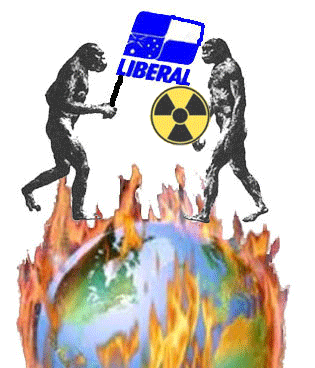 Robyn Wood, 20 June 19, The Liberal and National party MPs are mistaken when they say that nuclear power hasn’t been investigated since nuclear physicist Ziggy Switowski. They need to be aware that the South Australian government had a Nuclear Royal Commission in 2015/6. The majority pro nuclear power members found that nuclear power was not economic compared to renewables. Renewable technology is rapidly improving and the price dropping, while nuclear power plant costs are rapidly escalating and plants being shut down across the world. The report is available online. Even Mr Switkowski said in 2018 “the window for gigawatt-scale nuclear has closed”. Now is not the time to waste precious taxpayer’s money but to get on building renewables that are cheaper than even coal.
GOLD Coast-based Federal MP Karen Andrews OK with nuclear power, but exactly where on the Gold Coast?
Gold Coast nuclear plant in the mix: but where would you put it on the tourist strip? , Gold Coast Bulletin, 19 June 19
GOLD Coast-based Federal MP Karen Andrews has been challenged on where she would want a nuclear plant on the Glitter Strip after not ruling out the energy option.
Ms Andrews, the Member for McPherson, was on Sky News today when asked about nuclear energy following the release of CSIRO’s Australian National Outlook report.
The report compares two versions of the Australia in 2060, and predicts the nation will enter a “slow decline” if challenges are not met head on.
The Industry, Science and Technology Minister was asked about the findings including that Australia could reach zero emissions by 2050.
But she admitted coal would be “part of the energy mix for some time in the future”.
Asked about nuclear energy, Ms Andrews replied: “I don’t have an issue with it being considered.”
Opposition climate change and energy spokesman Mark Butler seized on the comments saying it was another senior Liberal backing nuclear.
“We know nuclear power plants need to be built near water so would Minister Andrews, the Member for McPherson, like the nuclear power stations in her electorate, lining the Gold Coast,” he said.
“Would the Minister prefer the nuclear plant in Coolangatta, Robina, Burleigh Heads or Palm Beach? Scott Morrison needs to make his position clear.”
Mr Butler said the Prime Minister last year had indicated “where something can stack up and can actually bring the prices down, well I’m all for it.”
“Just last week, Energy Minister Angus Taylor told would not rule out nuclear power either saying, ‘If there is a clear business case there is a clear business case’,” Mr Butler said.
“The pressure is now on Scott Morrison to take real action to end the energy crisis that emerged under the Liberal Government. “So far, all the Liberals are promising in energy is expensive new coal-fired power stations and a growing pressure from Morrison’s backbench for Australia to pursue even more expensive nuclear power.”
The Northern Territory’s opportunity – clean energy found a ‘pathway to prosperity’
 Clean energy found to be a ‘pathway to prosperity’ for Northern Territory, Renewable energy is not only a money-spinner for the NT, it can also help mining industries expand, a new report says, Guardian, Adam Morton@adamlmorton 20 Jun 2019 Energy development in the Northern Territory is a typically Australian story: it is backing fossil fuels – in this case gas – when it could, as one of the sunniest places on Earth, be reaping economic and environmental benefits from renewable energy. Clean energy found to be a ‘pathway to prosperity’ for Northern Territory, Renewable energy is not only a money-spinner for the NT, it can also help mining industries expand, a new report says, Guardian, Adam Morton@adamlmorton 20 Jun 2019 Energy development in the Northern Territory is a typically Australian story: it is backing fossil fuels – in this case gas – when it could, as one of the sunniest places on Earth, be reaping economic and environmental benefits from renewable energy.
|
|
New explorer for rare earths in W.A. – doesn’t mention processing, or radioactive wastes
Australians’ support for nuclear plants rising – but most don’t want to live near one
Essential poll finds 44% of Australians support nuclear power plants and 40% oppose them
Australians are slightly more inclined to support nuclear power plants than oppose them, but a clear majority of voters do not want to live near one, according to new polling.
With nuclear power making a return to the national political agenda, a new survey from Essential finds 44% of Australians support nuclear power plants, up four points since the question was last asked in November 2015, and 40% oppose them.
But asked whether respondents agreed or disagreed with the statement “I would be comfortable living close to a nuclear power plant”, only 28% agreed and 60% disagreed.
The new survey comes as some members of the Coalition are pushing for an inquiry into the viability of nuclear energy and the federal energy and environment ministers have left the door open to lifting Australia’s ban on nuclear power as part of a review of environmental regulations.
During the recent election campaign Scott Morrison insisted he had no plans to reverse the current ban on nuclear energy, after earlier suggesting he could be open to it if proposals stood on their own two feet.
While the internal positioning within the Coalition is nascent, influential industry groups such as the Minerals Council of Australia have been lobbying to overturn the ban. In the event the Morrison government ultimately proceeds with a legislative effort to end the prohibition, it is possible it could get the numbers in the new Senate even if Labor and the Greens oppose the shift.
The Australian Conservatives senator Cory Bernardi told Guardian Australia: “I’m all for it” – although he said he was not supportive of either a carbon price or government subsidies to make nuclear technology economically viable.
Bernardi said parliament should remove the ban and then let proponents determine whether power plants were viable or not.
The Centre Alliance senator Stirling Griff said it was possible the micro-party, which has two Senate votes, could support ending the nuclear ban. “We don’t have a closed mind on this, but we are a long way from having an open one,” he said. “I’m not there yet, but that’s not to say we won’t get there in the future.”
Griff said if any change was to be made it would need to be accompanied by appropriate safeguards and regulations to ensure safety and public confidence, and he said he was not sure Australian voters favoured the change.
The returning Tasmanian senator Jacqui Lambie is yet to flag her position publicly on a range of issues but in 2015 said: “Apart from hydro, the only way to decarbonise energy is to move very quickly to nuclear. And it’s about time we move to that option.”
The Switkowski review concluded that Australia could establish a nuclear industry, and nuclear power plants – which don’t emit carbon pollution – could make a useful contribution to Australia’s abatement task, but setting up the industry would take between 10 and 15 years. That review also concluded nuclear energy would not be viable without a carbon price.
A more recent inquiry in South Australia, while supportive of the industry, said a nuclear power plant would not be viable in the state even under carbon pricing policies consistent with achieving the well below 2C target agreed in Paris in December “because other low-carbon generation would be taken up before nuclear”.
Separate to the renewed nuclear debate, the mining giant BHP has submitted a plan to build a new tailings dam at South Australia’s Olympic Dam uranium mine within months.
Dave Sweeney, nuclear campaigner for the Australian Conservation Foundation, said: “Any increase in the footprint of Olympic Dam would mean an increase in the complexity and cost of future clean-up and rehabilitation.
“Cleaning up a uranium mine is never easy and always costly. BHP must be required to ensure there is the dedicated financial capacity to fund this clean-up work. It cannot be allowed to become a future burden to the SA community.”
The new survey from Essential says a majority of the sample 54% believe nuclear energy would be a reliable energy source for the future (28% disagree) and almost half the people in the survey, 47%, think nuclear would before better for the environment than coal-fired generation (30% disagree).
A majority, 63%, think having a nuclear industry in Australia would create skilled jobs, with 22% disagreeing. Even though nuclear energy is expensive, just over half the sample, 51%, think nuclear would help lower power prices (26% disagree).
John Howard established a review of nuclear power in the run-up to the 2007 election.
Rare earths processing – a dirty business, as Lynas has found out
Ores containing these rare earths typically contain radioactive material like thorium. To be useful for industrial purposes, rare earths must be isolated from raw ore through a complex chemical process that leaves behind radioactive waste. “Other countries have been fairly happy to let China take on all that processing,” Rasser says. “It’s a dirty business.”
One of the few rare earth processing facilities outside of China is the Australian owned Lynas Advanced Materials Plant in Malaysia. The facility has long been controversial, though the Malaysian government recently said it will renew Lynas’ license to operate. A prior processing facility shuttered in 1992 due to health and environmental concerns.
|
ARE RARE EARTHS THE NEXT PAWN IN THE US-CHINA TRADE WAR? https://www.wired.com/story/rare-earths-next-pawn-us-china-trade-war/ 17 June 19, SINCE THE TRUMP administration blocked sales by US companies to Chinese telecom giant Huawei last month, the world has waited for Beijing to retaliate.Previously, the trade conflict between the US and China centered on escalating tariffs. While tariffs make things more expensive; they don’t cut off supplies entirely. But when the US Department of Commerce effectively forbade US companies from providing US-made technologies, including chips and crucial software like the Google Play app store, to Huawei, it was a major blow to one of China’s highest-profile companies.
One possible arena for retaliation, in the minds of analysts: rare earth elements. China is the leading producer and processor of rare earths, with about 37 percent of the world’s reserves, according to a US Geological Survey report. The substances are used in a wide range of products including smartphones, airplanes, and medical devices, as well as military gear such as stealth technologies, radar, and night vision goggles. Neodymium, for example, is used to make magnets found in smartphone speakers and haptic feedback devices, while terbium is used to make solid state hard drives. There’s not a lot of money in the rare earth trade. The Geologic Survey report put the value of US imports at $160 million in 2018. But their key role in many products means China could strike a blow against the US without great harm to its own economy. “From a purely dollar standpoint, these exports don’t generate a lot of revenue, so Beijing might be calculating that they could do some harm to the US economy,” says Martijn Rasser, a senior fellow at the think tank Center for a New American Security. Continue reading |
Victorian Liberal Democrat David Limbrick gets it wrong about nuclear power
Denmark: 1985 law passed by the Danish parliament, prohibiting power production from nuclear energy in Denmark.
Austria has no nuclear power plants. As a result of a public referendum in 1978,Austria follows a strictly non-nuclear energy policy.
Greece has no nuclear power plants
Iceland has no nuclear power plants
Victorian crossbenchers go nuclear, SBS 17 June 19, A couple of Victorian crossbenchers want to explore lifting the state’s bans around uranium and nuclear power in an effort to tackle climate change.
Two of Victoria’s crossbench want the parliament to explore lifting the state’s bans on nuclear activities in an effort to tackle climate change.
The Liberal Democrats this week in the upper house will table a motion to establish a parliamentary inquiry expand the nuclear industry including uranium mining, exploration and exports, power generation, waste management, industrial and medical applications.
“If we have these issues with climate change we need to look at all the options available to us and at the moment we’ve got laws prohibiting certain options and we think that those options should be on the table,” Liberal Democrats MP David Limbrick told AAP….The minor party is still working to garner support for their inquiry, but would hope if it gets up it would be completed in about 12 months. https://www.sbs.com.au/news/victorian-crossbenchers-go-nuclear
Queensland can expect catastrophic heat waves (but then coal is more important than climate, isn’t it?)

|
The ‘catastrophic’ effect of increasing heatwaves on Queensland, https://www.brisbanetimes.com.au/national/queensland/the-catastrophic-effect-of-increasing-heatwaves-on-queensland-20190616-p51yaf.html Stuart Layt, June 17, 2019 Queensland’s emergency services are planning for more catastrophic weather events – including 30-day heatwaves and 43-degree peak temperatures – as the effects of climate change turn up the heat on regional parts of the state.
The state government commissioned the Queensland State Heatwave Risk Assessment 2019 following the extended heatwave over much of the state in late 2018, which culminated in “catastrophic” fire conditions. “Over the last few summers we have experienced record-breaking heatwaves and seen how their impacts are intensified when they coincide with another natural disaster,” Health Minister Steven Miles said in his foreword to the report. “We only need to look to the October 2018 bushfires, or the February 2019 North Queensland flooding, to see how heatwaves can cause further distress during times of crisis.” The summer of 2018-19 was the hottest on record for Australia. The report, made public this month and running over 100 pages, comprehensively lays out the various impacts the predicted increases to the length and severity of heatwaves would have on Queensland. It was developed using long-term climate modelling provided by the climate science division of the Department of Environment and Science, and is intended to be used by emergency services and related agencies to develop disaster management plans. The state is staring down the barrel of sweating through 15 per cent of the year in heatwave conditions by 2090, up from 3 per cent in 2018, as well as an increase in the duration of individual heatwaves from four days to nearly 30. The average temperature of heatwaves is predicted to rise from 32.5 degrees to 36 degrees, and the average temperature of the peak of the heatwaves will rise from 34 degrees to 43 degrees.
That extra heat is expected to have a range of effects on everything from people’s personal health and the environment to the multiple industries which would be affected, potentially costing the state billions of dollars. The expected effect on individual Queenslanders is “major to catastrophic”, with increased mortality rates among older people and those with pre-existing conditions. That would have a flow-on effect for hospital and health services, which would be under increasing pressure under this scenario. The report notes heatwaves already result in lost productivity to industry across Australia to the value of $8.8 billion, a figure expected to increase accordingly as heatwaves get longer and hotter. Heatwaves over a certain temperature also bring concerns about the effect on infrastructure, in particular the power grid being overloaded, as well as interruption to transport systems. Livestock is also set to be adversely affected by sustained periods of extreme heat, along with crops. The report offers a range of suggestions to mitigate the effects of heatwaves, while specifically not dealing with the underlying effects of climate change. It recommends electricity providers put measures in place to reduce network demand during periods of system stress, and for future infrastructure projects to take extreme heatwaves into account for their design and planning. It also urges industries to develop clear policies for managing workers’ health and safety during extreme heatwaves and more generally across the warmer months of the year. Between 1900 and 2011, extreme heat was the cause of death for at least 4555 people across Australia, more than the number of deaths attributed to all other forms of natural disaster combined. |
|
Australian government’s own data shows that its greenhouse gas emissions policy is failing
 Australia’s Emissions Reduction Fund is failing to deliver, government data shows, ABC News Australia’s Emissions Reduction Fund is failing to deliver, government data shows, ABC News
Key points:
The Emissions Reduction Fund also appears to be failing in its mission to lower emissions, Government data shows. In 2014, the Abbott government allocated $2.55 billion to the newly established Emissions Reduction Fund, mostly to pay polluters to emit less greenhouse gas. The Morrison Government has extended the program with an additional $2 billion and rebranded it the Climate Solutions Fund. Twice a year, the Clean Energy Regulator holds reverse auctions, where companies bid to win the emissions reduction work. The cheapest good-quality bids win and are awarded Emissions Reduction Fund contracts. Those contracts are for a range of projects, including planting trees, stopping tree-clearing and installing energy efficient appliances. Data shows flatlining of emissions reductionThe ABC examined figures from 10 different datasets published by the Government’s Clean Energy Regulator — a series of auction results published in separate PDFs, as well as two spreadsheets containing information about the status of Emissions Reduction Fund contracts and projects…….. https://www.abc.net.au/news/2019-06-17/australian-emissions-reduction-fund-data-analysis/11164476 |
|
‘Stop-Adani’ protest to go global: Brown
Protesters will gather outside the Indian high commission in Canberra on Saturday as the campaign to stop Adani’s Carmichael mine continues.
Queensland’s environment department on Thursday signed off on the company’s plan to manage groundwater on and around its Galilee Basin mine site – the final approval the company needs to begin construction.
Former Australian Greens leader Bob Brown is expected to join the peaceful demonstration to “highlight the Adani company’s appalling record of environmental destruction and corruption overseas”. A vigil is also expected to be held outside India’s consulate general in Sydney.
Adani is not about jobs, and never really was,
|
Adani is not about jobs, and never really was, https://www.smh.com.au/national/adani-is-not-about-jobs-and-never-really-was-20190614-p51xu0.html, By Matt Holden June 16, 2019 So Adani gets its final environmental approval from the Queensland government, and central Queensland gets the jobs it voted for in the federal election: “an enormous win for regional jobs”, according to Queensland LNP Opposition Leader Deb Frecklington.What that amounts to is about 1500 jobs in the construction phase – which at two years won’t even get us to the next federal election – and maybe 100 when the mine is operating, at least according to University of Queensland economist Professor John Quiggin. It feels like you can believe whatever you want about Adani, or at least whatever suits your world view. But Adani was never really about jobs. “Adani” is a litmus test in Australian politics: you are either for Adani, which means you are for economic prosperity and development of Australia’s regions, or you are against Adani, in which case you are against prosperity, against people who need jobs, even against central Queensland itself. The simplistic dualism suits politicians whose business it is to squabble over political power and to mediate that squabble through culture wars (this one over coal, the next one over religious freedom, who knows what after that) rather than the work of making real policy. It also suits the interests that will benefit from Adani – mining companies, fossil-fuel investors, construction and mining unions. Adani has become more than a coal mine (although it’s not even that yet, and maybe never will be). It’s part of a narrative in Australian politics that poses a false choice between jobs and the environment, framed as the difference between living in the real world and living in the inner-city bubble, Continue reading |
Australia’s governments keen to frack up the land with coal, gas, nuclear
|
Coal, Gas, Nuclear – What A Fracked Up Week In Australia https://www.solarquotes.com.au/blog/fracking-nuclear-adani-mb1095/ June 14, 2019 by Adani’s coal mine another step closer, fracking to kick off in the NT (WA soon too?) and our energy minister hasn’t shut the door on nuclear power. Thank <insert choice of deity here> it’s Friday.Fossil fuel advocates will be punching the air and high-fiving each other with some recent news, while nuclear energy supporters in Australia may also see a glimmer of hope for their cause.
The Queensland Department of Environment and Science (DES) approved Adani’s Groundwater Dependent Ecosystem Management Plan (GDEMP) for its Carmichael coal mine in Queensland’s Galilee Basin yesterday. This means the company can now start some work on the mine. Federal Employment Minister Michaelia Cash reportedly stated it was a great win for Queenslanders and that “we need to take a long, hard look at red and green tape in Australia”. When I mentioned the approval to SQ’s Ronald, he said:
While the news will come as a major disappointment to many, the Greens say the fight sn’t over yet – not by a long shot.
Before the first chunks of coal can be pulled from the ground, Adani will still need to gain other federal environmental approvals and a royalties agreement is yet to be finalised. Among the hurdles remaining is the little detail of getting the coal out of the area, with a shadow still looming over the Carmichael Rail Network; intended to link the Carmichael mine with Abbot Point Port near Bowen. Questions also remain as to whether the mine is even financially viable, but Adani remains bullish on this. The Greens say it will use whatever means are available in parliament, the courts and on the streets to try to prevent the mine going ahead; including continuing to push for a climate trigger in Australia’s environmental laws.
Referred to as a “carbon bomb”, the Carmichael mine has approvals to rip out up to 60 million tonnes of thermal coal annually, but Adani is reportedly planning to produce about 27.5 million tonnes. More on the decision, the mine and some concerns aside from the massive amounts of carbon emissions and toxins that will be unleashed from burning what is pulled from it can be viewed here and here. New Code Enables Fracking Up The NT To BeginEarlier this week, the Northern Territory Labor Government finalised the Code of Practice for the NT’s onshore gas industry; i.e. fracking.
It’s now game on for fracking in the Territory. The fracking moratorium was lifted in April last year, but the Code needed to be completed before activities could begin – and it seems there’s a number of players not wanting to waste any time in getting started. While 49% of the Territory will be “frack-free”, it means there’s around 688,000 square kilometres that could potentially host fracking activity. An ABC report says exploration could begin in “days, if not weeks”. On a related note, across the border in Western Australia work is reportedly under way on what could be WA’s first fracking gasfield says Lock The Gate Alliance. However, regulations governing fracking in WA are yet to released or legislated. The WA Government has been clever in selling fracking, last year lifting the state’s moratorium but committing to using fracking royalties for funding new renewable energy projects. Angus Taylor On Nuclear Power – Willing To Consider It, But..Australia’s pro-nuclear lobby have also been thrown a bone; albeit a small, brittle one with sharp edges and very little meat left on it. The type you wouldn’t give to a dog as it would probably choke. Minister for Energy and Emissions Reduction Angus Taylor was quizzed by journalists in a doorstop interview on Wednesday about the potential for nuclear power in Australia. Here’s the relevant bits.
You can read the full exchange here. There’s little hope of a viable business case being presented. While Minister Taylor may not have closed the door on nuclear power in Australia himself, he doesn’t need to as it’s pretty much already shut. This is just a distraction – nuclear power is horribly expensive; meanwhile the costs of renewables such as wind and solar energy (and energy storage) continue to plummet. Minister Taylor also made some curious comments this week regarding LNG, stating Australia’s LNG boom is “ reducing our global carbon impact“. |
|
Silly talk from Sussan Ley, Australia’s new Minister Against the Environment
 She babbles on. You have to pause and try to figure out what she really means – the underlying messages. As Minister she wants “greater focus on INDIVIDUAL action” rather than government action. “I do want my approach to the portfolio to be about what YOU can do”. Wants ” approval times for major projects cut”. She doubts that ” land clearing is responsible for species loss”. Wants to simplify the EPBC Act, (too much green tape). She is “open to the review considering a removal of the nuclear ban”
Really, we were better off with Melissa Price. She was a straight out no nonsense advocate for coal. She was well informed in her subject (coal) , and we all knew where she stood. I forgot to mention this. I heard Sussan Ley on ABC radio, saying that on the subject of species extinctions in Australia “she knew better than the UN researchers, because she had lived in rural Australia” She said that “the UN had got it wrong”
I

Environment Minister floats ‘lending’ Murray Darling environmental water to farmers, Brisbane Times, By Nicole Hasham, June 15, 2019 New Environment Minister Sussan Ley says farmers in the Murray Darling Basin should be allowed to “borrow” water reserved for maintaining the river’s health, and federal approval for major developments must be streamlined to “give proponents more assurances” and reduce delays.
In an interview with The Sydney Morning Herald and The Age, Ms Ley also identified invasive starfish as the “most imminent” threat to the Great Barrier Reef as she flagged potential changes to the way Australia’s natural assets are managed.
The Liberal MP was returned with a 7 per cent swing against her in the rural NSW seat of Farrer, where concern about water allocations to farmers featured heavily in the federal election campaign.
Ms Ley’s new portfolio captures the Commonwealth Environmental Water Office, which manages the majority of water for the environment recovered under the Murray Darling Basin Plan.
She cited the need for “flexibility” to allow water storages intended for environmental use to be “borrowed” by struggling farmers.
Sometimes the environment doesn’t need all its water but farmers desperately do need water,” she said……
The Australia Institute senior water researcher Maryanne Slattery, a former director at the Murray-Darling Basin Authority, described Ms Ley’s depiction of the problem as “not very accurate”…….
Ms Ley re-entered the Coalition government’s cabinet last month, after a 2017 expenses scandalforced her resignation from the front bench.
The environment portfolio includes protection of the Great Barrier Reef, which is under grave threat from climate change.
The federal government’s Great Barrier Reef Marine Park Authority says climate change “is the greatest threat to the Great Barrier Reef and coral reefs worldwide”. …..
Australia’s key piece of environment legislation, the Environment Protection and Biodiversity Conservation Act, is due to be reviewed this year.
Ms Ley said it provided “real opportunity to remove some of the green tape around environmental approvals”…..
Australian Conservation Foundation nature campaign manager Basha Stasak said talk about cutting green tape was “code for making it easier for the loggers to cut down our forests, the diggers to rip up endangered animal habitat and corporate irrigators to suck more water out of our rivers”. https://www.brisbanetimes.com.au/politics/federal/environment-minister-floats-lending-murray-darling-environmental-water-to-farmers-20190614-p51xsf.html
Tailings dams at Olympic Dam uranium mine are in the “extreme risk” category.
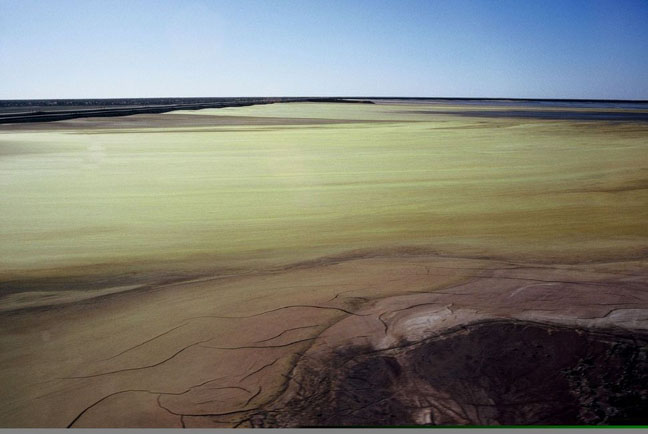
it is deeply disturbing that BHP recently confirmed that three of the tailings dams at Olympic Dam are in the “extreme risk” category.
This is the highest risk status according to what is often regarded as the best global industry benchmark – the Canadian Dam Association’s safety standards – and relates less to the likelihood of collapse and more to the severity of the resulting human and environmental impacts if a failure did happen.
The environmental threat of tailings dams https://independentaustralia.net/business/business-display/the-environmental-threat-of-tailings-dams,12805
AWAY FROM THE airbrushed corporate head offices, staged media events and slick communications products, the reality of the mining trade is pretty basic and very intrusive.
An orebody is identified, extracted, processed and removed and while the clothing might be high-visibility, many of the industry’s impacts tend to stay pretty low on the wider world’s radar.
Right now, the world’s biggest mining company, BHP, has formally applied to expand the massive Olympic Dam mine in northern South Australia.
This plan deserves serious attention and scrutiny for three key reasons: it involves the long-lived and multi-faceted threat of uranium, it proposes to use massive amounts of finite underground water and the company is in trouble globally over the management of mine wastes and residues currently stored in multiple leaking – and sometimes catastrophically failing – tailings dams.
BHP has recently commissioned a “tailings taskforce” to conduct a high-level review of the management of the company’s tailings dams or tailing storage facilities.
The move comes in the literal wake of the collapse of a tailings dam at the Samarco iron ore operation in Brazil in 2015 that saw 19 deaths along with widespread and continuing environmental damage.
The mine was a joint operation of BHP and Vale, a Brazilian mining multinational that is a major player in global iron and nickel production, promoting its mission as ‘transforming natural resources into prosperity’.
Or maybe not after an estimated 40 million cubic metres of toxic sludge from the collapsed dam poisoned the Doce River and utterly devasted the lives of the local Krenak people.
Nothing quite focuses the corporate mind as a high profile and high cost legal action and in May, BHP was served with a multi-party damages claim for over $7 billion on behalf of around 235,000 claimants.
The memory of Samarco and the dangers of large-scale tailings dam failure were tragically highlighted in January this year when another Vale tailings dam at the Brumadinho mine failed, resulting in terrible loss of life with a death toll of between two and three hundred people and massive environmental impact.
In this context, it is deeply disturbing that BHP recently confirmed that three of the tailings dams at Olympic Dam are in the “extreme risk” category.
This is the highest risk status according to what is often regarded as the best global industry benchmark – the Canadian Dam Association’s safety standards – and relates less to the likelihood of collapse and more to the severity of the resulting human and environmental impacts if a failure did happen.
In preparing to contest the new Olympic Dam expansion, environmental groups have commissioned a detailed analysis that clearly shows the tailings present a significant, near intractable, long-term risk to the environment.
However, there are serious concerns that BHP is seeking this major tailings expansion without a full Safety Risk Assessment — such an approach is inconsistent with modern environmental practice and community expectation.
Olympic Dam tailings contain around 80 per cent of the radioactivity associated with the original ore as well as around one-third of the uranium from the ore.
Since 1988, Olympic Dam has produced around 180 million tonnes (Mt) of radioactive tailings. These are intended to be left in extensive above-ground piles on-site forever.
BHP’s radioactive tailings at Olympic Dam are extensive and cover 960 ha or 9.6 km2, an area one-third larger than Melbourne’s CBD.
They have reached a height of 30 metres, roughly that of a ten-storey building, at the centre of tailings piles where water sprays are used to limit tailings dust release and potent radioactive radon gas is released to the atmosphere.
Critics of the planned expansion are calling for safety to be comprehensively and transparently assessed across all tailings at Olympic Dam, without any restrictions, exemptions or legal privileges to the company, before any decision on new storage facilities or more radioactive tailings production.
In the public interest, a full comprehensive tailings Safety Risk Assessment is required from BHP in the expansion Assessment Guidelines and this must be subject to public scrutiny in the EIS Assessment process.
Environment groups are demanding that the EIS Guidelines adopt the Federal Government’s Olympic Dam Approval Condition 32 Mine Closure (EPBC 2005/2270, Oct 2011) as a requirement on BHP for a full Comprehensive Safety Assessment, covering all radioactive tailings at Olympic Dam including that the tailings plan must:
‘…contain a comprehensive safety assessment to determine the long-term (from closure to in the order of 10,000 years) risk to the public and the environment from the tailings storage facility.’
In recognition that tailings risks are effectively perpetual, Condition 32 on Mine Closure requires environmental outcomes:
‘…that will be achieved indefinitely post mine closure.’
The SA Government’s Guidelines and the full comprehensive tailings Safety Risk Assessment must also incorporate the higher environmental standards set by the Federal Government in 1999 to regulate the Ranger Uranium Mine in Kakadu in the Northern Territory:
‘to ensure that:
- The tailings are physically isolated from the environment for at least 10,000 years;
- Any contaminants arising from the tailings will not result in any detrimental environmental impact for at least 10,000 years.’
There is an obligation for these Guidelines to mandate the application of the ‘high environmental standards’ set out in Object D of the Commonwealth-SA Assessment Bilateral Agreement.
BHP must demonstrate a plausible plan to isolate radioactive tailings mine waste from the environment for at least 10,000 years, in line with the Federal Government’s environmental requirements at the NT’s Ranger uranium mine.
And the South Australian and Federal Governments have a clear duty of care to make sure they do. After Brazil, no one in industry or government can ever say they didn’t know.
Adani mining project: Court asks Australian govt to look into public concerns
Adani mining project: Court asks Australian govt to look into public concerns https://www.nationalheraldindia.com/international/adani-mining-project-court-asks-australian-govt-to-look-into-public-concerns 14 June 19
A local court in Australia has asked Federal Govt to listen to public grievances on Adani’s North Galilee Water Scheme. It spells fresh trouble for Adanis and their billion dollar coal mining project
In what is being interpreted as fresh trouble for the Adanis in Australia, who are on way to set up USD 16 billion dollar coal mining project in the Queensland state, a local court has asked the Federal Government to listen to public grievances on Adani’s North Galilee Water Scheme.
The Australian Conservation Foundation (ACF), which had filed a case the Federal Government has said that the latter has conceded public grievances on the Adani’s water scheme were ignored.
ACF said, “This is a massive outcome for the broader community, who raised grave concerns about the effect this project would have on Australia’s precious water resources”, adding, “In conceding the case, the Federal Environment Minister has admitted the Federal Government failed to consider all of the thousands of valid public submissions about if and how Adani’s project should be assessed, in direct breach of the Environment Protection and Biodiversity Conservation Act 1999.”
According to ACF, “Those people were denied their right to a voice in this process. This win will ensure their voice is heard. Now the Government will need to go back to the drawing board and open up assessment of the project for public comment again. It’s a big moment in the Adani story, and it couldn’t have happened without the bold vision of ACF in launching the case, backed by the hard work and expertise of the legal team.”
It continued, “This win is a humiliating outcome for the Federal Government over its assessment of Adani’s North Galilee Water Scheme – the plan to pump up to 12.5 billion litres of water a year from the Suttor River to the company’s Carmichael mine site. Thousands of Australians made valid public comments on Adani’s North Galilee Water Scheme referral, many concerned about the project’s impact on our precious water resources during a time of extreme drought.”
According to ACF, “The Federal Environment Minister has now admitted her delegate did not consider these comments, as required by law. In fact, she has admitted that her Department lost an unknown number of public comments made over the controversial project. This botched process points to a worrying lack of oversight in core assessment procedures designed to protect Australia’s precious water resources.”
It insisted in a statement, “The Federal Environment Minister did not concede our client’s initial argument in the case, which was that the ‘water trigger’ should have applied to the Scheme. The ‘water trigger’ is a measure that ensures any action which has a significant impact on water resources and involves a large coal mining development requires a more rigorous assessment under the EPBC Act.”
It added, “The community is still no closer to having an answer on why the ‘water trigger’ should not have applied to the North Galilee Water Scheme – a project which will take billions of litres of water a year from Central Queensland to service a coal mine. The Australian people have a right to know the impact big projects like this have on their precious water resources.”
1 This month
.

Australians deserve the truth
about
AUKUS – https://aukuspublicinquiry.com/

PETITION – To: Prime Minister Anthony Albanese and the Australian Labor Government

of the week – Australians for War Powers Reform (AWPR)
To see nuclear-related stories in greater depth and intensity

