Greens MPs arrested and fined at Adani protest, as Indian miner is referred to consumer watchdog, The New Daily, 6 Dec 17 “………Adani referred to the ACCC
The protest comes after community legal service Environmental Justice Australia (EJA) referred the Indian miner to the Australian Consumer and Competition Commission (ACCC) over its jobs spruiking.
Acting for Townsville jobseeker Chris McCoomb, a volunteer coordinator with the Australian Unemployed Workers Union, EJA is urging the ACCC to investigate Adani for “misleading vulnerable jobseekers”.
EJA says “inflated” claims its mine will create 10,000 jobs is leading jobseekers to spend thousands of dollars on training for “jobs that will never exist”.
Mr McCoomb’s 17-page complaint names at least one Queensland mining training outfit that is using Adani’s “inflated figures … to promote sometimes costly training courses and certifications” to cash-strapped jobseekers.
That company advertises a one day “mining induction course” for $650.
In 2015, Land Court of Queensland president Carmel MacDonald found Adani had significantly “overstated” its job figures in court evidence and to the State Government.
Ms MacDonald accepted testimony the project would “increase average annual employment by 1,206 jobs in Queensland and 1,464 jobs in Australia”, not by 10,000.
EJA lawyer David Barnden told the ACCC “the evidence for misleading and deceptive conduct … is strong”.
“ACCC is urged to take action to prevent the continued dissemination of Adani’s misleading or deceptive statements that are directed at jobseekers.
“Vulnerable jobseekers should not be misled into spending money or training courses or certification without the true number of expected direct and indirect jobs being published by Adani.”
The Age , Cole Latimer, 6 Dec 17, Australia’s first offshore wind farm, an $8 billion 2000 megawatt project, has secured financial backing from a major international green energy investment fund.
Offshore Energy has joined with Danish fund management group Copenhagen Infrastructure Partnership to develop the renewable energy project.
The offshore wind farm, dubbed the Star of the South, will be built 10 to 25 kilometres off the coast of Victoria’s Gippsland region, in the Bass Strait, and could provide one and a half times the energy of the now-closed Victorian Hazelwood coal-fired power station.
Offshore Energy managing director Andy Evans told Fairfax Media the partnership would transform the company and lift the viability of offshore wind for Australia………
Star of the South is currently Australia’s only offshore wind project.
“The industry doesn’t really exist at the moment,” Mr Evans told Fairfax Media.
He said there is currently a greater focus on solar and onshore wind projects in Australia, as they are currently cheaper than offshore wind, however, “the cost of offshore will come down, and has already seen falling costs in Europe.”
However, it is not Australia’s only offshore renewable energy project in development.
There are a number of wave energy projects currently underway around the nation’s coast. Wave Swell Energy is one wave energy generator that is also using the Bass Strait as its testing grounds.
The group is carrying out commercial validation of its technology off King Island, in the Bass Strait.
The Community Grid Project launches with a ‘Local Energy Hero’ competition
Mornington Peninsula Shire were joined by representatives from electricity network provider United Energy and technology company GreenSync to officially launch the Community Grid Project at the Eco Living Display Centre, at the Briars in Mount Martha.
Improper creation of STCs results in compliance action
Following recent enforcement action against one of Australia’s largest solar retailers, the Clean Energy Regulator has taken enforcement action against one of the largest registered agents, Emerging Energy Solutions Group Pty Ltd.
The Australian utility first to embrace era of “base-cost renewables”
West Australia’s regional utility Horizon Power has become the first major Australian utility to embrace the concept of “base-cost renewables”, recognising that the plunging cost of solar and wind is set to turn traditional theories of energy supply on their head.
Polluting robots win big, clean energy workers get screwed in Trump tax bill
The Trump tax bill will devastate the renewable industry and jobs, while incentivising automation, and the manufacture of polluting, unprofitable robots.
By Steven Schubert Six Christian peace activists who illegally entered the top-secret Pine Gap defence base near Alice Springs have avoided jail time, with a judge telling the court he didn’t want to make a “martyr” of one of the offenders.
The group were charged under the Defence (Special Undertakings) Act, which carries a maximum of seven years in prison.
One of the group members, Andy Paine, faced another two years for carrying a smartphone onto the base.
But Justice John Reeves fined the group a total of $15,500.
While sentencing the oldest member of the group, Jim Dowling, 62, Justice Reeves expressed concern that Dowling had committed 27 similar trespass offences since 1986.
“If I imprison you, I think that would be likely to make you a martyr to your cause, rather than to underscore the law breaking in which you were involved,” he said.
Dowling was fined $5,000 as one of five people who entered Pine Gap on September 29, 2016.
In that group, Margaret Pestorius was fined $3,500, Andy Paine fined $2,500, while Franz Dowling and Tim Webb were fined $1,250.
Mark Parnell MLC , Parliamentary Leader, Greens SA, 6 Dec 17,
The last couple of sitting weeks of the year in State Parliament have been huge, and the Greens have had some significant wins
A win for democracy
My amendment to the South Australian Constitution to make it fairer to all parties and candidates passed both Houses of Parliament. Under the mis-leadingly named “fairness clause” in the Constitution, the boundaries of electorates were required to be rigged so that one of the two major parties would form a government. This is despite the fact that a growing number of South Australians don’t vote for either of the old parties.
For elections beyond 2018, the review of electorate boundaries will have regard to population, one-vote-one-value, geography, communities of interest and other relevant factors but won’t be artificially rigged to favour the old parties. The Greens have ensured that future elections will be more democratic and better reflect the will of the people of South Australia.
No more public money to spruik nukes
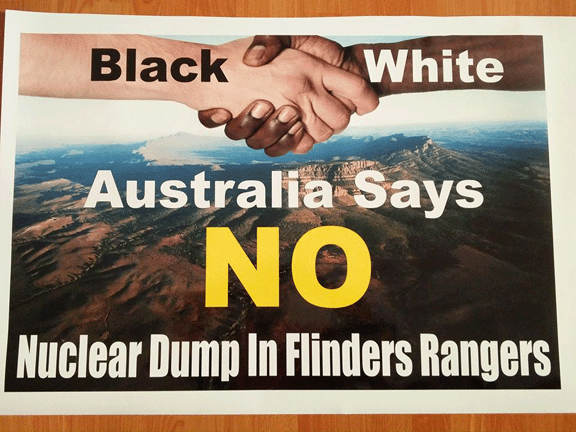
A big majority in Parliament passed my Greens Private Members Bill to prohibit the Government spending public money on spruiking the benefits of nuclear waste dumps in SA. We won the campaign against the high level international nuclear waste dump but we still have the national dump proposed for the Flinders Ranges and Kimba. Not only are these dumps illegal in SA, but now it is also illegal to use public money to encourage or finance nuclear waste dumps……..
There is a real crisis in biodiversity in South Australia, which is under threat from many sides including loss of habitat and climate change. Whilst passing a law for a new State Biodiversity Planning Policy won’t fix the problem overnight, it sends an important message to State and Local Governments that they can’t ignore the natural environment when making decisions about development or rezoning land.
Can SA be 100% renewable?
Absolutely! Despite attempts by some opportunistic MPs to blame renewable energy for the Statewide electricity blackout last year and other weather-related outages, a Parliamentary Inquiry has found that renewable energy was not to blame. What’s more, there is now a clear pathway to achieving 100% renewable energy in South Australia. The key is to use wind and solar energy backed by batteries, pumped hydro and solar thermal storage. This is achievable without compromising system reliability, security and affordability for consumers. With our State’s national leadership on renewables and our fantastic wind and solar resources, the future is looking bright. My report is at p.42 of the Committee’s Report.
5B plans module pre-fab facility in Adelaide, “gigafactory” in Asia
Australian solar plant innovators 5B have announced plans to set up a production facility in Adelaide, and potentially a “gigawatt” production line in Asia.
Burning coal for power “like burning dollar notes” in era of cheap solar
Burning coal to generate electricity in era of solar at 1c/kWh makes as about as much economic sense as “burning dollar notes”, says leading researcher Martin Green.
Energy regulator smashes illusion of “cheap” coal power in NSW
AER report absolves big generators of predatory bidding during demand peaks, but they hardly need to: The cost of “baseload” coal supply in NSW has jumped so high that there is no such thing as “cheap” coal generation.
Blockchain App that pays households to cut energy use wins Future Cities Hackathon
Held at UTS, the hackathon brought together some of the best and brightest from the fields of sustainability, design and technology, the corporate and academic world, and the start-up community.
WOMADelaide announces the 2018 planet talks program
WOMADelaide today announced the full program of speakers and presenters for The Planet Talks, its renowned series of political, social and planetary discussions hosted as part of the festival from March 10 – 12.
Enphase Energy roars into Indian market with the company’s largest solar installation in the Asia-Pacific region
Occupying 67,000 square feet over six rooftops in multiple orientations, the landmark installation overcomes shading challenges to power a large, fast-moving consumer goods company.
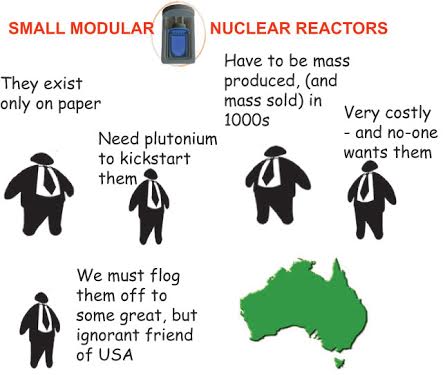
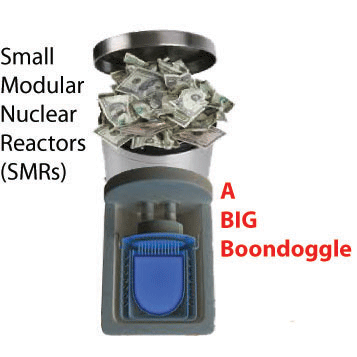
As the nation’s energy future remains at the forefront of federal political discourse, SMR Nuclear Technology has reignited the nuclear debate. Robert Pritchard serves as chairman of the board at SMR Nuclear Technology and is executive director of the Energy Policy Institute. He is calling for communities across Australia to consider whether nuclear power could be generated in their area.
“Ipswich ticks the box. “Places like Ipswich, Mt Isa, Broken Hill, Olympic Dam in South Australia, somewhere up in the Pilbara – there are lots of places where this makes all sorts of sense in 10 years’ time.”
Mr Pritchard said the station would not be built tomorrow, but called for the community to envisage the future. “The first one that would ever operate would not operate until 2030 – you’ve got 13 years,” he said.
“We’ve got the timeline mapped out as to what would happen in those 13 years but the work has to start now. Where you start is not with the technology – that’s a given – you’ve got to start with the community support.”
Mr Pritchard said there was a growing interest in nuclear generation across the community, which would be vital to its future……..
Federal Member for Blair Shayne Neumann dismissed the call.
“I don’t think it’s in the best interests of Ipswich to have a nuclear power plant on the banks of the Bremer River,” he said.
“It’s got to be renewables – solar, wind and geo-thermal energy.”
He said the nation was moving away from a high-emissions-intensity economy towards a green future.
“I’ve come to the conclusion a long time ago, as far as I’m concerned, not for our future here,” he said.
The strong opposition from the Member for Blair does not discourage Mr Pritchard, who, although encouraged politicians to keep an open mind, said it was up to the people to decide. “I think this is going to capture the public’s imagination, mainly because it’s not being pushed by politicians,” he said.”If the community doesn’t want it, we’re not going to have it, that’s the end of the story,” he said.The energy policy executive said it was a matter of; “fly the kite and see what happens”.
Mr Neumann was “convinced” the majority of residents in Ipswich would be opposed to nuclear generation technology.
Mr Pritchard said it would take the community time to learn about nuclear power generation.
He pledged to set up a series of meetings around the country where people were expressing serious interest.”What we want to do over the next little while is start these dialogues with community people,” he said.”You’re not going to push anything down people’s throats – people just won’t cop that.”The vast majority of people will be interested.” revolution, https://www.qt.com.au/news/ipswich-ticks-the-boxes-for-nuclear-revolution/3281160/
1000+ at an Adelaide rally yesterday to protest Canberra’s plans to dump Sydney’s nuclear waste in SA … People travelled from Hawker and Kimba regions of South Australia today to come and protest about the Federal Government’s plans to dump nuclear waste around their land and farms. All the speakers were very angry and cynical about the way that the Federal Government was behaving towards the people in this State.
Paul Waldon Fight To Stop Nuclear Waste Dump In Flinders Ranges SA, 3 Dec 17,
December the 4th, another red letter date in the nuclear arena.
On this day 37 years ago, at Cap La Hague, where a report of several litres of highly contaminated liquid containing one gram of Plutonium per litre leaked, this happened in part of their vitrification plant where Uranium, and Plutonium are separated from fission products. One gram of Plutonium per litre may not sound like much to the ignorant, but remember the contamination on a leg of a fly at the Hanford nuclear installation initiated a shutdown and evacuation of 20 acres.
Australia has recently held France up as a poster child for the risky and dangerous nuclear industry, with DIIS, and ANSTO’s falsely claiming with their factoids that the French nuclear industry is one to be applauded.
There are many ignorant people in the political arena, like Cory Bernadi espousing to the production of nuclear waste with no understanding that electricity is only a costly “byproduct” of reactor generation that future generations and the environment will have to pay for, so we can indulge for a meagre time in their history.
Some people embracing Thorium reactors do so without the understanding that such reactors share the same risky technology of a reprocessing plant on site to separate fuel and fission products to maintain a neutron moderator. This also opens another can of worms with the location of a site to abandon the radioactive waste, and the promotion of a reprocessing plant may dilute the Basel Convention which Australia signed in 1992 to keep all dangerous and toxic material as close as possible to the place of production. https://www.facebook.com/groups/344452605899556/
ABC News, By Josh Robertson and Isobel Roe 4 Dec 17, A group of traditional owners fighting Adani’s central Queensland coal mine have filed a court injunction against both the mine owner and the Queensland Government, hoping to prevent a National Native Title Tribunal decision on the Carmichael mine site. The legal fate of Australia’s largest proposed coal mine hinges on the tribunal registering an Indigenous land use agreement (ILUA).
After months of pressure from Adani, it is understood the tribunal has moved to fast-track its ruling and was due to hand down its decision some time this week.
The move shocked mine opponents within the Wangan and Jagalingou (W&J) traditional owners, who fear having a huge swathe of their native title claim on Galilee Basin country irreversibly struck down before the Federal Court can rule on a separate challenge to the validity of the ILUA.
Former national servicemen involved in British nuclear test have gold card bids rejected ABC, 4 Dec 17,By political reporter Dan ConiferA former national serviceman involved in a 1950s nuclear test in Australia is pleading for his lifetime healthcare application to be reconsidered.
Key points:
Operation Hurricane was the first British nuclear test in Australia and took place at the Montebello Islands
Ken Palmer believes exposure to radiation from a nuclear blast contributed to his illnesses
The national servicemen are now pleading to have their cases reviewed by Dan Tehan
Ken Palmer, 83, believes exposure to radiation from the blast has contributed to illnesses, including cancers.
“Please Mr Minister … you’ll still be in the job for a little while, make a clean breast of things, let your guard down a bit,” he said, referring to Veterans’ Affairs Minister Dan Tehan.
Mr Palmer was a teenager aboard HMAS Murchison in October 1952 when he saw “a big mushroom cloud” form on the horizon.
Operation Hurricane was the first British nuclear test in Australia and took place at the Montebello Islands, off Western Australia’s coast.
“It’s about five operations I could safely put down to being at Montebello,” Mr Palmer said.
He attributed having both thyroid glands removed to the nuclear test, along two hip procedures, back surgery, and having his prostate removed.
But Mr Palmer’s application was rejected by the Department of Veterans’ Affairs…….
Those aboard the ship have long argued they were as close as nine kilometres away, saying photographs taken moments after detonation prove their claims.
To qualify for gold cards, the national servicemen had to be within 10 kilometres.
“Was there a curtain they put up to stop the radiation heading towards our ship? I doubt it. I didn’t see it,” Mr Palmer said.
Veterans advocates estimate about 60 national servicemen were on the navy ship.
Another former ‘nasho’ aboard the HMAS Murchison, who has also been knocked back, estimated fewer than a dozen of his crewmates were still alive.
A Wangan and Jagalingou (W&J) representative said he was paid $2,000 by Adani to boost numbers at the meeting, where he said many who were “not part of my mob” voted on the compensation deal.
Another W&J woman said her family of eight voted against the deal but the official vote recorded just one person against and 294 people in favour.
What’s the deal with the Adani deal?
Traditional owners need to sign off on a deal for compensation
Adani can’t get finance until the deal is done
The deal’s divided the W&J group
Last year’s meeting was to sign off on the deal
A trial next year will decide whether the meeting was legitimate
The claims are made in sworn statements filed in the Federal Court, ahead of a trial in March to decide whether the meeting legitimately endorsed the Adani deal, which has bitterly divided the W&J Continue reading →
By senior business correspondent Peter Ryan Adani’s controversial Carmichael mine has been dealt another blow after one of China’s major banks said it would not bankroll the project.
Key points:
Two of China’s major banks have ruled out funding the Carmichael mine
This leaves Adani “increasingly reliant on public funding”, expert says
Adani previously claimed it would have finance in place by the end of this year
Industrial & Commercial Bank of China (ICBC) issued a statement to clarify it had no intention of funding Adani’s proposed mine in Queensland.
“ICBC has not been, and does not intend to be, engaged in arranging financing for this project,” ICBC said in a statement on its website.
“ICBC attaches great importance to its social responsibilities and keenly promotes green financing.”
While not mentioning coal, ICBC said it had provided finance in Australia “for a series of renewable energy projects”.
Earlier, China Construction Bank also rejected financing links with Adani saying it “is not involved with, nor considering involvement with, the Adani Carmichael Mine project”.
The anti-Adani lobby has hailed the rejection by two of China’s major banks as a significant development in blocking the construction of the mine.
Blow follows failure to secure finance from other banks
Market Forces executive director Julien Vincent said arranging finance from China was one of Adani’s last remaining hopes given that Australian banks had walked away.
“Having failed to secure finance from banks in the US, Europe and Australia, Adani has now seen the world’s largest and second largest banks by assets rule out support for its massive proposed coal mine,” Mr Vincent said.
“This leaves their attempts to open up Australia’s largest coal mine in tatters, and increasingly reliant on public funding.” Mr Vincent said Adani has been working to contract China Machinery Engineering Corporation (CEMC) into the Carmichael mine and rail project.
However, CEMC would potentially need to source credit and support from Chinese banks to participate in the Adani project.
Adani has, on numerous occasions, pushed back the start date for the mine.
Adani has previously claimed it would have finance in place by the end of this year and, later, said it expected to finalise finance by the end of the Indian fiscal year in March.
Global banks, including Australia’s major banks, have baulked at funding the Carmichael coal mine on concerns about its financial viability and the push towards renewable energy sources.
Brisbane, 3 December 2017. ‘For the fourth time since 2012, W&J Traditional Owners have voted unanimously at an authorisation meeting to reject an Indigenous Land Use Agreement (ILUA) with Adani, underlining their sustained opposition to the mine.
25 October – Film –Britain’s Nuclear Bomb Scandal: Our Story – part of the Adelaide Film Festival,
Screening and Conversation
A screening of Britain’s Nuclear Bomb Scandal: Our Story (2024) followed by a talk with 2026 Bettison and James Awardee and Tradtional Owner Karina Lester in conversation with Simone Tur.
When: Sun 25 Oct, 12:00pm-Screening, 1:15pm-Talk
Where: The Mercury
Free admission, register below by clicking on BUY TICKETS and select free event tickets, at end of web page:



 Nuclear Technology and is executive director of the Energy Policy Institute. He is calling for communities across Australia to consider whether nuclear power could be generated in their area.