Australia’s national security impacted by climate change: Senate investigation
 Senate investigates climate change’s impact on national security http://www.theadvocate.com.au/story/4849605/climate-change-security-impacts/,
  @MichelleWisbey1, 13 Aug 2017,Climate change could become a “driver of poverty and inequality” and a threat to Australia’s security if it is not addressed, a senate committee was told.
The call came as submissions closed for an inquiry examining the implications of climate change on national security. Tasmanian Senator Jacqui Lambie sits on the committee and said defence had been proactive in the area, but needed to be better. “Defence needs to work more productively with local government and businesses in terms of defence procurement to ensure everyone is meeting environmental standards,” she said. “I would like to see voluntary national service implemented to ensure when natural disasters strike, we have the numbers to support SES and the communities affected.”
The inquiry will also investigate the capacity of national security agencies to respond to the risks of climate change, as well as the role of climate mitigation policies.
The Climate Council said in its submission to the inquiry that climate change posed a growing threat to human well-being, and would go on to put the Australian Defence Force under significant pressure. “These events affect individuals and societies through the displacement of people, damage to critical infrastructure, and damage to health and livelihoods,” it said. “The ADF will increasingly be called upon to deliver humanitarian assistance in response to extreme weather and its impacts both at home and overseas.”
Former Defence Force chief Chris Barrie said urgent action was needed to mitigate the “potentially disastrous consequences” of not taking action. “We are approaching a time soon when there will be a serious possibility that no amount of effort in deploying the limited resources we have available will be able to ameliorate the national security problems and challenges we are confronting,” Admiral Barrie said.
World Vision Australia recommended that a Climate Change Strategy for the Department of Foreign Affairs and Trade be developed and implemented.“The impact of climate change on vulnerable communities in the Asia-Pacific region is of concern to Australia, and left unaddressed will likely become a driver of poverty and inequality,” it said. “Over time, this will have implications for the security and stability of Australia’s region.”
Rising sea levels endanger Australia’s surf life-saving clubs
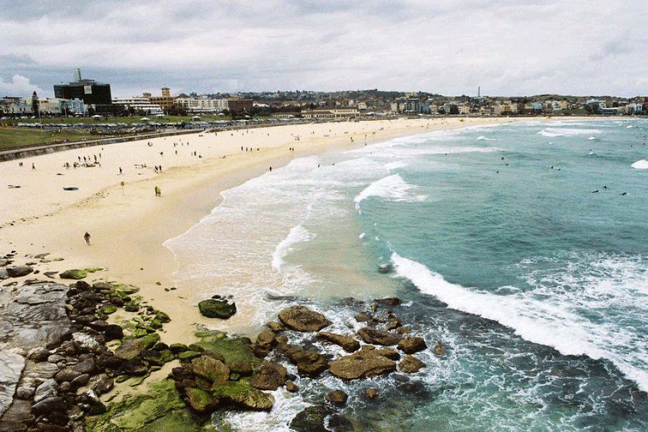 OUR FUTURE | Rescuers may need saving from climate changes, Bendigo Advertiser 13 Aug 2017, Rising sea levels and warming oceans are putting Australian surf life-saving clubs under increasing pressure, creating dangerous surf conditions and hindering the ability of life-savers to provide supervision and safety to beachgoers.
Life-saving clubs provide a valuable community service, yet their coastal position renders them vulnerable to the effects of intensifying climate change………
changing wave and tidal patterns are already eroding the sand dunes in front of our club house. This is due to rising sea levels, driven by worsening climate change.
This creates an aquatic environment that is increasingly difficult to contend with, creating deeper troughs, shallower sandbars and faster-forming rips.
Climate change is also driving hotter summers, with the Bureau of Meteorology showing January’s average temperature to be 0.78 degrees above average. This creates scorching conditions more often, prompting many Australians to flock to the beach to seek relief.
Lifesavers and lifeguards are becoming busier with a greater number of beachgoers. Hotter temperatures are increasing the incidence rates of sunburn and heatstroke, and more people in the water will likely result in more aquatic rescues.
Mount Emerald Wind Farm reaches major construction milestone
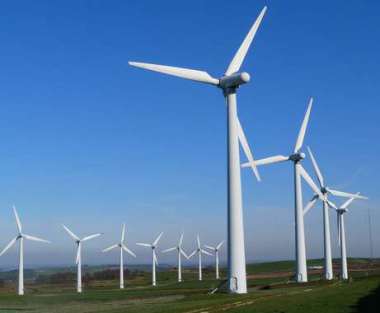 By Republic on 14 August 2017,Construction at the $360 million Mount Emerald Wind Farm near Mareeba reached an important milestone last week when the first of 53 turbine foundations was put in place.
The 800-tonne foundation which is buried to ground level provides an immovable anchor for each turbine and consists of a 50-tonne reinforced steel cage filled with around 350m3 tonnes of concrete, or up to 70 truckloads.
Ratch Australia Corporation Executive General Manager Business Development, Mr Anthony Yeates, said the first foundation was always a special milestone in wind farm construction. Continue reading
Solar company to Deliver More Than 500MW in Australia over the Next 12 Months
First Solar Awarded 241MW module supply contract for edify energy solar projects in Australia http://reneweconomy.com.au/first-solar-awarded-241mw-module-supply-contract-edify-energy-solar-projects-australia-32835/ Company to Deliver More Than 500MW in Australia over the Next 12 Months
BRISBANE, Australia–(BUSINESS WIRE)–Aug. 11, 2017– First Solar, Inc. (Nasdaq: FSLR) today announced it has been awarded a 241 megawatt (MW)DC module supply contract by RCR Tomlinson Ltd (ASX: RCR) as engineering, procurement and construction contractor for Edify Energy’s Daydream (180.7MWDc) and Hayman (60.2MWDC) solar projects in Queensland, Australia.
This contract takes First Solar’s delivery pipeline to over 500MW in the next 12 months, cementing it as the leading module supplier for large-scale solar in Australia.
Located across two sites north of Collinsville, the projects will utilize an optimized technology solution that includes single axis tracking technology from Array Technologies, Inc., and more than 2,026,565 First Solar advanced thin film photovoltaic (PV) modules, to produce approximately 531,000 megawatt-hours of sustainable energy each year.
The First Solar Series 4 modules chosen for the projects are ideally suited to the hot and humid environmental conditions of the Whitsunday Region, due to a superior temperature coefficient, and better shading and spectral response.
“First Solar’s unique energy yield advantage enables our solar projects in North Queensland to produce more energy per MW installed than other available PV technology,” said John Cole, Edify Energy’s Chief Executive. “This is of significant importance for asset owners and operators looking to maximize energy production.
The First Solar team has been very supportive and a key enabler of these projects.”
On completion, the projects will provide significant environmental benefits, producing enough sustainable energy to displace 429,000 metric tons of carbon dioxide emissions per year combined.
This will serve the needs of approximately 73,000 average Queensland homes, the equivalent of taking approximately 115,000 cars off the road.
Construction on the projects is scheduled to commence in Q3 2017, with module delivery in Q4 2017 and Q1 2018.
Missile defence system for Australia – unwise and probably ineffective
 Paul Keating: North Korea could collapse if it gives up nuclear weapons, SMH, James MassolaFergus Hunter, 12 Aug 17 “……..When asked if a missile shield was an option that Australia should pursue to protect the mainland, Mr Keating’s response was blunt.
“I think this is more than debatable. The offending missiles would approach their targets at something like Mach 20, a phenomenal speed. We could never know, until the fatal event, whether a missile defence system would effectively work, or work in respect of each and every missile,” he said.
“A more worldly and competent foreign and defence policy is by far the preferred first line of defence – rather than the default position of relying on expensive but problematic hardware.”
Mr Turnbull also disagreed with Mr Abbott and Mr Rudd – who have both told Fairfax Media in the last four weeks that Australia should pursue missile defence – on the need for such a shield.
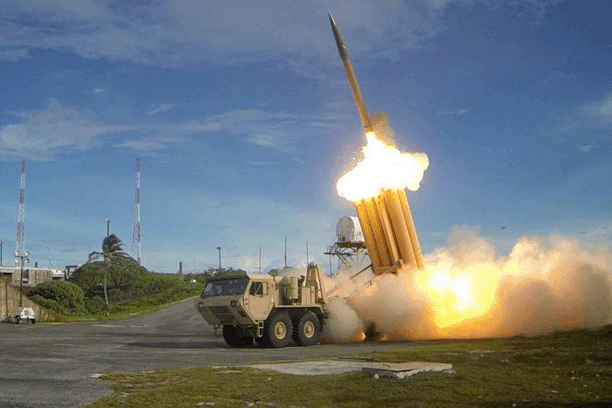
He said on Friday the current advice from Defence was that the terminal high altitude area defence [THAAD] system “is designed to provide protection for relatively small areas against short to intermediate range missiles”……..
Greens leader Richard Di Natale said “the last thing we need here is a Prime Minister backing an unhinged and paranoid leader into a conflict that could potentially end life on Earth as we know it”.
He called on Mr Turnbull to tell the President to “back off”.
“If there was an ever a clearer example of why Australia needs to ditch the US alliance and forge an independent, non-aligned foreign policy, this is it. Malcolm Turnbull now needs to pick up the phone, he needs to talk to Donald Trump and urge him to de-eascalate.”…..http://www.smh.com.au/federal-politics/political-news/paul-keating-north-korea-could-collapse-if-it-gives-up-nuclear-weapons-20170811-gxua4x.html
Because of Pine Gap, Australia would be dragged into a Korean war
Pine Gap hardwires Australia into a Korean war https://www.echo.net.au/2017/08/pine-gap-hardwires-australia-korean-war/ Whether we like it or not, Australia would be dragged into a conflict on the Korean Peninsula because of the critical role of Pine Gap in US military operations against North Korea.

Given the geography of Korea and the decades of military preparations of both sides, we could become a participant in a war likely to result in the deaths of hundreds of thousands of Koreans, with a high likelihood of uncontrollable escalation to involve regional conflict.
Informed commentators recognize that there is no military solution to this conflict, and talking is the only option to avoid unimaginable horror.
Difficult though it is to negotiate with North Korea, there is good reason to believe that its leaders are not bent on suicide. There are indications that negotiations could be possible, but they need to be genuine to have any chance of avoiding war.
The Australian government’s strategic response has for a long time been compliance with whatever constitutes United States policy of the day.
In the hands of President Trump, this places the future of both the Korean Peninsula and Australia in the hands of a deeply delusional narcissist who is incapable of comprehending the consequences of his actions.
The Joint Defence Facility Pine Gap will play a critical role in both conventional and nuclear-armed U.S. attacks on North Korea.
Pine Gap hardwires Australia into US combat operations in Northeast Asia. Pine Gap’s tasking will now be very actively focussed on North Korea.
The logic of nuclear weapons, epitomized by the United States’ nuclear posture, and fully supported by compliant Australian governments, has led to North Korea’s successful path to nuclear weapons state status.
Its goal has clearly been to deter US from attempting regime change, rather than suicidal nuclear aggression.
It is time for Australia to take an independent stance urging the utmost caution on its nuclear-armed ally as well as on North Korea, and actively oppose any action leading to what would be a catastrophic outbreak of war.
But equally, the present crisis makes clear that doctrines of nuclear deterrence – by any country – hold the whole world to ransom, with deterrence failure inevitable in the long run.
It is clear that only the abolition of nuclear weapons will offer any chance of planetary safety.
The Australian government’s craven acceptance of US demands that its allies boycott the treaty to prohibit nuclear weapons adopted at the United Nations indicates that we have no independent foreign policy.
Professor Richard Tanter, senior research associate at the Nautilus Institute and honorary professor in the School of Political and Social Sciences at Melbourne University.
Professor Tanter will address the issue ‘What would an independent Australian foreign policy look like?’ during the upcoming Independent and Peaceful Australia Network National Conference in Melbourne over the weekend of 8-10 September.
Aboriginal Clinton Pryor’s long walk for justice
 Long walk for justice: ‘Spiritual Walker’ Clinton Pryor crosses the country for his people, SMH, Damien Murphy, 11 August, Clinton Pryor has walked across Australia from west to east seeking justice for Aborigines but he seemed overwhelmed when he walked down Eveleigh Street into the heartland of the Black Power movement.
He set out from Perth on September 8 last year and about 300 people gathered in front of the Redfern Community Centre to cheer Mr Pryor as he walked into Sydney late Thursday afternoon behind an array of flags representing Australia, Eureka, Land Rights and Torres Strait Islanders.
“Its my first time here on the east coast … I just walked in here and can’t tell you what Redfern has meant to us all over the years. Everyone knows Redfern is where we made our stand,” he said.
When he set out on “Clinton’s Walk for Justice” Mr Pryor aimed to walk to Canberra to protest forced closures of Indigenous communities in Western Australia.
But in his 11-month walk he said he had come to realise the issues facing Aborigines were the same across the nation.
“You only have to look at what’s become of ‘The Block’ here in Redfern to see that our people have lost control of their land and lives,” he said.
Mr Pryor told the Redfern audience he was “a Wajuk, Balardung, Kija and a Yulparitja man from the west” but as “a man from Western Australia walking across the whole country for justice and for change” he will march to Parliament House to confront Prime Minister Malcolm Turnbull on the issues he has encountered……..
But in his 11-month walk he said he had come to realise the issues facing Aborigines were the same across the nation.
“You only have to look at what’s become of ‘The Block’ here in Redfern to see that our people have lost control of their land and lives,” he said.
Mr Pryor told the Redfern audience he was “a Wajuk, Balardung, Kija and a Yulparitja man from the west” but as “a man from Western Australia walking across the whole country for justice and for change” he will march to Parliament House to confront Prime Minister Malcolm Turnbull on the issues he has encountered…….
Mr Pryor will head to Newcastle before turning south for the home walk to Canberra.
He expected to walk up to Parliament House early next month. He will bring Auntie Bronwen and elders from Kalgoorlie to help him tell the Prime Minister what he saw on his walk across Australia. http://www.smh.com.au/nsw/long-walk-for-justice-spiritual-walker-clinton-pryor-crosses-the-country-for-his-people-20170810-gxtsnt.html

Legal case – a world first – against the Commonwealth Bank, over its failure to disclose climate risks
 New CBA case a warning: Step up on climate change, or we’ll see you
  incourt https://www.theguardian.com/commentisfree/2017/aug/11/new-cba-case-a-warning-step-up-on-climate-change-or-well-see-you-in-court. John Hewson, Despite the scale and urgency of the climate crisis and popular support for action, governments and financiers are failing to act. This will have to change John Hewson is a professor at ANU and a former Liberal leader, In a global first, Australian mum-and-dad shareholders Guy and Kim Abrahams have launched a case against the Commonwealth Bank, arguing that the bank has breached the law by not disclosing the risks climate change poses to its business. Continue reading
12 August – more REneweconomy news

-
It’s absurd. But consumers might be better off quitting the gridAs long as Australia’s energy networks hold on to their inflated asset base, and generators and retailers to their inflated profit margins, consumers will have no choice but to take matters into their own hands with solar and battery storage. But what a hopeless failure in public policy that would be.
-
EOI open for NQ Clean Energy HubA key part of the $386 million Powering North Queensland Plan will commence today.
A Northern Australia Infrastructure Facility funded Adani rail link could create a $billion ghost train
Government loan to Adani will create ‘billion-dollar ghost train’, Senate told https://www.theguardian.com/environment/2017/aug/11/government-loan-to-adani-will-create-billion-dollar-ghost-train-senate-told
Public governance specialist raises concerns over the way the Northern Australia Infrastructure Facility is conducting itself, Guardian, Michael Slezak, 11 Aug 17, If the federal government funds a rail link to Adani’s proposed Carmichael mine, it will become known as the “government-funded billion-dollar ghost train”, an expert in public governance has told the Senate.
Thomas Clark, a professor at the University of Technology Sydney, who has decades of experience in public and corporate governance, appeared before a Senate inquiry into the operation and governance of the Northern Australia Infrastructure Facility (Naif), which is considering a $900m loan to Adani’s rail link.
He said the way Naif was conducting itself neglected years of reforms in public finance, and risked returning Australia to an era “when the public sector was discredited”.
Clark criticised Naif’s lack of transparency, pointing to its lack of disclosure of conflicts of interests and refusal to disclose whether or not Adani had applied for funding.
The former minister for resources Matthew Canavan has acknowledged that Naif is considering a loan application by Adani for the railway, and an Adani spokesman confirmed that the company had sought a loan.
Clark said the fact the Naif board was considering the loan for the rail link showed it was was not conducting itself properly. He said it would not benefit the larger community, would harm other coalmines and industries, and threaten the Great Barrier Reef.
“The worry is that the Naif’s structure and processes, and the way the board has been selected and so on has neglected all of that reform and thrown us back to an era of long ago when the public sector was quite discredited.”
He said the corporate history of Adani – which has been implicated in several environmental disasters and governance questions – would make the company ineligible for government funding.
“The serious concern is that if this rail project goes ahead and is funded, it will not only prove a financial and energy disaster, it will also announce to the world the poor standards and poor public governance that allowed this disaster to occur and utilised tax payer money to fund it,” Clark said.
“This will not enhance the reputation of Australia internationally for sound governance and probity in public finance.
“Undoubtedly if Naif funds this Carmichael project, it will become renowned as the government-funded billion-dollar ghost train – a useless waste of taxpayer money to enrich a company based in the Cayman Islands, which the Australian public will not forget or forgive.”
The Senate hearing continues on Friday, and will include an appearance by Naif officials.
Commonwealth Bank will not lend to Adani Carmichael coalmine project
Carmichael coalmine: Commonwealth Bank indicates it will not lend to Adani
Controversial Queensland coalmine project is now without financing from any of Australia’s big four banks, Guardian, Michael Slezak, 11 Aug 17, The Commonwealth Bank has indicated it will not lend money to Adani’s proposed Carmichael coalmine, leaving the project without financing from any of Australia’s big four banks.
A spokesman from Commonwealth Bank said the bank is “not among the banks who have been, or will be, asked to consider this financing”……
The statement follows a significant public campaign pressuring the bank to rule-out funding the project.
Until today, it was the last of Australia’s big-four banks to not rule out lending to the project. Commonwealth Bank remains a lender to Adani’s Abbot Point coal export terminal, through which coal from the proposed Carmichael mine will be shipped through the Great Barrier Reef to India……
Blair Palese, chief executive of 350.org Australia said the announcement was a win for the public campaign.
“It’s a huge win for the two and a half years of campaigning from the public across Australia to put pressure on the bank,” Pelase said.“Literally there were thousands of protests at Commbank branches around the country,” she said. It would be really great if they would come out openly and clearly (to rule out the project) but we’ll take it,” she said. “It’s a clear statement that it’s a toxic project.”
Julien Vincent, chief executive of Market Forces, a financial campaign group, said not having any of Australia’s big-four banks on board would be a problem for Adani.
“They provide not just debt but credibility,” he said. “Losing Commonwealth Bank from the pool of prospective lenders is a huge blow, given that CBA is already a lender to Adani’s Abbot Point coal export terminal.”
Jonathan Moylan, a campaigner at Greenpeace said the announcement from CBA is a win for the public, but that pressure on the bank to release a stronger climate policy would continue…….https://www.theguardian.com/business/2017/aug/11/carmichael-coalmine-commonwealth-bank-indicates-it-will-not-lend-to-adani
Adani fined $12,000 for Abbot Point coal terminal stormwater breach
The Age, Jorge Branco , 11 Aug 17, Indian mining giant Adani has been fined $12,000 for a stormwater breach at its Abbot Point coal terminal during Tropical Cyclone Debbie.
The Adani-owned Abbot Point Bulk Coal was granted a temporary licence to more than triple its “suspended solids” releases during the severe weather in March. But the Department of Environment and Heritage Protection claimed more than eight times that amount was released into the ocean near the north Queensland facility.
The fine did not relate to water released into the surrounding wetlands, which was still under investigation. Activists released striking photos of the difference in the wetlands before and after the cyclone, claiming coal had turned the area black, but Adani said it had complied with the conditions of its licence.
12 August REneweconomy news
-
Australia’s biggest wind farm is also its least productiveWhat’s wrong with Australia’s biggest wind farm? Victoria’s 420MW Macarthur facility was supposed to produce 50% more power than it did last year.
-
Another solar farm planned for Collinsville, as Blackrock buys inNew 50MW Hayman solar farm to go merchant, as US investor BlackRock makes first big move into renewables with two solar farm investments.
-
Australia’s first battery “giga-factory” set for development in DarwinAustralian company Energy Renaissance says it has “sealed deal” with NT government, locking in Darwin as preferred site for 1GWh lithium-ion battery manufacturing plant.
-
New rules for retailers, but don’t sit there waiting for your electricity bill to go downA call to retailers; Information about discounts will be simpler, but you’ll still have to do the legwork to shop around.
-
Scientists develop spit-powered batteryYou can make a battery out of a lemon, a tomato, an orange or a stack of pennies. And now you can make a battery using spit.
-
RCR awarded $315M for Daydream and Hayman solar farm projectsRCR Tomlinson Ltd is pleased to announce that it has been awarded two contracts for the 150MWac Daydream Solar Farm and the 50MWac Hayman Solar Farm, developed and maintained by Edify Energy Pty Ltd.
Inquiry into the security ramifications of climate change – warning on Australia’s risks
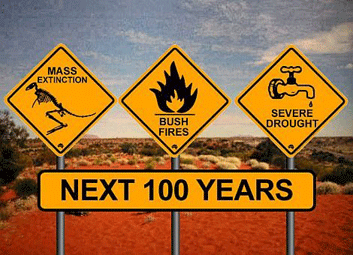 Australia faces potentially disastrous consequences of climate change, inquiry told
Former defence force chief decries Australia’s response to climate challenge as a ‘manifest failure of leadership’, Guardian, Ben Doherty and Michael Slezak, 11 Aug 17.
Military and climate experts, including a former chief of the defence force, have warned that Australia faces potential “disastrous consequences” from climate change, including “revolving” natural disasters and the forced migration of tens of millions of people across the region, overwhelming security forces and government.
Former defence force chief Adm Chris Barrie, now adjunct professor at the strategic and defence studies centre at the Australian National University, said in a submission to a Senate inquiry that Australia’s ability to mitigate and respond to the impacts of climate change had been corrupted by political timidity: “Australia’s climate change credentials have suffered from a serious lack of political leadership”.
The inquiry into the security ramifications of climate change also heard from some of the country’s leading climate scientists, who warned the security threats posed by climate change had been underestimated, and complained Australia had been “walking away” from exactly the type of research that would help the country prepare……
Barrie said the security threat of climate change was comparable to that posed by nuclear war, and said the Australian continent would be most affected by changing climate.
“We will suffer great effects from these changes, such as new weather patterns; droughts, sea-level rises and storm surges, because we have substantial urban infrastructure built on the coastal fringe; ravages of more intense and more frequent heatwaves and tropical revolving storms.”
But he said the existential impacts of climate change were likely to be first, and most severely, felt across Australia’s region, the Asia-Pacific rim, the most populous region in the world, and one that will be home to seven billion people by 2050……..
The Australian Defence Force has been examining the potential insecurities caused by climate change for a decade. Within Defence, there are serious concerns over the vulnerability of military bases to climate impacts, and the military’s reliance on fossil fuels.
But Barrie said political action lagged far behind and Australia’s hyper-politicised debate over climate had hampered decisive government action.
“Our current posture is a manifest failure of leadership,” he said……..
Jane McAdam, director of UNSW’s Kaldor centre for international refugee law told the inquiry climate change functioned as a “threat amplifier”, that magnified risk and exacerbated existing crises.
“Disasters become disasters on steroids: more frequent and more intense. Climate change is also a process. Slow-onset impacts such as sea-level rise or desertification take place over time, resulting in a gradual deterioration of living conditions that ultimately renders land uninhabitable.”……
McAdam said most displacement and migration would occur within countries, not across national borders.
“Longer-term movement will generally be gradual rather sudden, and movement that is sudden (for instance, in the aftermath of a disaster) will often require temporary relief rather than permanent migration. There is scant evidence to justify claims that there will be mass outflows of people across international borders which will threaten international, regional or national security, or generate new risks of Islamist terrorism or fundamentalism.”……https://www.theguardian.com/environment/2017/aug/11/australia-potentially-disastrous-consequences-of-climate-change-inquiry-told
Tony Abbott wants Terminal High Altitude Area Defense (THAAD) missile defence for Australia
Tony Abbott calls for Australia to urgently consider missile defence shield, The Age, Peter Hartcher, 11 Aug 17, Tony Abbott has called for Australia urgently to consider a missile defence shield to protect against attack by nuclear-armed North Korea.
This means that Australia’s two most recent former leaders – one Labor and one Liberal – have now made such a call in the last four weeks. Australia has no defence against intercontinental ballistic missiles. The government has yet to indicate any interest in acquiring one.
After US President Donald Trump this week said he would deal with Pyongyang’s threats with “fire and fury”, North Korea said that “only absolute force can work on him”….
Foreign Affairs Minister Julie Bishop said on Wednesday that a North Korean ICBM capability posed “an unacceptable existential threat to our country” although she said Australia was “not a primary target”.
She said that Australia’s strategy was to deter North Korea through international solidarity and called on “all sides” to step back.
But Kevin Rudd and Tony Abbott separately are urging defensive steps:…..
This week the US Defence Intelligence Agency estimated that North Korea already has a miniaturised nuclear warhead to put atop the missiles, according to US media reports.
Mr Abbott said: “We should upgrade the capability of the air warfare destroyers so they’re not just able to track incoming missiles but shoot them down.”
“And we should look at the sort of system the US is installing in South Korea,” the Terminal High Altitude Area Defence system. Mr Abbott said that the main argument against a missile defence was cost.
“Some would say that it would contribute to an arms race, but it’s a race that others are already running,” he added.
Experts point out that neither system nominated by Mr Abbott is designed for intercepting intercontinental ballistic missiles but for shorter-range missiles.
However, the most effective missile shields use multiple systems – including shorter and longer range defences – “layered” on top of each other to increase the odds of success…….http://www.theage.com.au/federal-politics/political-news/tony-abbott-calls-for-australia-to-urgently-consider-missile-defence-shield-20170810-gxtrrs.html
1 This month


Help Aunty Sue Protect Her Land and Sacred Sites From Destructive Rocket Testing.
.

Australians deserve the truth
about
AUKUS – https://aukuspublicinquiry.com/

PETITION – To: Prime Minister Anthony Albanese and the Australian Labor Government

of the week – Australians for War Powers Reform (AWPR)
To see nuclear-related stories in greater depth and intensity

