Graham Glover scrutinises the language of the Nuclear Fuel Cycle Royal Commission
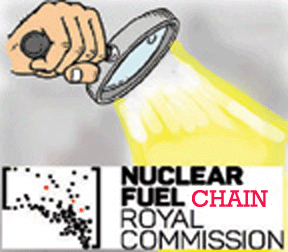 Tentative Findings Response – Graham Glover http://nuclearrc.sa.gov.au/app/uploads/2016/04/Glover-Graham.pdf
Item 73 The risks associated with storing nuclear waste for many hundreds of thousands of years cannot be adequately assessed, considering the potential changes in geological, political, social, economical, environmental and global issues.
A not particularly anti-nuclear Submission still objects to #NuclearCommissionSAust ‘s bias
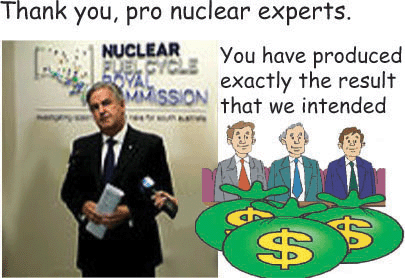 Response to Tentative Findings of Royal Commission into the nuclear fuel cycle Submission by Gary Rowbottom,
“…….there is very little information on ILW [Intermediate Level Waste] presented in the Royal Commission Issue Paper (No.4) on the hazard level and required safe containment/storage method or duration required for ILW.
During the tentative fmding delivery by Mr. Kevin Scarce in Port Augusta in February, the day following the release of the tentative fmdings, I asked Mr. Scarce of the SA Government Royal Commission, “how long ILW was dangerous for, and needed to be stored safely for” – he replied “hundreds of years”, but one of his advisors piped up at that point & said, “No, there is no specific figure, it depends on the specific radionuclides involved etc., but is generally in the thousands of years”. The FederalGoverment National Radioactive Waste Management Project information indicates hundreds of thousands of years.
I am very concerned at this disparity of information. I think that whole ILW question needs better thinking and collaboration between the SA Government and Federal Government investigating agencies on this issue, to establish the truth and to then represent this true story to the public…….
I am further a little concerned too that Mr. Scarce, in his delivery of the tentative findings, a mere day after the release of these findings, seemed to be critical of any comments made in opposition to deepening Australia’s involvement in the nuclear fuel cycle, often citing lack of evidence for viewpoints expressed. ……
I would have to say that it seems there is a fair bit of evidence that the commission members themselves are in the majority, clearly quite pro nuclear. I am not happy at the lack of subjectivity that may have brought to the findings, particularly on the waste issue. Whilst Mr. Scarce did say that they did look at the negative sides of all the Issue papers, there is not much evidence of that in the Tentative Findings Report…….http://nuclearrc.sa.gov.au/app/uploads/2016/05/Rowbottom-Gary.pdf
Mothers for a Sustainable South Australia outline 8 risks of #NuclearCommissionSAust
Mothers for a Sustainable South Australia: Our Response to the Tentative Findings of the Nuclear Fuel Cycle Royal Commission • Maureen Graney • Mary Houlahan • Tracey Kermond • Michelle Parsons • Barbara Pocock 18 March 2016
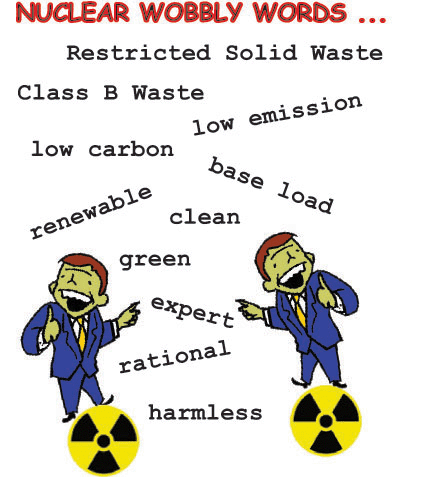 “……..Language We understand from public hearings and the text of the Tentative Report that the Commission does not like the word ‘dump’ and would prefer the language of ‘waste disposal’. We believe that language is important: it needs to reflect reality, not cloak it in a preferred – or deceptive – ambiguity. The Oxford dictionary defines a dump as ‘a site for depositing rubbish’ and, more specifically ‘A place where particular kind of waste, especially dangerous waste is left: a nuclear waste dump’. (http://www.oxforddictionaries.com/definition/english/dump…). In this light, in the interests of clarity, we deliberately use the word ‘dump’ in responding to the recommendation that South Australia should build one for high-level nuclear waste.
Abandon all thoughts of this nuclear waste import scheme – Ngoppon Together
The Commission states that there ‘is no existing market to ascertain the price a customer may be willing to pay for the permanent disposal of used fuel’ so such estimates are simply conjectures with no genuine basis in reality
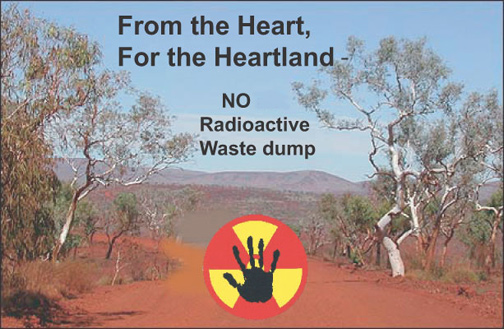 Our members plead with Commissioner Scarce and the members of the Royal Commission, with Premier Weatherill and all Members of Parliament and Members of the Legislative Assembly: for the sake of our common humanity abandon all thoughts of this scheme. As fellow South Australians, Australians and as fellow human beings together, the implications and consequences of importing the world’s radioactive waste in its highly toxic form is indeed terrifying; and, it must be said, a totally irresponsible legacy, for our generation to leave to the grandchildren, great grand children and every generation to come in our state of South Australia
Ngoppon Together Inc. (Walking Together Reconciliation Group Murray Bridge SA) RESPONSE to the NUCLEAR FUEL CYCLE ROYAL COMMISSION TENTATIVE FINDINGS – due March 18th, 2016
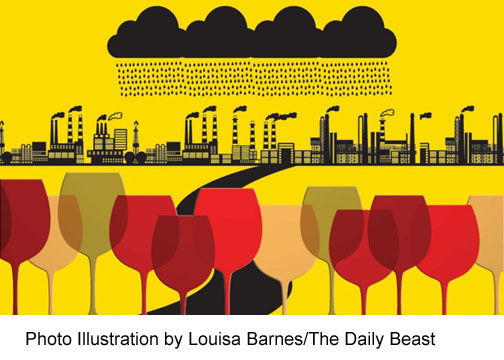
South Australia’s wine industry is worried about #NuclearCommissionSAust’s plan
SUBMISSION OF: SOUTH AUSTRALIAN WINE INDUSTRY ASSOCIATION INCORPORATED This submission is specifically focussed on the key issues of brand value, reputation and recognition, with further consideration of the impacts on tourism, regional infrastructure, natural resources, and legacy issues.
No confidence in economic projections of #NuclearCommissionSAust
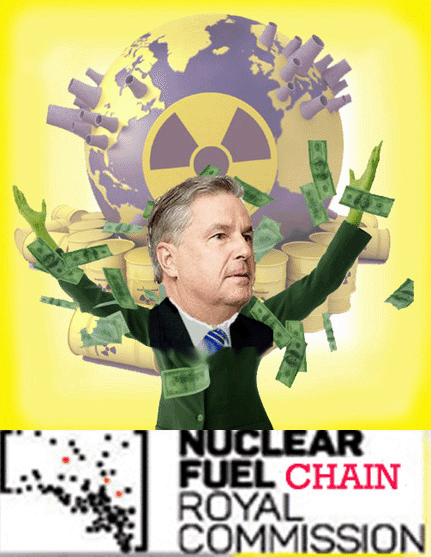 Economic risks: ‘Trust me I’m an economist’
A farming perspective on the Nuclear Royal Commission waste import plan
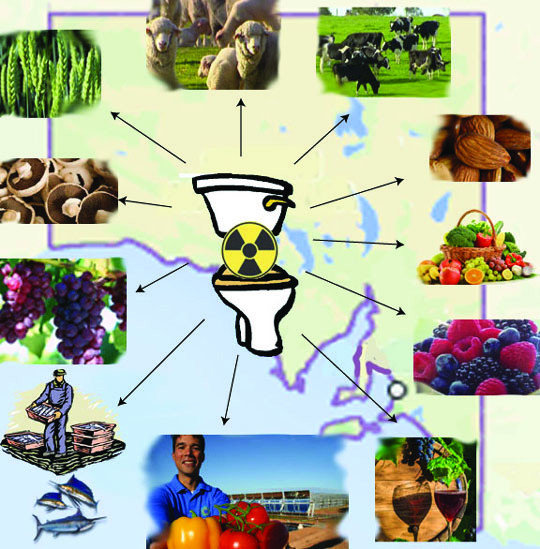 Nuclear Fuel Cycle Royal Commission Submission. Patricia and Maxwell Jones
After having many years of dealing with Uranium Exploration on our Property, we feel we know more about Uranium than miners know about farming.
1* Uranium storage (dumping) LOW waste or HIGH waste, will have an effect on neighbouring properties. Just the name Uranium puts fear in people, had great effect on sheep sales from our property, people did not want to buy glow in the dark sheep. Did lower the value of our Merino wool, dust, (not Uranium dust) have had trouble getting through to miners that we are talking good old
fashion dust that is stirred up every time a vehicle passes by, caused lower yields in our wool, therefore devalued it. Lowered our returns.
2* The uranium waste will come via ship we assume, if ship is lost at sea, what happens to our seas. Once on land it travels by road or rail. There is only one highway across Australia, if an accident, will Highway be closed, Kimba, Low level waste is half way across Australia. Small towns have been totally closed
by paint spills before.
3* If it is as we are told very safe, why then is it not possible to store it in Adelaide? Lots of land there close to the sea not being used. Plenty of workers going to be needing jobs soon in Adelaide.
This is the only State not allowed to grow GM crops, because it could contaminate other crops (see court cases in WA etc;) and the stigma attached to GM, which upsets our Politicians. So what would South Australians and the rest of the world think is worse? The answer is obvious.
If in the polls or Royal Commission were to ask the South Australian people in their individual areas eg; (5th East, Riverland, Adelaide etc/) did they want a Uranium waste dump, we are sure the answer would be NO, not in our back yard.
If it’s so safe why, does it have to be sent to our Farming Land? The only safe
place for URANIUM, is LEAVE IT IN THE GROUND.
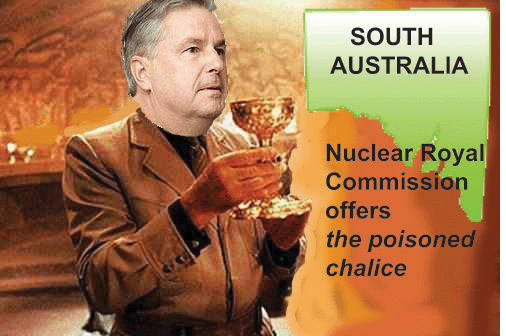
Nuclear Commission’s recommendations – a poisoned chalice for South Australia?
As a South Australian citizen, I am very concerned by what appears to be a disregard for the rule of law. This is particularly concerning as the nuclear industry across the world has a somewhat tarnished reputation when it comes to transparency and compliance with legal requirements. Any lack of confidence in the rule of law (whether perceived or real) will be extremely detrimental to this project and to South Australia as a democratic state.
A high level nuclear waste dump is a permanent solution to a temporary problem. Voluntary importation of one of the deadliest substances known to humanity, with all of its intransigent problems (which no country in the world has yet managed to resolve) may indeed prove to be a poisoned chalice. Indeed, the x billions anticipated as revenue are minor in global economic terms, and definitely insignificant given the 240,000 year time frame of the proposal.
Response to Nuclear Fuel Cycle Royal Commission’s Tentative Findings, Trisha Drioli http://nuclearrc.sa.gov.au/app/uploads/2016/04/Drioli-Trisha.pdf I have a large number of concerns arising from a proposal that seeks to store highly toxic waste in my home State for a period longer than the entire existence of the human species. Never-the-less, I restrict my submission to my some key points: Continue reading
No true transparency in the machinations of the Nuclear Fuel Chain Royal Commission
 “Transparency” is a term when used in such context, makes a mockery of public consultation and decision-making. In an industry that is hidden within Legislative Agreements that prohibit “freedom of information” and with information locked up in inter-departmental exchanges that circumvent any public disclosure, there is no transparency. Local get-togethers do not equal public engagement. These are serious matters which are of National concern
Response to “Tentative Findings” – Anne McGovern
Meg Backhouse’s fine Submission to Nuclear Fuel Cycle Royal Commission
 RE: HIGH LEVEL and INTERMEDIATE WASTE STORAGE http://nuclearrc.sa.gov.au/app/uploads/2016/05/Backhouse-Meg.pdf Meg Backhouse
 Catholic Religious South Australia express duty to oppose Nuclear Commission’s import waste plan (extracts from Submission)
 Catholic Religious South Australia – response the the nuclear fuel chain Royal Commission’s ‘Tentative Findings’
Major financial risks for South Australia are ignored by Nuclear Fuel Cycle Royal Commission
The proposal has major financial risks to taxpayers that have been ignored or played down in the Tentative Findings. These are sufficient grounds to reject the scheme. However, if the Royal Commission is determined to ignore or downplay the risks and recommend the proposed project, it should also recommend that 5 the substantial financial risks be taken by a private corporation or consortium, not Australian taxpayers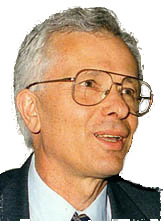 Comments on the Cost Analysis, Business Case and Risks of Management for Storage and Disposal of Nuclear Waste in South Australia
 Aboriginal award winner calls on Premier Weatherill to save Flinders traditional land from nuclear waste dumping
 Premier silent while Flinders Ranges threatened, INDAILY, 6 May 16 One of the traditional owners of the Flinders Ranges land earmarked for a low level nuclear waste dump, Regina McKenzie, writes about the significance of the site and why Premier Jay Weatherill should intervene…….
Last year I was awarded the SA Premier’s Natural Resource Management Award in the category of ‘Aboriginal Leadership − Female’ for working to protect land that is now being threatened with a nuclear waste dump.
But Premier Jay Weatherill has been silent since the announcement of six short-listed dump sites last year, three of them in SA. Now the Flinders Ranges has been chosen as the preferred site and Mr Weatherill must speak up.
The Premier can either support us ‒ just as the SA government supported the Kupa Piti Kungka Tjuta when their land was targeted for a national nuclear waste dump from 1998-2004 ‒ or he can support the federal government’s attack on us by maintaining his silence. He can’t sit on the fence.
Regina McKenzie is a Yappala Station resident and member of Viliwarinha Yura Aboriginal Corporation. http://indaily.com.au/opinion/2016/05/06/premier-silent-while-flinders-ranges-threatened/
Legal battle ahead for The Australian govt’s plan to impose nuclear waste dump on sacred Aboriginal land
 Plan for Flinders Ranges nuclear waste dump faces legal battle MEREDITH BOOTH, VERITY EDWARDS THE AUSTRALIAN MAY 5, 2016 Environmentalists and traditional owners say eight years of legal wrangling, which saw the withdrawal of Muckaty Station in the Northern Territory as a site for a nuclear waste dump, is a precedent for the fight they are prepared to wage against a dump planned in South Australia.Wallerberdina Station, part-owned by former Liberal senator Grant Chapman and adjoining Adnyamathanha sacred sites in the northern Flinders Ranges more than 550km north of Adelaide, has been chosen ahead of five others as the preferred site for a national low-level nuclear waste dump.
The decision was made independently of the state’s Nuclear Fuel Cycle Royal Commission, which hands down its findings tomorrow and is expected to recommend that the state stores high-level radioactive waste from overseas.
Conservation Council of South Australia chief executive Craig Wilkins said he hoped the fight to stop the Wallerberdina dump did not reach court, but he was prepared to support a legal battle. “Muckaty Station was an eight-year campaign. We’re deeply hopeful that we don’t need to do that again,’’ he said yesterday. “Not only is it incredibly sacred country for the Adnyamathanha people, the land is subject to flash flooding and frequent earthquake activity.’’
Elder Regina McKenzie, who lives next to the station, said she was prepared to go to court to prevent a nuclear waste dump being built on burial areas and through a 70km storyline that was particularly sacred to indigenous women.
“It’s desecration on all fronts, it’s an attack on our religion, it’s cultural genocide,” she said. “There are Aboriginal bones that have calcified and turned to stone and what right do they have to move those?”
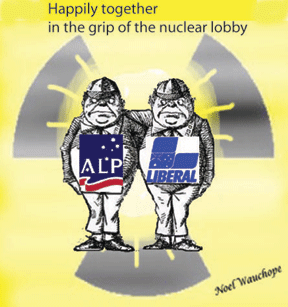 The Greens have slammed Labor and the Liberals for “teaming up” to defeat a motion calling on the government to acknowledge traditional owners’ opposition to the dump.
Federal Resources Minister Josh Frydenberg said that a final decision had not been made.
Australia’s pro nuclear politicians want to be nuclear industry leaders

AUSTRALIA JOINS INTERNATIONAL NUCLEAR RESEARCH FORUM 29 Apr 2016
Australia has overnight been approved as a member of the Generation IV International Forum (GIF), a co‑operative international endeavour, joining 12 other nations and the European Union to work together on long‑term research on advanced nuclear technologies.
The Forum develops Generation IV technology and addresses not only the construction and operation of the next generation of nuclear power reactors, but also considers fuel efficiency, reducing waste production, and meeting stringent standards of safety and proliferation resistance.
Minister for Industry, Innovation and Science Christopher Pyne said Australia’s success in gaining membership is based on the landmark research infrastructure and world-class research capabilities and expertise at the Australian Nuclear Science and Technology Organisation (ANSTO) to contribute to the GIF’s goals.
“Australia’s invitation to join this important global project marks an exciting opportunity to be at the forefront of global innovation in the nuclear industry,” Mr Pyne said…..GIF research is focused on six reactor designs that will deliver safe, secure, sustainable, competitive and versatile nuclear technology…
[Frydenberg]“This forum will help develop the technologies that will be integral to the future of the international nuclear industry.”https://www.pyneonline.com.au/media-centre/media-releases/australia-joins-international-nuclear-research-forum
1 This month
17 October, Free Public Talk on Nuclear Issues in South Australia
David Noonan will speak on public interest concerns over the new Roxby Downs Indenture Act 2026 on BHP copper-uranium mining and ore processing in SA, and on how AUKUS may face SA with a High-Level nuclear waste agenda.
Dr Jim Green will discuss international developments in the field of nuclear power including ‘small modular reactors’ and Generation 4 ‘advanced’ nuclear reactor concepts.


Help Aunty Sue Protect Her Land and Sacred Sites From Destructive Rocket Testing.
.

Australians deserve the truth
about
AUKUS – https://aukuspublicinquiry.com/

PETITION – To: Prime Minister Anthony Albanese and the Australian Labor Government

of the week – Australians for War Powers Reform (AWPR)
To see nuclear-related stories in greater depth and intensity

