South Australia”destined to be locked in to nuclear industry” – Adelaide Advertiser
The Adelaide Advertiser – mouthpiece of the nuclear lobby advises that we should all just give up – “see the light’ and let South Australia just roll over like a tame dog, and let the nuclear juggernaut roll over it.

we hosted the British nuclear bomb tests at Maralinga in the 1950s, and we have the world’s largest uranium mine at Olympic Dam.
So we are destined to be locked in to the nuclear fuel industry for decades to come. – Chris Kenny, The Advertiser 21 Feb 16
National Radioactive Waste Management Act overrides any local opposition to nuclear waste dump
 Overriding opposition, Jim Green 21 Feb 16 Bruce Wilson said it would be unlikely that the federal government would override state/territory government opposition to a repository. But that’s exactly what the federal government did the first time round (1998– 2004). And that’s exactly what the federal government did in the NT (2005– 2014). As Wilson acknowledged, the government retains the power to override state/territory governments in order to impose a radioactive waste repository/store. The government should amend the legislation so it no longer has that power.
Wilson said the National Radioactive Waste Management Act is consent-driven ‘world’s best practice’ legislation. In fact, it gives the federal government extraordinary powers to override state/territory governments, councils, communities, Traditional Owners and anyone else.
A government rep said the government gave up on the Muckaty / NT site when it realised that community support was lacking. That’s false. The government knew that a majority of Traditional Owners opposed the proposed repository/store in 2006/07 but only gave up in 2014.
Kimba residents are all too aware of the distress and division that the radioactive waste issue has created in the past six months. Muckaty Traditional Owners endured the same problems for the best part of a decade. “We’ll probably have one of the first good sleeps we’ve had in eight years,” Marlene Bennett said when the government finally stopped its thuggish attempt to impose a radioactive waste repository on an unwilling community.
Julie Bishop, Christopher Pyne, Bill Shorten do their bit for the pro nuclear dance

Opposition Leader Bill Shorten has indicated he is open to the idea as long as there is community support, an economic benefit, and reassurance of environmental protection….
Overall Ms Bishop is optimistic that public opinion is in favour of more engagement with the nuclear fuel cycle………http://www.adelaidenow.com.au/news/south-australia/australia-the-ideal-location-for-nuclear-waste-dump-says-julie-bishop/news-story/c2655249dd4f655d05bf809d6d1795c8
Australia breaches Paris climate agreement, damages economy, by cutting CSIRO climate modelling
 CSIRO climate cuts will breach Paris agreement and cost economy – report
Cuts to climate modelling and measuring research contradict Australia’s pledge to strengthen commitments to climate science, the Climate Council says, Guardian Michael Slezak 21 Feb 16 Cuts to the CSIRO’s climate modelling and measuring research will breach Australia’s obligations under the recent Paris agreement and will result in huge costs to the economy, a report by Australia’s Climate Council has found.
The report adds to a chorus of eminent bodies and individuals criticising the move, which the CSIRO made after almost no consultation with its own scientists or other research institutions.
Earlier in the month it was revealed CSIRO would be cutting up to 350 staff from climate research programs over two years. Over the following weeks, the organisation’s chief executive Larry Marshallexplained that would result in a loss of about 50% of the staff working in climate modelling and measuring.
In a report titled “Flying Blind: Navigating Climate Change without the CSIRO,” the Climate Council said governments and businesses relied on the CSIRO’s climate modelling and measuring work to make billion-dollar decisions and if the cuts went ahead, would be relying on “guesswork”.
The report notes Australia and the rest of the world agreed to strengthen commitments to climate science at COP21 in Paris in December. “The recently announced cuts to climate science mean that Australia has already reneged on one of its obligations under the Paris commitments,” it concludes.
It cites a number of examples of decisions and industries that have relied on the modelling and measuring performed by the CSIRO:………
An open letter signed by more than 2800 scientists raised similar concerns. In response to the chorus of criticisms, Marshall initially said the response was more like religion than science, and compared climate scientists to oil lobbyists in the 1970s…….
It was revealed in Senate estimates that CSIRO executives did not consult with organisations like the Bureau of Meteorology who depend on CSIRO modelling until 24 hours before the cuts were made public.
Even Ken Lee, the director of the division that would take the brunt of the cuts was only told about the cuts four days before they were announced.
The Climate Council, which produced the new report, is a crowd-funded body that seeks to provide authoritative information on climate change to the community. It was created after the Abbott government cut the Climate Commission when it took government in 2013, and seeks to perform the same job. http://www.theguardian.com/environment/2016/feb/22/csiro-climate-cuts-will-breach-paris-agreement-and-cost-economy-report
Michele Madigan points out the National dangers of transporting nuclear wastes
 Nuclear waste danger knows no state borders, Eureka Street Michele
 Madigan | 09 February 2016 “……..It would be a mistake for anyone living outside of South Australia to think that the premier’s plan is just a South Australian problem. Transport and containment risks are hugely significant. State boundaries are no guarantees of safety.
Professor John Veevers of Macquarie University notes the ‘tonnes of enormously dangerous radioactive waste in the northern hemisphere, 20,000km from its destined dump in Australia … must remain intact for at least 10,000 years.
‘These magnitudes — of tonnage, lethality, distance of transport and time — entail great inherent risk.’
In 1998 when the federal government identified the central northern area of South Australia to be site for a proposed national radioactive waste dump, it was not only South Australians who were concerned.
In 2003 the mayors of Sutherland, Bathurst, Blue Mountains, Broken Hill, Dubbo, Griffith, Lithgow, Orange, Wagga Wagga, Auburn, Bankstown, Blacktown, Fairfield, Holroyd, Liverpool, Parramatta and Penrith — communities along potential transport routes — opposed ‘any increase in nuclear waste production until a satisfactory resolution occurs to the waste repository question’.
The NSW parliamentary inquiry into radioactive waste found ‘there is no doubt that the transportation of radioactive waste increases the risk of accident or incident — including some form of terrorist intervention’. Continue reading
ARPANSA: a not so independent radiation regulator
 Jim Green 21 Feb 16 Bruce Wilson (from the federal government’s Department of Industry, Innovation and Science) and other governments reps were keen to talk up the role of the ‘independent’ regulator, the Australian Radiation Protection and Nuclear Safety Agency (ARPANSA). But ARPANSA has a troubled history. Its troubles began immediately: the government allowed ANSTO a direct role in selecting the founding CEO of ARPANSA, so ARPANSA’s independence was undermined from the start.
Here’s a more recent example of problems with ARPANSA, summarised in a 2011 ABC article:
“A review of Australia’s nuclear industry regulator, ARPANSA, has found an improper relationship with the main agency it monitors [ANSTO]. The Health Department’s audit and fraud control branch has been investigating how ARPANSA handled allegations of safety breaches and bullying at the nation’s only nuclear reactor in Sydney. Whistleblowers had alleged ARPANSA was too close to the Australian Nuclear Science and Technology Organisation (ANSTO), which runs the Lucas Heights research facility.”
ABC, 8 July 2011, Nuclear regulator ‘too close’ to ANSTO, www.abc.net.au/news/stories/2011/07/07/3264086.htm
An independent regulator could provide some confidence. But a not-so-independent regulator with a poor track record …
More information about ARPANSA:
- www.foe.org.au/anti-nuclear/issues/oz/arpansa
- ANSTO / ARPANSA whistleblower saga: www.foe.org.au/ansto-whistleblower-saga-2007-ongoing
Nuclear waste dump plan for Kimba – govt ignores relevant standards and codes
 Jim Green 21 Feb 16 Some comments on the 18 Feb 2016 government ‘information session’ in Kimba regarding plans for a radioactive waste repository and above-ground ‘interim’ store for long-lived intermediate-level waste.
 1. The government ignores and breaches relevant standards and codes when it suits.
As a Kimba resident noted at the meeting, the National Health and Medical Research Council’s (NH&MRC) ‘Code of Practice for Near-Surface Disposal of Radioactive Waste in Australia (1992)’ states that “the site for the facility should be located in a region which has no known significant natural resources, including potentially valuable mineral deposits, and which has little or no potential for agriculture or outdoor recreational use”.
So the government has breached the NH&MRC Code of Practice by short-listing the Kimba sites.
Following the so-called clean-up of the Maralinga nuclear test site in the late 1990s, nuclear engineer Alan Parkinson wrote: “The Department has claimed that burial is a safe disposal method consistent with “the [NH&MRC] Code.” This was the first time that the Code had been mentioned in relation to the Maralinga project. When three of the five authors said that it was not applicable (the other two were Commonwealth public servants and would not comment), the Department claimed that it did not have to follow the Code but had chosen to do so. It made this statement despite the fact that not a single requirement of that Code was satisfied.”
(Alan Parkinson, “The Maralinga Rehabilitation Project: Final Report”,
http://www.ippnw.org/pdf/mgs/7-2-parkinson.pdf)
So the government ignores relevant standards and codes when it suits, and the government breaches relevant standards and codes when it suits. Why would anyone trust the government to safely operate a radioactive waste facility in the Kimba region in those circumstances?
Alan Parkinson summarises the problem (keep in mind that he is pro-nuclear and a nuclear engineer): “The disposal of radioactive waste in Australia is ill-considered and irresponsible. Whether it is short-lived waste from Commonwealth facilities, long-lived plutonium waste from an atomic bomb test site on Aboriginal land, or reactor waste from Lucas Heights. The government applies double standards to suit its own agenda; there is no consistency, and little evidence of logic.”
(Alan Parkinson, 2002, ‘Double standards with radioactive waste’, Australasian Science, www.foe.org.au/anti-nuclear/issues/oz/britbombs/clean-up)
Next steps in the push for South Australia as world’s nuclear toilet
 Friends of the Earth 20 Feb 16 The ‘Tentative Findings’ report is posted at: http://nuclearrc.sa.gov.au/tentative-findings/
The deadline for written submissions responding to the interim report is March 18 (see the Royal Commission website for details).
The final report will be published in May 2016. http://www.foe.org.au/royal-commission
9 News 19 Feb 16 The report is due on May 6 and the state government will not make any decisions before the end of the year.
That could include putting the issue to a referendum at the next state election, due in 2018
Nuclear Semioticians (sign experts): how to warn future generations of the wastes danger
they established the field of nuclear semiotics……. an “atomic priesthood”
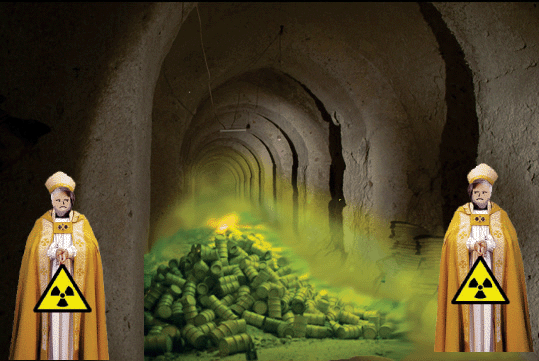
The message walls would have the faces as well as simple messages
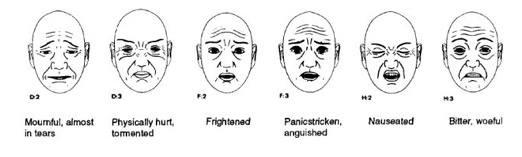
Temple of Doom: How do we warn the future about nuclear waste?, Triple J Hack, by James Purtill, 19 Feb 16 This week the South Australian Royal Commission released “tentative findings” recommending the state take more than 100 tonnes of high-level radioactive waste and store it in the desert for hundreds of thousands of years.
……..If the facility goes ahead, the designers may consider a problem that has baffled linguists and semioticians (sign experts): how to tell the distant future don’t dig up the dump?
Atomic priesthoods and ‘ray cats’
In 1991, the Department of Environment hired linguists, scientists and anthropologists at a cost of about $1 million to answer what is basically a conundrum of labelling. How do you warn far-off civilisations or scattered bands of post-apocalyptic survivors that invisible beams of energy emanating from the earth could kill them, and this was not a trick, there’s no buried treasure?
The report runs to 351 pages and has the (rather dry) title: Expert Judgement on Markers to Deter Inadvertent Human Intrusion into the Wasteland Isolation Pilot Plant.
Here’s some of the problems they identified:
- Languages evolve too fast to communicate with the future: Few English speakers understand Old English, which was spoken about 1000 years ago.
- The meanings of symbols is too ambiguous: For example, the physicist Carl Sagan was invited to join the researchers, couldn’t make it, and wrote to suggest they simply use the skull-and-crossbones symbol to signify danger. But this symbol has only been current for a few hundred years, has meant ‘poison’ for the last 100, and is no longer very threatening. It’s on ‘pirate theme’ drink bottles.
- Even if they understand the warnings, future trespassers might not believe them. Curses associated with the burial sites of the Egyptian Pharaohs did not deter grave robbers.
Maralinga tipped for the site of Premier Jay Weatherill’s nuclear waste site fantasy
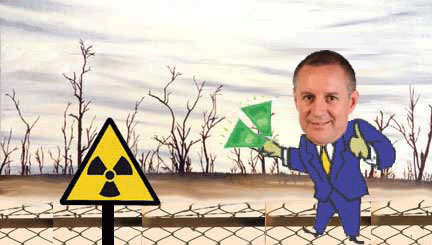 Planning 500 years ahead makes nuclear storage a difficult road, AFR, Simon Evans 20 Feb 16, It’s the first 500 years that bring the biggest worries about radioactivity when it comes to spent nuclear fuel rods.
After that, most of the radioactive elements have decayed, but they still need to be isolated from the environment in a deep underground nuclear storage facility for many hundreds of thousands of years. Everything in the nuclear waste industry has an enormously long outlook, including the promise of a $257 billion pay-day for South Australia . Correct, billion. That is if it’s able to traverse a difficult political road and build a sophisticated nuclear waste facility 500 metres below ground to operate over a projected 120-year commercial life……….
DEEP-BELOW-GROUND STORAGE
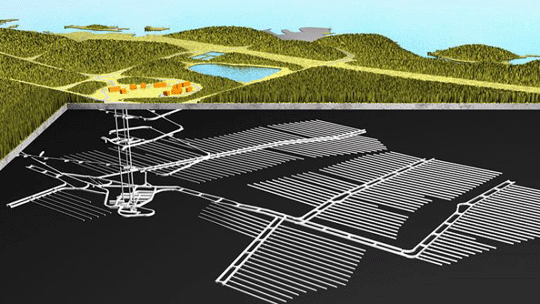
political considerations collide with the economics of the proposed plant. He says the $33 billion cost of the underground facility is so vast it would need to be shared between the state and federal government, which also needs to change legislation to allow it to proceed. Federal Resources and Energy Minister Josh Frydenberg gave cautious support to the plan if a political and community consensus can be developed……..
One submission to the royal commission by a private company called SA Nuclear Energy Systems has proposed the Maralinga atomic bomb test sites about 850km north-west of Adelaide as a good spot for an underground facility. Maralinga was used by Britain to test atomic bombs in the late 1950s, with the site later becoming embroiled in controversy because of the long-term health effects on the Aboriginal owners of the land and on military personnel who had been present. http://www.afr.com/business/energy/nuclear-energy/planning-500-years-ahead-makes-nuclear-storage-a-difficult-road-20160216-gmvchl#ixzz40e9J9qEw
What does the #NuclearCommissionSAust report say?
the waste-to-fuel fantasies of Senator Edwards and Ben Heard are dead and buried.
 [Wastes storage] timeframes – 150 years in the U.S. report and 120 years in the Royal Commission study – are nothing compared to the lifespan of nuclear waste. It takes 300,000 years for high level waste to decay to the level of the original uranium ore. The Royal Commission report notes that spent nuclear fuel (high level nuclear waste) “requires isolation from the environment for many hundreds of thousands of years.”
 the Waste Isolation Pilot Plant (WIPP) in the U.S. state of New Mexico. WIPP was closed in 2014 because of a chemical explosion which ruptured a nuclear waste barrel and resulted in 23 workers being exposed to radiation. Before WIPP opened, the government estimated one radiation release accident every 200,000 years. But there has been one radiation release accident in the first 15 years of operation of WIPP.
 The Royal Commission’s report is silent about WIPP. It is silent about the Asse repository in Germany, where massive water infiltration has led to the decision to exhume 126,000 barrels of radioactive waste. The report is silent about the fire at a radioactive waste repository in the U.S. state of Nevada last year. And the report is silent about many other problems with the nuclear industry that it should have squarely addressed
Summary of ‘Tentative Findings’ of SA Nuclear Fuel Cycle Royal Commission Friends of the Earth Australia, by Jim Green, national nuclear campaigner, Friends of the Earth 20 Feb 16 What does the report say?
In a nutshell, the Royal Commission is negative about almost all of the proposals it is asked to consider – but positive about the proposal to import high-level nuclear waste from nuclear power plants for disposal in South Australia. Continue reading
No country has a nuclear waste repository that will last long enough
Temple of Doom: How do we warn the future about nuclear waste?, Triple J Hack, by James Purtill, 19 Feb 16 “…….This week the South Australian Royal Commission released “tentative findings” recommending the state take more than 100 tonnes of high-level radioactive waste and store it in the desert for hundreds of thousands of years…….
This is true, but it’s worth pointing out none of these already built repositories are for the final disposal of nuclear fuel. They are either for low to intermediate level waste, which needs to be isolated for several hundred years, or they are temporary, interim solutions to the problem of finding a final resting place that will isolate waste for tens of thousands of years.
Finland is building the world’s first deep underground repository for high level nuclear waste and Sweden is close behind. The Finnish site is scheduled for completion in 2023.
A better example of the kind of repository proposed for South Australian is the United States’ Waste Isolation Pilot Plant (WIPP), deep in the New Mexico desert. It’s the only working long-lived nuclear waste repository in the world. It holds barrels of gloves and masks and machines and bomb parts contaminated by nuclear testing. The site is designed to last for 10,000 years.
WIPP is scheduled to close in the 2040s. It will be sealed up and left alone. Centuries will pass and become millennia. On the surface, civilisations will rise and fall.
China, the world’s oldest continuous civilisation, stretches back about 5,000 years. The world’s oldest inscribed clay tablets date from about the same time.
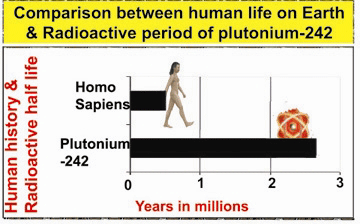 The half-life of plutonium-239, which can produce fatal radiation doses during short periods of direct exposure, is 24,000 years – the time it takes to decay to half its level of radioactivity. In 10 times that period, or 240,000 years, it decays to uranium-234, which is fairly harmless.
Homo sapiens began to evolve about 200,000 years ago………..http://www.abc.net.au/triplej/programs/hack/temple-of-doom-how-do-we-warn-the-future-about-nuclear-waste/7181278
Australian govt’s wrong decision to dump CSIRO climate modelling – Dr John Church
 Renowned CSIRO scientist Dr John Church speaks out against decision to dump climate modelling, ABC News 19 Feb 16 By Angela Ross One of the CSIRO’s most respected scientists, Dr John Church, has spoken out against the body’s decision to scrap its climate modelling program.
A petition signed by 2,800 international scientists from more than 60 countries expressed outrage about the decision to cut two research programs under the oceans and atmosphere business unit.
“The decision to decimate a vibrant and world-leading research program shows a lack of insight and a misunderstanding of the importance of the depth and significance of Australia’s contributions to global and regional climate research,” it read……..
Dr Church argued there was no point collecting data if scientists were not there to analyse the results.
“If Australia pulls out of key activities in the southern hemisphere then that will leave significant gaps, we will be losing partnerships with key agencies all around the world,” he said……..
The union representing Dr Church and his colleagues, the CSIRO Staff Association, has lodged a dispute with the Fair Work Commission but no date has been set. http://www.abc.net.au/news/2016-02-19/award-winning-scientist-condemns-csiro-job-cuts/7184410
#NuclearCommissionSAust ignores the long term problem of storing radioactive trash
South Australia ponders nuclear waste options MAX OPRAY, The Saturday Paper, 20 Feb 16 The initial findings of a royal commission into the merits of South Australia becoming a hub for uranium mining and waste storage raised as many questions as they answered.”…… Scarce put forward a premise even more audacious than his necktie – that South Australia’s seemingly hopeless descent into economic oblivion could be reversed by importing 138,000 tonnes of high-level nuclear waste from all over the world, reaping $445 billion in profits over 120 years. ……
The royal commission’s brief was to examine the feasibility of South Australia mining more uranium, processing it, using it for nuclear energy and then storing the waste – turning the state into a value-adding, vertically integrated hub of radioactivity.
The initial findings, based on interviews with 128 witnesses and more than 250 submissions, will be out for public comment for a five-week period before informing a final report due on May 6……….
Scarce urged attendees in Adelaide to contemplate the state’s future, but when question time arrived, the locals appeared to be thinking further ahead than he had in mind.
There was Lorraine Brady, who described herself as being from a group of mothers concerned about jobs for their children and future generations, but “not at any price”.
Brady asked: “How can you guarantee the safe containment of toxic, high-level nuclear waste for thousands of years to come?”
To speak of millennia is not hyperbole – by the royal commission’s own admission, some of the waste in question will remain hazardous for hundreds of thousands of years.
Craig Wilkins, chief executive of Conservation Council SA, an organisation that has actively questioned the impartiality of the royal commission, said the overall time frame needed to be taken into account not just in an environmental sense but an economic one.
“The commission acknowledges that nuclear waste needs to be isolated from the environment for ‘many hundreds of thousands of years’ yet there is no attempt to cost the management of waste over those time frames,” he said.
“If there’s one thing we know, the nuclear industry is expert at overstating the benefits and radically understating the costs and risks.”……..
there is the actual journey – the transportation of waste internationally across oceans, and then through ports and populated areas, before arriving at a temporary above-ground dump site, where it will have to remain until enough funds have been accrued from such imports to invest in a large-scale underground facility.
As the attendees noted, communities all along the route would need to offer consent, along with anyone living near the final destination………..https://www.thesaturdaypaper.com.au/news/politics/2016/02/20/south-australia-ponders-nuclear-waste-options/14558868002910
Melbourne Girls’ College’s original approach to becoming carbon neutral
 Melbourne Girls’ College pedals toward carbon neutral status with outdoor cinema, solar installations, ABC News, 19 Feb 16 774 ABC Melbourne By Clare Rawlinson An all-girls Melbourne high school is on its way to becoming the first Victorian school to go carbon neutral.
Melbourne Girls’ College is working towards carbon neutral status through the installation of solar arrays and energy reduction projects, spearheaded by the school’s Sustainability Collective.
The passionate young environmentalists are hosting an outdoor cinema powered by bicycles and ergo machines on Friday, to share their quest with the public and draw attention to the true cost of energy.
The students will pedal all day to charge the cinema batteries for the screening of movie Oddball, as well as the power for coffee carts and popcorn machines.
“The idea behind it is to show people what a watt hour is and how much electricity goes into these events,” former student Ruby Wynn Williams said.
Sustainability coordinator Andrew Vance said the first step towards the school’s goal of carbon neutrality was awareness. “It’s really easy to burn some coal to watch a movie but it’s completely out of sight and out of mind,” he said. “When you get on the bike and pedal two watts, it’s like an epiphany.”
Reputation for environmental sustainability
The school’s reputation for environmental sustainability has already earned it acclaim through a major international competition, the Zayed Future Energy Prize. In 2015 it was selected as one of five schools globally to receive the competition’s $US100,000 funding grant for sustainability projects.
The majority of the prize money has been spent on converting the school’s permanent power source to solar, with the installation of a 33kW solar array on one side of the gymnasium roof.
It plans to cover the other side of the roof with community-funded solar arrays.
“[Each person] who buys a panel will get their name on it … so they can go and look at how much carbon they’ve offset and the equivalent in trees,” Mr Vance said.
“That will get us close to our carbon neutral goal.”…….http://www.abc.net.au/news/2016-02-19/melbourne-girls-college-pedals-toward-carbon-neutrality/7180684
1 This month
17 October, Free Public Talk on Nuclear Issues in South Australia
David Noonan will speak on public interest concerns over the new Roxby Downs Indenture Act 2026 on BHP copper-uranium mining and ore processing in SA, and on how AUKUS may face SA with a High-Level nuclear waste agenda.
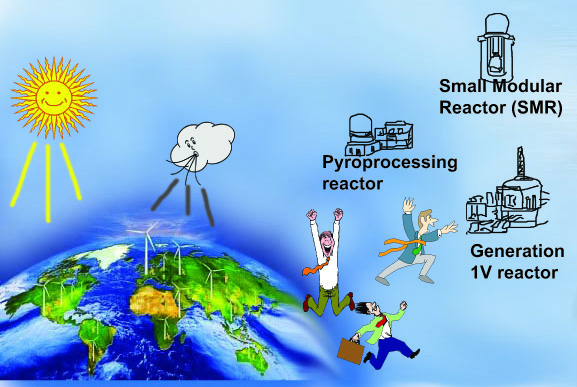
Dr Jim Green will discuss international developments in the field of nuclear power including ‘small modular reactors’ and Generation 4 ‘advanced’ nuclear reactor concepts.


Help Aunty Sue Protect Her Land and Sacred Sites From Destructive Rocket Testing.
.

Australians deserve the truth
about
AUKUS – https://aukuspublicinquiry.com/

PETITION – To: Prime Minister Anthony Albanese and the Australian Labor Government

of the week – Australians for War Powers Reform (AWPR)
To see nuclear-related stories in greater depth and intensity

