Coal giant Adani in a financial pickle
 Adani’s finances go from bad to worse, Independent Australia Lachlan Barker 3 January 2016, Federal and State Governments continue to approve it but the Adani Carmichael project will never eventuate unless an investor with “a financial death wish” can be found, writes Lachlan Barker.
IN OCTOBER 2015, the new Minister for Resources, Energy and Northern Australia,Josh Frydenberg, made a death knellpronouncement on Adani’s Carmichael Coal Mine and Rail Project, indicating that the rail line to the Galilee Basin to serve the mine:
“… wouldn’t be a priority project.”
He added that Adani’s project was:
“… a commercial operation and it needs to stand on its own two feet.”
This makes it pretty clear that the federal government have, at last, recognised that this Adani coal mine has not a chance in hell of making a red cent and federal funding through the Northern Australia Infrastructure Facility (named by opponents as the ”Dirty Energy Finance Corporation”) will not be provided.
Additionally, the banks have indicated that they will not touch this project and the one bank that Adani has constantly pointed to as a source of finance, the State Bank of India (SBI), has not actually said “yes” to the project. The SBI has simply received an application from Adani for financing.
Currently, the SBI are reviewing Adani’s application – as they do with any application – and will, presumably, announce their decision soon.
So, with no banks and now without the Australian Government, Adani were left with the solitary hope that the Queensland Government might come to the “white elephant” party.
If that was indeed their main source of hope, they must have been chagrined when, over the Christmas break, a tiny story appeared on the SBS website, headlined, ‘Adani must fund mine: Qld premier’.
The link takes us to a brief story reprinted here:
Queensland’s government has warned Indian mining giant Adani it must finance the controversial Carmichael coal mine on its own.
The federal government on Tuesday approved the expansion of Abbot Point port, which is intended to service the proposed Carmichael mine, prompting Premier Annastacia Palaszczuk to sternly tell Adani not to expect any financial assistance from the state.
“There will be no taxpayers’ money going towards this project,” she said.
At the time of writing, the only entity on the planet prepared to fund the Carmichael mine project – rated as a A$16 billion project (US$11 billion) – is Adani itself.
IEEFA tells us that Adani has already borrowed A$3 billion for the initial investment in the mine and now need to raise the remaining A$13-14 billion (US$9-10 billion). That being the case, the mine looks as likely to be built as environment minister Greg Hunt’s chances of getting an invitation to the Greenpeace Christmas party — for Adani’s financial situation has got worse………https://independentaustralia.net/article-display/adanis-finances-go-from-bad-to-worse,8539
Maralinga nuclear toxicity continues
Mr Kerin and the Minister for Aboriginal Affairs, Robert Tickner, told the cabinet that the Commonwealth would plead the Statute of Limitations if any Aboriginal initiated a common law  action against Canberra.
Further, the ministers stipulated that if Yami Lester, a Yankunytjatjara man blinded by a “black mist from the south in the 1950s”, rejected the offer and proceeded with his common law action the Commonwealth should also plead the Statute of Limitations.
 In a coda, Bob Hawke [at left] told journalists attending a National Archives briefing on the cabinet papers last month that Australia should take the world’s nuclear waste as a way to raise new revenue as an alternative to raising the GST or reducing expenditure.
Cabinet papers: Fallout continues from British atomic tests http://www.smh.com.au/nsw/cabinet-papers-fallout-continues-from-british-atomic-tests-20151217-glqlmg.html January 1, 2016 Damien Murphy The cabinet papers reveal how ignorant various Australian governments had remained about contamination at the British atomic test sites in Maralinga in South Australia.
They also erroneously believed that British clean-up operations were effective in removing plutonium contamination. Continue reading
Sorry history of the inadequate clean-up of radioactive Maralinga nuclear bomb test site
 “By ploughing soil at Taranaki without first removing contaminated fragments the British failed to achieve a significant reduction in radiological hazard and made the situation more difficult to remedy,”
Under a 1956 agreement, the UK accepted responsibility for cleaning up the site. In a subsequent agreement in 1968, Australia released the UK from that responsibility.
Clean-up work finally started in 1996 and continued to 2000, with the worst-affected area now deemed safe to visit but not for permanent occupancy, including by traditional owners the Maralinga-Tjarutja people who officially got their land back only in 2009.

 Aust demands UK pay up for nuclear mess http://www.9news.com.au/national/2016/01/01/00/09/aust-demands-uk-pay-up-for-nuclear-mess In 1990, [Prime Minister] Bob Hawke faced one of his more challenging missions, demanding British PM Margaret Thatcher pay to clean up the God-awful mess left behind when her predecessors let off A-bombs in the outback. Continue reading
South Australian towns could become nuclear terrorism targets
 Nuclear a terrorist risk, Whyalla News Dec. 28, 2015, Local towns such as Whyalla could be made terror targets if South Australia does become part of the nuclear fuel cycle.
This risk was outlined as part of a Nuclear Royal Commission public session held at the Whyalla public library in front of a small group of locals earlier this month.
Regional engagement officer Jon Bok said that an increased threat of terrorism was one of the several risks the commission were taking into account.
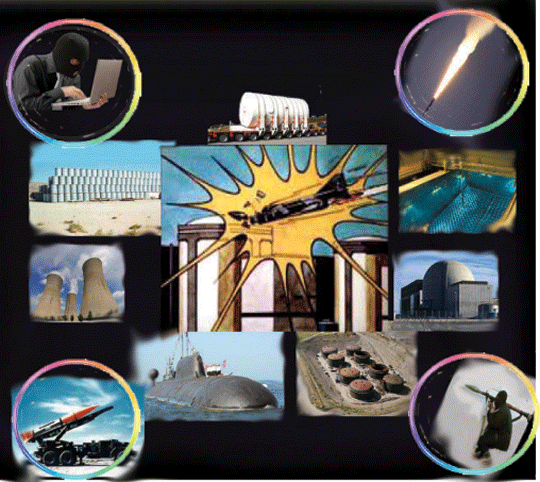
“At the moment we are looking into several issues, with terrorism being one of them,” Mr Bok said.
Mr Bok declined to comment on what counter-measures could be taken to prevent a terrorist attack…… http://www.whyallanewsonline.com.au/story/3617682/nuclear-a-terrorist-risk/
Australian government in deal with Ukraine’s troubled nuclear industry

 Ukraine to sign agreement on nuclear energy with Australia in 2016 http://en.interfax.com.ua/news/general/314722.html 29 Dec 15 Ukraine plans in 2016 to sign an agreement with Australia on cooperation in the field of using nuclear energy for peaceful purposes, Director of the Department of Strategic Planning and European Integration at the Energy and Coal Industry Ministry of Ukraine Mykhailo Bno-Airiian has said.
“One of the main tasks for 2016 is the signing of an agreement between the government of Ukraine and Australia on cooperation in the field of using nuclear energy for peaceful purposes,” he said at a briefing in Kyiv.
According to the department, the agreement has been agreed with the Australian government and is currently undergoing national procedures for its signature and ratification.
Broken Hill has Southern hemisphere’s largest solar energy project
 The industry is looking for assurance that Prime Minister Malcolm Turnbull is more climate-friendly than his predecessor, Tony Abbott, who said coal was “good for humanity.”
How Broken Hill became a solar power trailblazer, SMH December 22, 2015 James Paton Broken Hill spawned the world’s largest mining company and generated more than $75 billion in wealth. Now as its minerals ebb, Australia’s longest-lived mining city is looking to tap a more abundant resource.
On the sun-baked edge of the outback city, 700 miles west of Sydney, a solar farm the size of London’s Hyde Park shimmers like an oasis – its panels sending enough electricity to the national grid to power 17,000 homes a year.
Combined with a sister plant, the AGL Energy and First Solar project is the largest of its type in the southern hemisphere. Clean energy advocates are counting on the 140-hectare development to make Broken Hill, which at one time boasted the world’s most successful silver mine, a trailblazer once again. Continue reading
Australia leads the world in home rooftop solar
 Australia’s Small-Scale Rooftop Solar Installations Hit 4.59 GW In 2015 http://cleantechnica.com/2015/12/29/australias-small-scale-rooftop-solar-installations-hit-4-59-gw-in-2015/ by Glenn Meyers Propelling a global boost in renewable energy, Australia’s Clean Energy Regulator has reported small-scale rooftop solar totaled 4.59 GW in 2015. As reported by pv-magazine, data released by the Clean Energy Regulator shows 119,000 new small-scale PV installations have taken place in 2015. While not as sizable as 2014, this number distinguishes Australia with the highest portion of residential buildings with rooftop PV globally.
The Australia small-scale rooftop solar numbers also show the nation has maintained its world lead the world in deployment of rooftop solar. Counting a December 1 calculation, Australia has reached 1.49 million small-scale PV installations. This total is based on data released by this country’s Clean Energy Regulator.
The Clean Energy Regulator was established on 2 April 2012 as an independent statutory authority by the Clean Energy Regulator Act 2011, and operates as part of the Environment portfolio.
Clean Energy Finance Corporation (CEFC) estimates the nation will have another 300 MW of large-scale PV by the end of 2015. “Renewable energy is essential to Australia’s future economic growth and prosperity in a carbon-constrained world and to helping lower Australia’s carbon emissions. The transformation of Australia’s energy sector will require around $100 billion in investment in the renewables sector over the period to 2050.”
The CEFC Act has provided that a minimum of 50% of the CEFC portfolio be invested in renewable energy technologies, related enabling technologies and hybrid technologies that integrate renewable energy technologies by 1 July 2018.
CEFC reports on Australian solar potential
The CEFC has stated, “With the highest average solar radiation per square metre of any country in the world, and substantial cost reductions in solar technology over recent years, there is significant future opportunity for growth in deployment of solar technologies in Australia.”
CEFC has invested in both large and small-scale solar projects using solar photovoltaics. It reports the demand for solar financing continues to be strong, with solar projects valued over $3 billion.
The clean energy report shows a solid foundation for small-scale solar is in place.
Record low price for wind energy achieved in ACT deal with South Australia
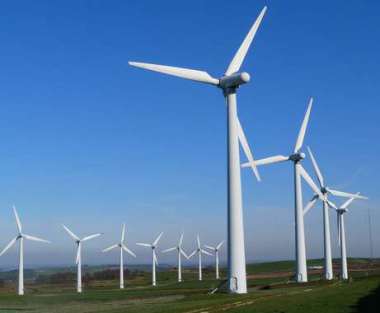 Record price for renewable energy achieved in new wind farm deal, ACT Government says http://www.abc.net.au/news/2015-12-21/record-price-for-renewale-energy-achieved-in-new-wind-farm-deal/7045414
A record low in pricing for renewable energy has been set as part of a deal to buy power from a South Australian wind farm, the ACT Environment Minister says.
The French-developed Hornsdale wind farm has been selected to supply power to the ACT, at a cost of $77 per megawatt hour.
Located just north of Jamestown in South Australia, the wind farm will eventually power 56,000 Canberra houses, providing 13 per cent of the ACT’s projected electricity demand by 2020. Continue reading
Queensland’s Fraser Coast Region could bloom with solar farm, says Councillor
 Solar Farm ‘Common Sense’ For Queensland’s Fraser Coast December 30, 2015 Energy Matters “There are many issues on the Fraser Coast Region; none of which are more important than rising energy prices,” says Cr. Loft; who also points to issues with unreliable delivery of electricity.
The councillor states the construction of a solar farm within the region’s boundaries could provide savings for Council of around 15%, freeing up hundreds of thousands of dollars in working capital that could be redirected to other community needs.
In addition to savings, creating jobs and a more robust electricity supply, Cr. Loft says benefits for the region would include “the ability to portray the Fraser Coast Council as an environmentally friendly and green community, compatible with our magnificent natural environment.”
The Fraser Coast sits within the Great Sandy Biosphere, which is part of a world network of Biosphere Reserves.
The proposed feasibility study would include profiling the electricity consumption of Council and major consumers of electricity in the Shire; determining total Shire electricity consumption, potential locations for the facility and the most appropriate technology, e.g. solar panels, CPV or solar thermal + storage.
Cr. Loft believes now is a good time for a major solar power project……..
The Fraser Coast Council incorporates Fraser Island – the world’s largest sand island – and towns including Maryborough, Burrum Heads, Hervey Bay and Brooweena.
Queensland is Australia’s leading state in terms of total solar capacity and it also has the highest number of small scale solar power systems – more than 460,000 installations. http://www.energymatters.com.au/renewable-news/fraser-coast-solar-em5271/
Solar thermal plant at Forbes, New South Wales,has great potential
“This sort of technology will put massive amounts of money into regional Australia if it takes off “.
“It could be very significant here in Australia but also, there are significant overseas opportunities for Vast where Australia could earn export dollars.”
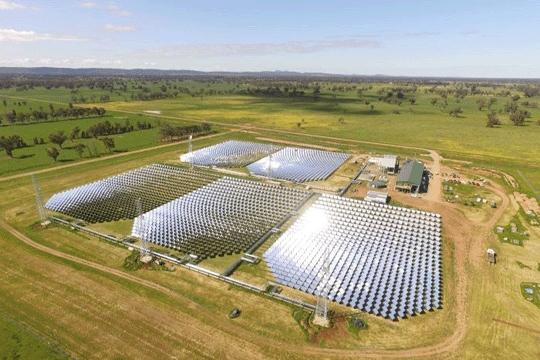
Developer of $20 million Australian-first solar thermal pilot plant predicts sunny future under Turnbull ABC Central West By Melanie Pearce 23 Dec 15 After hours of steady rain, there is not a ray of sunshine in sight and the mud is thick on the ground at the $20 million Jemalong pilot solar thermal plant near Forbes in central west New South Wales.
But in a way, the fact it is overcast helps to explain the importance of this technology, which enables both capture and storage of energy from the sun, according to James Fisher, chief technology officer of Vast Solar.
The engineer, who formerly worked in the fossil fuel industry and said he never thought renewables could compete with coal, now has a much sunnier outlook on the subject.
Technology behind solar thermal power plant
The Australian company has developed what it hopes will be a low-cost, high-efficiency Concentrated Solar Power (CSP) generation technology.
The Jemalong pilot plant will be ready for commissioning in mid-January and is designed to prove the technology works. Continue reading
Australian media ignored the indigenous achievements in opposing a nuclear South Australia
Dennis Matthews 24 Dec 15 In response to Dave Sweeney’s “good nuclear news” – on the leadership of indigenous Australians in opposing the nuclear industry and nuclear waste dumping in South Australia
 It’s correct, in December Karina and Rose Lester shared the Conservation Council of SA (Conservation SA) 2015, $1000, Jill Hudson Award for environmental protection for their opposition to the nuclear industry, but, apart from a small column in The Advertiser which didn’t mention the nuclear industry I’ve seen no mention of this important event.
I looked for a media release on the Conservation SA website but couldn’t find anything.
Perhaps someone could put the media release on this website?
PS. The first winners of the Jill Hudson award were Adnyamathanha activist Dr Jillian Marsh and ABC journalist Rose Crane. I understand that Jillian is involved in fighting attempts to put the proposed national nuclear waste dump on Adnyamathanha land.
South Australia power networks cannot impose tariff on solar homes
Federal Court rejects SA Power Networks’ proposed charge on solar-powered households http://www.abc.net.au/news/2015-12-23/federal-court-rejects-solar-household-charge/7050600 The Federal Court has dismissed an appeal by SA Power Networks to charge a tariff on homes with solar panels.
The electricity distributor wanted it to approve a tariff of about $100 a year.
It argued that solar-powered houses have different energy consumption patterns and are effectively subsidised by houses without panels.
SA Power Networks took the matter to court when the Australian Energy Regulator rejected the proposed charge.
The distributor said that it was “disappointed by the appeal decision” and maintained that its application was about “fair and equitable cost-sharing among customers”.
“This was not about additional revenue,” SA Power networks said in a statement.
Solar farm for Parkes, could double as sheep farm
French company plans 240ha solar farm for Parkes http://www.abc.net.au/news/2015-12-18/240ha-solar-farm-planned-for-parkes/7035218 Landholders adjoining a proposed solar farm near Parkes in central west New South Wales are being assured they will not be adversely affected by the development. The proponent Neoen is planning a 240-hectare plant west of the town that will include about 245,000 solar panels.
Cattle producer John Smeaton plans to lease his land to the company and says planting trees around the site will address any concerns about glare.
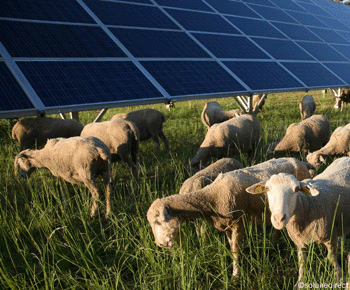 He said he was confident the area would remain productive and become ideal for grazing sheep.”These panels, cattle would wreck them, the only thing they could run there could be sheep,” Mr Smeaton said.
“Some of the other neighbours might be interested in running sheep there.
“From a fire prevention point of view I think it’s necessary for something to take the grass down, because it’s fertile farm land and the grass can grow a metre or more high and it grows hot when it burns.”
The company plans to create 120 jobs during construction if it is successful in getting grant funding and planning approvals next year. Mr Smeaton said it would also have tourism potential.
Research into wind turbines and their role in reducing carbon emissions
The effect of increasing the number of wind turbine generators on carbon dioxide emissions in the Australian National Electricity Market from 2014 to 2025, Australian policy Online
18 December 2015……
Bill Fisher spells it out on nuclear waste – Submission to #NuclearCommissionSAust
 Bill Fisher Nuclear Fuel Cycle Royal Commission – Submission – All Issues
Introduction I frequently make submissions to parliamentary enquiries on matters nuclear: most recently the Enquiry into Nuclear Non-proliferation and Disarmament and the Enquiry into expansion of the Roxby mine. My submission is usually among the large majority (about 90%) opposed to uranium mining and export. The usual 90% majority is usually ignored! The 10% who are listened to are uranium industry representatives, governments and government departments, and a few scientists who are on the payroll of the uranium industry or the government. While this is a significant problem in the case of federal governments, it is far worse in South Australia, where the Roxby Downs Indenture Act is designed to override virtually all other legislation, and government departments which are supposed to monitor mining and export also act as promoters and protectors of the industry…..
1 This month
17 October, Free Public Talk on Nuclear Issues in South Australia
David Noonan will speak on public interest concerns over the new Roxby Downs Indenture Act 2026 on BHP copper-uranium mining and ore processing in SA, and on how AUKUS may face SA with a High-Level nuclear waste agenda.
Dr Jim Green will discuss international developments in the field of nuclear power including ‘small modular reactors’ and Generation 4 ‘advanced’ nuclear reactor concepts.


Help Aunty Sue Protect Her Land and Sacred Sites From Destructive Rocket Testing.
.

Australians deserve the truth
about
AUKUS – https://aukuspublicinquiry.com/

PETITION – To: Prime Minister Anthony Albanese and the Australian Labor Government

of the week – Australians for War Powers Reform (AWPR)
To see nuclear-related stories in greater depth and intensity

