Safety concerns over transport of radioactive trash returning to Australia
Ship laden with nuclear waste heading to Australia despite safety concerns, Guardian, Oliver Milman, 17 Oct 15 The 25 tonnes of waste was originally generated by Australian Nuclear Science and Technology Organisation and sent to France in 2001 for reprocessing. A ship laden with nuclear waste is heading to Australia from France, despite concerns raised over its safety record.
The BBC Shanghai, flagged to Antigua and Barbuda, is on its way to Port Kemblain New South Wales from the French port of Cherbourg with a cargo of reprocessed nuclear waste.It’s outrageous the BBC Shanghai is heading towards Australia and is not outfitted to safely carry nuclear waste. -Emma Gibson, Greenpeace Australia Pacific
The 25 tonnes of waste was originally generated by the Australian Nuclear Science and Technology Organisation and sent to France in 2001 for reprocessing.
Environmental groups have raised concerns over the safety of the BBC Shanghai, pointing out it has been blacklisted by the US due to its record. Continue reading
Wind farms seek contracts in Australian Capital Territory
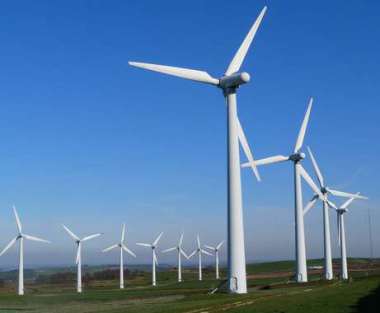 Fifteen wind farms vie for ACT contracts as second auction round closes, Canberra Times, October 16, 2015 Stephen Jeffery The Canberra Times reporter Environment Minister Simon Corbell believes the ACT is still a strong renewable energy “buyers’ market” after receiving 15 proposals to supply Canberra with 200 extra megawatts of wind power from 2018.
The territory government’s second large-scale wind energy auction closed bidding on Wednesday, having attracted only three fewer proposals than the last round in February.
The closure of bids in the “reverse auction” process, in which wind farms compete to be among two or three to supply the ACT with energy in exchange for a feed-in tariff, comes as the Department of Environment and Planning’s annual report showed 18.5 per cent of the territory’s energy was supplied from renewable resources in the last financial year.
The figure, up from 14.2 per cent in 2010/11, showed a major acceleration in renewable power uptake was needed if the government was the reach its target of green energy supplying 90 per cent of the ACT’s needs by 2020. But the document also notes successful wind farm bidders from the first auction are due to come online between 2016 and mid-2017, contributing to about 25 per cent of the ACT’s expected electricity demand in 2020.
Mr Corbell said the winning farms from the most recent auction would contribute an additional 25 per cent of forecast 2020 demand to the supply, while solar farms launched between 2014 and 2016 would provide an additional three per cent.
“This second wind auction will cut over half of the emissions associated with electricity usage in each and every Canberra household,” he said.”Our early review of bid pricing indicates we are still in a very strong buyers’ market.”………
The government plans for the bulk of renewable energy infrastructure to be in place by 2018, with a target of green energy supplying 80 per cent of electricity in that year.That would leave only 10 per cent of power to be switched to renewables in the final two years before the target is achieved.
An interim report released earlier this year showed the ACT’s greenhouse gas emissions had fallen 8 per cent between 2011/12 and 2013/14. http://www.canberratimes.com.au/act-news/fifteen-wind-farms-vie-for-act-contracts-as-second-auction-round-closes-20151014-gk9i1s.html#ixzz3olgThmLR
‘Dustbin’ ship takes N-waste to Australia
 http://www.gulf-times.com/australia/244/details/459111/%E2%80%98dustbin%E2%80%99-ship-takes-n-waste-to-australia A ship carrying 25 tonnes of reprocessed nuclear waste was steaming to Australia yesterday despite protests from activists about an “environmental disaster waiting to happen”.
The BBC Shanghai left the northern French port of Cherbourg after approval from local officials, who carried out an inspection on Wednesday, and was due to arrive by the end of the year in New South Wales state.
It was laden with radioactive waste from spent nuclear fuel that Australia sent to France for reprocessing in four shipments in the 1990s and early 2000s, the Australian Nuclear Science and Technology Organisation (ANSTO) said yesterday. The reprocessing involves removing uranium, plutonium and other materials, with the remaining substances stabilised in glass and stored in a container.
“The container will be placed on a nuclear-rated ship, brought to an Australian port, and trucked to Lucas Heights (nuclear facility) with an appropriate security operation,” ANSTO said in a statement.
“The ship was selected by (France-based nuclear company) Areva, and after a full inspection carried out by both French maritime safety authorities and by the French nuclear safety regulator on October 14, the ship’s seaworthiness was confirmed and certified.”
Greenpeace, French environmental campaign group Robin des Bois (Robin Hood) and a leading green lawmaker called for the shipment, sent by Areva, to be halted.
Small Nuclear Reactors lobby turns to Australia, as safety rules too strong in USA
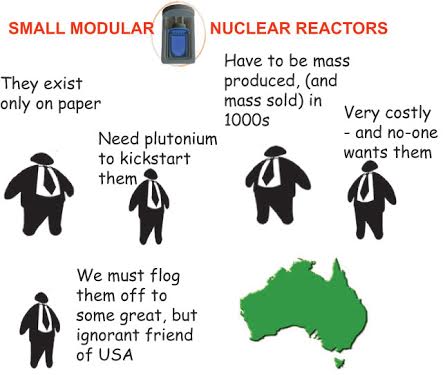 Why Australia is important to the Small Nuclear lobby. Independent Australia
the nuclear lobby’s spiel to Australia is something different, and very original. No dispute — because the argument is that small reactors would further the large reactor industry.
First articulated by Oscar Archer on ABC RN, March 2015, the idea is that Australia, in setting up small nuclear reactors, would enable the conventional nuclear industry and uranium mining to flourish:….. As Archer says, Australia would indeed be the pioneer for the new technology.
And that’s what the USA “new nuclear” lobby desperately needs. They need this, because they’re finding it impossible to go ahead in America. Why? Well it’s those pesky safety regulations imposed by the Nuclear Regulatory Commission.
What the “Small Nuclear” lobby needs is a “nuclear friendly” country – one with less stringent safety
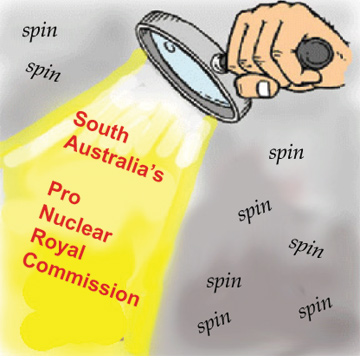 regulations – to set up their nuclear reactors on a test site. Hence the enthusiasm of those lobbyists for the South Australia Nuclear Fuel Chain Royal Commission, as shown, for example, in a recent Royal Commission hearing speech by Thomas Marcille of Holtec International nuclear company.
……… the Nuclear Regulatory Commission(NRC) has proved to be real nuisance since it tightened regulations for the licensing process after the Fukushima nuclear disaster. The new nuclear marketers have had to go overseas, first to China, then perhaps to Australia?…. https://independentaustralia.net/environment/environment-display/why-australia-is-important-to-the-small-nuclear-lobby,8263
South Australia: subsidy for large-scale solar photovoltaic (PV) projects
 Rooftop solar subsidies for SA business http://www.heraldsun.com.au/news/breaking-news/rooftop-solar-subsidies-for-sa-business/story-fni0xqi4-1227569000315
CLIMATE Change Minister Ian Hunter says the subsidy for large-scale photovoltaic (PV) projects, between 10 and 50 megawatts, will help businesses take advantage of a $100 million commonwealth funding pool aimed at increasing the uptake of solar panels.
“This is a great opportunity for potential developers to bring the cost of solar PV down to a price comparable to wind energy,” Climate Change Minister Ian Hunter said on Wednesday.
Adani coal mine approval ‘grossly irresponsible’
Australian Conservation Foundation, October 15, 2015 Federal environment minister Greg Hunt’s approval of what could become one of the world’s largest coal mines sets back global efforts to combat climate change, the Australian Conservation Foundation said today.
“To approve a massive coal mine that would make species extinct, deplete 297 billion litres of precious groundwater and produce 128.4 million tonnes of CO2 a year is grossly irresponsible,” said ACF President Geoff Cousins.

“At a time when the world is desperately seeking cleaner energy options this huge new coal mine will make the effort to combat climate change all the more difficult.”
If it goes ahead the Carmichael mine would be the largest ever dug in Australia. It would take up five times the area of Sydney Harbour. The climate pollution resulting from burning its coal would be more than New Zealand’s entire annual emissions.
In August the Federal Court set aside Minister Hunt’s original approval of Adani’s controversial proposal to dig the massive coal mine in Queensland’s Galilee Basin.
Minister Hunt’s re-approval of the Carmichael coal mine flies in the face of rising public opposition to the proposal and scientific evidence that shows the mine would destroy 10,000 hectares of habitat for endangered species, including the largest known population of the southern black-throated finch.
“Tens of thousands of ACF supporters from all over Australia have written to Greg Hunt, asking him to reject the Carmichael mine once and for all,” Mr Cousins said.
“Just as Woodside lost its social license to build a gas factory at James Price Point in the Kimberley, most Australians do not want Adani to dig a massive coal mine and export the coal across the Great Barrier Reef.
“ACF will scrutinise this approval decision and carefully consider our options.
“We will use all appropriate means to stop this mine,” Mr Cousins said.
ACF and other environment groups ran ads in major newspapers in August urging Minister Hunt not to re-approve Adani’s Carmichael proposal.
Uranium miner ERA should be made accountable for fire in Kakadu National Park
Federal Environment Minister Greg Hunt has committed to an inquiry into the fire. This is welcome but any inquiry needs to be open and transparent, not simply another yellowcake whitewash.
Kakadu has been burnt but it is ERA who should be in the firing line. The company lacks the commitment, capacity and competence to conduct such a dangerous trade in such a special place and the recent fire is further proof that it is time to close the chapter on uranium mining in Kakadu.
Uranium miner in the firing line over Kakadu burn http://www.sbs.com.au/news/article/2015/10/13/comment-uranium-miner-firing-line-over-kakadu-burn A week- long fire in the World Heritage listed Kakadu has caused significant environmental damage and threatened Aboriginal art and cultural sites, writes Dave Sweeney. The smoke is finally starting to settle over Australia’s largest national park. For a week Kakadu has been burning following the escape of a “controlled” fire lit by the uranium mining company Energy Resources of Australia.
In a case of good luck rather than good management, no one was seriously injured but, as the flames die down and the damage assessment and questions start up, more of ERA’s shrinking credibility has literally gone up in smoke.
While the full extent of the damage is not yet known, the fire burned over 200 square kilometres of the World Heritage listed Kakadu, causing significant environmental damage and threatening ancient and important Aboriginal art and cultural sites. Continue reading
Fall in quarterly production for uranium miner ERA
 ERA’s Sept quarter production falls, NT NewsAAP OCTOBER 13, 2015 THE Rio Tinto-owned company that recently shelved a major uranium mine expansion has reported a fall in quarterly production.
ENERGY Resources of Australia produced 457 tonnes of uranium oxide in the September quarter, down 19 per cent on the same quarter last year.
- Production was up 17 per cent on the June quarter, when output was impacted by a mill shutdown to carry out maintenance.All ore milled in the September quarter was taken from existing stockpiles, and no exploration expenditure was incurred during the quarter.ERA lost half its board in June after deciding a proposed new underground mine at Ranger in the Northern Territory will not proceed to a final feasibility study due to a sluggish uranium market.
 Rio Tinto has pulled its support for any expansion, but ERA continues to seek to extend its authority to operate Ranger in order to re-visit the expansion at some stage.
The company’s total evaluation expenditure for the September quarter dropped to $1 million, from $3 million in the June quarter, due to “close out activities” of its Ranger pre-feasibility study……..http://www.ntnews.com.au/business/era-sept-quarter-production-down-19-pct/story-fnjbnvte-1227567072625
Energy utilities face challenge as community energy increases
 Community energy projects pose challenge for mainstream suppliers, The Age, October 11, 2015 Angela Macdonald-Smith Energy Reporter A gradual loss of trust in mainstream electricity suppliers and a growing sense of local engagement have driven huge growth in community-based renewable-energy projects in Britain, with a similar trend potentially taking hold in Australia.
Volker Beckers, the former head of British energy supply giant Npower who now chairs London-based Albion Community Power, said traditional large energy suppliers risk losing customers to the smaller, local outfits.
Community ventures typically take advantage of community support to push renewable energy projects through planning processes, while building a customer base that in some cases in Britain have reached into the hundreds of thousands, eroding the market share of larger utilities. A surge in community energy projects in Britain, where they now number as many as 5000, was creating “healthy competition” for the big six utilities, which were having to quickly respond with increased customer focus, he said.
“Community energy means business models have to become more customer centric,” Mr Beckers told Fairfax Media while in Melbourne to attend a conference. “In my view the big utilities which can respond and adapt as quickly as the small-scale renewable-energy companies can do will survive. Others will have to completely redefine their business model.”
Mr Beckers pointed to research carried out in Europe that found the “net promoter score”, a recognised method of gauging the loyalty and support of a firm’s customers, was typically 20-35 per cent higher for community energy companies than traditional utilities. Support from a local community can be 20-30 per cent higher for a wind farm that is being built by a local company, for example, rather than a more anonymous mainstream utility, because people believe that the benefit of having local generation will flow back to that community.
Mr Beckers said the ventures were “an example of the shared economy in the energy area”, where people were more supportive of a product where it gets generated. That leads to lower administration and operating costs, with savings flowing back to customers in the community.
“It’s a win-win for both sides, customers and companies alike,” he said.
Australia has an increasing number of community energy projects, put at 70 by non-profit organisation Embark Australia, which works to accelerate the uptake of community renewable energy. About 16 are already generating power……….. http://www.theage.com.au/business/energy/community-energy-projects-pose-challenge-for-mainstream-suppliers-20151007-gk3vq3.html#ixzz3oUuoUgeT
Turnbull govt postpones effort to stop environmentalists using legal avenues
Anti-mine activist law changes delayed https://au.news.yahoo.com/a/29788659/anti-mine-activist-law-changes-delayed/ Federal government plans to stop environmental activists halting major projects through court action have been delayed until next year.
The Senate committee looking into the draft laws, drawn up by the Abbott government after the Federal Court overturned the approval of Adani’s $16.5 billion Carmichael coal mine, was due to report on Monday but has been given an extension until February 2016.
Government Senate leader George Brandis on Monday reconfirmed the coalition’s commitment to changing the law to restrict judicial reviews of environmental approvals to “aggrieved” people.
Broken Hill’s solar mega-plant operational this year
Broken Hill mega-plant solar panels lift the roof http://www.theaustralian.com.au/national-affairs/climate/broken-hill-mega-plant-solar-panels-lift-the-roof/story-e6frg6xf-1227565295647?sv=2fcdf280bb239bfc36e6b071c20e2458 OCTOBER 12, 2015 Sid Maher
The final panels on the biggest large-scale solar power station in the southern hemisphere will be installed at Broken Hill today, paving the way for the plant to be fully operational by year’s end.
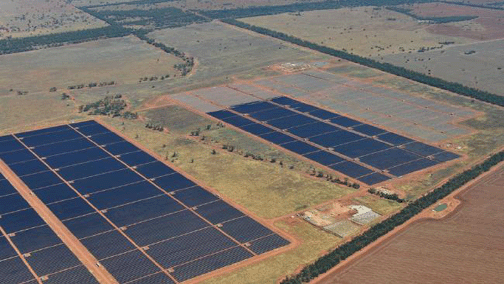
The 53-megawatt solar plant, a partnership between AGL and First Solar, will work in conjunction with the 102MW Nyngan solar plant to produce enough electricity to power about 50,000 average Australian homes. The Nyngan plant began operating six months ago. “There is a real sense of momentum driving large-scale solar in Australia today,’’ Australian Renewable Energy Agency acting chief executive Ian Kay said.
The large-scale solar plant begins operation as more than 1.4 million households in Australia have solar panels on their roofs, providing the highest penetration at the household level in the world.
However, the government is trying to drive more solar uptake at the commercial level as part of the 23.5 per cent renewable energy target. Environment Minister Greg Hunt has set a priority of increasing the uptake of utility- scale solar as part of the government’s renewable energy mix.
The government through ARENA had provided $166.7 million towards the $440m AGL Solar Project.
“As well as powering Australian homes with renewable energy, this project is also assisting AGL to transition towards a decarbonised economy. It’s a win-win scenario,’’ Mr Hunt said.
Mr said there was $350m available through ARENA and the Clean Energy Finance Corporation to further accelerate growth in the sector. ARENA has a $100m large-scale solar round that could double the capacity of large-scale solar.
AGL executive general manager group operations Doug Jackson said the Broken Hill Solar Plant was already generating up to 27MW of renewable energy into the grid and the remaining 26MW was expected to be brought on line this month.
First Solar’s regional manager for the Asia Pacific, Jack Curtis, said the project combined industry leading thin film modules and construction techniques. He said the Broken Hill plant contained 677,760 of First Solar’s advanced PV modules. The Cadmium Telluride modules offered significant efficiency and reliability advantages over typical crystalline silicon modules, Mr Curtis said.
National Affairs Editor
A network of micro-grids for Australia’s energy future?
 Australia’s energy future could be network of micro-grids http://reneweconomy.com.au/2015/australias-energy-future-could-be-network-of-micro-grids-84534 By Giles Parkinson on 13 October 2015
The creation of micro-grids is seen by many leading players as an obvious solution to Australia’s soaring electricity costs, where the grid has to cover huge areas, at the cost of massive cross-subsidies that support it.
The major network operators in Queensland, NSW, South Australia and Western Australia see micro-grids as an obvious solution to the challenge and cost of stringing networks out, sometimes more than 1,000km away from the source of generation.
In Western Australia and Queensland, these subsidies amount to more than $500 a household. The cost of service to regional consumers in Queensland is far above the cost of service to those in the south-east corner. To address this, these states are proposing to take some small communities, and towns like Ravensthorpe in Western Australia off the grid. In New South Wales, some towns are taking the initiative themselves.
In northern rivers region, the township of Tyalgum revealed it is considering a micro-grid that would allow it to largely, or entirely, look after its own energy needs.
Indeed, the whole Byron shire is considering micro-grids as part of its efforts to become “zero net emissions” within the next decade, and to source 100 per cent of its electricity needs from renewables.
But micro-grids are not just about grid defection. While it will make sense for those towns and communities at the edge of the network to become self-sufficient and disconnect entirely, most micro-grids will remain connected to the network, helping to reshape a centralised grid to one focused on more efficient decentralised renewable power generation sources and storage. Continue reading
To meet climate goals, Australia must double decarbonisation
 Australia must double decarbonisation rate to meet 2030 goals, report finds, Guardian, Oliver Milman, 13 Oct 15 Coalition claims nation is making good progress towards cutting emissions by 26% by 2030, but report by PricewaterhouseCoopers shows more is needed The federal government has said it is making good progress in cutting greenhouse gases after a new report found that Australia will have to double its historic rate of decarbonisation if it is to meet its climate goals.
Australia will have to slash its carbon intensity by 4.4% each year if it is to meet its goal of reducing emissions by at least 26% by 2030, based on 2005 levels, according to the PricewaterhouseCoopers (PwC) analysis.
This rate of required emissions reduction is nearly double the average 2.4% cut managed by Australia annually since 2000.
Australia’s rate of decarbonisation is among the best of the world’s largest economies, PwC said. If Australia maintained its 4.7% reduction in carbon intensity in 2014, it could hit the 2030 target. However, the 2014 figure includes six months during which the former Labor government’s carbon price of $24 a tonne was in place…….
According to the PwC analysis, the global economy has reduced its carbon intensity, which is emissions related to economic growth, by 1.3% a year since 2000. Last year saw the biggest drop yet, at 2.7%.
But these reductions are still not enough to meet the 2C target, which, if exceeded, will result in runaway climate change associated with punishing drought, damaging sea level rises and extreme weather events.
If current emissions cuts are maintained, the world will spew out enough heat-trapping gases to exceed the 2C limit by 2036, PwC said. The European Commission has said that national pledges to further cut emissions ahead of climate talks in Paris in December will still result in a 3C rise in average temperatures.
The federal government has said Australia’s emission reduction target places it among comparable nations although independent analysis suggests it lags at the back of the pack.
Australia still lacks a comprehensive plan to reduce emissions beyond a $2.55bn emissions reduction fund that hands out money to businesses that wish to reduce their greenhouse gas output. Analysts believe this plan will fall well short of the target without major modification, potentially including emissions trading, which the government has previously ruled out.
Australia’s energy is still overwhelmingly fossil fuel based, with coal, oil and gas accounting for 94% of the country’s energy demands, PwC said. However, coal consumption has slipped 18% since 2009 and energy from renewables such as wind and solar has increased by 72% over the same period.
Greens senator Larissa Waters said: “The Abbott government’s attacks on renewable energy are continuing under Malcolm Turnbull who has made a deal with the Nationals to retain the low 2030 target and not bring back an emissions trading scheme.
“We’re missing out on clean energy jobs because the Turnbull government is holding us back from this exciting transition that we need to save our environment and very way of life.”……… http://www.theguardian.com/environment/2015/oct/13/australia-must-double-decarbonisation-rate-to-meet-2030-goals-report-finds
There needs to be a stronger framework for Aboriginal property rights
At the heart of current concerns are two apparent contradictions.
First, to get back their land, Indigenous claimants need to legally demonstrate continuity of rights and interests under traditional laws acknowledged and traditional customs observed and to demonstrate continuity of connection with lands and waters since colonisation. Similar requirements are stipulated in earlier land rights law to demonstrate primary spiritual responsibility for land and to have a right to forage, to economically use, land claimed.
Such special relationship with land that is usually of low commercial value, in turn requires land owners to live remote from mainstream work opportunities. The maintenance of tradition that is required to claim the land, and hold it, geographically disadvantages land holders in their engagements with 21stcentury global capitalism. This also raises important questions about what constitutes ‘economic development’ from the perspective of Indigenous land owners.
Second, in accord with tradition land is inalienable. There was no trade in land pre-colonially and so land was passed inter-generationally on the basis of descent.
I am not convinced that inalienability is a major hurdle to development………
What is more significant, in my opinion, is the issue of property rights and the legal finding that mineral ownership is vested with the crown alongside state assertion of exclusive rights to own and regulate valuable natural resources like fresh water, fisheries and even carbon for commercial purposes….
Unfortunately, the Native Title Act framework provides native title groups a far weaker property right, a mere right to negotiate with a window of opportunity of six months, at best, and a right of consultation, at worst. This has resulted in many benefit sharing agreements, although whether they are equitable remains a contentious point.
And as Indigenous people get back more and more of the continent, political pressure continues to deprive them of ownership of commercially valuable resources: minerals, fisheries and fresh water. And as resource hungry developers look to explore and exploit Indigenous lands, there is a risk that disparities between Indigenous and non-Indigenous Australians might increase rather than decline.
Equally unfortunately, while the dominant approach to Indigenous development focuses on ‘mainstreaming’ the only guarantees that Indigenous people have to resources are outside the market system. So, Indigenous groups may be guaranteed ‘customary’ non-market rights, but not commercial market rights.
The Australian Law Reform Commission has produced the only policy response to grasp this key issue when it recommends that native title rights and interests might be exercised for any purpose, including the commercial alongside hunting, fishing, gathering and trading rights and interests. This is a means to empower Indigenous land owners to have the freedom to make development choice, although such policy reform could exacerbate wealth and wellbeing differentials between those who own land and those who do not.
Others like the White Paper and the Australian Human Rights Commission focus too much on real or imagined over-regulation of Indigenous lands and seek the removal of what Mick Gooda and Tim Wilson refer to as ‘red and green tape that stifles Indigenous development’. This all sounds too much like Keating’s warnings about ‘workability’ and risks change that will be structural and disempowering of the Indigenous disadvantaged in favour of the rich and powerful.
It might be timely for those who champion ‘rights to development’ to advocate for stronger Indigenous property rights either by making them inclusive of commercial rights, at best, or by making them the equivalent of the free prior informed consent rights proposed by Justice Woodward and embedded in land rights law nearly 40 years ago.
Such advocacy might see prospects for Closing the Gap enhanced for those Indigenous people who prioritise development in the mainstream while simultaneously enhancing livelihood prospects from alternate forms of development for those who choose otherwise.
As the Broome Communiqué of May 2015 noted there are tensions between cultural matters, environmental protection and development objectives. Stronger native title property rights are a potentially important means to ameliorate such tensions.
A version of this article was published in Land Rights News Northern Edition August 2015/Edition 3.

Eloquent Submission to #NuclearCommissionSAust – an Aboriginal Perspective
 Submission to: Nuclear Fuel Cycle Royal Commission South Australia Prepared by Breony Carbines on behalf of West Mallee Protection
“West Mallee Protection are a conservation group made up of Aboriginal and non-Aboriginalmembers based in Ceduna on the west coast of South Australia. Our On country work includes cultural maintenance of water rock holes and monitoring of biodiversity in the last stretch of intact stunted mallee country. WMP also works to ensure that this area is protected now and well into the future.”
I found it very hard to select an extract from this submission, because I didn’t want to exclude any of it. This submission is expressed with clear and forceful logic: it contains excellent references and recommendations.
Here’s what they had to say about the Commission’s question onsetting up a nuclear waste dump:
1 This month
17 October, Free Public Talk on Nuclear Issues in South Australia
David Noonan will speak on public interest concerns over the new Roxby Downs Indenture Act 2026 on BHP copper-uranium mining and ore processing in SA, and on how AUKUS may face SA with a High-Level nuclear waste agenda.
Dr Jim Green will discuss international developments in the field of nuclear power including ‘small modular reactors’ and Generation 4 ‘advanced’ nuclear reactor concepts.


Help Aunty Sue Protect Her Land and Sacred Sites From Destructive Rocket Testing.
.

Australians deserve the truth
about
AUKUS – https://aukuspublicinquiry.com/

PETITION – To: Prime Minister Anthony Albanese and the Australian Labor Government

of the week – Australians for War Powers Reform (AWPR)
To see nuclear-related stories in greater depth and intensity


