Bjorn Lomborg’s climate views have no credibility in the scientific community
 “UWA was approached by the federal government” [ to host Bjorn Borg’s Centre, with govt funding]
In an email to supporters of the Climate Council on Friday, former Australian of the Year Tim Flannery said it was “extraordinary” that the government had abolished the Climate Commission “which was composed of Australia’s best climate scientists, economists and energy experts” on the basis of lack of funding only to find the money to “import a politically-motivated think tank to work in the same space.”
“Mr Lomborg’s views have no credibility in the scientific community,” Professor Flannery wrote.
Bjorn Lomborg centre: leaked documents cast doubt on Abbott government claims, The Age April 23, 2015 Lisa Cox, Matthew Knott It was the Abbott government’s original idea for the University of Western Australia to host a think tank created by the “sceptical environmentalist” Bjorn Lomborg, according to leaked talking points.
The government will provide $4 million over four years to bring Dr Lomborg’s Copenhagen Consensus Centre methodology to Australia at a new centre within the University of Western Australia (UWA) business school. Continue reading
Climate Change Authority (CCA) warns on need for big cuts in carbon emissions beyond 2020
 Climate Change Authority recommends Australia makes aggressive cuts to emissions beyond 2020, ABC News 22 Apr 15 By National Environment Reporter Jake Sturmer and Lisa Main The Climate Change Authority (CCA) has recommended aggressive cuts in emissions beyond 2020 to ensure Australia does its fair share to combat climate change.
A CCA report recommends cutting greenhouse gas emissions by 30 per cent by 2025 based on Australia’s emissions from the year 2000. This would require significant emissions cuts beyond the current 2020 target of 5 per cent. Australia’s emissions are less than 1.5 per cent of global emissions, but per capita Australia is the biggest emitter of all developed nations.
The CCA warned if the Government sat on the sidelines based on Australia’s global share of emissions being small, it would be “more self-serving than credible”. “To maintain that posture in the light of  increasing international actions to reduce emissions – by developed and developing, big and small countries – makes it even less credible,” CCA chair Bernie Fraser said.
The fact is that Australia stands to be massively affected by global warming whatever its share of global emissions.”While the CCA conceded these were “challenging” targets, its report said many other countries were promising similar levels of emissions reductions.
The CCA previously suggested cuts of between 40–60 per cent by 2030.
But what would such cuts look like in reality? ‘Economy can look pretty similar’ Not-for-profit think tank ClimateWorks and the Australian National University conducted a study to look at such a future.
“Our economy can look pretty similar to the way it does today even when we’ve transitioned to low-carbon energy sources,” chief of ClimateWorks Anna Skarbek said. “We would still have a strong mining sector, a strong manufacturing sector, our household activities such as driving and flying would continue as they are. “The difference would be that we would use equipment that’s powered with low-carbon energy.”…….http://www.abc.net.au/news/2015-04-22/cca-recommends-aggressive-cuts-to-emissions/6410666
France’s involvement in South Australia’s Nuclear Royal Commission
 This Nuclear Royal Commission is becoming a bigger farce with each passing day!
We already knew that the Royal Commission was seeking help from Canada- notorious for the corruption in its nuclear industry
The Advertiser (South Australia’s voice for the nuclear industry) has informed us , apparently with joy and delight, that:
“The French want to sell the state their world-leading uranium enrichment and electricity-generating nuclear technology.”
“Suggestions proposed by the French have already been incorporated into its terms of reference”
“the French Ambassador, Christophe Lecourtier, also briefed Mr Weatherill on the transformation of the regional economy of Normandy, as host to significant sectors of French’s nuclear industry.
The ambassador argued parallels could be found with the South Australian economy if it were to become the home of a fledgling Australian uranium enrichment and nuclear energy industry.
Normandy has the French government’s most modern and main export reactor design, the so-called European pressurised reactor (EPR), which is currently under construction.”
It all sounds so very fine and dandy.
EXCEPT for:
1 France’s Nuclear Financial Crisis France’s State owned nuclear company AREVA now a costly burden France’s nuclear corporation AREVA in deep financial trouble – needs tax-payer bailout.
2. France’s Nuclear Safety Crisis UK nuclear strategy faces meltdown as faults are found in identical French project. Future of the entire Flamanville-3 project in doubt, with more problems at EPR nuclear reactor
Rio Tinto and ERA passing the buck to each other on who pays for Ranger uranium clean-up
As Ranger approaches its end of mine life the stark question of which company bears responsibility for the costly, complex and technically challenging rehabilitation effort is increasingly being asked. ERA says it doesn’t have the funding capacity and Rio Tinto claim it hasn’t the legal responsibility.
Rio Tinto and ERA are playing a game of corporate convenience and the stakes are very high as the miners are required by law to bring the former mineral lease to a standard whereby it can be incorporated into the surrounding Kakadu National Park.
 Rio Tinto and Energy Resources of Australia: Uranium Uncertainty and Radioactive Responsibility, Environment Centre NT 22 Apr 15 “The fate of Energy Resources Australia hangs in precarious balance with majority-owner Rio Tinto growing increasingly uncertain about the competitive economics and investment risk of a life-sustaining underground expansion” Financial Review, April 2015
Rio Tinto owns 68 per cent and is the parent company of Energy Resources of Australia, an Australian-listed uranium miner who’s only operating asset is the troubled Ranger mine in Kakadu – a 30-year-old mine with a long history of accidents, spills and security breaches.
Mining at Ranger’s open pit ceased over two years ago and production is currently sustained by processing stockpiles. All mining and mineral processing at the site must end in January 2021, to be followed by a mandated five year rehabilitation period.
But as the window on mining at Ranger closes there is growing concern that Rio Tinto may seek to avoid its near $700 million rehabilitation responsibilities and leave a lasting radioactive hole in the heart of Kakadu National Park.
RIO HOLDING THE REINS AT RANGER Continue reading
Warning to Australian and Canadian governments on the dangers in selling uranium to India
International call not to sell uranium to India http://www.acfonline.org.au/news-media/media-release/international-call-not-sell-uranium-india April 15, 2015
 Canadian and Australian governments not to further advance controversial plans for uranium sales to India.
The call comes as Australian nuclear free campaigners join Indigenous landowners affected by uranium projects to present at the World Uranium Symposium in Québec.
The conference takes place against the backdrop of Indian Prime Minister Narendra Modi’s visit to Canada and Australian Foreign Minister Julie Bishop’s trip New Delhi to advance planned uranium sales.
“Canada and Australia should show responsibility restraint and prudence, as India has been criticised widely over the safety, security and transparency of its nuclear industry,” ACF’s Dave Sweeney said. “Australia and Canada should not rush into uranium sales agreements with India while serious concerns about safety and security remain unresolved.”
Australia’s controversial uranium deal with India has been widely criticised, including by former safeguards director John Carlson, who was for two decades head of Australia’s safeguards regime and was a keen nuclear promoter. Mr Carlson has raised concernsthat the new treaty’s administrative arrangements could substantially depart from Australia’s usual safeguards conditions, meaning Australia may be unable to keep track of what happens to uranium supplied to India.
Speaking from Québec ACF’s Dave Sweeney called on the Canadian and Australian governments not to further fuel instability in South Asia by selling uranium into the already volatile region.
“Uranium is not like other minerals. It is the fuel for nuclear weapons and creates carcinogenic waste that lasts for thousands of years,” he said. “Fuelling danger and instability in India is not in the interests of Canada or Australia.”
South Australia faces job losses if Renewable Energy Target is cut
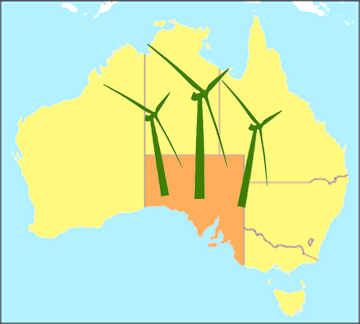
 Renewable Energy Target: Conservation Foundation warns cut would threaten potential SA jobs http://www.abc.net.au/news/2015-04-20/acf-warns-against-renewable-energy-target-cut/6405544 The Australian Conservation Foundation (ACF) says South Australia could lose up to $6 billion worth of investment, if the Renewable Energy Target (RET) is reduced.
The Federal Government wants to cut the target from 41,000 gigawatt hours to less than 32,000 gigawatt hours by 2020.
The foundation’s energy analyst, Tristan Knowles, said leaving the target as is would have huge benefits for South Australia.
“The bigger picture here if the RET isn’t weakened is that there’s 10 wind projects across South Australia that have been approved and the investment potential for those is about $6 billion and if they went ahead there’d be over 6,000 construction jobs and 31 ongoing jobs,” he said.
“So there’s a lot of potential.”
“South Australia was the only state that saw a drop between 2009 and 2014, so if these projects go ahead, they will generate jobs in construction and in ongoing maintenance and operations.”
Australia’s crumbling international reputation – questions on climate policy
 UN Countries Question Australia Over Climate And Energy Policy http://cleantechnica.com/2015/04/20/un-countrys-issue-australia-questions-climate-energy-policy/ by Joshua S Hill
Australia’s clean energy and climate policy (or lack thereof) has been brought back back into international focus again these last few weeks, as the country’s politicians continue to bicker over the Renewable Energy Target. Such political uncertainty has also led several major UN nations to present Australia with questions to explain their lack of political support for a cleaner future, with Brazil even going so far as to highlight Australia’s “low level of ambition.”
Over the past week, two reports have shown that the current political bickering has cost Australia’s renewable energy industry dearly, not to mention worldwide coverage concerningAustralia’s poor performance and unwillingness to commit to agreed upon climate facts and goals.
On Monday of last week, the Australian Bureau of Statistics (ABS) released a report which showed that the country’s renewable energy sector lost almost 2,500 jobs over 2013-14. According to the figures published by the ABS, renewable energy industry jobs dropped 15%, or 2,300, from the peak of 14,890 recorded in 2011-12.
Two days later, a new analysis from Bloomberg New Energy Finance showed that investment in the Australian renewable energy industry plummeted 90% over the 12 months since 31 March, 2014, “stifled by more than 13 months of policy uncertainty.”
We’re going backward if you compare us to quite a wide range of countries,” Andrew Thomson, managing director of Acciona Energy in Australia, said by phone to Bloomberg. “For companies operating in Australia, many would be saying, it’s getting extremely difficult here, why don’t we take a look at the broader region, Southeast Asia for example.”
These two reports followed a white paper published by the Australian Government on its energy policy, which was subsequently pulled apart by news agencies and industry representatives the country over.
So it comes as no real surprise, then, that United Nations’ countries are also going to be asking questions of Australia. The UN has compiled a list of questions presented to Australia (PDF) from a number of countries, including from big emitters like the United States and China. Even countries like Saudi Arabia and Brazil got in on the action, calling in to question Australia’s “initiative to support sustainable development” and Australia’s “level of ambition.”
Of the over 35 questions presented to Australia in the March session of the UN, not a single one has an answer from Australia — and that, ladies and gentlemen, is the most telling point of it all.
Senate Inquiry warns of energy “death spiral”
An energy ’death spiral’ could result in electricity prices skyrocketing as more consumers go ‘off-grid’ http://www.couriermail.com.au/news/queensland/an-energy-death-spiral-could-result-in-electricity-prices-skyrocketing-as-more-consumers-go-off-grid/story-fnihsrf2-1227312552139 JESSICA MARSZALEK APRIL 21, 2015
AN ENERGY “death spiral” could result in electricity prices skyrocketing further as some customers tear up large bills in favour of using their own solar and battery power.
A Senate committee examining the management of electricity networks has found bill shock will become even more shocking for some unlucky customers as improving technology allows other customers to go “off-grid”.
A report prepared by the Environment and Communications References Committee said it was increasingly likely more and more customers would generate their own electricity in the future as technology improves solar and battery power, leaving fewer customers to foot the bill for the growing and expensive electricity network.
“Electricity prices, largely driven by network costs, have risen significantly while the demand for electricity has declined,” the report says.
“This had led to concern about a death spiral; that is, high prices are causing demand to decline while also encouraging consumers and businesses to engage in their own generation activities. Remaining customers would be required to pay an increasing share of the network costs.”
With more than one million solar power systems already on roofs and emerging battery storage technology allowing homes to store their own solar power, we could see an even more dramatic behaviour shift.
The report recommended an urgent investigation into electricity production, asking state governments to “prioritise efforts” to focus on whether networks are properly anticipating more and more customers going “off-grid”. Meanwhile, the committee is still considering allegations of price rorting by electricity company Energex.
The inquiry was sparked by an Energex whistleblower’s revelations published in The Courier-Mail last year that it looked into manipulating data to target a higher rate of return. The issues will be discussed in the inquiry’s final report, due by May 5.
Report shows Australia could have 100% renewable energy by 2050
 100% Renewable Energy Powered Australia Possible By 2050 http://www.energymatters.com.au/renewable-news/renewables-anu-wwf-em4784/ April 22, 2015
Australia has the potential to reach 100% renewables and zero net emissions by 2050 according to a report from Australian National University’s Centre for Climate Economics and Policy.
Commissioned by WWF-Australia, the report’s primary focus is on how deep cuts to Australia’s emissions can be achieved, and at a low cost. An important strategy is boosting uptake of renewables.
The report notes 100% renewable energy can be supplied through utilising existing technologies such as wind turbines, solar panels and concentrating solar thermal.
Surplus or deficits in supply could be addressed by molten salt storage associated with solar thermal plants, biomass-fired generators and existing hydropower.
However, a rapid shift to 100% renewables could be problematic in that it would mean early retirement of significant existing power generation assets – and while that may be attractive to many; it’s not going to happen without a massive fight.
“A more gradual transition to a near-zero carbon system, by around 2040, would take advantage of natural asset turnover and be more cost effective, and would be combined with early targeted retirement of Australia’s most emissions intensive power stations. Almost all of Australia’s existing electricity generation assets will be retired before 2050 in any case.”
Going green in such a big way doesn’t mean ‘we’ll all be rooned’.
“Most economic modelling indicates that ambitious mitigation action does not dramatically change the structure of the Australian economy, and that all industries that are growing in the base case,” says the report.
The devil in the detail is policy stability – a devil we’ve become all too familiar with already. The current argy-bargy over Australia’s Renewable Energy Target has seen new investment in large scale renewables practically stall. Local investment in new large-scale renewable energy projects collapsed in 2014 to levels almost 90 per cent lower than the year before.
“The solution is clear: set an ambitious long-term goal for reducing carbon pollution, and take decisive action to make it happen,” said Kellie Caught, WWF-Australia’s National Manager – Climate Change. “That’s the kind of leadership hardworking taxpayers deserve – let’s commit to leaving things better than we found them.”
The report, “Australia Can Cut Emissions Deeply And The Cost Is Low” can be viewed in full here (PDF).
First Nuclear Royal Commission Issues paper indicates an expensive farce
 The paper appears to be totally confused by what is a cyclic process. For example, the phrase “once-through” cycle is an oxymoron and reprocessing spent fuel is just that, not recycling. These terms come from the nuclear industry’s spin doctors.
Nowhere in this Issues Paper is information given on Government funding of the nuclear industry either directly in the form of grants and through government supplied services such as exploration, testing, environmental, and occupational health and safety services or indirect in the form of administrative services associated with the nuclear industry. We have no way of telling, for example, whether government expenditure has been recouped through royalties.
 NUCLEAR FUEL CYCLE (sic) ROYAL COMMISSION
ISSUES PAPER ONE
EXPLORATION, EXTRACTION AND MILLING (of Uranium and Thorium), critique by Dennis Matthews, 20 Apr 15
This, the first issues paper of the SA Government’s commission into expanding SA’s role in the nuclear industry, will confirm the worst fears of those who suspect that this commission is an expensive farce funded by the taxpayers of SA , and that the decision to expand the nuclear industry in SA is an ALP-LP-nuclear industry done deal.
The issues paper is the product of the SA Government’s mining bureaucracy, a bureaucracy that has a long history of a gung-ho environmental vandalism in the name of development. In the days when uranium mining was being considered at Roxby, Beverley and Honeymoon it was called the Dept of Mines & Energy but was known in the environment circles as the Dept of Mines & Mines, there never was any interest in anything form of energy other than coal, gas, oil and uranium.
Thanks to the Australian Democrats we got the Renewable Energy Target (RET) which overnight led to significant investment in wind energy in SA. We then got an even better result in the form of rooftop solar, the ultimate challenge to the fossil-nuclear fuel lobby and to multinational energy corporations in general. Not surprisingly the Liberal-Labor duopoly is now trying to reverse this challenge to big business’ control over electricity generation. To a ruling duopoly, which has given us widespread privatisation of essential services, consumer control over electricity generation is anathema.
The issues paper has four sections. Continue reading
Nuclear Royal Commission needs balance – Jim Green
 20 Apr 15 The SA government’s Nuclear Fuel Cycle Royal Commission kicks off in Mount Gambier today Dr Jim Green, national nuclear campaigner with Friends of the Earth, Australia, said:
“Kevin Scarce promised a ‘balanced’ royal commission but three of the five members of his ‘expert panel’ are pro-nuclear, with just one critic. There’s nothing wrong with including nuclear advocates on the panel but there should be balance.
“One way or another Kevin Scarce needs to act to restore credibility to the Royal Commission. Otherwise it will be treated with the same ridicule as the Switkowski Review, which was comprised entirely of ‘people who want nuclear power by Tuesday’ according to comedian John Clarke.”
Despite its bias, the 2006 Switkowski Review was sceptical about proposals to expand Australia’s role in the nuclear fuel cycle, as was BHP Billiton in its submission to the Switkowski Review (see attachment below). Conditions are no more favourable now than in 2006. Despite the hype about a nuclear ‘renaissance’, the number of reactors has declined over the past decade.
Dr Green said: “Presumably the Royal Commission sees Mount Gambier as a potential site for a nuclear power reactor. The local community should consider the legacy of high-level nuclear waste that would remain in the Mount Gambier region indefinitely since there is no disposal site for high-level nuclear waste in Australia − or anywhere in the world for that matter. The only deep underground nuclear waste repository in the world − in the US state of New Mexico − has been shut down following an underground chemical explosion that spewed radiation to the outside environment and contaminated 22 workers.
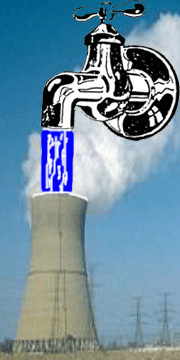 “Nuclear power is incredibly thirsty − a single reactor requires 35−65 millions litres of cooling water daily. The huge water intake pipes destroy marine life by the tonnes.”
The local community should also consider scientific research linking nuclear reactors to increases in childhood leukemias. UK radiation biologist Dr Ian Fairlie notes that over 60 studies have examined cancer incidence in children near nuclear power plants and more than 70% of those studies found increased cancer rates. Dr Fairlie concludes that “the matter is now beyond question, i.e. there’s a very clear association between increased child leukemias and proximity to nuclear power plants”.1
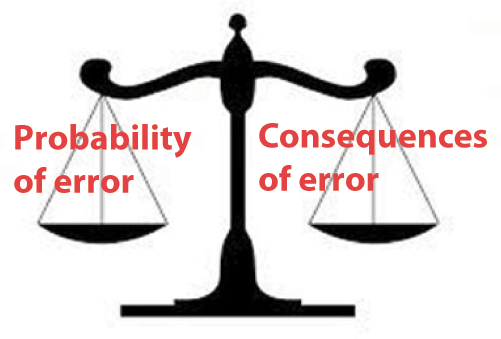 “The community of south-east SA also needs to consider the small risk of a catastrophic accident. The costs of the Fukushima disaster in Japan will probably exceed $500 billion − more than enough to ruin not only the local economy but the entire state’s economy,” Dr Green concluded.
Contact: Jim Green 0417 318 368, jim.green@foe.org.au
——————————————–
ATTACHMENT Continue reading
China, USA, Brazil critical of Australia’s poor policies on climate change
China and other big emitters challenge Australia over its climate change policies, The Age, Adam Morton and Tom Arup April 20, 2015 The world’s biggest greenhouse gas emitters, including China and the US, have questioned the credibility of Australia’s climate change targets and “direct action” policy in a list of queries to the Abbott government.
In the latest sign of diplomatic pressure over Canberra’s stance on global warming, China accused Australia of doing less to cut emissions than it is demanding of other developed countries, and asked it to explain why this was fair.
Beijing also questioned whether the Abbott government’s emissions reduction fund – the centrepiece of its direct action policy, under which the government will pay some emitters to make cuts – would be enough to make up for the axed carbon price and meet Australia’s commitment of a minimum 5 per cent emissions cut below 2000 levels by 2020.
The questions have been lodged with the United Nations for Australia to answer in the lead-up to the December climate summit in Paris, where the world is supposed to sign a global deal to combat climate change. Continue reading
Be aware of the Pro Nuclear Royal Commission’s publicity meetings in South Australia
The Commissioner will be undertaking a series of community engagements during the Royal Commission.
The first of these community engagement visits are listed below.
- 20 April 2015: Mount Gambier
- 30 April 2015: Port Augusta
- 01 May 2015: Port Augusta/Port Pirie
- 05 May 2015: Berri
- 11-14 May 2015: Remote Aboriginal Communities (locations to be confirmed).
Further information will be posted on this site when available.
Guide to submissions to South Australia’s Pro Nuclear Royal Commission
Submissions to the Royal Commission have to be in by July 24.
Well, they seem to be making this as difficult as possible for the ordinary peasant. You have to register at the website, you have to read the Issues Papers, and abide by their guidelines. (So far, only one Issues Paper is available Exploration, Extraction and Milling, with 3 more supposed to come later – Further Processing and Manufacture Electricity Generation Management, Storage and Disposal of Waste) Anything you want to say outside of their stated questions must not go into your submission, but be attached as an Appendix.
The submission must be in their stated form, as an affidavit, witnessed as a legal document.
Most of the stated questions are worded in such a way that they invite positive opinions about the industry. Having said all this – there still is scope to raise some pertinent questions to the Commission. For example – these 3 curly ones:
1.7 Is there a sound basis for concluding that there will be increased demand for uranium in the medium and long term? Would that increased demand translate to investment in expanded uranium production capacity in South Australia (bearing in mind other sources of supply and the nature of South Australia’s resources?). Figure 4: World Uranium Production and Demand 10 Figure 5: Traded price for uranium
1.10 Would a future expansion of exploration, extraction and milling activities create new environmental risks or increase existing risks? If so, are current strategies for managing those new risks sufficient? If not, in what specific respects? How would any current approach need to changed or adapted?
1.13 Would an increase in extraction activities give rise to negative impacts on other sectors of the economy? Have such impacts been demonstrated elsewhere in Australia or in other economies similar to Australia?”
Kevin Scarce kicks off the SA Nuclear Royal Commission with a warning about people being “emotional”
 Kevin Scarce expects debate around the future of the nuclear fuel cycle in SA to be ‘emotional’ CAMERON ENGLAND THE ADVERTISER APRIL 17, 2015 “……. Commissioner Scarce said he expected there to be a lot of “emotion” associated with the debate, and he was committed to running a transparent process.
“Today really is the start of business,’’ Commissioner Scarce said. “We are issuing our first issues paper which covers the opportunity to expand mining and exploration, and also the risks and costs of doing that……..
“I think there’s going to be a lot of emotion about the nuclear industry. We can’t walk away from the fact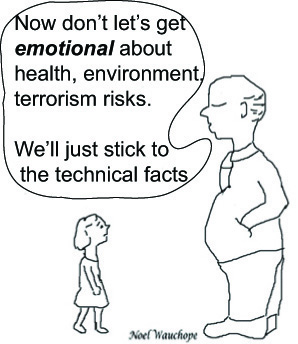 that when there are accidents they are catastrophic and I would expected there will be a lot of emotion about the risks, the impact on the environment, and I want to encourage people, again in an evidence-based way, to give us their views on that, but at the end of the day, the purpose of a Royal Commission is to inquire and to get evidence-based information back…….
The issues paper addresses issues around exploration, mining and milling uranium, and poses 13 questions for discussion around what could be done to foster more activity, whether that is economically viable, and what the environmental and social costs might be.
Three further issues papers will be released over the next two to three weeks, looking at fuel management and storage, fuel enrichment and power generation.
Commissioner Scarce said once all of the issues papers were released there would be 90 days for companies, organisations and individuals to make submissions.
“The we’ll take all of that evidence, bring it together in a report, and then we will engage the community in the outcomes of all of the reports that come to us through the issues papers.’’
Commissioner Scarce will spend the next month travelling to areas such as Aboriginal communities including the APY Lands, and Maralinga and regional areas including Port Pirie and Whyalla……http://www.theaustralian.com.au/news/kevin-scarce-expects-debate-around-the-future-of-the-nuclear-fuel-cycle-in-sa-to-be-emotional/story-e6frg6n6-1227307853022
1 This month
17 October, Free Public Talk on Nuclear Issues in South Australia
David Noonan will speak on public interest concerns over the new Roxby Downs Indenture Act 2026 on BHP copper-uranium mining and ore processing in SA, and on how AUKUS may face SA with a High-Level nuclear waste agenda.
Dr Jim Green will discuss international developments in the field of nuclear power including ‘small modular reactors’ and Generation 4 ‘advanced’ nuclear reactor concepts.


Help Aunty Sue Protect Her Land and Sacred Sites From Destructive Rocket Testing.
.

Australians deserve the truth
about
AUKUS – https://aukuspublicinquiry.com/

PETITION – To: Prime Minister Anthony Albanese and the Australian Labor Government

of the week – Australians for War Powers Reform (AWPR)
To see nuclear-related stories in greater depth and intensity

