Jetsetting for South Australia’s Pro Nuclear Royal Commissioner, and who else?
 International nuclear-site visit on cards for royal commissioner MEREDITH BOOTH THE AUSTRALIAN APRIL 18, 2015
http://www.theaustralian.com.au/business/mining-energy/international-nuclear-site-visit-on-cards-for-royal-commissioner/story-e6frg9df-1227308901763
As Abbott govt delays decision on RET, South Africa races ahead with renewable energy
 The contrast with South Africa, another coal dependent country, could not be greater. It has so far contracted for more than 5,000MW of large scale wind and solar and announced overnight it would look to install another 6,300MW – much of this solar PV and solar thermal, where it has become a leader in the global market.
developers in WA are confident their projects can go ahead, because of the unique nature of that market, and there are numerous smaller projects that could also get the tick of approval, and finance, if a resolution is found
 First 100MW solar plant points to missed opportunity in Australia, REneweconomy By Giles Parkinson on 17 April 2015 In a ceremony attended by the heads of AGL Energy and First Solar, and ministers from the NSW government – but not the federal government – the last and 1,366,380th solar panel was installed on the 102MW Nyngan solar farm in western NSW on Friday.
And while it is a welcome thought that Australia has finally made it onto the big solar map, it also highlights just what could have been for big solar in Australia. Continue reading
New South Wales goes for big solar energy
 Baird and Nyngan bask in big solar energy switch http://www.governmentnews.com.au/2015/04/baird-and-nyngan-bask-in-big-solar-energy-switch/ by Julian Bajkowski on April 17, 2015 The Federal government’s Renewable Energy Target (RET) may still be in political limbo, but states are voting with their sustainable dollars after New South Wales’ Minister for Industry, Resources and Energy Anthony Roberts and Minister for the Environment Mark Speakman cut the ribbon on what has been hailed as the installation of the final solar panel at Australia’s largest solar project. Continue reading
South Australian Commission chief Kevin Scarce already aligns himself with the nuclear industry
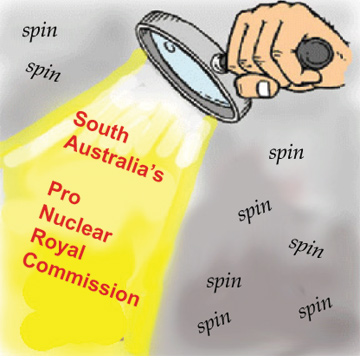
Dennis Matthews 17 April 15 Commissioner Kevin Scarce has made an unconvincing start to his inquiry into the nuclear industry, now officially “The Nuclear Fuel Cycle” Royal Commissioner.
By accepting the nuclear industry spin that it is a nuclear fuel cycle he has immediately identified himself with the nuclear industry. Do we talk about the coal fuel cycle or the gas fuel cycle? No, like nuclear fuel these are one way processes – fuel in, heat and waste out.
It is typical of the nuclear industry that they would like to give the impression that it is otherwise – fuel in, more fuel out – a mirage fostered by its so-called fast breeder programme, itself another example of nuclear spin. The only thing fast about fast breeders is that they use fast neutrons to attempt to slowly produce nuclear fuel in a nuclear reactor. This technology has not only failed to produce significant amounts of nuclear fuel but has rapidly consumed huge amounts of tax payers money.
If Kevin Scarce and the SA Government want to retain any skerrick of credibility then they will take immediate steps to change the name to the “Nuclear Industry” commission.
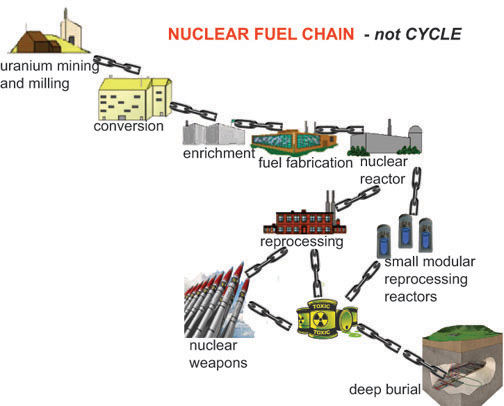
S.A. Nuclear Royal Commission to Mt Gambier: note the issues that will NOT be on the agenda
They don’t mention the health and environmental aspects of the nuclear fuel chain. They don’t mention the national laws that will have to be overturned. They don’t mention the existing problems from Australia’s history of uranium mining.
And then there’s the continuing nuclear radiation crisis at Fukushima – you can bet that will not be on the agenda. Nor will they be talking about the global nuclear decline in the nuclear industry, and the fact that the new geewhiz nuclear reprocessing reactors (a) don’t exist yet and (b) nobody wants to invest in them
 17 APRIL 2015 – NUCLEAR FUEL CYCLE ROYAL COMMISSION VISITS MOUNT GAMBIER The first public forum of the Nuclear Fuel Cycle Royal Commission will be held in Mount Gambier on Monday 20 April – the formal start of a three month state-wide community engagement program.
The public meeting to be held at City Hall at midday is an opportunity for community, industry and other interested stakeholders to hear more about the Royal Commission and how they might take part in the process. It will also be the first time the Commission’s Issues Papers will be presented to the public for comment.
While in Mount Gambier, Royal Commissioner Rear Admiral the Honourable Kevin Scarce AC CSC RANR (Rtd) will also meet with city representatives and community leaders.
Key areas of discussion will include those activities relating to the potential for the expansion of exploration and extraction of minerals; the undertaking of further processing of minerals and manufacture of materials containing radioactive substances; the use of nuclear fuels for electricity generation; and the storage and disposal of radioactive and nuclear waste……http://nuclearrc.sa.gov.au/media-centre/17-april-2015-nuclear-fuel-cycle-royal-commission-visits-mount-gambier/
South Australia’s Nuclear Royal Commission appoints prominent pro nuclear advisors
South Australia’s Nuclear Royal Commission: 3 out of 5 of those named for the Expert Advisory Committee are well known pro nuclear industry advocates.
1. Professor Barry Brook purports to be a leader in climate action, but in fact is internationally known as a strident advocate for the nuclear industry
2. Dr Timothy Stone comes from the Office for Nuclear Development (OND): it “focuses on removing potential barriers to investment, and signals clearly to the industry the serious intent of the Government to push forward nuclear new build”
3. John Carlson – advocate for An Asia Pacific Nuclear Energy Community
http://nuclearrc.sa.gov.au/media-centre/17-april-2015-nuclear-fuel-cycle-royal-commission-begins-public-consultation/The Royal Commissioner the Nuclear Fuel Cycle Royal Commission, Rear Admiral the Honourable Kevin Scarce AC CSC RANR (Rtd) detailed two key milestones today with announcement of the Expert Advisory Committee and the first of the Commission’s Issues Papers.
The Expert Advisory Committee comprises eminent leaders from academia, law, industry and the community and includes:
- Visiting professor at University College London Dr Timothy Stone CBE
- Professor of Environmental Sustainability Professor Barry Brook from Tasmania
- Past president of the Australian Conservation Foundation and Emeritus Professor of Science, Technology and Society at Griffith University Ian Lowe
- South Australian’s chief scientist Dr Leanna Read, who has a medical science background, and Mr John Carlson, former director of the Australian Safeguards and Non Proliferation Office (ASNO).
However, the committee does include Ian Lowe who has a long and honourable record of pointing out the risks and the diseconomics of the nuclear industry
Commissioner Scarce said the Expert Advisory Committee had been engaged to provide high-level expert advice to him and the Commission’s staff for the duration of the Royal Commission.
“The members of this Committee have been chosen to ensure that the Commission receives a broad range of advice and reflects the diversity of views that the community holds,” he said.
“The membership of the Committee comprises both proponents and opponents of the nuclear fuel cycle, and I believe this type of diverse contribution will ultimately allow the Royal Commission to develop a comprehensive final report.”
Commissioner Scarce said that the release of the first of four Issues Papers today was a key milestone for the Royal Commission and marked the start of the formal engagement process.
“Today is also an important step in the consultation process with the release of the first Issues Paper, which will help guide the community and industry in their understanding of the nuclear fuel cycle and assist them in making their submissions,” he said.
“I want this Royal Commission to be a far reaching enquiry into the nuclear fuel cycle, investigating the associated risks and opportunities.
“I am seeking to engage in a conversation with the South Australian community, speak to people, hear their lived experience and obtain the views of those who wish to have a say on this important matter.”
The Commission also announced its first public forum will be held at Mount Gambier City Hall at noon on Monday, April 20, with future metropolitan and regional meeting dates to be confirmed.
Written submissions can be made through www.nuclearrc.sa.gov.au and must be lodged by July 24, 2015.
Abbott govt calls for rural landowners to host nuclear trash dump
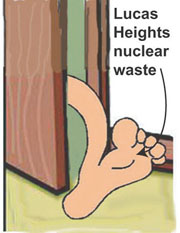 Hands up if you want to host a toxic waste dump http://www.weeklytimesnow.com.au/news/national/hands-up-if-you-want-to-host-a-toxic-waste-dump/story-fnkfnspy-1227304649717 ROB HARRIS THE WEEKLY TIMES APRIL 16, 2015 LANDHOLDERS are being asked to volunteer to host Australia’s next radioactive waste dump.
The Federal Government has advertised for landholders in all states and territories to nominate 100ha of land to “safely store and dispose of toxic waste”.The waste is mainly byproducts from medical, research and industrial processes.
The landholder of the select site will be offered “a generous payment”, while the local community will be given a “package of benefits”.
Federal Industry Minister Ian Macfarlane said an Independent Advisory Panel had been established to help assess nominations. The Government said it will undertake “extensive” public consultation during every stage of the project.
Environment groups have urged that radioactive waste storage is not imposed on unwilling communities.
Abbott govt funds W.A. centre to stall action on climate change
Labor’s foreign affairs spokeswoman, Tanya Plibersek, questioned what kind of message the appointment sent to Pacific countries who are deeply concerned about the impact of climate change……
Last year Lomborg spoke at an event on “energy poverty” in the leadup to the G20 in Brisbane, sponsored by Peabody Coal……in a speech to the Grattan Institute in 2013, the then shadow environment minister, Greg Hunt, used Copenhagen Consensus Center findings to support his policy to abolish the carbon tax…..Lomborg will be the co-chair of the Australia Consensus Centre Advisory Board with Prof Johnson, the university’s vice-chancellor.
 Abbott government gives $4m to help climate contrarian set up Australian centre, Guardian, Lenore Taylor 17 Apr 15 Bjørn Lomborg has been given money from the hard-pressed federal budget to set up a ‘consensus centre’ at the University of Western Australia
A spokesman for the education minister, Christopher Pyne, said the government was contributing $4m over four years to “bring the Copenhagen Consensus Center methodology to Australia” at a new centre in the University of Western Australia’s business school.
The spokesman said the “Australia Consensus Centre” was a proposal put forward by the “university and Dr Lomborg’s organisation”.
Sources have told Guardian Australia the establishment of the centre had come as a surprise even to senior staff in the business school, who were unaware that the centre was being established until shortly before it was announced this month……..
As Lomborg explained in a Freakonomics podcast last year, his consensus centre was defunded by the centre-left Danish government in 2012 and he was searching for a long-term funding solution. Continue reading
Professor Penny Sackett points to Australian Capital Territory’s leadership on Climate Change
 Sustainability Symposium: World to learn from Canberra’s climate change policy April 16, 2015 Clare Colley Reporter at The Canberra Times Canberra is a world leader when it comes to climate-change policy, but Australia is still not doing enough to tackle the problem, former chief scientist Professor Penny Sackett says.
Professor Sackett, now deputy chair of the ACT Climate Change Council and an adjunct professor for the ANU’s Climate Change Institute, will join Nobel laureate Professor Brian Schmidt, and ACT Environment Minister Simon Corbell at a climate change symposium bringing together about 12 Nobel Prize winners in Hong Kong from April 23.
She said Australia wasn’t the only country that had to catch up with its cities leading the way on climate change.
The invitation extended to Mr Corbell to address the international symposium’s policy challenge session was evidence of Canberra’s reputation as a world leader tackling climate change, Professor Sackett said.
“People are recognising how Canberra is not only stepping up with ambitious targets … but actually already on its way to meeting them,” she said. “I would really love to see the country I live in … do all it can for climate change and I don’t think we are there yet.”……
Professor Schmidt said Canberra’s status as an affluent city with people who had a greater understanding of climate change allowed it to be “more adventurous on a small scale”.
Neither the federal government nor opposition’s policies would solve climate change in the short-term, Professor Schmidt said, instead scientific solutions would take 20 years to develop but work should begin now.
“We don’t actually have that much more carbon to throw up in the atmosphere before we start exceeding two degrees Celsius by the end of the 21st century,” he said.
Professor Schmidt said he expects a declaration from the symposium to be taken to the UN Climate Change Conference in Paris in December to help reach a “sensible outcome”.
Professor Sackett said the “very important” summit would be where nations decide whether they will stand with their citizens to do all they can to combat climate change……..http://www.canberratimes.com.au/environment/climate-change/sustainability-symposium-world-to-learn-from-canberras-climate-change-policy-20150416-1mmcee.html
Australian government aims to shut down critics of its environmental policies
given the urgency of the environmental crisis, an increasing number of Australians recognise that we need environmental groups who do more than plant trees.
In the run to this year’s Paris climate talks and next year’s federal election, we need laws that encourage full-blooded political participation.

 Government inquiry takes aim at green charities that ‘get political’ The Conversation, Peter BurdonSenior lecturer at University of Adelaide 16 Apr 15 The almost 600 environmental groups that hold tax-deductibility status in Australia are being scrutinised by a federal government inquiry, with reports that more than 100 of them face being struck off the list.
Some, like the state and territory Conservation Councils and Environmental Defenders Offices, are still reeling from cuts to their programs and core funding. Others, such as Greenpeace, The Wilderness Society, and Friends of the Earth, could lose access to the tax-deductible donations that help sustain their work.
Encouraging donations Deductible gift-recipient status allows eligible organisations, such as those on the environmental register, to receive tax-deductible gifts and contributions. Consistent with similar schemes in the United States and Europe, the environmental register was established as an incentive for citizens and corporations to fund organisations that are active in the public sphere, while also feeding into the logic of small government and shifting the burden of catering for social needs back onto the community.
In Australia, an environmental organisation is defined as a body or society whose primary purpose is to protect the environment or conduct education and research.
Importantly, however, in 2010 the High Court ruled that groups with tax-deductible status also have the right to engage in political debate and advocacy. The judgement described the freedom to speak out on political issues as “indispensable” for “representative and responsible government”.
Moreover, the court pointed out that there is no general rule that excludes “political objects” from charitable purposes. Instead, the key consideration is whether the organisation “contributes to the public welfare”. The ruling has been used as a precedent both in Australia and overseas, such as when Greenpeace won a favourable decision from the New Zealand Supreme Court last year.
Why is Australia holding the inquiry? Continue reading
Australia’s Anti – nuclear fight goes to Canada

Canadian company Cameco is behind plans for two controversial uranium mines in Western Australia – Kintyre in the Pilbara and Yeelirrie in the Northern Goldfields, which will be at the forefront of issues raised by the Australian delegation alongside the emerging issues with the South Australian Royal Commission into the nuclear industry.
The Symposium will examine the human and environmental impacts of the industry, with the Australian delegation presenting sessions on the nuclear fuel chain legacy in Australia, Indigenous Rights and the nuclear fuel chain and the intergenerational health impacts of nuclear power and nuclear weapons.
The Symposium will be followed by the 5th International Uranium Film Festival, which will feature the Australian film “Protecting Manuwangku”, documenting the successful struggle of Warlmanpa Traditional Owners to stop a national radioactive dump at Muckaty in the Northern Territory.
Follow the tour via the ANFA website and via twitter on #uranium2015.
The Australian delegation includes:
• Barb Shaw, Australian Nuclear Free Alliance co-chair (Alice Springs)
“Nationally we meet once a year with common issues on common ground, we’re now taking that internationally where people are fighting and struggling with the same things we’re facing back at home. My expectations for the next few days is networking and sharing solutions”
• Peter Watts, Australian Nuclear Free Alliance co-chair (Arabunna Nation)
“What we’re digging up at home has consequences for every corner of the globe. I’m devastated that the uranium dug up from our country has such far reaching consequences globally, not just locally”
• Debbie Carmody, Tjuma Pulka Radio Station Kalgoorlie (Anangu/Spinifex)
“People don’t always connect the mining with the end result, for example, what has happened at Fukushima”
• Dave Sweeney, Australian Conservation Foundation
“People from all around the world are in Canada sharing stories about the dangers and the environmental impacts of all aspects of the nuclear trade. From the land of the maple leaf to the land of the gum leaf, there is no place for the nuclear trade. It is not sustainable and it is not welcome.”
• Gem Romuld, International Campaign to Abolish Nuclear Weapons
• Marcus Atkinson, Footprints for Peace, Anti-nuclear Alliance of Western Australia
Contact the delegation
Gem Romuld: (+1) 865 919 4562 gemromuld@gmail.com
Australian Contacts:
Sue Coleman-Haseldine – ANFA : 0458 544 593
Natalie Wasley- Beyond Nuclear Initiative: 0429 900 774
Mia Pepper -Conservation Council WA: 0415 380 808
Media gagged: Energy resources of Australia can’t afford to rehabilitate Ranger uranium mine?
 Media banned from Rio Tinto’s ERA AGM after concerns about uranium mine rehabilitation, ABC News By Joanna Crothers 14 Apr 15 Media outlets have been banned from the annual general meeting of a Rio Tinto-owned company that operates the Ranger Uranium Mine in the Northern Territory amid concerns the company does not have enough money to rehabilitate the site once it finishes production.
The mine, near Jabiru which is surrounded by Kakadu National Park, 230 kilometres east of Darwin, is run by Energy Resources of Australia (ERA).

ERA is majority-owned by mining giant Rio Tinto. Ranger Uranium Mine is one of Australia’s three operating uranium mines.
On Monday, the NT Environment Centre said it had “major concerns” ERA would no longer be able to afford the full cost of rehabilitation, estimated at $512 million, due to suffering substantial losses over the past few years.
The company reported a $136 million loss for the 2013-14 financial year which was an $83 million improvement on the previous year.
ERA has said rehabilitation is funded under its current business plan, but if a proposed underground mine known as Three Deeps is not developed it may require another source of funding to pay for all of the rehabilitation works.
Environment Centre spokeswoman Lauren Mellor said she would raise these concerns at ERA’s AGM being held in Darwin today. Media have been told they cannot attend the meeting, even without recording devices, despite journalists having been able to attend previous ERA AGMs.
Speeches from the AGM have been published on the ERA website.
On Monday, Ms Mellor said she wanted to know whether parent company Rio Tinto would cover costs of rehabilitation should ERA be unable to pay.
“We’ll be asking to board of ERA whether they believe that the parent company, who does have the financial capacity to achieve rehabilitation, should be held responsible in the event that ERA no longer has the money to achieve this huge cyclical challenge of rehabilitating Kakadu National Park.
“What we’ve been seeing is Rio Tinto as a major shareholder, which is certainly not short of cash in the way that ERA is, trying to deflect criticism and attention and its corporate ties to this particular project and sidestep that responsibility.”……..http://www.abc.net.au/news/2015-04-14/concerns-rio-tinto-era-wont-pay-for-ranger-mine-rehabilitation/6390600
David Noonan’s Submission to the South Australian Nuclear Royal Commission, proposed Terms of Reference
 Monday 9 March 2015, David Noonan, B.Sc., M.Env.St
To: The Attorney-General’s Department of South Australia
Re: Public submission to the SA Nuclear Royal Commission, proposed Terms of Reference
Nuclear is not ‘peaceful’. Nuclear waste imposes unique risks and unacceptable impacts. Nuclear actions before this Commission are National issues affecting the rights and interests of all Australians. No State administration has a right to impose nuclear risks and impacts on others.
Proposed Term of Reference to direct the Nuclear Royal Commission:
“To inquire into and report on the Democratic and Legal Rights, and the Civil and Human Rights, including to Environmental Protection, to Sustainability, to Health and to Non-Imposition of Nuclear actions, that are at stake and subject to nuclear actions before this Commission.”
Political Leadership in South Australia by Liberal Premier John Olsen in 2000 prohibited International and key National nuclear wastes. Nuclear waste proposals before this Commission are illegal in SA.
Under the “Nuclear Waste Storage Facility (Prohibition) Act 2000”, the import, transport, storage and disposal of any wastes derived from nuclear reactors, or uranium enrichment plants, or from the conditioning and reprocessing of spent nuclear fuel, is prohibited. The construction and operation of such nuclear waste facilities is against the law in our State. The Objects of this important Act are:
“to protect the health, safety and welfare of the people of South Australia and to protect the environment in which they live by prohibiting the establishment of certain nuclear waste storage facilities in this State.”
Continue reading
Aboriginal women speak out for a Treaty
 Aboriginal women on why Australia needs a treaty https://www.greenleft.org.au/node/58715 Thursday, April 9, 2015 By Rachel Evans & Richard Fan More than 150 people filled the Redfern Community Centre on March 20 to discuss a treaty for Australia’s first people.
Organised by Stop the Intervention Collective Sydney (STICS), the event was hosted by veteran journalist Jeff McMullen and televised by National Indigenous TV. As coverage of female Aboriginal voices are rare among mainstream discourses, their retelling of their pasts and hopes for the future captivated the room.
Natalie Cromb, a Gamileraay woman, said that a treaty “would help the Australian government keep its word to the Aboriginal people”. She noted the ongoing debates between treaty and constitutional recognition and argued that the British colonisers fashioned three legal ways to justify their occupation: “First it was settlement, second through conquest, then third through succession — where sovereignty was ceded and agreement was reached between the parties.”
Cromb observed that Britain occupied the land, declared terra nullius and declared that Australia’s Indigenous people were an absent, fading race. “Terra nullius was deliberate and the average Australian does not know about this history of rapes, murders, and genocidal policies, and that it was also used to deny compensation,” she said.
Cromb said that a treaty “is vital to our solution. It would be a first meaningful step. A treaty is the insurance policy we need to hold the government to account. But we are still at the bottom of the social pyramid. We are having water switched off in communities. We know constitutional change won’t stop the removal of our people.”
Amala Groom, a Wiradjuri woman and founding member of Aboriginal Rights Coalition (ARC) and STICS, noted that a treaty “would recognise the sovereignty of the First Nations over their land”, and secure the right of self-determination which was promised when Australia ratified the International Covenant on Economic, Social and Cultural Rights 40 years ago. Continue reading
South Australian government gives funding for mining exploration
 SA Government commits $2 million to mining exploration projects
The South Australian Government says now is the time to invest in exploration projects, after granting a range of mining companies funding for exploration drilling. …
Resources and Energy Minister Tom Koutsantonis said it would enable those companies to stimulate the next crop of greenfield discoveries.
Media player: “Space” to play, “M” to mute, “left” and “right” to seek.
“This is the way to build our extensive knowledge of what deposits we have in South Australia, we spend a lot of money on pre-competitive data, going out doing geological surveys to try and understand where the copper is, where the uranium is, where the iron-ore is,” he said. http://www.abc.net.au/news/2015-04-13/sa-government-mining-exploration-grants-drilling/6389166
1 This month
17 October, Free Public Talk on Nuclear Issues in South Australia
David Noonan will speak on public interest concerns over the new Roxby Downs Indenture Act 2026 on BHP copper-uranium mining and ore processing in SA, and on how AUKUS may face SA with a High-Level nuclear waste agenda.
Dr Jim Green will discuss international developments in the field of nuclear power including ‘small modular reactors’ and Generation 4 ‘advanced’ nuclear reactor concepts.


Help Aunty Sue Protect Her Land and Sacred Sites From Destructive Rocket Testing.
.

Australians deserve the truth
about
AUKUS – https://aukuspublicinquiry.com/

PETITION – To: Prime Minister Anthony Albanese and the Australian Labor Government

of the week – Australians for War Powers Reform (AWPR)
To see nuclear-related stories in greater depth and intensity

